


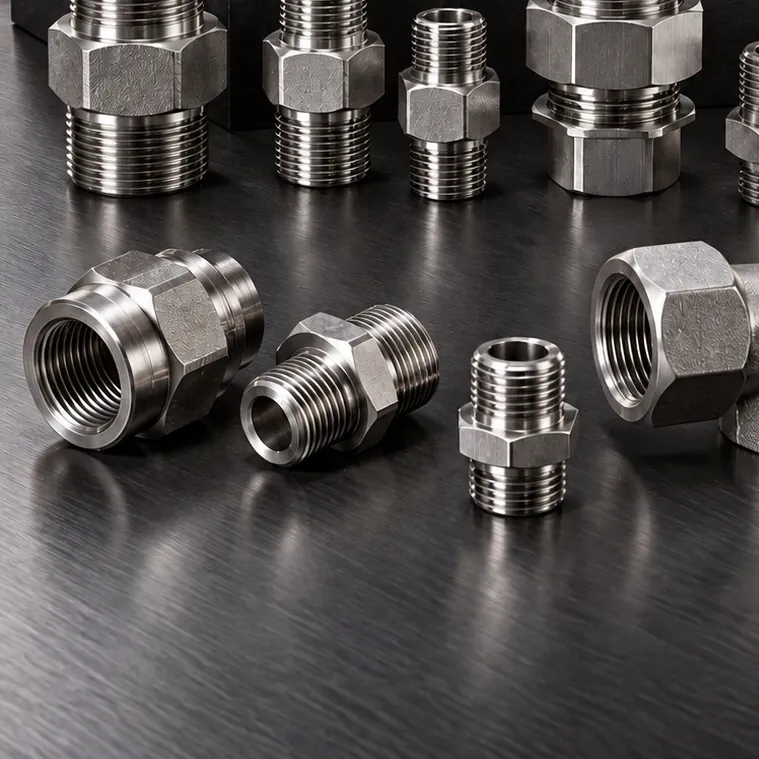
DIN 2353 Compression Fittings
Male Stud Connector (BSPP)
Stainless steel male stud connector with a 24° cone tube end and BSPP male thread, connecting tube to pump, valve block or…
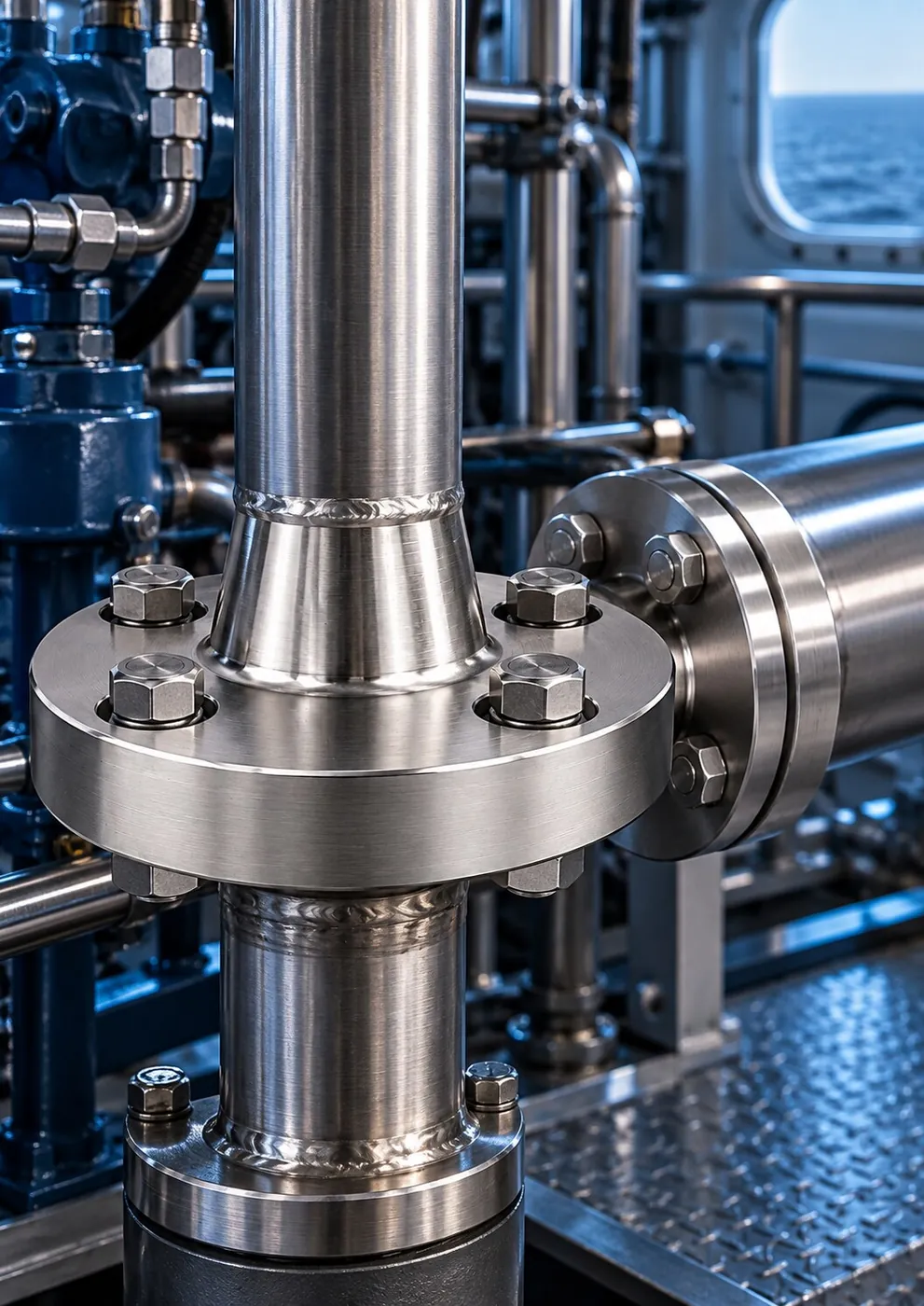
Saltwater · Vibration · Deck hydraulics
AISI 316L fittings, hose assemblies, SAE flanges and valves built to withstand salt spray and vibration on deck cranes, windlasses, steering gear, passerelles and engine room lines.
Featured products in this sector
View all 36 productsProducts
36 products are listed for the operating conditions of Marine & Shipping. Narrow down by group; open a product page for sizes and thread standards.
DIN 2353 Compression Fittings
Stainless steel male stud connector with a 24° cone tube end and BSPP male thread, connecting tube to pump, valve block or…
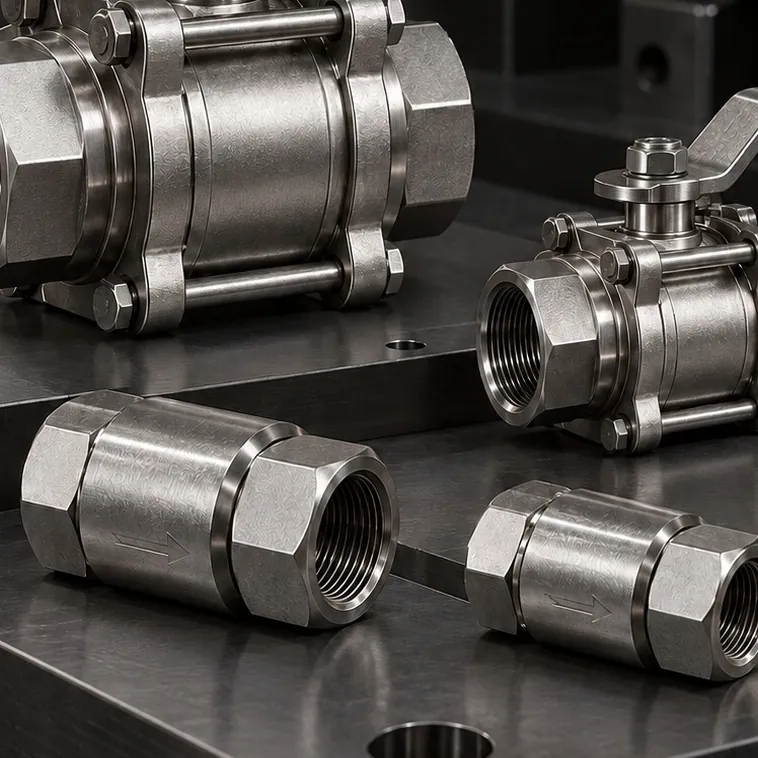
Ball, Needle & Check Valves
High-pressure stainless steel ball valve with an AISI 316L body, providing quarter-turn on/off service in hydraulic and process…
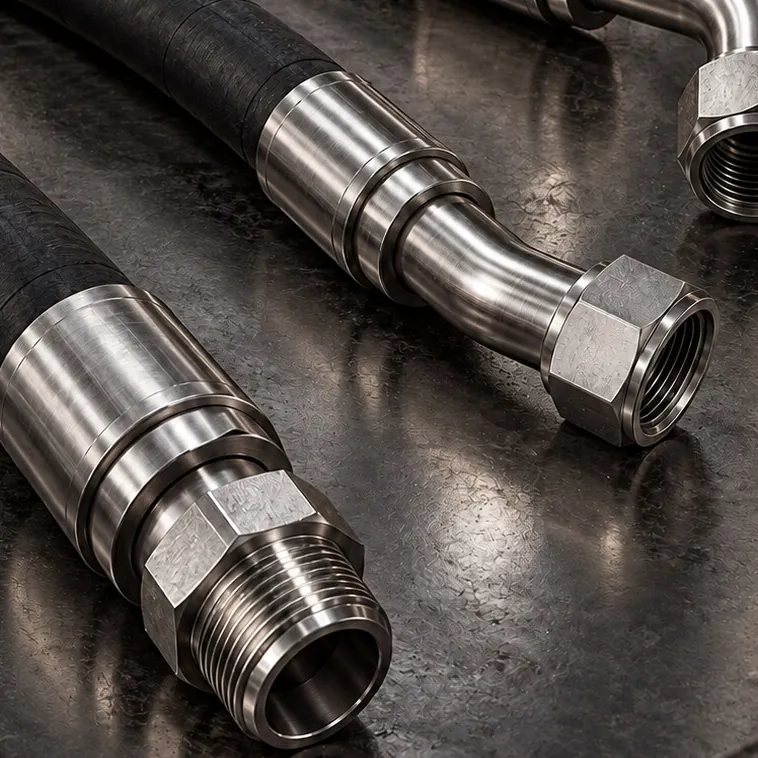
Hose Fittings & Ferrules
Stainless steel crimp-style 90° hose fitting with a female BSP swivel nut and 60° cone seat. Routes the hose at a right angle in…
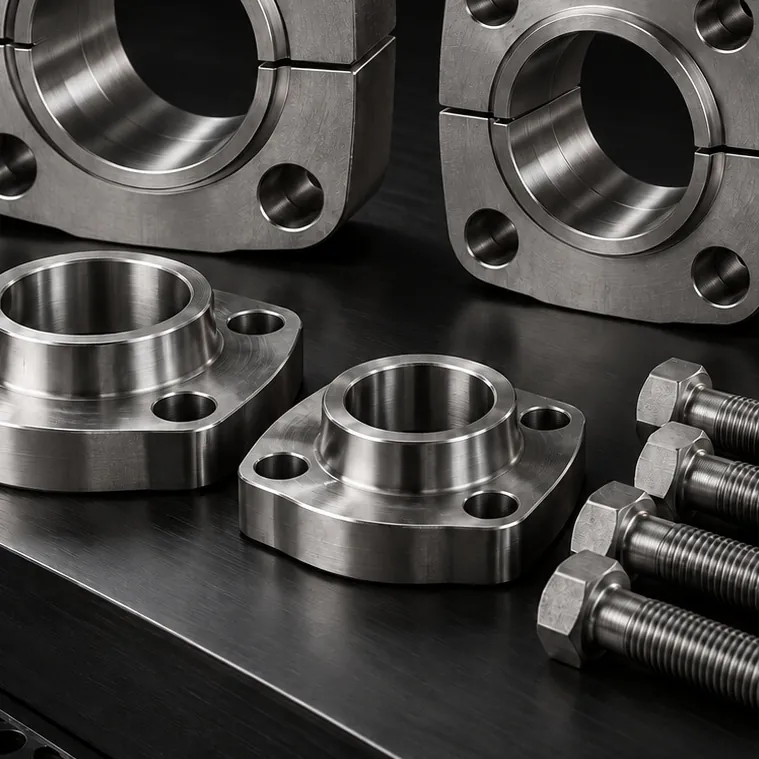
SAE Flanges (Code 61 / 62)
Two-piece stainless steel split flange clamp that holds a flanged-head hose fitting or tube end against an SAE Code 61 port…
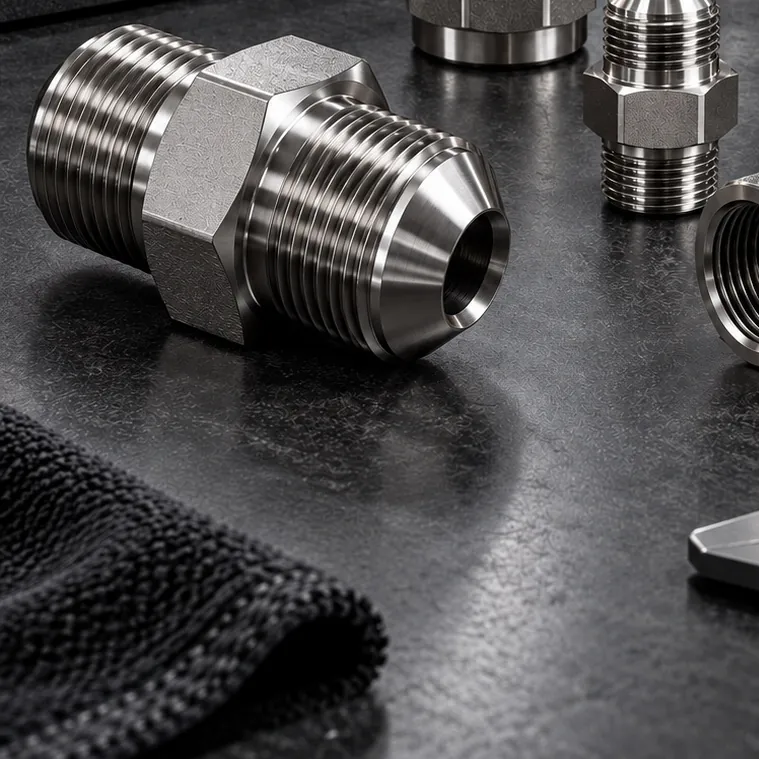
JIC 37° Fittings & Adapters
Stainless steel straight adapter with UNF male threads and JIC 37° cone seats at both ends. Joins two female swivel hose or tube…
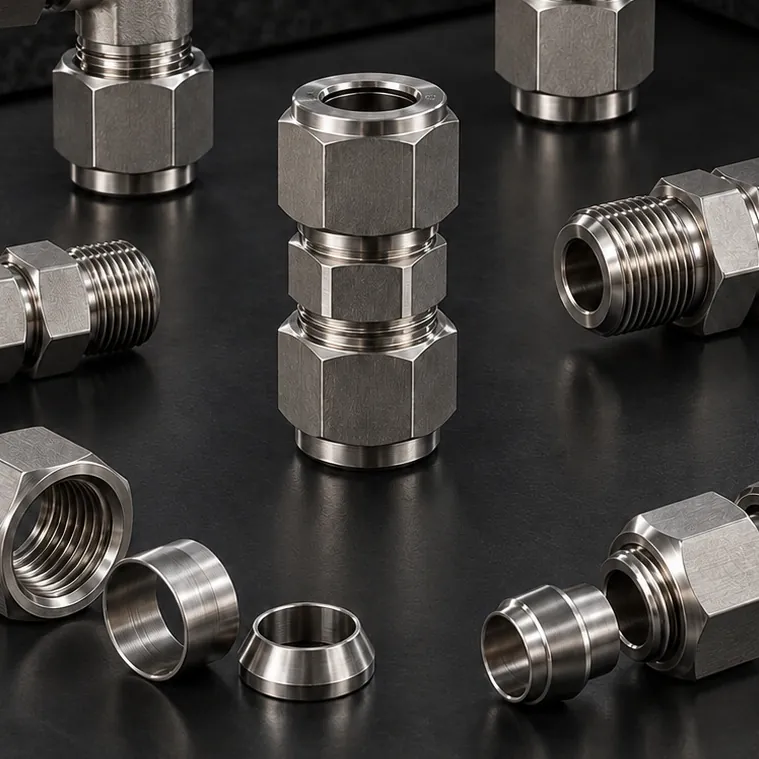
Twin Ferrule Instrumentation Fittings
Stainless steel twin-ferrule union joining two instrumentation tubes on the same axis. Weld-free, repeatable makeup in…
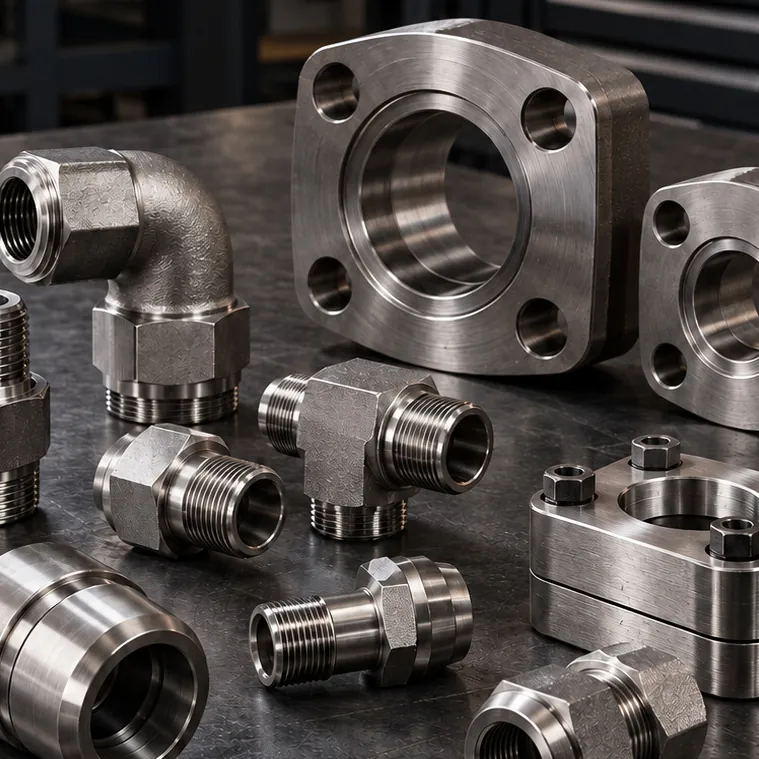
SAE Flanges (Code 61 / 62)
Stainless steel flange block combining SAE flange ports in a single body with elbow, spacer, reducer or distribution functions…
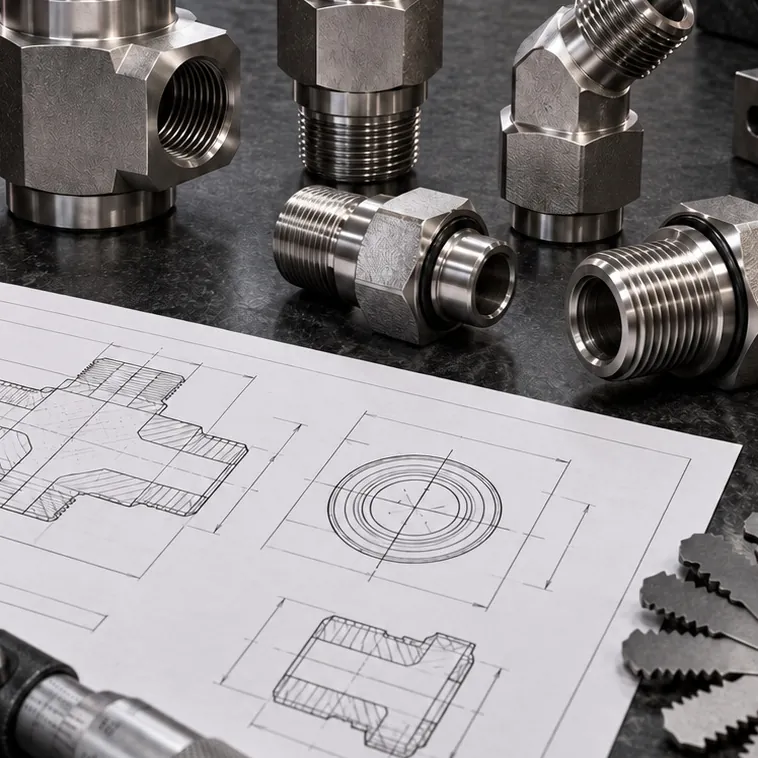
Custom-Made Hydraulic Parts
Custom stainless hydraulic adapter CNC-machined from a sample or technical drawing for thread, size and angle combinations not…
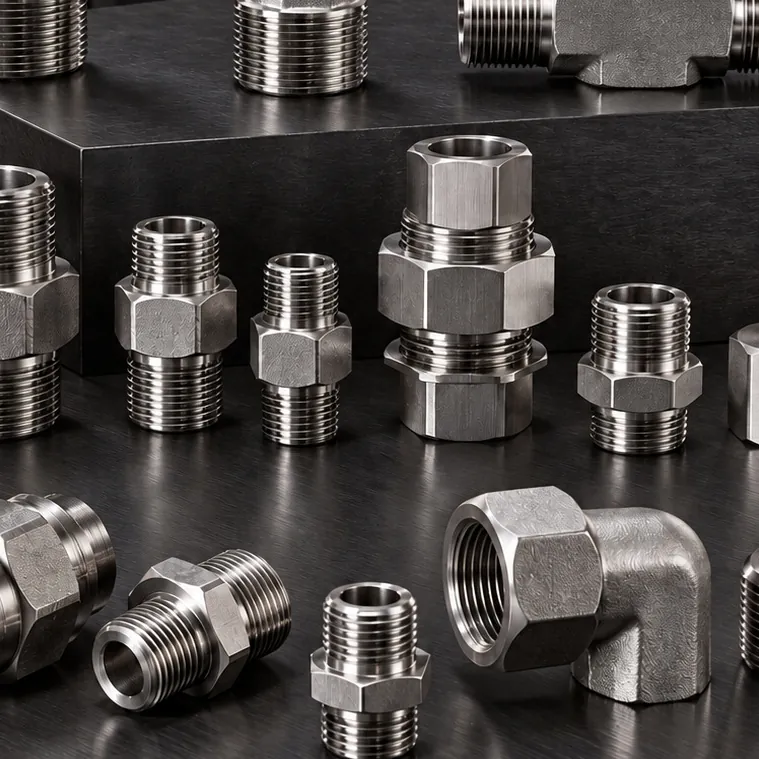
DIN 2353 Compression Fittings
24° cone straight coupling (DIN 2353) that joins two stainless steel tubes on the same axis without welding. AISI 316L body, L…
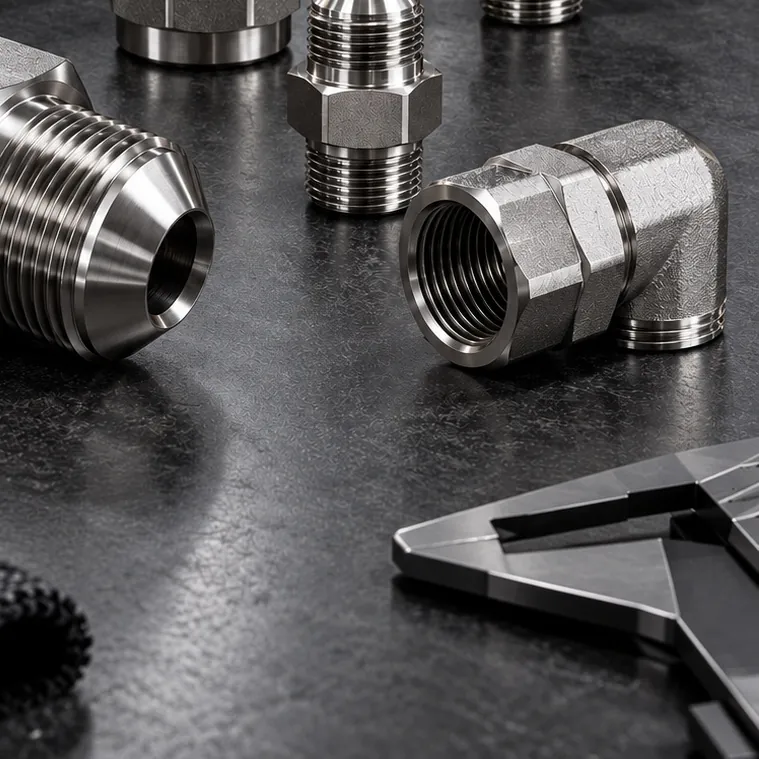
DIN 2353 Compression Fittings
Stainless steel 24° cone equal elbow providing a weld-free 90° change of direction in a tube line. For tight installation spaces…
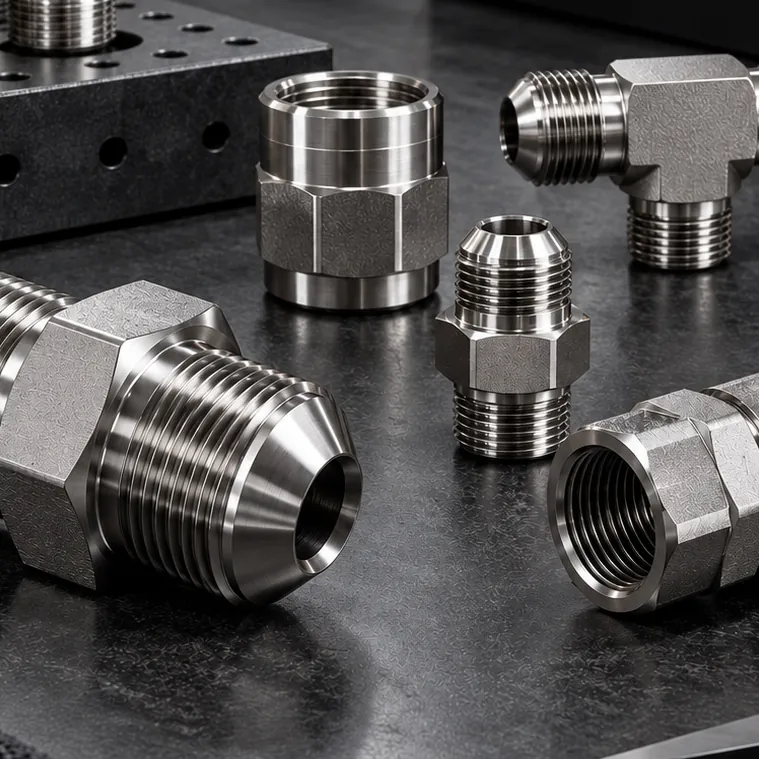
DIN 2353 Compression Fittings
Stainless steel 24° cone bulkhead coupling with locknut that routes a tube line through a panel, tank wall or ship bulkhead in a…
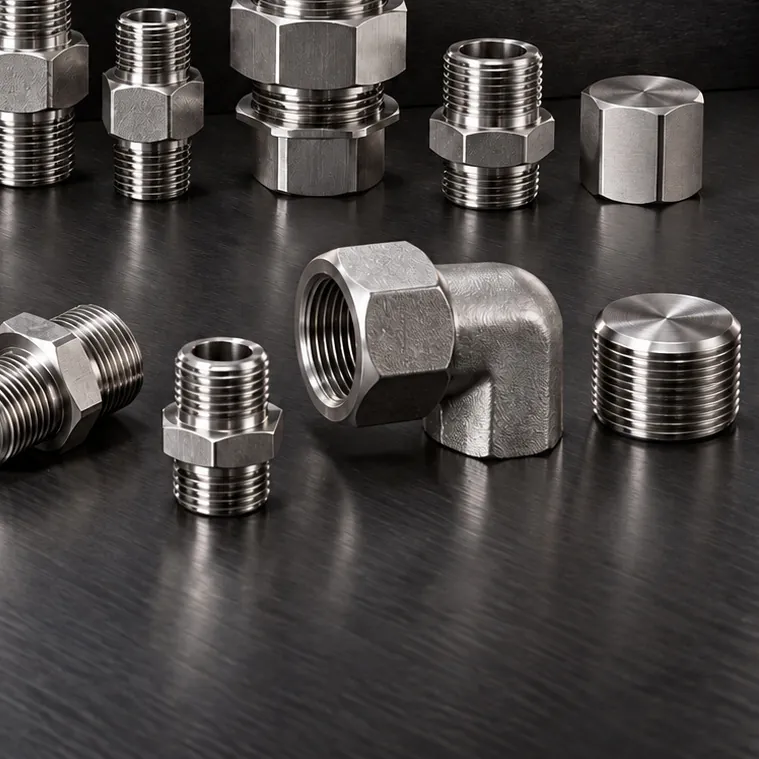
DIN 2353 Compression Fittings
Stainless steel 90° male stud elbow with a 24° cone tube connection on one end and a male NPT thread on the other. Tube outlet…
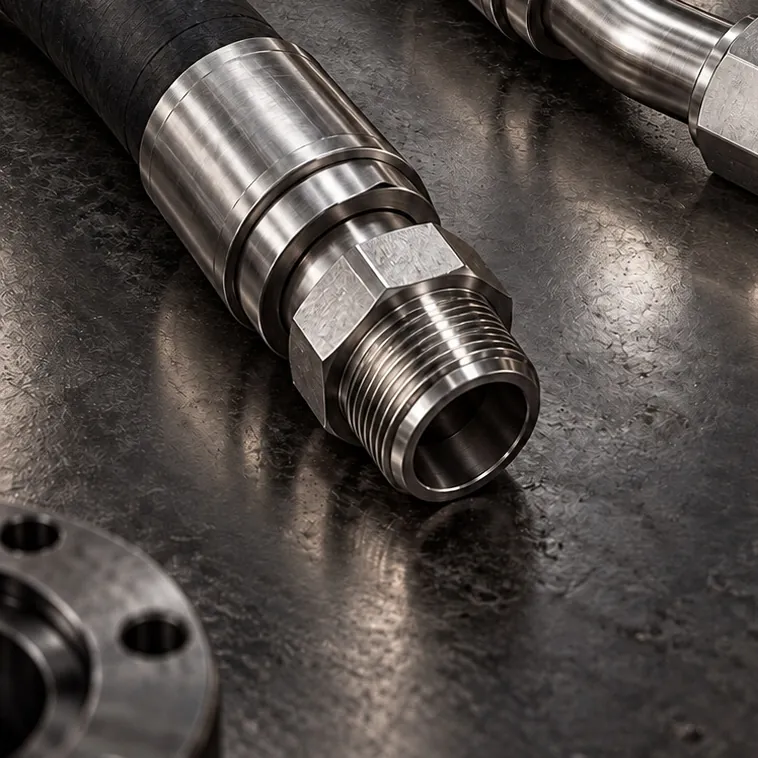
Hose Fittings & Ferrules
Stainless steel straight hose fitting with a female UNF swivel nut and JIC 37° cone seat. Crimp hose end for hydraulic systems…
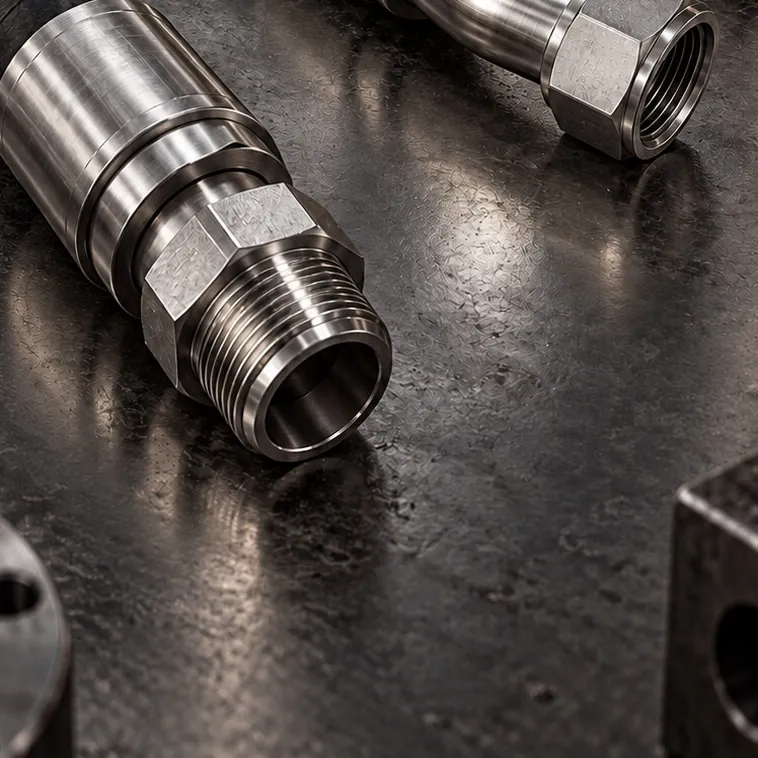
Hose Fittings & Ferrules
Stainless steel O-ring face seal (ORFS) hose fitting with a female swivel nut. Reduces the risk of leaks in high-pressure lines…
Hose Fittings & Ferrules
Stainless steel crimp-style 90° hose fitting with an SAE Code 61 flange head. Connects to pump and block ports in large-bore…
Hose Fittings & Ferrules
Stainless steel DKOL straight hose fitting (L series) with a metric swivel nut and 24° cone with O-ring. Connects directly to DIN…
Hose Fittings & Ferrules
Stainless steel crimp ferrule for 2SN hydraulic hoses with two steel wire braids. Crimped together with the hose fitting to form…
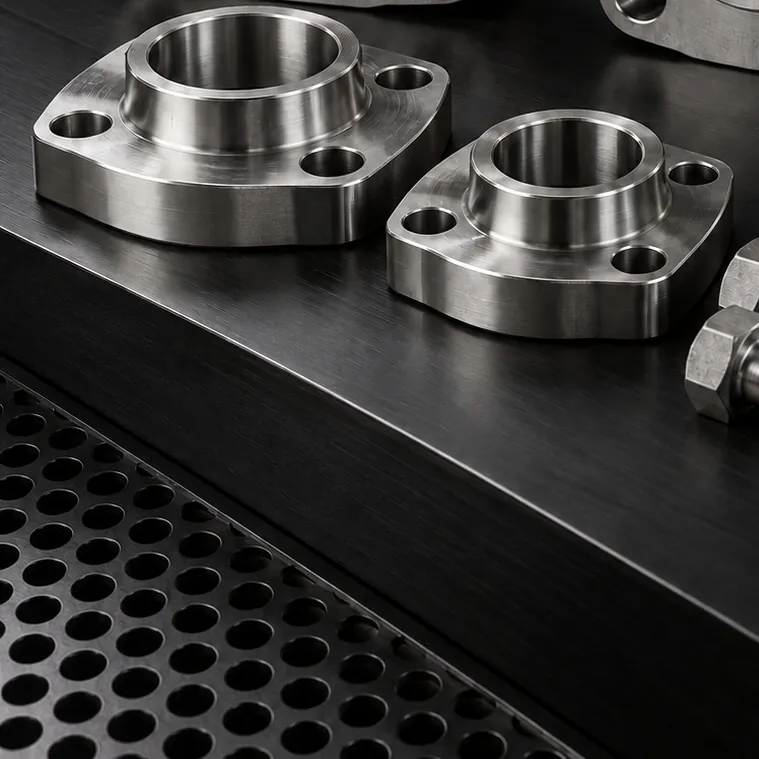
SAE Flanges (Code 61 / 62)
Stainless steel SAE Code 62 mating flange for high-pressure hydraulic lines. Connects the pipe to a Code 62 port via a welded or…
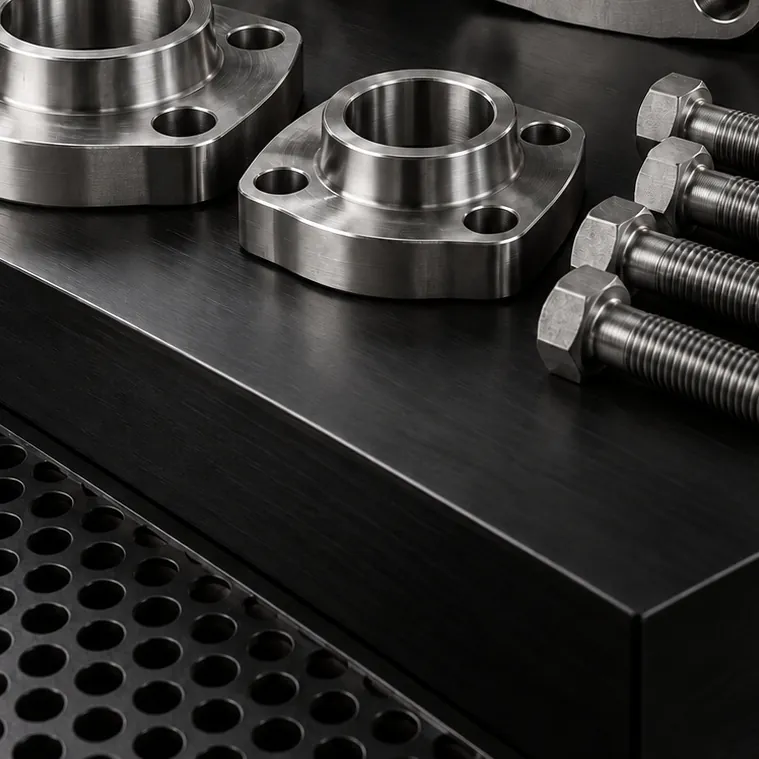
SAE Flanges (Code 61 / 62)
Stainless steel blind flange for closing off unused SAE flange ports or flanged line ends. Made to Code 61 and Code 62 port…
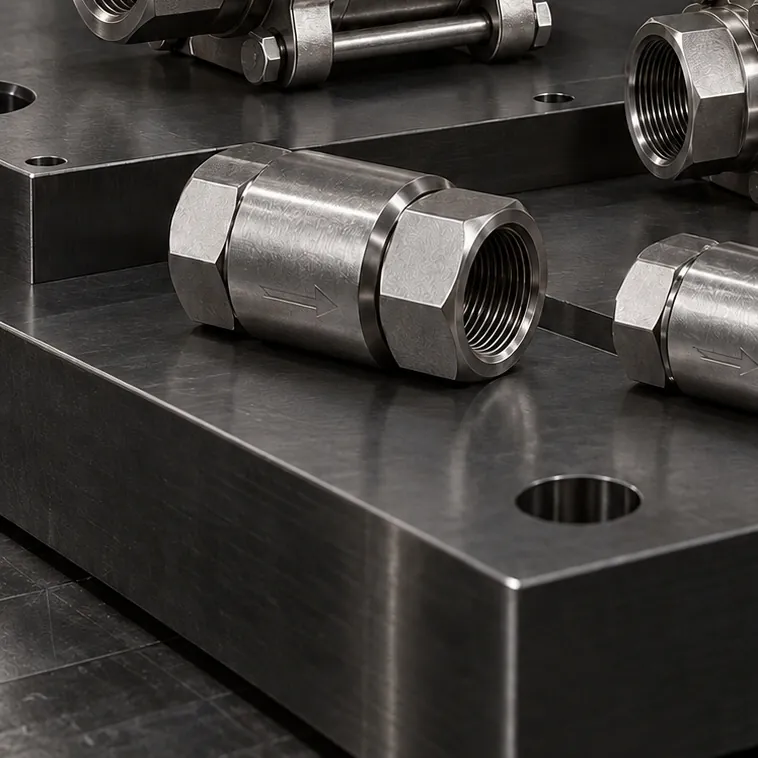
Ball, Needle & Check Valves
In-line stainless steel check valve that passes flow in one direction and stops reverse flow with a spring-loaded poppet. Female…
Twin Ferrule Instrumentation Fittings
Stainless steel twin ferrule male connector joining instrumentation tube to a threaded port, with a tube end on one side and a…
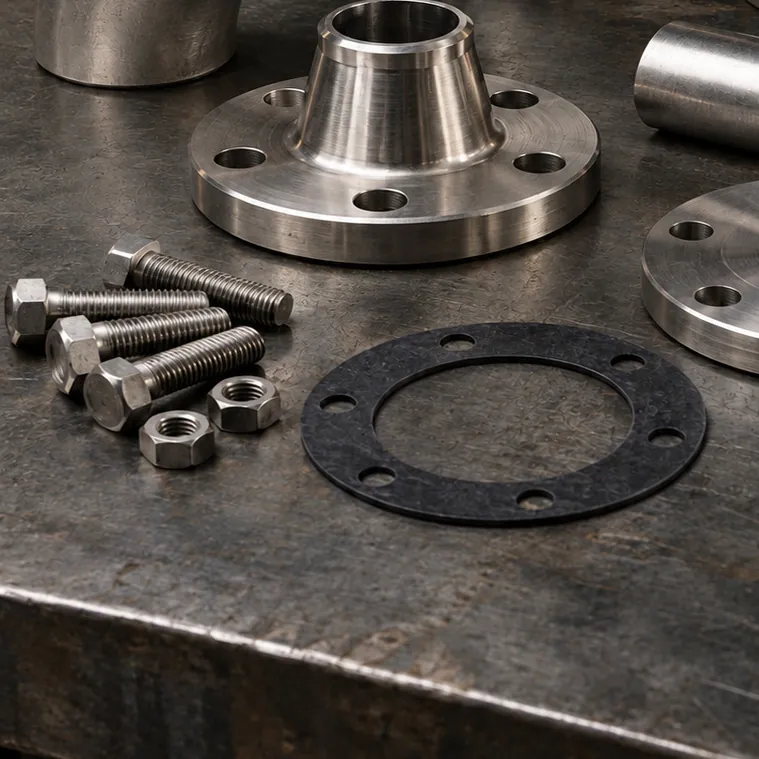
Stainless Steel Pipes & Flanges
Stainless steel flange with a tapered hub that is butt-welded to the pipe. For equipment connections and removable line breaks in…
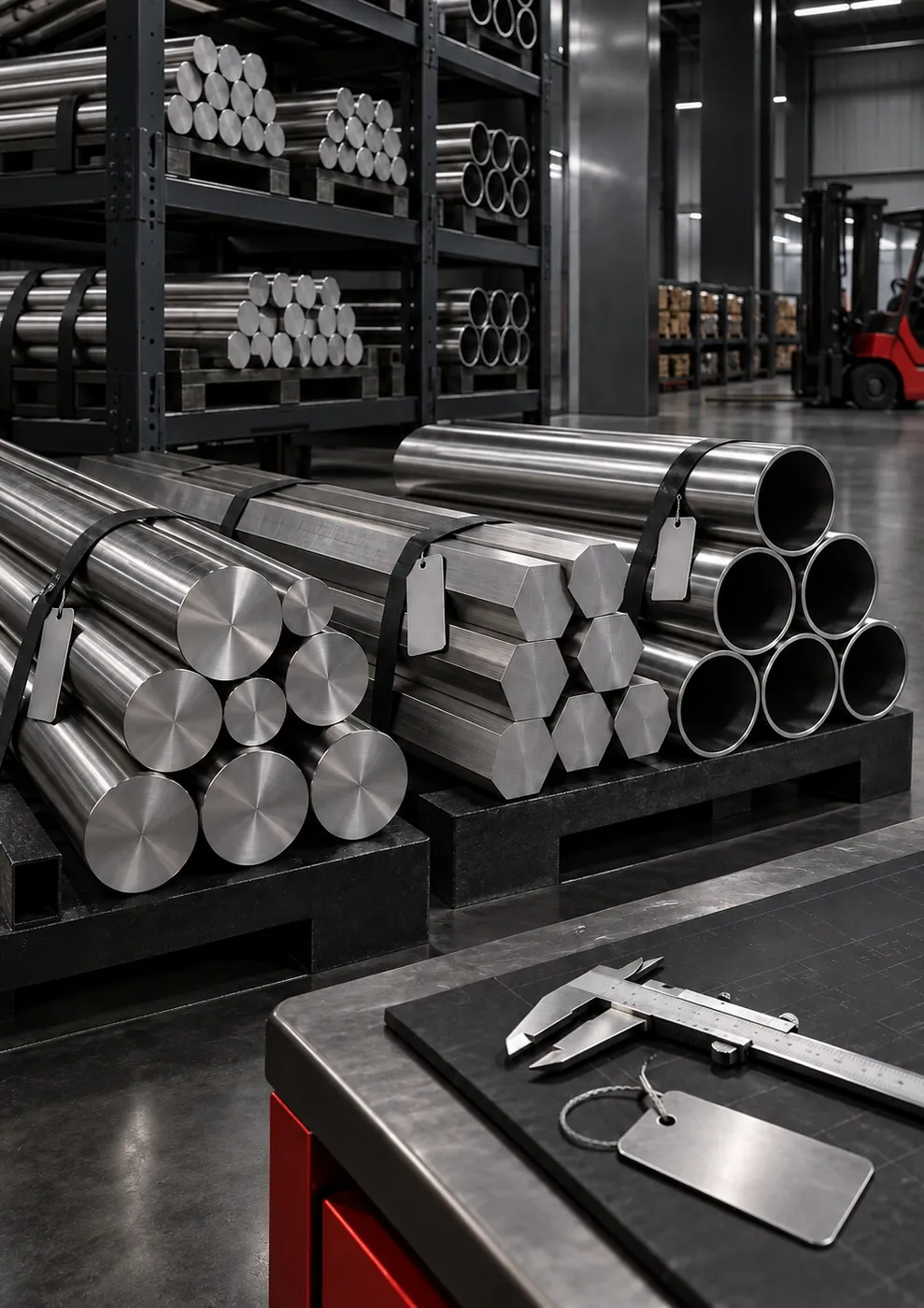
Stainless Steel Pipes & Flanges
Seamless stainless steel hydraulic tube in metric OD sizes for bite-type compression fittings and welded lines. AISI 316L; wall…
JIC 37° Fittings & Adapters
Stainless steel conversion adapter with a JIC 37° UNF male end and a BSPP parallel male thread. For connecting JIC hose lines to…
JIC 37° Fittings & Adapters
Stainless steel 90° elbow with a JIC 37° male end and a JIC 37° female swivel nut end. Routes hoses without twisting and makes…
BSP / NPT Adapters & Nipples
Stainless steel male x male reducing adapter with BSPP threads of different sizes and a 60° cone seat at each end. Size…
BSP / NPT Adapters & Nipples
Stainless steel conversion adapter with a BSP male thread on one end and an NPT male thread on the other. Connects equipment…
BSP / NPT Adapters & Nipples
Stainless steel hex head plug with a BSPT tapered thread for closing unused female ports and threaded line ends. AISI 316L.
BSP / NPT Adapters & Nipples
Straight hex-body stainless steel nipple with BSPT tapered male threads on both ends. Connects two female ports, valves or…
BSP / NPT Adapters & Nipples
Stainless steel BSPP reducing adapter with parallel threads, sealed on the port side by a bonded seal. For ports that are opened…
Weld Nipples & Weld Fittings
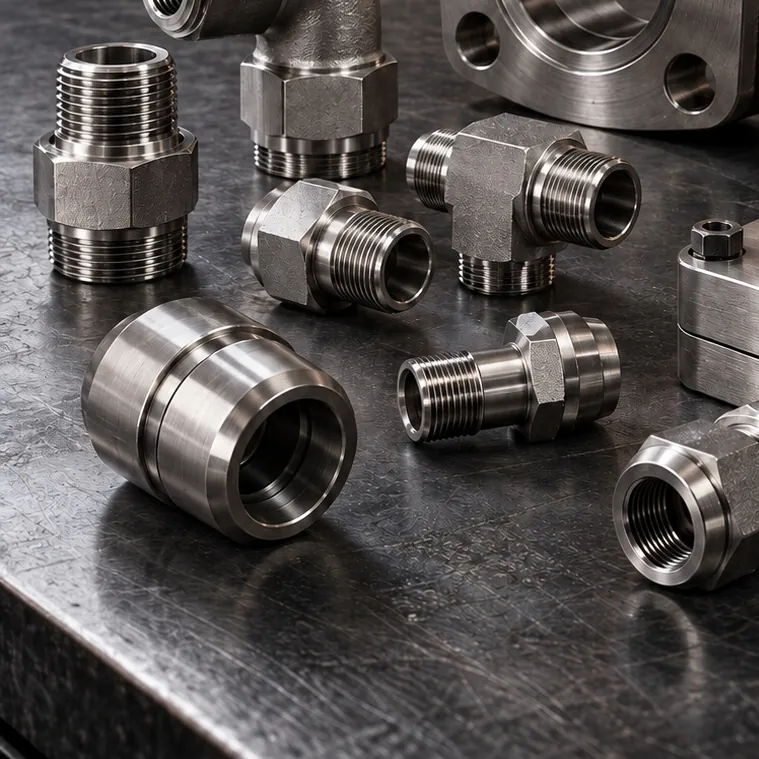
Stainless steel set consisting of a 24° cone body, a nut and an O-ring weld nipple that is butt-welded to the tube. Adds a…
Weld Nipples & Weld Fittings
Stainless steel bulkhead coupling welded into a ship bulkhead, tank wall or shell plate, with 24° cone compression connections on…
Weld Nipples & Weld Fittings
Stainless steel 90° elbow with one end welded to the tube and a 24° cone bite-type compression end on the other. Right-angle…
Weld Nipples & Weld Fittings
Stainless steel 24° weld nipple that is butt-welded to the tube end and seats in a 24° cone with an O-ring. Straight, reducing…
Quick Disconnect Couplings
Stainless steel-bodied male-female quick disconnect coupling with BSP threads. Fast, tool-free connection at test points, on…
Custom-Made Hydraulic Parts
Stainless steel manifold blocks machined from solid to technical drawings, combining multiple hydraulic lines in a single body…
Can't find your part in the list?
Send a sample photo, technical drawing or dimensions; we'll identify the right fitting from our catalog or through custom manufacturing.
Faik Güney · Contact person
Services
Beyond supplying parts, we complete the job in the field with piping, hose assembly, custom manufacturing and technical identification.
Stainless steel hydraulic fittings and hose assemblies for ship and boat steering systems and for passerelle, crane and…
View service – Steering Gear & Actuator PartsHydraulic hose assembly and crimping: hose assemblies with straight, 45° and 90° stainless steel ends in BSP, JIC, NPT…
View service – Hydraulic Hose AssembliesWelded and demountable stainless steel lines built from AISI 316/316L pipe, flanges and fittings: bevel preparation…
View service – Stainless Steel Pipe FabricationWhere a standard product is not the answer: custom adapters, nipples, flange blocks and transition parts made from a…
View service – Custom Parts from Drawings & SamplesSelection of AISI 316L-body ball valves, needle valves and check valves by body, connection standard, bore size…
View service – Valves, Check Valves & Flow ControlStandard stainless steel fittings, adapters, hose ends, flanges and valves ready to ship within an average of 1-3…
View service – Fast Supply & Shutdown SupportThread profiles, sealing cones, wrench flats and connection geometry are machined from AISI 316/316L bar on CNC…
View service – Stainless Steel CNC MachiningOrderly, labeled and service-friendly connections with stainless steel tube and fittings on control panels, power units…
View service – Control Panel & HPU TubingAISI 316/316L tube with twin-ferrule union, elbow, tee, connector and adapter fittings for small-bore measurement…
View service – Instrumentation TubingIdentifying BSP, NPT, UNF/JIC and metric threads by measurement, matching them correctly to the mating part, and…
View service – Fitting & Thread IdentificationOverview
Quick answer
In ship, boat and yacht hydraulics, lines exposed to salt spray and constant vibration use AISI 316/316L stainless steel fittings, hose ends, SAE flanges and valves; low-carbon 316L is preferred for parts that will be welded. Selection depends on the equipment's port standard (BSP, NPT, UNF/JIC, metric or SAE flange), working pressure, line size and maintenance access. Thread type should not be identified by measuring the outside diameter alone; the pitch must also be checked with a thread pitch gauge and the sealing surface inspected.
On a boat or a ship, the weakest link in a hydraulic line is often the connection point. Salt spray, humidity on deck, heat in the engine room and vibration from the propeller and main engine all converge on the same fitting. Carbon steel or plated fittings soon start bleeding rust in this environment, their threads seize, and they can no longer be removed during maintenance.
Since 2020, GÜNEYSS has been manufacturing fittings, nipples, hose fittings, SAE flanges, valves and custom parts to technical drawings from AISI 316/316L stainless steel in Tuzla. From deck machinery to steering systems, and from passerelles to engine room piping, we prepare the fittings that boat and shipbuilders, marine groups and service teams need, either from stock or manufactured to size.
Field conditions
We select fittings for these conditions and specify the material, sealing type and installation method accordingly.
Describe your own conditionsFittings on the open deck are continuously exposed to chloride-laden moisture; plated carbon steel parts soon bleed rust and their threads seize.
The main engine, propeller and wave impact put constant stress on connections; poorly supported hoses and tubing loosen and crack.
In the steering gear room, the engine room and in-hull ducts, wrench flats, connection orientation and bend radius must be planned together.
Equipment of different origins arrives on the same ship with BSP, NPT, JIC and metric ports; the right conversion adapter prevents leaks.
Stainless steel parts in direct contact with an aluminum hull and deck hardware accelerate corrosion of the aluminum unless they are isolated.
Failures often coincide with a short stay in port; spares need to arrive quickly and in the right size.
Technical selection notes
Points we clarify with you before ordering for Marine & Shipping applications.
Use a thread pitch gauge and measure the outside diameter together; BSP has a 55° profile while NPT and UNF have 60° profiles, and they are not interchangeable.
In weld nipples, bulkhead fittings and flanges, low-carbon 316L reduces the risk of intergranular corrosion.
For SAE flanges, the choice between Code 61 and Code 62 is based on nominal size, working pressure and port geometry.
Bend radius, twisting and chafe points directly determine hose service life.
Removable connections should be positioned where a wrench can reach them and with room for seal replacement.
Detailed guide
At sea, hydraulics work wherever power transmission is most intensive. What determines the fitting requirement is not only pressure but also the environment the part sits in: on the open deck it faces constant spray, in the engine room heat and vibration, and in the steering gear room tight installation spaces.
Both grades are molybdenum-alloyed austenitic stainless steels and offer markedly better resistance to chloride-induced pitting corrosion than grade 304. The difference lies in carbon content: 316L contains a maximum of 0.03% carbon. This low carbon level limits chromium carbide precipitation in the heat-affected zone of welded joints and reduces the risk of intergranular corrosion. We recommend 316L for parts that will be welded, such as weld nipples, bulkhead fittings, flanges and pipe spools, and 316 or 316L, depending on the application, for fittings machined directly without welding.
Stainless steel does not mean maintenance-free at sea. Stagnant seawater, areas under seals and crevices where salt deposits build up are favorable environments for crevice corrosion. The superficial brown discoloration that appears over time on open decks (known in the literature as "tea staining") can usually be kept under control with regular freshwater rinsing. On aluminum-hulled boats, there is a risk of galvanic corrosion wherever stainless steel fittings are in direct contact with aluminum; an isolating installation detail should be planned at these points.
A single ship may carry European, American and Asian equipment at the same time. That makes it impossible to rely on just one thread standard:
| Standard | Where it is common on board | Sealing method |
|---|---|---|
| BSPP / BSPT (55° Whitworth) | European-made power units, valve blocks, pump ports | BSPP: seal or cone seat; BSPT: tapered thread (1:16) |
| NPT (60°, tapered) | US-made pump, filter and instrument ports | Tapered thread with a suitable thread sealant |
| UNF / JIC 37° | US-standard crane and steering systems | Metal-to-metal seating of the 37° cone faces |
| Metric 24° cone (DIN 2353 / ISO 8434-1) | Tubed deck and engine room lines | Ferrule biting into the tube, plus cone seating |
| SAE flange (Code 61 / Code 62) | Large-bore pump outlets, main pressure lines | O-ring in the flange face |
For SAE flanges, Code 61 is generally referred to as the 3000 PSI class and Code 62 as the 6000 PSI class; however, the permissible pressure varies with flange size, and the selection should be verified against nominal size and port geometry. On stainless steel threads, using a suitable anti-seize compound during assembly is recommended to prevent galling.
On a ship at sea or a boat in mid-season, a leaking fitting costs far more than the price of the part. That is why we recommend the following:
In series boat and yacht production, the same model is built again and again with the same hydraulic layout. Tying the fittings, elbows and hose ends used in the steering, passerelle, swim platform and tender garage circuits to a model-based list ensures that the same part goes to the same place on every boat. The assembly team no longer has to search for parts each time, and purchasing can place repeat orders using the same size list. When a new model is being developed, the fittings on the first boat can be taken as samples and listed; non-standard transition fittings are then produced in the same sizes for subsequent boats. For parts used in visible areas, surface finish expectations should be specified separately in the order.
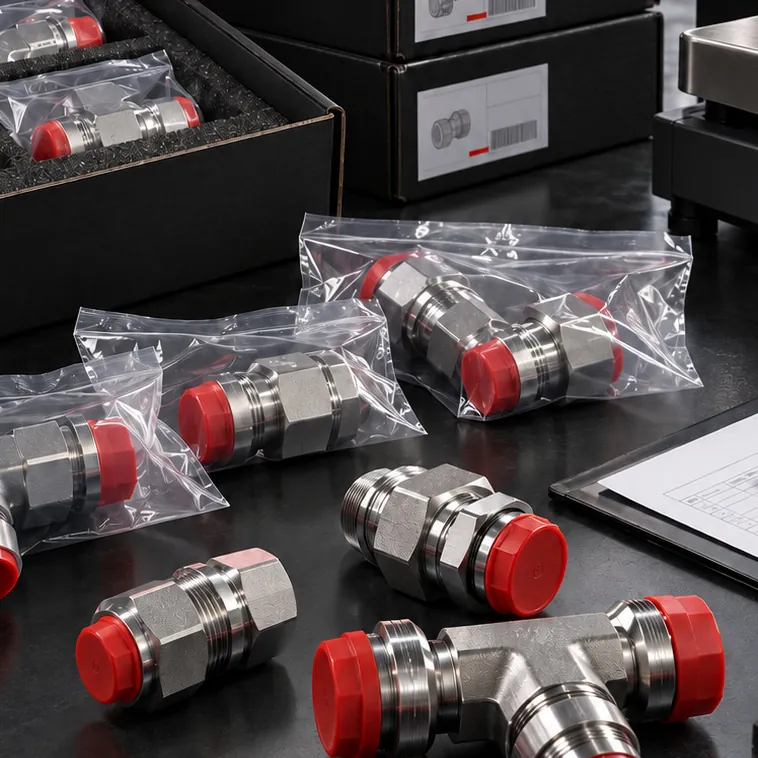
Standard sizes in stock are ready to ship within 1-3 business days on average. Standard production items are scheduled within 5-10 business days on average, hose assemblies crimped to length within 5-15 business days on average, and custom-size and project manufacturing within 10-20 business days on average after technical approval. For a steering or crane fitting whose original part is no longer available, a sample or a dimensioned drawing is sufficient; once the critical diameters, thread standard and sealing type have been confirmed in writing, production begins with first article approval. Parts are shipped with protective caps on threads and ports, packed separately by size and order group.
Applications
Teams in Marine & Shipping that need fittings, hose assemblies and custom parts.
Stainless steel fittings and hose ends for steering, passerelle, swim platform and tender garage hydraulics that look clean even in visible locations.
Standardized adapter, elbow and hose assembly kits for fleet maintenance; the same size on every repeat order.
Tube and hose connections between the steering pump, cylinders and valve blocks; custom transition fittings made to technical drawings.
Cylinder connections, compact elbows and hoses for moving lines on telescopic and rotating passerelles.
SAE flanges and high-pressure hose ends on the pressure and return lines of windlasses, capstans, mooring winches and cargo cranes.
Cylinder lines for hatch covers, ro-ro ramps and bow doors.
Power units, stabilizer and bow thruster circuits, and flanged stainless steel pipelines.
Gallery
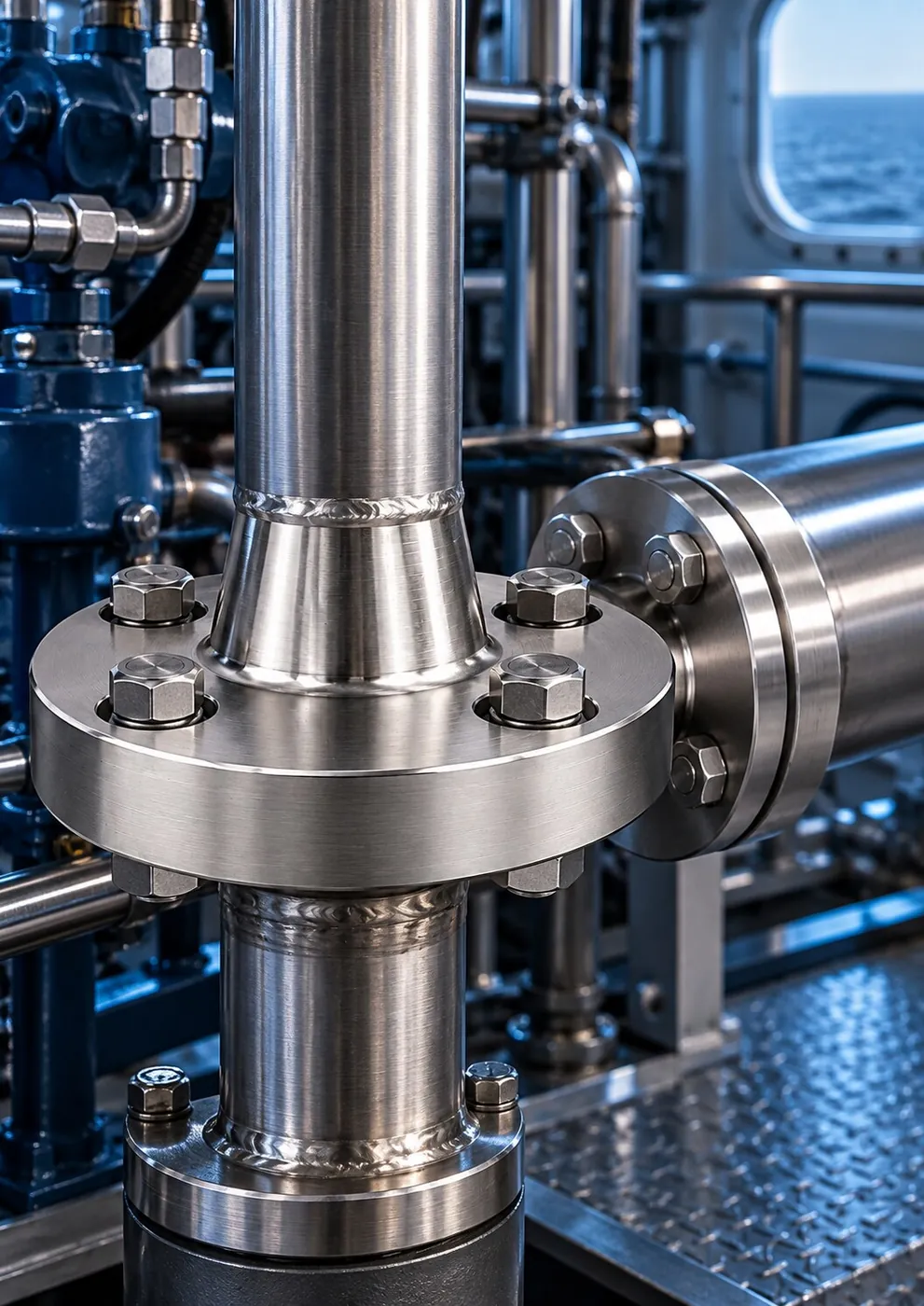
Flanged stainless steel pipeline in a ship's engine room (illustrative image)
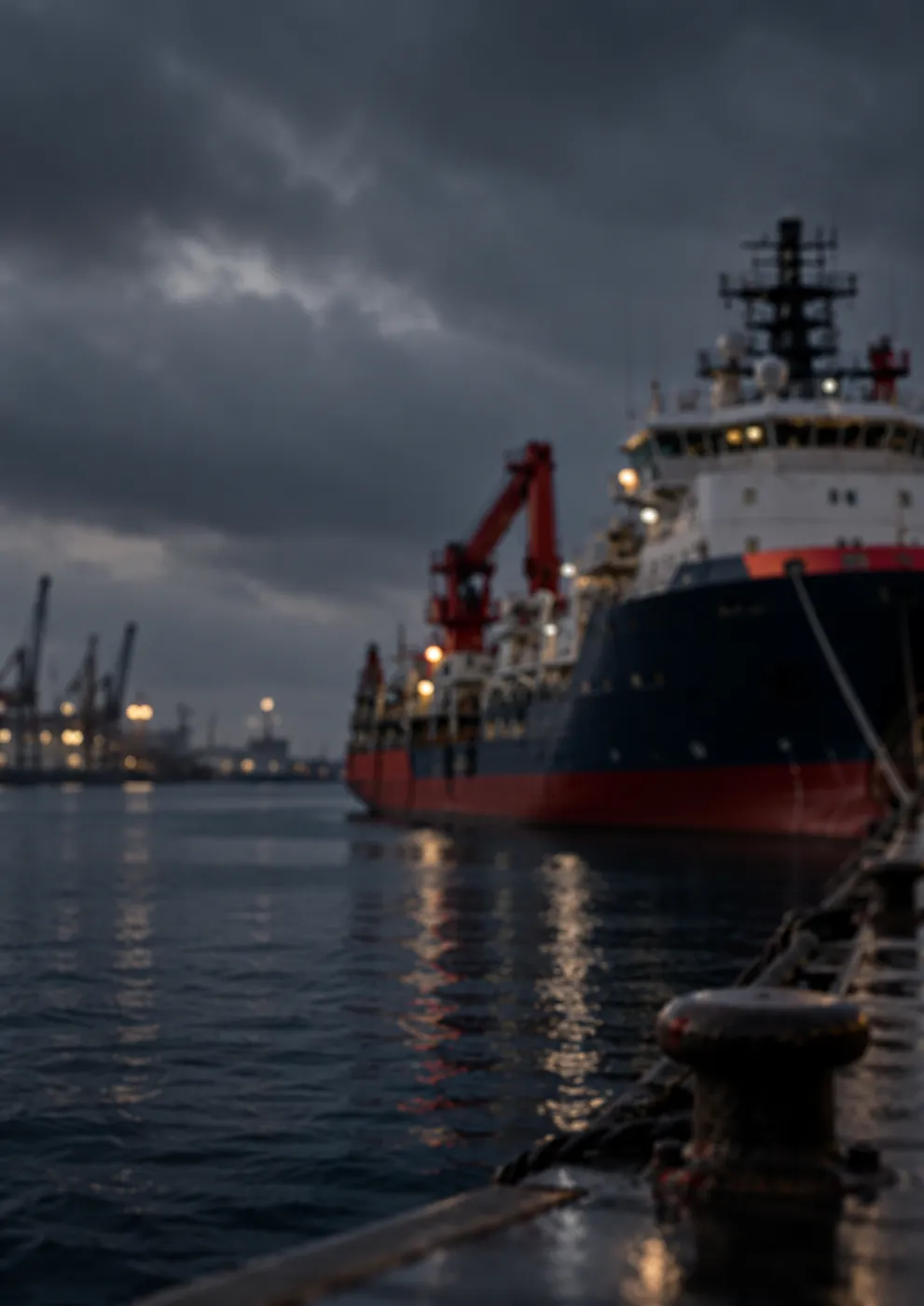 Offshore support vessel in port; an example of a fleet with intensive deck hydraulics (illustrative image)
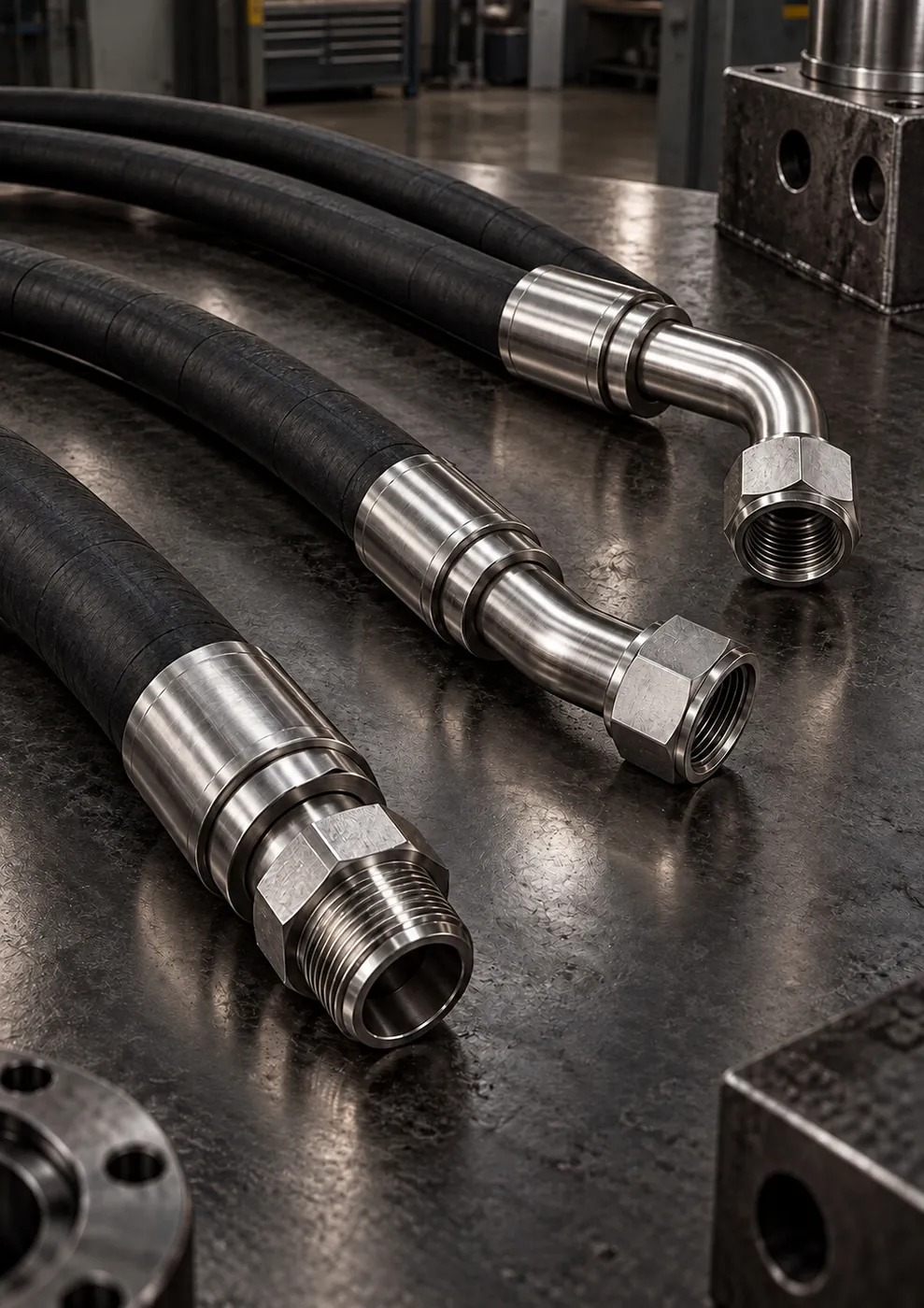 Ready-to-install hose assemblies with stainless steel ends (illustrative image)
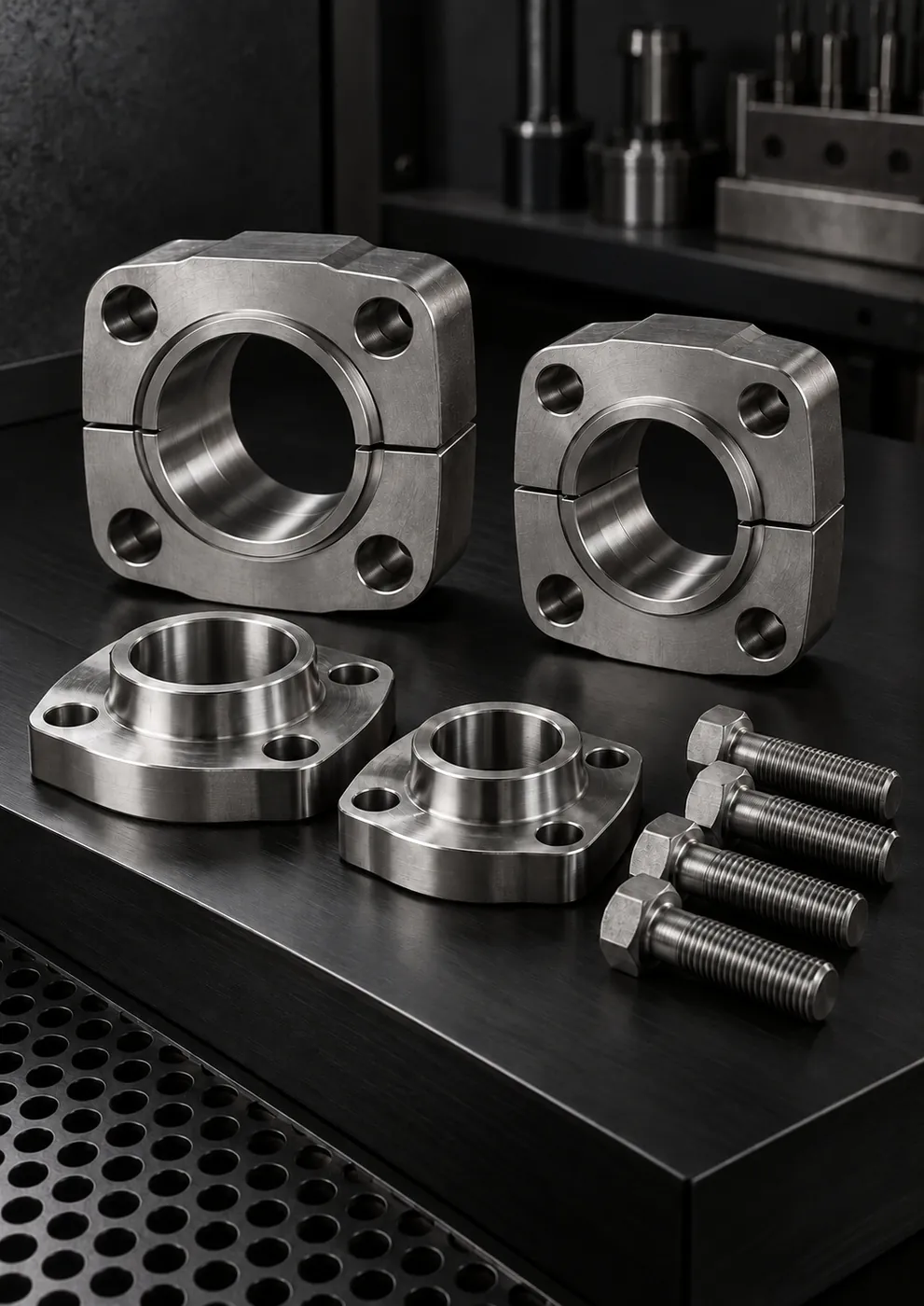 SAE flanges and bolts for main pressure lines (illustrative image)
Knowledge Center
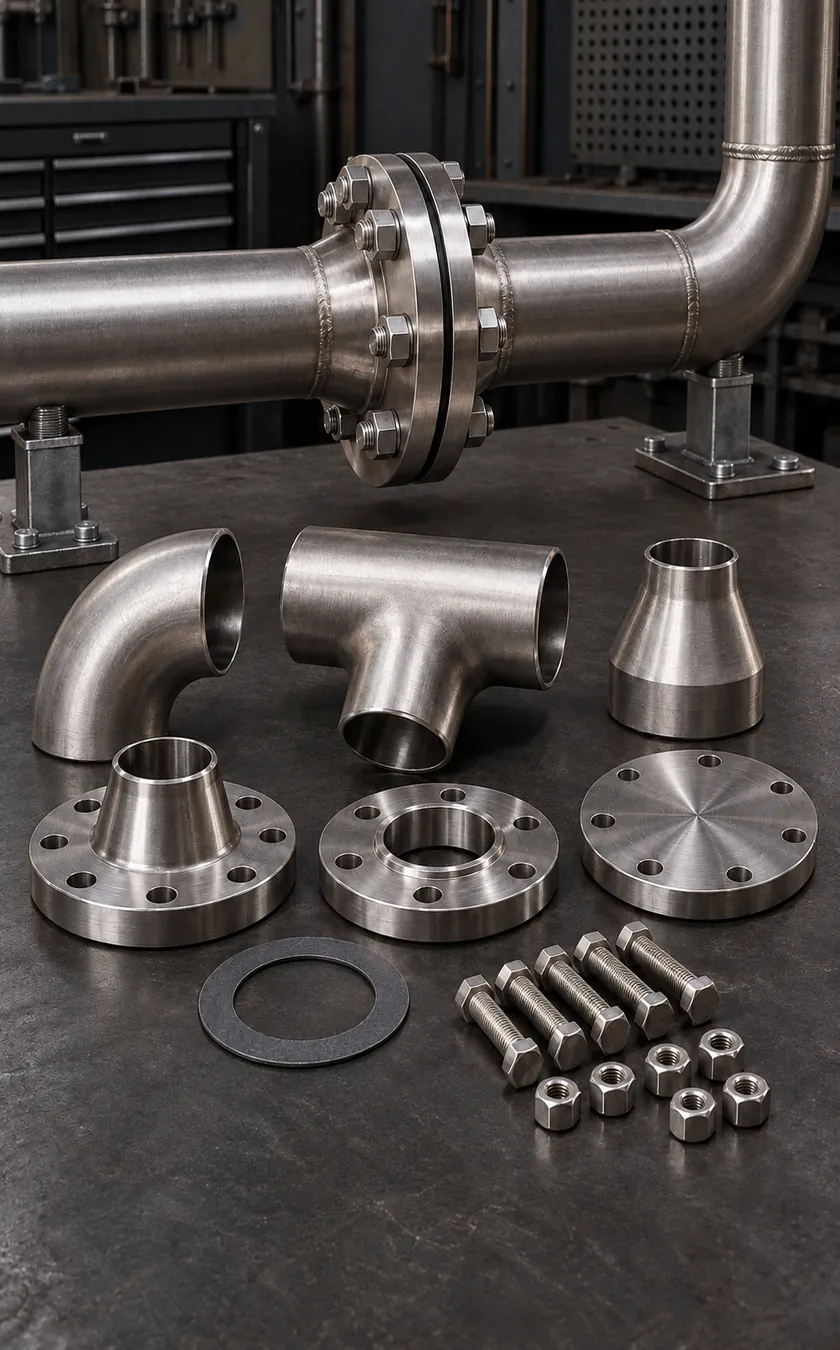
On a stainless steel pipeline, fittings and flanges are selected by matching them to the pipe's DN/NPS size and Schedule wall thickness. Weld neck…
In saltwater environments, the baseline material is AISI 316L; its molybdenum content increases resistance to chloride-induced pitting and crevice…
The right hose assembly is defined by seven pieces of information: inside diameter and length, temperature, application conditions, fluid, working…
Frequently asked questions
If your question isn't answered here, write to us and we'll pin down the size, thread standard and material together.
Send us your questionBoth are molybdenum-alloyed, so both are markedly more resistant than grade 304 in saltwater environments. If the part will be welded (weld nipples, bulkhead fittings, flanges), low-carbon 316L should be preferred. For fittings machined without welding, either grade can be used depending on the application and the project specification.
316/316L withstands the marine atmosphere well, but it is not entirely maintenance-free. Crevice corrosion can occur in stagnant seawater, under seals and in crevices where salt deposits build up; superficial brown discoloration can form on the open deck. Regular freshwater rinsing and an installation that does not let water collect greatly reduce this risk.
Yes. The thread standard, critical diameters and sealing type are determined from a sample or dimensioned drawing and confirmed in writing. Production begins after first article approval; custom-size and project manufacturing is scheduled within 10-20 business days on average after technical approval.
Outside diameter alone is not enough, because some sizes in the two standards are very close to each other. Measure the pitch with a thread pitch gauge, and check the thread angle (BSP 55°, NPT 60°) and whether the thread is parallel or tapered. If you are unsure, send photos and measurements via WhatsApp and we will make the match together.
Standard sizes in stock are ready to ship within 1-3 business days on average; items requiring standard production are scheduled within 5-10 business days on average, and hose assemblies made up to length within 5-15 business days on average. If you send us sizes and quantities by phone or WhatsApp, we will quickly confirm stock availability and let you know separately about the items that require manufacturing.
After machining, sharp burrs are removed, thread roots and transition areas are inspected, and the part is checked for dents, scratches and deformation. During shipping, threads and sealing surfaces are protected with protective caps. If you have a specific surface finish requirement, state it at the quotation stage so that we can clarify upfront whether it can be met.
Quote
Share the port standard, line size and working pressure; we will separate the items available from stock from those that need manufacturing and get back to you with a lead time plan.
Marine & Shipping request form
Other sectors