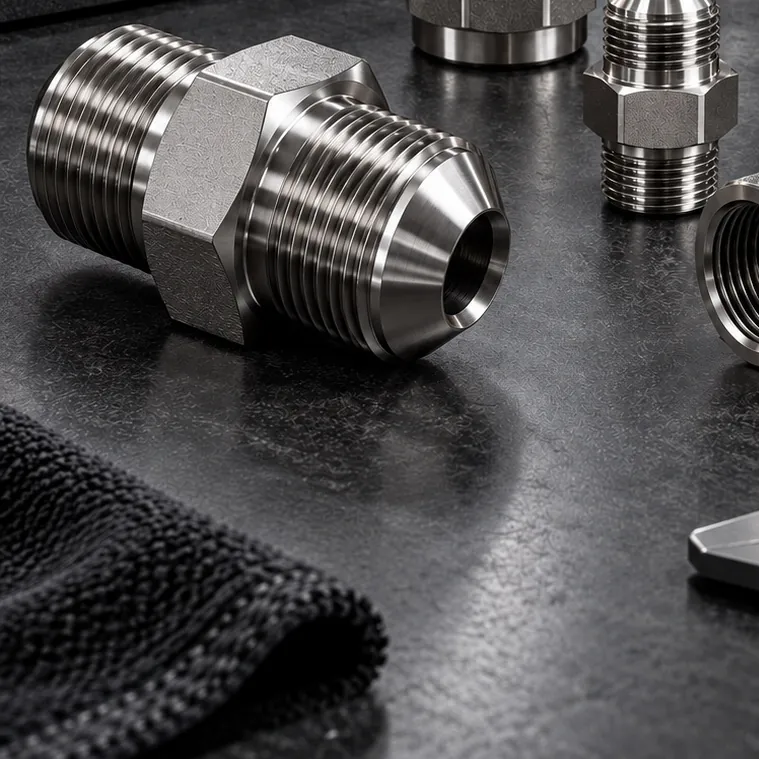
 JIC 37° Fittings & Adapters
JIC Male x JIC Male Adapter
Details & quote
Hose assembly · Crimping · Stainless steel ends
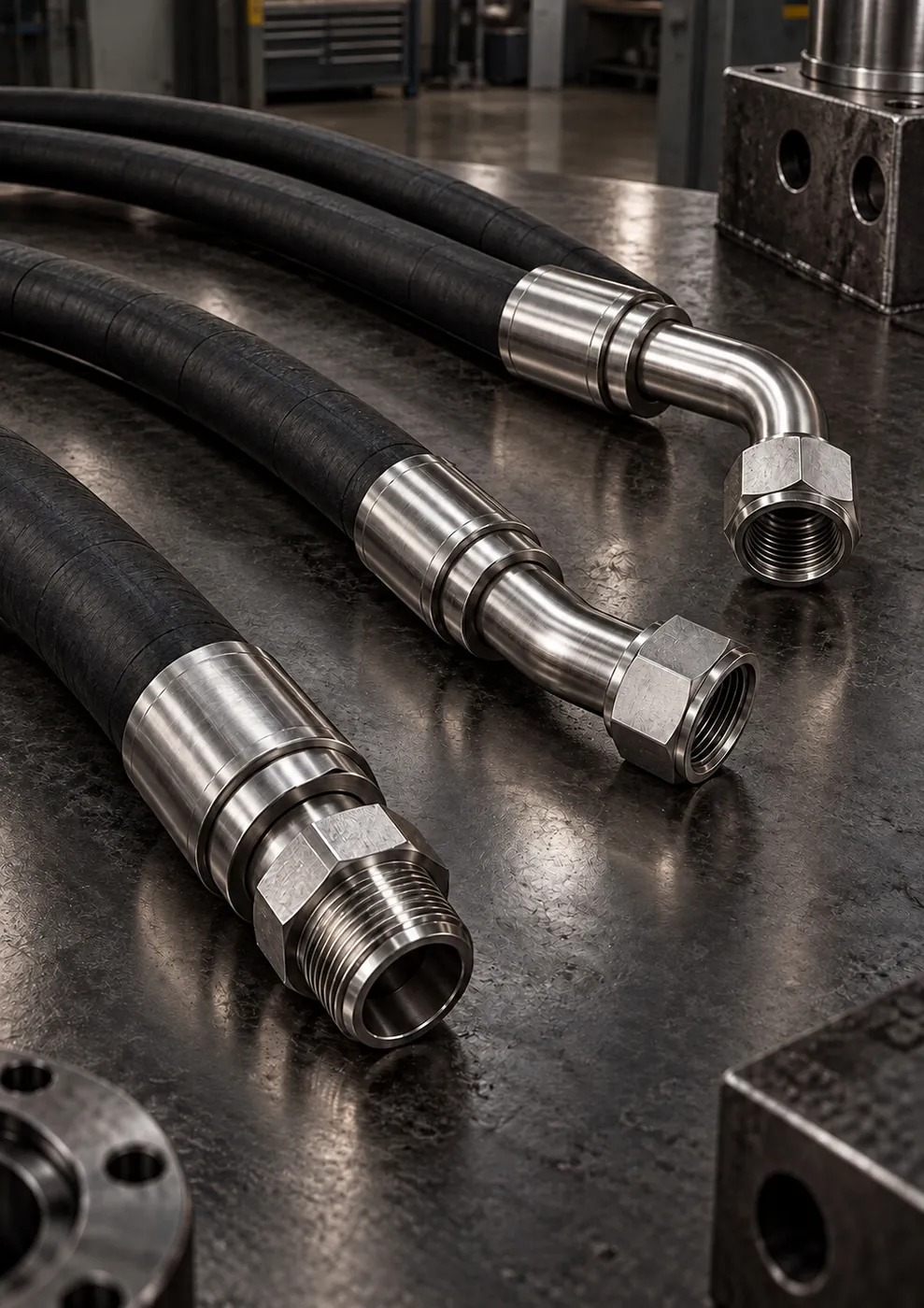
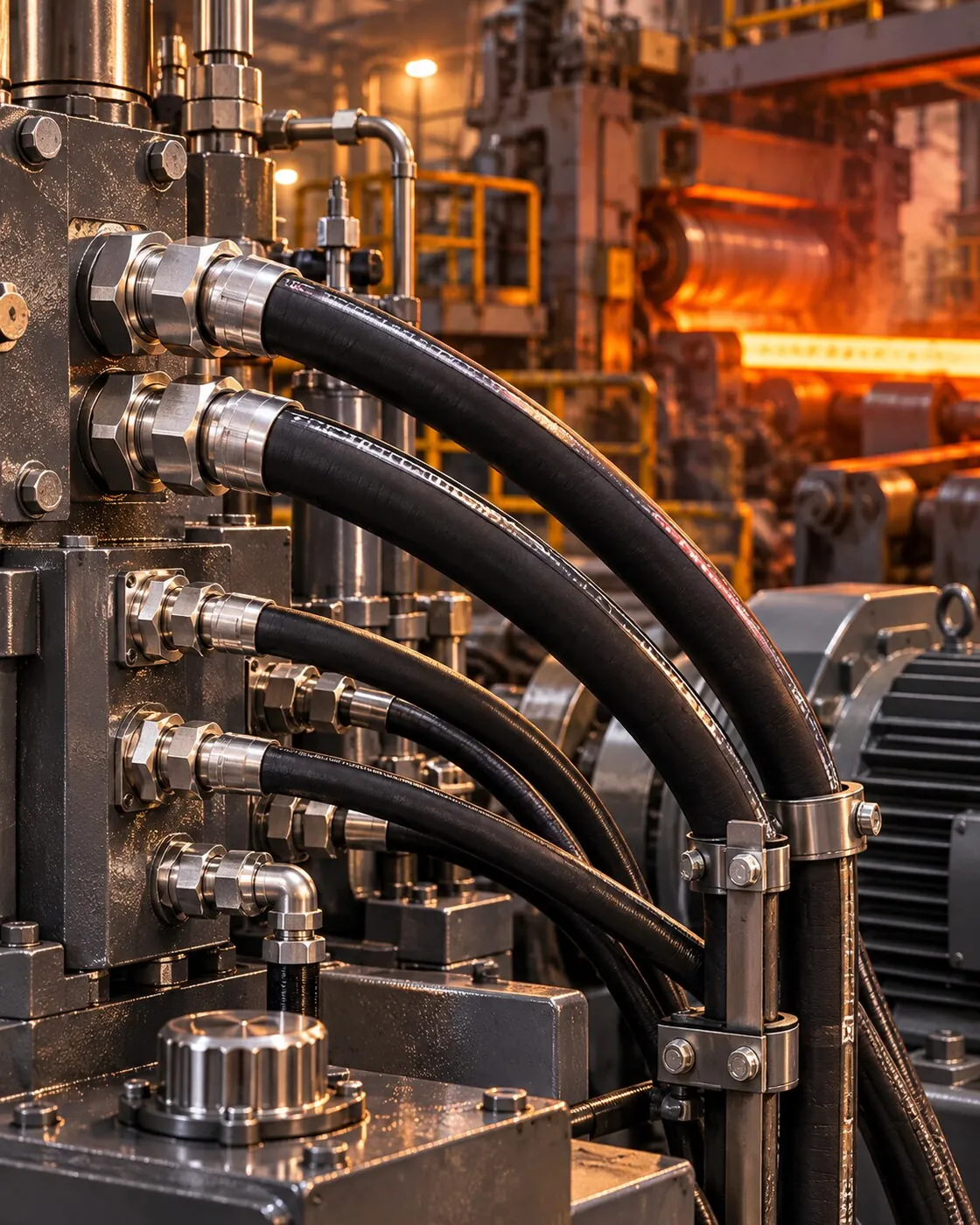
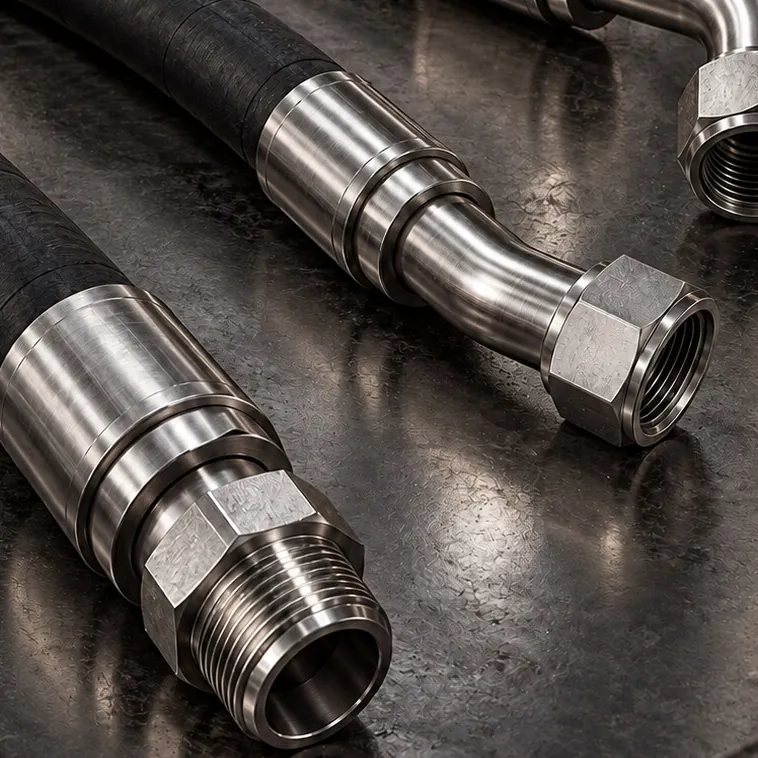
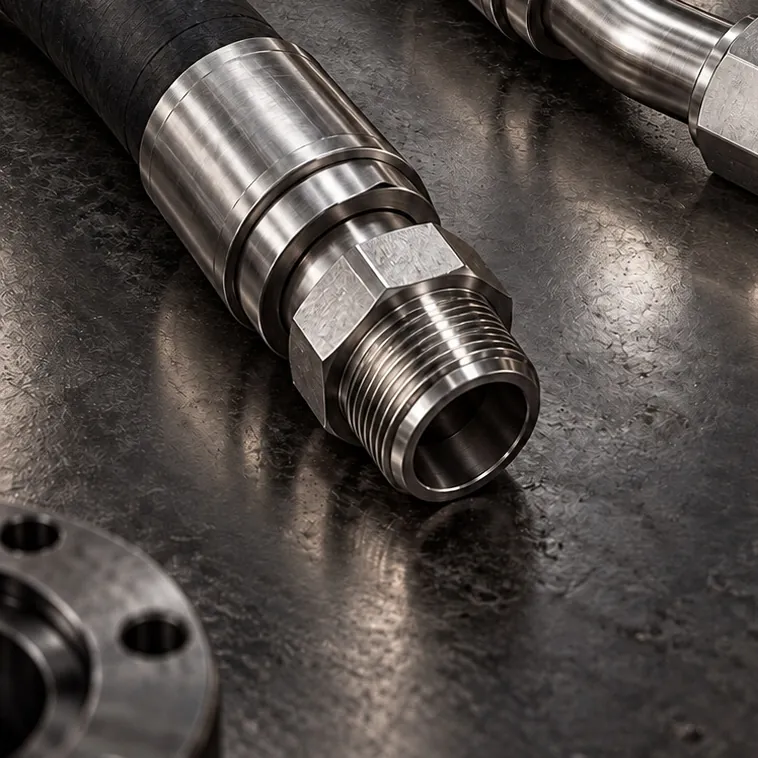
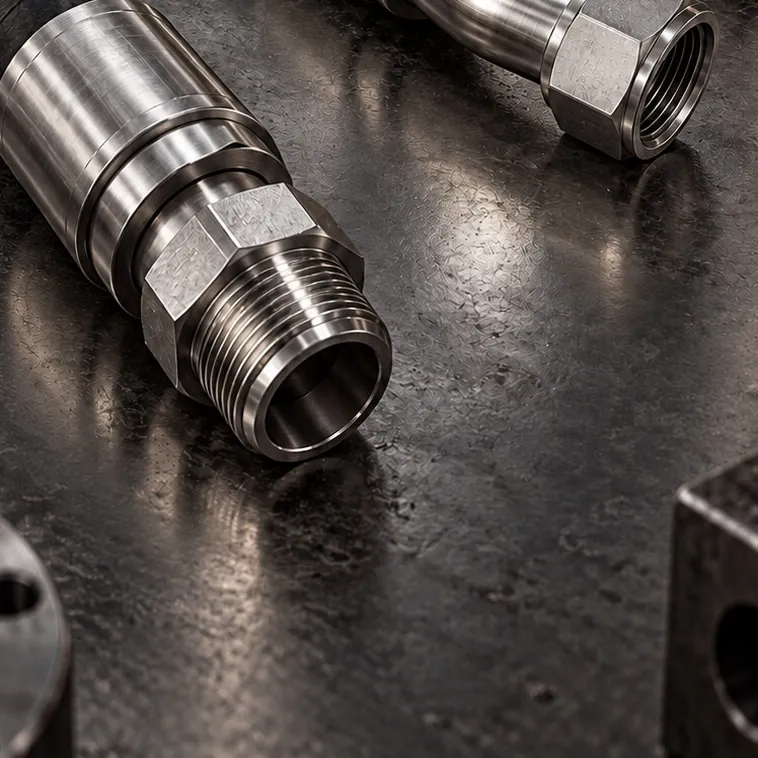
Hydraulic hose assembly and crimping: hose assemblies with straight, 45° and 90° stainless steel ends in BSP, JIC, NPT, metric and SAE flange (ORFS on request), delivered ready to install with controlled crimping and bend radius and twist checks.
Quick answer
GÜNEYSS crimps hydraulic hose with the selected stainless steel ends and delivers it as a ready-to-install hose assembly. End type (BSP, JIC/UNF, NPT, metric or SAE flange; ORFS on request), end angle, overall length and, on assemblies with elbows at both ends, the orientation angle between the ends are confirmed at order; every assembly is tagged. Made-up hose assemblies are typically prepared within 5-15 business days.
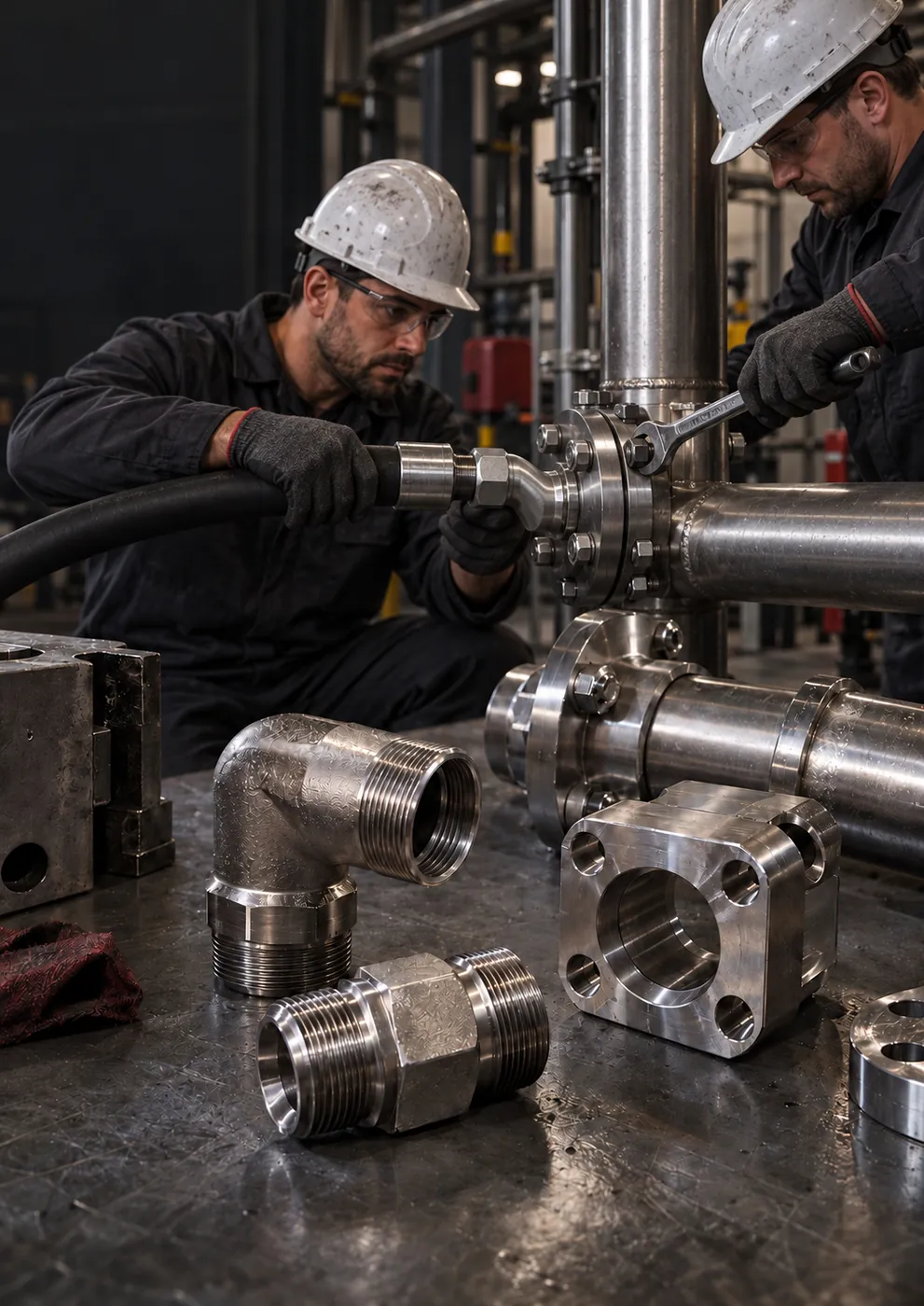
This is the job known in the field as "getting a hydraulic hose made", "hose crimping" or "hose swaging": the hose is cut to length, its stainless steel ends are crimped, and the assembly is prepared in the workshop and shipped ready to install. A hose assembly consists of the hose, two end fittings and the crimp that joins them. Most hoses that cause problems in the field do not fail because of the hose itself, but because of the wrong end standard, an end that does not match the hose, a faulty crimp, or the hose being kinked or twisted during installation. That is why we build each hose assembly not just from its diameter and length, but together with the two ports it connects and the route it will follow.
Overall length is measured by the widely accepted method, from the sealing surface of one end to the sealing surface of the other. On female swivel nut ends, the reference is the cone or O-ring seat inside the nut, not the nut face; on elbow ends, the measurement is taken to the centerline of the sealing surface. The measuring points are confirmed with you at order. On assemblies with elbows at both ends, if the orientation angle between the ends is not specified, the hose ends up twisted when connected on the machine. If the port standard is unclear, it is identified with a thread pitch gauge and diameter measurement.
The hose is cut square and clean; chips and dust from cutting are cleaned out of the hose bore. Contamination is one of the leading causes of valve and pump failures in hydraulic systems; a clean bore ensures the assembly does not carry dirt into the system at first start-up.
The end must be suited to the hose type being used. The crimp diameter is set to the value specified by the hose and end manufacturer; after crimping, the diameter is measured and the end is checked for full seating on the hose. Under-crimping brings the risk of leaks and the end blowing off the hose, while over-crimping damages the reinforcement layers.
Pressure and leak-tightness verification is carried out depending on the application. Every assembly is tagged with its end type, length and order information; the ends are closed with protective caps and the assembly is prepared for shipment.
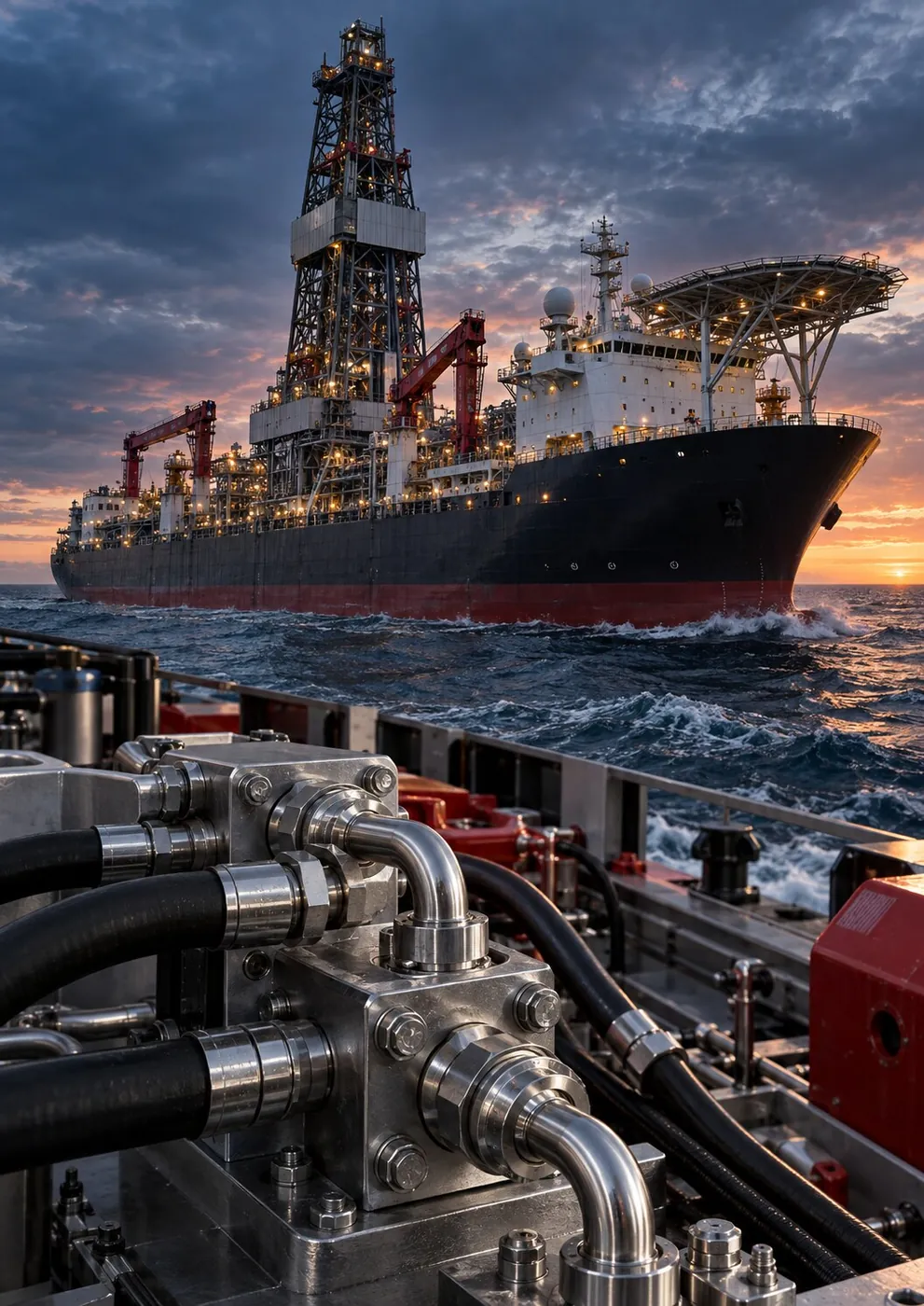
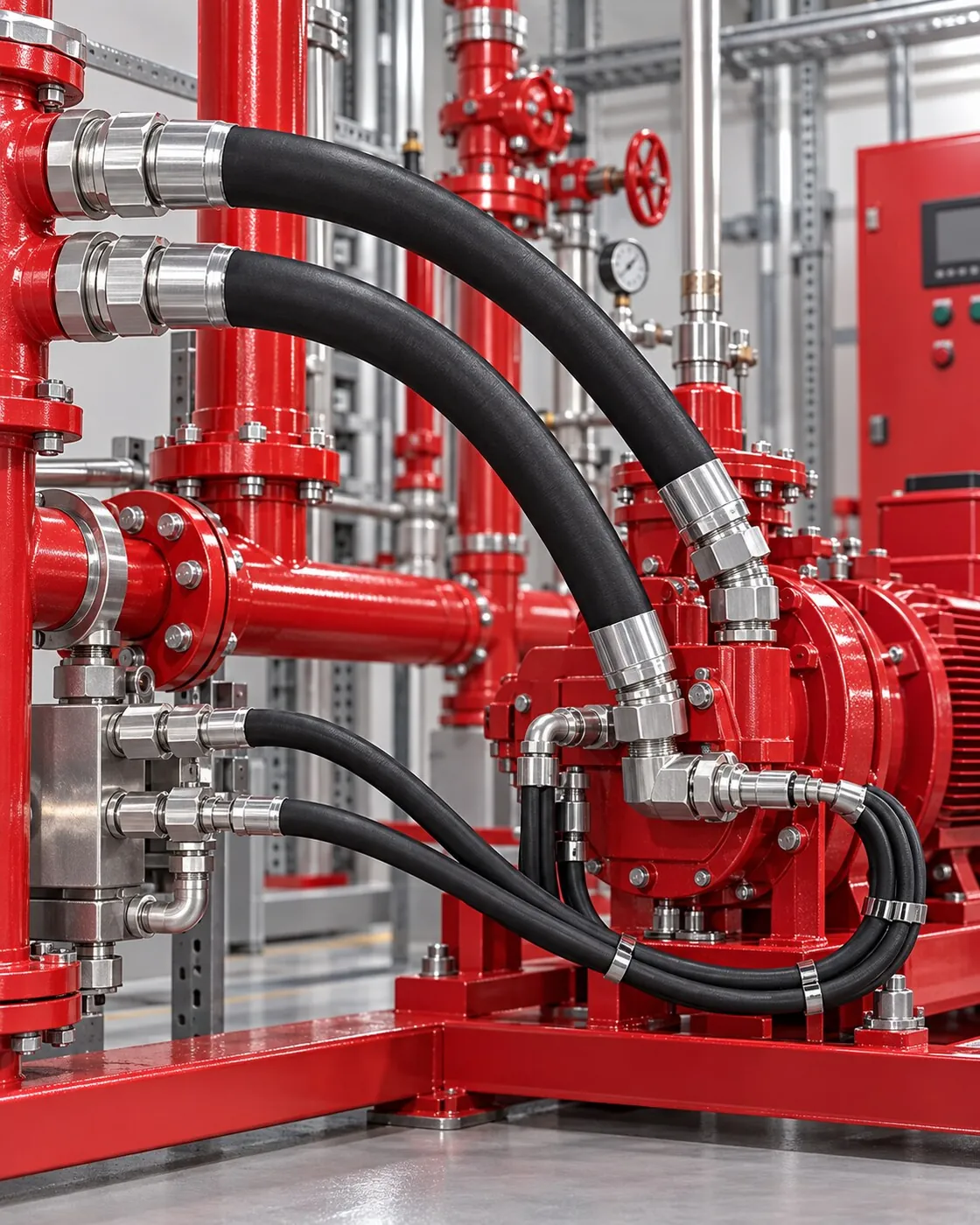
Deck machinery, crane and steering hydraulics on ships; pipe handling and hoisting equipment on drillships; press and mill roll lines in rolling mills; corrugator and actuator lines in paper and board mills; flexible connections on fire pump sets; mobile hydraulics in the defense industry; ground support and test equipment in aviation; transfer lines in chemical and food plants.
Made-up hose assemblies are typically prepared within 5-15 business days; the time varies with end type, quantity and hose stock availability. Stainless steel hose ends from stock are typically ready to ship within 1-3 business days. For plants with a planned maintenance shutdown, if the list of hoses to be replaced is shared in advance, the assemblies can be prepared to match the shutdown date.
Process
From request to delivery in 5 steps
Hose diameter, working pressure, fluid, temperature and the port standard at both ends are collected.
End type, end angles, overall length and elbow orientation angle are finalized in writing.
The hose is cut square, and cutting chips and dust are cleaned from the bore.
Ends are crimped to the crimp diameter suited to the hose-end combination and measured.
Leak-tightness is verified depending on the application, the assembly is tagged and the ends are capped.
Sectors
On the sector page, you'll find this service's field-specific applications, recommended products and frequently asked questions.
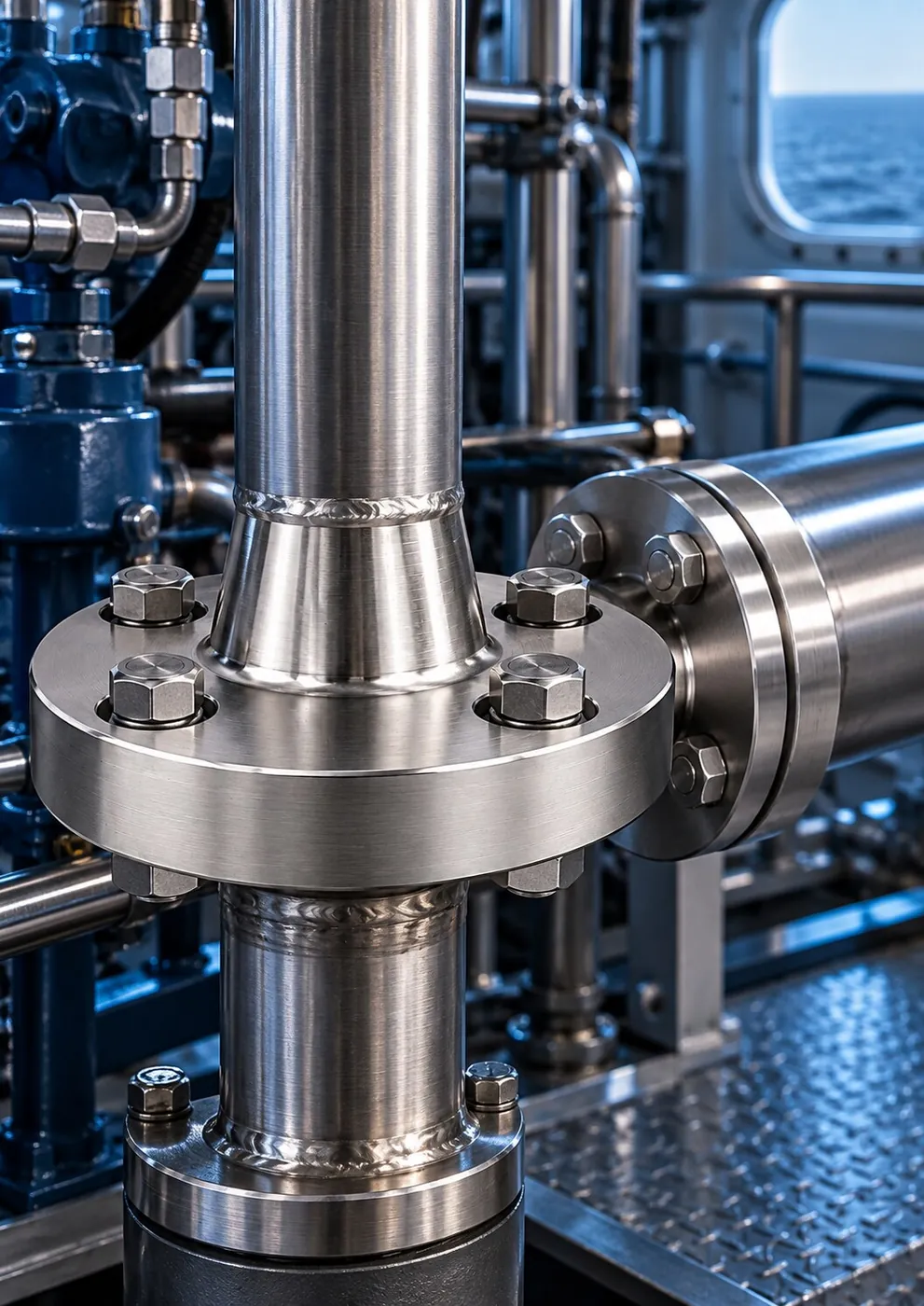
AISI 316L fittings, hose assemblies, SAE flanges and valves built to withstand salt spray and vibration on deck cranes, windlasses, steering gear, passerelles and engine room lines.
Stainless steel pipe, flanges, fittings and hose assemblies, from newbuild piping circuits to drydock overhauls; fast spares from stock for ship crane service teams.
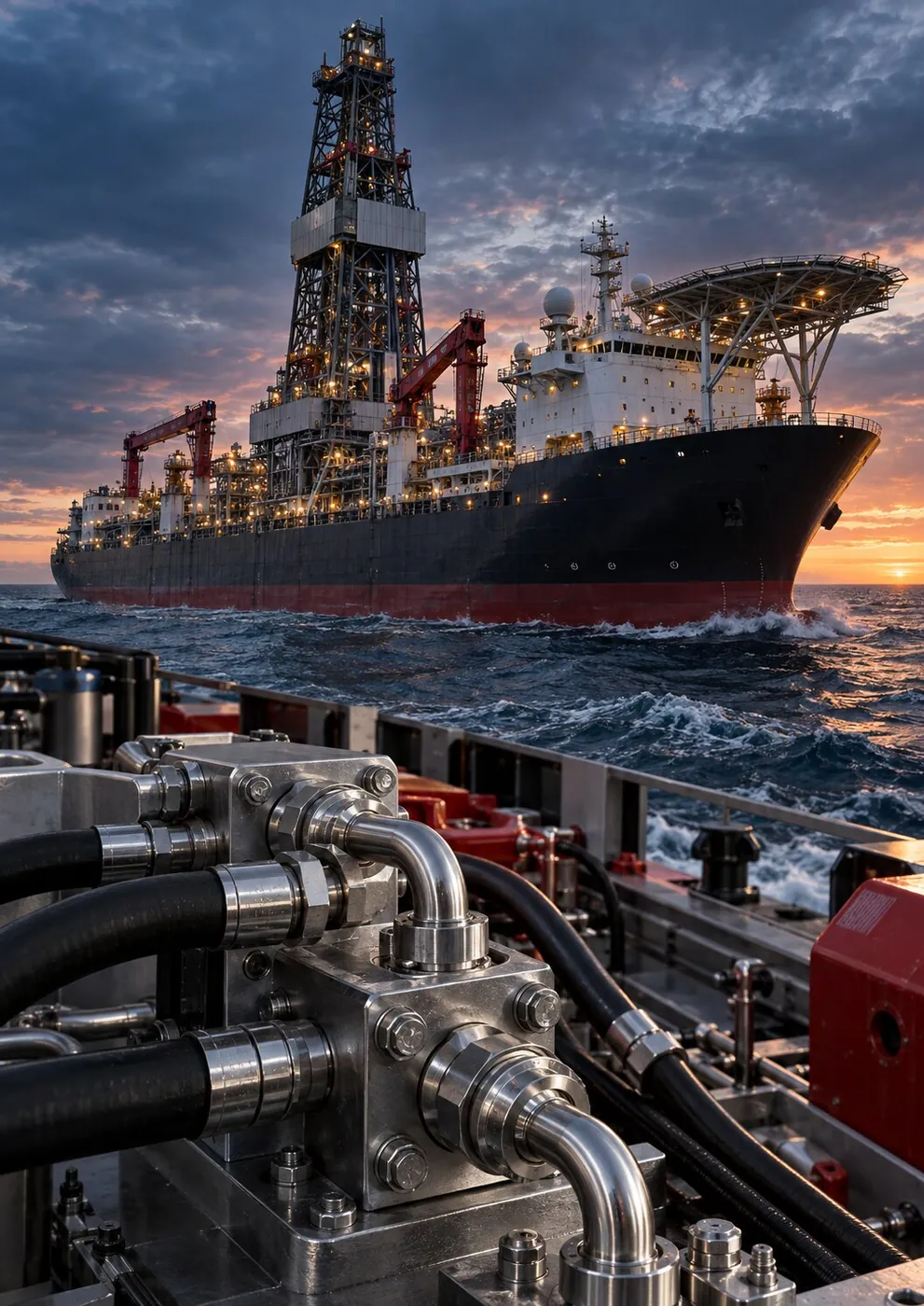
AISI 316L hose ends, SAE flanges, adapters and valves for crane, pipe handling, deck machinery and power unit lines on drillships and platforms.
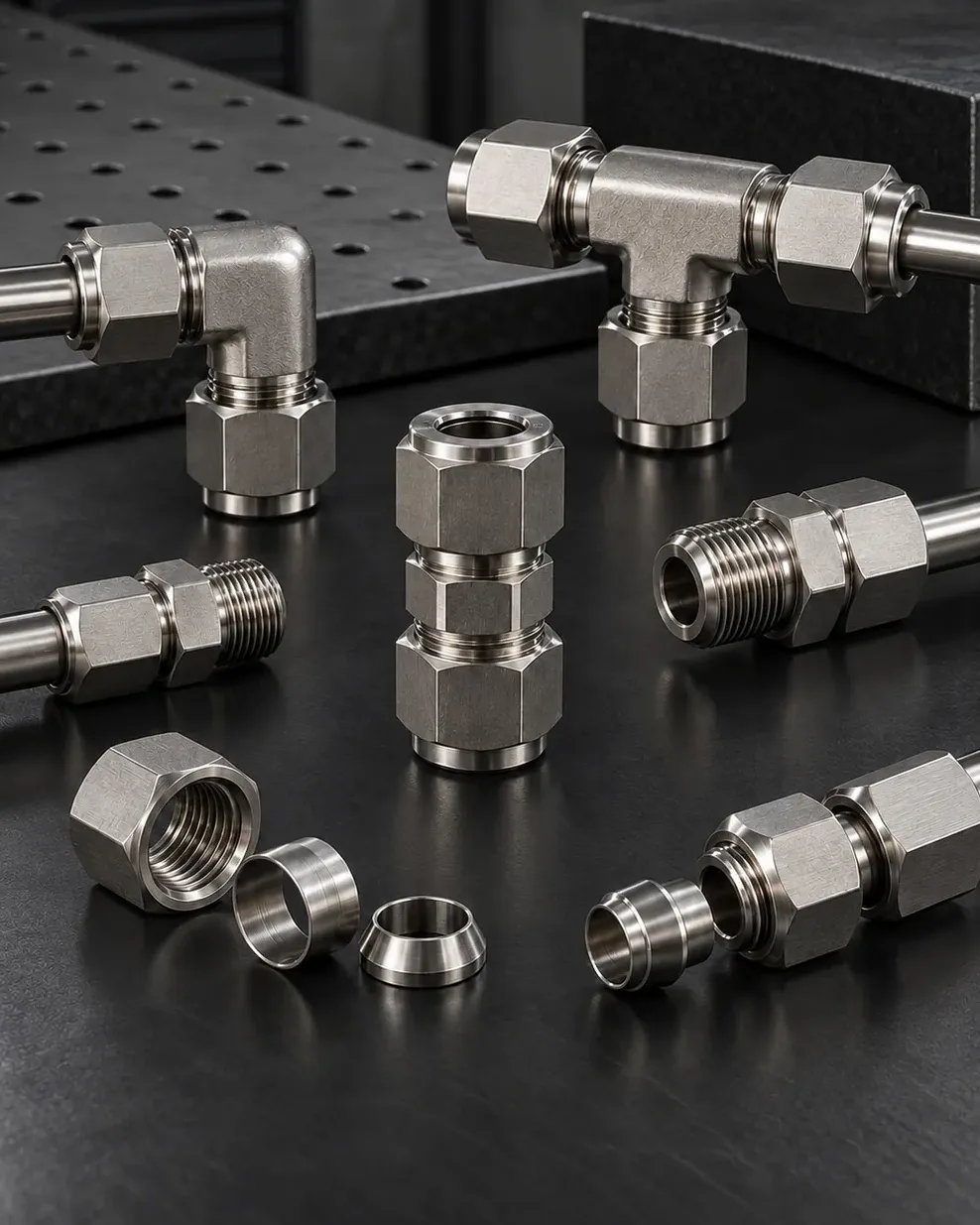
316L twin-ferrule fittings, needle valves, check valves and tubing for wellhead control panels, chemical injection, refinery instrument and sampling lines, and pipeline stations.
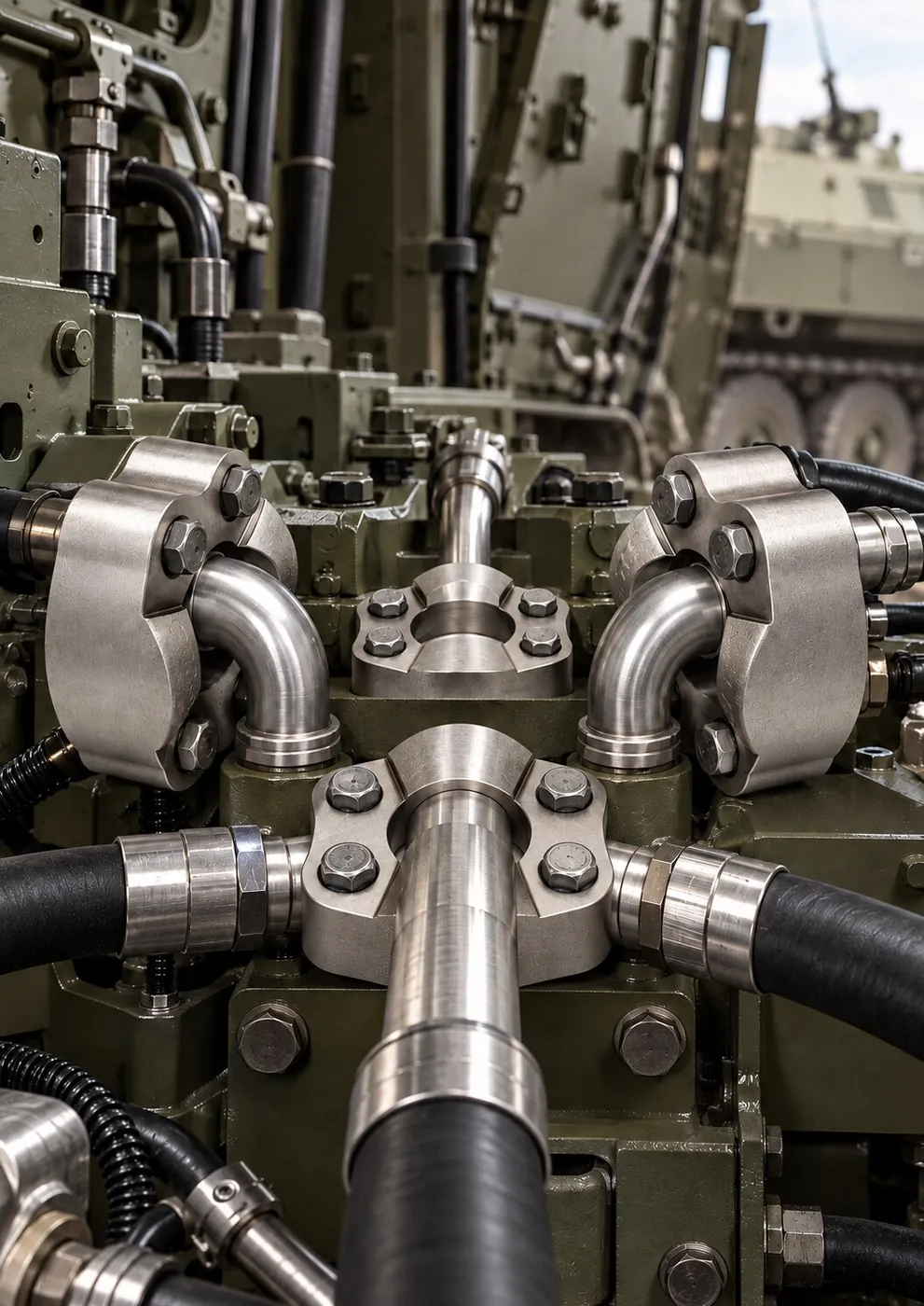
SAE flanges, adapters, elbows and hose fittings CNC-machined after technical drawing approval for mobile hydraulic systems, maintenance benches and compact power units.
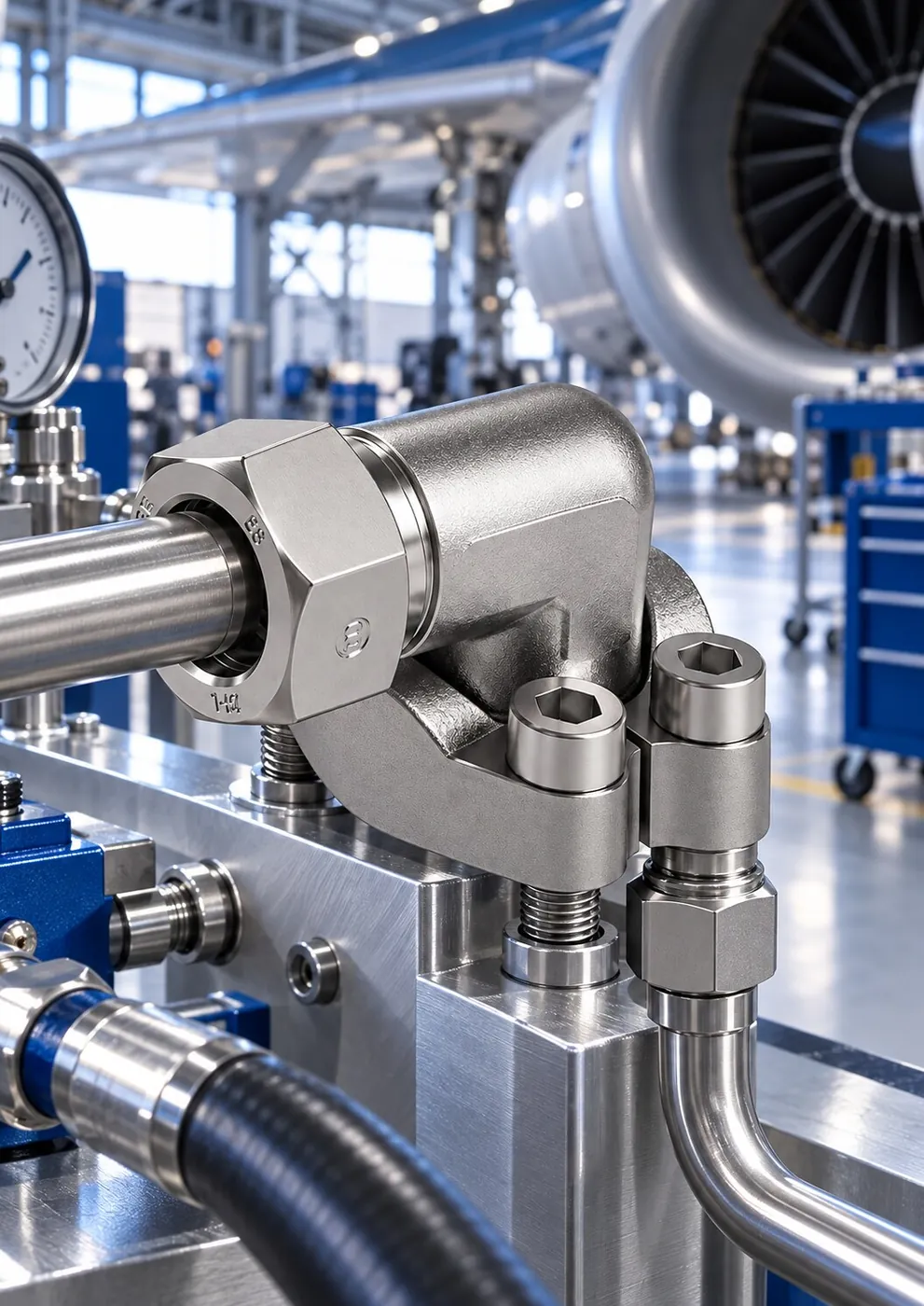
Compact AISI 316/316L fittings with clean threads and sealing surfaces for ground support equipment, hydraulic test benches and maintenance workshops.
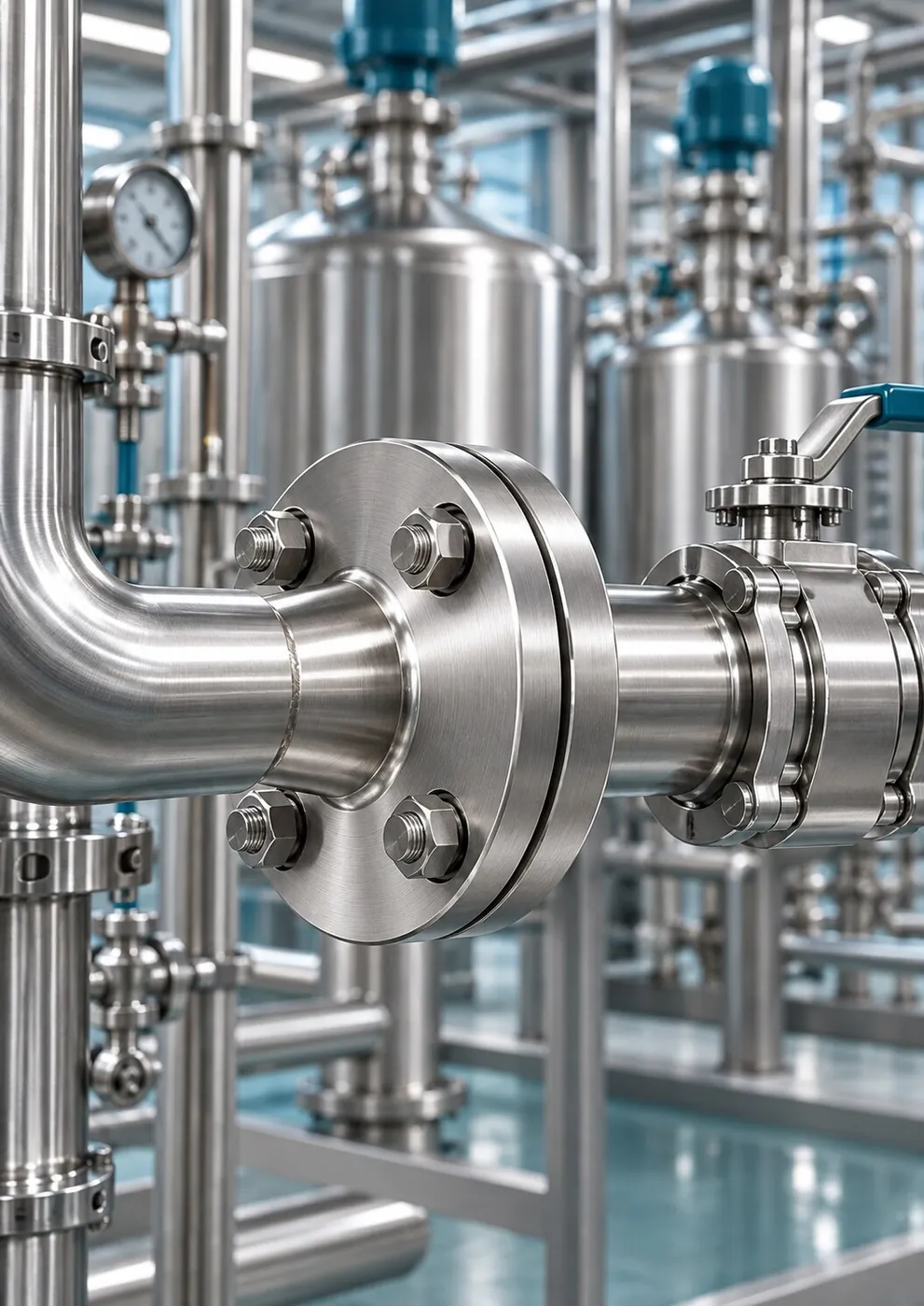
Stainless steel fittings, nipples, valves, flanges and hose fittings for chemical transfer and process lines, selected by weighing fluid compatibility, corrosion resistance, temperature and pressure together.
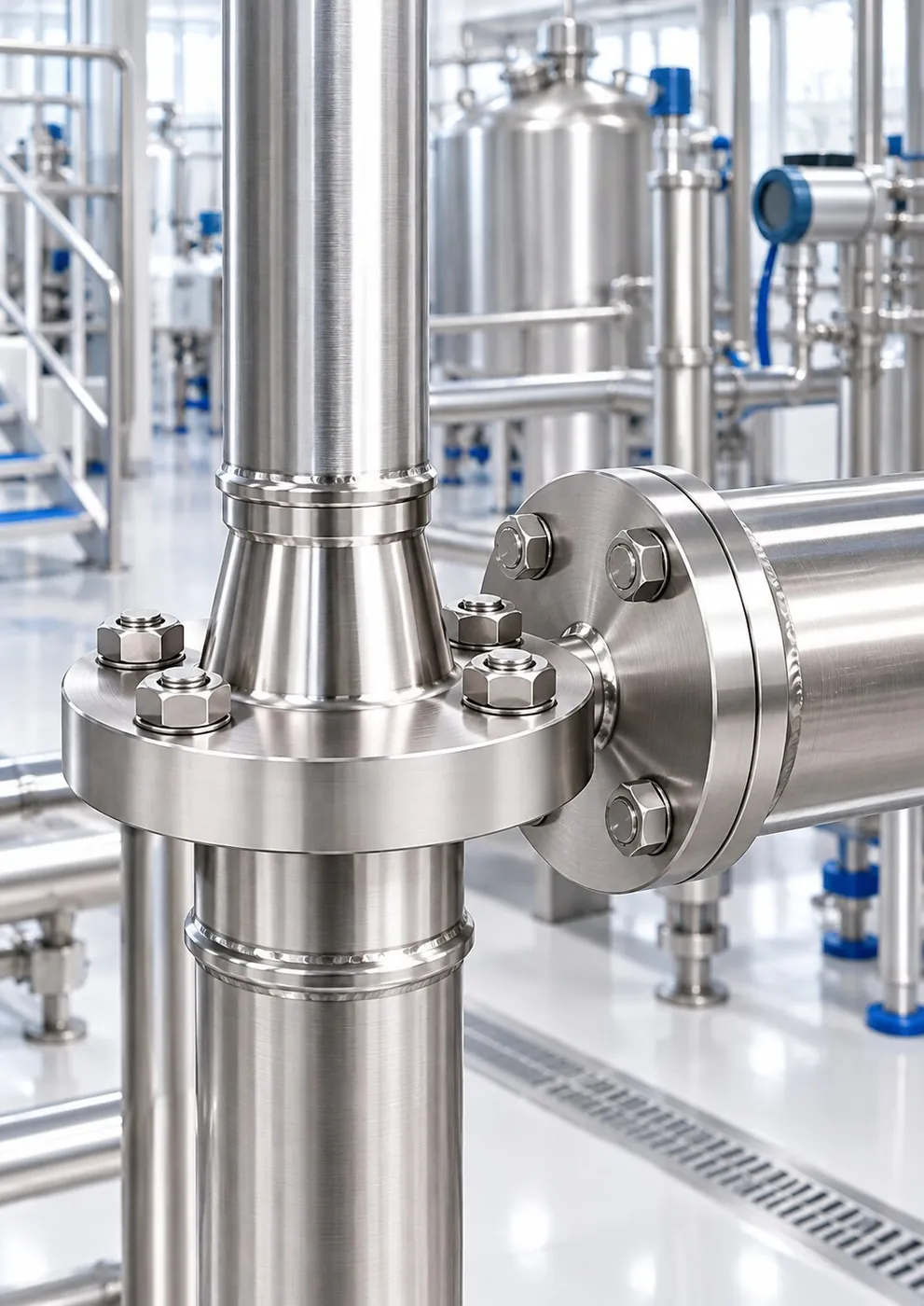
AISI 316/316L fittings, nipples, valves, flanges and hose assemblies for food and beverage lines that call for cleanable surfaces, corrosion resistance and maintenance access.
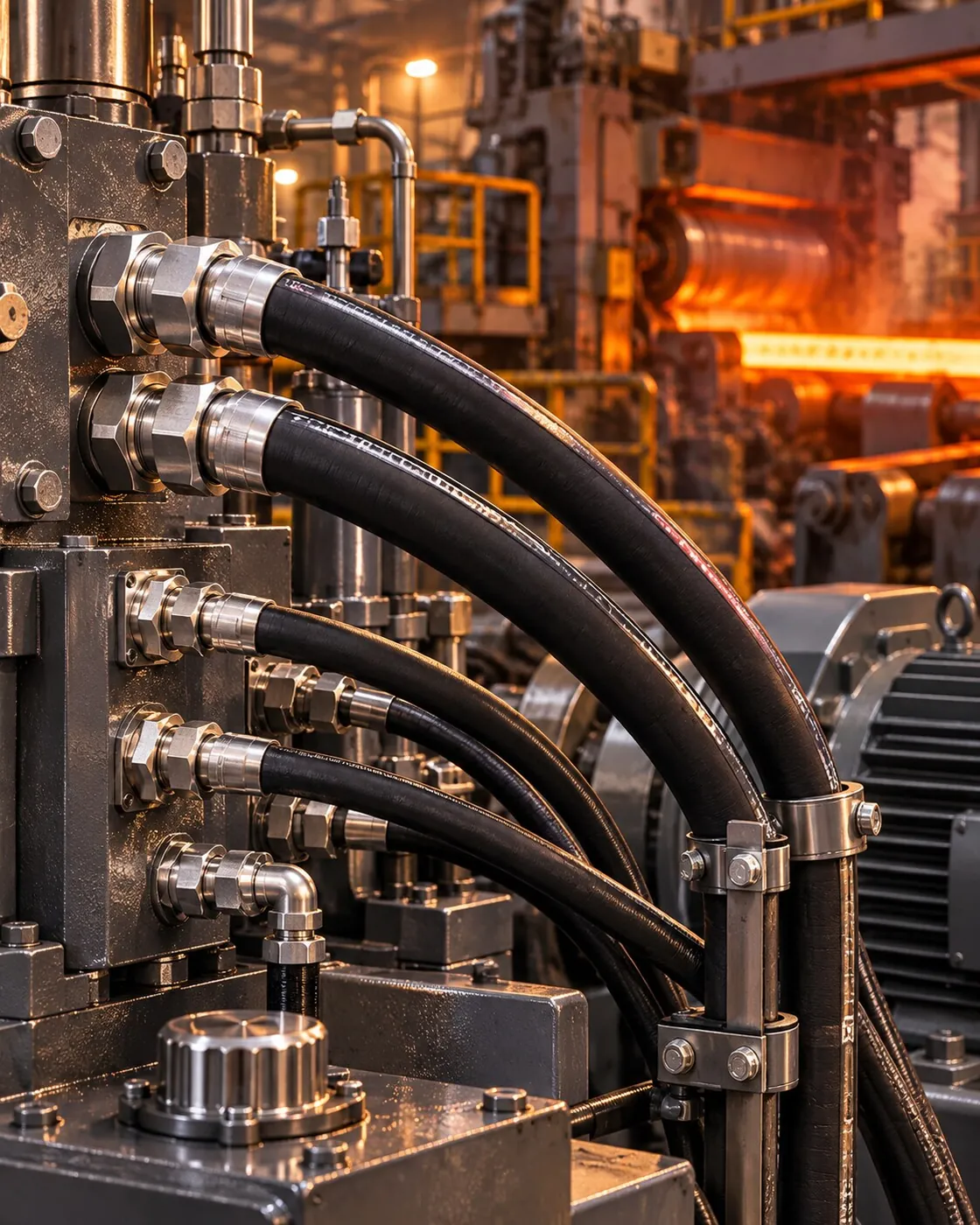
High-pressure hose ends, SAE flanges and adapters built for the high cycling, heat and vibration of presses, mill rolls and hydraulic power units; supplied from stock for emergency maintenance.
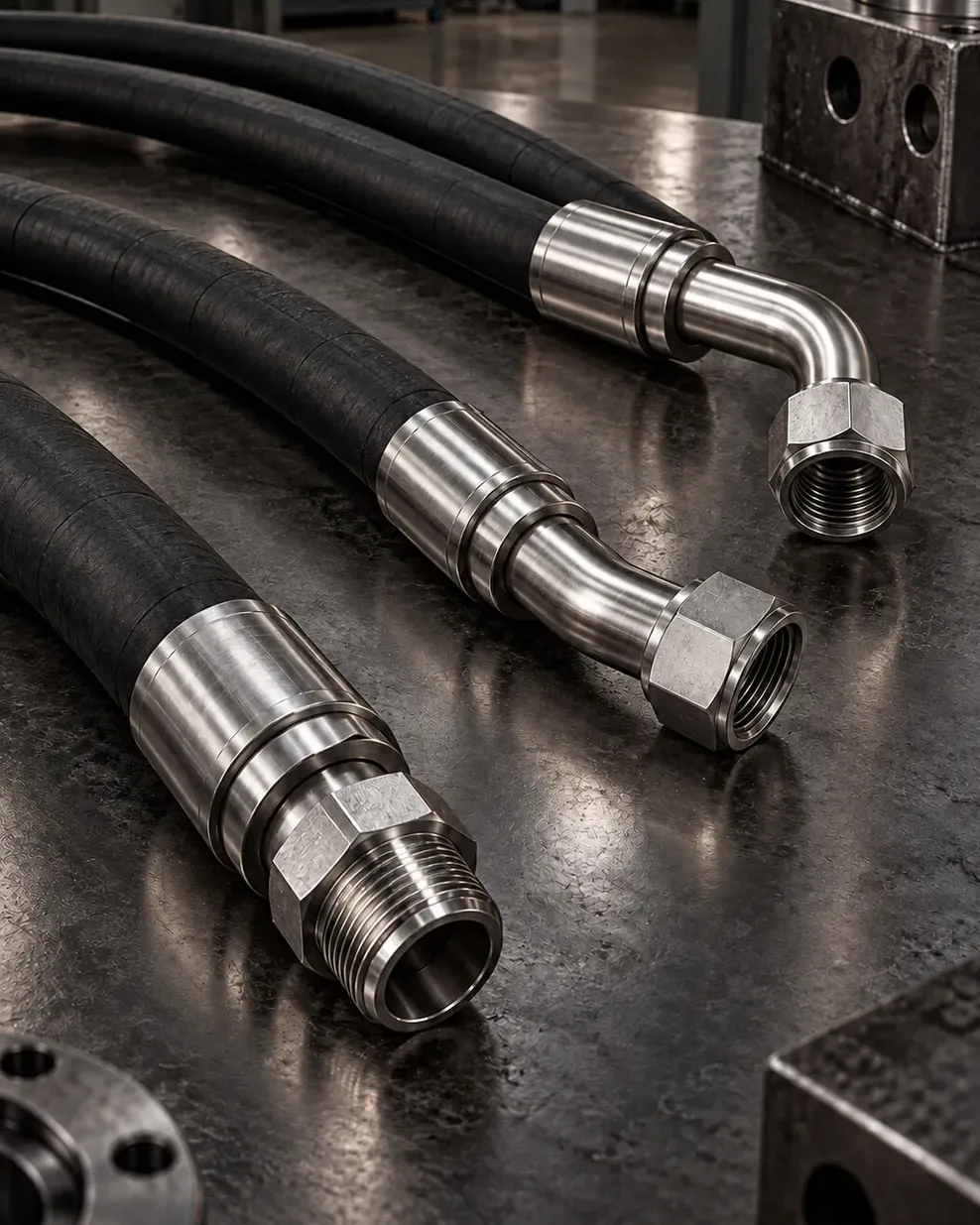
AISI 316L hose ends, SAE flanges, adapters and valves selected for mine water, vibration and abrasion on underground and open-pit machinery, crushing and screening, flotation, leaching and drainage lines.
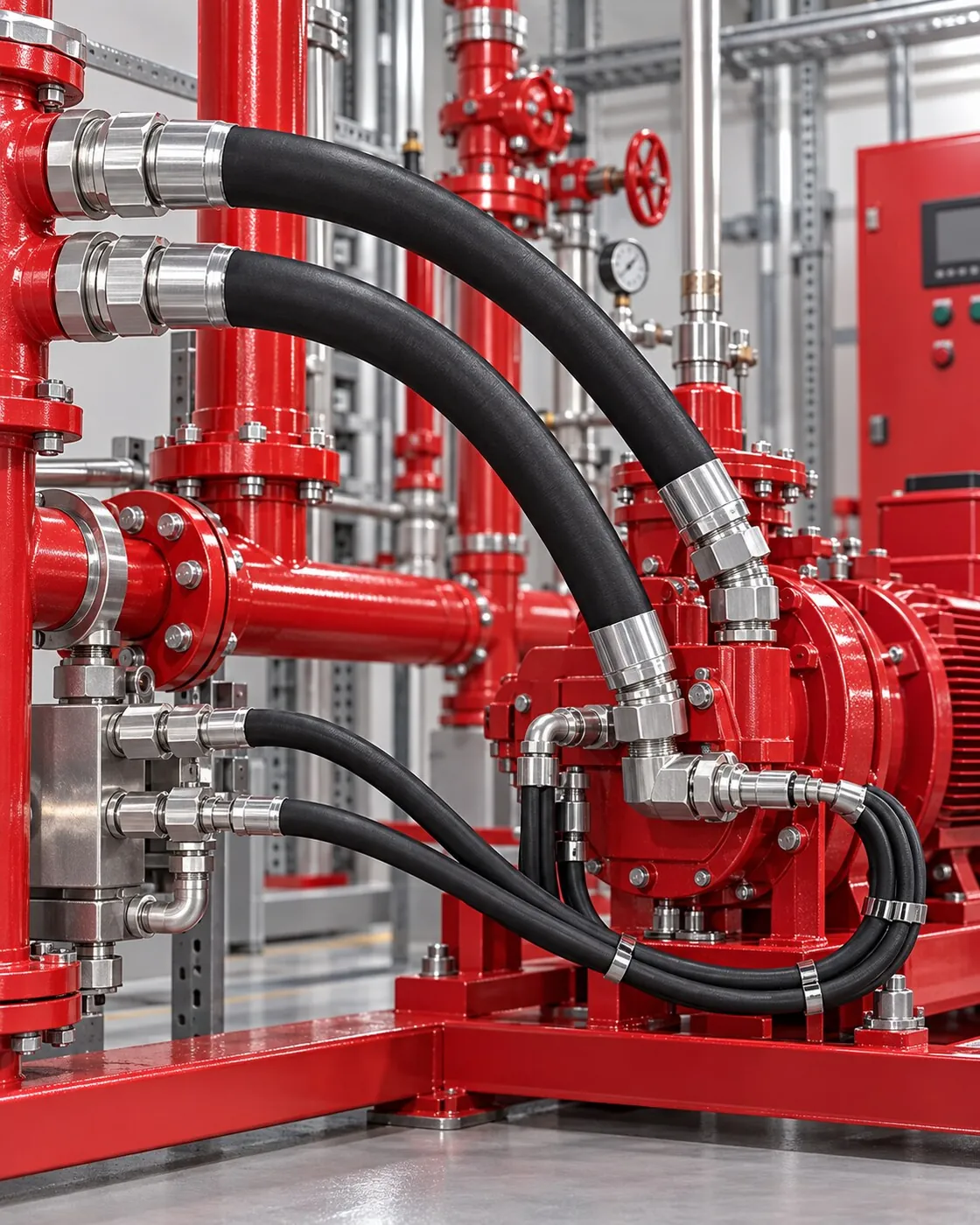
Neatly laid out, leak-tight stainless steel nipples, fittings, hose assemblies and flange connections that make servicing easier on fire pump sets, control skids and pressurized auxiliary lines.
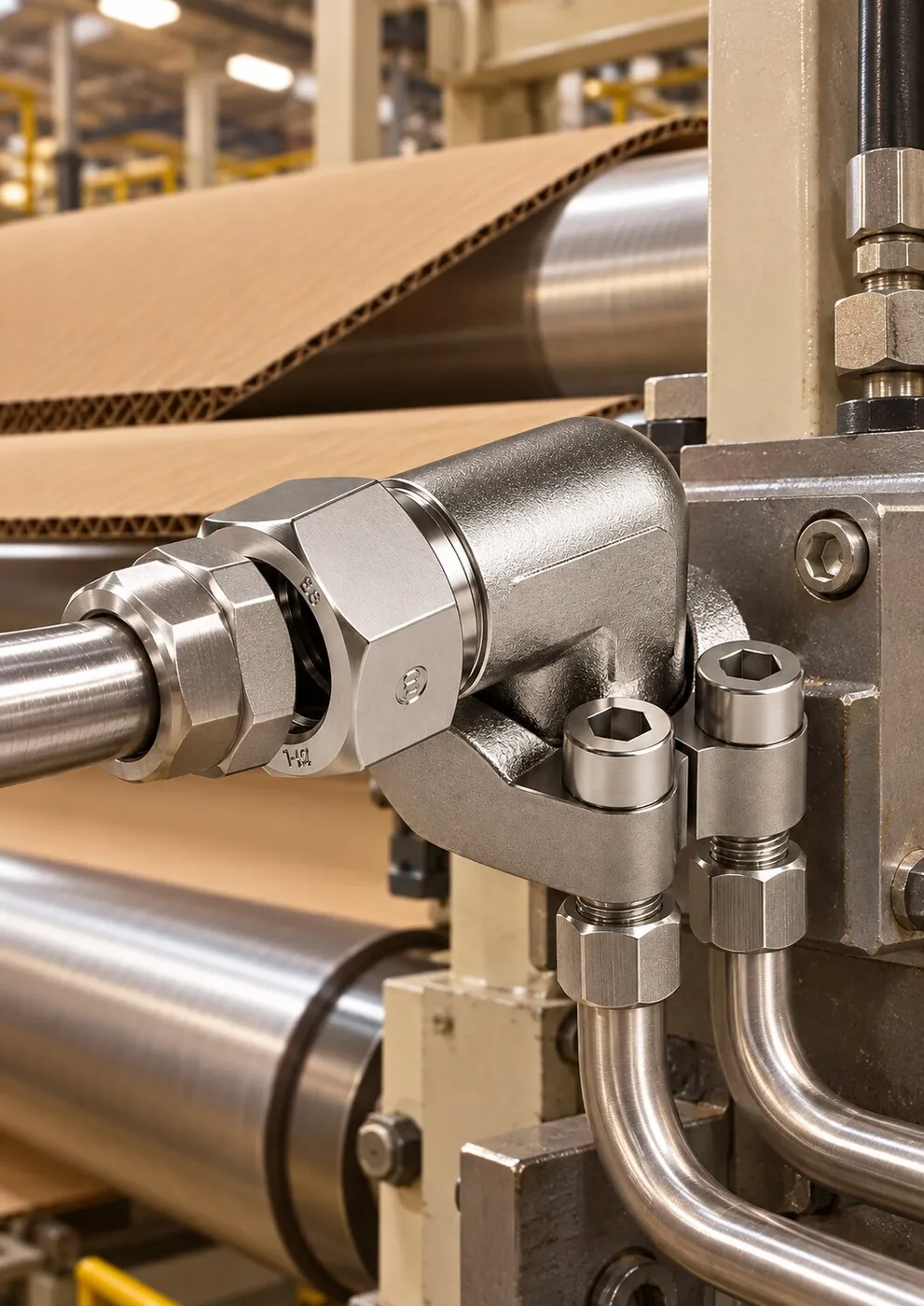
Elbows, tees, adapters, hose fittings and SAE flanges that cut maintenance time for continuously running hydraulic systems on corrugator, roll, cutting and actuator lines.
14 products
JIC 37° Fittings & Adapters 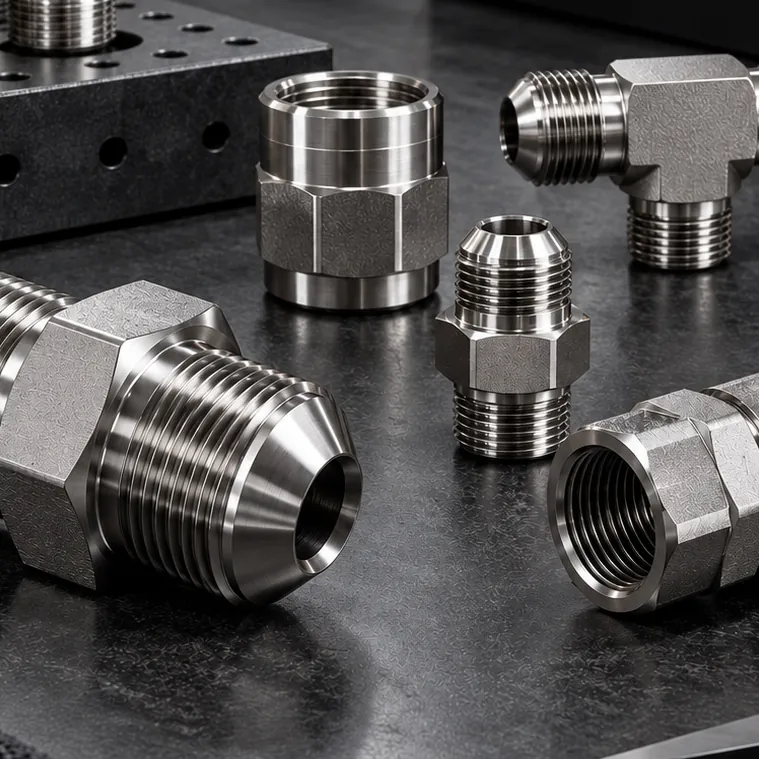 JIC 37° Fittings & Adapters
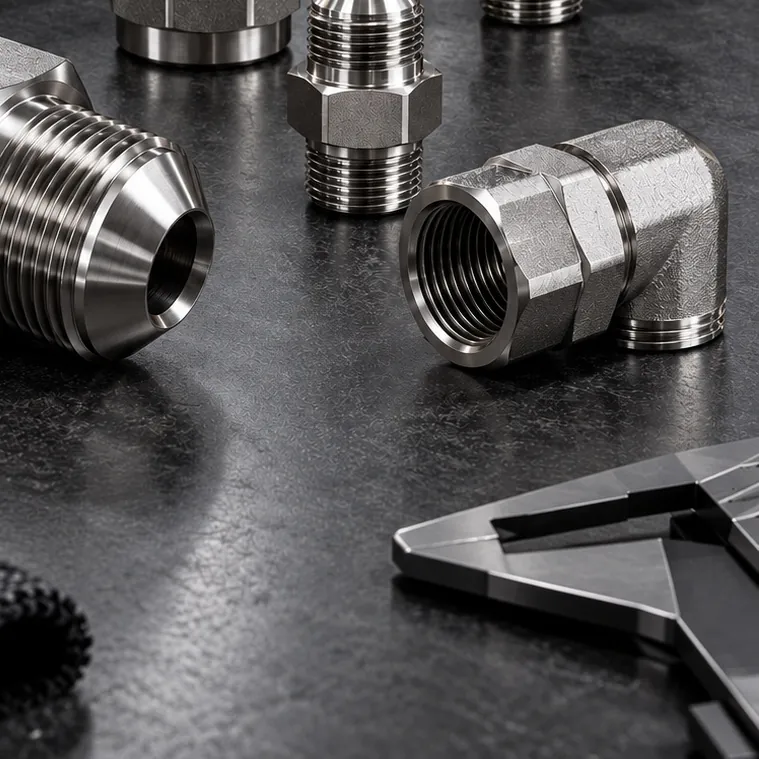 JIC 37° Fittings & Adapters JIC 37° Fittings & Adapters
 Hose Fittings & Ferrules
 Hose Fittings & Ferrules
 Hose Fittings & Ferrules Hose Fittings & Ferrules Hose Fittings & Ferrules Hose Fittings & Ferrules
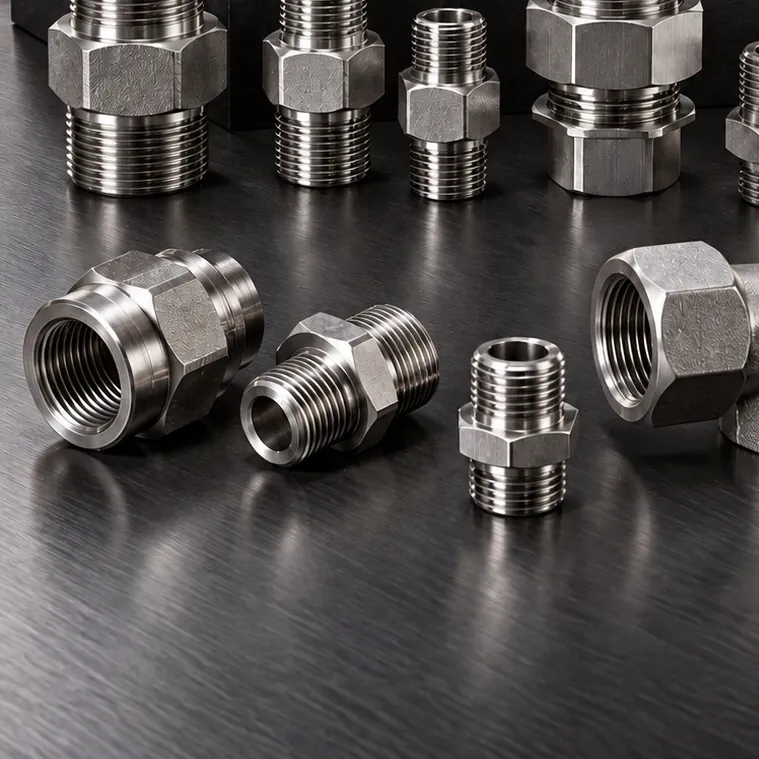 Hose Fittings & Ferrules BSP / NPT Adapters & Nipples
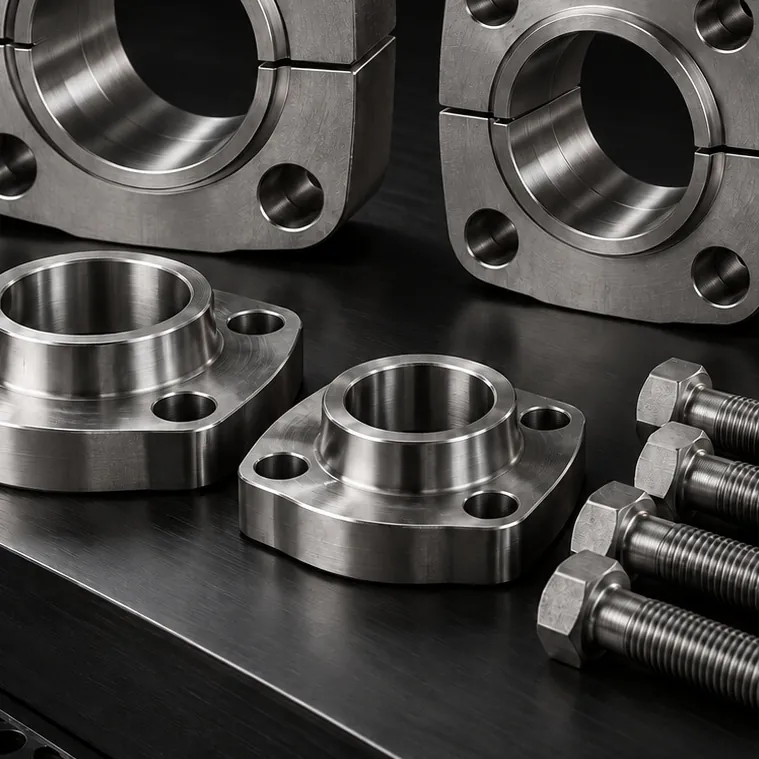 SAE Flanges (Code 61 / 62)
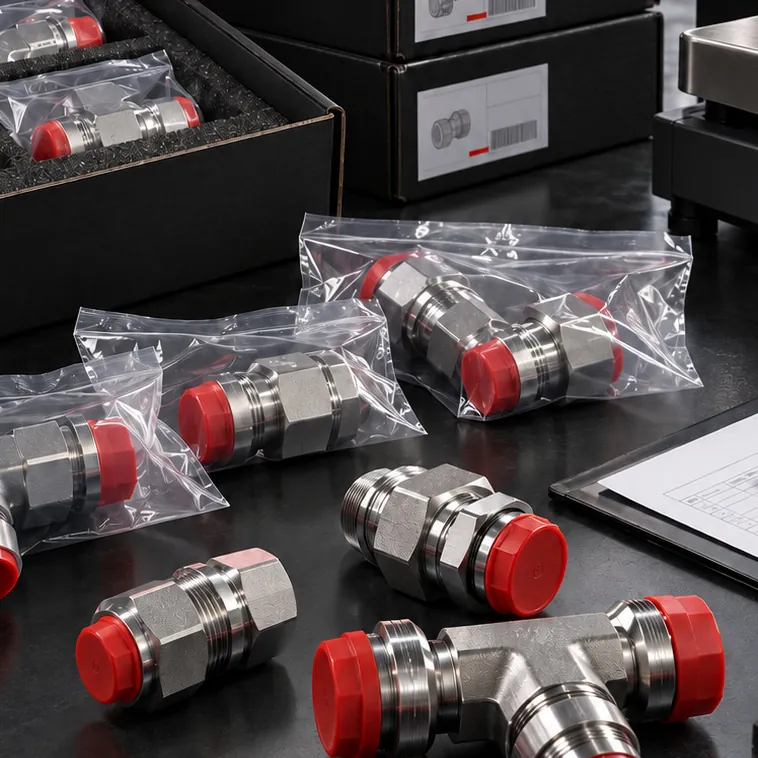 Quick Disconnect Couplings
Gallery
FAQ
If your question isn't here, message us on WhatsApp with a ready-made message and our technical team will answer directly.
Ask on WhatsAppOverall length is measured from the sealing surface of one end to the sealing surface of the other; on female swivel nut ends, the reference is the seat inside the nut, not the nut face. On elbow ends, the measurement is taken to the centerline of the sealing surface. If you are replacing an old hose, the safest approach is to lay it flat on the floor without stretching it and measure it, or to send it as a sample. If you measured from a different point, just let us know; we confirm the measuring points with you at order.
The two elbows are crimped at a specific angle relative to each other. If this angle does not match the position of the ports on the machine, the hose ends up twisted when connected; twisting strains the reinforcement layers and significantly shortens hose life. The angle is described as how far the far end is rotated when viewed from one end, and it is confirmed at order.
Yes. The end standard, thread size, end angles and length are determined from the sample. If the printing on the hose is legible, the hose type is identified from it; if not, a suitable hose is selected based on the working pressure, fluid and temperature.
No. Stainless steel ends are the right choice in environments with saltwater, humidity, cleaning chemicals or corrosive fluids, and in plants that require an all-stainless line. For applications without these conditions, the selection is made together based on the operating conditions.
Made-up hose assemblies are typically prepared within 5-15 business days. The time varies with end type, quantity and hose stock availability; stainless steel hose ends from stock are typically ready to ship within 1-3 business days.
Quote and technical verification
Briefly describe your request; once size, material and lead time are clear, we'll respond with a written quote.
Details that speed up your quote