


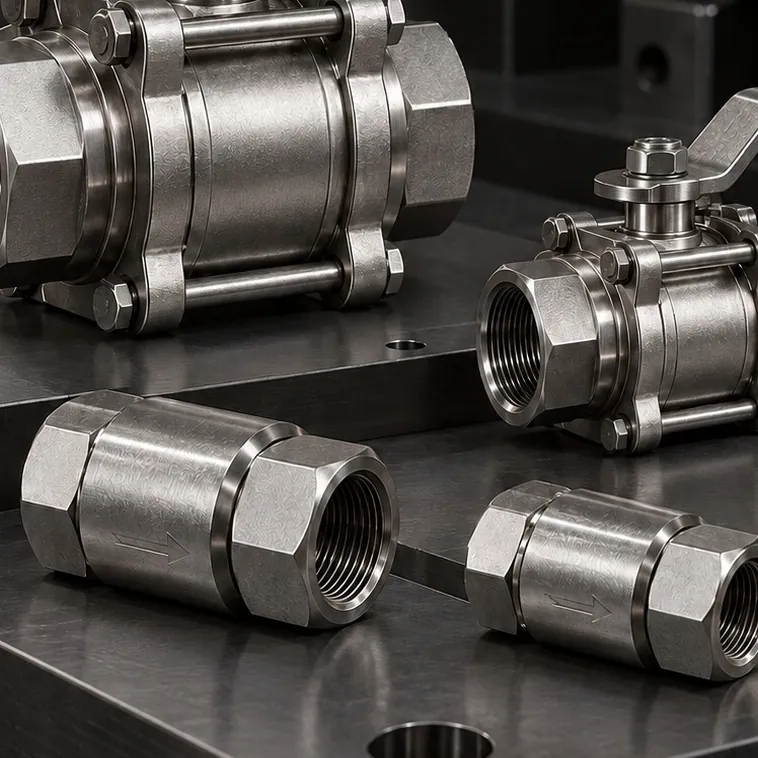
Ball, Needle & Check Valves
High-Pressure Stainless Ball Valve
High-pressure stainless steel ball valve with an AISI 316L body, providing quarter-turn on/off service in hydraulic and process…
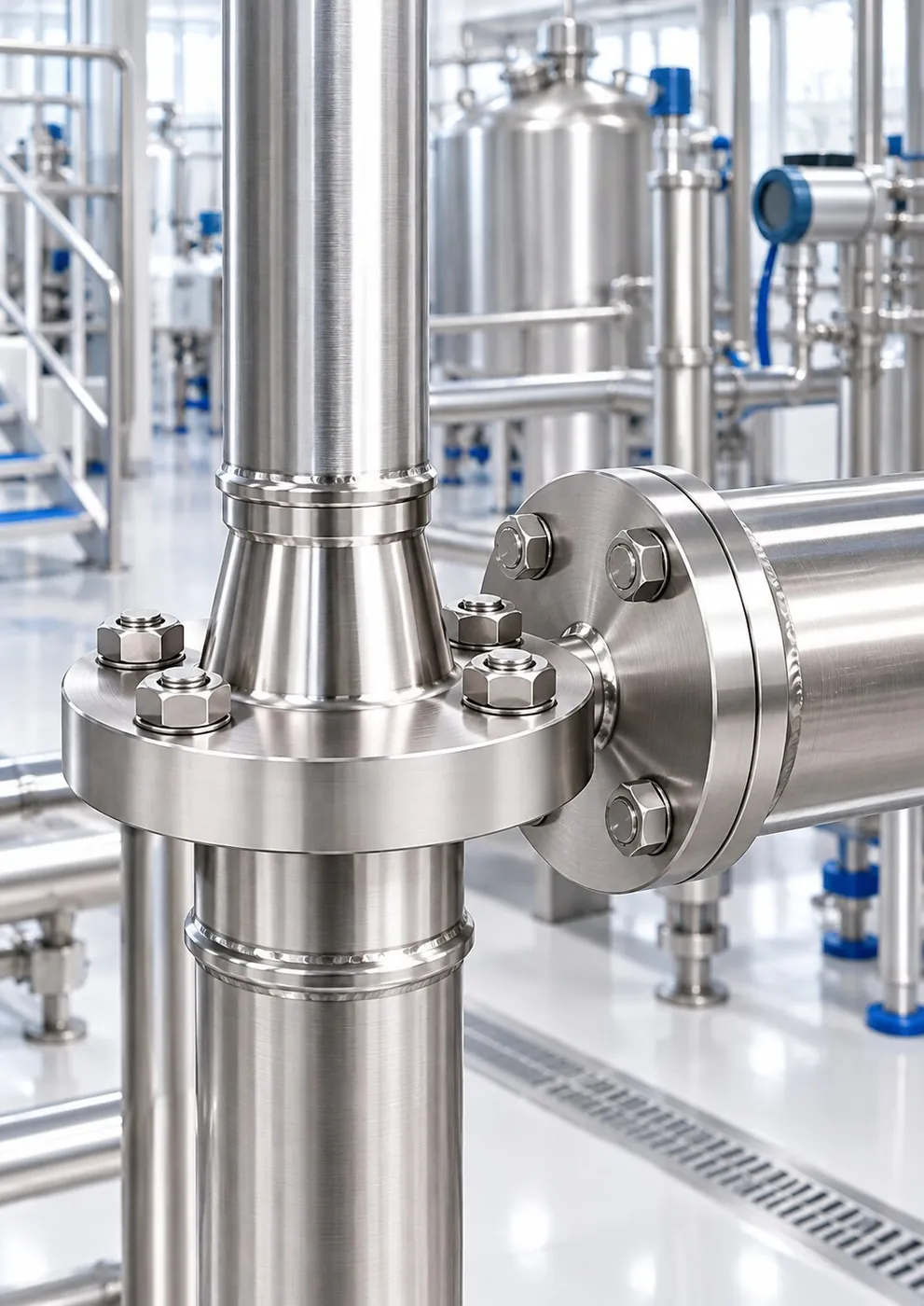
Hygiene · CIP cleaning · 316L
AISI 316/316L fittings, nipples, valves, flanges and hose assemblies for food and beverage lines that call for cleanable surfaces, corrosion resistance and maintenance access.
Featured products in this sector
View all 18 productsProducts
18 products are listed for the operating conditions of Food & Beverage. Narrow down by group; open a product page for sizes and thread standards.
Ball, Needle & Check Valves
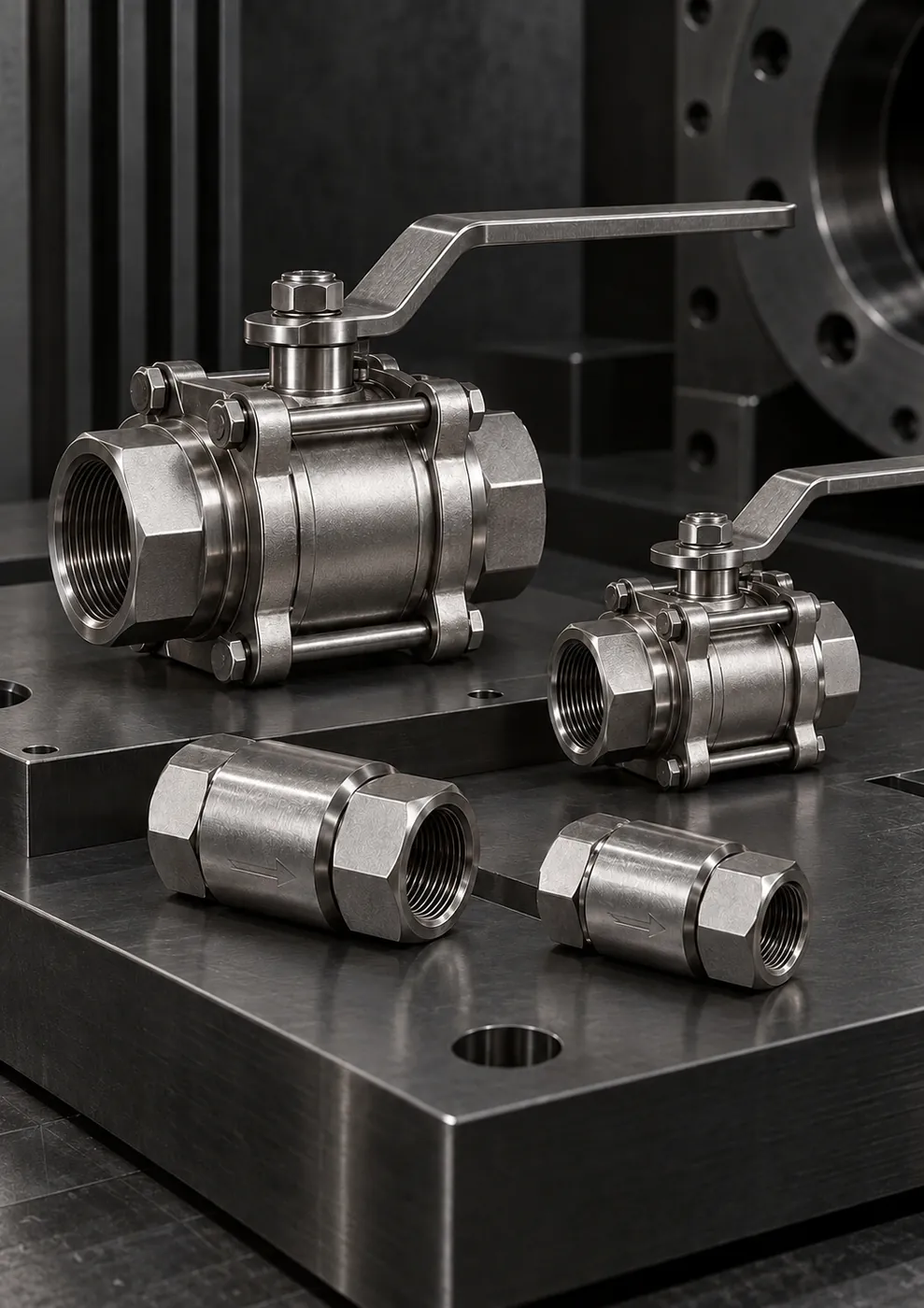
High-pressure stainless steel ball valve with an AISI 316L body, providing quarter-turn on/off service in hydraulic and process…
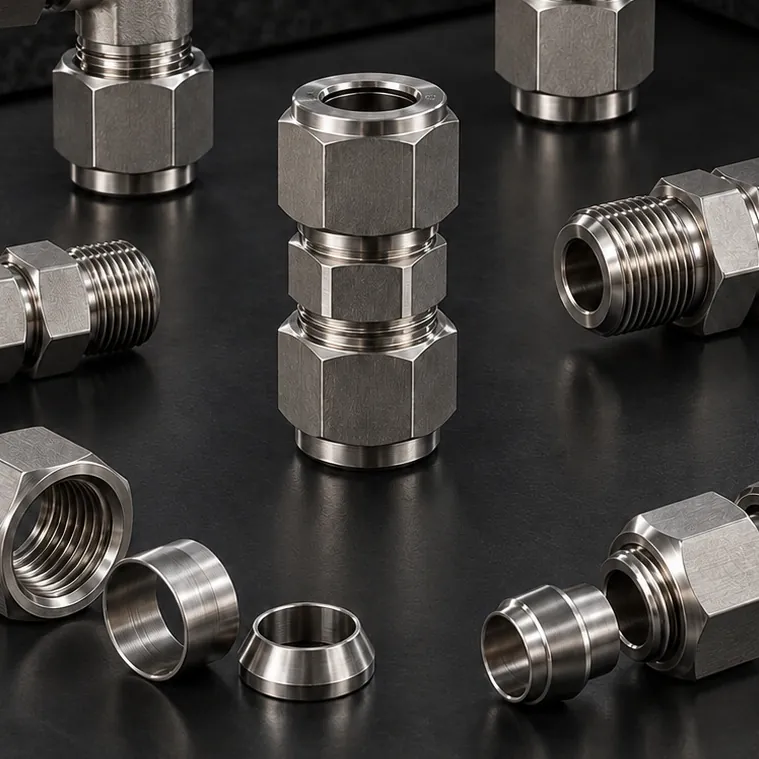
Twin Ferrule Instrumentation Fittings
Stainless steel twin-ferrule union joining two instrumentation tubes on the same axis. Weld-free, repeatable makeup in…
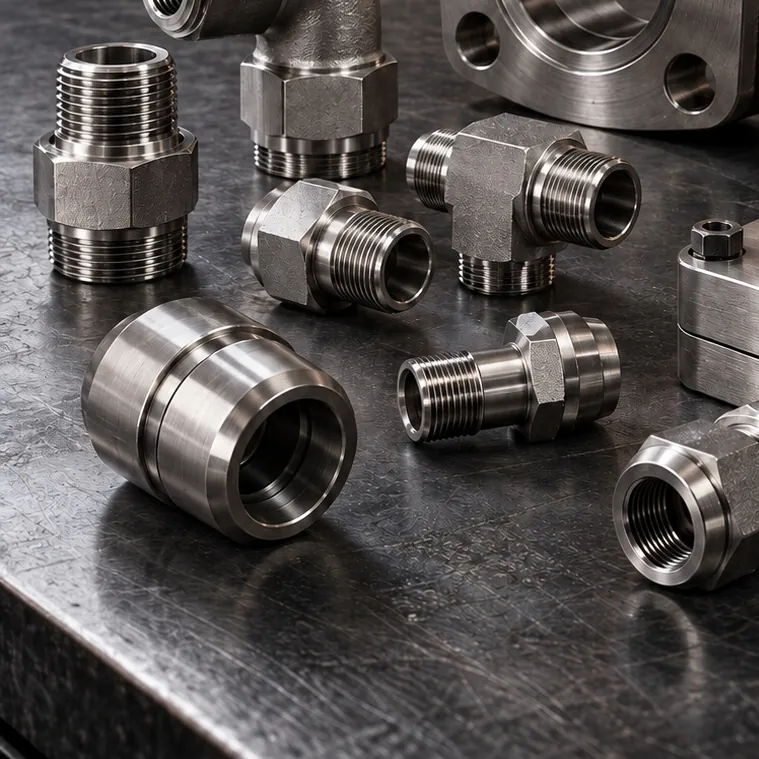
DIN 2353 Compression Fittings
Stainless steel tee with bite-type ends on the run and a male BSPT thread on the branch. Provides a direct take-off from the tube…
Ball, Needle & Check Valves
Stainless steel needle valve with a tapered stem for fine flow adjustment and isolation of measurement lines. For gauge, sampling…
Ball, Needle & Check Valves
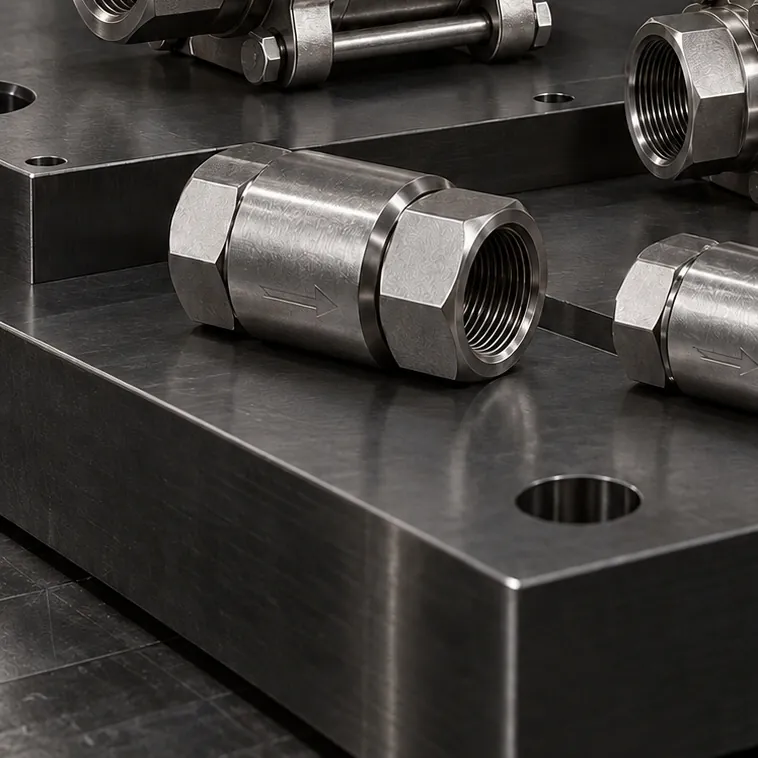
In-line stainless steel check valve that passes flow in one direction and stops reverse flow with a spring-loaded poppet. Female…
Twin Ferrule Instrumentation Fittings
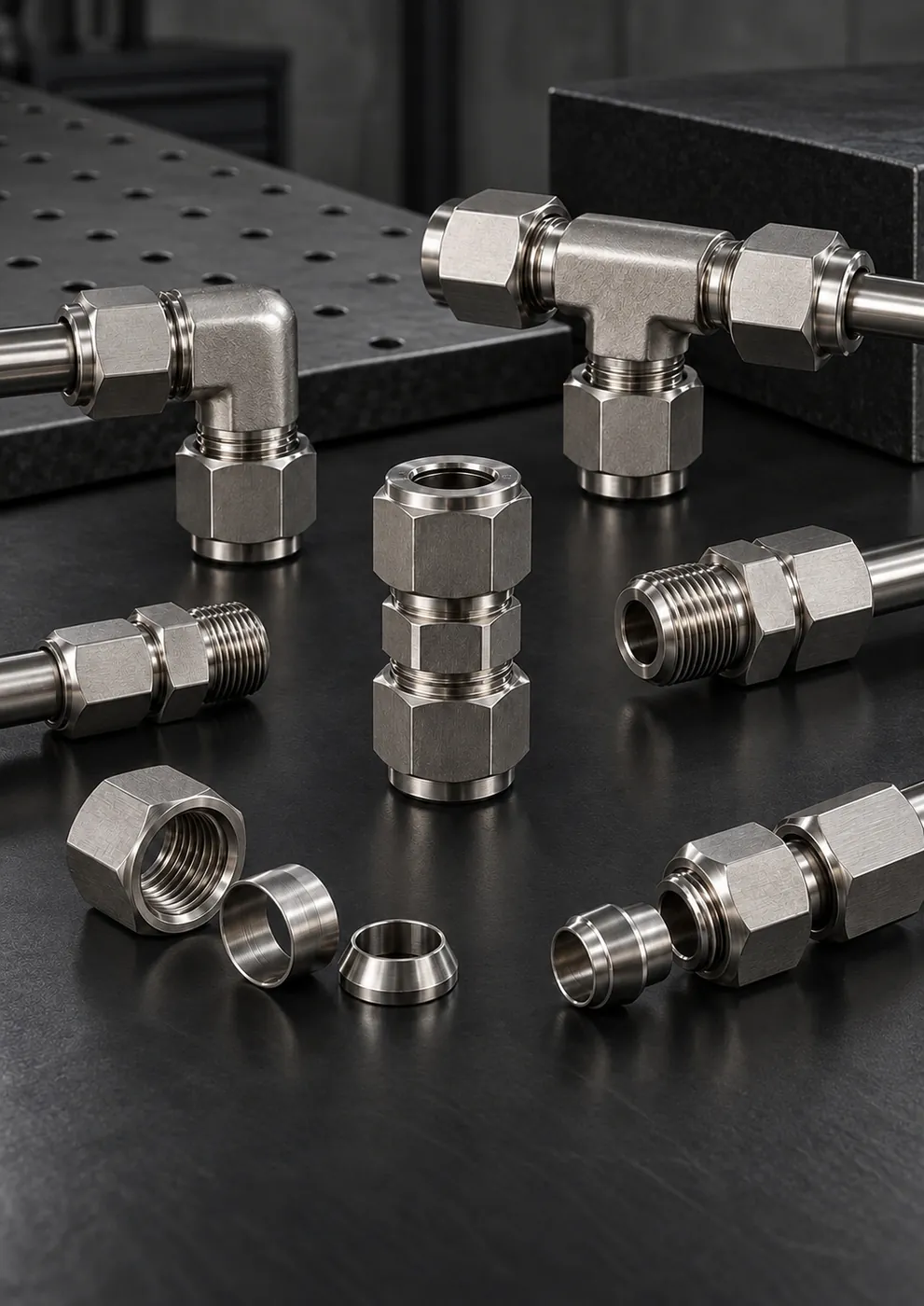
Stainless steel twin ferrule union elbow joining two instrumentation tubes at 90°. Change of direction without bending tube…
Twin Ferrule Instrumentation Fittings
Stainless steel union tee with three twin ferrule ends for branching measurement and control lines. For transmitter, pressure…
Twin Ferrule Instrumentation Fittings
Stainless steel twin ferrule male connector joining instrumentation tube to a threaded port, with a tube end on one side and a…
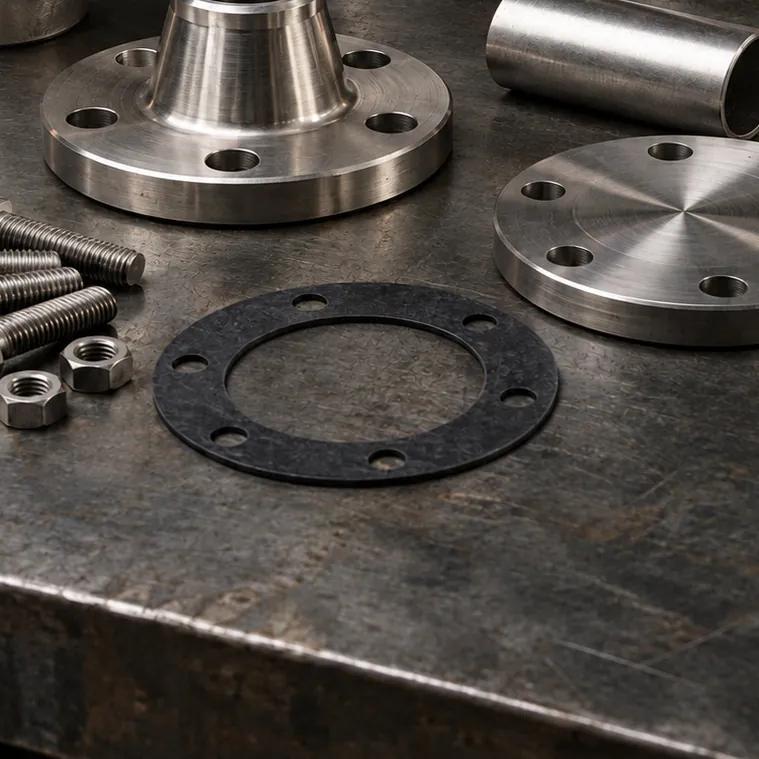
Stainless Steel Pipes & Flanges
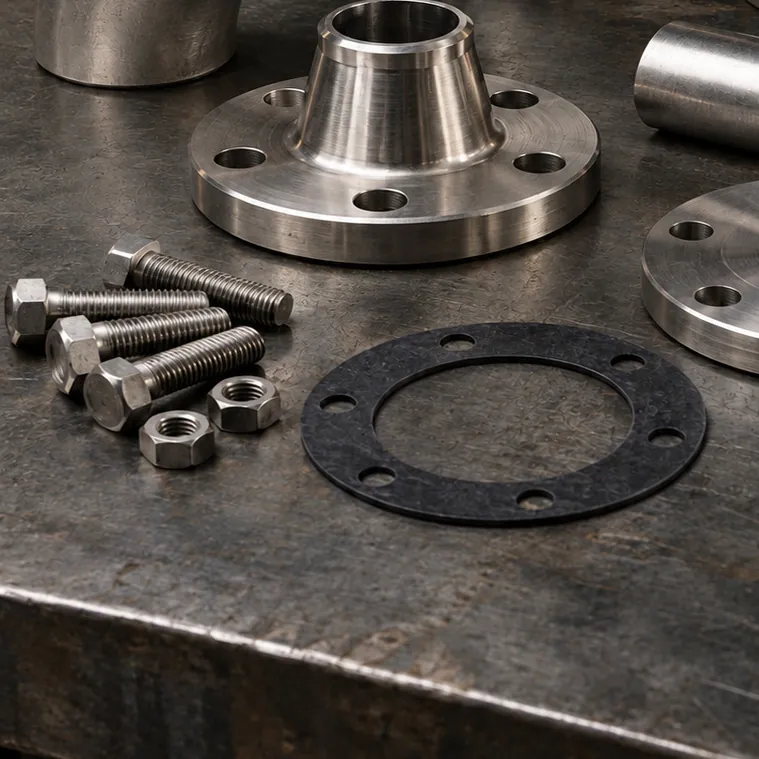
Stainless steel flange with a tapered hub that is butt-welded to the pipe. For equipment connections and removable line breaks in…
Stainless Steel Pipes & Flanges
Stainless steel blind flange that closes off the end of a pipeline or equipment outlet. For closing off lines, allowing for…
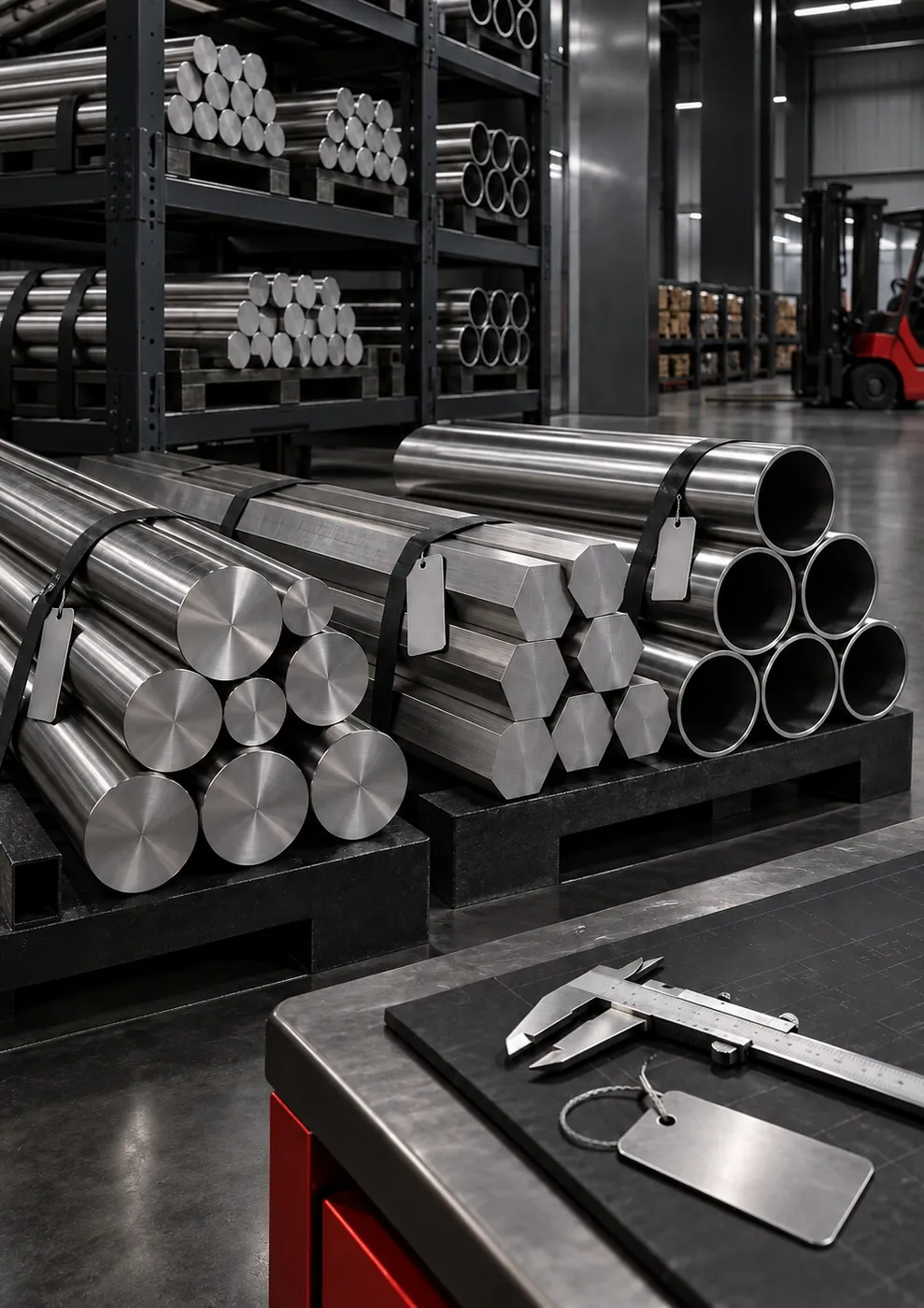
Stainless Steel Pipes & Flanges
Seamless stainless steel hydraulic tube in metric OD sizes for bite-type compression fittings and welded lines. AISI 316L; wall…
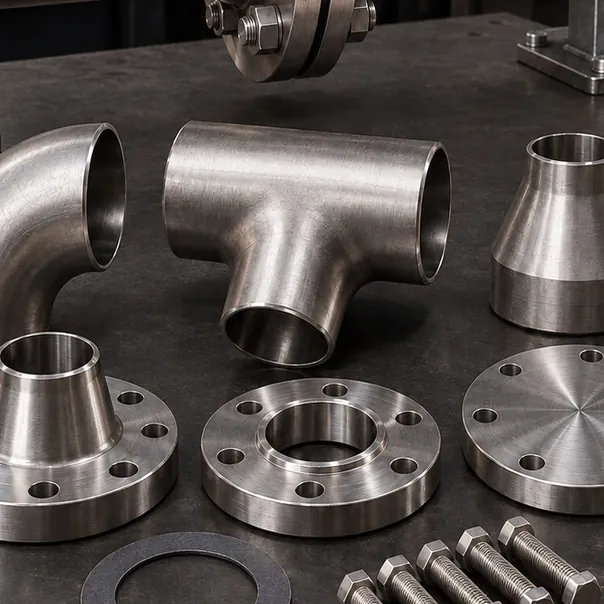
Butt-Weld Pipe Fittings
Butt-weld elbow for 90° changes of direction in welded stainless steel piping. Long (1.5D) and short (1D) radius; Schedule wall…
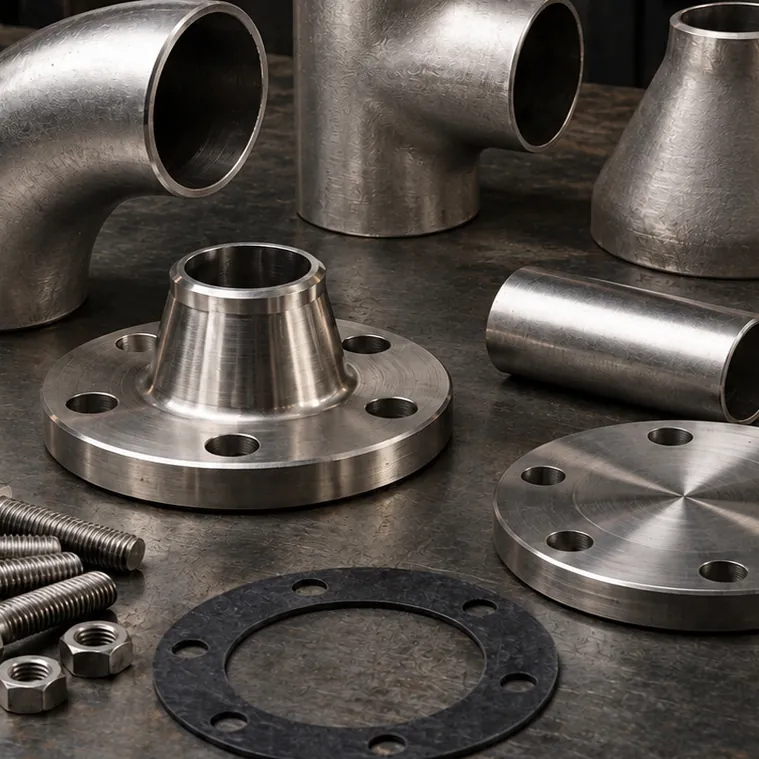
Butt-Weld Pipe Fittings
Butt-weld equal tee for same-size branch connections in welded stainless steel piping. AISI 316/316L for header, distribution and…
Butt-Weld Pipe Fittings
Butt-weld concentric reducer providing a coaxial size transition in welded stainless steel piping. For pump discharge lines and…
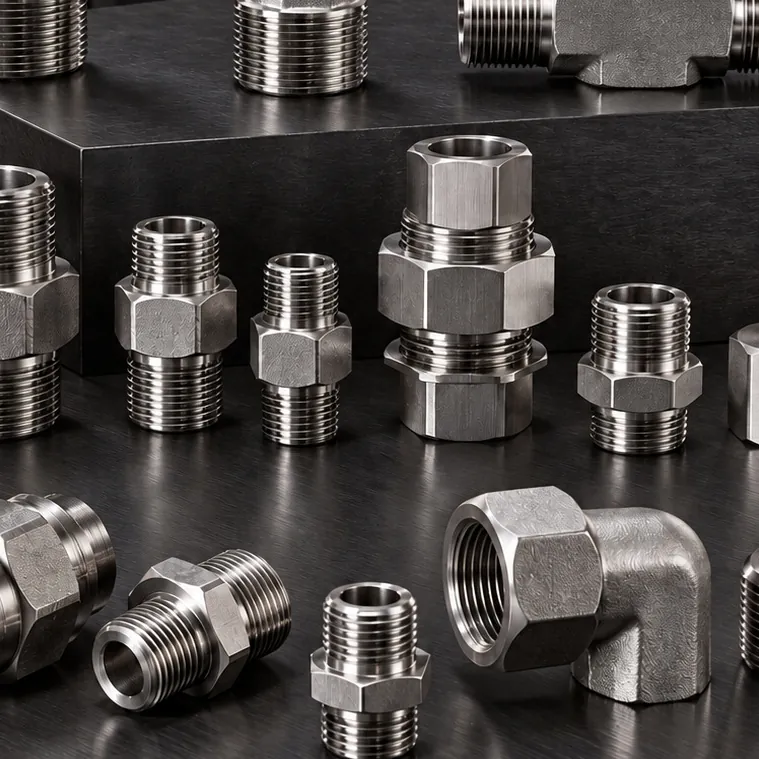
BSP / NPT Adapters & Nipples
Stainless steel conversion adapter with a BSP male thread on one end and an NPT male thread on the other. Connects equipment…
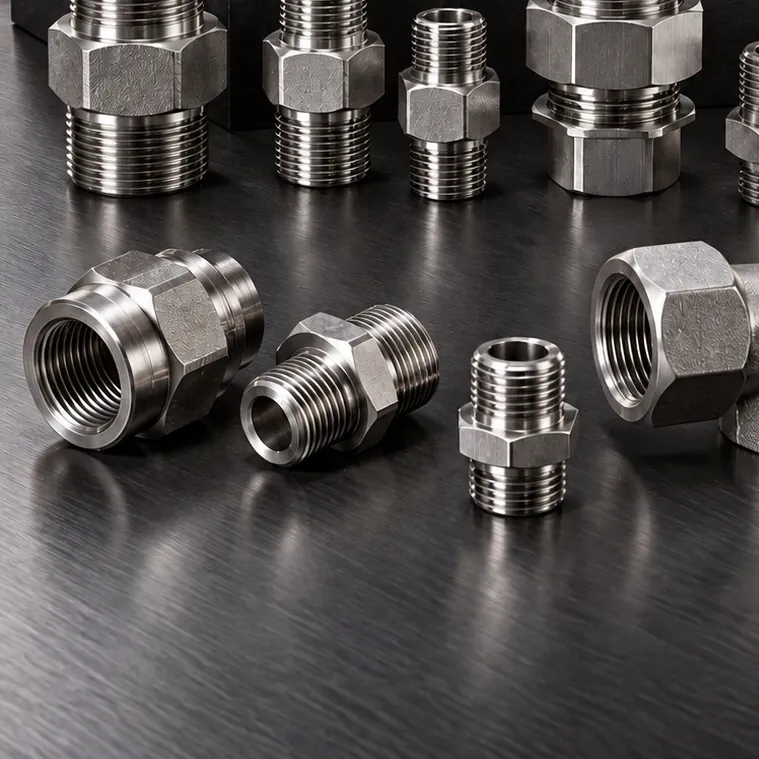
BSP / NPT Adapters & Nipples
Hex-body stainless steel reducing bushing with a male NPT tapered thread outside and a female NPT tapered thread inside. Steps…
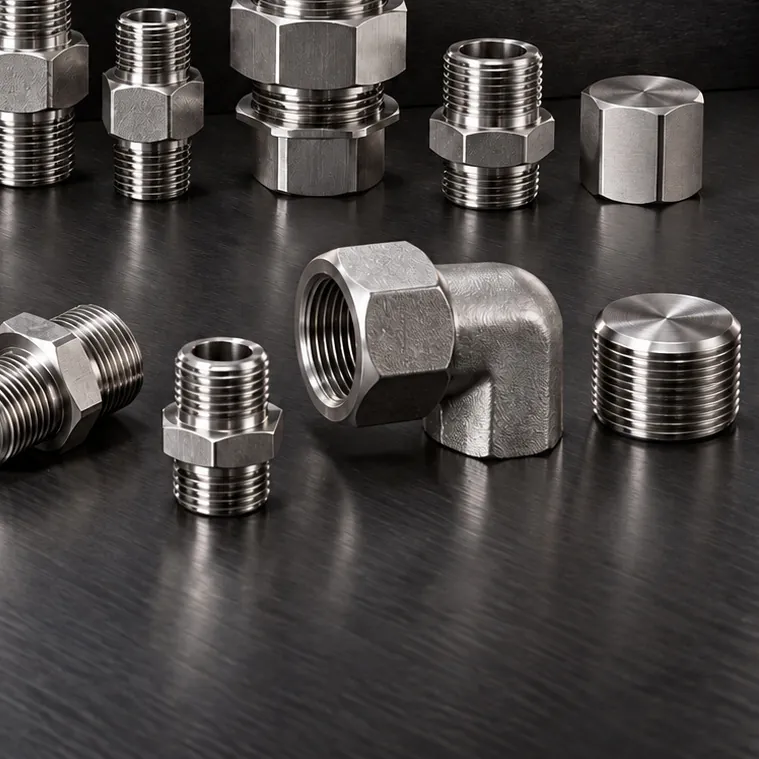
BSP / NPT Adapters & Nipples
Stainless steel hex head plug with a BSPT tapered thread for closing unused female ports and threaded line ends. AISI 316L.
BSP / NPT Adapters & Nipples
Straight hex-body stainless steel nipple with BSPT tapered male threads on both ends. Connects two female ports, valves or…
Can't find your part in the list?
Send a sample photo, technical drawing or dimensions; we'll identify the right fitting from our catalog or through custom manufacturing.
Faik Güney · Contact person
Services
Beyond supplying parts, we complete the job in the field with piping, hose assembly, custom manufacturing and technical identification.
Welded and demountable stainless steel lines built from AISI 316/316L pipe, flanges and fittings: bevel preparation…
View service – Stainless Steel Pipe FabricationSelection of AISI 316L-body ball valves, needle valves and check valves by body, connection standard, bore size…
View service – Valves, Check Valves & Flow ControlHydraulic hose assembly and crimping: hose assemblies with straight, 45° and 90° stainless steel ends in BSP, JIC, NPT…
View service – Hydraulic Hose AssembliesAISI 316/316L tube with twin-ferrule union, elbow, tee, connector and adapter fittings for small-bore measurement…
View service – Instrumentation TubingStandard stainless steel fittings, adapters, hose ends, flanges and valves ready to ship within an average of 1-3…
View service – Fast Supply & Shutdown SupportIdentifying BSP, NPT, UNF/JIC and metric threads by measurement, matching them correctly to the mating part, and…
View service – Fitting & Thread IdentificationOverview
Quick answer
Food and beverage plants use AISI 316/316L stainless steel fittings, nipples, valves, flanges and hose fittings that provide cleanable surfaces, corrosion resistance and easy access for routine maintenance. Selection is based on temperature, cleaning chemicals, pressure and line size. For lines in direct contact with the product, hygienic design and documentation requirements must be defined by the project owner.
In a food plant, a fitting is exposed to two different kinds of attack: acids, salt and sugar from the product, and a cleaning regime of hot caustic, acid and disinfectant applied at the end of every shift. The wrong material loses its surface in this cycle, while the wrong design leaves a pocket the cleaning solution cannot reach. In food and beverage plants, cleanable surfaces, corrosion resistance and easy access for routine maintenance are the key selection criteria.
GÜNEYSS supplies food and beverage producers with fittings, nipples, valves, flanges and hose assemblies made from AISI 316/316L stainless steel to suit the application. From the hydraulic circuits of filling machines and presses to auxiliary lines in the washdown area, we work with you to select the right fitting based on temperature, cleaning chemicals, pressure and line size.
Field conditions
We select fittings for these conditions and specify the material, sealing type and installation method accordingly.
Describe your own conditionsHot caustic, acids and chlorinated disinfectants attack surfaces every day; materials and seals must be selected accordingly.
Hydraulic fittings washed down along with the machine frame rust quickly if they are carbon steel or plated.
Dead legs, burred surfaces and lines that do not drain create a microbial risk.
Temperature swings between production and cleaning fatigue seals and hoses.
Planned shutdowns are short; if a part arrives in the wrong size, the production schedule slips.
Technical selection notes
Points we clarify with you before ordering for Food & Beverage applications.
The type and temperature of the caustic, acid and disinfectant used determine material and seal selection.
Blind ends and long branches create areas the cleaning solution cannot reach.
O-rings must be suitable for both the cleaning chemicals and the line fluid.
Hygienic design and documentation requirements for lines in direct product contact should be stated at the quotation stage.
Frequently replaced hose assemblies and adapters should be stocked ahead of the planned shutdown.
Detailed guide
For lines in direct contact with the product, the hygienic connection type, surface roughness and documentation requirements are defined by the project owner. When these requirements are shared at the quotation stage, it becomes clear from the outset which items can be supplied.
When choosing stainless steel for food plants, the deciding factor is often the cleaning regime rather than the product. Salt brine, tomato and fruit acids, the acidic and alkaline solutions used for cleaning, and chlorine-based disinfectants all increase the risk of pitting corrosion in grade 304. Molybdenum-alloyed 316/316L offers higher resistance in these environments. On welded piping and weld nipples, low-carbon (maximum 0.03%) 316L is preferred because it reduces the risk of intergranular corrosion in the weld zone.
With chlorine-based disinfectants, 316L can also be attacked if the recommended concentration, temperature or contact time is exceeded. Using the disinfectant according to the manufacturer's instructions and rinsing afterwards with clean water extends the life of the stainless steel surface. Contact between stainless steel parts and carbon steel chips or carbon steel tools can contaminate the surface with iron and cause localized rust spots; using tools reserved for stainless steel during installation and maintenance reduces this risk.
In CIP systems, lines are cleaned without dismantling, using caustic and acid solutions at specified temperatures and concentrations. The following points are important when selecting fittings:
In the hydraulic circuits of food processing machines, carbon steel or plated fittings corrode quickly under daily high-pressure washdown, and rust stains can migrate into the product zone. Stainless steel fittings and hose ends greatly reduce this risk. On machines where incidental product contact is possible, food-grade (H1) hydraulic fluids can be used; in that case, the compatibility of the seal material with the fluid must be checked separately.
Food plants make extensive use of steam and hot water for cooking, pasteurization, sterilization and cleaning. On these lines, fitting selection starts with temperature: the seal material, and the hose if there is one, must be rated for the operating temperature. On lines that expand and contract with temperature changes, connection points are put under strain, so anchoring and flexibility must be planned together. On compressed air lines, condensed water causes rust in carbon steel fittings, and this rust can be carried to actuators or into the product zone; stainless steel fittings reduce this risk.
In ball valves, the body cavity can trap product and cleaning solution in the closed position. For this reason, it is recommended that ball valves on utility lines be flushed in the open position during cleaning and included in the maintenance plan. For check valves, the flow arrow direction and service access should be checked during installation.
| Selection criterion | What it affects |
|---|---|
| Temperature | Seal material and hose type; especially important on hot water and steam lines |
| Cleaning chemical | Stainless steel grade and seal compatibility |
| Pressure | Fitting body type, hose reinforcement and flange class |
| Line size | Nipple, fitting and valve size; flow velocity and cleaning effectiveness |
In food production, planned maintenance shutdowns are usually short and scheduled in advance. Stocking frequently replaced hose assemblies and adapters ahead of the maintenance schedule prevents downtime from running over. White residue or brown staining around a fitting after cleaning can be a warning sign about cleaning chemical concentration or rinsing; visually checking these points during maintenance rounds allows early corrective action. Standard sizes in stock are typically ready to ship within 1-3 business days; standard production is scheduled within an average of 5-10 business days, made-to-length hose assemblies within an average of 5-15 business days, and custom-size and project manufacturing within an average of 10-20 business days after technical approval. Parts are shipped with protective caps on threads and ports, packed separately by size.
Applications
Teams in Food & Beverage that need fittings, hose assemblies and custom parts.
Stainless steel fittings for process utility lines, machine hydraulics and cleaning systems.
CIP return and dosing lines, hot water and steam connections.
Hydraulic and pneumatic line fittings in the washdown zone of filling and capping machines.
Acid-resistant stainless steel fittings and hose ends for hydraulic press circuits.
Machine fittings exposed to salt brine and intensive washdown.
Standardized stainless steel hose assembly and adapter kits for on-machine use.
Gallery
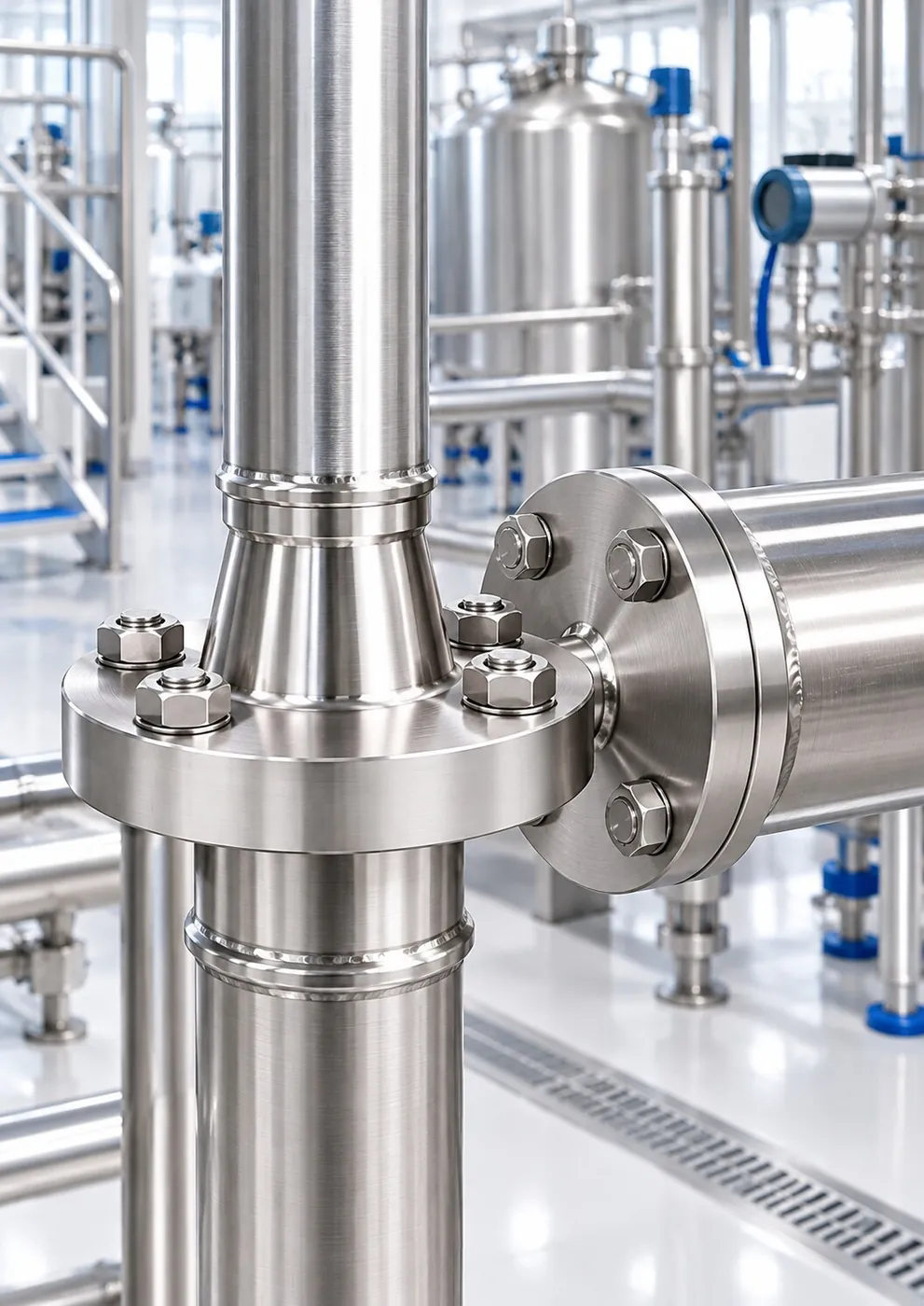
Stainless steel tank and flanged piping in a food plant (illustrative image)
Stainless steel ball valves and check valves for line isolation (illustrative image)
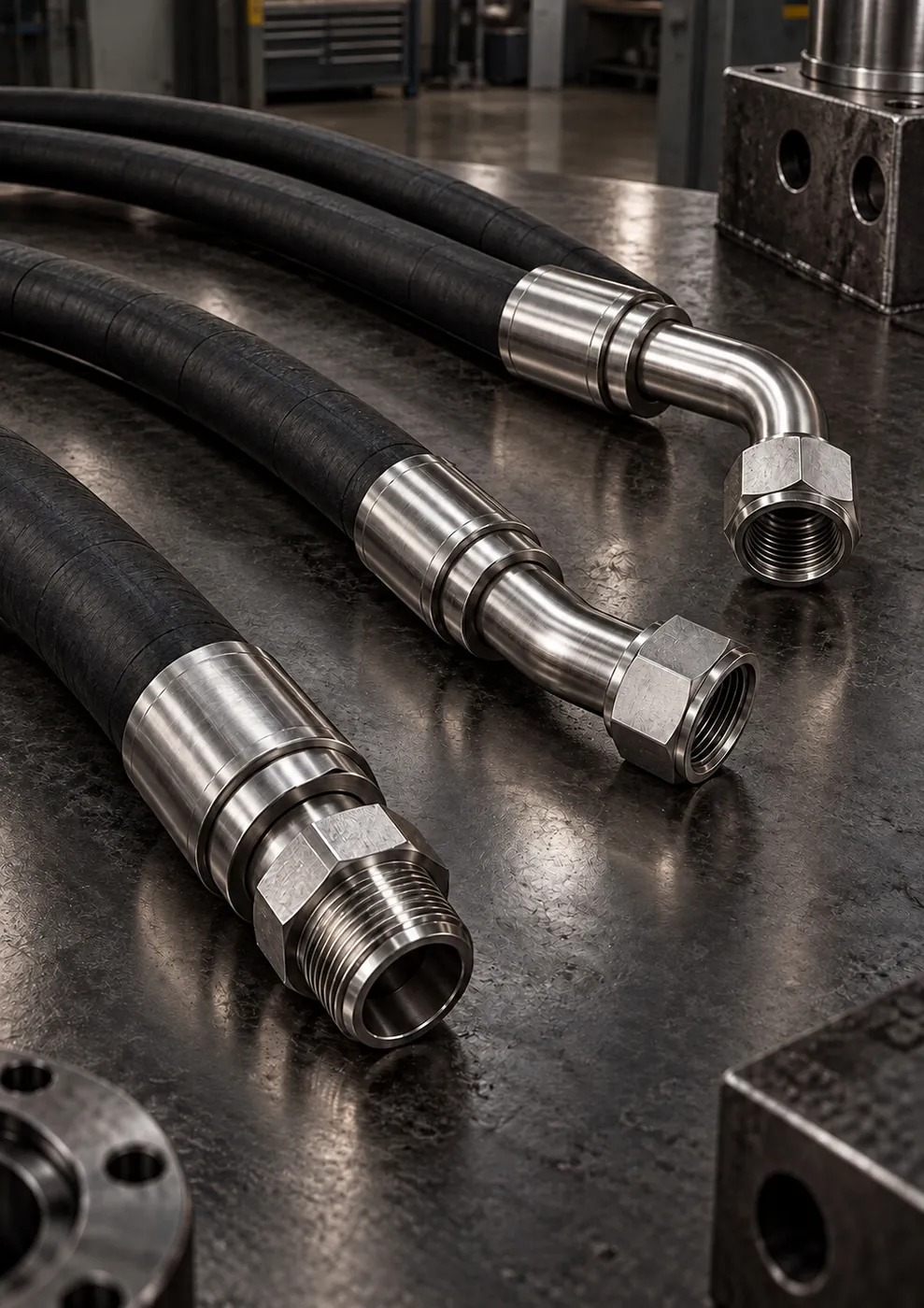 Hose assemblies with stainless steel ends (illustrative image)
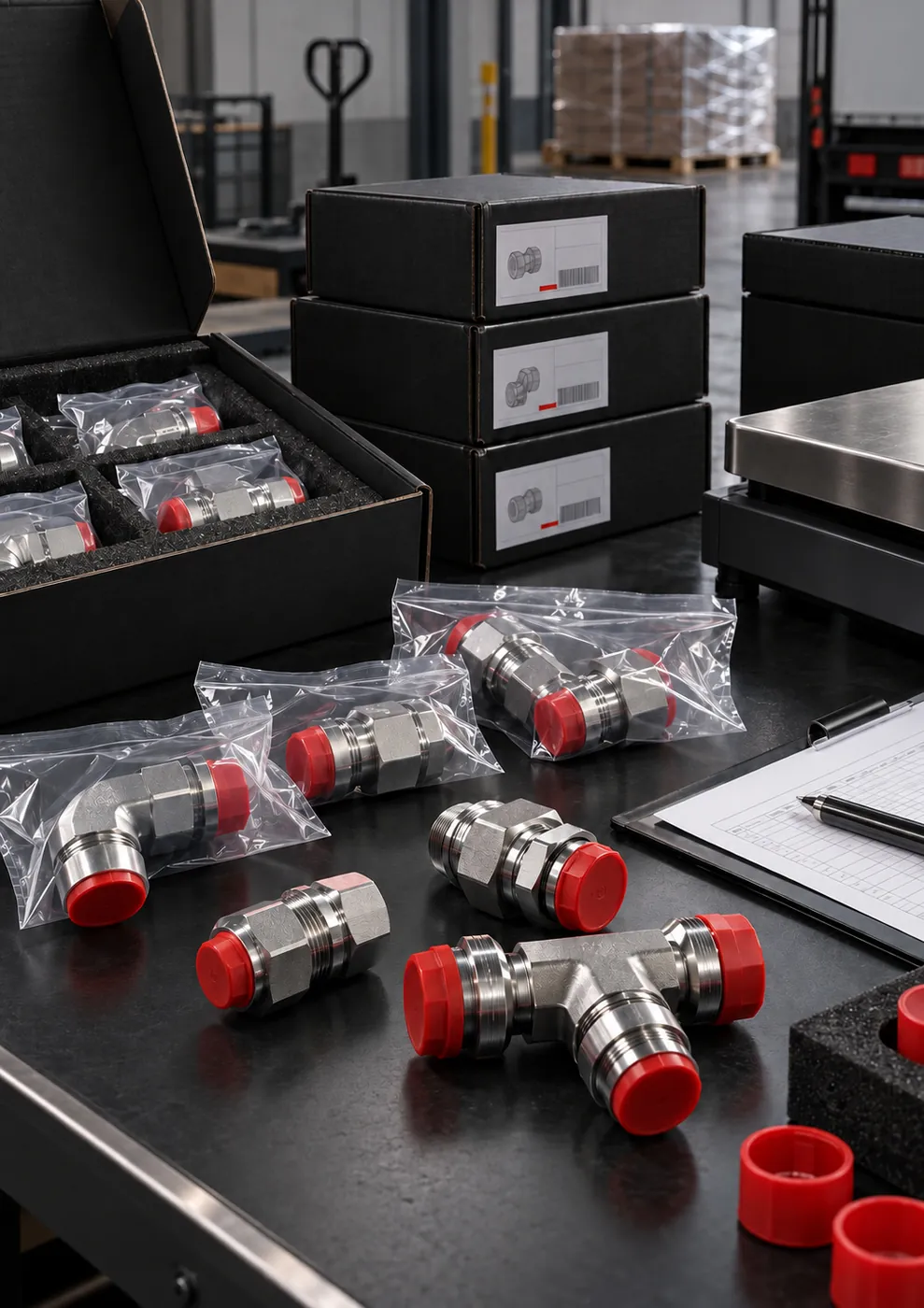 Bagged fittings with threads and ports sealed by protective caps (illustrative image)
Knowledge Center
Stock items are prepared within an average of 1-3 business days, standard production within 5-10 business days, hose assemblies made to length within…
In a twin-ferrule fitting, the front ferrule provides the seal and the back ferrule grips the tube. For correct installation, the tube is cut square…
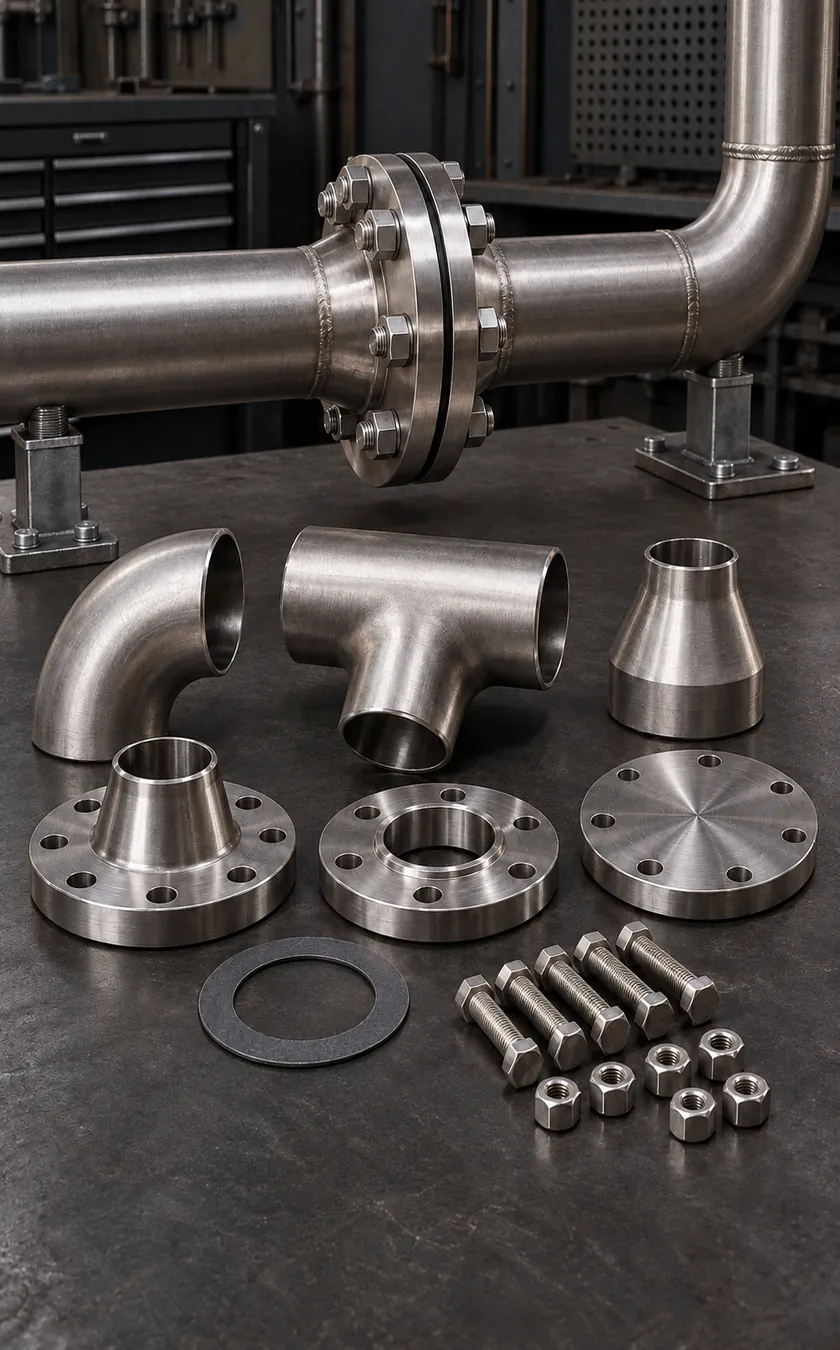
On a stainless steel pipeline, fittings and flanges are selected by matching them to the pipe's DN/NPS size and Schedule wall thickness. Weld neck…
Frequently asked questions
If your question isn't answered here, write to us and we'll pin down the size, thread standard and material together.
Send us your questionSalt brine, fruit acids and chlorinated disinfectants increase the risk of pitting corrosion in grade 304. Molybdenum-alloyed 316/316L offers higher resistance in these environments. On welded lines, low-carbon 316L also reduces the risk of intergranular corrosion in the weld zone.
For lines in direct contact with the product, the hygienic connection type, surface roughness and documentation requirements are defined by the project owner. If you share these requirements at the quotation stage, we will clarify from the outset which items can be supplied. Our focus applications are machine hydraulics, utility lines and cleaning systems.
They can. Hot caustic and acid solutions harden or swell some seal materials. If you state the type, concentration and temperature of your cleaning chemical in the order, the O-ring and seal materials are selected accordingly.
On hydraulic lines that are pressure-washed along with the machine frame, carbon steel or plated fittings corrode quickly and rust stains can migrate into the product zone. Stainless steel fittings and hose ends greatly reduce this risk. If a food-grade hydraulic fluid is used, seal compatibility must be checked separately.
Yes. Standard sizes in stock are typically ready to ship within 1-3 business days; standard production is scheduled within an average of 5-10 business days, and made-to-length hose assemblies within an average of 5-15 business days. If you share your maintenance list before the shutdown date, we separate the items that can be supplied from stock from those that require manufacturing and set up the lead time plan accordingly.
Quote
Share the line size, temperature, pressure and the cleaning chemicals you use; we'll recommend suitable stainless steel grade and seal options with a lead time plan.
Food & Beverage request form