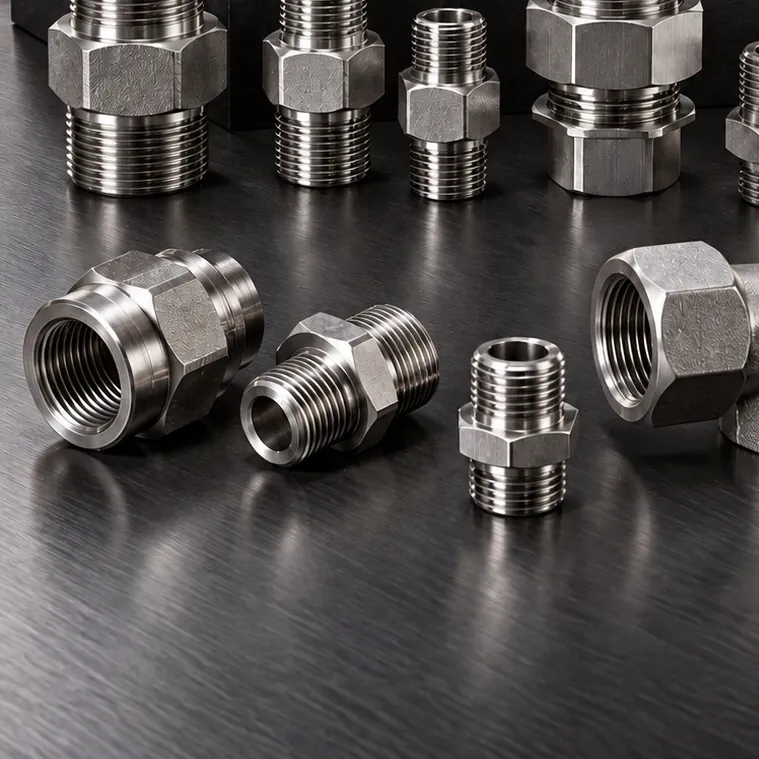
 BSP / NPT Adapters & Nipples
NPT Reducing Bushing
Details & quote
Twin-ferrule · Measurement lines · Sample lines
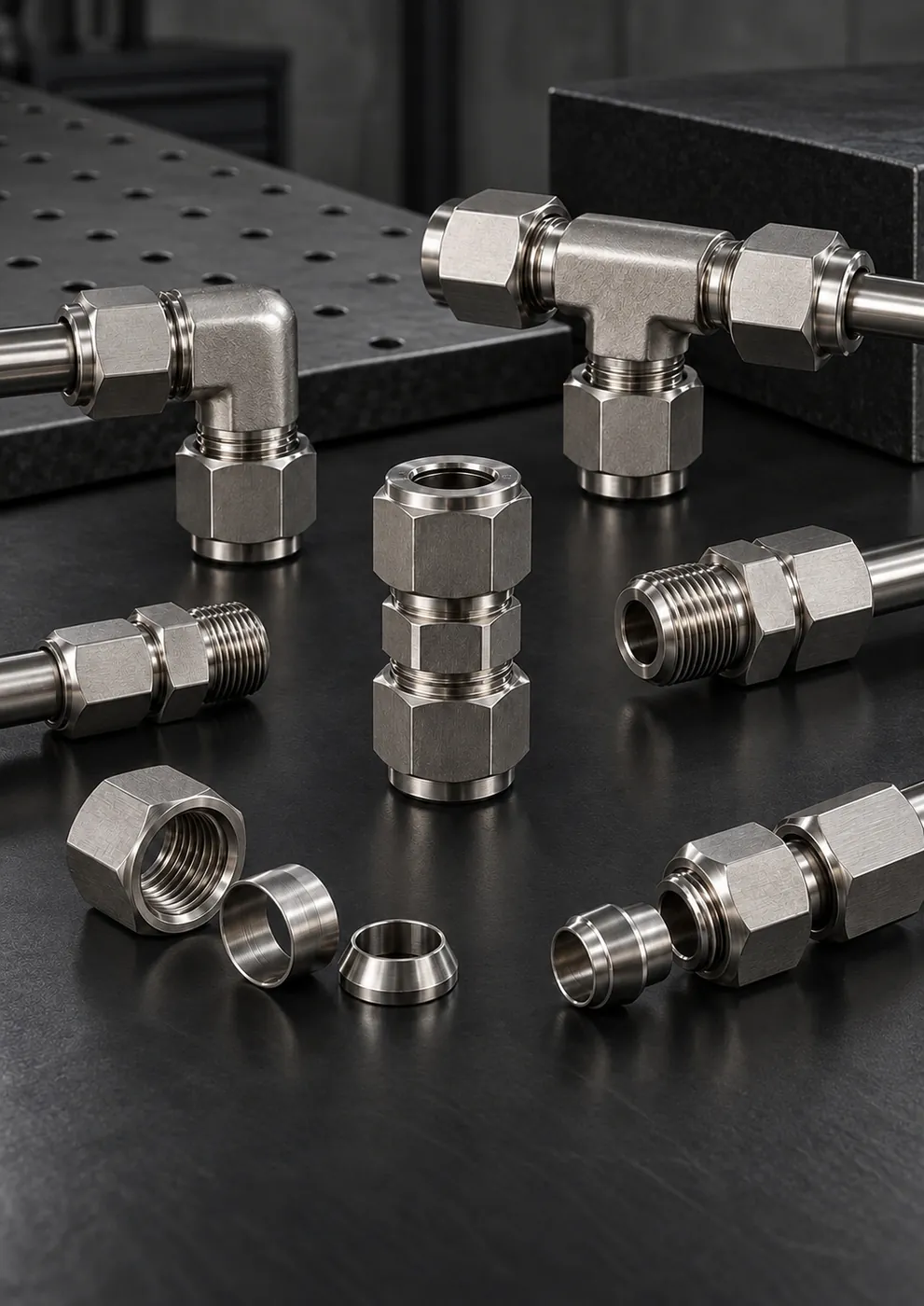
AISI 316/316L tube with twin-ferrule union, elbow, tee, connector and adapter fittings for small-bore measurement, control and sample lines; installed with clean tube cuts and the correct number of wrench turns.
Quick answer
Instrumentation tubing consists of small-bore stainless steel lines that connect pressure gauges, transmitters, analyzers and sampling points to the process. On these lines, GÜNEYSS uses twin-ferrule fittings (union, elbow, tee, connector, adapter) that grip the tube in a controlled way. Tube outside diameter, wall thickness and material compatibility are selected together; clean tube cuts and the correct number of wrench turns are essential during installation.
Instrumentation lines are small in diameter, but they are the eyes and ears of the plant. A micro-leak on the line to a pressure transmitter leads to a false reading, and unnecessary dead volume in a sample line leads to a misleading analysis. That is why, in instrumentation tubing, the tube, fittings and installation workmanship must all be right together, not just individually.
As the nut is tightened, the front ferrule seats between the tapered bore of the body and the tube surface to create the seal. The back ferrule pushes the front ferrule along the axis and grips the tube. Splitting sealing and grip between two separate parts increases connection reliability on lines subject to vibration and allows the fitting to be disassembled and remade during maintenance.
Tube outside diameter, wall thickness and material compatibility are evaluated together. Imperial and metric tubes are not interchangeable: although 6 mm tube and 1/4 inch (6.35 mm) tube look close in size, they will not seal reliably with the same fitting. Wall thickness must suit the working pressure and the range recommended by the fitting manufacturer. For the ferrule to grip the tube properly, the tube must not be harder than the fitting material; this is why seamless, annealed stainless steel tube is generally preferred. AISI 316/316L tube and fittings are used together in plants that require corrosion resistance.
The tube is cut square to its axis with a tube cutter or a suitable cutting fixture, and the inside and outside burrs are removed. An angled cut or burr prevents the ferrule from seating properly. There must be no scratches on the tube surface where the ferrule will seat.
The tube is pushed in until it bottoms against the shoulder in the fitting body. If the tube is not fully inserted, the ferrule grips it at the wrong point and the connection may leak under pressure.
The nut is first tightened by hand, then turned with a wrench by the number of turns specified by the fitting manufacturer, while the body is held with a second wrench. Under-tightening causes leaks; over-tightening damages the ferrule and tube. On connections that are disassembled and remade, tightening again follows the manufacturer's instructions.
Lines are supported with clamps, bends are not made right at the base of a fitting, and flexibility is allowed for thermal expansion. A clean route that reduces the number of tees and elbows cuts down on both leak points and dead volume.
Process measurement and sample lines in chemical plants; pressure and temperature measurement connections in food and beverage plants; instrument lines exposed to saltwater environments on offshore platforms and ships; measurement lines on hydraulic test benches in aviation; compact test and control units in the defense industry; pressure sensing lines on pump skids in fire suppression systems.
Fittings and tube from stock are typically ready to ship within 1-3 business days. If a custom adapter or non-standard transition is required, standard production takes an average of 5-10 business days, and custom-size parts are scheduled within an average of 10-20 business days after technical approval.
Process
From request to delivery in 5 steps
Instrument points, tube size, pressure and fluid data are collected.
Tube measurement system, wall thickness and fitting types (union, elbow, tee, connector, adapter) are specified.
The tube is cut square, deburred and its surface checked.
The tube is inserted to the shoulder and the nut is tightened by the specified number of wrench turns.
Leak-tightness is verified, lines are supported and open ends are capped.
Sectors
On the sector page, you'll find this service's field-specific applications, recommended products and frequently asked questions.
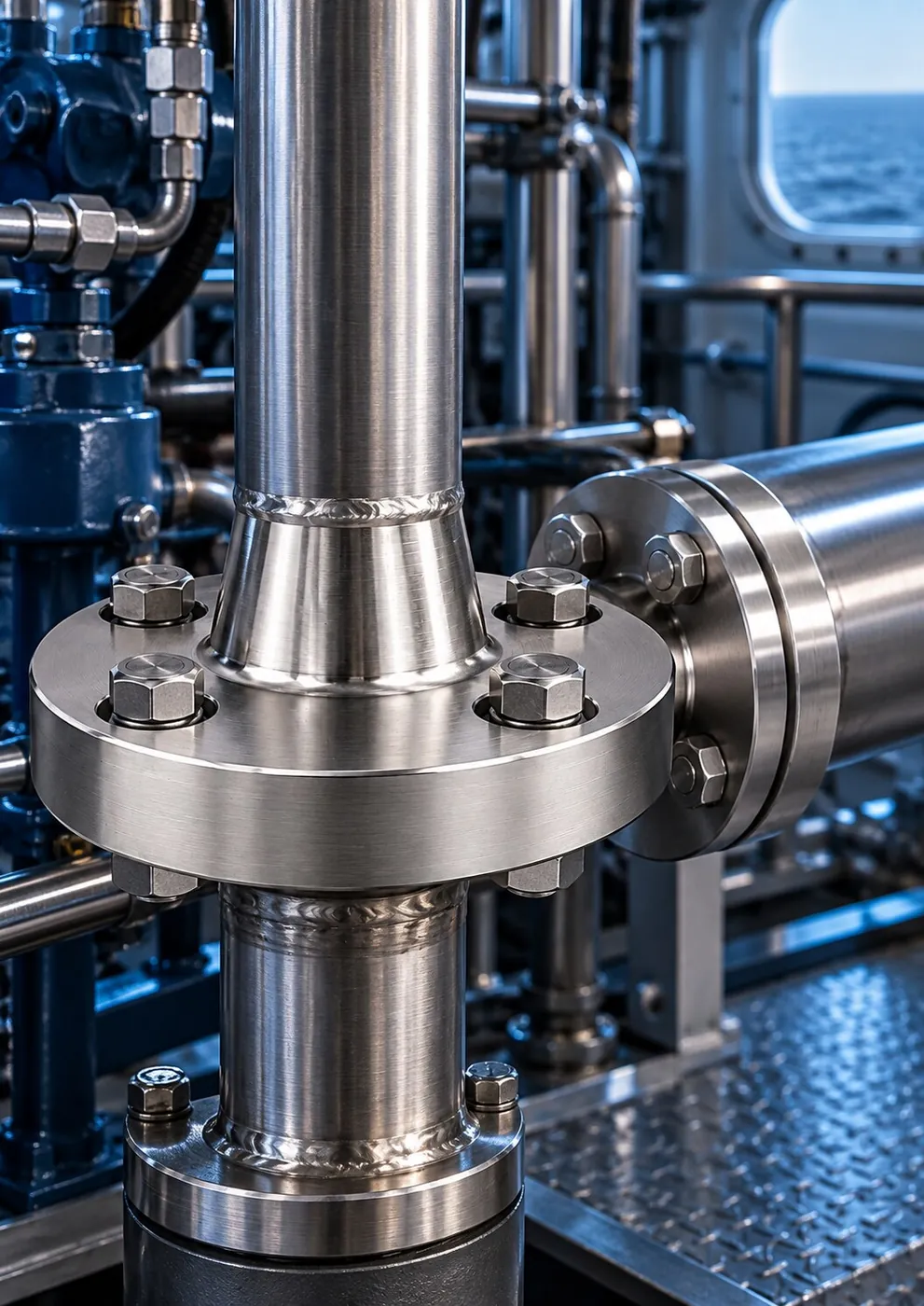
AISI 316L fittings, hose assemblies, SAE flanges and valves built to withstand salt spray and vibration on deck cranes, windlasses, steering gear, passerelles and engine room lines.

Stainless steel pipe, flanges, fittings and hose assemblies, from newbuild piping circuits to drydock overhauls; fast spares from stock for ship crane service teams.

AISI 316L hose ends, SAE flanges, adapters and valves for crane, pipe handling, deck machinery and power unit lines on drillships and platforms.
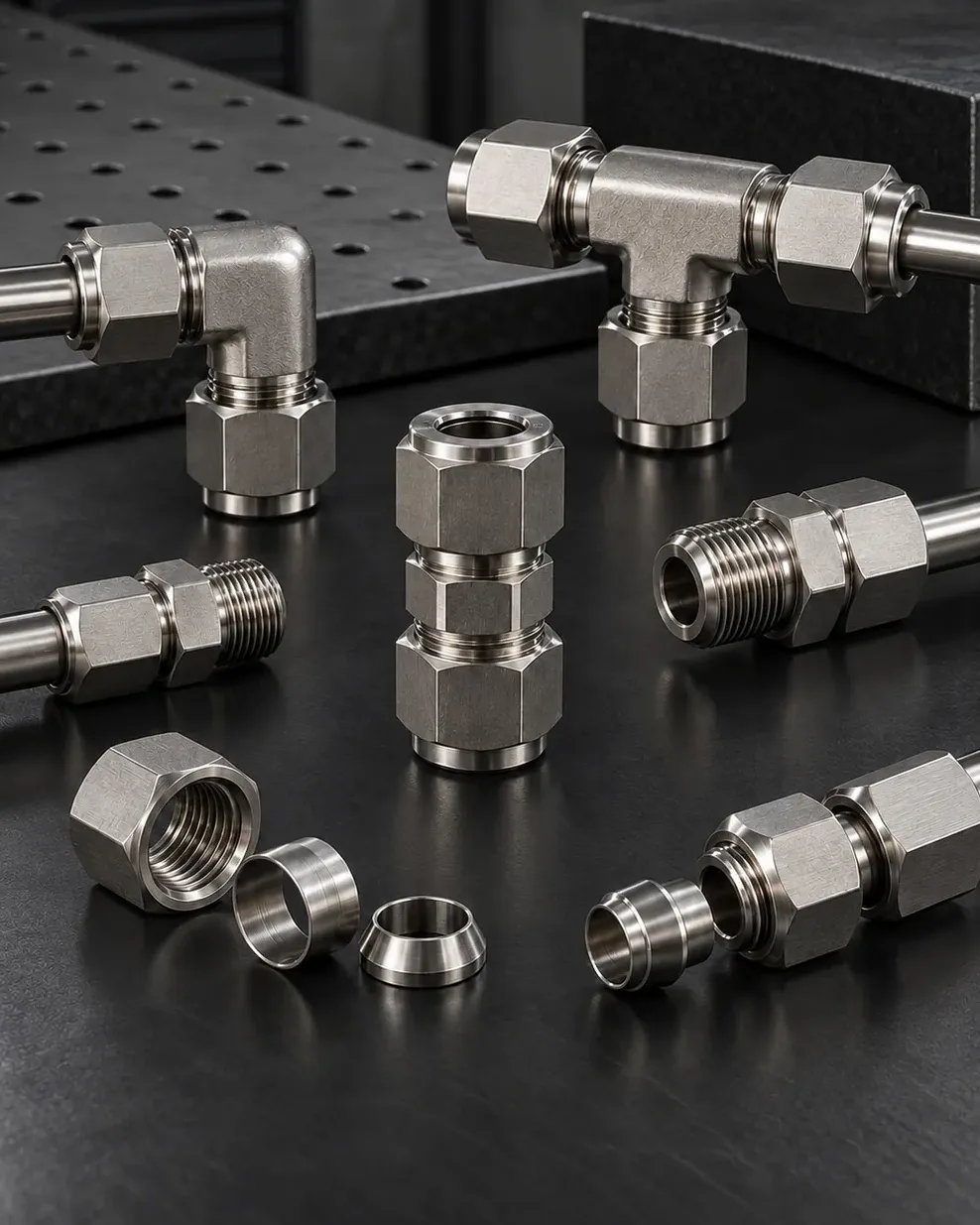
316L twin-ferrule fittings, needle valves, check valves and tubing for wellhead control panels, chemical injection, refinery instrument and sampling lines, and pipeline stations.
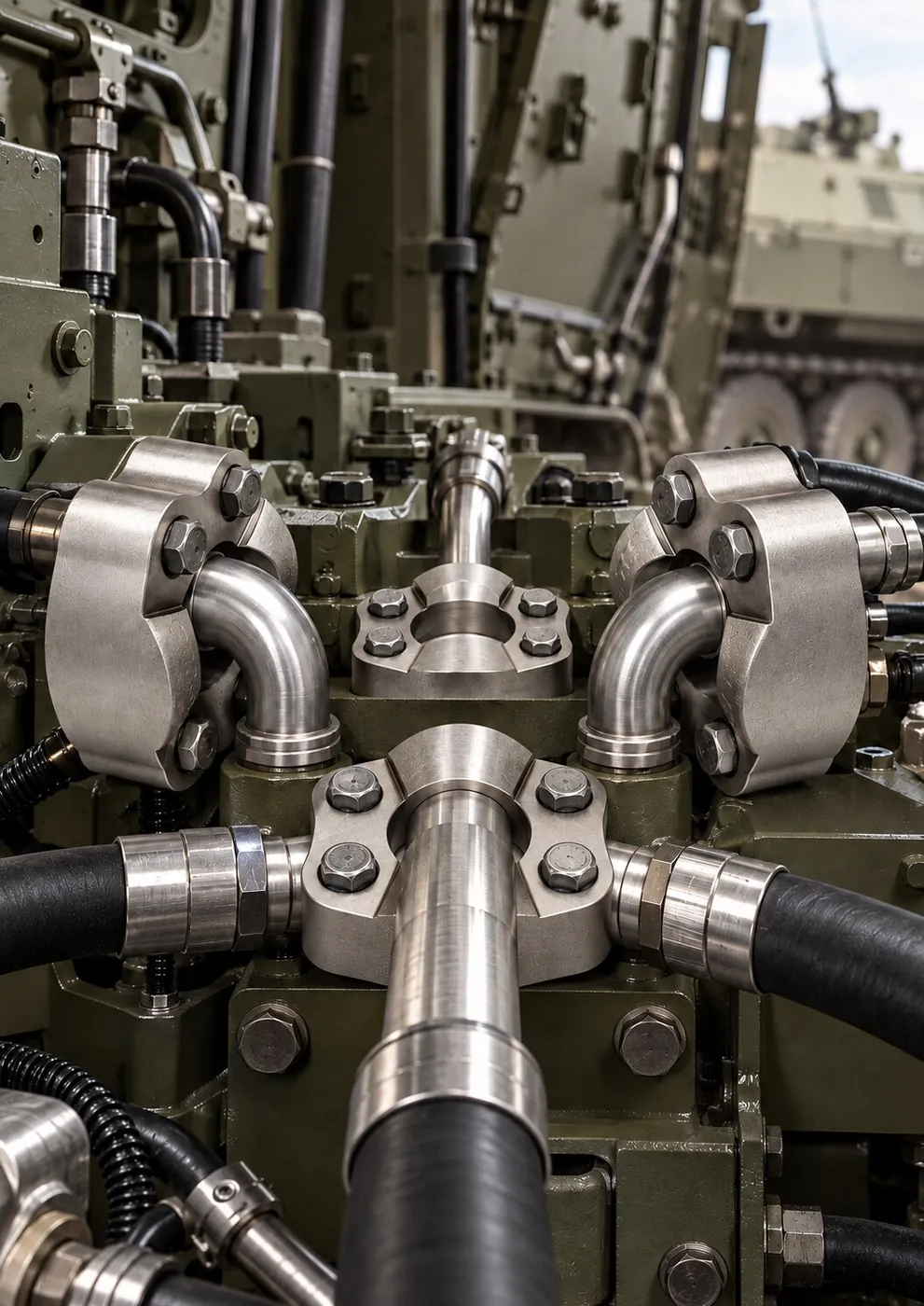
SAE flanges, adapters, elbows and hose fittings CNC-machined after technical drawing approval for mobile hydraulic systems, maintenance benches and compact power units.
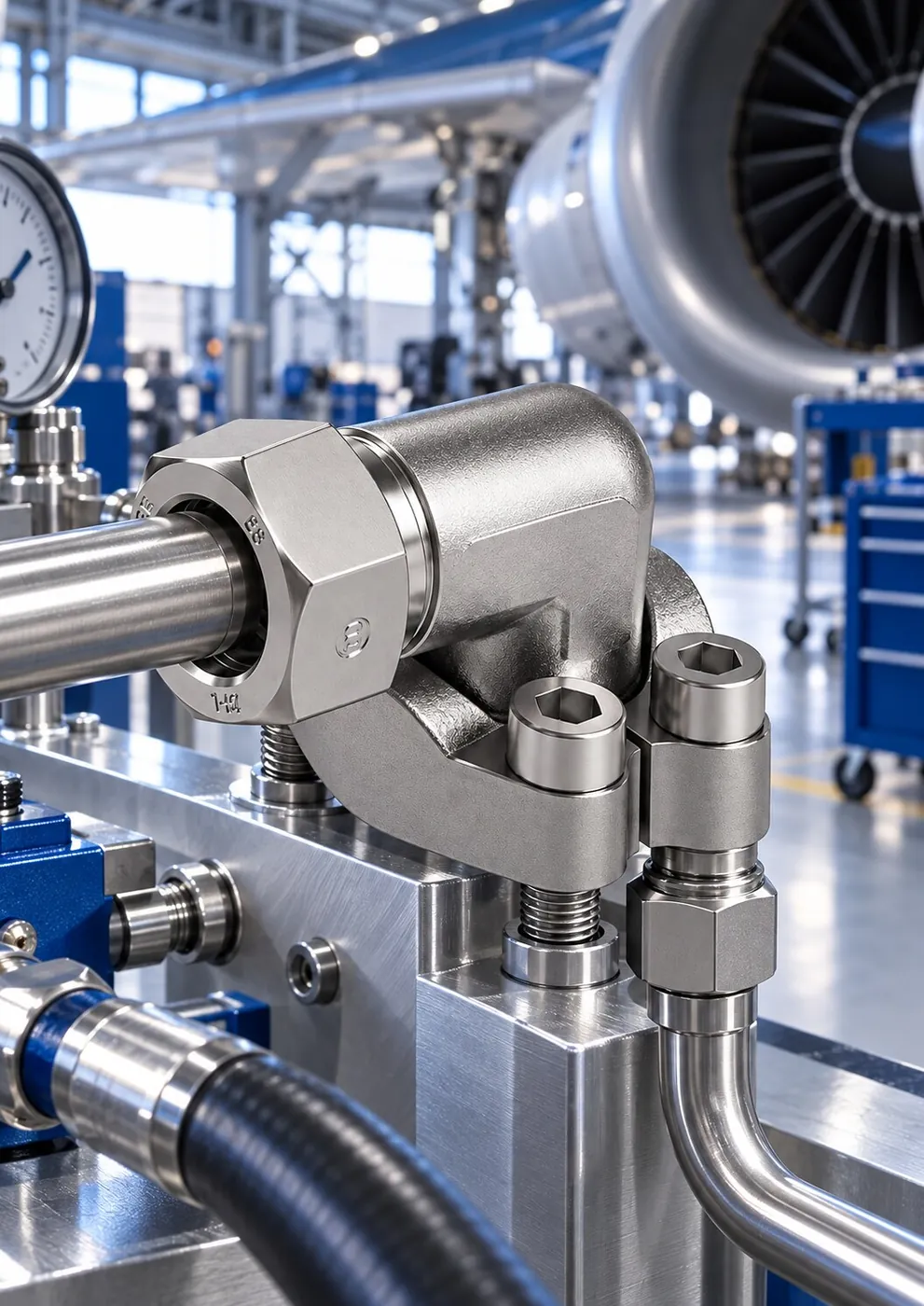
Compact AISI 316/316L fittings with clean threads and sealing surfaces for ground support equipment, hydraulic test benches and maintenance workshops.
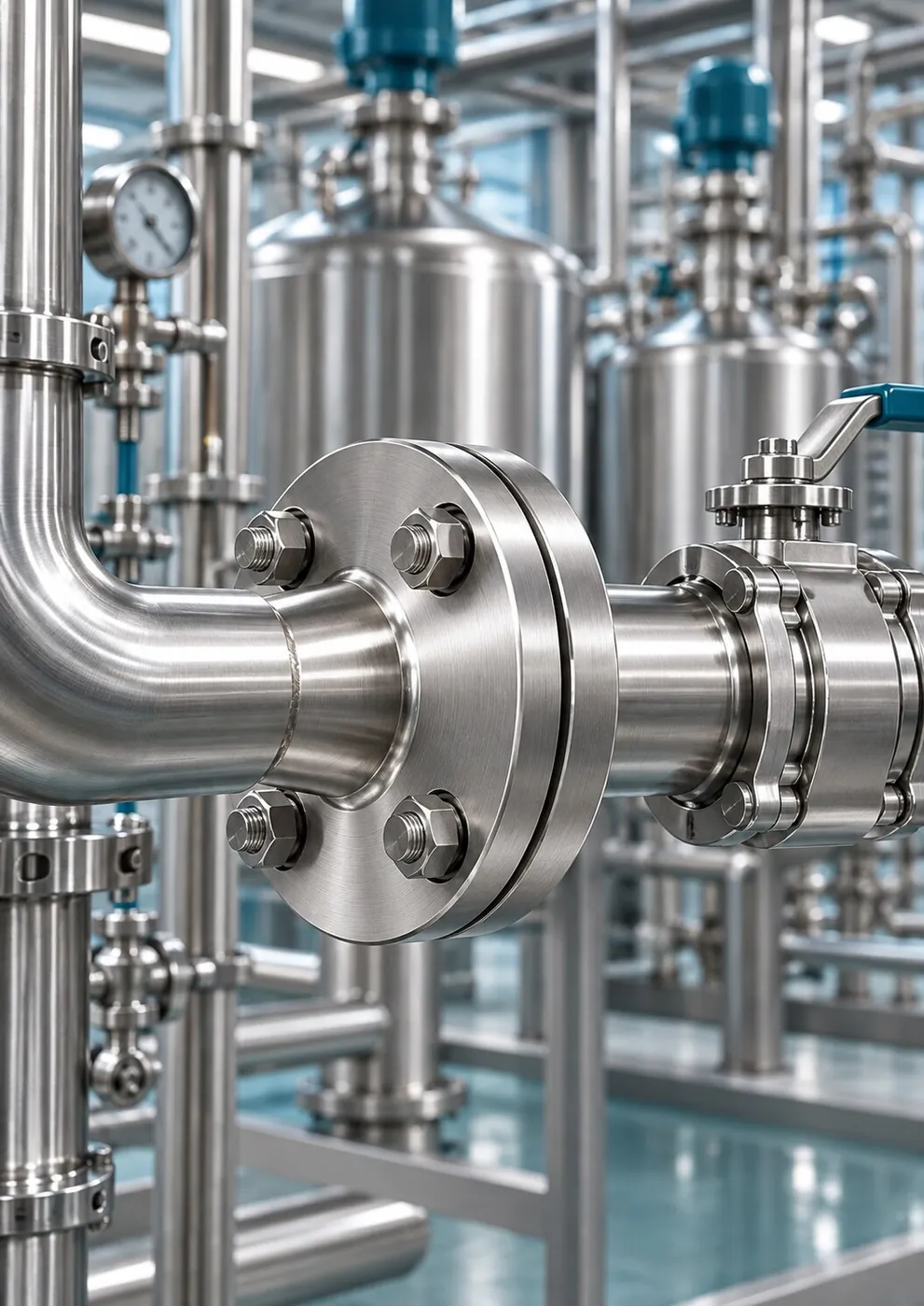
Stainless steel fittings, nipples, valves, flanges and hose fittings for chemical transfer and process lines, selected by weighing fluid compatibility, corrosion resistance, temperature and pressure together.
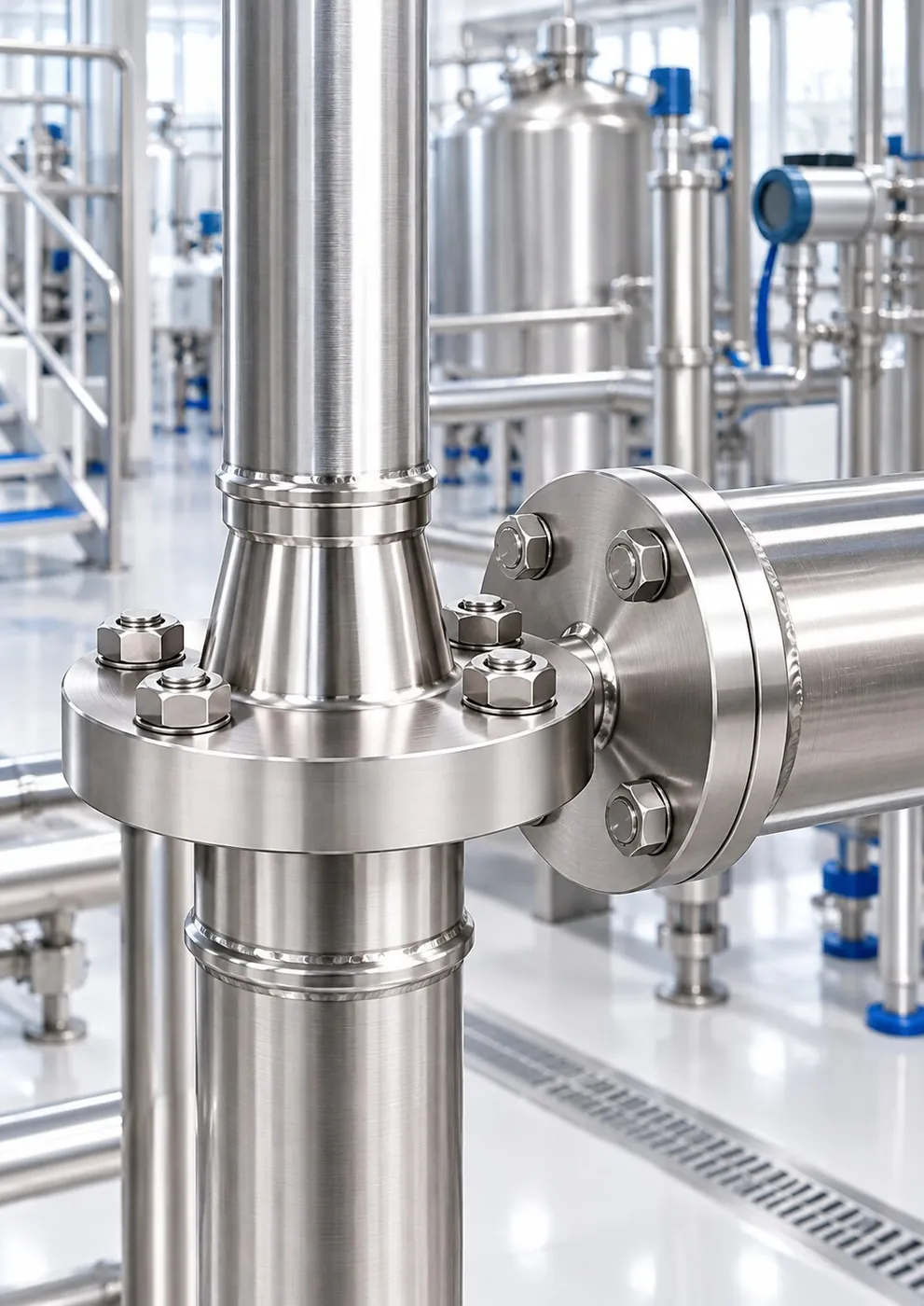
AISI 316/316L fittings, nipples, valves, flanges and hose assemblies for food and beverage lines that call for cleanable surfaces, corrosion resistance and maintenance access.
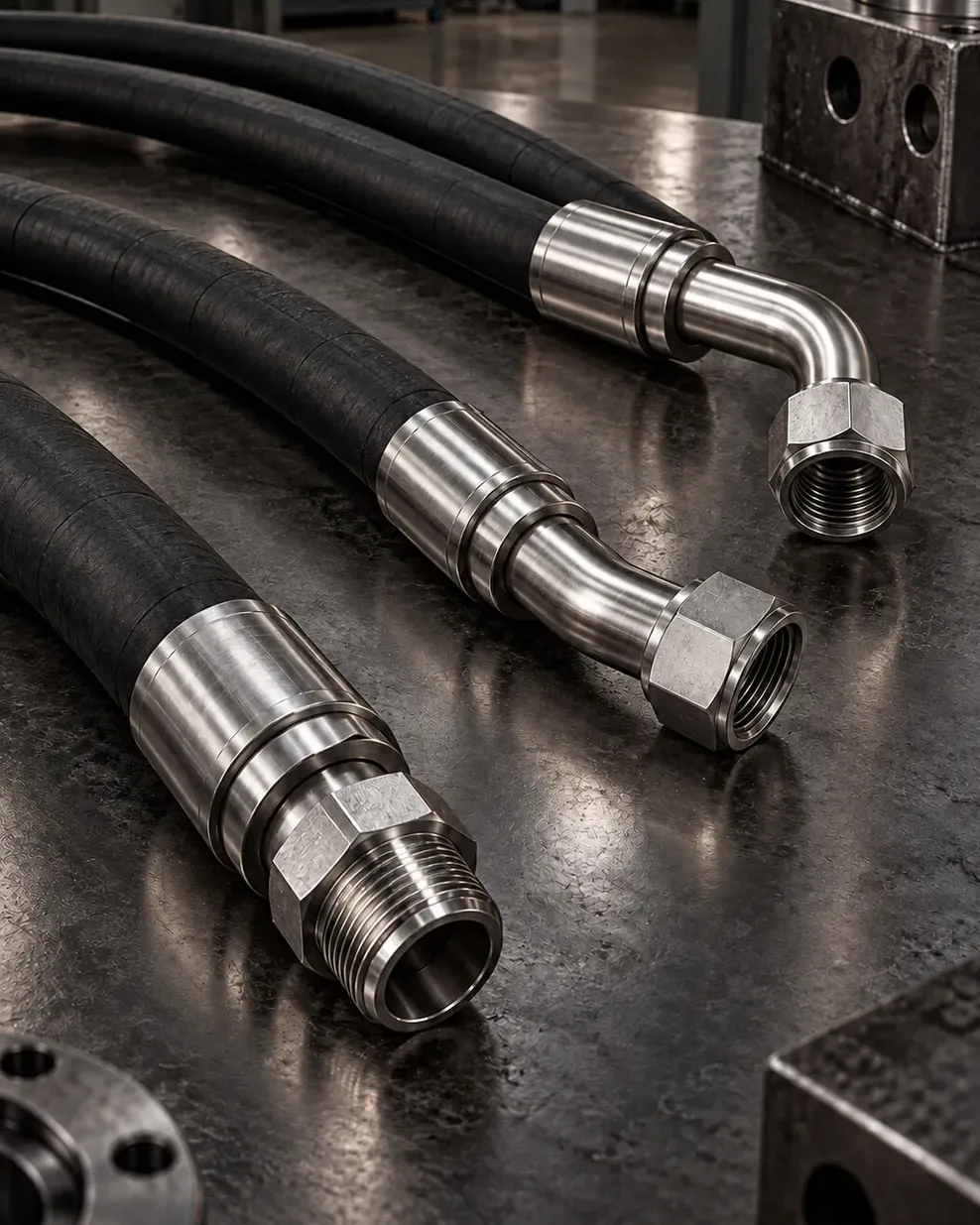
AISI 316L hose ends, SAE flanges, adapters and valves selected for mine water, vibration and abrasion on underground and open-pit machinery, crushing and screening, flotation, leaching and drainage lines.
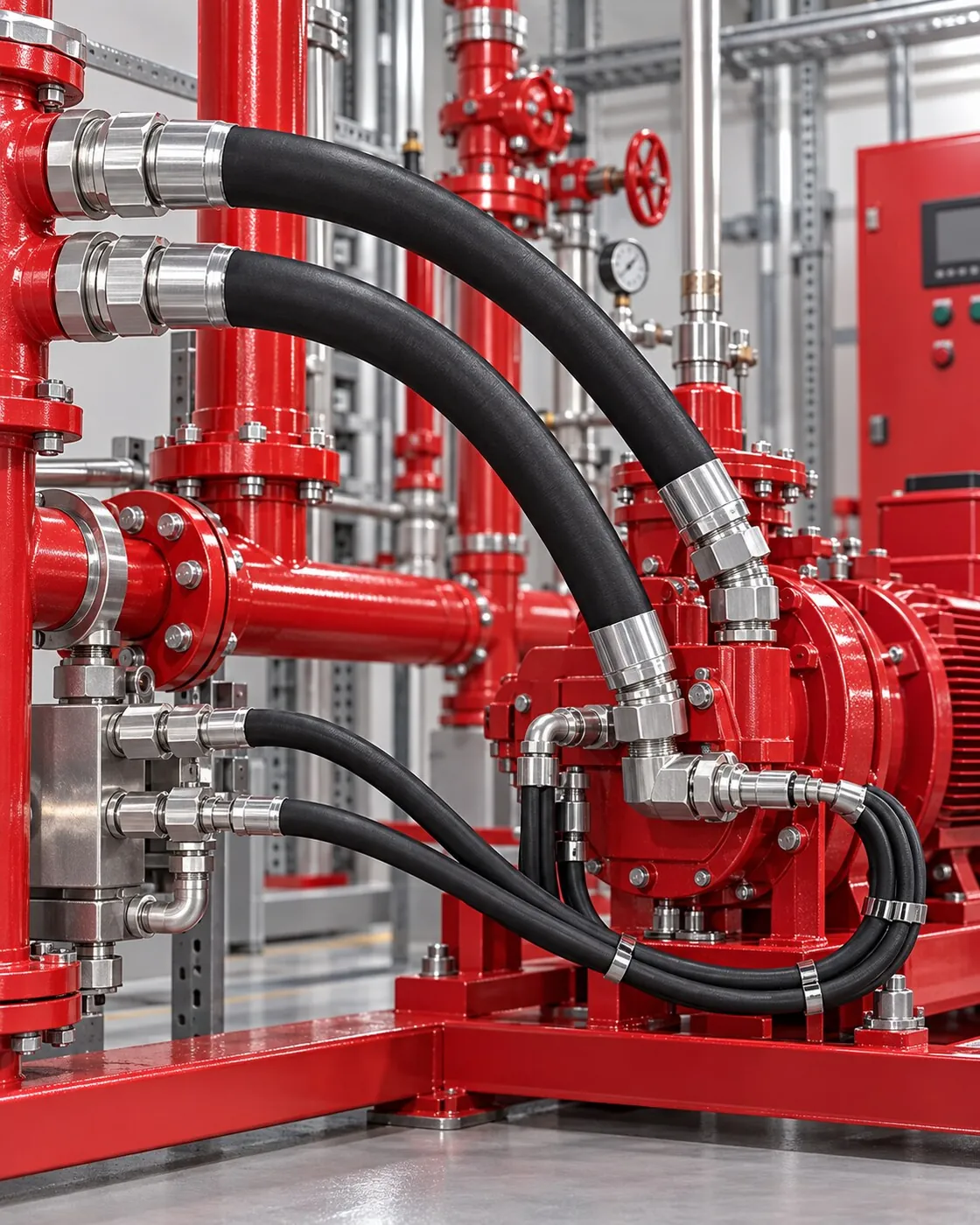
Neatly laid out, leak-tight stainless steel nipples, fittings, hose assemblies and flange connections that make servicing easier on fire pump sets, control skids and pressurized auxiliary lines.
6 products
BSP / NPT Adapters & Nipples 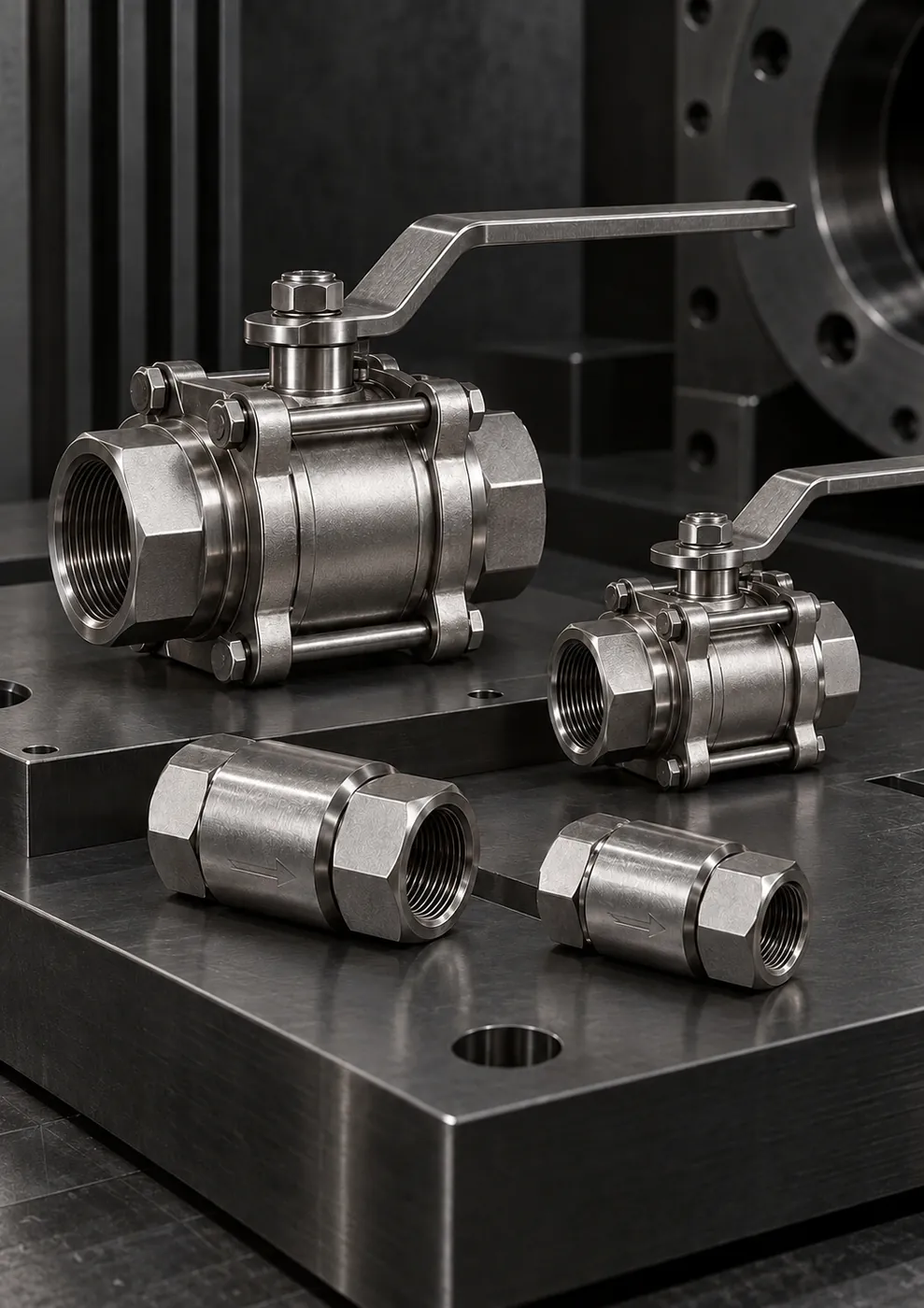 Ball, Needle & Check Valves
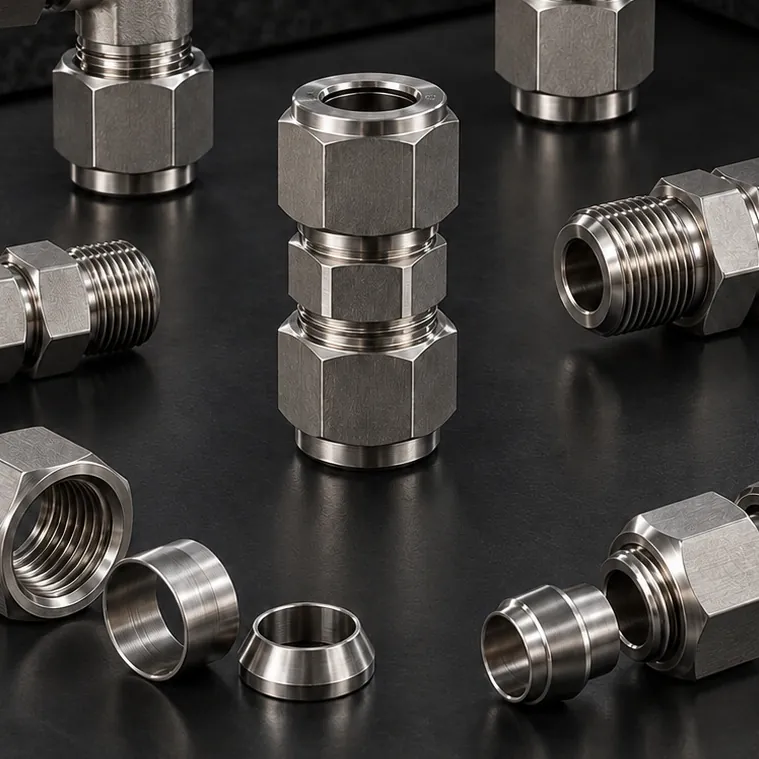 Twin Ferrule Instrumentation Fittings Twin Ferrule Instrumentation Fittings Twin Ferrule Instrumentation Fittings Twin Ferrule Instrumentation Fittings
FAQ
If your question isn't here, message us on WhatsApp with a ready-made message and our technical team will answer directly.
Ask on WhatsAppIt is not recommended. The body, nut and ferrules are designed together; mixing components from different manufacturers does not guarantee a seal. The body, nut and ferrules in a connection should all come from the same system.
No. Close sizes such as 6 mm and 1/4 inch (6.35 mm), or 12 mm and 1/2 inch (12.7 mm), are not interchangeable. The ferrule cannot grip the tube properly, and the connection may leak under pressure or the tube may blow out.
The nut is first tightened by hand, then turned with a wrench by the number of turns specified by the fitting manufacturer, while the body is held with a second wrench. Under-tightening causes leaks; over-tightening damages the ferrule and tube.
Seamless, annealed stainless steel tube is generally preferred. The tube must not be harder than the fitting material so that the ferrule can grip it. Outside diameter and wall thickness are selected according to the working pressure and the range recommended by the fitting manufacturer.
The line should be kept as short as possible, unnecessary branches that create dead volume should be avoided, and a needle valve or suitable shut-off valve should be fitted at the sampling point. For corrosive samples, the compatibility of the tube and fitting material with the sample should also be checked.
Quote and technical verification
Briefly describe your request; once size, material and lead time are clear, we'll respond with a written quote.
Details that speed up your quote