


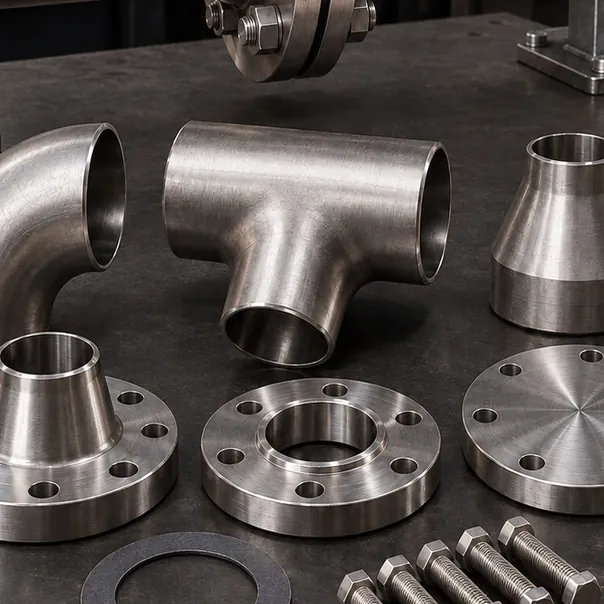
 Butt-Weld Pipe Fittings
Butt-Weld Elbow 90°
Details & quote
Product group
Butt-weld stainless steel elbows, equal and reducing tees, concentric and eccentric reducers; they form the geometry of the pipeline.
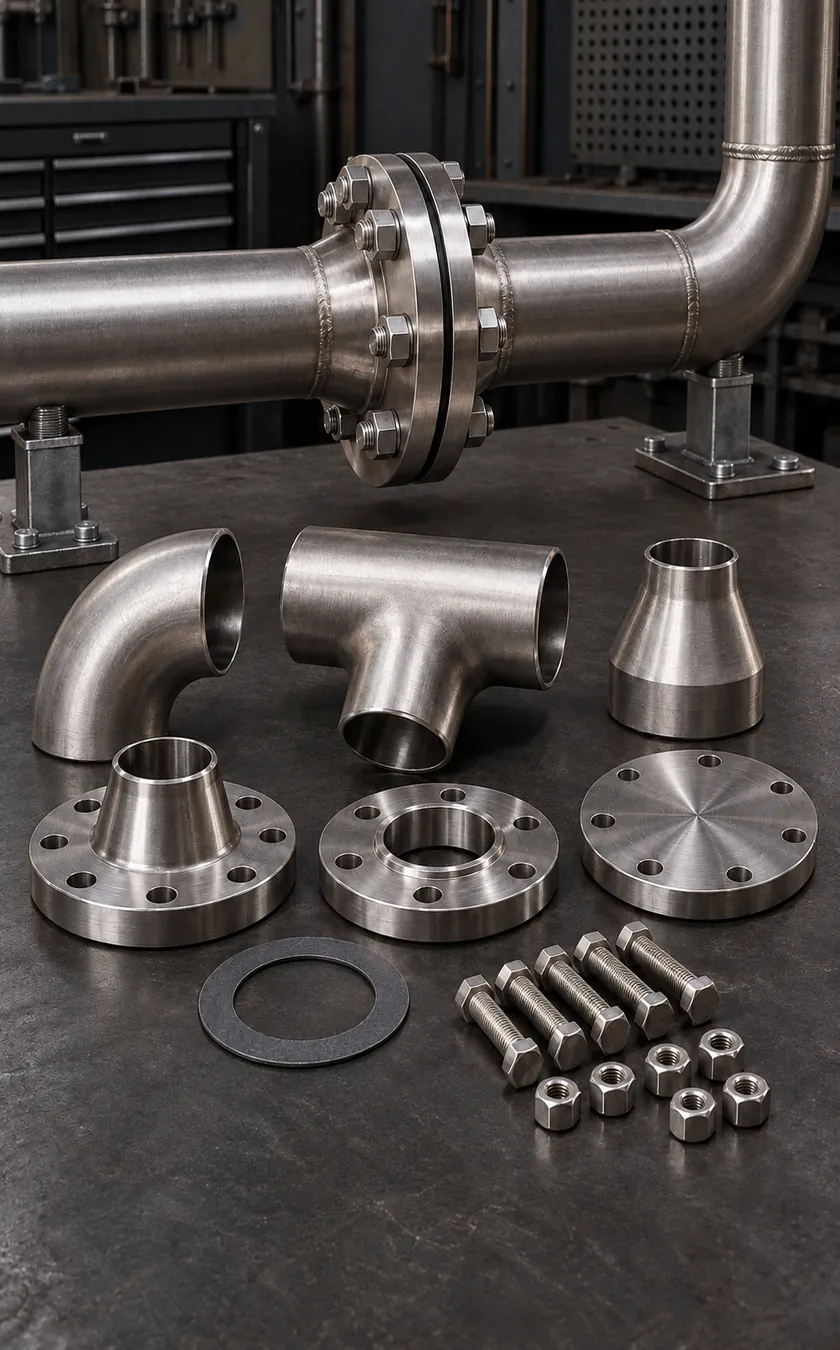 Butt-Weld Pipe Fittings
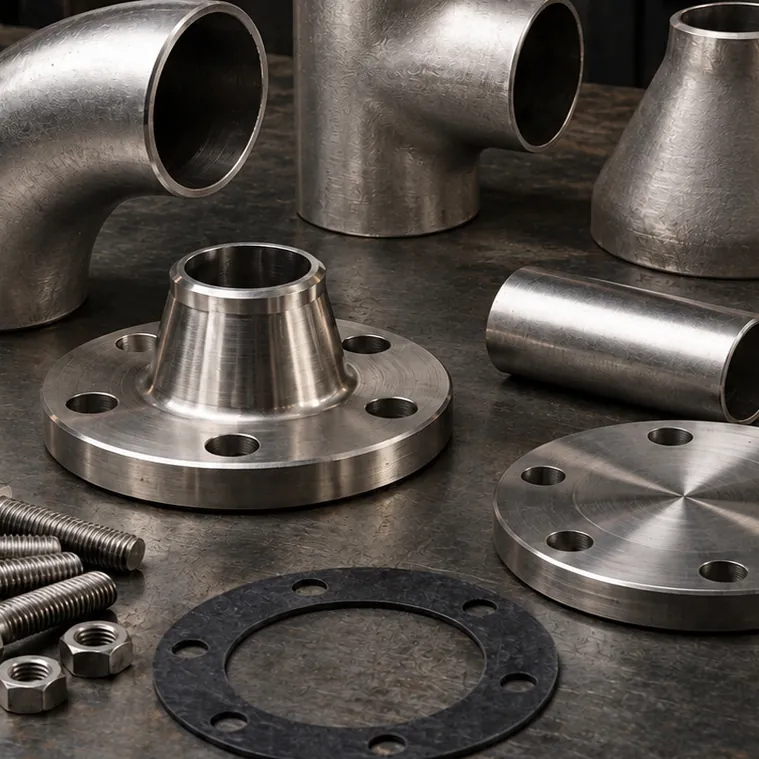 Butt-Weld Pipe Fittings Butt-Weld Pipe Fittings
Selection guide
Elbows, tees and reducers form the geometry of a welded pipeline. Butt-weld fittings join the pipe end at the same wall thickness, keeping the inner surface of the line continuous; this reduces flow losses, buildup points and the risk of crevice corrosion. Unlike threaded fittings, a welded joint carries no risk of thread leakage, which is why butt-weld fittings are preferred on process lines where sealing and cleanability are important. Selection is not based on nominal size alone; the wall thickness (Schedule), end preparation and pressure rating must be compatible with the pipe.
The ends are beveled according to the wall thickness, the parts are tacked in axial alignment, and misalignment is checked before welding. The welding method and filler material are determined by the project requirements; depending on the application, the inside of the pipe is purged with shielding gas to keep the root side from oxidizing. After welding, heat tint is removed by pickling and passivation or by a suitable mechanical method; discs and brushes that have been in contact with carbon steel are not used.
Header and distribution lines in chemical plants, cleanable process lines in food and beverage plants, pump discharge lines in fire suppression systems, and newbuild and repair piping in shipyards. Fittings in stock are typically ready to ship within 1-3 business days; jobs that require project-specific cutting and preparation are typically scheduled within 10-20 business days after technical approval. Stating the DN/NPS, Schedule and quantity of each part in your order prevents repeat shipments caused by missing items.
Not sure about the right size?
Send the sample, the technical drawing or your caliper measurements, and we'll confirm the thread standard and the matching part together.
+90 545 206 13 74Knowledge Center
Technical articles on selecting, installing and maintaining the products in this group.
On a stainless steel pipeline, fittings and flanges are selected by matching them to the pipe's DN/NPS size and Schedule wall thickness. Weld neck…
FAQ
If your question isn't answered here, message us on WhatsApp with dimensions or a photo, and our technical team will answer directly.
Ask on WhatsAppA long-radius (LR, 1.5D) elbow reduces flow loss and turbulence; it is the first choice for general use. A short-radius (SR, 1D) elbow is used in tight spaces where a long-radius elbow will not fit.
In a concentric reducer, both ends share the same axis; it is used on vertical lines and on the pump discharge side. In an eccentric reducer, one side is flat; on horizontal pump suction lines the flat side is placed on top to prevent air pockets from forming.
The Schedule determines the wall thickness. Parts with different wall thicknesses create a step at the weld; this step leads to turbulence in the flow, stress concentration at the weld root and a buildup point.
A butt-welded joint leaves the inner surface of the line continuous and eliminates the leak risk of a threaded connection. That is why butt-weld fittings are preferred on process lines where sealing and cleanability are important; flanges are used where a detachable point is needed.
When a smaller branch is to be taken off the main line, a reducing tee replaces an equal tee and a separate reducer with a single part. This reduces the number of welds and the length of the line. The main line and branch sizes should be specified together with the Schedule of each.