


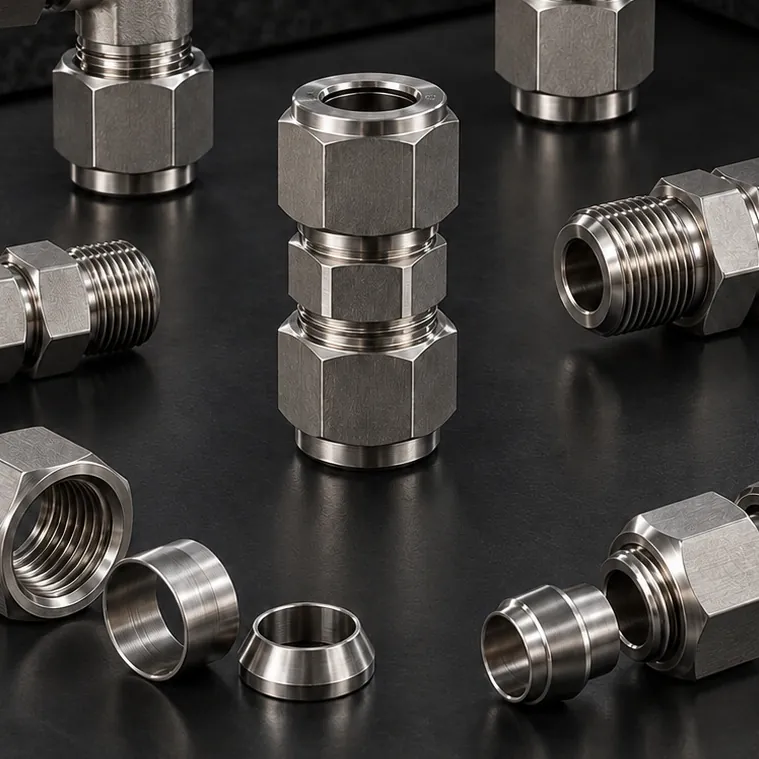
Twin Ferrule Instrumentation Fittings
Twin Ferrule Straight Union
Stainless steel twin-ferrule union joining two instrumentation tubes on the same axis. Weld-free, repeatable makeup in…

Wellheads · Refineries · Pipelines
316L twin-ferrule fittings, needle valves, check valves and tubing for wellhead control panels, chemical injection, refinery instrument and sampling lines, and pipeline stations.
Featured products in this sector
View all 20 productsProducts
20 products are listed for the operating conditions of Oil & Gas. Narrow down by group; open a product page for sizes and thread standards.
Twin Ferrule Instrumentation Fittings
Stainless steel twin-ferrule union joining two instrumentation tubes on the same axis. Weld-free, repeatable makeup in…
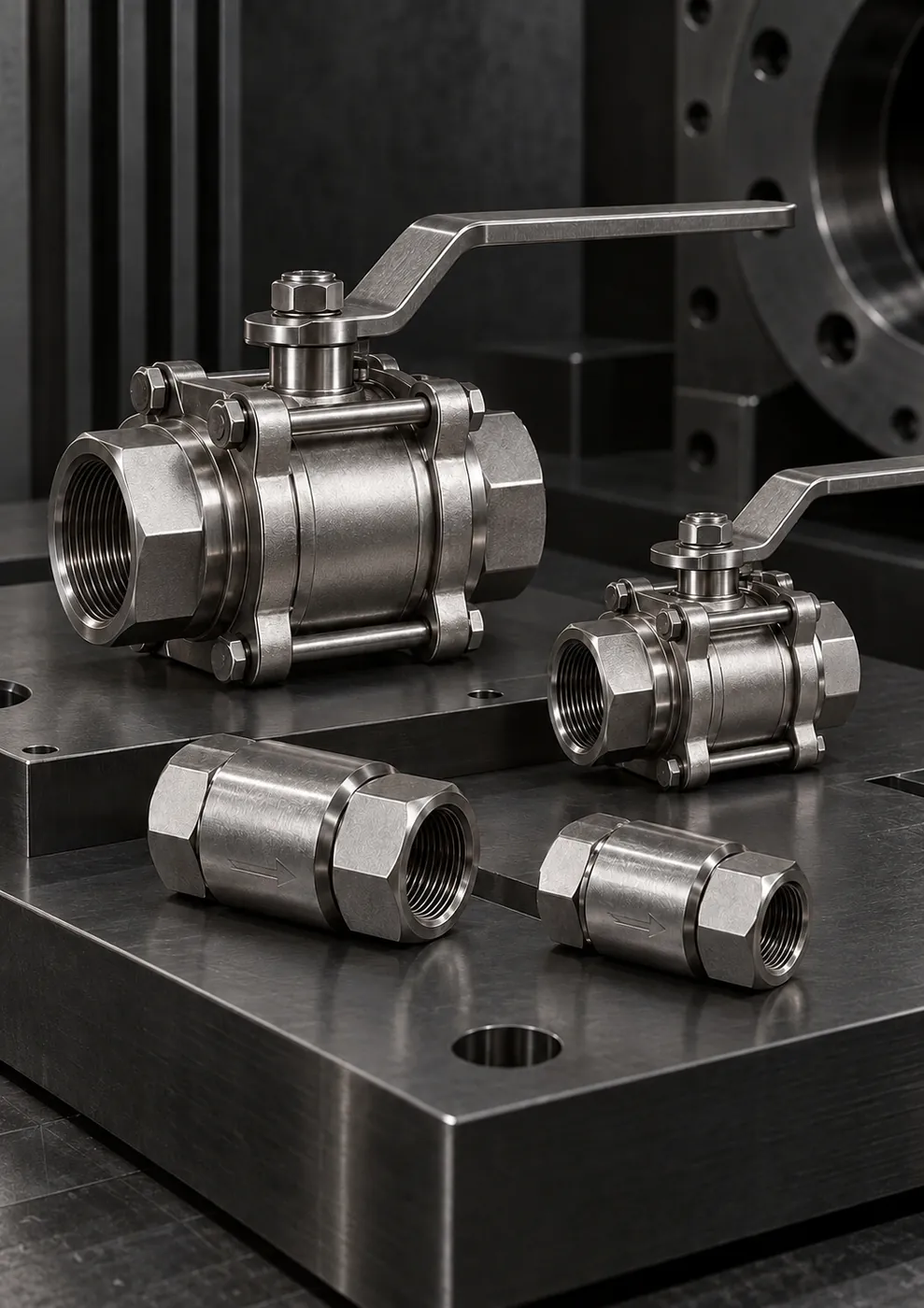
Ball, Needle & Check Valves
Stainless steel needle valve with a tapered stem for fine flow adjustment and isolation of measurement lines. For gauge, sampling…
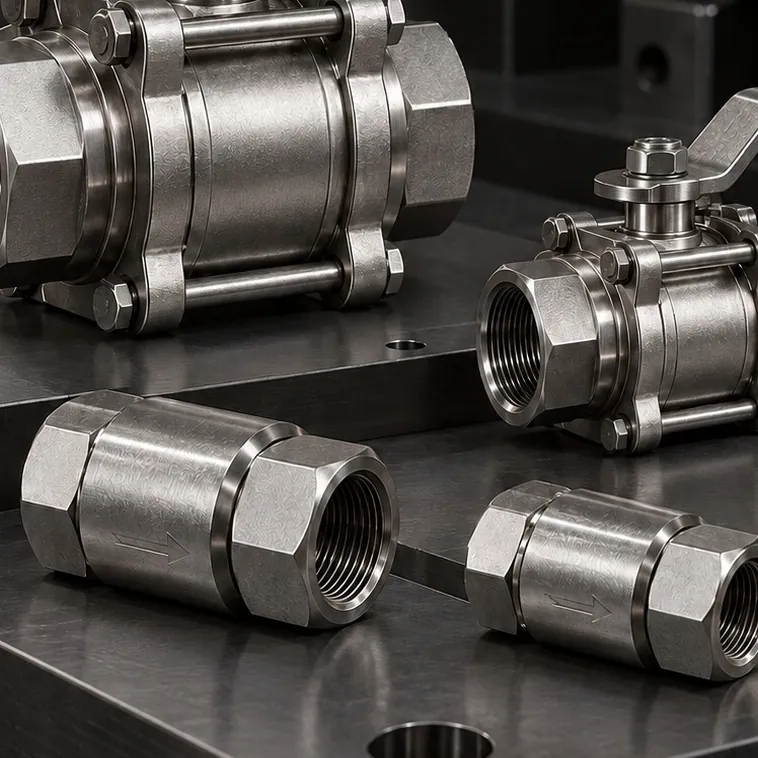
Ball, Needle & Check Valves
High-pressure stainless steel ball valve with an AISI 316L body, providing quarter-turn on/off service in hydraulic and process…
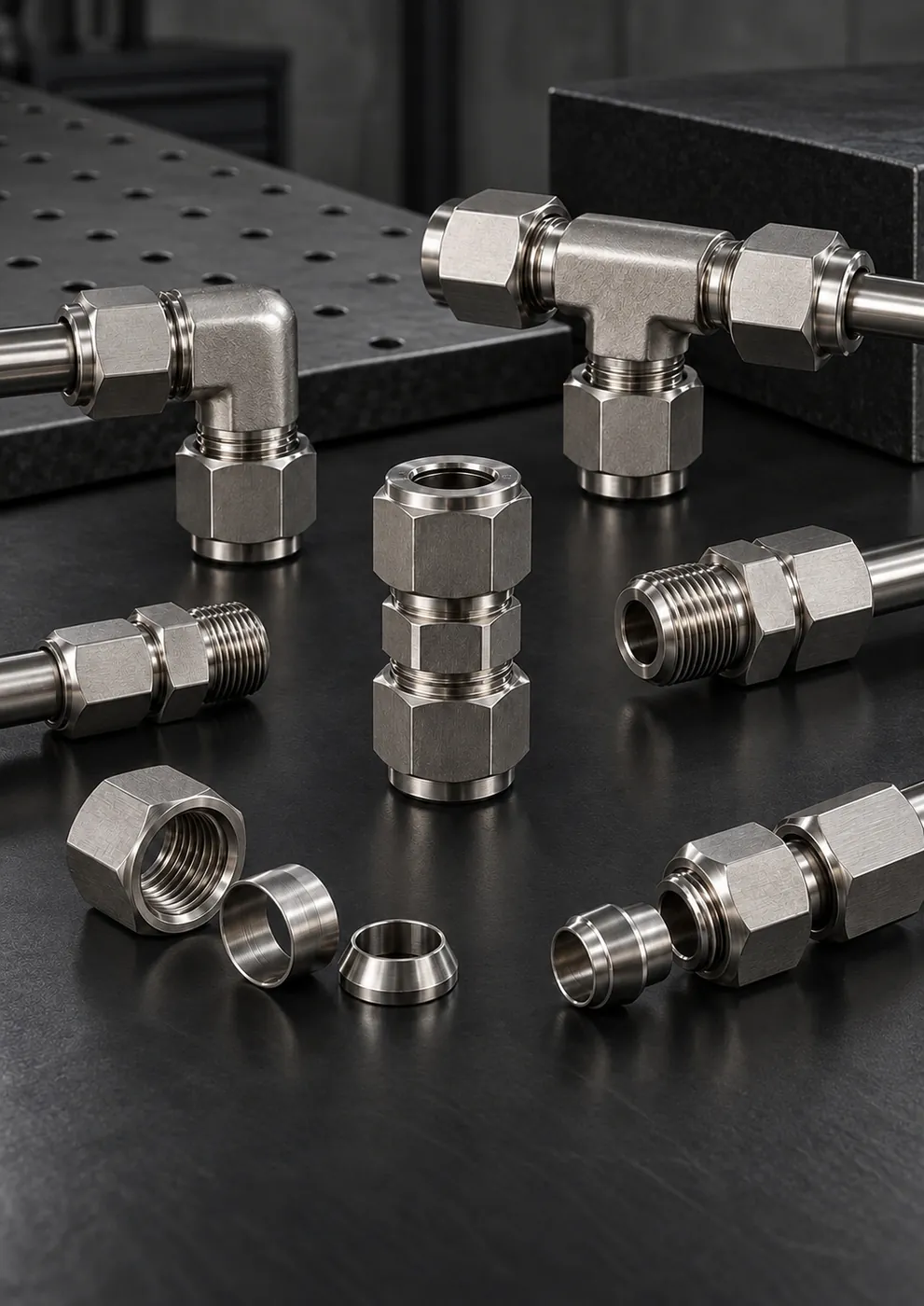
Twin Ferrule Instrumentation Fittings
Stainless steel twin ferrule union elbow joining two instrumentation tubes at 90°. Change of direction without bending tube…
Twin Ferrule Instrumentation Fittings
Stainless steel union tee with three twin ferrule ends for branching measurement and control lines. For transmitter, pressure…
Twin Ferrule Instrumentation Fittings
Stainless steel twin ferrule male connector joining instrumentation tube to a threaded port, with a tube end on one side and a…
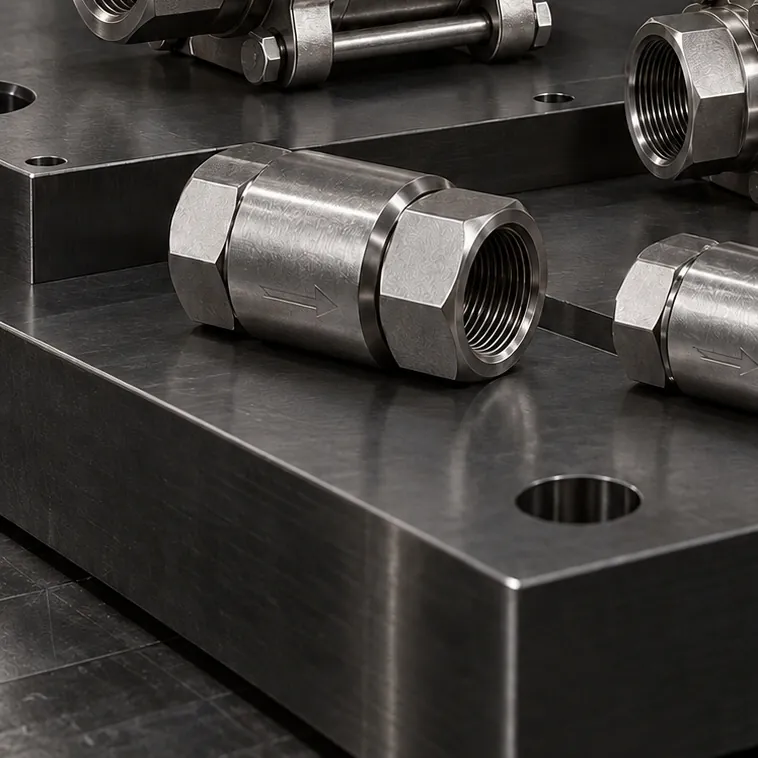
Ball, Needle & Check Valves
In-line stainless steel check valve that passes flow in one direction and stops reverse flow with a spring-loaded poppet. Female…
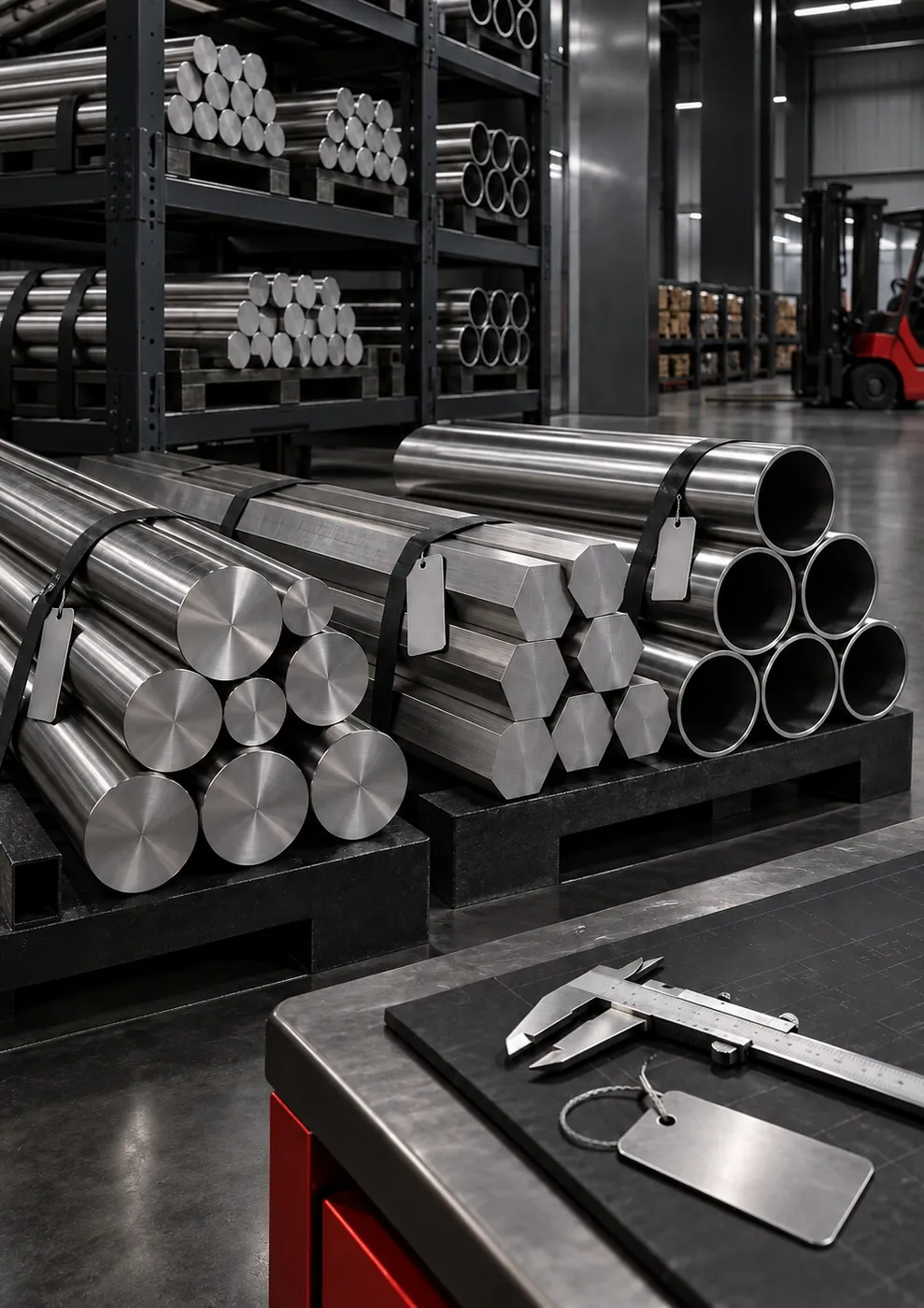
Stainless Steel Pipes & Flanges
Seamless stainless steel hydraulic tube in metric OD sizes for bite-type compression fittings and welded lines. AISI 316L; wall…
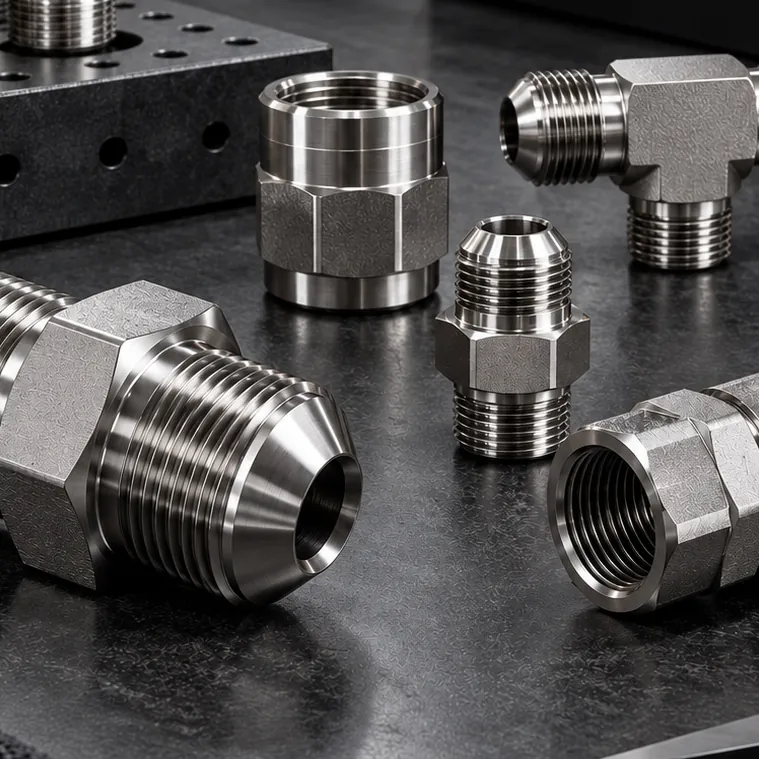
DIN 2353 Compression Fittings
Stainless steel 24° cone bulkhead coupling with locknut that routes a tube line through a panel, tank wall or ship bulkhead in a…
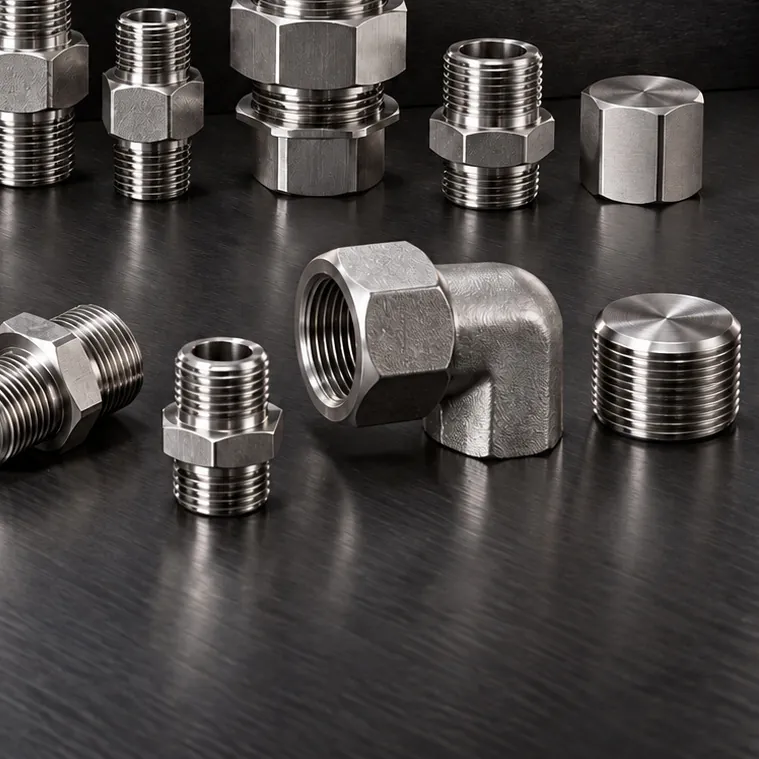
DIN 2353 Compression Fittings
Stainless steel 90° male stud elbow with a 24° cone tube connection on one end and a male NPT thread on the other. Tube outlet…
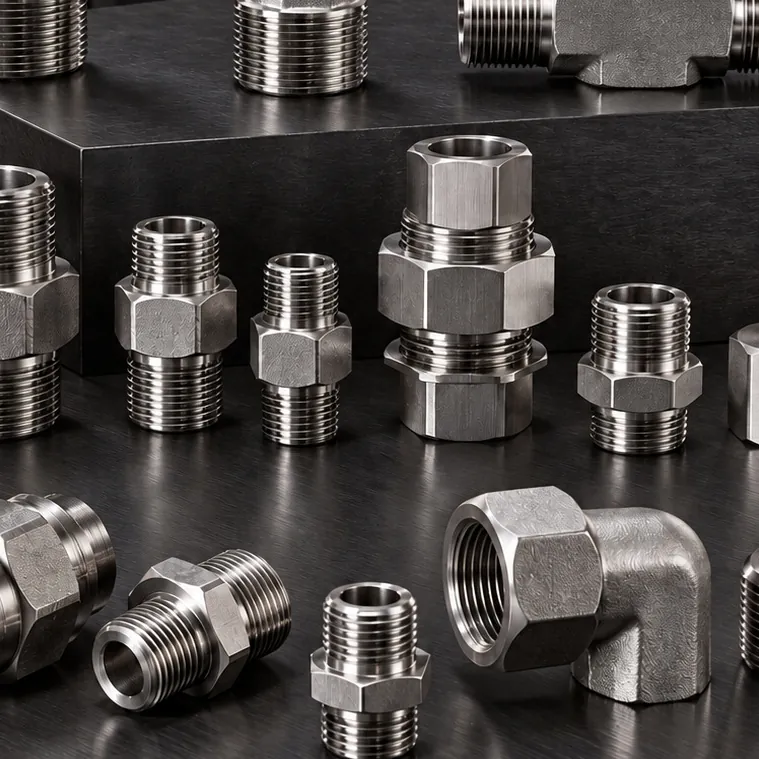
BSP / NPT Adapters & Nipples
Stainless steel conversion adapter with a BSP male thread on one end and an NPT male thread on the other. Connects equipment…
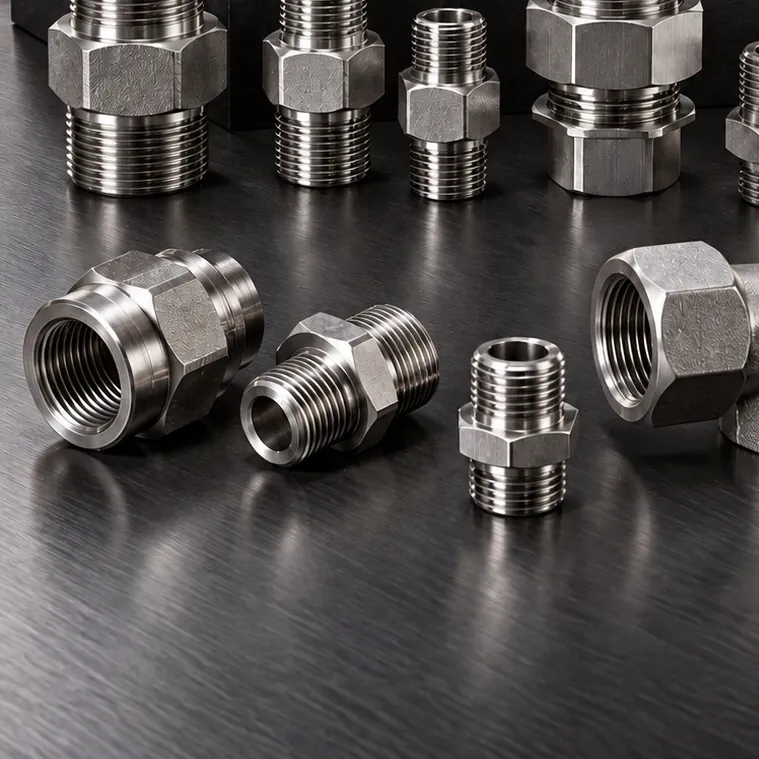
BSP / NPT Adapters & Nipples
Hex-body stainless steel reducing bushing with a male NPT tapered thread outside and a female NPT tapered thread inside. Steps…
JIC 37° Fittings & Adapters
Straight stainless steel adapter with a JIC 37° UNF male end and an NPT tapered male thread. Connects JIC hoses or tubing to…
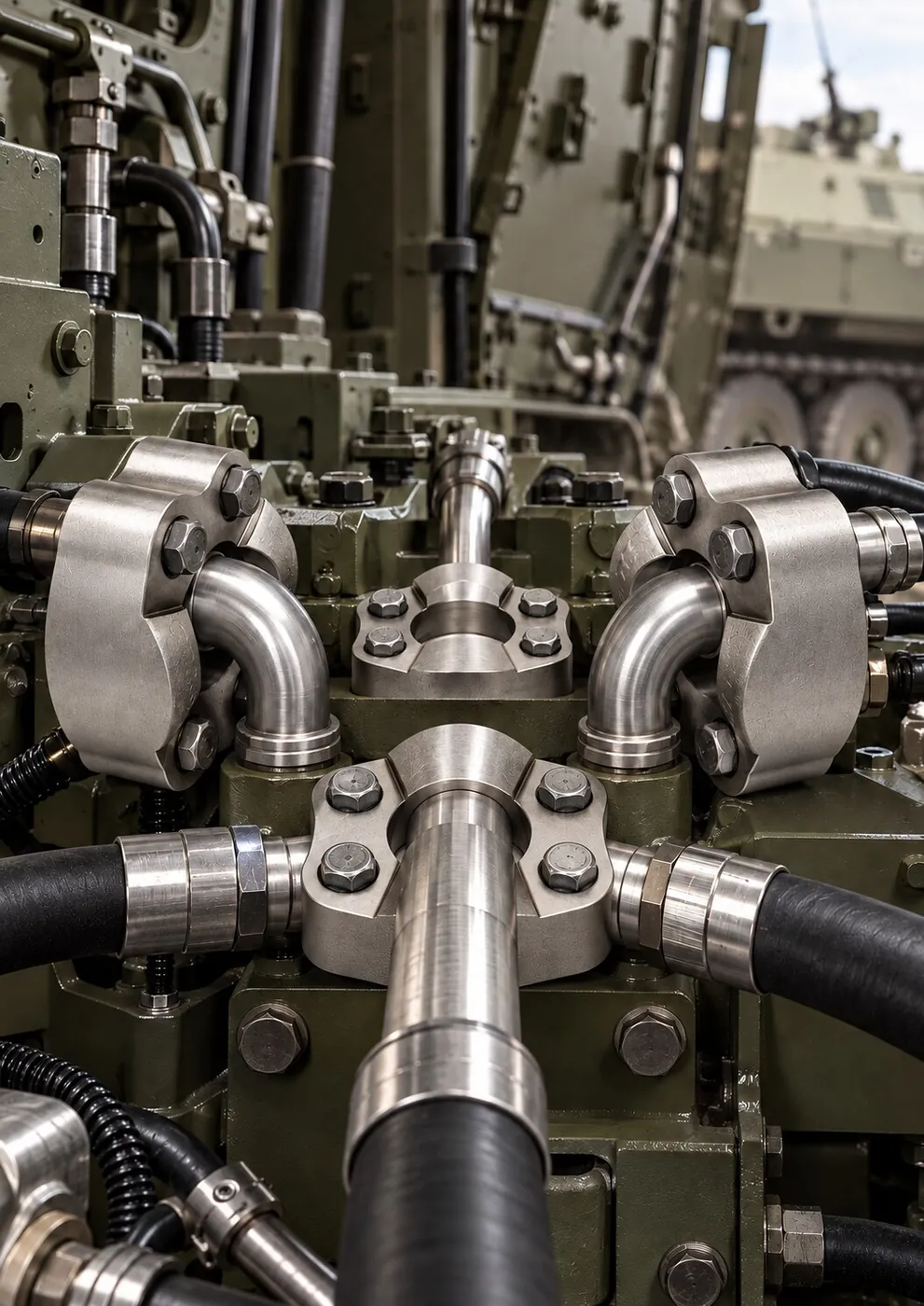
Custom-Made Hydraulic Parts
Stainless steel manifold blocks machined from solid to technical drawings, combining multiple hydraulic lines in a single body…
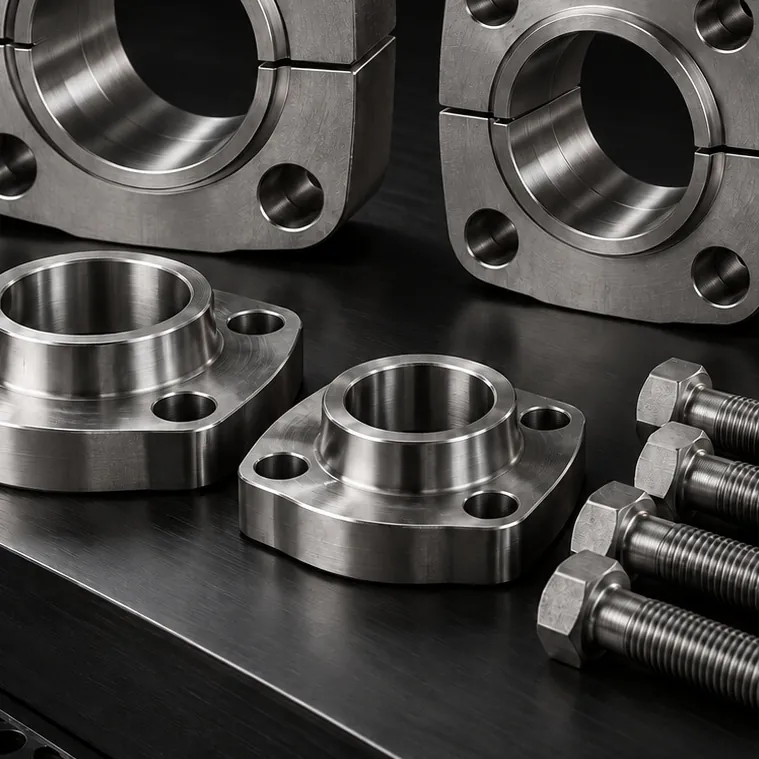
SAE Flanges (Code 61 / 62)
Two-piece stainless steel split flange clamp that holds a flanged-head hose fitting or tube end against an SAE Code 61 port…
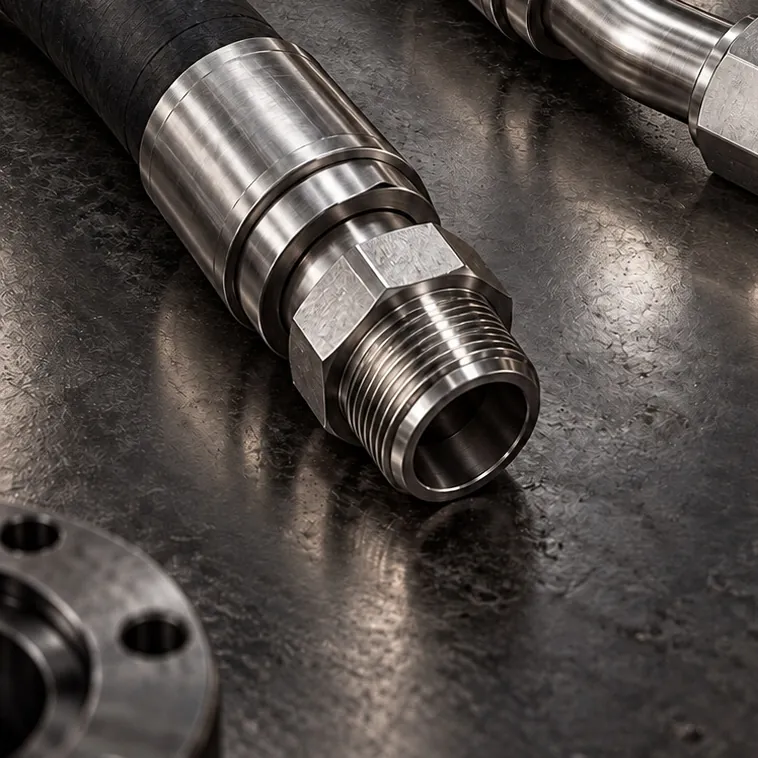
Hose Fittings & Ferrules
Stainless steel straight hose fitting with a female UNF swivel nut and JIC 37° cone seat. Crimp hose end for hydraulic systems…
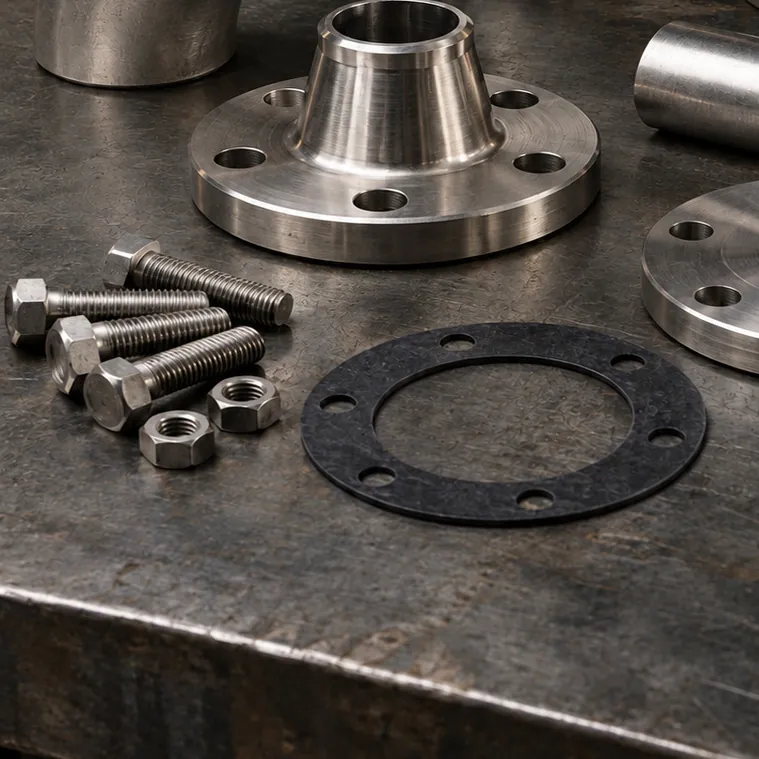
Stainless Steel Pipes & Flanges
Stainless steel flange with a tapered hub that is butt-welded to the pipe. For equipment connections and removable line breaks in…
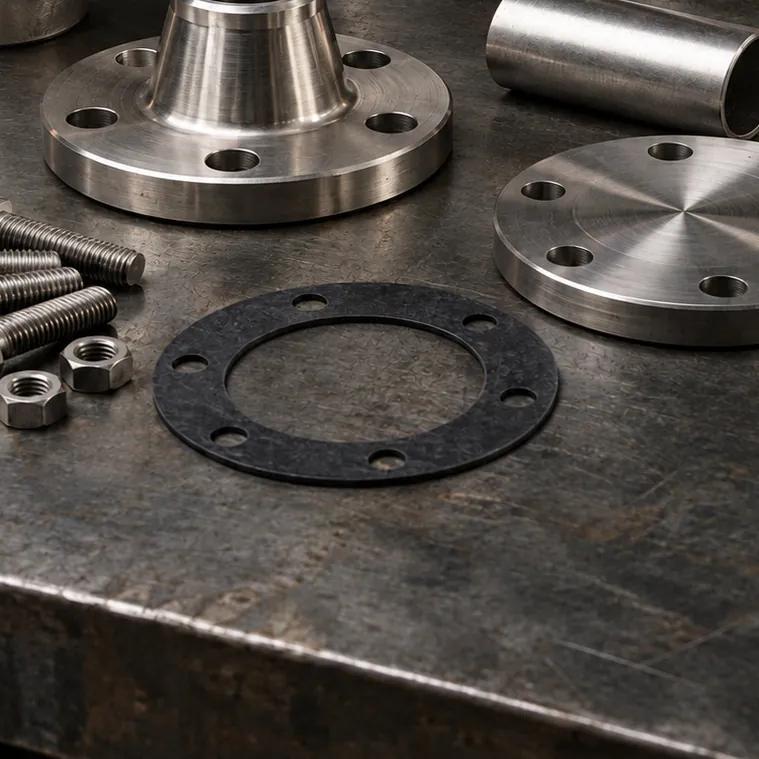
Stainless Steel Pipes & Flanges
Stainless steel blind flange that closes off the end of a pipeline or equipment outlet. For closing off lines, allowing for…
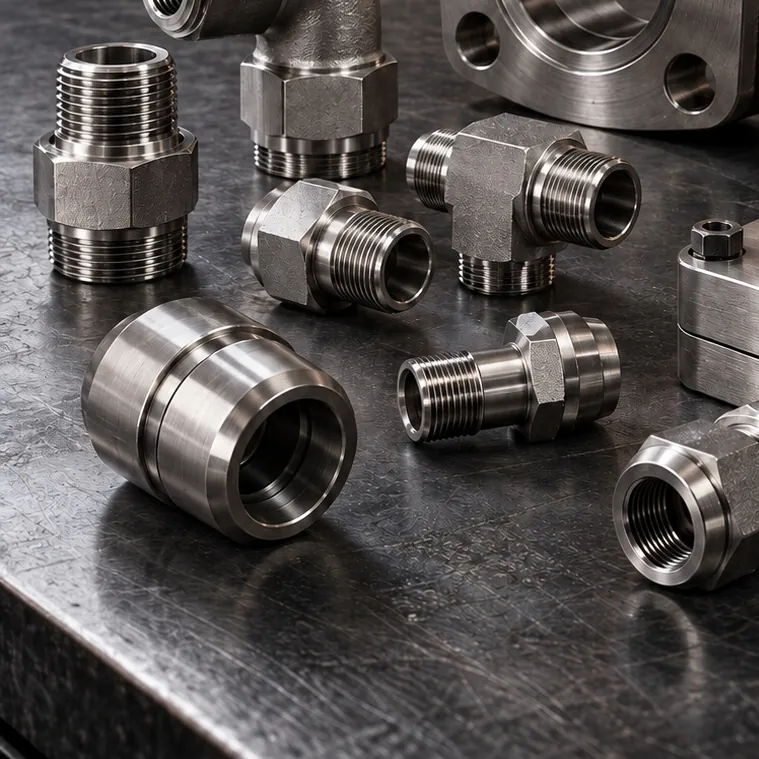
Weld Nipples & Weld Fittings
Stainless steel set consisting of a 24° cone body, a nut and an O-ring weld nipple that is butt-welded to the tube. Adds a…
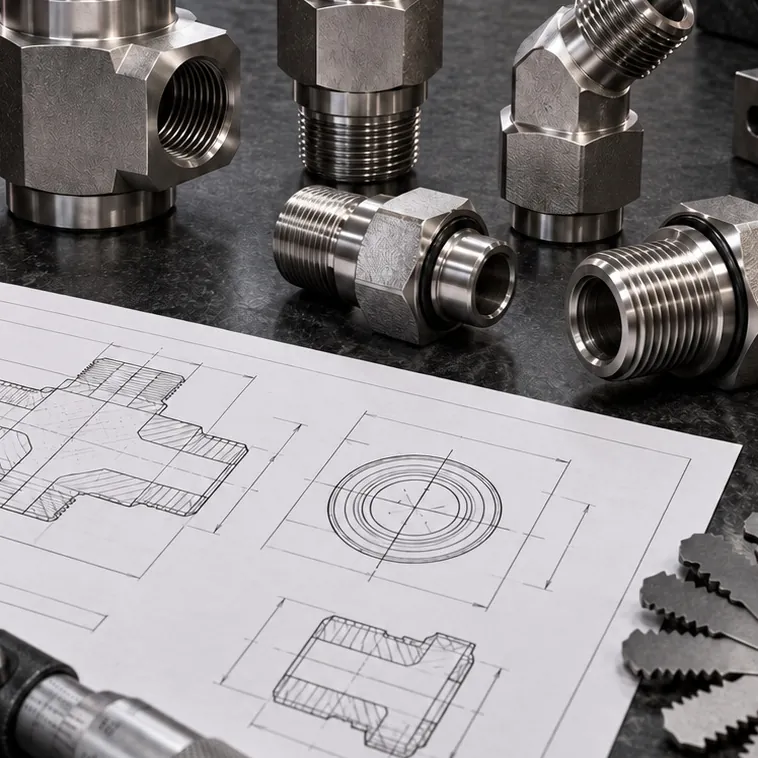
Custom-Made Hydraulic Parts
Custom stainless hydraulic adapter CNC-machined from a sample or technical drawing for thread, size and angle combinations not…
Can't find your part in the list?
Send a sample photo, technical drawing or dimensions; we'll identify the right fitting from our catalog or through custom manufacturing.
Faik Güney · Contact person
Services
Beyond supplying parts, we complete the job in the field with piping, hose assembly, custom manufacturing and technical identification.
AISI 316/316L tube with twin-ferrule union, elbow, tee, connector and adapter fittings for small-bore measurement…
View service – Instrumentation TubingOrderly, labeled and service-friendly connections with stainless steel tube and fittings on control panels, power units…
View service – Control Panel & HPU TubingSelection of AISI 316L-body ball valves, needle valves and check valves by body, connection standard, bore size…
View service – Valves, Check Valves & Flow ControlWhere a standard product is not the answer: custom adapters, nipples, flange blocks and transition parts made from a…
View service – Custom Parts from Drawings & SamplesIdentifying BSP, NPT, UNF/JIC and metric threads by measurement, matching them correctly to the mating part, and…
View service – Fitting & Thread IdentificationHydraulic hose assembly and crimping: hose assemblies with straight, 45° and 90° stainless steel ends in BSP, JIC, NPT…
View service – Hydraulic Hose AssembliesWelded and demountable stainless steel lines built from AISI 316/316L pipe, flanges and fittings: bevel preparation…
View service – Stainless Steel Pipe FabricationStandard stainless steel fittings, adapters, hose ends, flanges and valves ready to ship within an average of 1-3…
View service – Fast Supply & Shutdown SupportOverview
Quick answer
In oil and gas facilities, AISI 316/316L twin-ferrule fittings, needle valves, check valves, ball valves, tubing and hose connections are used on wellhead control panels, chemical injection units, refinery and petrochemical instrument, impulse and sampling lines, and pipeline valve actuators. Selection is based on design pressure, the fluid, the presence of H2S and chlorides, temperature, and the material and documentation requirements of the project specification.
In oil and gas facilities, a small-bore fitting is part of the safety chain of a much larger system. The control line that holds a wellhead safety valve open, the injection tubing that delivers corrosion inhibitor into a pipeline, the impulse line of a transmitter: each one requires the right material, correct installation and traceable documentation. Sites are often remote, hydrocarbons, H2S and chlorides may be present, and the specification changes from project to project.
GÜNEYSS prepares AISI 316/316L twin-ferrule instrumentation fittings, needle valves, check valves, ball valves, stainless steel tubing, flanges and hose assemblies for teams working at onshore fields, refineries, petrochemical plants and pipeline stations, and for companies that build panels and skids for these facilities. Non-standard transition pieces and manifold blocks are manufactured to technical drawings.
Field conditions
We select fittings for these conditions and specify the material, sealing type and installation method accordingly.
Describe your own conditionsMaterial selection for sour service lines depends on NACE MR0175 / ISO 15156 in production, mostly on MR0103 / ISO 17945 in refineries, and on the project specification.
Saline produced water from the well and a hot, humid, chloride-laden atmosphere increase the risk of pitting and stress corrosion cracking in 316L.
On safety valve control lines, the pressure rating of the fittings, tubing and valves must each be confirmed separately.
Requirements for 3.1 certificates, PMI, hardness and marking vary from project to project; missing documents can stop a part from being accepted on site.
Wellheads and line stations operate outdoors, far from maintenance crews; every connection is a potential leak point.
In classified areas, equipment and installation methods are subject to regulations and the operator's safety requirements.
Technical selection notes
Points we clarify with you before ordering for Oil & Gas applications.
The fluid, design pressure, temperature and any H2S or chlorides are the starting point for material suitability.
NACE MR0175 / ISO 15156 or MR0103, a material certificate, hardness, PMI or testing requirements should be specified in the quote request.
Inch and metric tubing and fittings are separate families; bodies, nuts and ferrules should come from the same system.
At the injection point, a check valve stops backflow but does not isolate; the specification determines whether a single valve or DBB is required upstream of the instrument.
Tube bending and a custom manifold block reduce the leak points created by a chain of elbows and adapters.
Detailed guide
This page focuses on onshore fields, refineries, petrochemical plants and pipelines; offshore platforms and drillships are covered on our “Offshore & Drilling” sector page. Wellhead equipment (API 6A) and BOP control systems (API 16D) are subject to their own standards and certification requirements; we make no claim to supply parts for this equipment itself. For auxiliary lines, confirm the applicable specification in writing before ordering.
Control panels, injection lines and measurement points are built with small-bore stainless steel tubing. Twin-ferrule (double ferrule) fittings grip the tube without welding, in a controlled and repeatable way; needle valves are used for flow adjustment and gauge isolation, and check valves to prevent backflow. The main points to watch:
AISI 316L is a common material in hydrocarbon service and against atmospheric corrosion; however, its use is limited in H2S-containing environments and in hot, chloride-bearing water. Material requirements for these environments are defined by NACE MR0175 / ISO 15156 in oil and gas production and, in refineries, mostly by NACE MR0103 / ISO 17945. ISO 15156 accepts austenitic stainless steels within limits that depend on temperature, chloride content, H2S partial pressure, pH and the presence of elemental sulfur; it also sets requirements for heat-treatment condition and hardness. Whether a line stays within these limits is decided by the project specification; if this requirement applies, it should be stated clearly in the order.
In chloride environments, pitting resistance is compared using PREN (Cr + 3.3 Mo + 16 N); on this scale, 316L is clearly below duplex and super duplex steels, and as temperature rises it becomes more susceptible to localized corrosion and stress corrosion cracking. For this reason, specifications may call for duplex, super duplex, 6Mo or nickel alloys under severe conditions. Since our raw material is AISI 316/316L, state any different material class in your quote request; whether the request can be met will be stated clearly before the order.
In oil and gas projects, documentation is part of the delivery. The purchase specification may call for an EN 10204 3.1 material certificate, positive material identification (PMI), hardness values, a pressure test or specific marking. Raw material batches are recorded at receiving and kept traceable; parts undergo dimensional, thread and surface inspection before dispatch. State your documentation, testing or inspection requirements in writing at the quotation stage; the scope that can be provided is clarified before the order.
Hydraulic or gas-over-oil actuators on line valves, their control blocks, hand pumps and pressure-sensing lines are connected with small-bore stainless steel tubing and fittings. Most line valve stations are unmanned and operate outdoors in every season; reducing the number of connections, supporting the tubing against vibration and positioning valves where they can be reached for maintenance all lower the risk of leaks. In the hydraulic power units of compressor and pump stations, large-bore pressure lines are mostly built with SAE flanges, and moving connections with hose assemblies with stainless steel ends. A manifold block machined to a technical drawing can replace a chain of elbows and adapters. If there is an additional requirement for connections and installation in hazardous (explosive atmosphere) areas, it should be stated in the specification.
Refinery turnarounds are planned in advance; the earlier the requirements list is finalized, the more orderly the shipments. Before the turnaround, we recommend listing the fittings, valves and tubing to be replaced together with their size family (inch or metric), thread standard (NPT, BSPP, BSPT), material and documentation requirements. Parts are packed separately by order and size group; open threads and ports are protected with caps. The delivery plan is communicated before the order, taking documentation and testing requirements into account.
Applications
Teams in Oil & Gas that need fittings, hose assemblies and custom parts.
Twin-ferrule fittings, needle valves and check valves for wellhead control panels, accumulators and safety valve control lines.
Tubing, valve and injection point connections for inhibitor, methanol and glycol dosing skids.
Stainless steel tubing components for transmitter impulse lines, sampling points and analyzer systems.
Fittings, tubing and valves for line valve actuators, pressure-sensing and pilot lines.
Manifold, bulkhead and distribution connections for WHCP, HPU and ESD panels.
316L fittings for tank farm measurement, sampling and valve control lines.
Gallery
Control and test panel with pressure gauges (illustrative image)
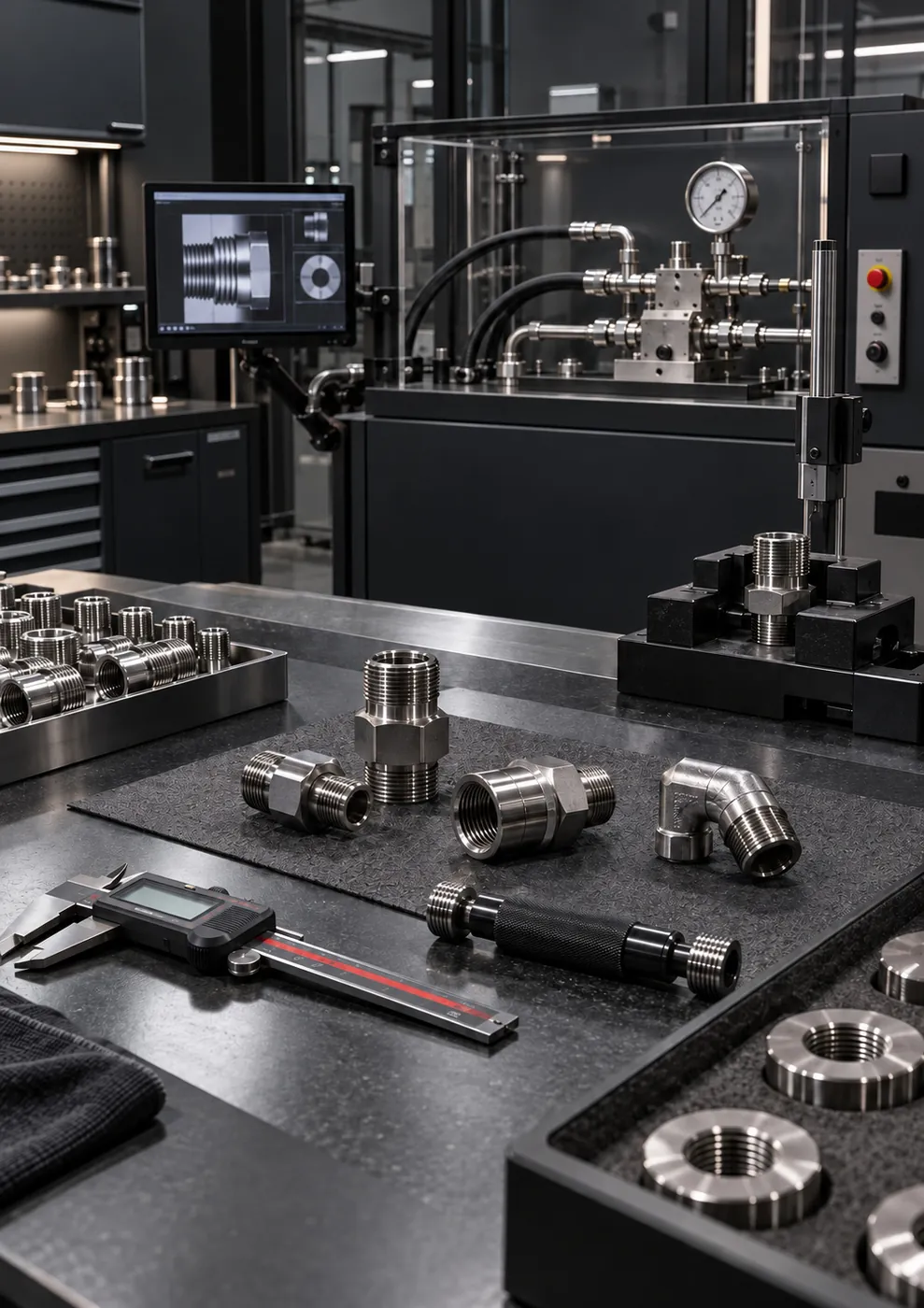
Stainless steel ball valves and check valves (illustrative image)
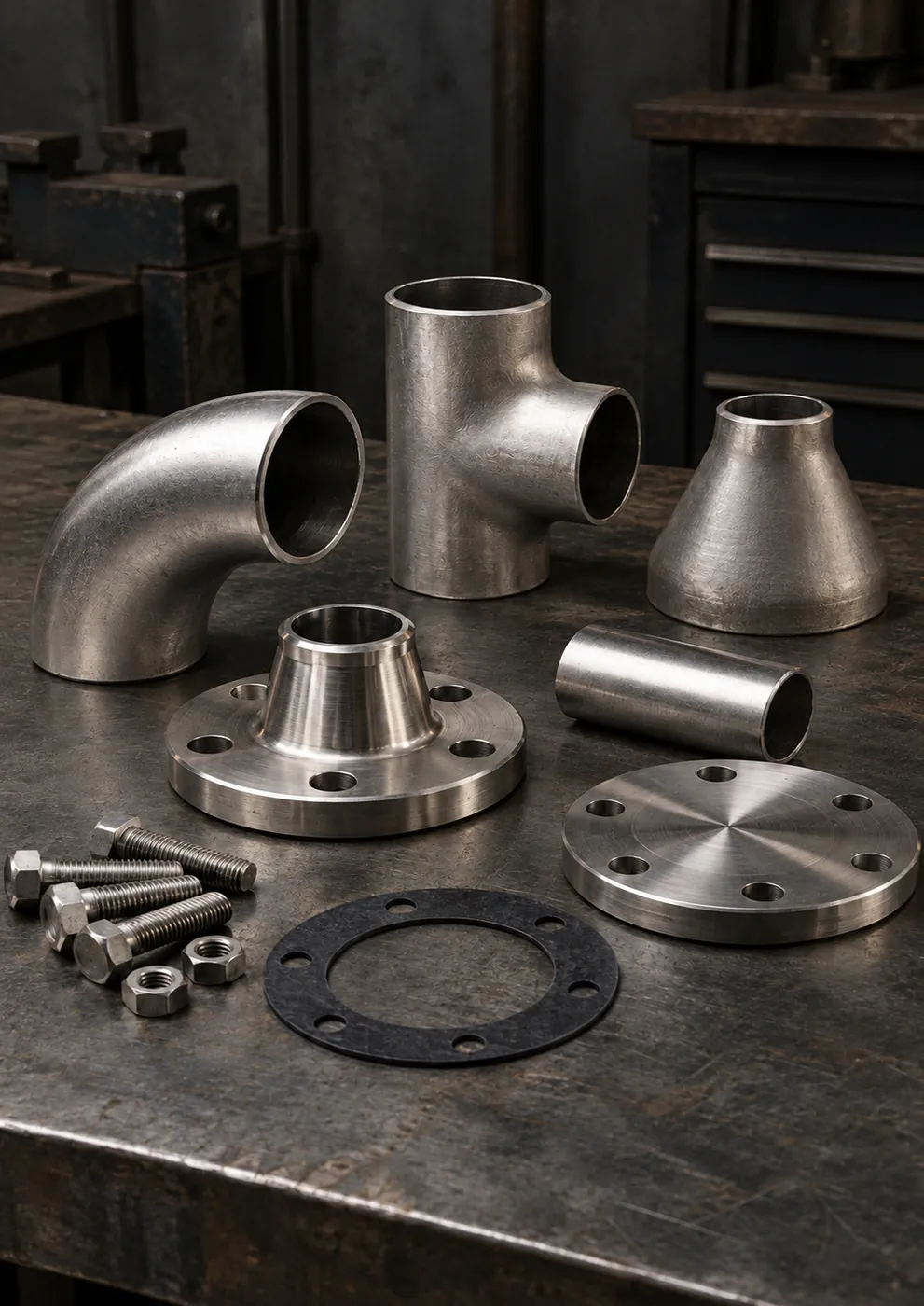 Weld neck flange, stainless steel pipe, gasket and bolt set (illustrative image)
Twin-ferrule instrumentation fittings for measurement and control lines (illustrative image)
Knowledge Center
In a twin-ferrule fitting, the front ferrule provides the seal and the back ferrule grips the tube. For correct installation, the tube is cut square…
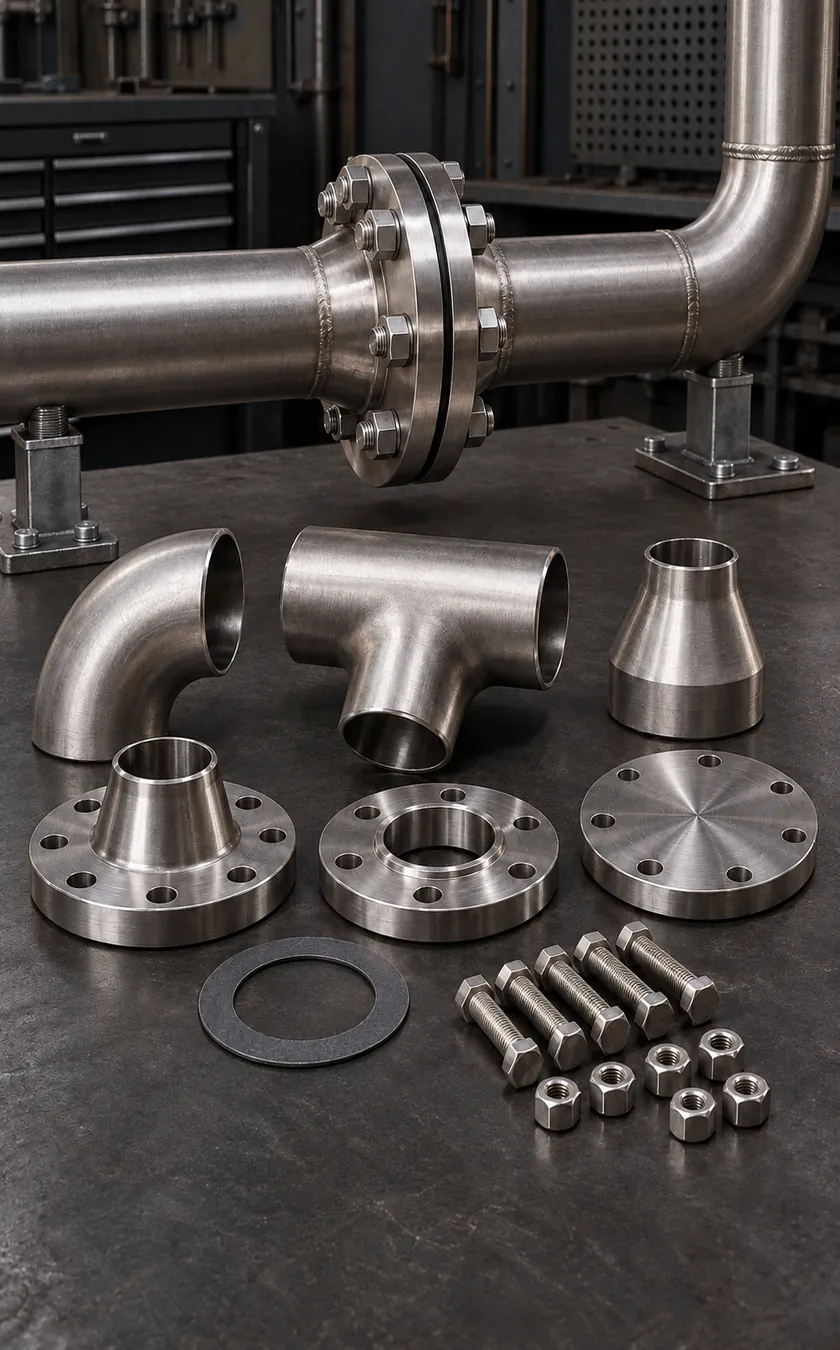
On a stainless steel pipeline, fittings and flanges are selected by matching them to the pipe's DN/NPS size and Schedule wall thickness. Weld neck…
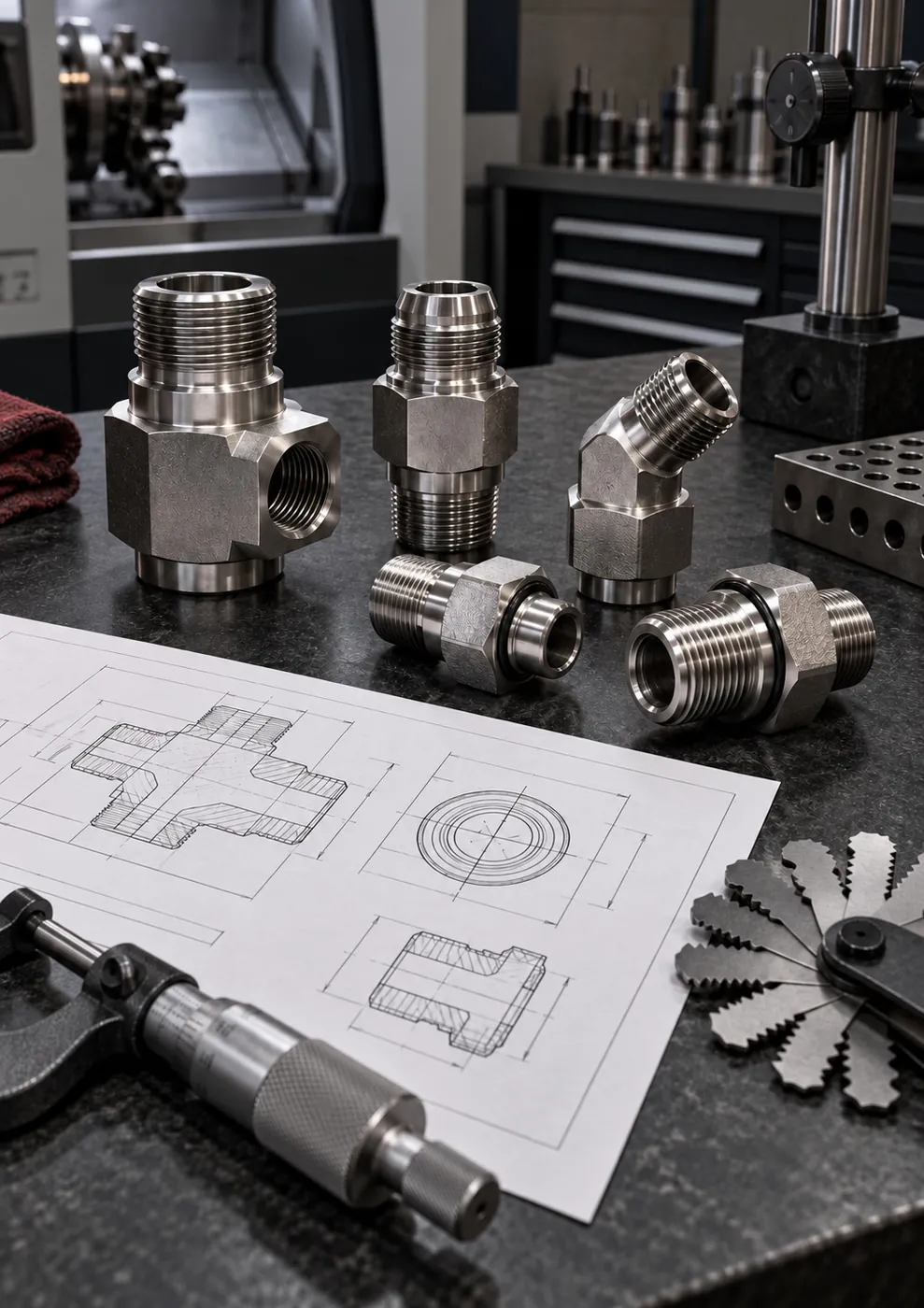
When a standard part won't fit, custom manufacturing starts with a sample, a dimensioned technical drawing or dimensional data. The thread standard…
Frequently asked questions
If your question isn't answered here, write to us and we'll pin down the size, thread standard and material together.
Send us your questionNACE MR0175 / ISO 15156 accepts austenitic stainless steels only within certain environmental limits; these limits are set by temperature, chloride content, H2S partial pressure, pH and the presence of elemental sulfur, and there are also requirements for the material's heat-treatment condition and hardness. For refinery lines, NACE MR0103 / ISO 17945 is mostly applied. Whether a line stays within these limits is decided by the project specification. If this requirement applies, state it in your quote request together with the specification; since our raw material is AISI 316/316L, we will tell you clearly before the order whether the request can be met.
Raw material batches are recorded at receiving and kept traceable; parts undergo dimensional, thread and surface inspection before dispatch. If you need a document such as a 3.1 material certificate, PMI or a test report, state it at the quotation stage; the documents and scope that can be provided are clarified before the order.
On wellhead control panels (WHCP), safety valve control lines are built with stainless steel instrumentation tubing and twin-ferrule fittings; needle valves are used for flow adjustment and gauge isolation, check valves to prevent backflow and, where lines pass through the panel wall, a bulkhead fitting compatible with the line's connection system. The pressure rating, tube wall thickness and size family are confirmed against the panel's design pressure and schematic. The design and approval of the panel are the responsibility of the system designer.
Our raw material is AISI 316/316L. If the project specification calls for a different material class such as duplex, super duplex or a nickel alloy, state it in your quote request together with the material, sizes and quantity; whether the request can be met will be stated clearly at the quotation stage. If the specification allows it and the service conditions stay within the limits of 316L, a 316L option can also be considered alongside it.
With twin-ferrule fittings, bodies, nuts and ferrules should come from the same system; a tube end made up with one manufacturer's ferrules should not be fitted into another manufacturer's body. The transition is made either by cutting off the old ferruled section and fitting the new system's nut and ferrules onto the fresh tube end, or with an NPT or BSP threaded adapter that lets each side stay within its own system. If you share the line's size family (inch or metric), tube outside diameter and end type, we will plan the transition point accordingly.
This page focuses on onshore fields, refineries, petrochemical plants and pipelines. For crane, power unit and control lines on offshore platforms, drillships and support vessels, see our “Offshore & Drilling” sector page; saltwater exposure, shipping and packaging are covered there separately.
Quote
Send the line list, tubing sizes, design pressure and specification; we'll tell you from the start what we can meet in terms of material, documentation and lead time.
Oil & Gas request form