 DIN 2353 Compression Fittings
Bulkhead Coupling with Locknut
Details & quote
Steering hydraulics · Actuation · Boats and ships
Stainless steel hydraulic fittings and hose assemblies for ship and boat steering systems and for passerelle, crane and hatch cover actuation; manufacturability review for parts such as pins, bushings and rod ends based on technical drawings or samples.
Quick answer
GÜNEYSS prepares the stainless steel hydraulic connections for steering systems and actuation assemblies: fittings, adapters and hose connections for steering cylinder and pump lines. Machined parts such as pins, bushings and rod ends are manufactured from AISI 316/316L after a manufacturability review based on a sample or technical drawing. Design and approval of the system remain the responsibility of the system manufacturer or the shipyard.
The steering system is one of the systems on a boat or ship that can least afford to fail. In hydraulic steering, the pump, cylinder and the lines between them, and on the mechanical side the rods, pins, bushings and rod ends, all operate under seawater, humidity and constant movement. The same goes for actuation assemblies such as passerelles, ship cranes, hatch covers and ramps. For these parts, stainless steel is often not an option but a requirement.
Machined parts are produced to a technical drawing or sample. For load-bearing and safety-critical parts, dimensions, material and tolerances are determined based on the system manufacturer's drawing or the shipyard's approval.
On the existing system, the thread standard of the cylinder ports, the hose diameter and length, and the path the hose follows during movement are determined. BSP, NPT, UNF/JIC and metric connections can be found together in the same system on boat and ship equipment, and imperial and metric sizes may appear side by side on steering systems of foreign origin. That is why threads are identified by measurement, not by guesswork.
For hoses that move with the cylinder, the length is set so that the hose is neither stretched nor bent below its bend radius at either end position of the rudder. The hose is never installed twisted, and points where it rubs against the hull structure or neighboring equipment are checked.
For parts such as pins, bushings and rod ends, fit tolerance, surface finish and material are evaluated together. Because stainless steel surfaces that rub against each other carry a risk of galling, the material of the mating part and the lubrication conditions are taken into account in the design. When manufacturing from a worn sample, the original dimension is established by comparing the amount of wear with the dimensions of the mating part.
On passerelle, ship crane, hatch cover and ramp systems, cylinders operate over a wide range of motion and out in the open. The pins and bushings at the cylinder mounting ends wear under both seawater and variable loads. If the hose connections on the same cylinder are also checked when these parts are renewed, the risk of a second shutdown shortly afterwards is reduced.
Boat builders and marinas; shipyards and ship repair companies; steering system manufacturers and service providers; passerelle manufacturers; ship crane manufacturers and crane maintenance providers; deck and actuation hydraulics on offshore support vessels; actuation connections on naval platforms in the defense industry.
Fittings, adapters and hose ends from stock are typically prepared within 1-3 business days, and made-up hose assemblies within an average of 5-15 business days. Machined parts produced from samples or technical drawings are scheduled within an average of 10-20 business days after technical approval. If measurements are taken and samples sent early while the boat is on the hard or the ship is in dock, parts can be scheduled around the launch date.
Process
From request to delivery in 5 steps
Port threads, hose diameter and length, and the dimensions and material of machined parts are determined.
Critical dimensions, tolerances and installation positions are finalized in writing.
Fittings and adapters are CNC machined, hose assemblies are crimped, and pins and bushings are machined.
Thread fit, fit dimensions, crimp and length are checked.
Parts are labeled by installation position and packed with protective caps.
Sectors
On the sector page, you'll find this service's field-specific applications, recommended products and frequently asked questions.
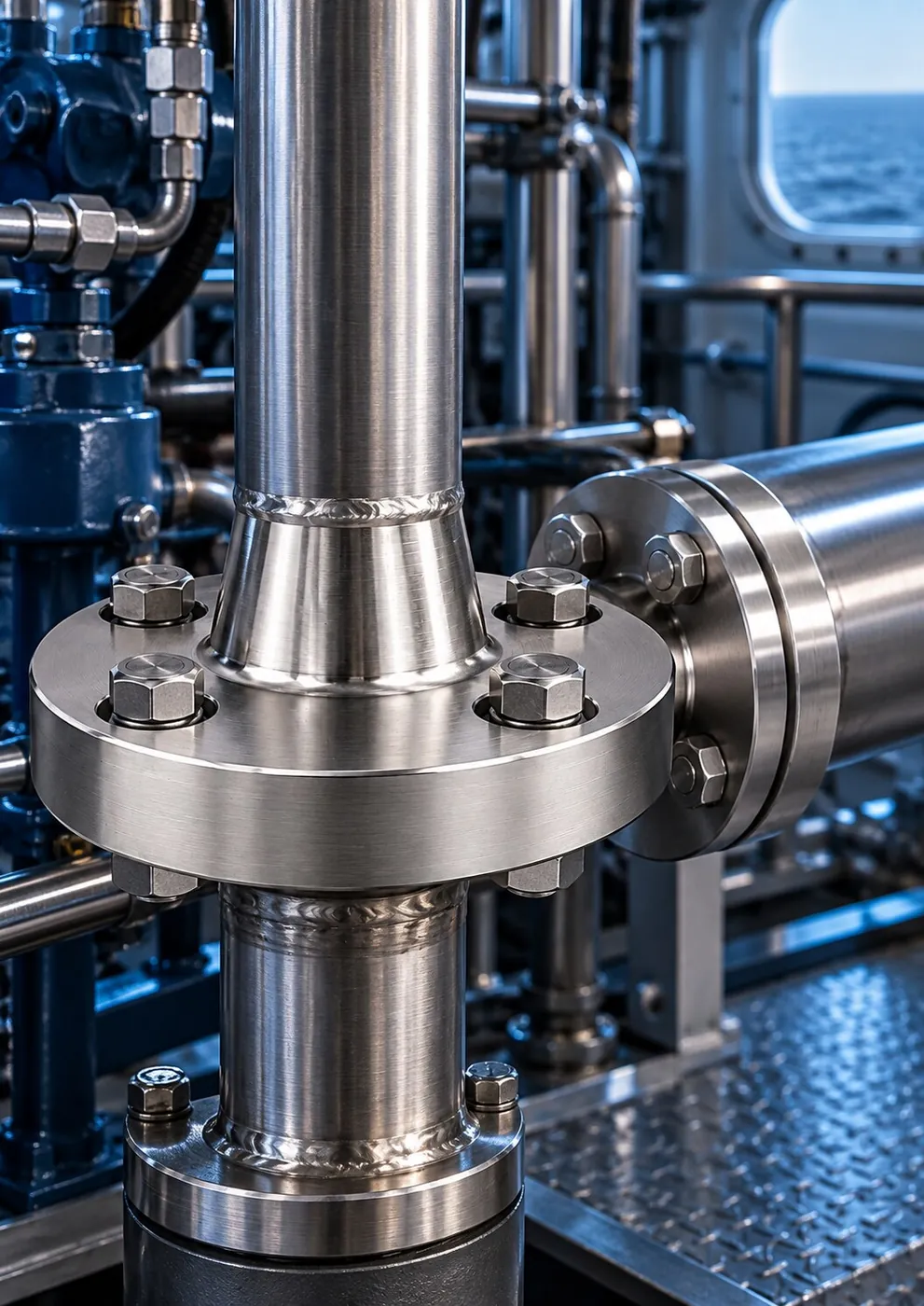
AISI 316L fittings, hose assemblies, SAE flanges and valves built to withstand salt spray and vibration on deck cranes, windlasses, steering gear, passerelles and engine room lines.
Stainless steel pipe, flanges, fittings and hose assemblies, from newbuild piping circuits to drydock overhauls; fast spares from stock for ship crane service teams.
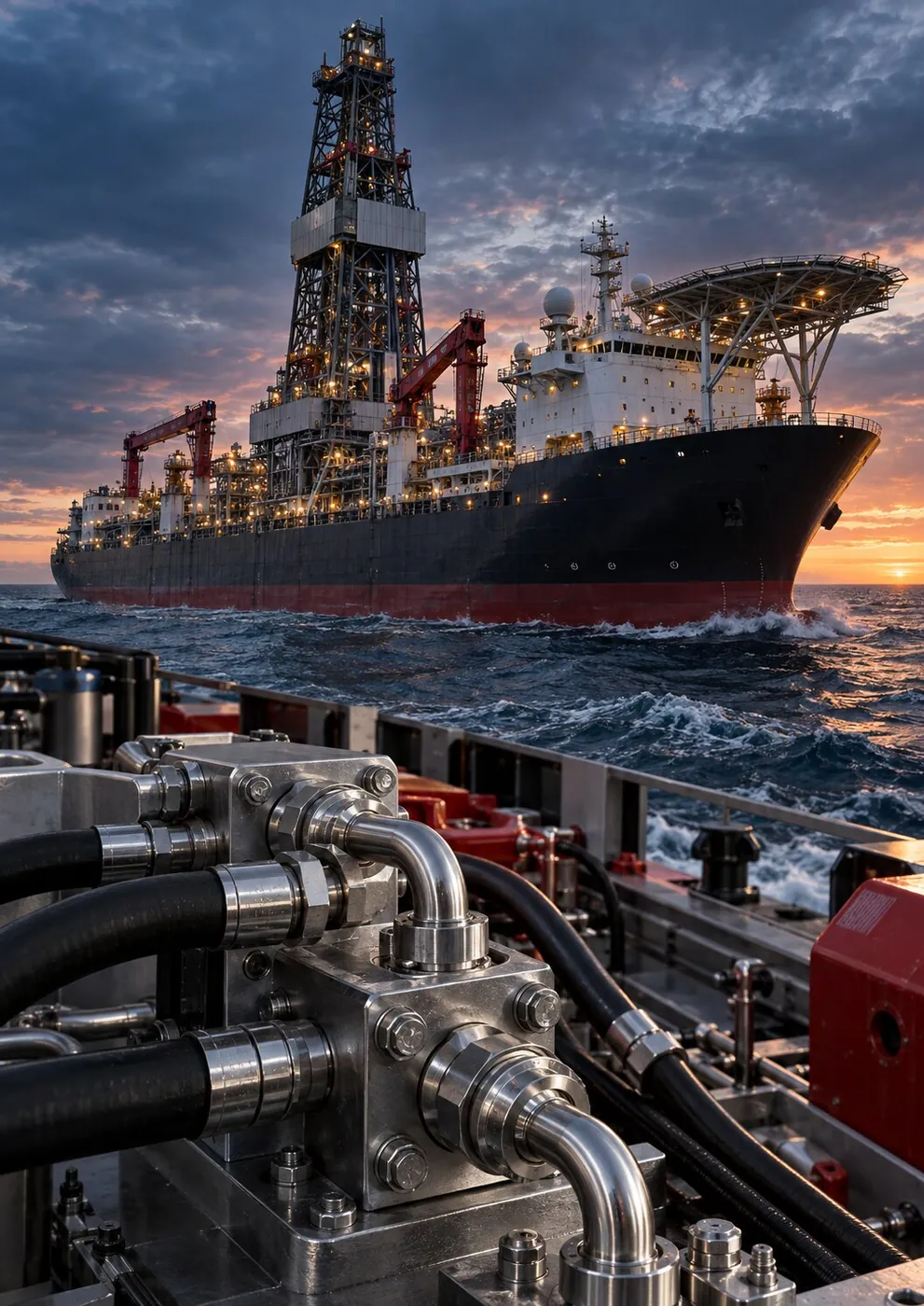
AISI 316L hose ends, SAE flanges, adapters and valves for crane, pipe handling, deck machinery and power unit lines on drillships and platforms.
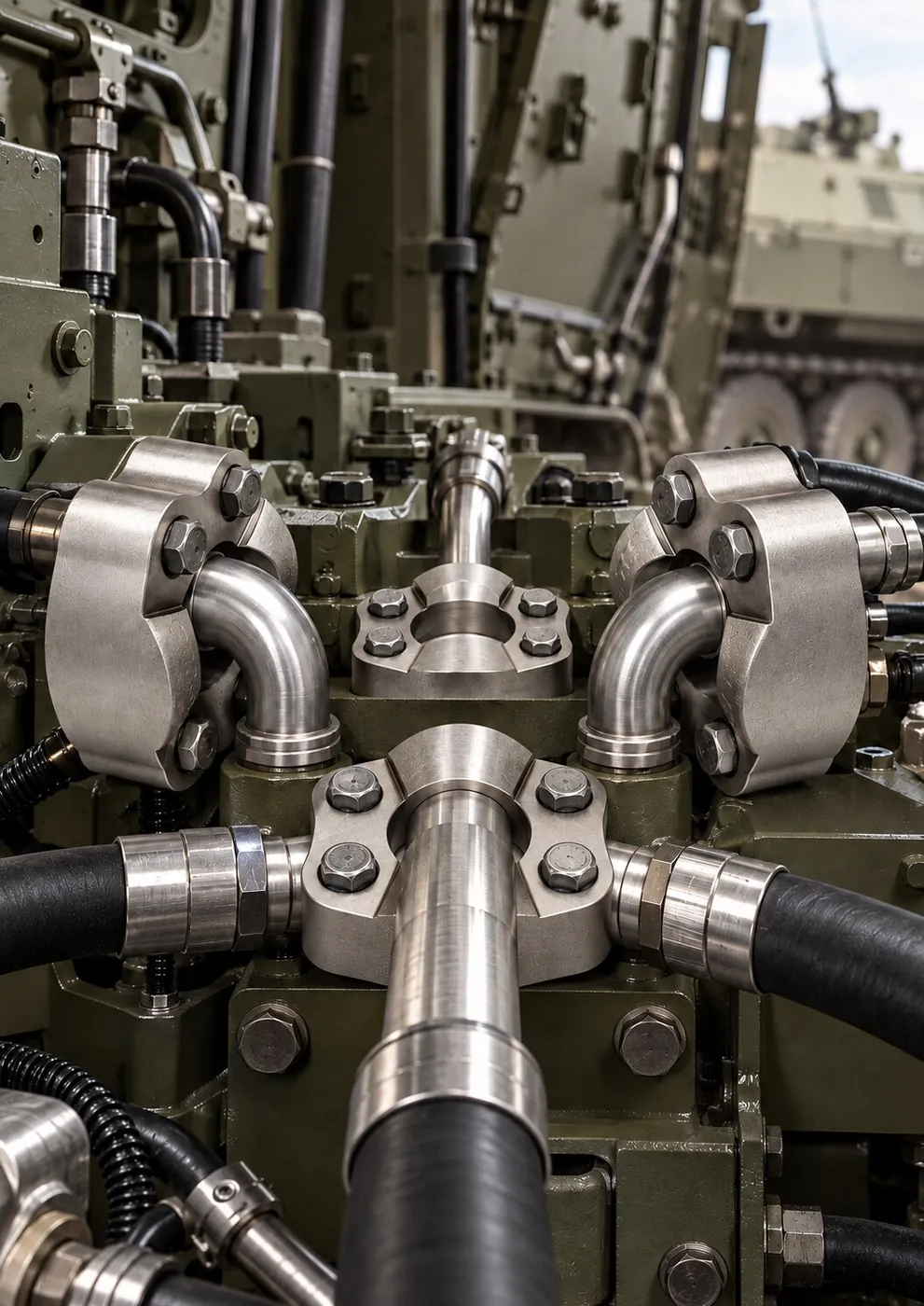
SAE flanges, adapters, elbows and hose fittings CNC-machined after technical drawing approval for mobile hydraulic systems, maintenance benches and compact power units.
8 products
DIN 2353 Compression Fittings 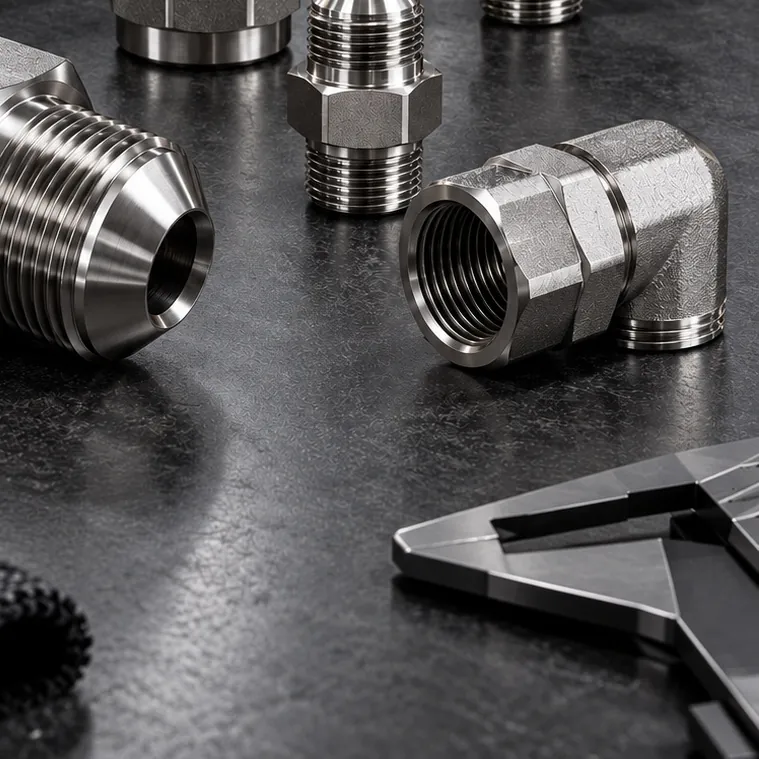 JIC 37° Fittings & Adapters
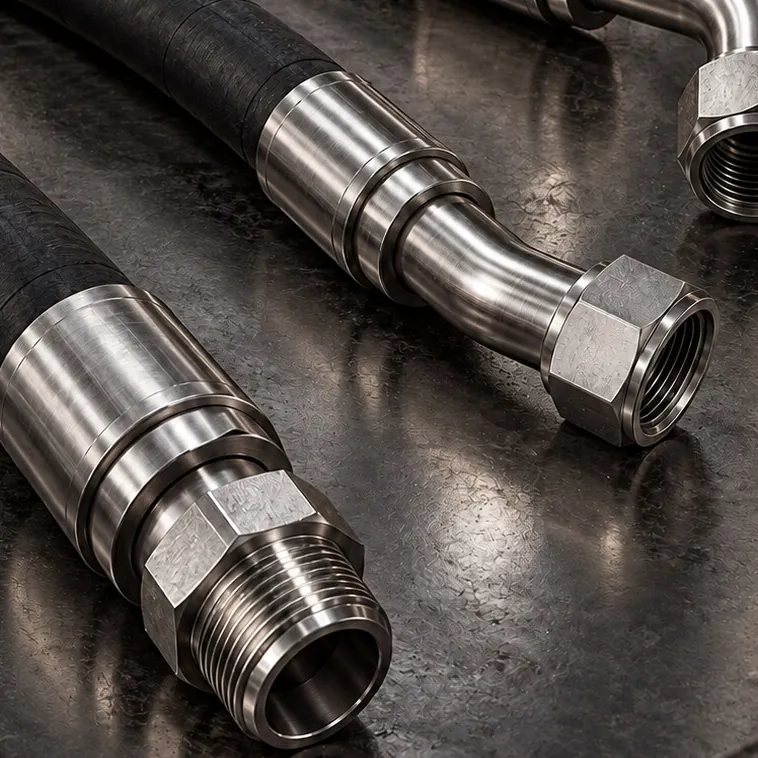 Hose Fittings & Ferrules
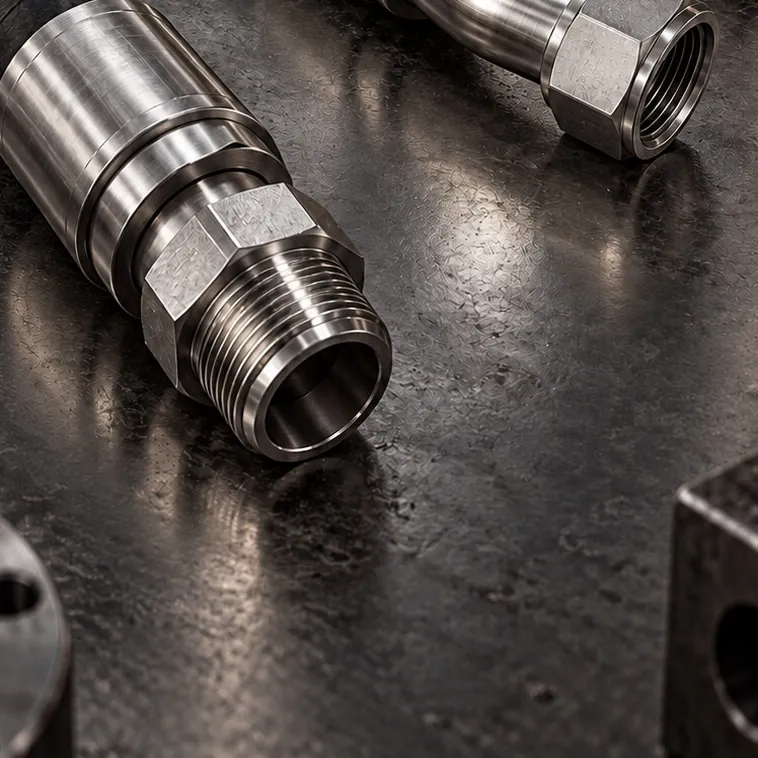 Hose Fittings & Ferrules
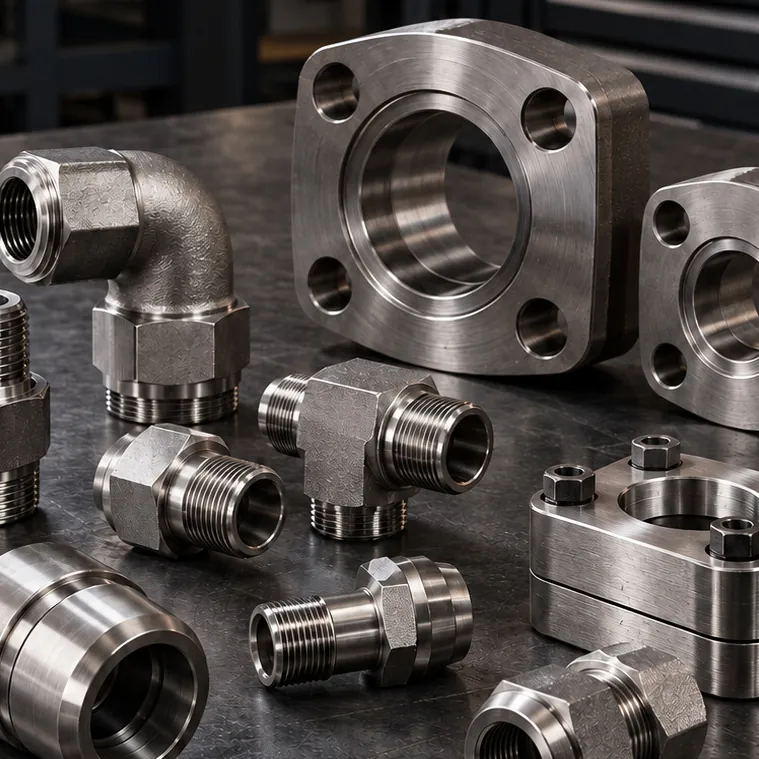 SAE Flanges (Code 61 / 62)
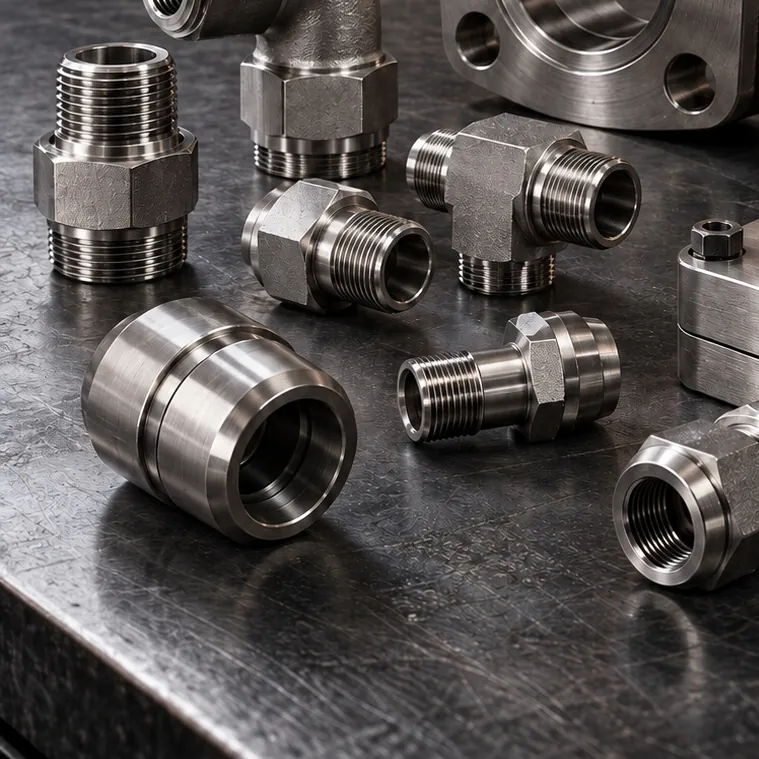 Weld Nipples & Weld Fittings
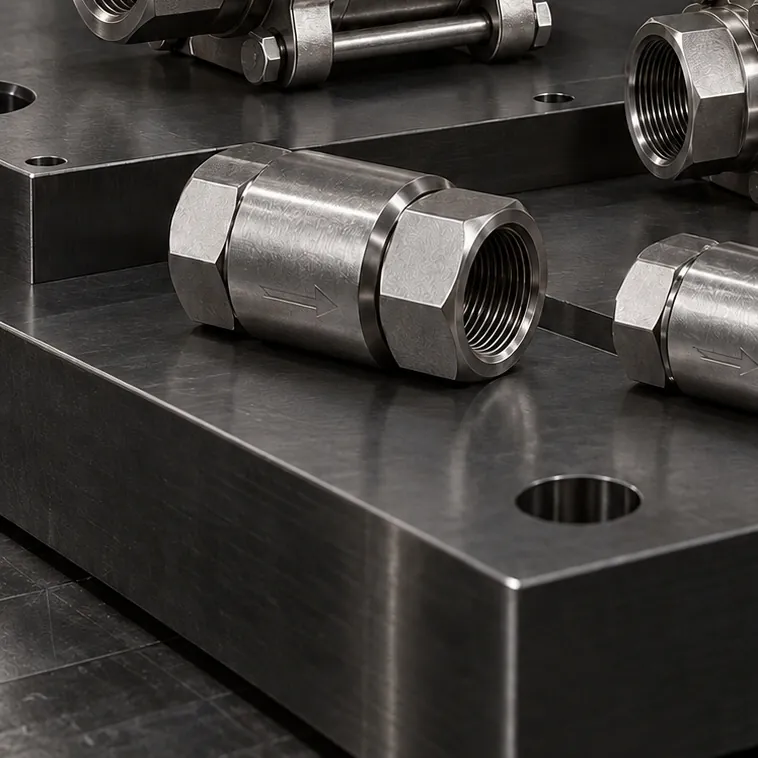 Ball, Needle & Check Valves
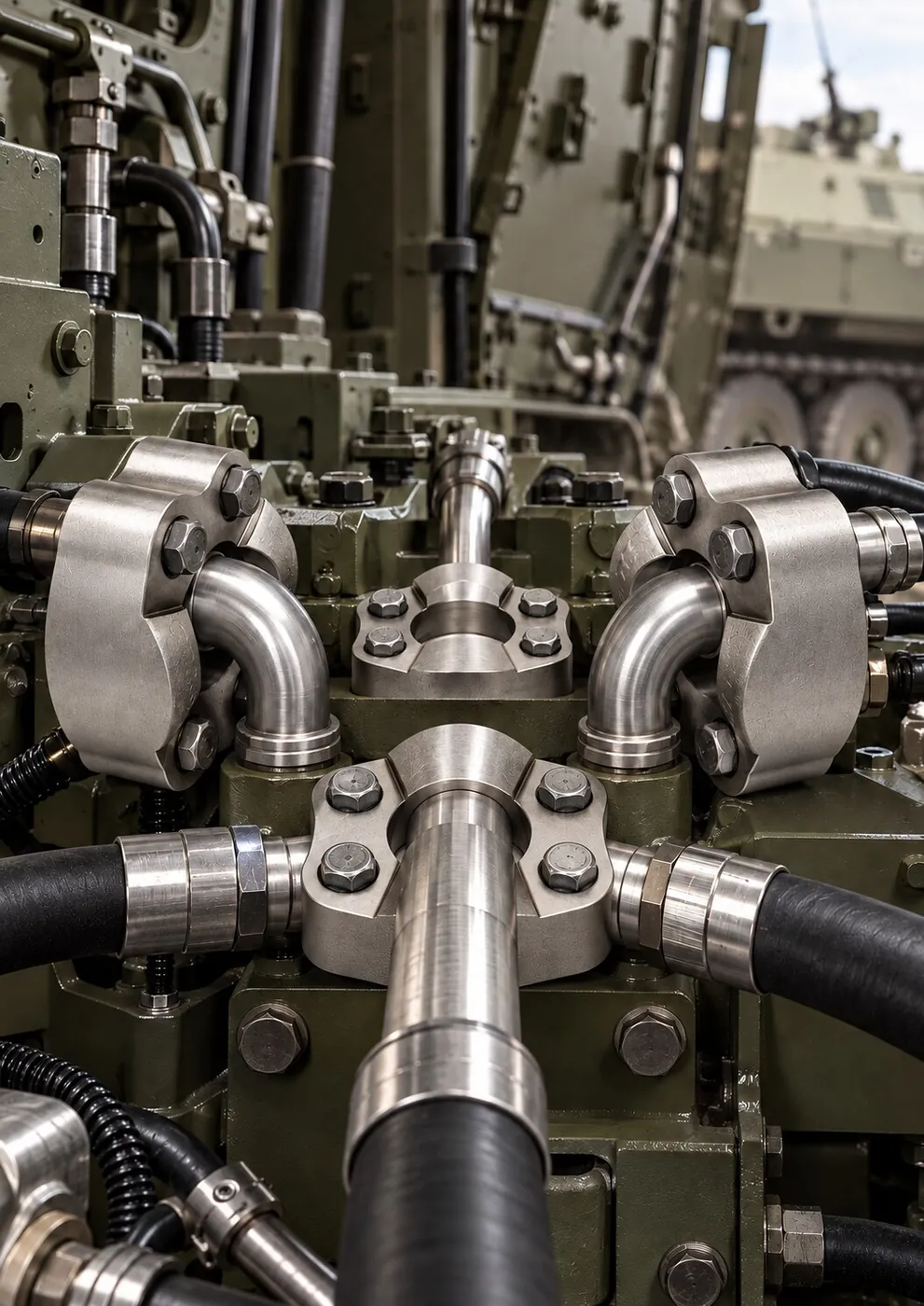 Custom-Made Hydraulic Parts
Gallery
FAQ
If your question isn't here, message us on WhatsApp with a ready-made message and our technical team will answer directly.
Ask on WhatsAppNo. Design, calculation and approval of the steering system are the responsibility of the system manufacturer or the shipyard. We manufacture the stainless steel hydraulic connections, hose assemblies and machined parts for these systems to technical drawings or samples.
Send a photo of the port and fitting, the outside diameter measured with a caliper and, if possible, the pitch measured with a thread pitch gauge. Once the thread standard is identified, the same part or a conversion adapter that fits the existing hose can be manufactured.
The first choice for the marine environment is AISI 316/316L. Because stainless steel surfaces that rub against each other carry a risk of galling, the material of the mating part, lubrication conditions and load data are evaluated together; if a different material is required, it should be specified on the technical drawing.
Hose length should be selected so that the hose is neither stretched nor bent below its bend radius at either end position of the rudder, and the hose must not be installed twisted. After replacement, the system should be bled according to the manufacturer's instructions and the connections checked for leaks.
Fittings, adapters and hose ends from stock are typically prepared within 1-3 business days, and made-up hose assemblies within an average of 5-15 business days. Parts machined from samples or technical drawings are scheduled within an average of 10-20 business days after technical approval.
Quote and technical verification
Briefly describe your request; once size, material and lead time are clear, we'll respond with a written quote.
Details that speed up your quote