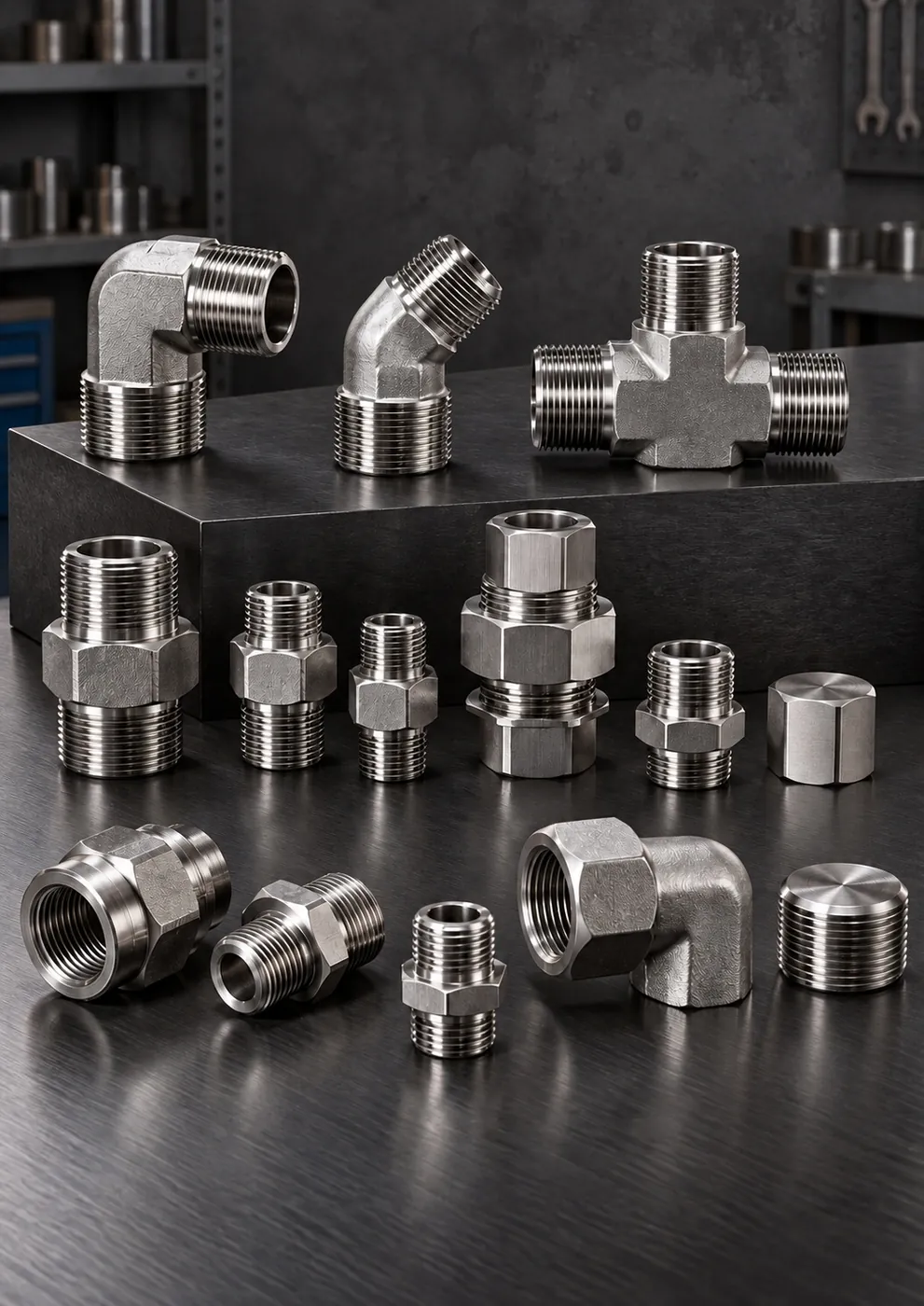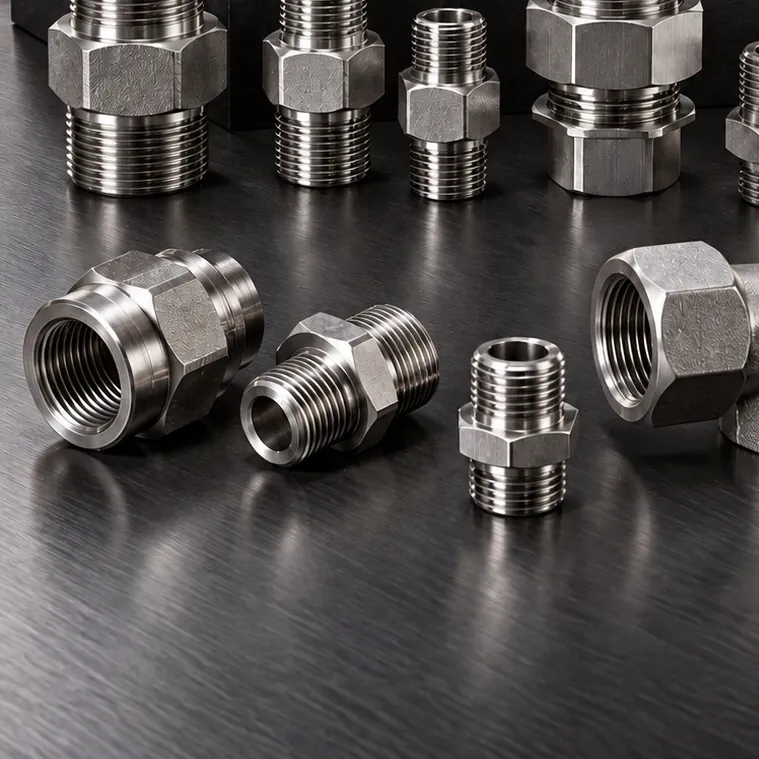
DIN 2353 Compression Fittings
Male Stud Connector (BSPP)
Stainless steel male stud connector with a 24° cone tube end and BSPP male thread, connecting tube to pump, valve block or…
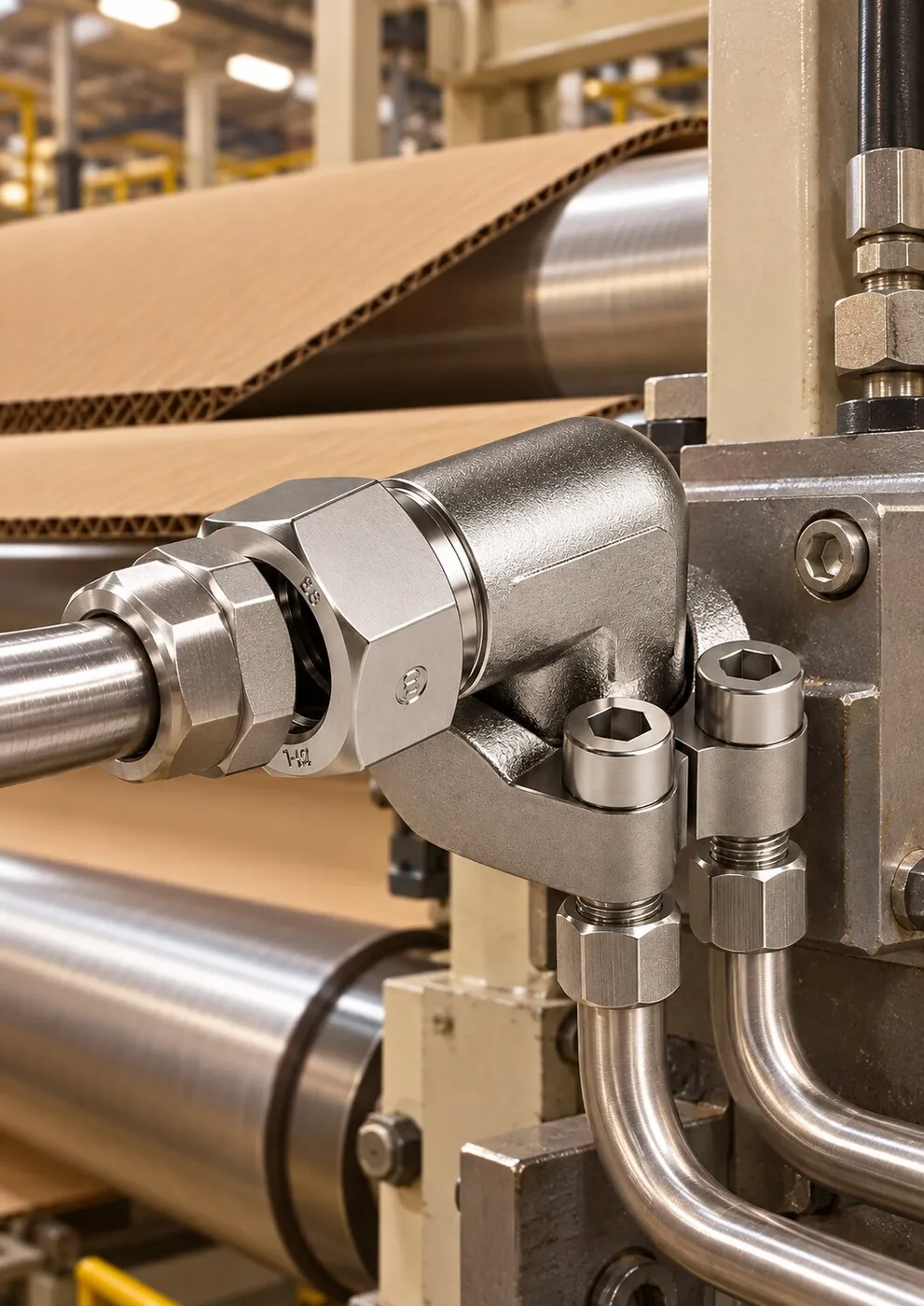
Corrugator · Rolls · Continuous operation
Elbows, tees, adapters, hose fittings and SAE flanges that cut maintenance time for continuously running hydraulic systems on corrugator, roll, cutting and actuator lines.
Featured products in this sector
View all 17 productsProducts
17 products are listed for the operating conditions of Paper & Board Mills. Narrow down by group; open a product page for sizes and thread standards.
DIN 2353 Compression Fittings
Stainless steel male stud connector with a 24° cone tube end and BSPP male thread, connecting tube to pump, valve block or…
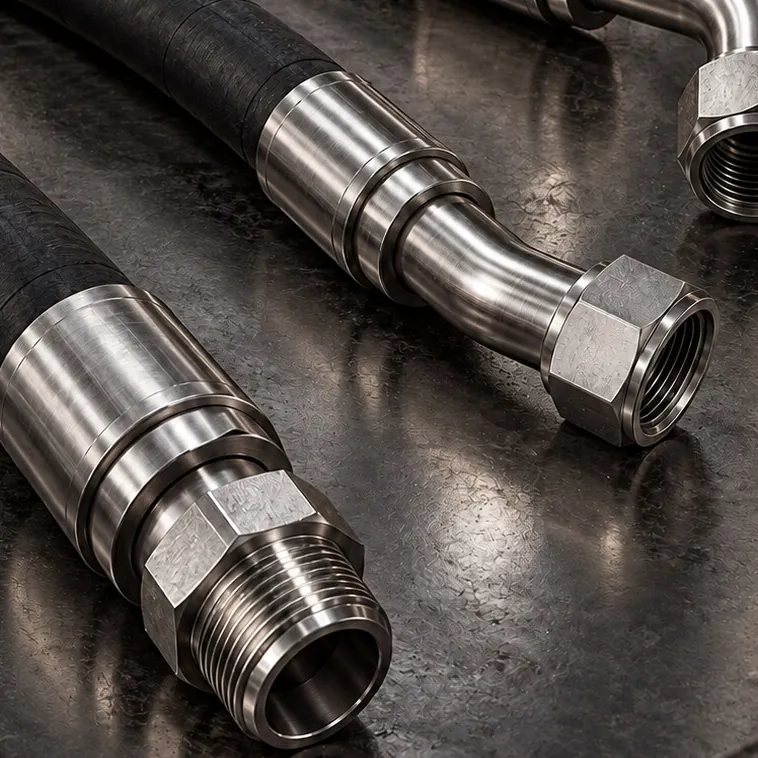
Hose Fittings & Ferrules
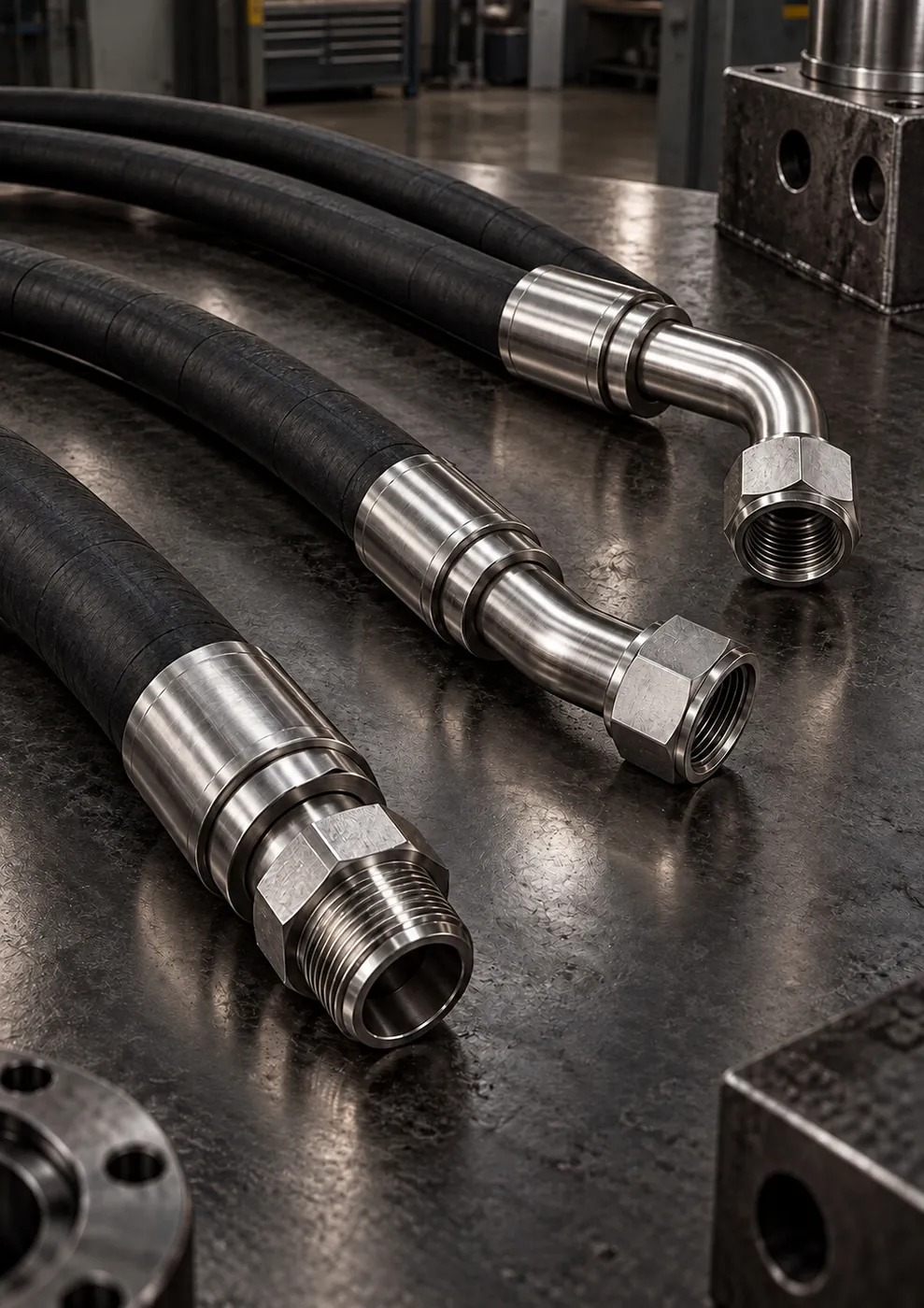
Stainless steel crimp-style 90° hose fitting with a female BSP swivel nut and 60° cone seat. Routes the hose at a right angle in…
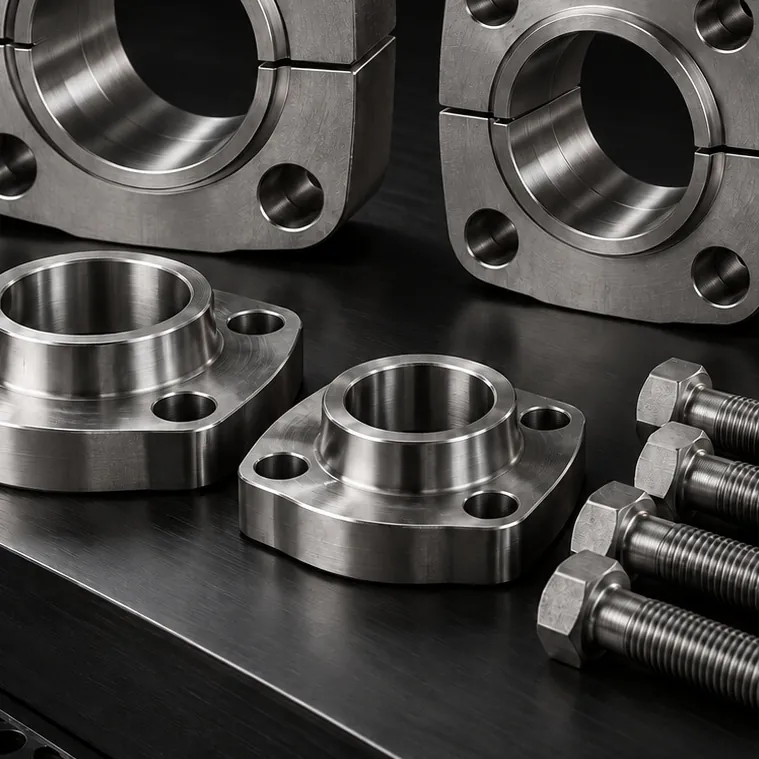
SAE Flanges (Code 61 / 62)
Two-piece stainless steel split flange clamp that holds a flanged-head hose fitting or tube end against an SAE Code 61 port…
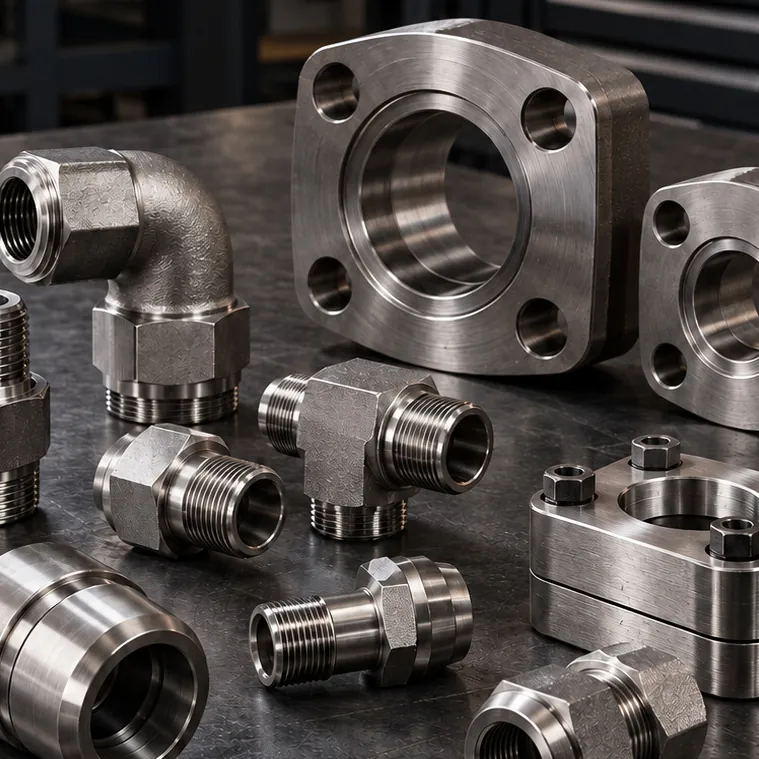
SAE Flanges (Code 61 / 62)
Stainless steel flange block combining SAE flange ports in a single body with elbow, spacer, reducer or distribution functions…
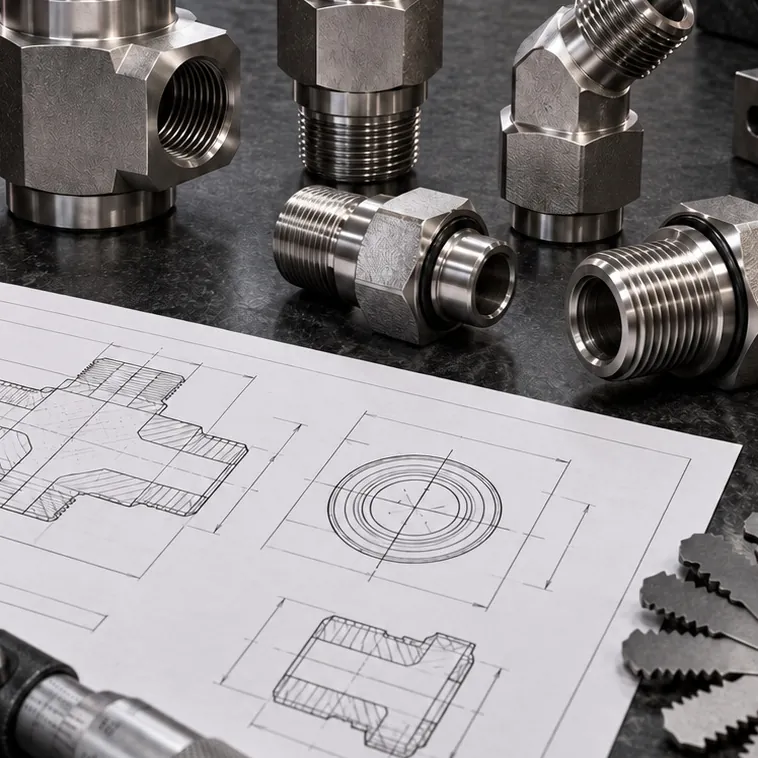
Custom-Made Hydraulic Parts
Custom stainless hydraulic adapter CNC-machined from a sample or technical drawing for thread, size and angle combinations not…
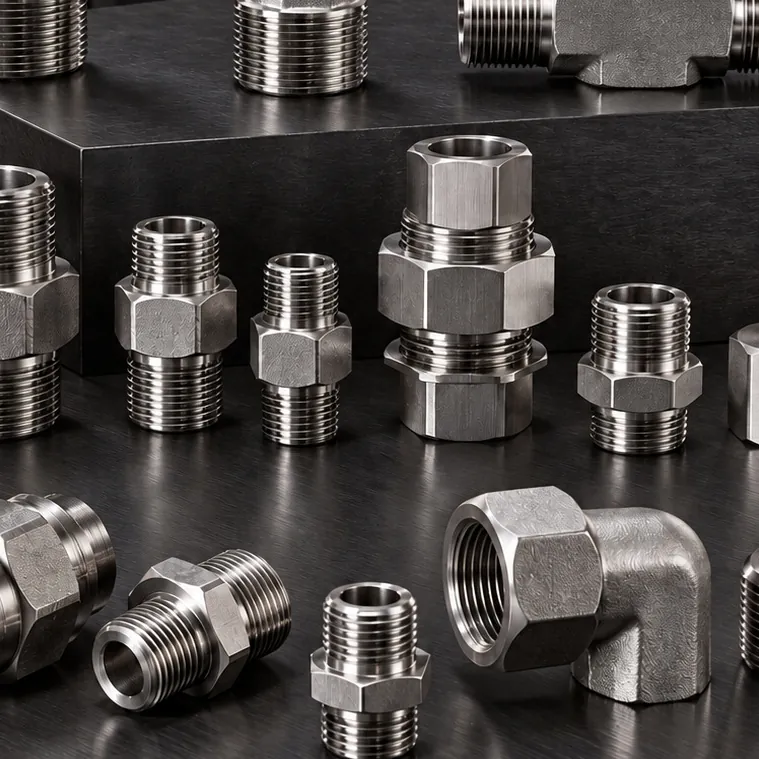
DIN 2353 Compression Fittings
24° cone straight coupling (DIN 2353) that joins two stainless steel tubes on the same axis without welding. AISI 316L body, L…
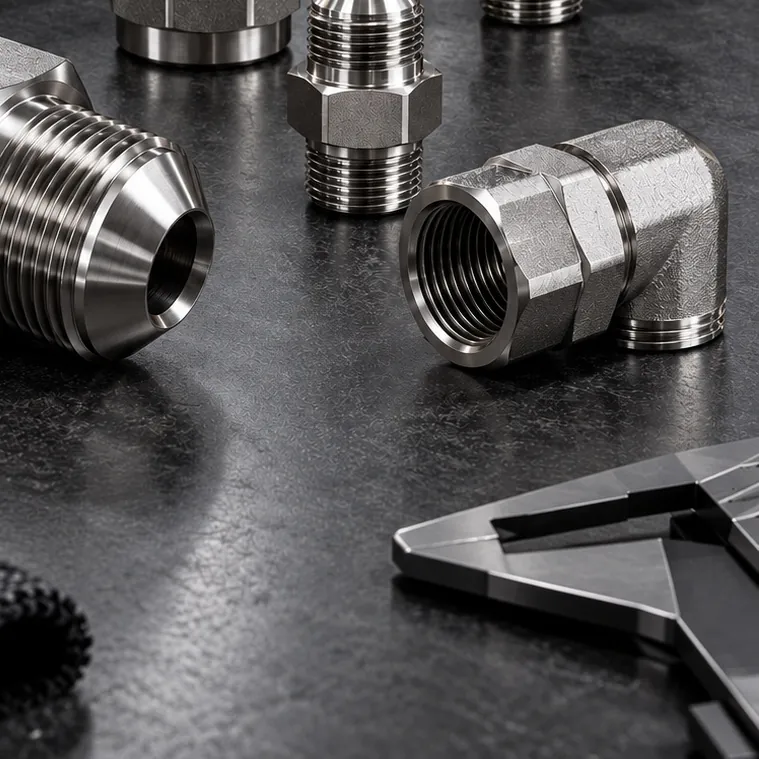
DIN 2353 Compression Fittings
Stainless steel 24° cone equal elbow providing a weld-free 90° change of direction in a tube line. For tight installation spaces…
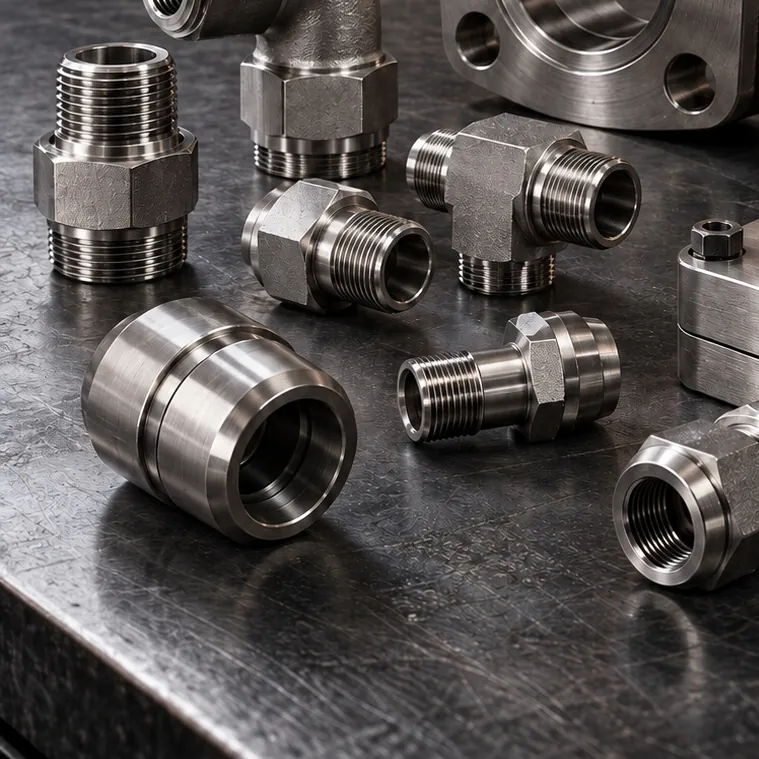
DIN 2353 Compression Fittings
Stainless steel 24° cone equal tee joining three tubes of the same diameter, used to branch off the main line. AISI 316L, DIN…
DIN 2353 Compression Fittings
Stainless steel tee with bite-type ends on the run and a male BSPT thread on the branch. Provides a direct take-off from the tube…
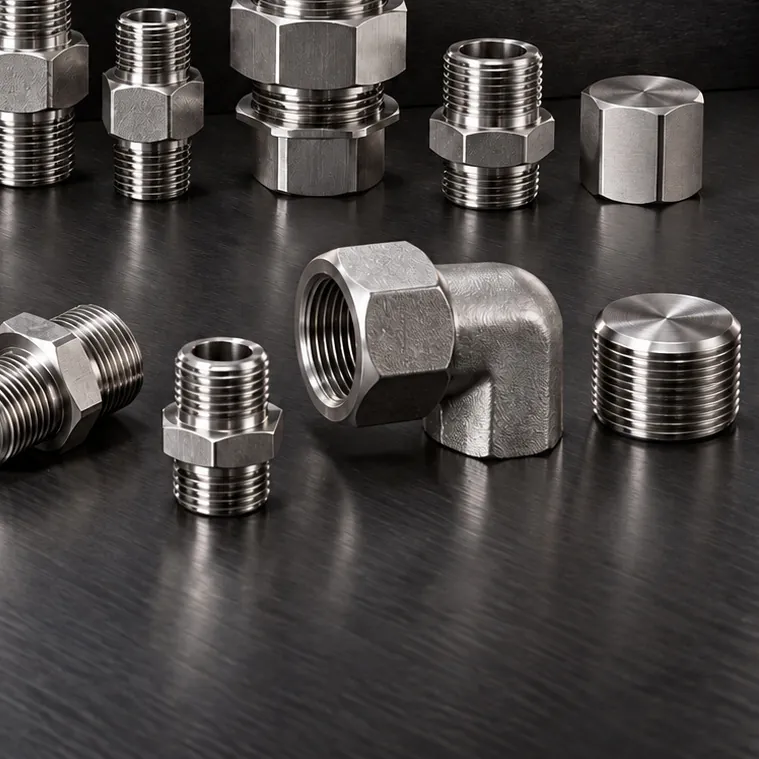
DIN 2353 Compression Fittings
Stainless steel 90° male stud elbow with a 24° cone tube connection on one end and a male NPT thread on the other. Tube outlet…
Hose Fittings & Ferrules
Stainless steel crimp-style 90° hose fitting with an SAE Code 61 flange head. Connects to pump and block ports in large-bore…
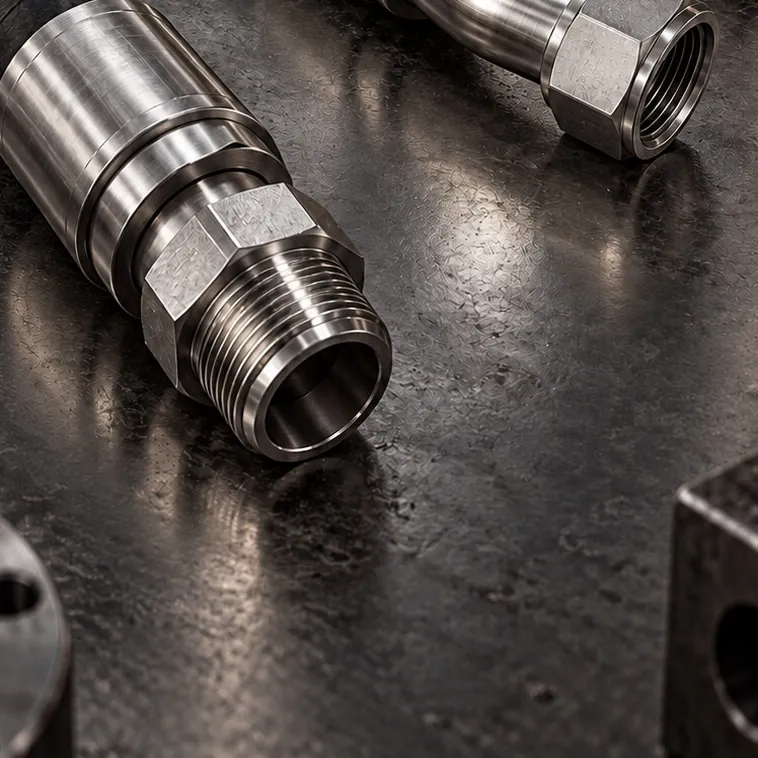
Hose Fittings & Ferrules
Stainless steel DKOL straight hose fitting (L series) with a metric swivel nut and 24° cone with O-ring. Connects directly to DIN…
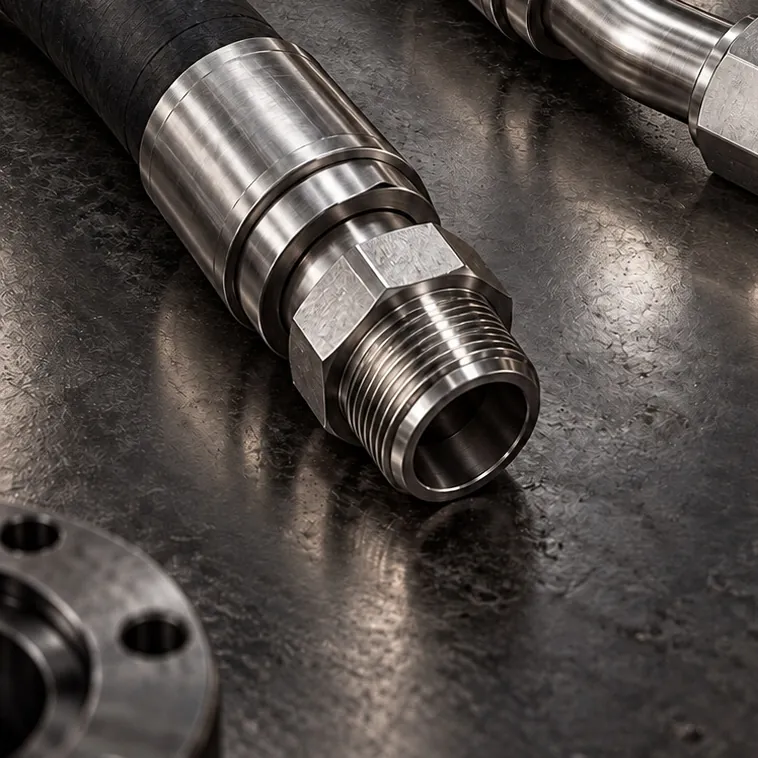
Hose Fittings & Ferrules
Stainless steel crimp ferrule for 2SN hydraulic hoses with two steel wire braids. Crimped together with the hose fitting to form…
Hose Fittings & Ferrules
Stainless steel ring-type (banjo) hose fitting connected to the port with a hollow bolt. Rotatable connection perpendicular to…
JIC 37° Fittings & Adapters
Stainless steel conversion adapter with a JIC 37° UNF male end and a BSPP parallel male thread. For connecting JIC hose lines to…
BSP / NPT Adapters & Nipples
Stainless steel male x male reducing adapter with BSPP threads of different sizes and a 60° cone seat at each end. Size…
BSP / NPT Adapters & Nipples
Stainless steel BSPP reducing adapter with parallel threads, sealed on the port side by a bonded seal. For ports that are opened…
Can't find your part in the list?
Send a sample photo, technical drawing or dimensions; we'll identify the right fitting from our catalog or through custom manufacturing.
Faik Güney · Contact person
Services
Beyond supplying parts, we complete the job in the field with piping, hose assembly, custom manufacturing and technical identification.
Hydraulic hose assembly and crimping: hose assemblies with straight, 45° and 90° stainless steel ends in BSP, JIC, NPT…
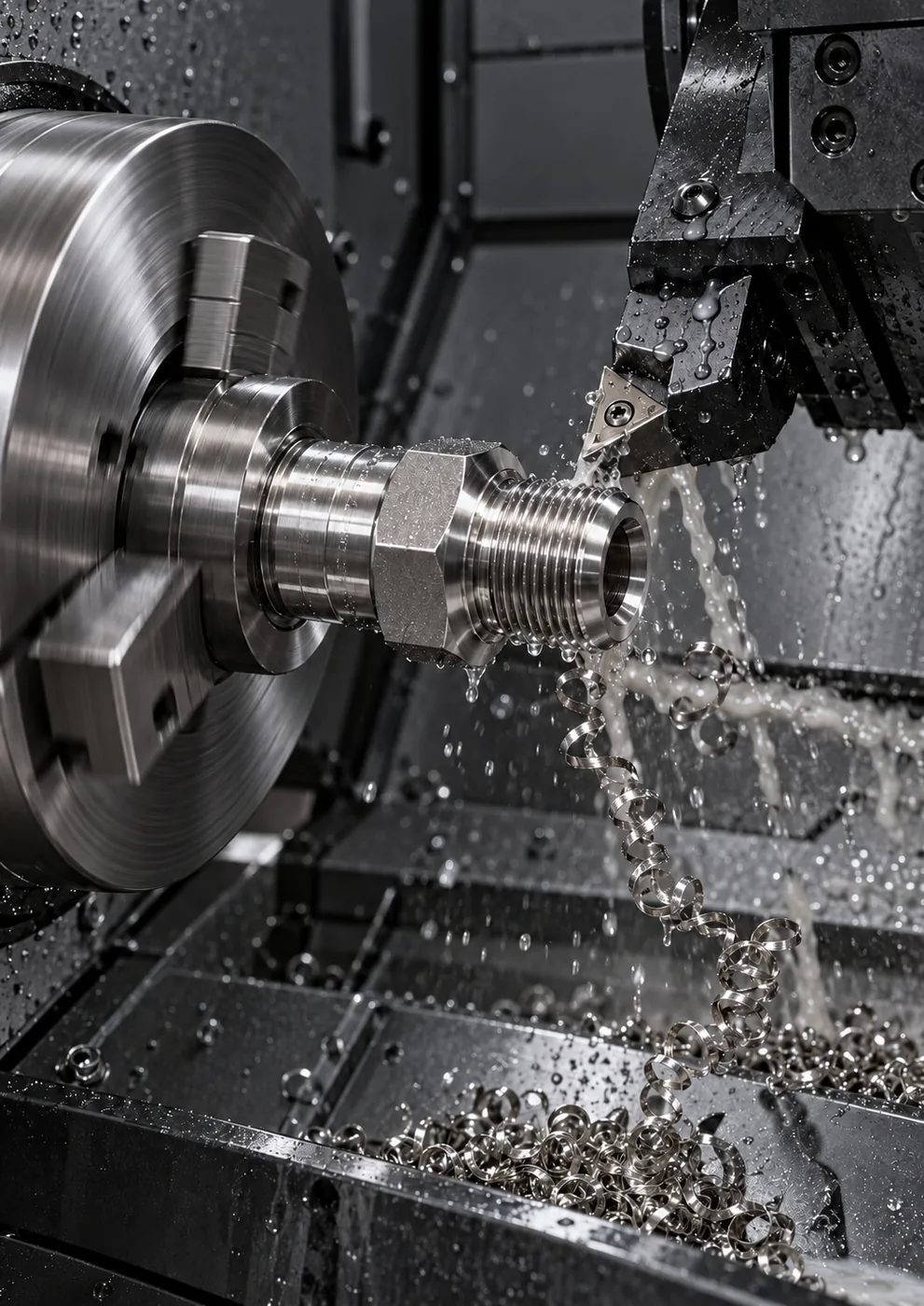
View service – Hydraulic Hose AssembliesThread profiles, sealing cones, wrench flats and connection geometry are machined from AISI 316/316L bar on CNC…
View service – Stainless Steel CNC MachiningStandard stainless steel fittings, adapters, hose ends, flanges and valves ready to ship within an average of 1-3…
View service – Fast Supply & Shutdown SupportWhere a standard product is not the answer: custom adapters, nipples, flange blocks and transition parts made from a…
View service – Custom Parts from Drawings & SamplesIdentifying BSP, NPT, UNF/JIC and metric threads by measurement, matching them correctly to the mating part, and…
View service – Fitting & Thread IdentificationOrderly, labeled and service-friendly connections with stainless steel tube and fittings on control panels, power units…
View service – Control Panel & HPU TubingOverview
Quick answer
Paper and board mills use stainless steel elbows, tees, adapters, hose fittings and SAE flanges on corrugator, roll, cutting and actuator lines. Selection is based on the machine port, hose size, working pressure and installation clearance. In areas exposed to steam, moisture and starch adhesive, stainless steel fittings reduce corrosion and thread seizure, shortening maintenance time.
When a corrugated board line stops, it is not just one machine that stops but the entire cutting, printing and packaging schedule behind it. The steam-heated cylinders of the corrugator, the lift cylinders of the roll stands, and the hydraulic circuits of the cutters and stackers run all day long; moisture, steam, starch adhesive and paper dust put the connections in these circuits under constant stress. Corrugator, roll, cutting and actuator lines need the right fittings to cut maintenance time for hydraulic systems that run continuously.
GÜNEYSS supplies stainless steel elbows, tees, adapters, hose fittings and SAE flanges to board mills, corrugated packaging plants and paper mills. We identify the part that matches the machine port through dimensional verification, machine non-standard parts on CNC equipment, and ship them after deburring and final inspection.
Field conditions
We select fittings for these conditions and specify the material, sealing type and installation method accordingly.
Describe your own conditionsThe area around steam-heated cylinders is constantly hot and humid; carbon steel fittings rust.
Starch adhesive and dust build up on fitting surfaces, trapping moisture and accelerating corrosion.
Corrugator and cutting lines run nonstop over long shifts, fatiguing fittings.
Hose routing is limited; an elbow at the wrong angle kinks the hose and causes abrasion.
Machines of different origins run in the same mill with BSP, metric, JIC and SAE ports.
Maintenance is usually squeezed into weekends or planned shutdowns; spare parts must be ready in advance.
Technical selection notes
Points we clarify with you before ordering for Paper & Board Mills applications.
The port's thread standard and sealing method directly determine the adapter type.
Elbow angle and tee orientation should be selected so the hose works without kinking.
Hoses and seals near steam and hot cylinders must be rated for the operating temperature.
On high-pressure, large-diameter lines, Code 61 or Code 62 is selected based on nominal size and pressure.
Sizes of frequently replaced hoses and adapters should be recorded for each machine.
Detailed guide
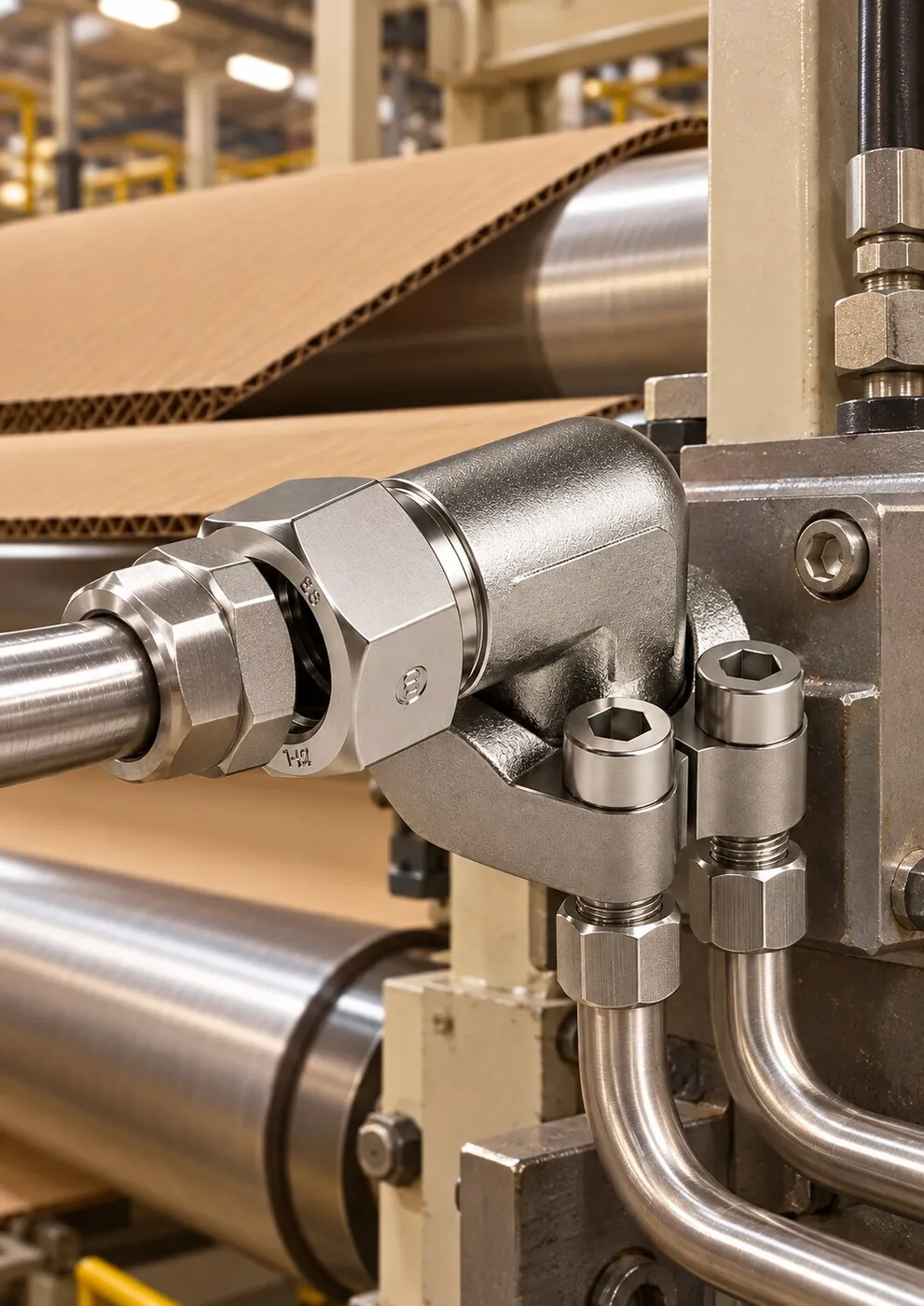
In a corrugator, paper is bonded with starch-based adhesive as it passes over steam-heated cylinders. This process creates a constantly hot, humid environment around the machine. Adhesive splatter and paper dust build up on fittings and hold moisture against the surface. Carbon steel and plated fittings rust in this environment; when they need to be removed during maintenance, they come off with seized threads, and sometimes have to be replaced together with a section of the line. AISI 316/316L stainless steel fittings break this cycle: surface corrosion is greatly reduced, removal becomes easier and maintenance is completed in less time. Chemicals such as caustic soda and borax are also used in the adhesive preparation unit; on the transfer and dosing lines in this area, stainless steel fittings are a safer choice against chemical attack.
On lines close to heat sources, the hose and seal materials must also be checked for suitability at the operating temperature; hoses running near steam lines should be routed as far from the heat source as possible.
Machines of different origins operate side by side on board lines: a European-built corrugator may sit next to an Asian- or US-built cutting machine. Each machine comes with its own port standard; BSP, metric, JIC/UNF and SAE flanges can all coexist in the same mill. For this reason, technical selection starts with the machine port, hose size, working pressure and installation clearance.
| Selection input | What it determines |
|---|---|
| Machine port | Thread standard, adapter type and sealing method |
| Hose size | Hose fitting size and flow capacity |
| Working pressure | Fitting body, hose reinforcement and flange class (Code 61 / Code 62) |
| Installation clearance | Elbow angle (straight, 45°, 90°), tee and hose length |
In tight machine frames, an elbow at the right angle or a compact tee allows the hose to work without kinking or abrading, which directly extends hose life.
Balers that compact trim and waste paper are among the highest-pressure hydraulic equipment in the mill. High-pressure hose ends are used on the lines feeding the baler cylinder, and SAE flange connections on larger sizes. Balers usually operate in areas with heavy dust and paper debris; hoses rubbing against sharp edges and moving parts are among the most common causes of failure. Hose routing, protective sleeves and clamping layout are therefore just as important as fitting selection.
On paper machines, the loading cylinders of the press section rolls determine the pressure applied to the paper; in these circuits, stable pressure and leak-free connections also matter for product quality. In reel handling and winding systems, frequently moving arms and lift cylinders put hoses and fittings under constant bending and vibration loads. Since the wet end is exposed to large amounts of water and steam, stainless steel fittings in these areas reduce the need for replacement due to corrosion.
In board mills, hydraulic maintenance is usually squeezed into weekends or planned shutdowns. Creating a machine-by-machine size list for frequently replaced hose assemblies, elbows and adapters and keeping critical parts in stock prevents the waiting that prolongs downtime. If it is not certain before maintenance which hoses will be replaced, keeping spares of the few most frequently replaced sizes for each machine is a good start; as maintenance records build up, the list is updated to reflect actual replacement frequency. Standard sizes in stock are typically ready to ship within 1-3 business days; standard production is scheduled within an average of 5-10 business days, made-to-length hose assemblies within an average of 5-15 business days, and custom-size and project manufacturing within an average of 10-20 business days after technical approval.
Applications
Teams in Paper & Board Mills that need fittings, hose assemblies and custom parts.
Hydraulic connections on the roll stands, single facer and double backer units of the corrugator line.
Elbows and adapters for rotary cutter, slitter-scorer and stacker hydraulics.
Stainless steel fittings for press section loading cylinders and reel handling systems.
Hose fittings and tees for flatbed and rotary die cutters.
Hose ends and SAE flanges for high-pressure baler lines.
Size-verified spare hose assembly and adapter kits for board machinery.
Gallery
Knowledge Center
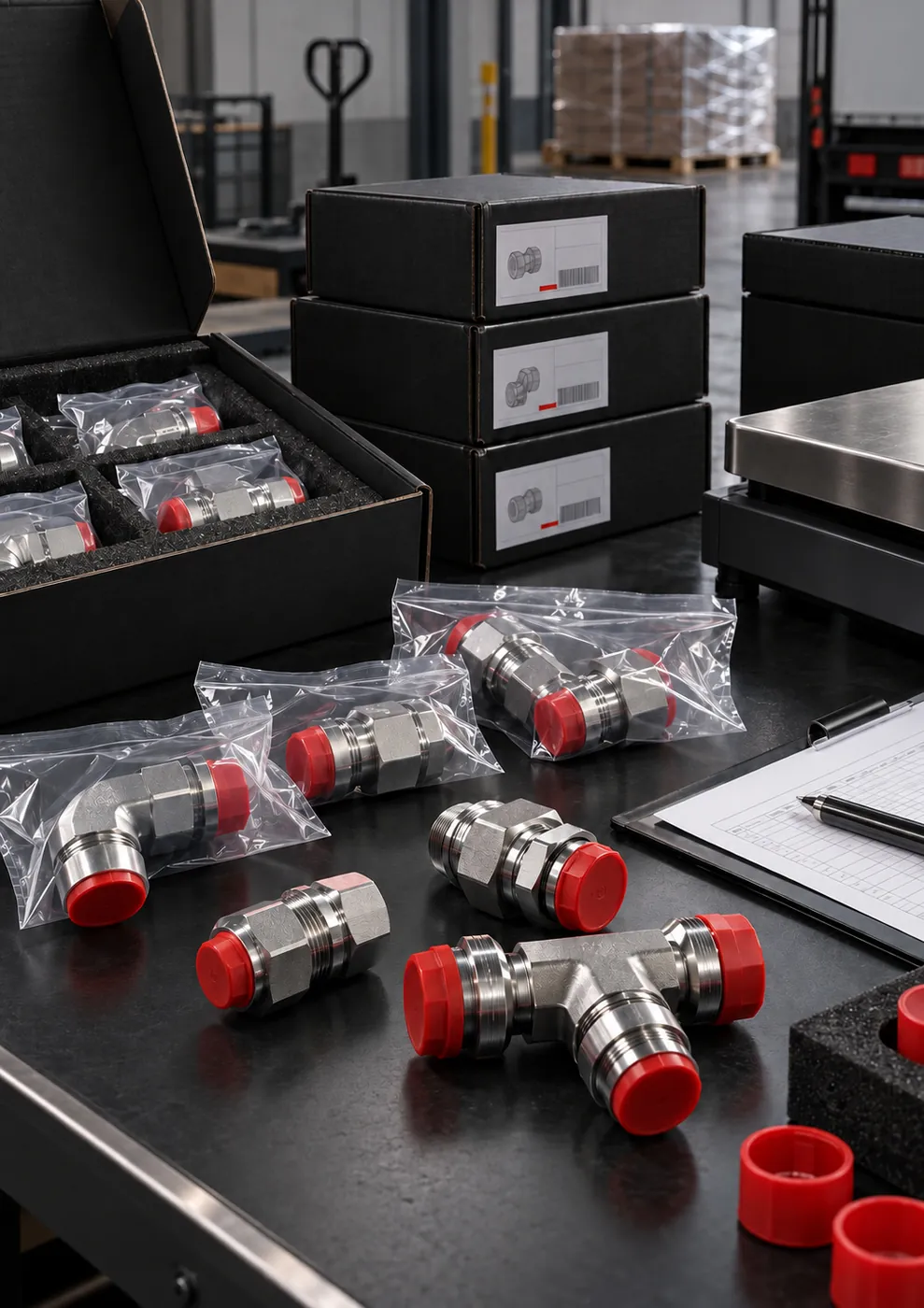
Stock items are prepared within an average of 1-3 business days, standard production within 5-10 business days, hose assemblies made to length within…
The right hose assembly is defined by seven pieces of information: inside diameter and length, temperature, application conditions, fluid, working…
Hydraulic connections are sealed in four ways: O-ring, bonded seal (Dowty washer), metal cone face and tapered thread. On parallel threads, the seal…
Frequently asked questions
If your question isn't answered here, write to us and we'll pin down the size, thread standard and material together.
Send us your questionOutside diameter alone is not enough; the pitch should be measured with a thread pitch gauge, and the thread angle and whether the thread is parallel or tapered should be checked. BSP has a 55° profile, while NPT and UNF have a 60° profile. If you are not sure, send us photos of the port and the existing part along with their dimensions, and we will match them together.
Steam, moisture, starch adhesive and paper dust accelerate corrosion in carbon steel fittings and cause threads to seize. Stainless steel fittings greatly reduce this corrosion, making removal and replacement easier and shortening maintenance time.
Yes. The thread standard, critical diameters and sealing type are verified from a sample, photo or technical drawing. The part is shipped after CNC machining, deburring and final inspection; custom-size manufacturing is scheduled within an average of 10-20 business days after technical approval.
Standard sizes in stock are prepared within an average of 1-3 business days, standard production items within an average of 5-10 business days, and made-to-length hose assemblies within an average of 5-15 business days. If you share your maintenance list at least this far in advance, the items supplied from stock and those requiring manufacturing are scheduled around your maintenance date.
An elbow at a suitable angle (45° or 90°) or a compact tee allows the hose to work without sharp bends. Using a hose below its minimum bend radius or installing it twisted shortens its life. If you send us the installation clearance and a photo of the current routing, we can select the right part together.
Quote
Share your machine ports, hose sizes and installation clearances; we'll plan the parts to be supplied from stock and those to be manufactured around your maintenance schedule.
Paper & Board Mills request form
Other sectors