


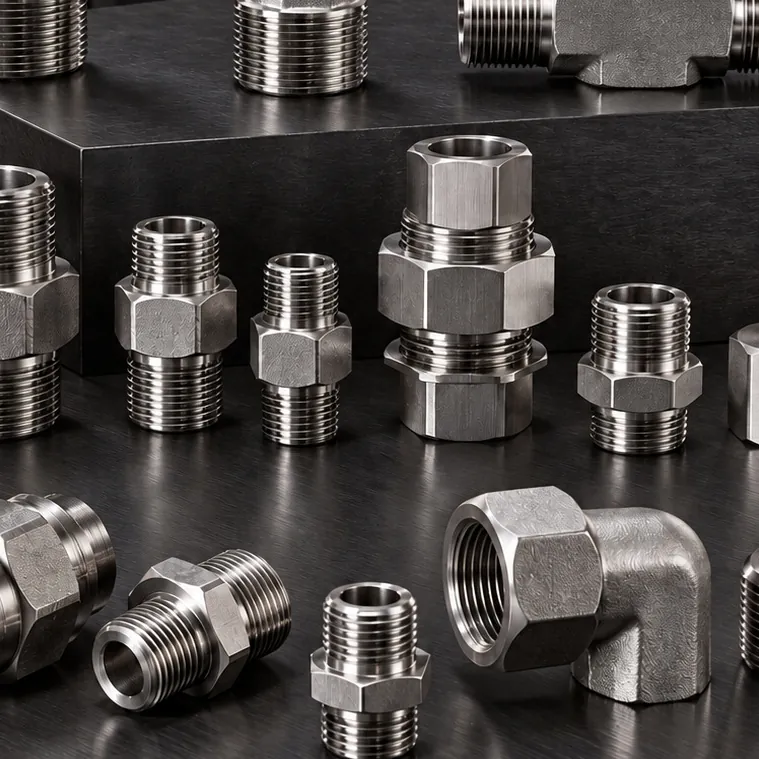
 DIN 2353 Compression Fittings
Straight Coupling (24° Cone)
Details & quote
Stainless Steel Hydraulic Fittings
Stainless 24° cone compression fittings to DIN 2353 / ISO 8434-1: straight couplings, elbows, tees, bulkhead couplings and male stud connectors.
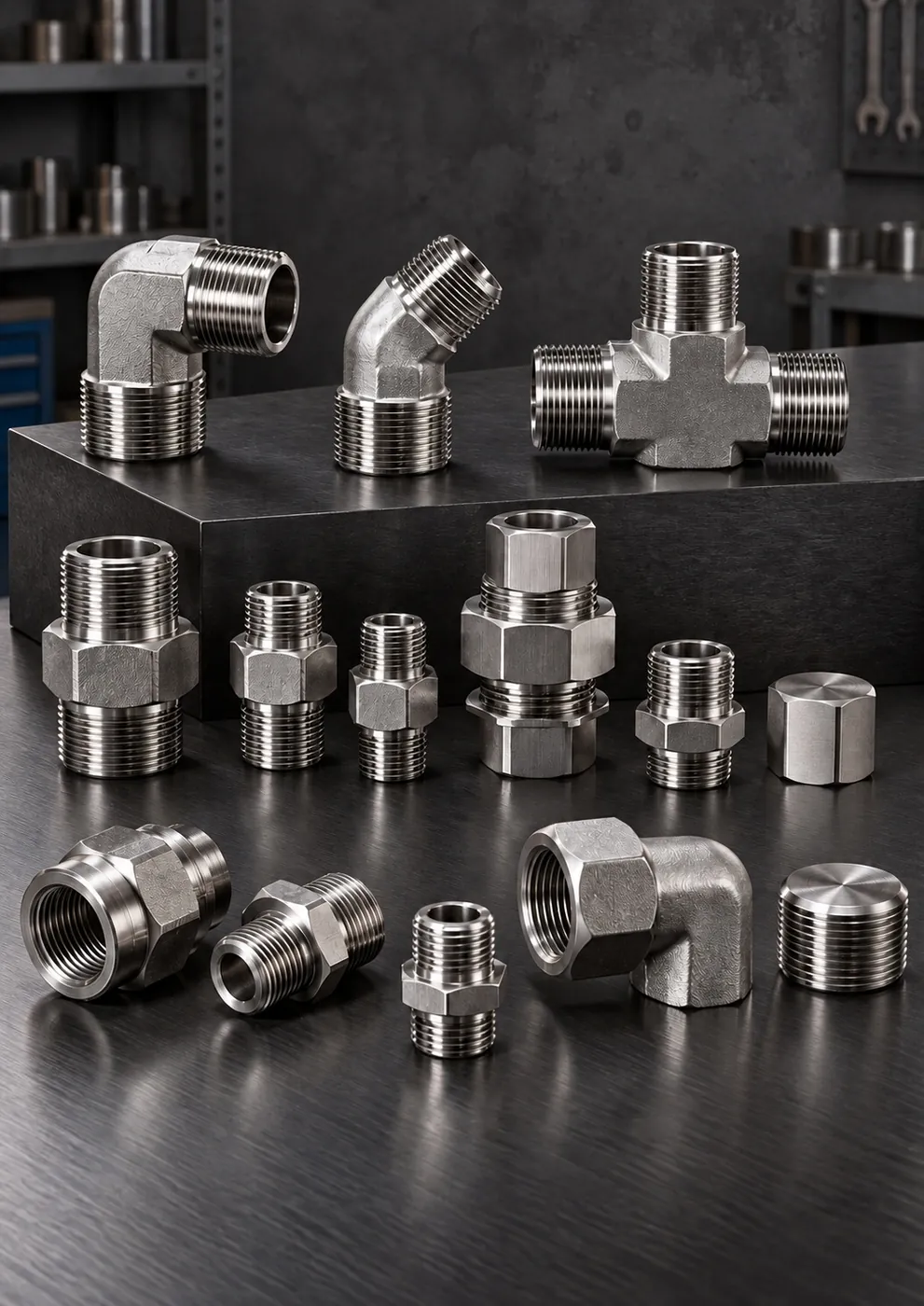 DIN 2353 Compression Fittings
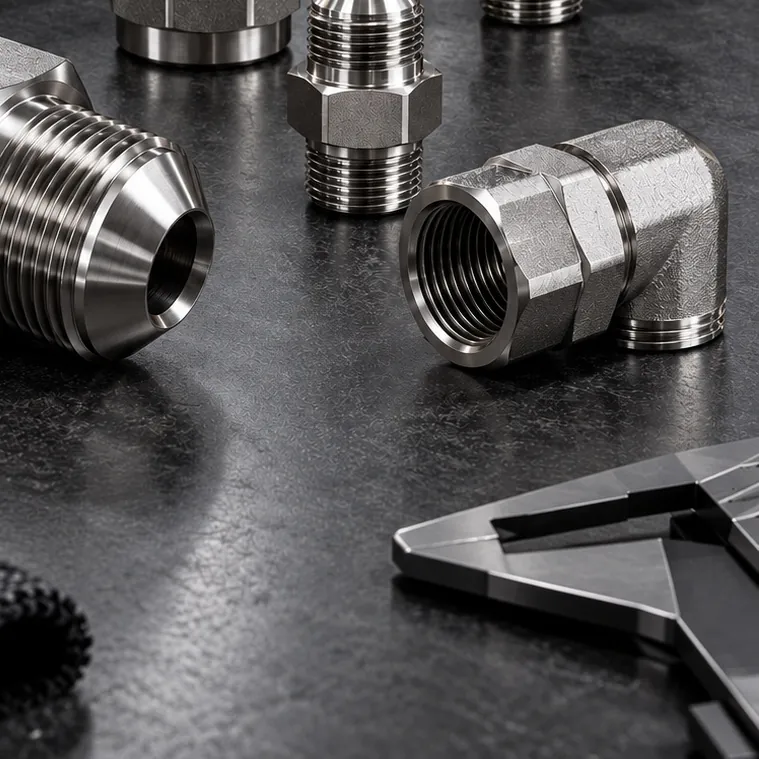 DIN 2353 Compression Fittings
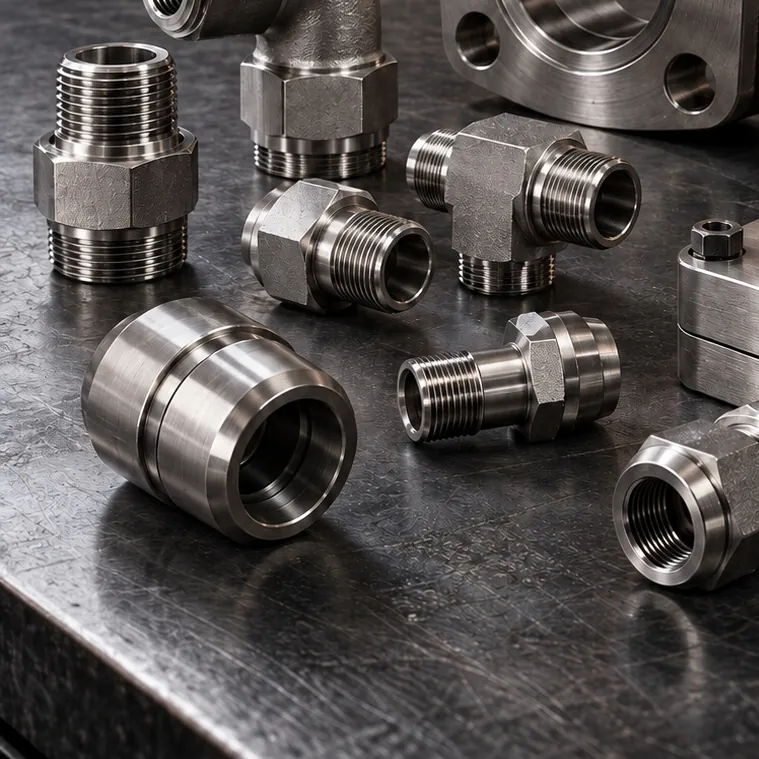 DIN 2353 Compression Fittings DIN 2353 Compression Fittings
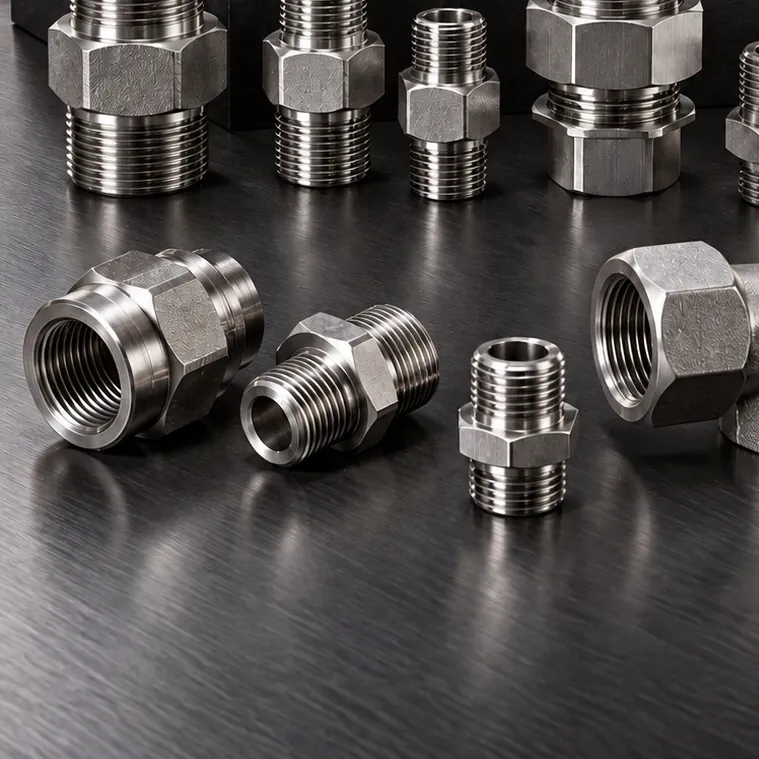 DIN 2353 Compression Fittings
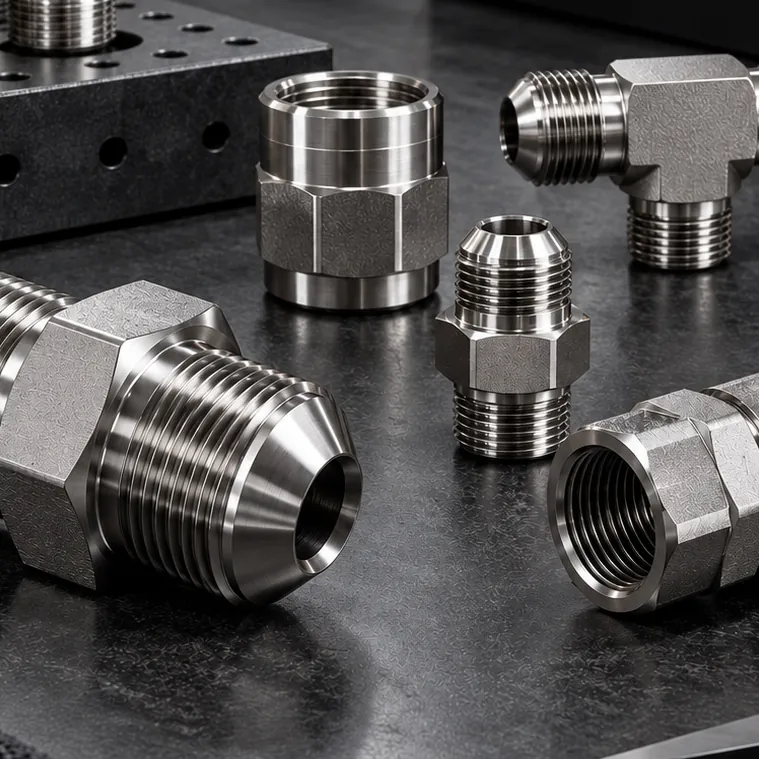 DIN 2353 Compression Fittings
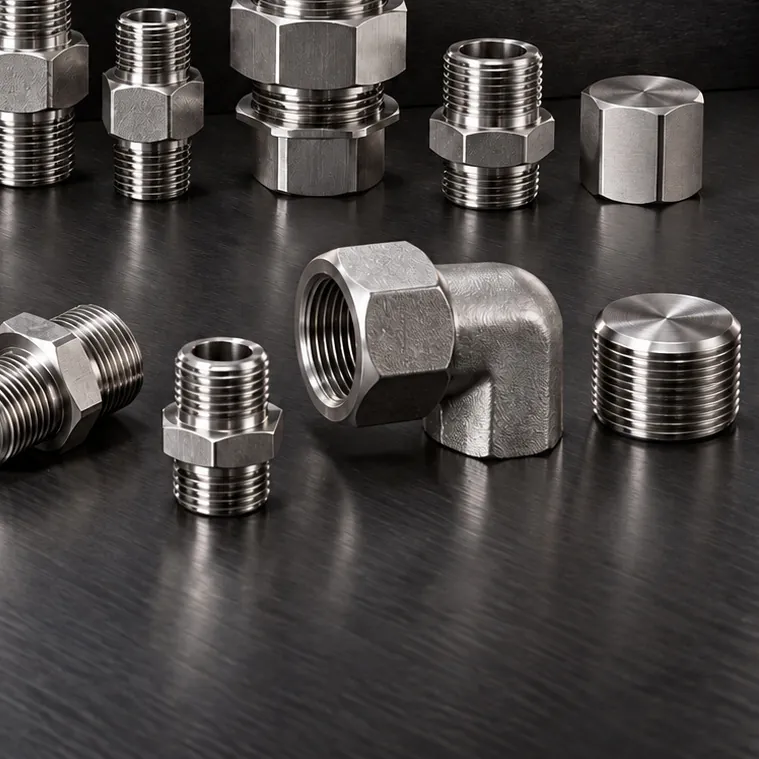 DIN 2353 Compression Fittings
Selection guide
DIN 2353 compression fittings are used to connect metric OD tube into a line without welding. Commonly called "Ermeto-type fittings" in the field in Turkey (the name comes from one manufacturer's registered trademark and is used here only to describe the connection type), these connections are 24° cone compression fittings with nut and ferrule, covered by DIN 2353 and ISO 8434-1. As the nut is tightened, the cutting edge of the ferrule bites into the tube in a controlled way; sealing is achieved by metal-to-metal contact in the 24° cone seat or by an O-ring sealed cone end. Because the ferrule bites into the tube, they are also known as bite-type fittings.
ISO 8434-1 defines different pressure series for the same tube OD. Because the series changes the nut thread and body dimensions, parts from different series cannot be fitted together.
| Series | Tube OD range in the standard | Typical use |
|---|---|---|
| L (light) | 6-42 mm | General hydraulic power and return lines |
| S (heavy) | 6-38 mm | Lines with high pressure and pressure spikes |
For example, for 12 mm tube the nut thread is M18x1.5 in the L series and M20x1.5 in the S series. The standard also defines an extra-light LL series for small-diameter pilot lines. Working pressure varies with size, series and material; the value is checked in the table for the selected part. Stock and production sizes are confirmed at the quotation stage.
These fittings are used with seamless hydraulic tube whose OD tolerance and hardness suit the ferrule. If the tube is too hard, the ferrule cannot bite in sufficiently; if it is too soft, it collapses inward under pressure. Wall thickness is selected according to line pressure.
Overtightening damages the ferrule and the cone; undertightening can allow the tube to slip under pressure.
Ship engine room and deck hydraulics, shipyard maintenance and repair work, offshore power units, rolling mill and board mill power lines, fire pump skids, and the hydraulic circuits of chemical and food plants. Where a removable point is needed on a welded line, weld nipples and weld fittings are used; where a hose transition is needed, metric swivel-nut hose fittings are used.
Not sure about the right size?
Send the sample, the technical drawing or your caliper measurements, and we'll confirm the thread standard and the matching part together.
+90 545 206 13 74Knowledge Center
Technical articles on selecting, installing and maintaining the products in this group.
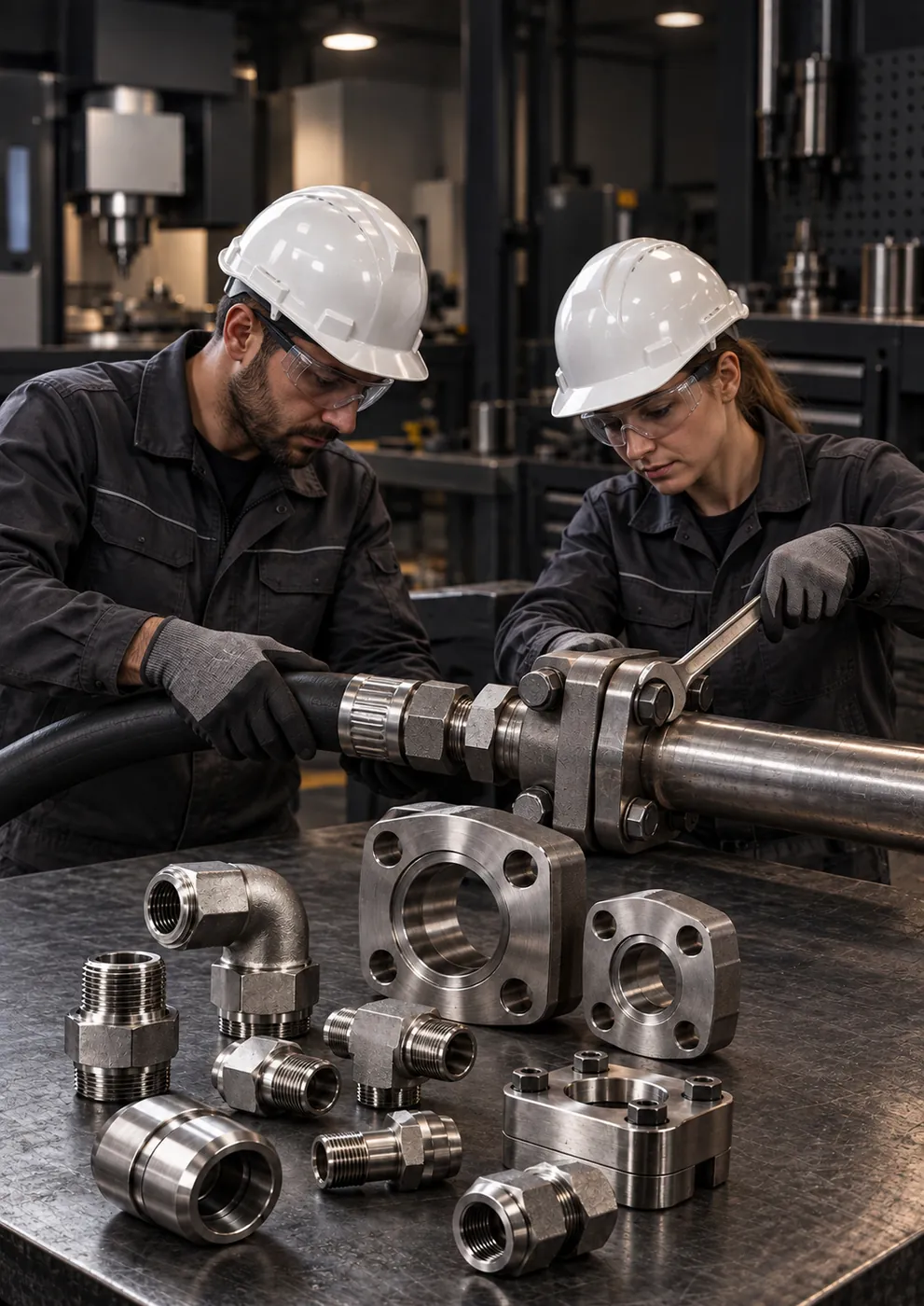
Hydraulic connections are sealed in four ways: O-ring, bonded seal (Dowty washer), metal cone face and tapered thread. On parallel threads, the seal…
BSP threads have a 55° profile, while NPT, UNF and metric threads have a 60° profile. BSPT and NPT tapered threads seal on the thread itself; on…
FAQ
If your question isn't answered here, message us on WhatsApp with dimensions or a photo, and our technical team will answer directly.
Ask on WhatsAppThey are 24° cone (bite-type compression) tube fittings covered by DIN 2353 / ISO 8434-1: as the nut is tightened, the ferrule bites into the tube and connects it into the line without welding. The same connection type is made by many manufacturers and may be known by different names in the market. The bite-type fittings in this group are AISI 316L stainless steel.
For the same tube OD, the S (heavy) series is designed for higher pressure; its nut thread and body dimensions differ from those of the L (light) series. For example, on 12 mm tube the L-series nut thread is M18x1.5, while the S-series thread is M20x1.5. That is why L and S parts cannot be fitted together; the series of an existing line is identified from the nut thread.
When the same joint is disconnected and reassembled, a ferrule that has already bitten into the tube can be reused on the same tube; the nut is brought back to its previous position and tightened slightly. If the tube is being replaced or the ferrule is damaged, a new ferrule must be used, because the old bite mark will not match the new tube.
Use seamless stainless steel hydraulic tube whose OD tolerance and hardness are suitable for the ferrule. Wall thickness is selected according to line pressure. Stating the tube OD and wall thickness together with the fitting series speeds up correct matching.
Port-side sealing depends on the thread standard. On BSPP parallel threads, sealing is provided by a bonded seal, an O-ring or a cutting edge; on BSPT and NPT tapered threads, it is made on the threads themselves with a suitable sealant. A part should not be selected until the port standard has been verified.