


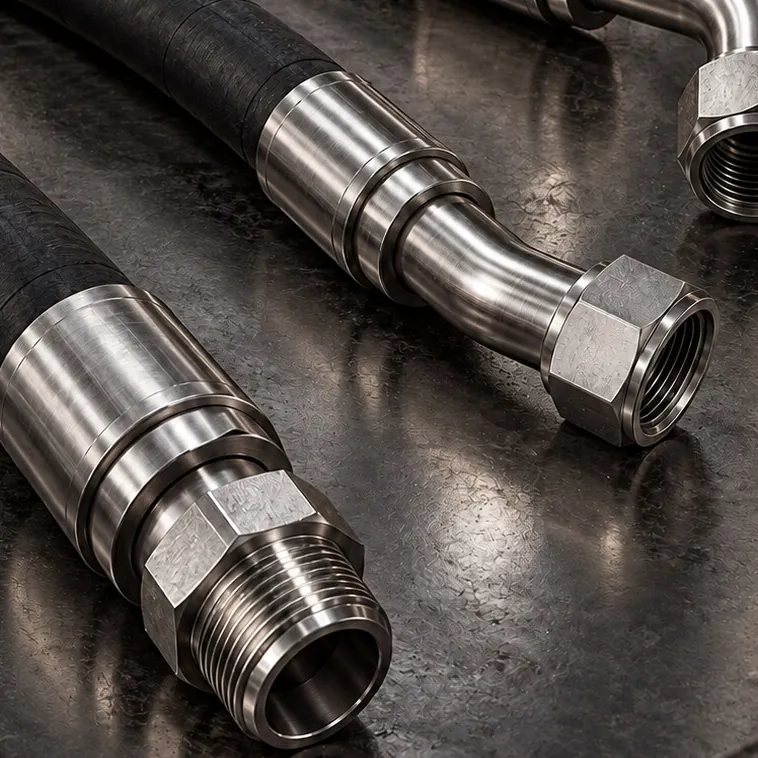
 Hose Fittings & Ferrules
BSP Female Swivel 90° Hose Fitting
Details & quote
Product group
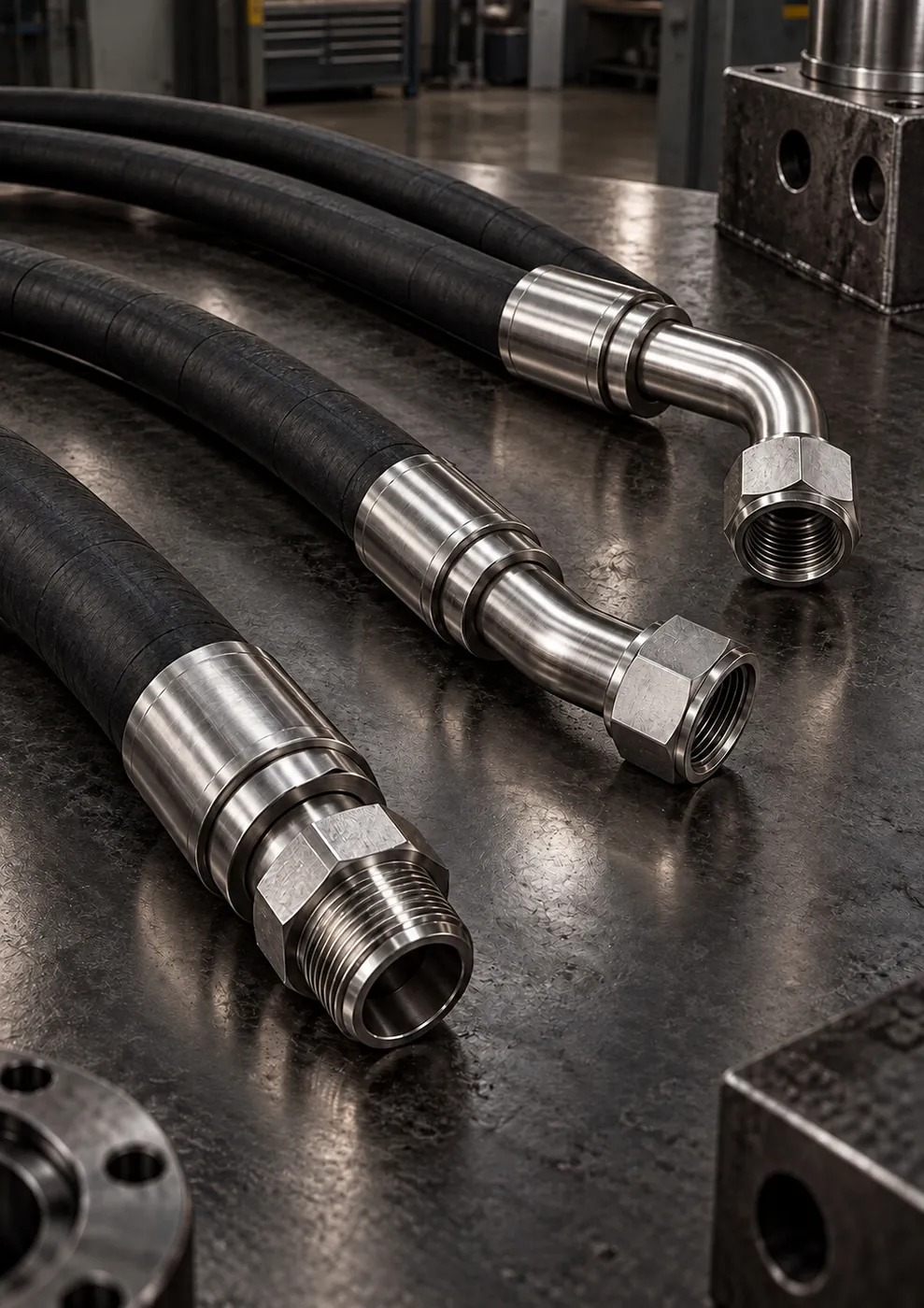
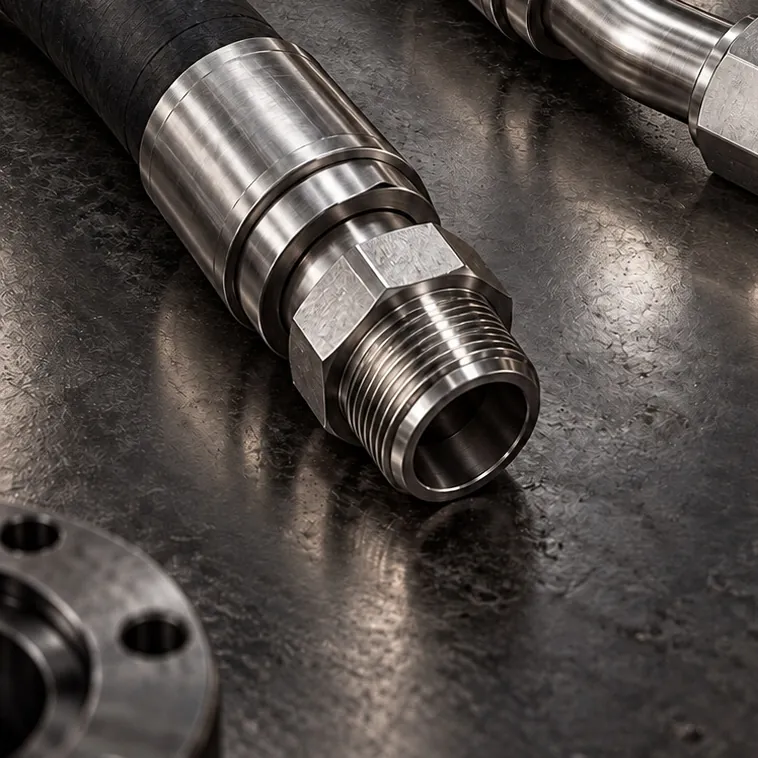
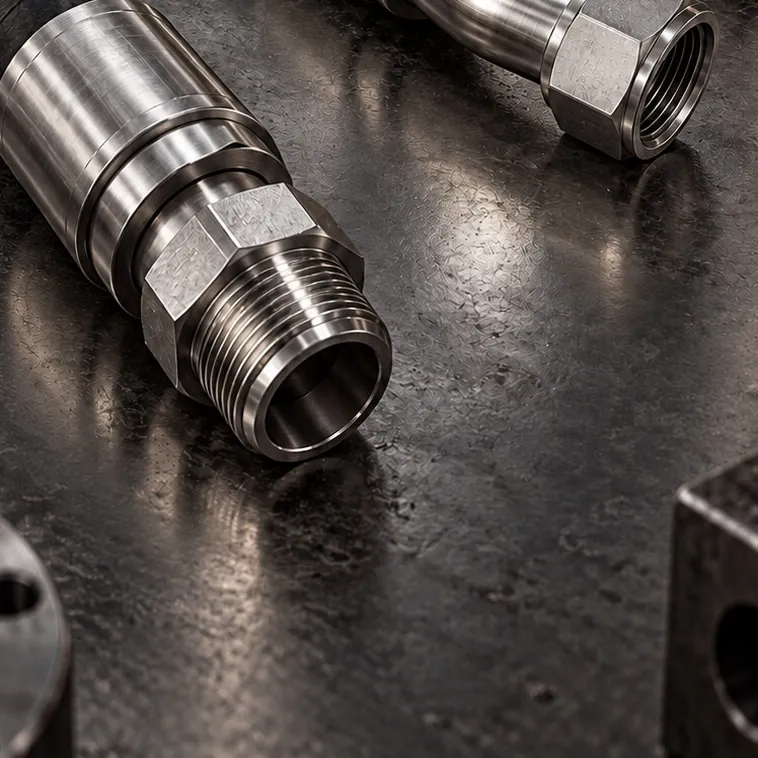
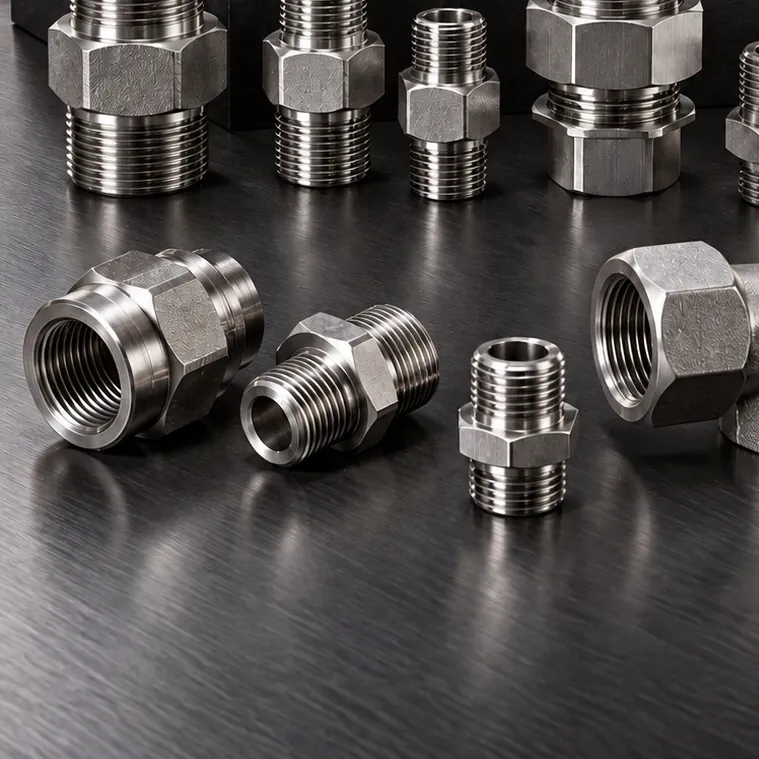
Straight, 45° and 90° stainless steel hose fittings; BSP, JIC/UNF, NPT, metric and SAE flange ends, ORFS ends on request, and ferrules matched to the hose type.
 Hose Fittings & Ferrules
 Hose Fittings & Ferrules
 Hose Fittings & Ferrules Hose Fittings & Ferrules Hose Fittings & Ferrules Hose Fittings & Ferrules
 Hose Fittings & Ferrules
Selection guide
Hose fittings and ferrules are the crimped end components that connect a hydraulic hose into a line. In the field they are also called "hose ends" or "crimp fittings." The fitting is the body and connection end that goes inside the hose; the ferrule (socket) is the sleeve that slides over the outside of the hose and, when crimped, locks the fitting onto the hose. Crimped together, the two form a ready-to-install hose assembly. Stainless steel connection ends offer a robust solution in environments with saltwater, humidity and cleaning chemicals, where carbon steel ends rust.
| End type | Sealing | Where is it used? |
|---|---|---|
| BSP female swivel | 60° cone seat | Pump, valve and cylinder lines built to European standards |
| JIC 37° (UNF) female swivel | 37° conical surface | Machines built to American standards, mobile hydraulics, test equipment |
| Metric 24° (L / S series) | O-ring on the 24° cone nose | Connection to DIN 2353 compression fitting bodies |
| NPT male | On the threads | Equipment with NPT ports |
| SAE flange (SAE 3000 / 6000, Code 61 / 62) | O-ring on the face of the flange head | Large-bore pressure and suction lines, pump outlets |
| ORFS (on request) | O-ring on the flat face | High-pressure and vibrating lines |
Ends can be supplied straight, 45° and 90°; angled ends route the hose in front of the port without twisting it.
For customers who need a custom hydraulic hose assembly, that is, the hose cut to length and its ends crimped, the ends are prepared by matching the hose type and the crimp diameter. When ordering, specify the ID, overall length, working pressure, fluid, the standard and angle of both ends, and, for assemblies with elbows on both ends, the orientation angle of the ends relative to each other. Hose assemblies are typically ready to ship within 5-15 business days, and stainless steel ends in stock within 1-3 business days.
The hose must not be bent tighter than its minimum bend radius, and the bend must not start right at the end fitting. The hose must not be twisted when connected; the printed layline along it should stay straight. Because the length changes slightly under pressure, the line must not be installed fully taut, and protective sleeves should be used at chafing points.
Ship deck machinery, crane and steering hydraulics; pipe handling and lifting equipment on drillships; press and mill roll lines in rolling mills; corrugated board (corrugator) and actuator lines in board mills; flexible connections on fire pump sets; and mobile hydraulics in the defense industry.
Not sure about the right size?
Send the sample, the technical drawing or your caliper measurements, and we'll confirm the thread standard and the matching part together.
+90 545 206 13 74Knowledge Center
Technical articles on selecting, installing and maintaining the products in this group.
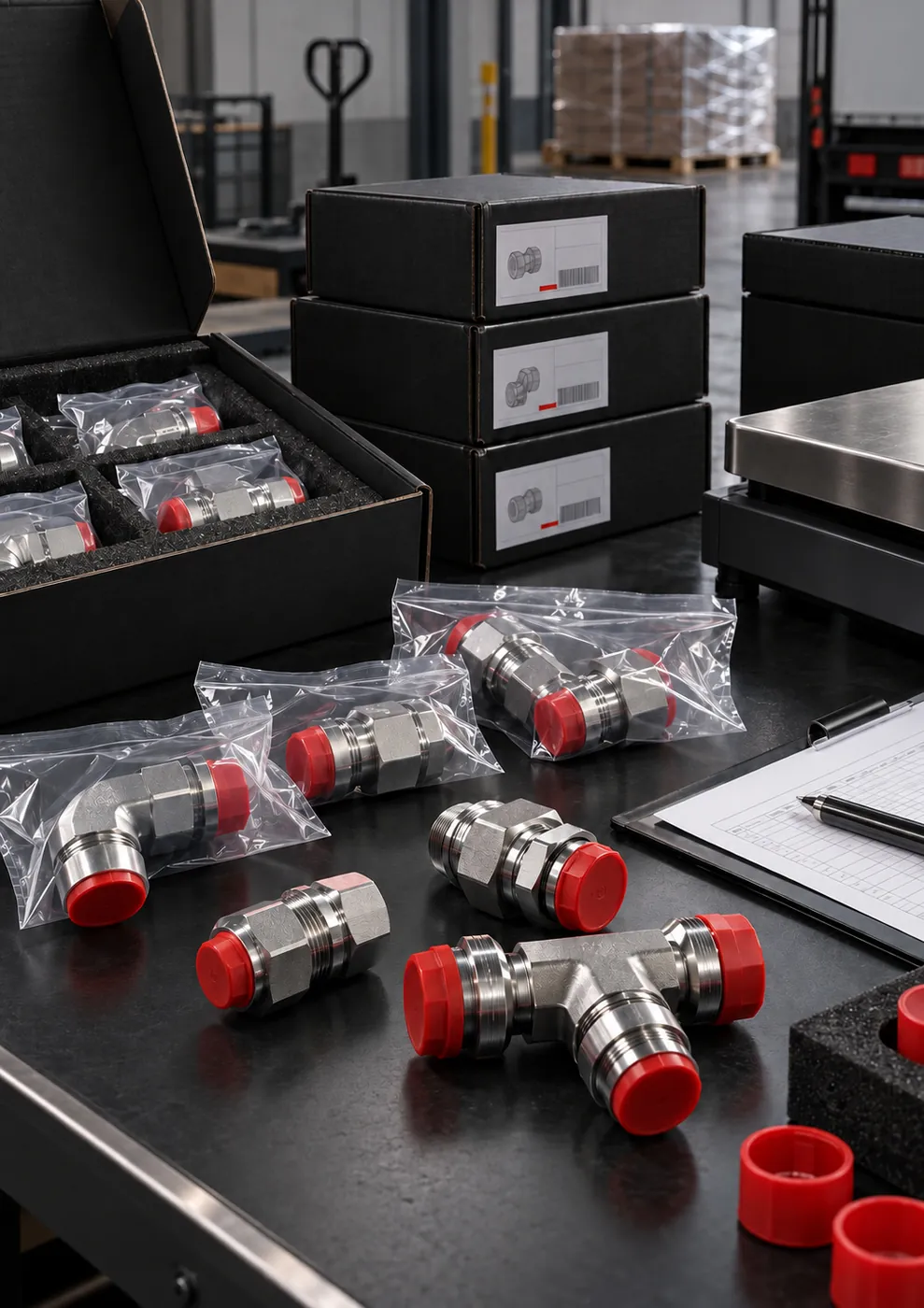
Stock items are prepared within an average of 1-3 business days, standard production within 5-10 business days, hose assemblies made to length within…
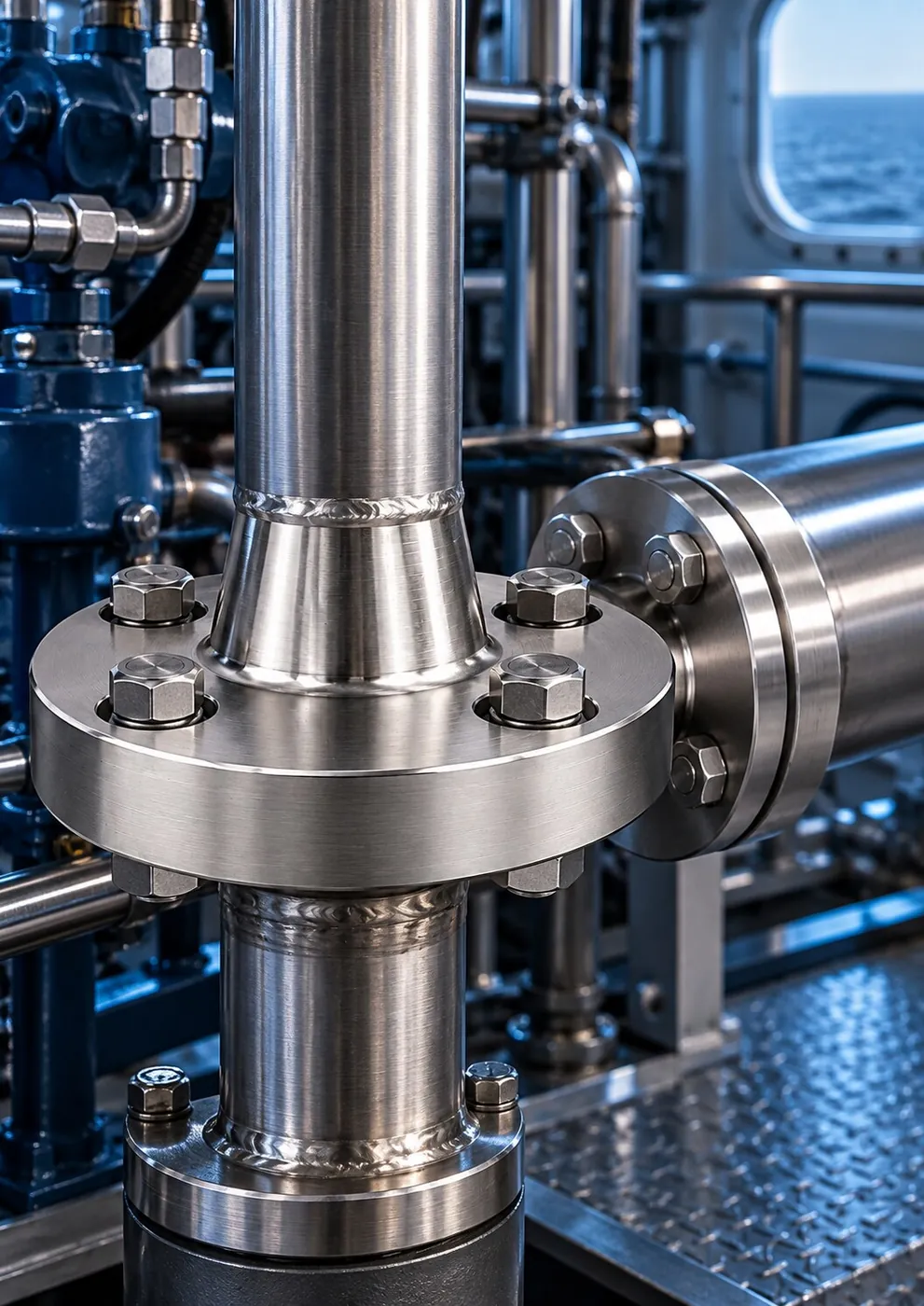
In saltwater environments, the baseline material is AISI 316L; its molybdenum content increases resistance to chloride-induced pitting and crevice…
The right hose assembly is defined by seven pieces of information: inside diameter and length, temperature, application conditions, fluid, working…
FAQ
If your question isn't answered here, message us on WhatsApp with dimensions or a photo, and our technical team will answer directly.
Ask on WhatsAppThe fitting (hose end) is the body and connection end that goes inside the hose; the ferrule is the sleeve that slides over the outside of the hose and, when crimped, locks the fitting onto the hose. In one-piece designs the two are combined. Either way, the parts are selected according to the hose type and ID.
The hose ID, the overall length and the points it is measured between, the working pressure, the fluid and temperature, the connection standard and angle of both ends, the orientation angle of the ends for assemblies with elbows on both ends, and the quantity. If you have the old hose, a sample or a photo of its printed marking is the fastest route.
1SN hoses have one layer and 2SN hoses two layers of steel wire braid (EN 853); at the same ID, 2SN withstands higher pressure. 4SH has four layers of spiral steel wire reinforcement (EN 856) and is used for high-pressure, high-impulse service. A separate ferrule is designed for each type; the ferrule for one hose cannot be used on another.
Ferrules and fittings are designed around the reinforcement construction and OD of the hose; even among hoses of the same class, the OD and crimp values can vary from one manufacturer to another. That is why the hose brand and type should be stated in the order, and the crimp diameter set according to that match.
The end angle is chosen according to the path the hose will follow after leaving the port. If the hose would have to bend sharply in front of the port, or needs to turn to the side immediately, a 45° or 90° end preserves the bend radius and does not strain the hose. If there is enough straight length, a straight end gives lower pressure loss and easier installation.