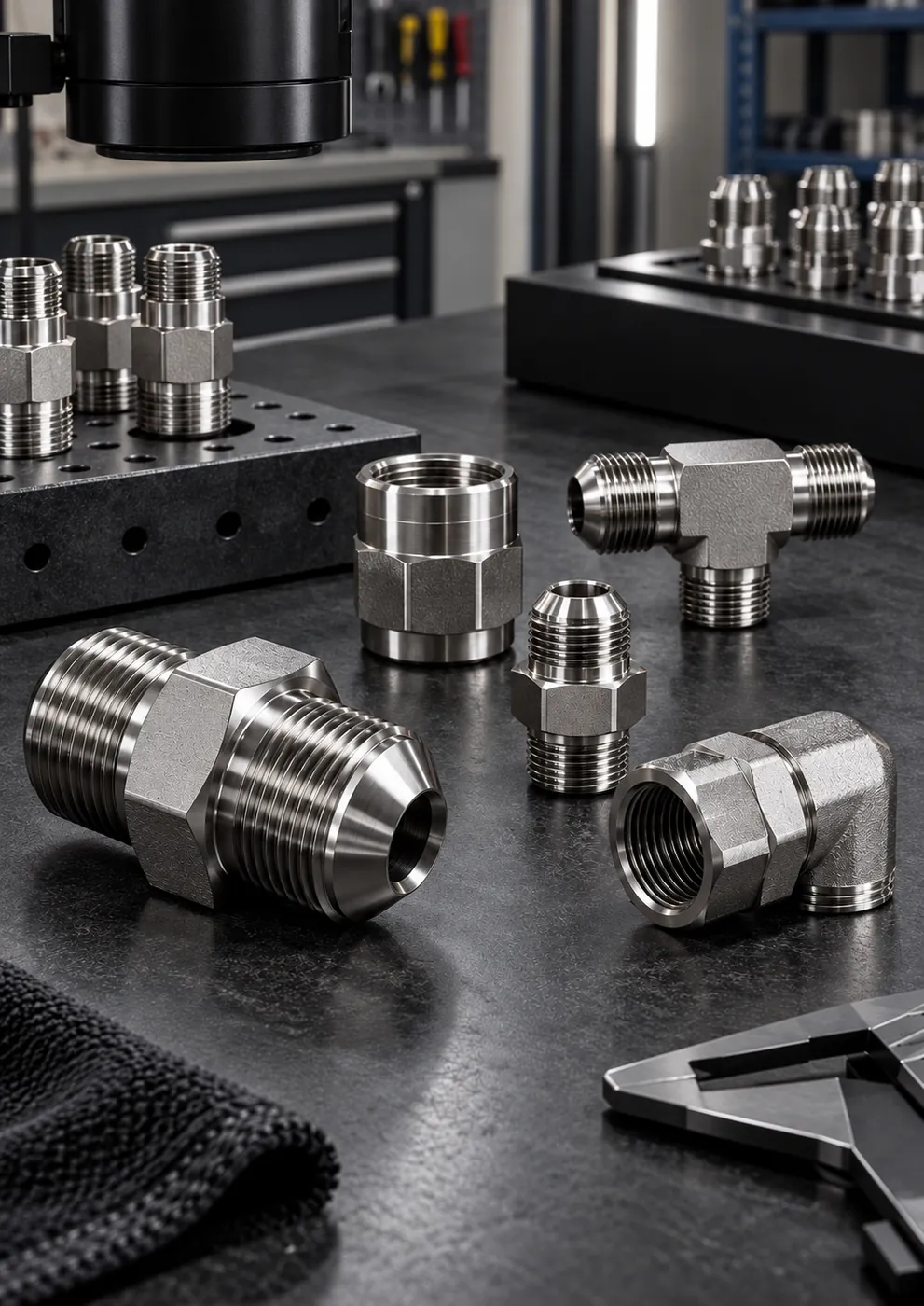
 DIN 2353 Compression Fittings
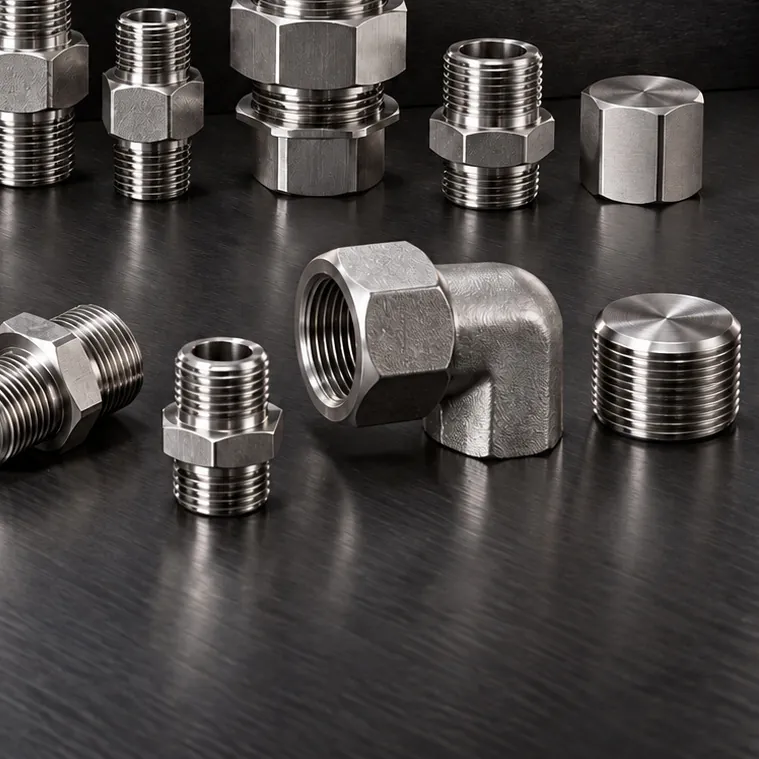
Male Stud Elbow (NPT)
Details & quote
Thread identification · Correct matching · Sealing
Identifying BSP, NPT, UNF/JIC and metric threads by measurement, matching them correctly to the mating part, and selecting the right sealing method for the application from O-ring, bonded seal, cone seat or thread sealing.
Quick answer
Fitting identification means determining by measurement which thread standard a port or fitting uses and how it seals. The BSP family has a 55° thread profile, while the NPT and UNF families have a 60° profile; that is why selection is never based on the caliper-measured outside diameter alone: the pitch (with a thread pitch gauge), the standard and the seal face are checked together. GÜNEYSS carries out this identification from photos, measurements or samples and recommends the correct fitting, adapter or sealing element.
The most common connection problem in the field is not the wrong part, but the wrong match. BSPP parallel, BSPT tapered, NPT tapered, UNF/JIC and metric threads look alike, but they differ in angle, pitch, diameter and sealing method. Forcing two incompatible threads together comes back as a leak at the first pressurization, and often as permanent thread damage. Technical consulting exists to eliminate this uncertainty before the part is ordered.
Once the standard is identified, the mating part is selected from the same standard. If two different standards need to meet, for example connecting a JIC-ended hose to a pump with a BSP port, a suitable conversion adapter is used instead of forcing the connection. Transitions not available in catalogs can be custom-made from a sample or technical drawing.
On ORFS connections, the O-ring sits in a groove in the face and seals by being pressed against the flat face of the mating part. On SAE O-ring boss (ORB) connections, it sits in the neck where the thread ends and is compressed by the chamfer at the port mouth. The O-ring material must be compatible with the fluid and temperature.
It consists of a metal washer with a rubber ring vulcanized to its inside diameter, and seals on the face of parallel-thread ports such as BSPP and metric. The port face must be flat, clean and free of scratches.
On JIC 37° and 24° cone connections, sealing is achieved through metal-to-metal contact. A nick or scratch on the cone surface is a direct leak path; sealing tape is never wrapped on these surfaces.
On BSPT and NPT tapered threads, sealing is achieved by the threads wedging into each other together with a suitable thread sealant. The first one or two threads are left bare so that the sealant does not get into the system. This method does not provide reliable sealing on parallel threads.
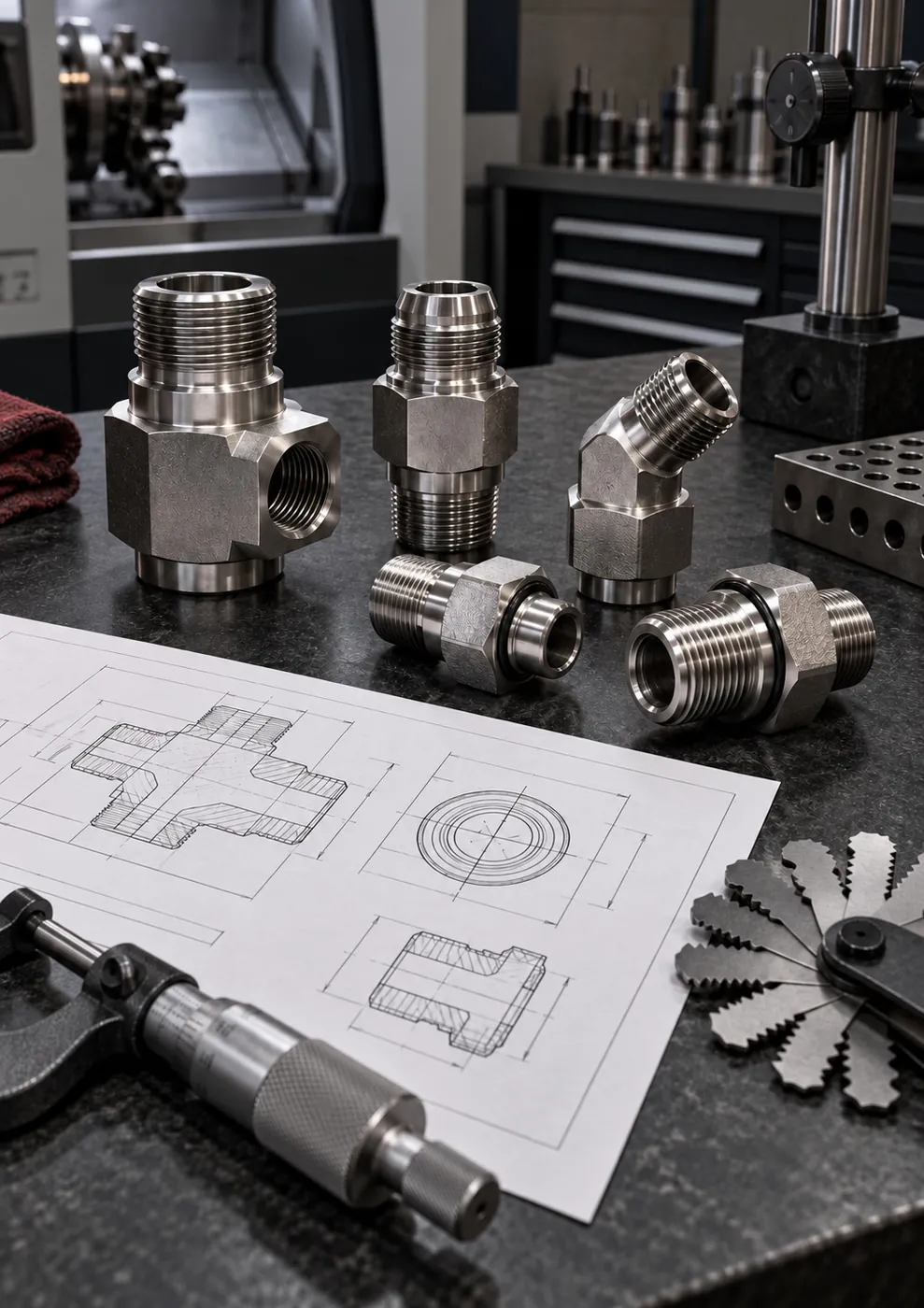
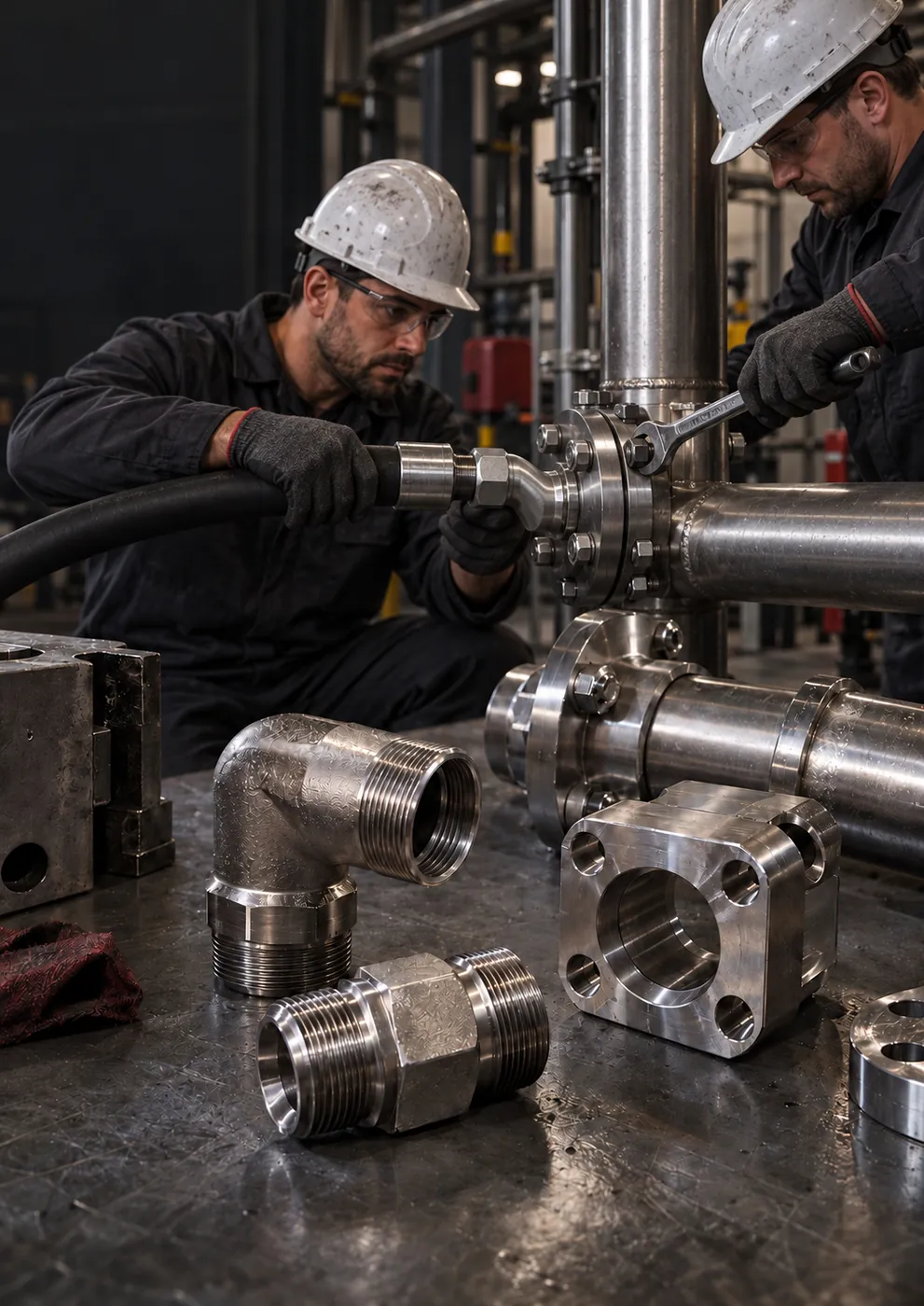
Clear photos of the part from different angles, the outside diameter measured with a caliper (even better if the caliper reading is visible in the photo), the pitch measured with a thread pitch gauge if available, and the make and model of the equipment the part is fitted to. With this information, a preliminary identification can be made for most connections; if a definitive identification is needed, the sample can be sent to Tuzla, Istanbul.
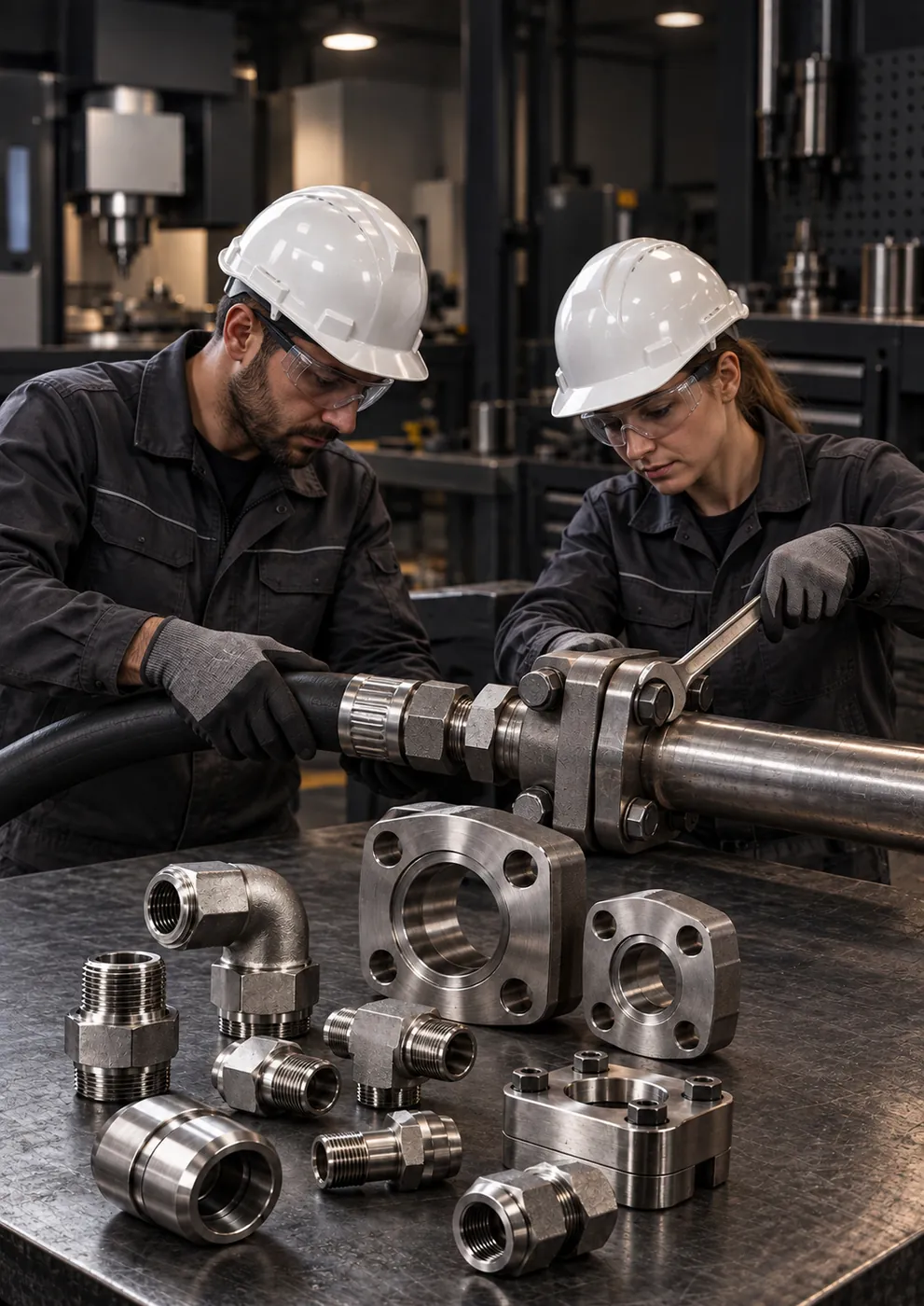
The need for identification arises in any plant where equipment of different origins operates side by side: foreign-made deck and steering equipment on ships and in shipyards, mixed-standard hydraulic lines on offshore facilities, lines in rolling mills and paper and board mills where old and new machines are used together, and correct connection selection in defense, aviation, chemical, food and fire suppression systems.
If the identified part is in stock, it is typically ready to ship within 1-3 business days. Standard parts not in stock are scheduled within an average of 5-10 business days, and custom conversion adapters within an average of 10-20 business days after technical approval.
Process
From request to delivery in 5 steps
Part photos, caliper measurements, pitch and equipment details are collected.
Candidate thread standards and the sealing surface are determined.
If necessary, the standard is verified by measuring the sample or the mating part.
The correct fitting, adapter or sealing element is recommended, along with installation notes.
The part is shipped from stock or scheduled for manufacturing.
Sectors
On the sector page, you'll find this service's field-specific applications, recommended products and frequently asked questions.
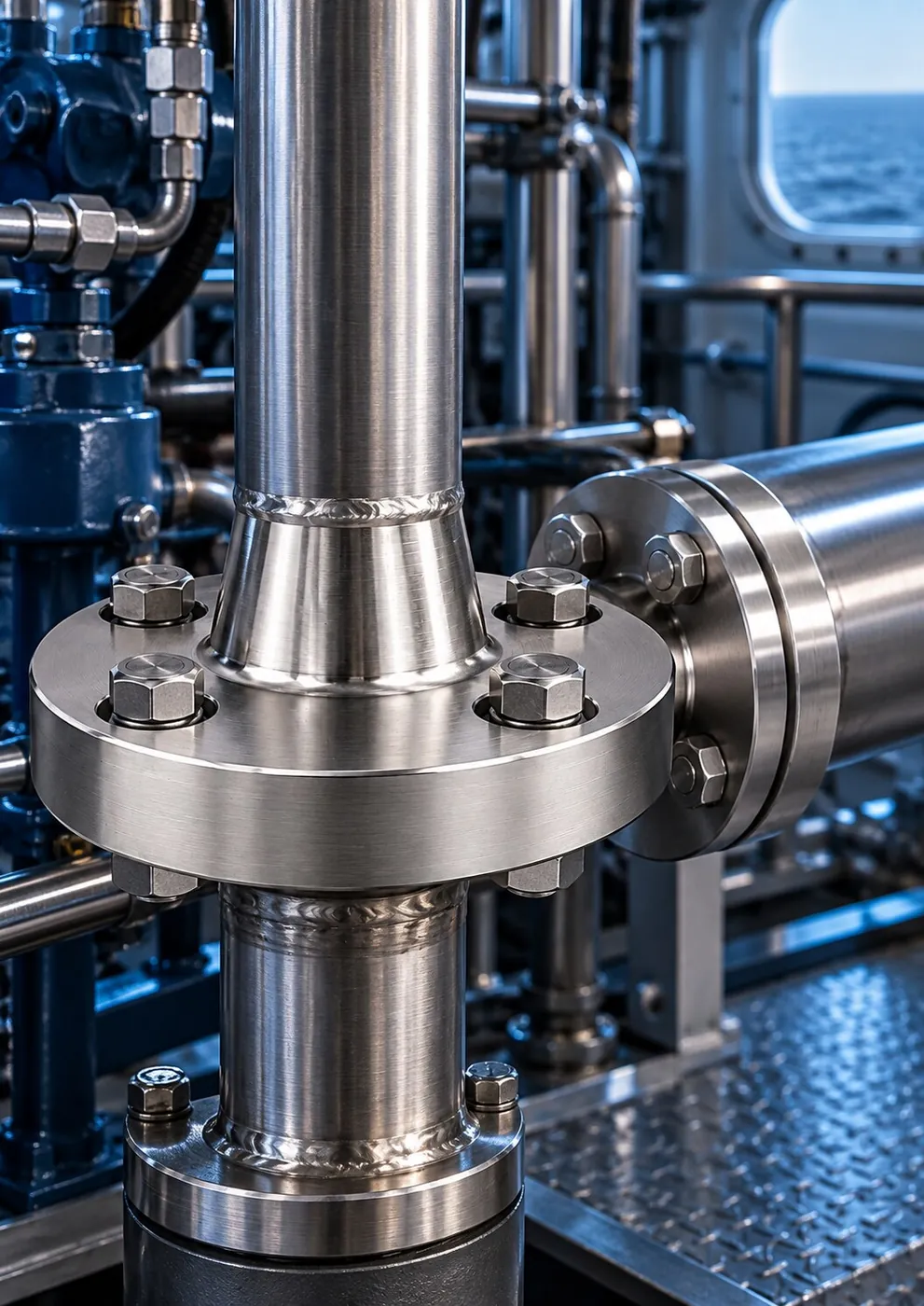
AISI 316L fittings, hose assemblies, SAE flanges and valves built to withstand salt spray and vibration on deck cranes, windlasses, steering gear, passerelles and engine room lines.

Stainless steel pipe, flanges, fittings and hose assemblies, from newbuild piping circuits to drydock overhauls; fast spares from stock for ship crane service teams.

AISI 316L hose ends, SAE flanges, adapters and valves for crane, pipe handling, deck machinery and power unit lines on drillships and platforms.
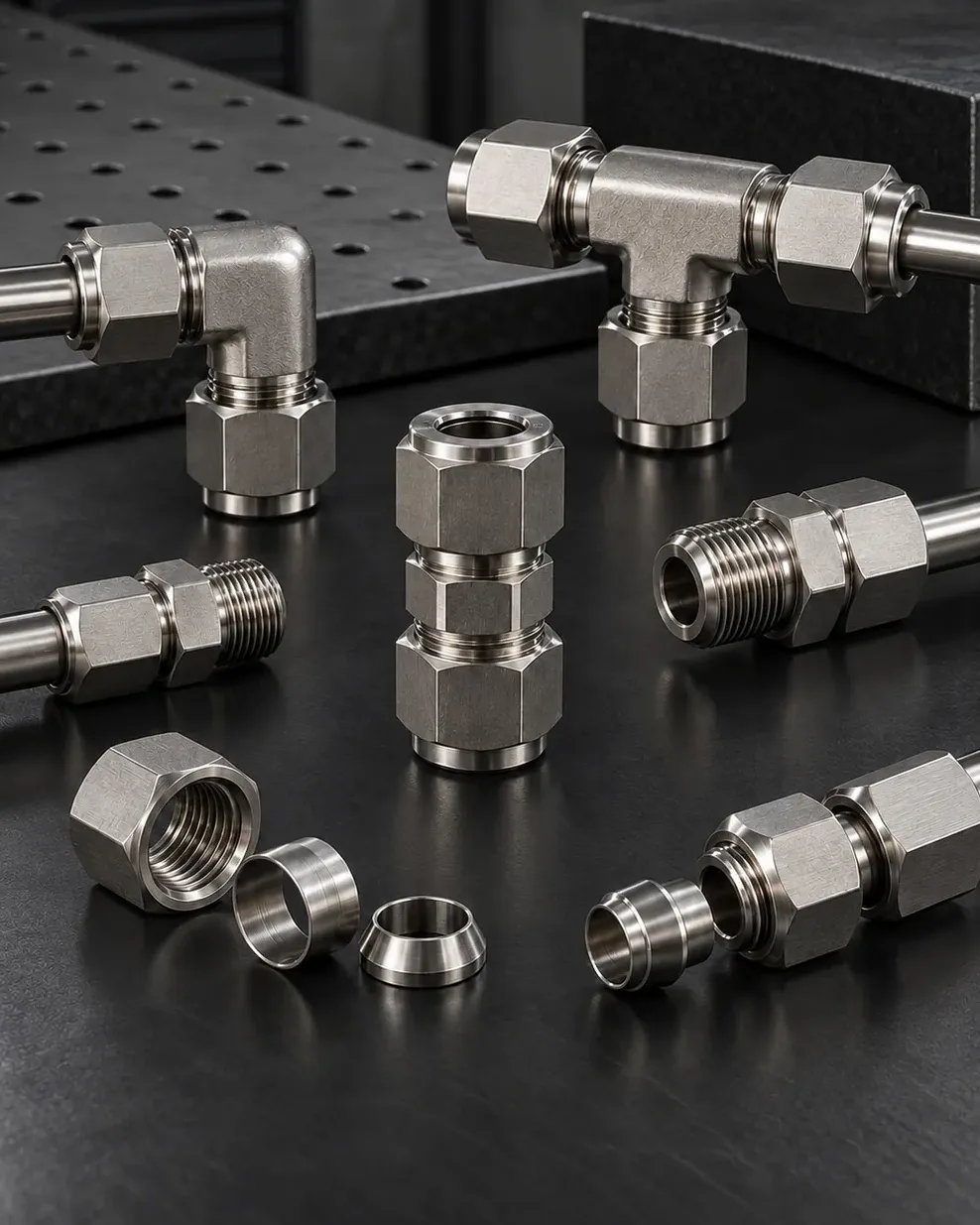
316L twin-ferrule fittings, needle valves, check valves and tubing for wellhead control panels, chemical injection, refinery instrument and sampling lines, and pipeline stations.
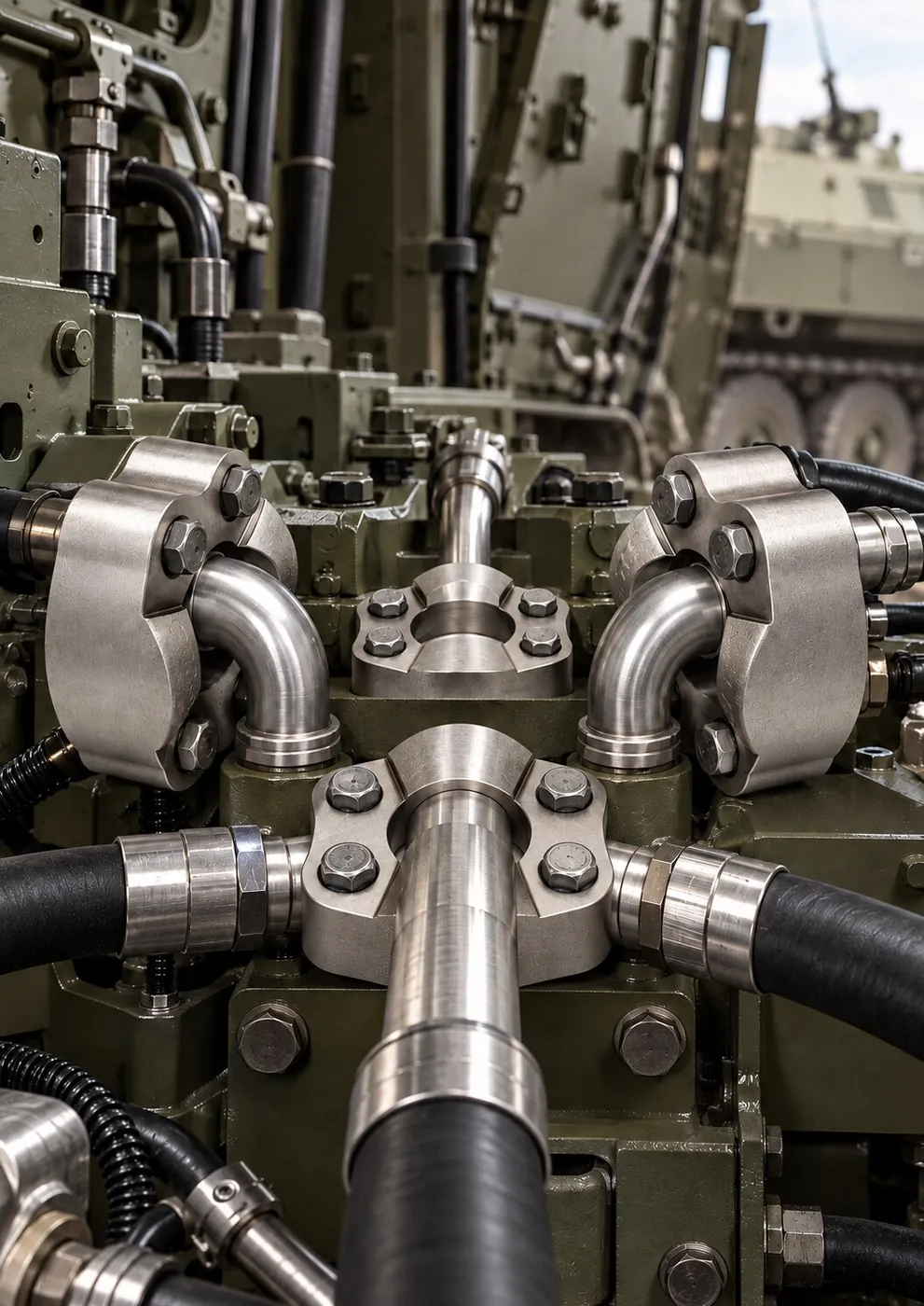
SAE flanges, adapters, elbows and hose fittings CNC-machined after technical drawing approval for mobile hydraulic systems, maintenance benches and compact power units.
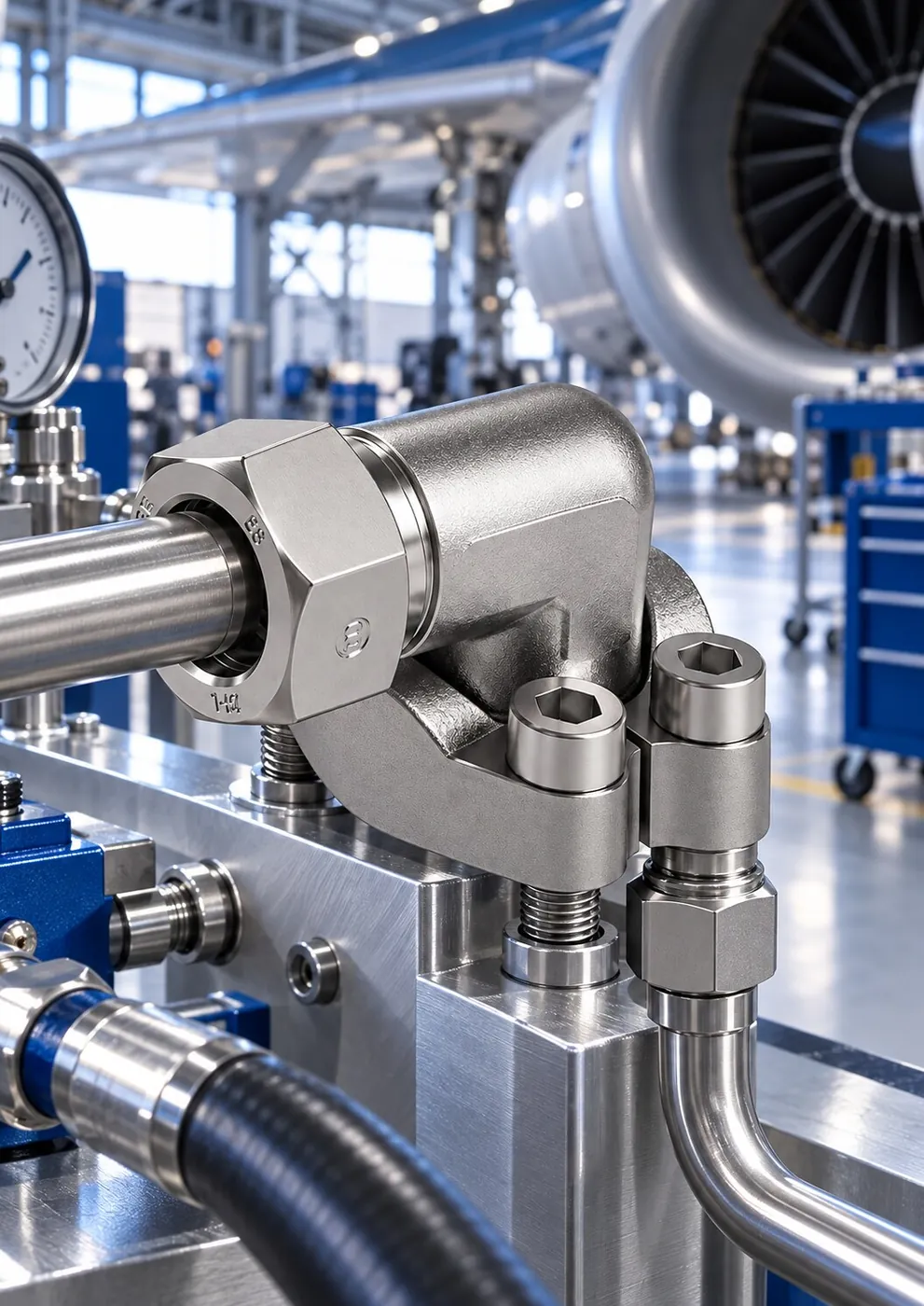
Compact AISI 316/316L fittings with clean threads and sealing surfaces for ground support equipment, hydraulic test benches and maintenance workshops.

Stainless steel fittings, nipples, valves, flanges and hose fittings for chemical transfer and process lines, selected by weighing fluid compatibility, corrosion resistance, temperature and pressure together.
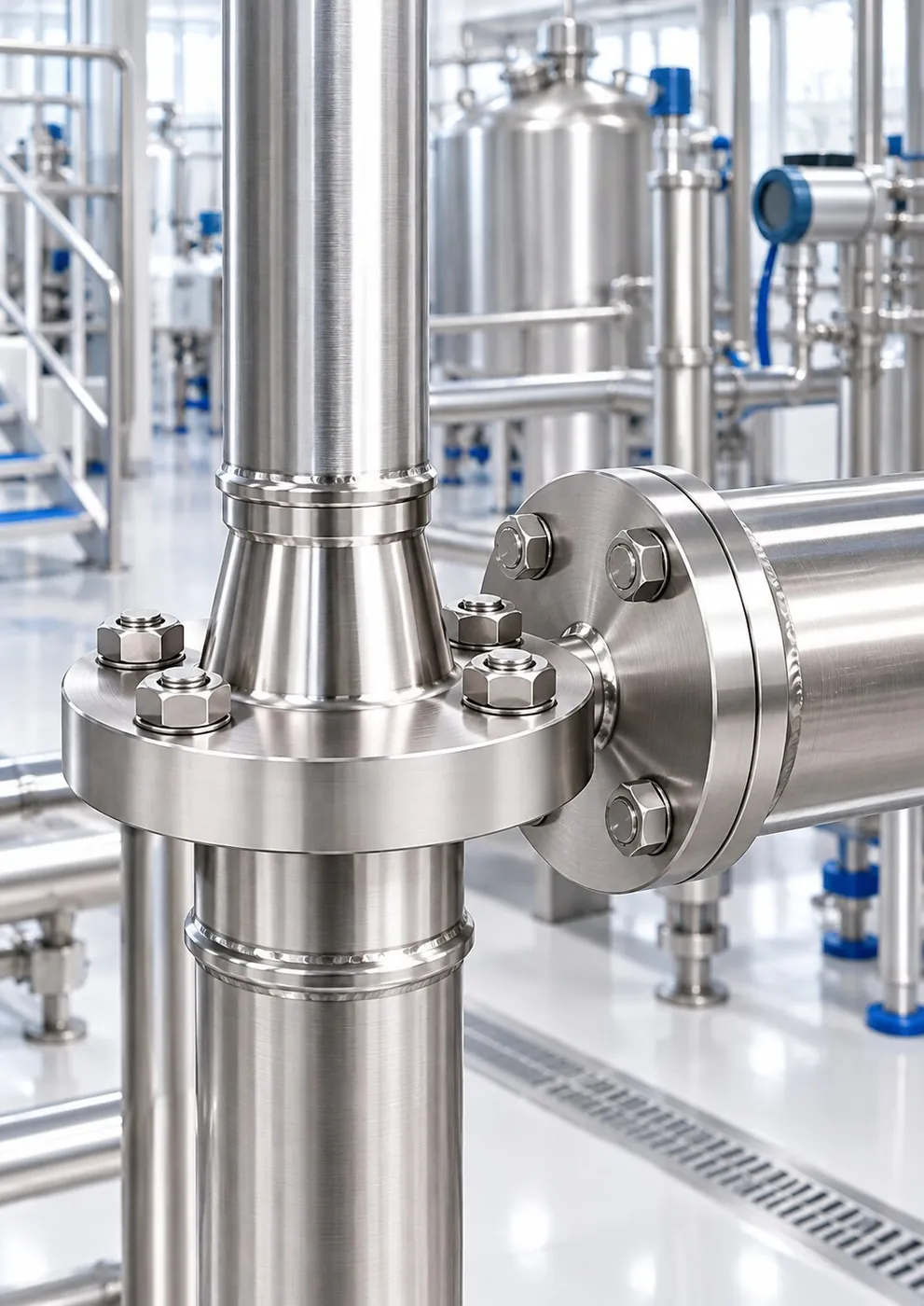
AISI 316/316L fittings, nipples, valves, flanges and hose assemblies for food and beverage lines that call for cleanable surfaces, corrosion resistance and maintenance access.
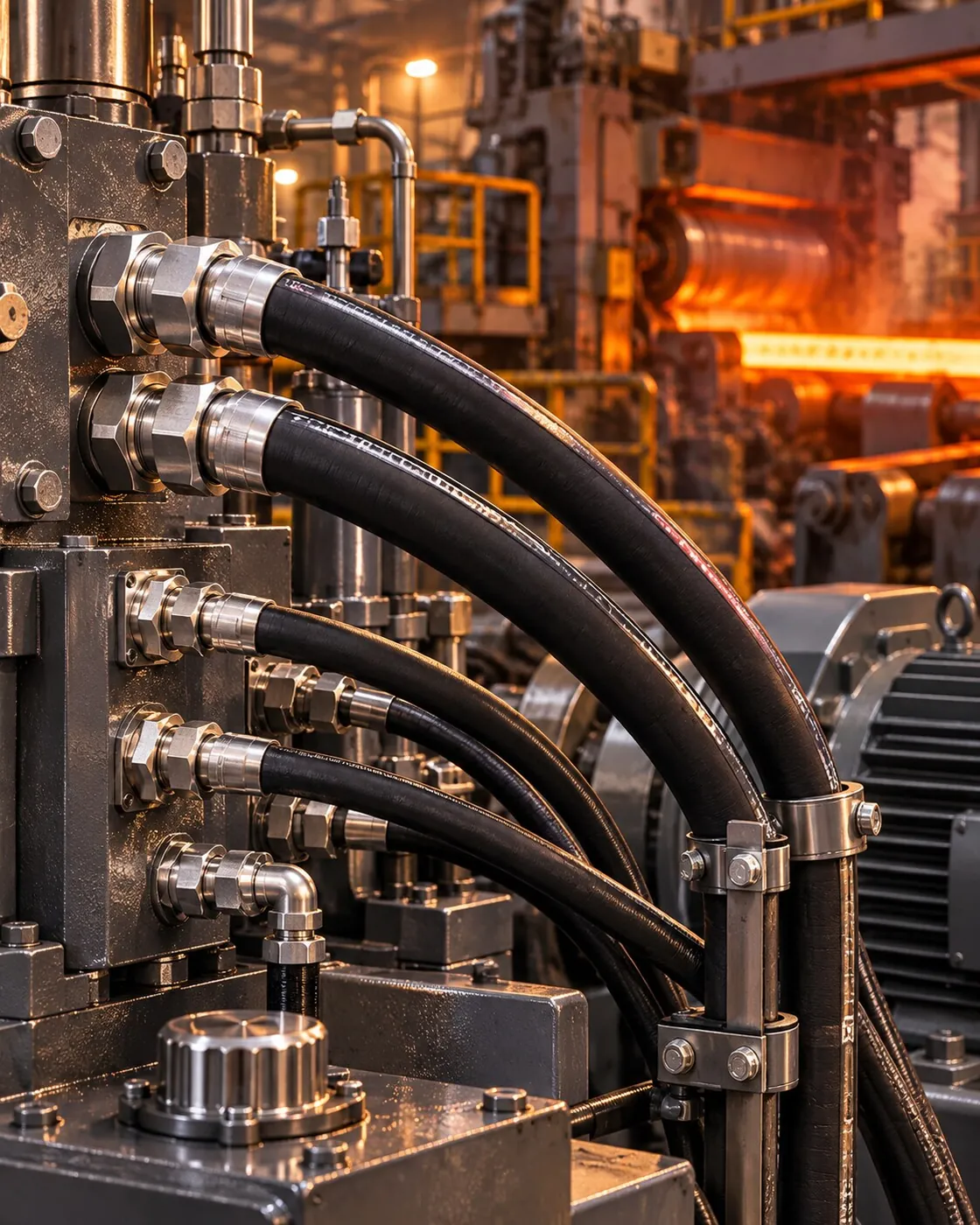
High-pressure hose ends, SAE flanges and adapters built for the high cycling, heat and vibration of presses, mill rolls and hydraulic power units; supplied from stock for emergency maintenance.
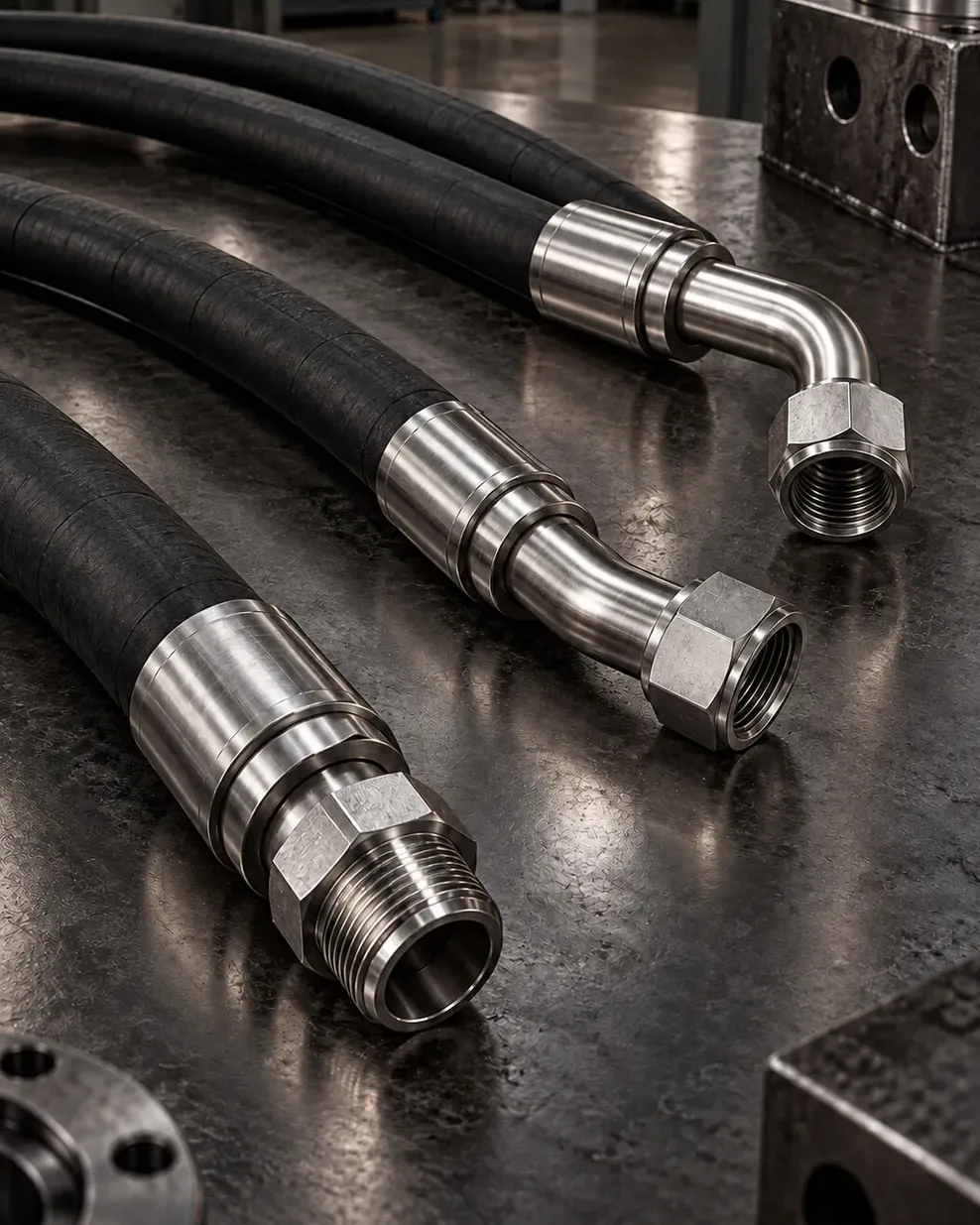
AISI 316L hose ends, SAE flanges, adapters and valves selected for mine water, vibration and abrasion on underground and open-pit machinery, crushing and screening, flotation, leaching and drainage lines.
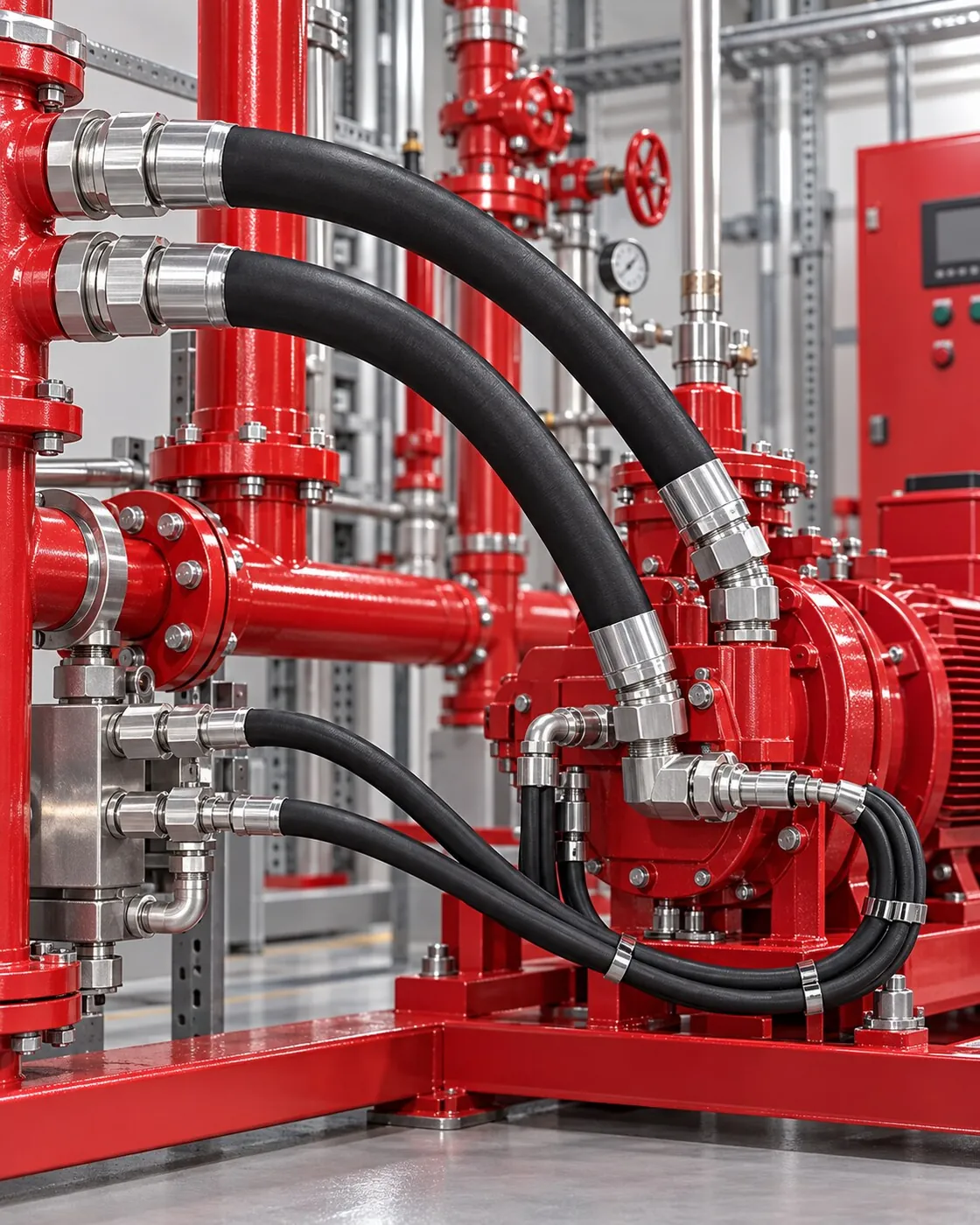
Neatly laid out, leak-tight stainless steel nipples, fittings, hose assemblies and flange connections that make servicing easier on fire pump sets, control skids and pressurized auxiliary lines.
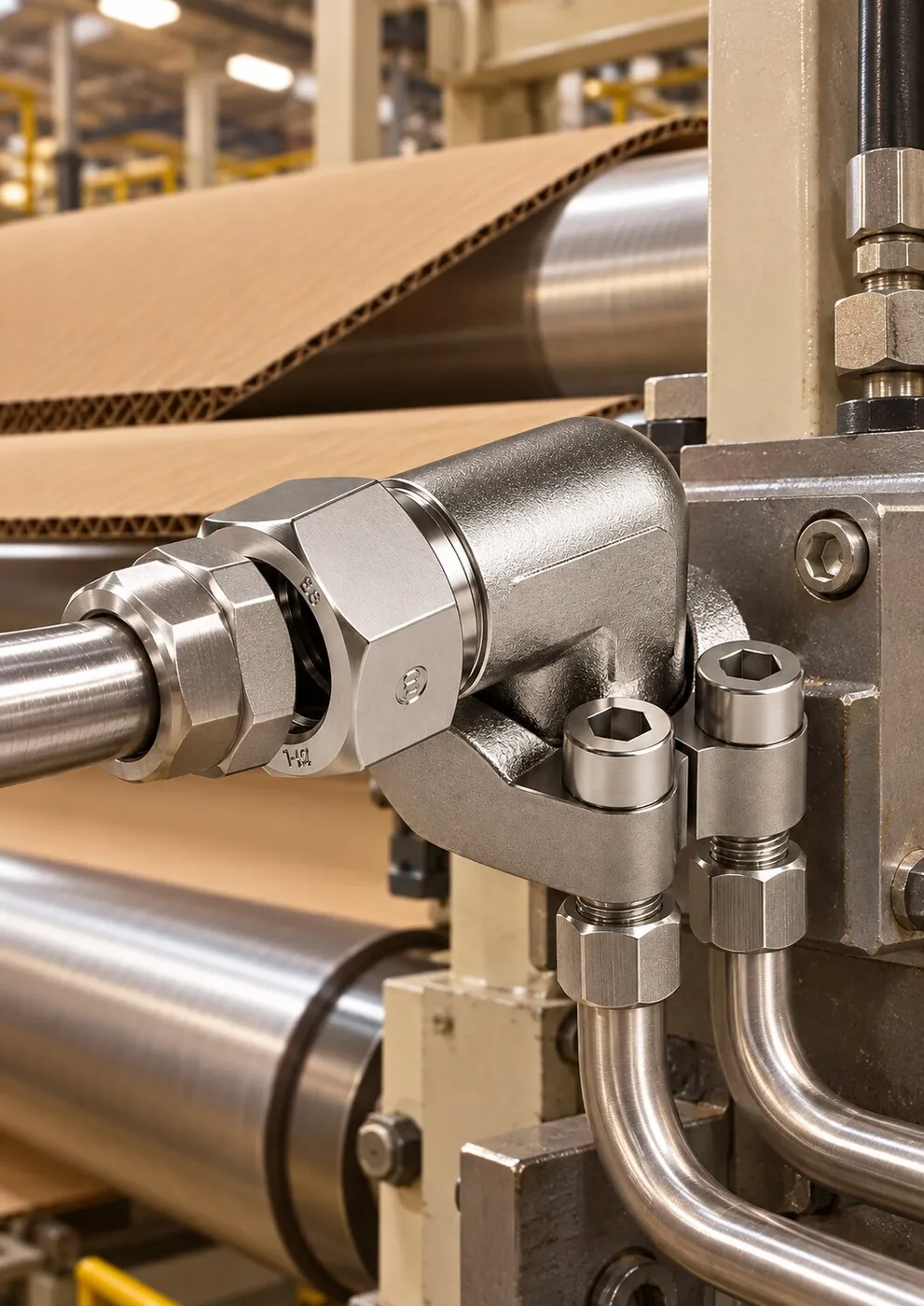
Elbows, tees, adapters, hose fittings and SAE flanges that cut maintenance time for continuously running hydraulic systems on corrugator, roll, cutting and actuator lines.
7 products
DIN 2353 Compression Fittings 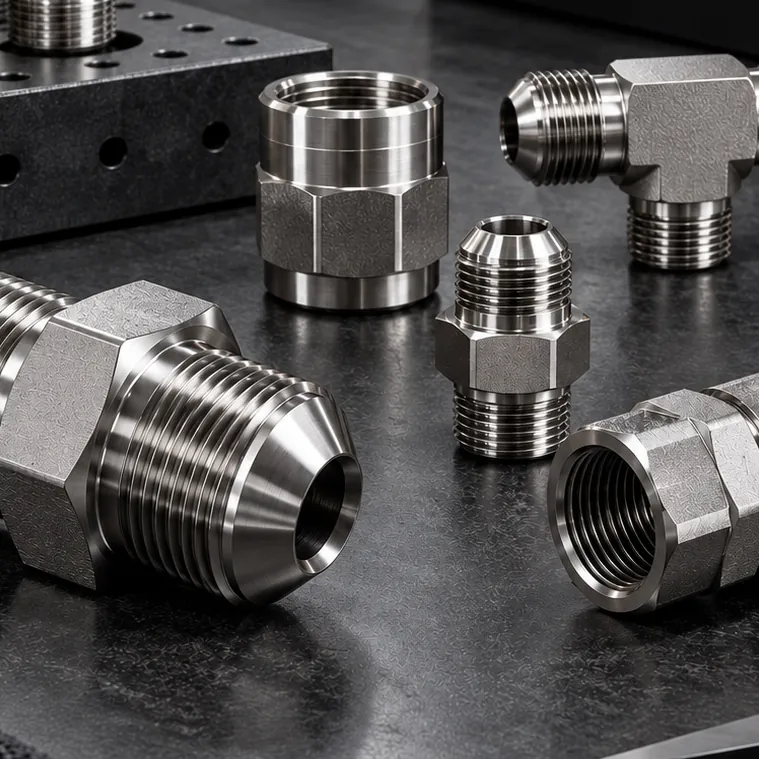 JIC 37° Fittings & Adapters
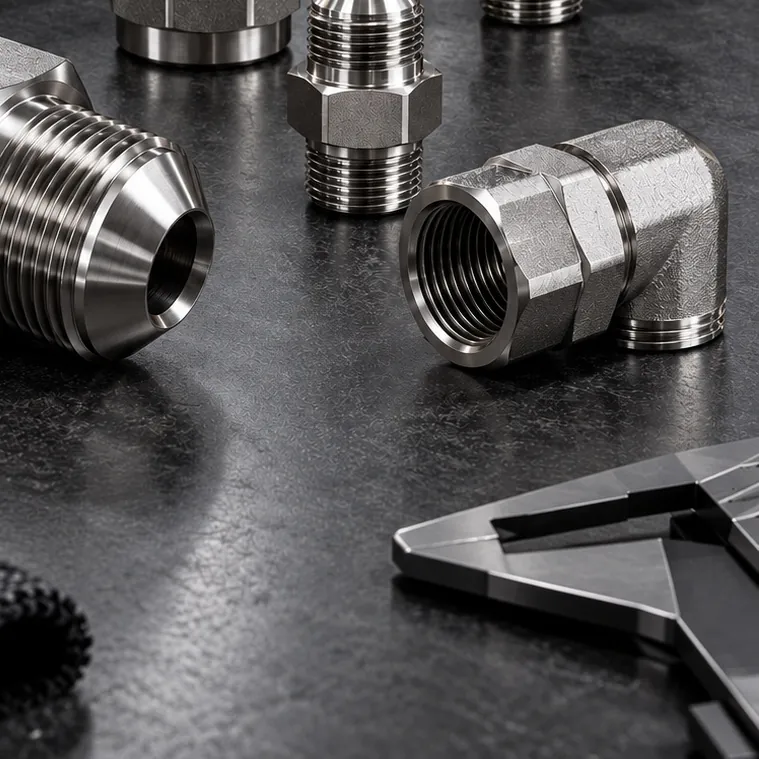 JIC 37° Fittings & Adapters
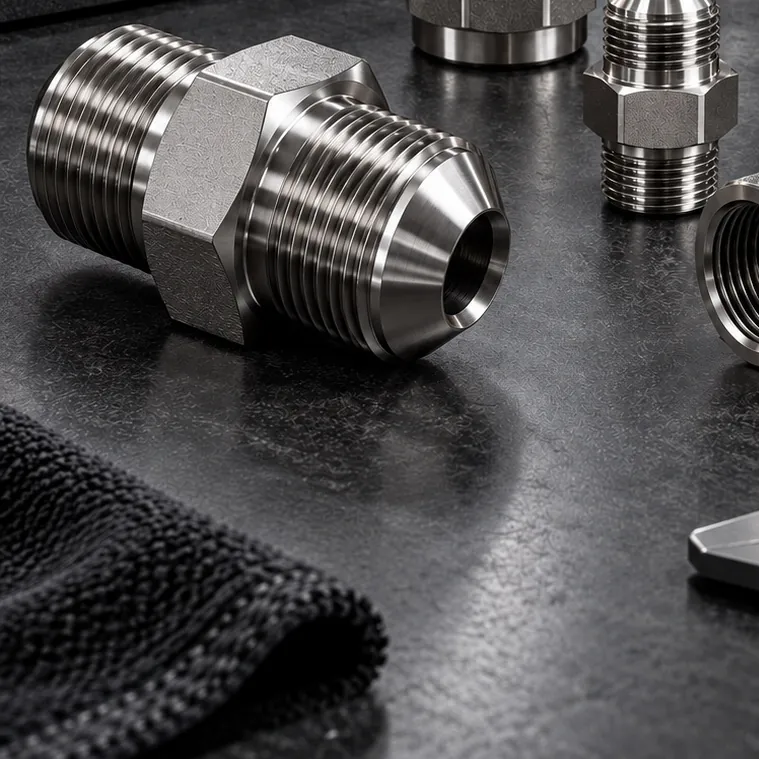 JIC 37° Fittings & Adapters
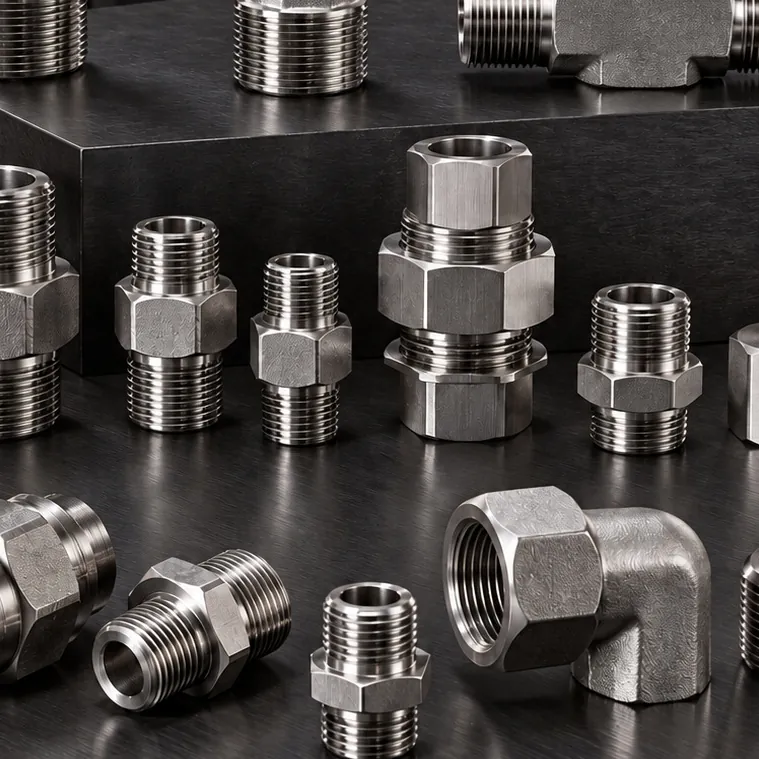 BSP / NPT Adapters & Nipples
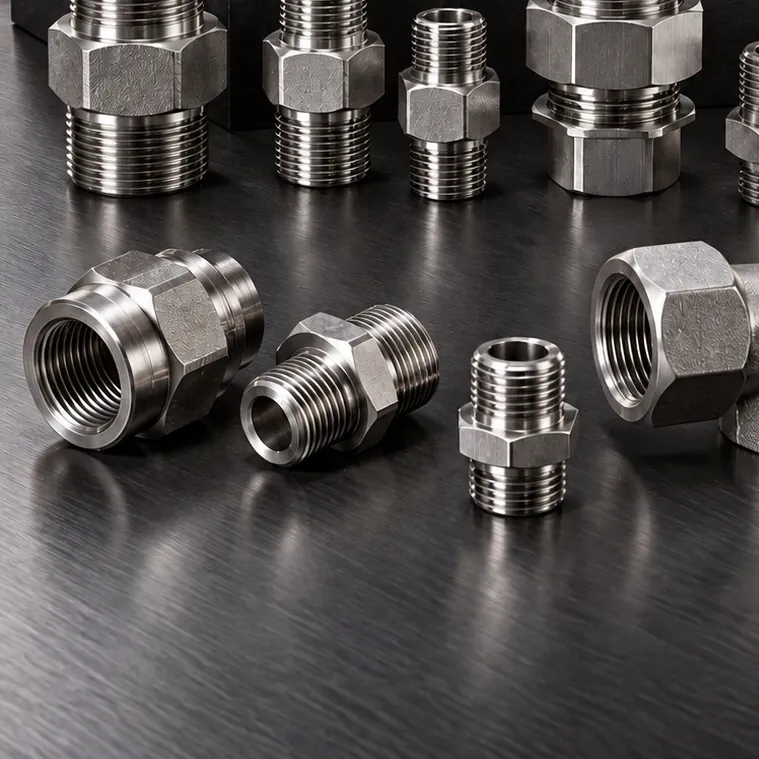 BSP / NPT Adapters & Nipples
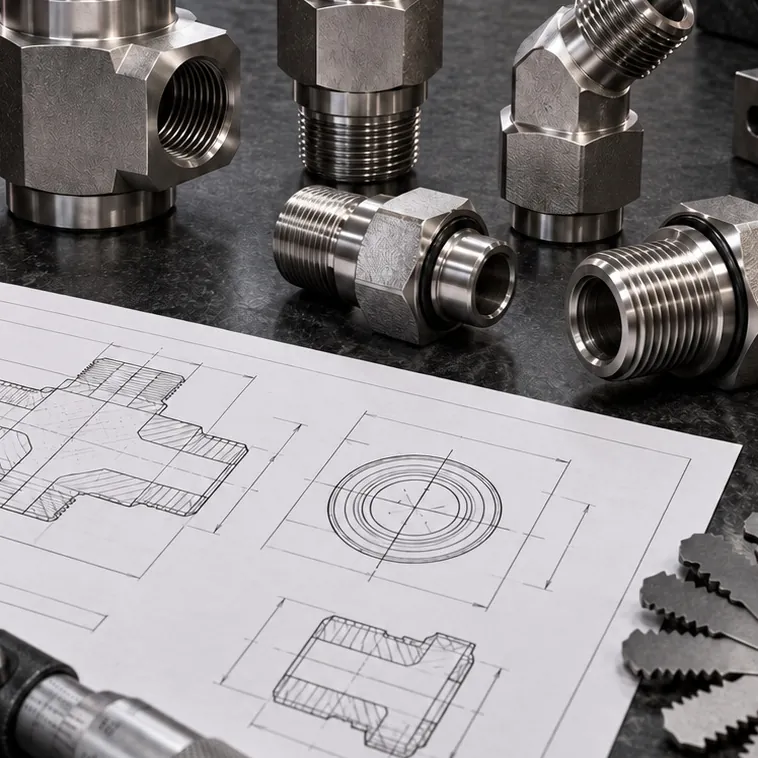 Custom-Made Hydraulic Parts
Gallery
FAQ
If your question isn't here, message us on WhatsApp with a ready-made message and our technical team will answer directly.
Ask on WhatsAppThreads of different standards can have very similar outside diameters. For example, 1/2 inch BSP and 1/2 inch NPT threads have the same pitch and almost identical diameters; the difference shows up in the thread angle (55° vs. 60°) and the taper. For correct identification, outside diameter, pitch, angle and sealing surface are evaluated together.
The distinguishing difference is the thread profile angle: BSP is 55°, NPT is 60°. Check which of the Whitworth and 60° thread pitch gauges sits on the thread without any gaps. In addition, NPT is always tapered, while BSP can be parallel (BSPP) or tapered (BSPT).
Not reliably. On parallel threads, sealing is not achieved on the thread but through a seal, an O-ring or a cone seat. Tape does not provide a seal and also creates a risk of fragments getting into the hydraulic system.
Not always. Clear photos, a caliper measurement and the pitch measured with a thread pitch gauge are enough for a preliminary identification of most connections. For worn, painted or non-standard parts, a sample or the mating part may be requested for a definitive result.
If the part is in stock, it is typically ready to ship within 1-3 business days. Standard parts not in stock are scheduled within an average of 5-10 business days, and custom conversion adapters within an average of 10-20 business days after technical approval.
Quote and technical verification
Briefly describe your request; once size, material and lead time are clear, we'll respond with a written quote.
Details that speed up your quote