


 Stainless Steel Pipes & Flanges
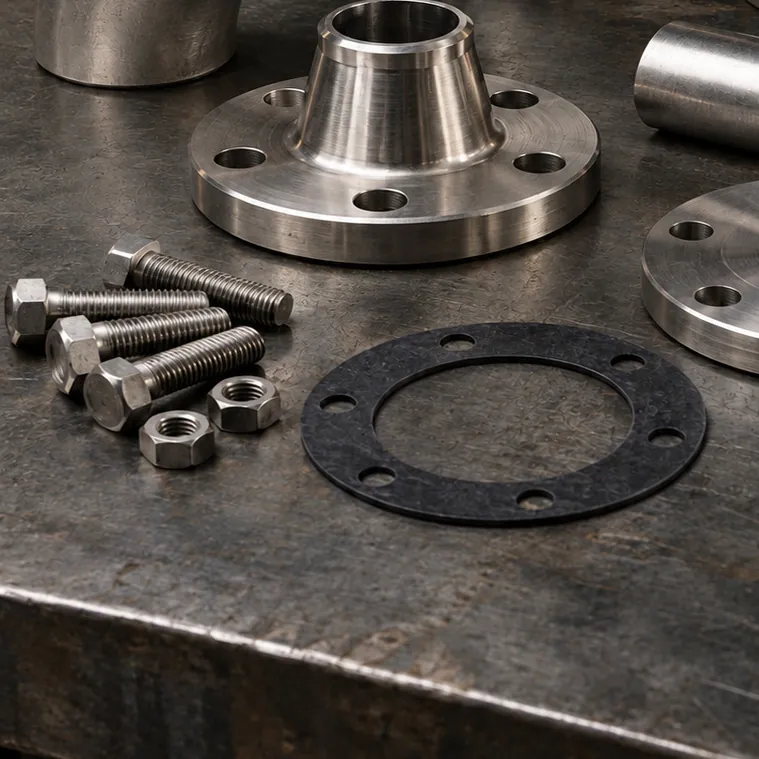
Weld Neck Flange
Details & quote
Product group
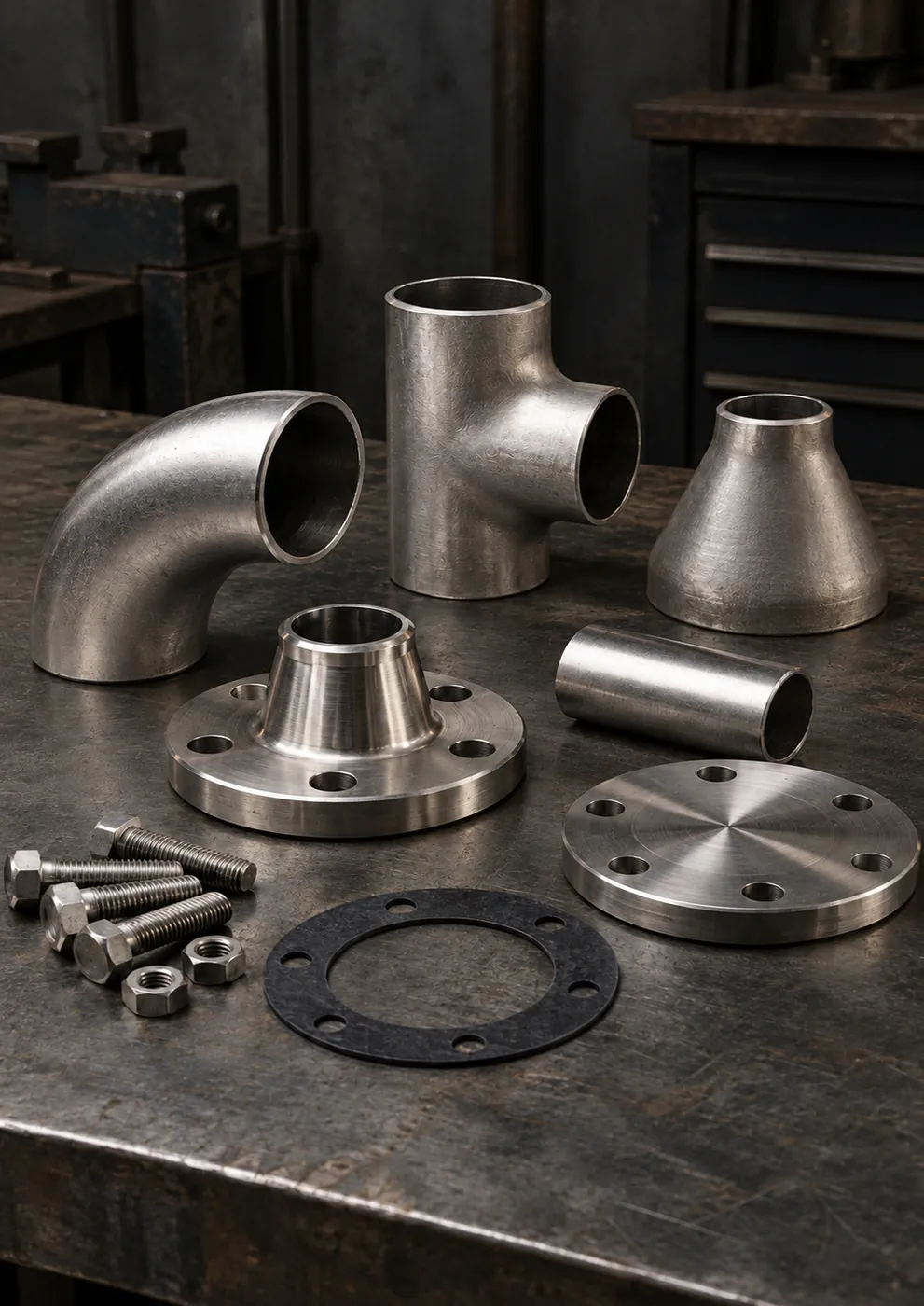
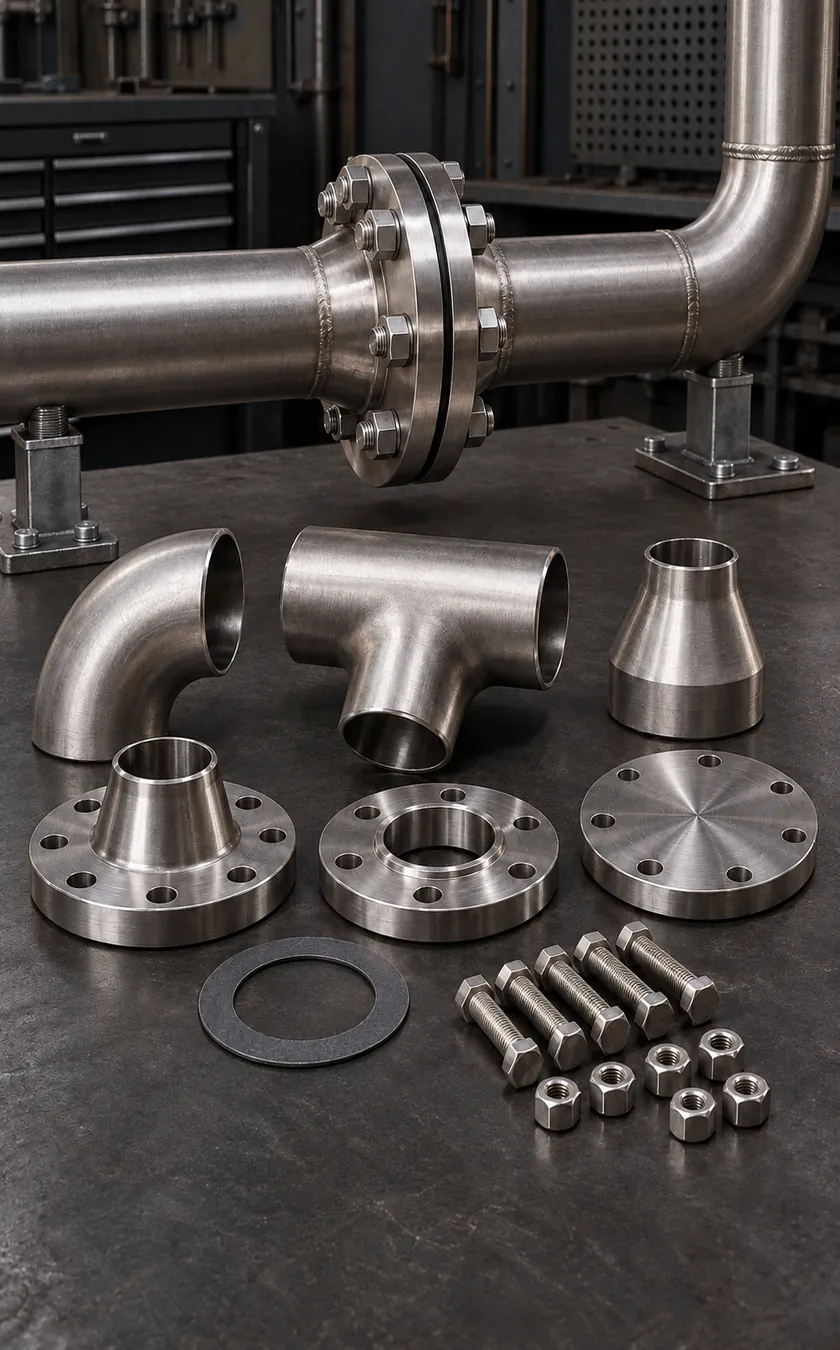
Seamless and welded stainless steel pipes; weld neck, slip-on and blind flanges, gasket and bolt sets.
 Stainless Steel Pipes & Flanges
 Stainless Steel Pipes & Flanges
 Stainless Steel Pipes & Flanges
Selection guide
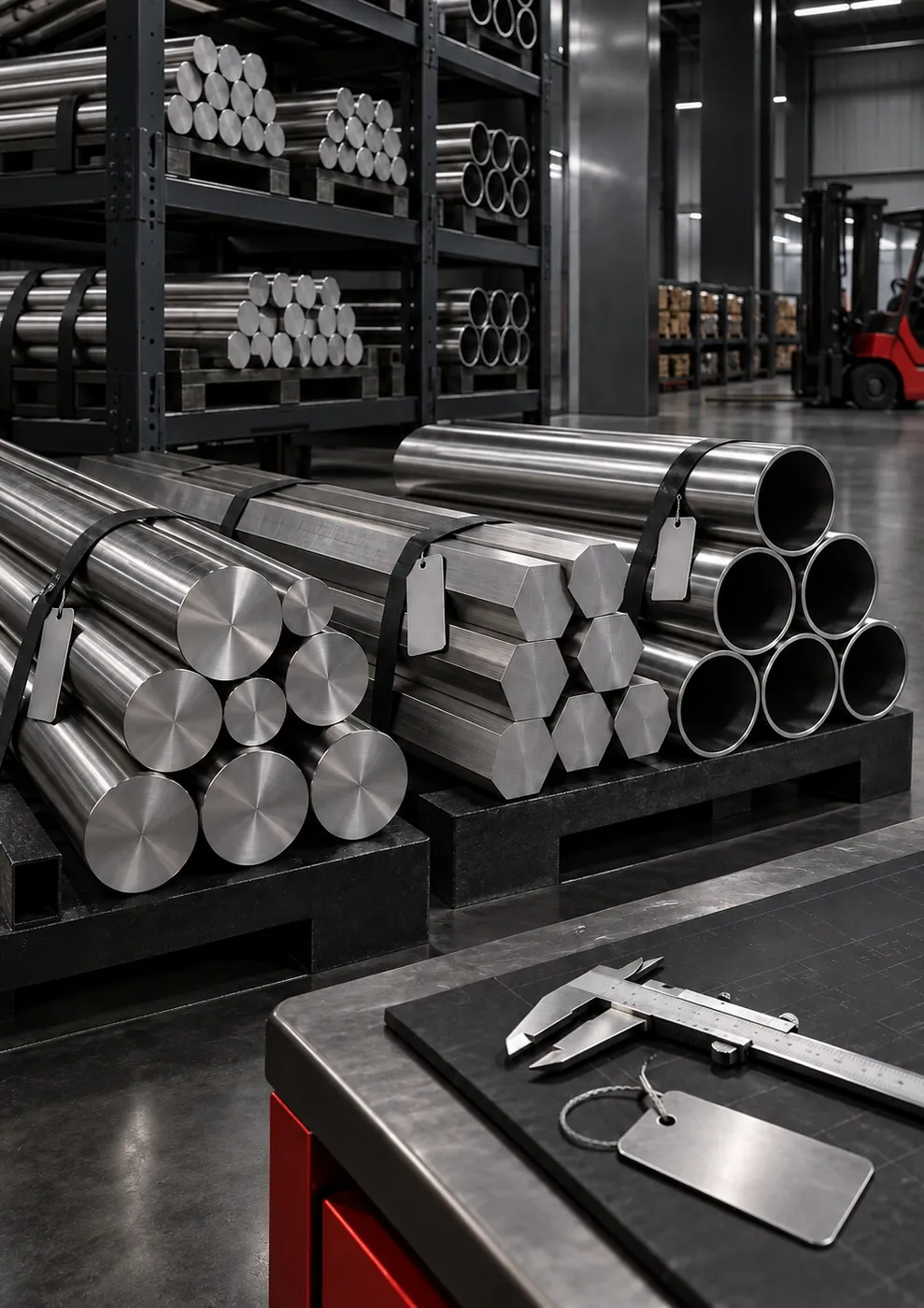
In stainless steel piping, pipe class, wall thickness, flange type, pressure rating and gasket face are evaluated together to ensure safe flow and removable maintenance connections. This group brings together two different worlds of pipe: metric OD seamless hydraulic tube for hydraulic lines with fittings, and pipe defined by DN/NPS and Schedule for welded process lines, along with the flanges that connect to these lines.
| Flange | Connection | When? |
|---|---|---|
| Weld neck (WN) | Butt-welded to the pipe, tapered hub | Lines subject to pressure, temperature swings and vibration |
| Slip-on | The pipe slides into the flange; inside and outside fillet welds | Moderate-duty lines, easy alignment |
| Blind flange | Bolted to the mating flange | Closing off a line, allowance for future extension, pressure testing |
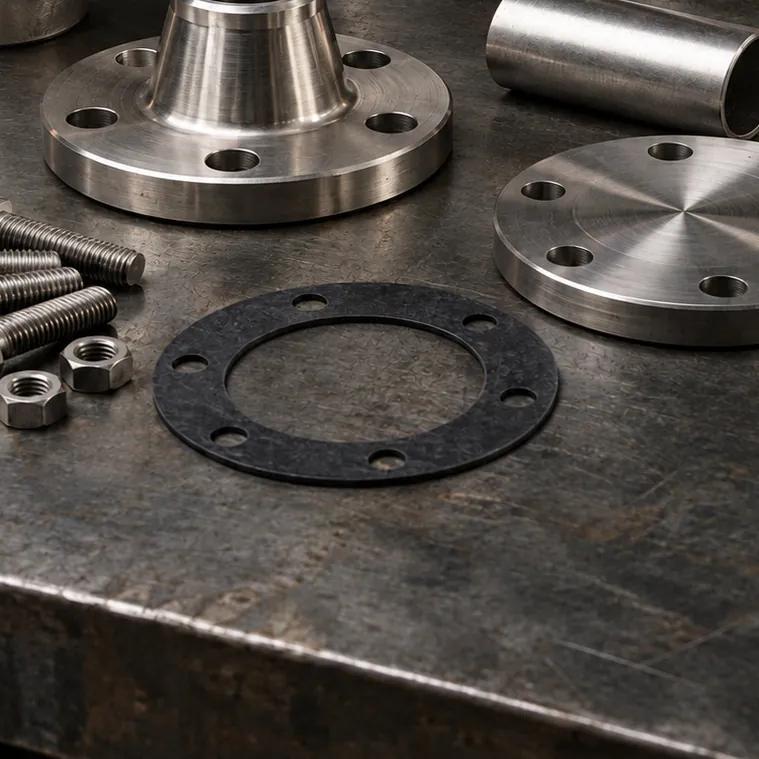
The European standard EN 1092-1 classifies flanges by PN (e.g., PN16, PN40), while the American standard ASME B16.5 classifies them by Class (e.g., Class 150, Class 300). The flange dimensions and bolt circles of the two systems are generally different; PN and Class flanges should not be connected to each other. The gasket face (flat face or raised face) must be the same as that of the mating flange, and the gasket must be selected according to this face, the fluid and the temperature.
Flanges must not be forced into alignment with the bolts; if there is misalignment, the pipe support is corrected first. The gasket is centered, and the bolts are tightened in a criss-cross pattern and in stages. On welded joints, the heat tint is cleaned off, and tools that have been in contact with carbon steel are not used. Placing removable flanged points in front of and behind pumps, filters and valves that need servicing avoids having to cut the line during maintenance.
Process and transfer lines in chemical plants, cleanable stainless steel lines in food and beverage plants, auxiliary systems exposed to seawater in ship engine rooms, pump discharge and skid piping in fire suppression systems, and lines exposed to salty environments at offshore facilities. Pipes and flanges in stock are typically scheduled within 1-3 business days, and project-specific lines within 10-20 business days after technical approval.
Not sure about the right size?
Send the sample, the technical drawing or your caliper measurements, and we'll confirm the thread standard and the matching part together.
+90 545 206 13 74Knowledge Center
Technical articles on selecting, installing and maintaining the products in this group.
On a stainless steel pipeline, fittings and flanges are selected by matching them to the pipe's DN/NPS size and Schedule wall thickness. Weld neck…
The only difference between 316 and 316L is the carbon limit: max. 0.08% for 316 and max. 0.03% for 316L. Because low carbon reduces the risk of…
FAQ
If your question isn't answered here, message us on WhatsApp with dimensions or a photo, and our technical team will answer directly.
Ask on WhatsAppPN is the pressure rating designation used in European standards such as EN 1092-1, and Class is the one used in American standards such as ASME B16.5. The flange dimensions and bolt circles of the two systems are generally different; a flange should not be selected until the standard and rating of the mating flange have been confirmed.
On lines with pressure, temperature swings or vibration, a weld neck flange spreads stress into the pipe thanks to its tapered hub and is joined with a full-penetration butt weld. A slip-on flange is easier to align and is sufficient for moderate-duty lines.
No. Hydraulic tube is defined by metric OD and wall thickness and is used with fittings; process pipe is defined by DN/NPS and Schedule and is usually joined with weld fittings and flanges. If the size systems are mixed up, the parts will not fit together.
The gasket is selected according to the flange pressure rating, the gasket face (flat or raised), the fluid and the temperature. The gasket ID must not protrude into the pipe bore, and the gasket must be centered within the bolt circle.
No. On a flange forced together with the bolts, the gasket is not loaded evenly, a leak shows up at the first pressurization, and permanent stress is built into the piping. The pipe support and axial alignment must be corrected first, and then the bolts tightened in a criss-cross pattern.