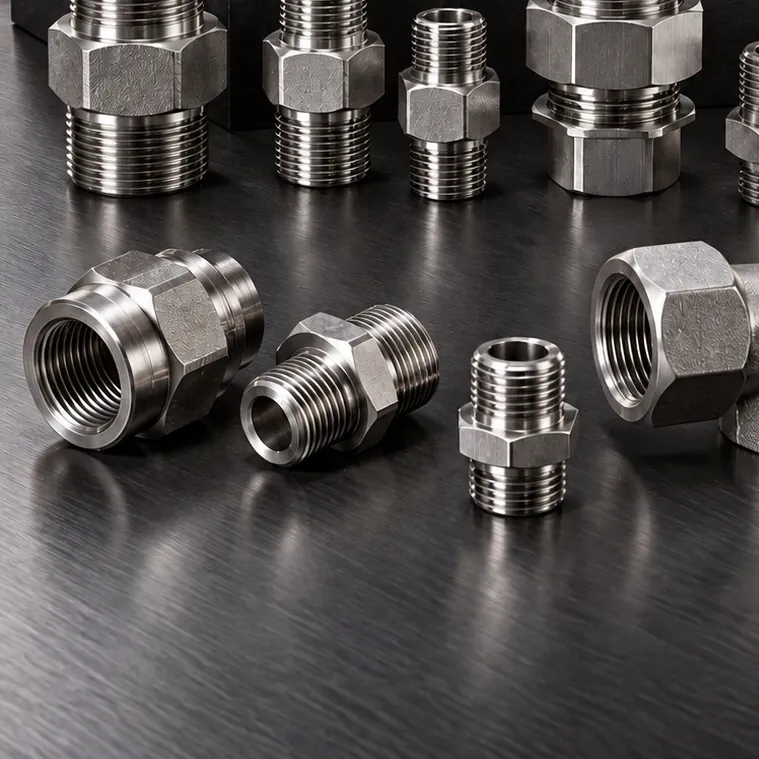
 Hose Fittings & Ferrules
Banjo Fitting and Bolt
Details & quote
CNC machining · Thread profile · Batch repeatability
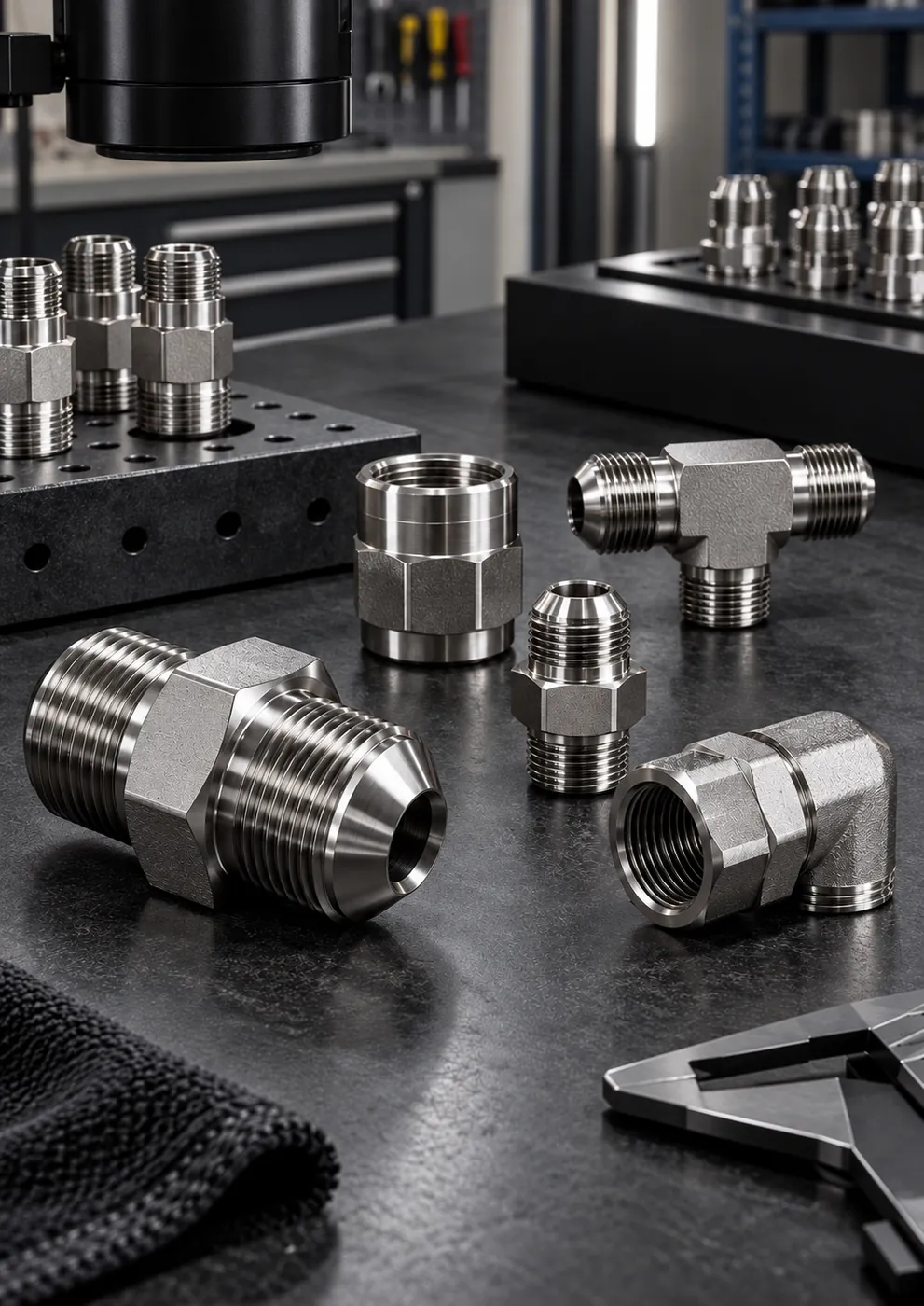
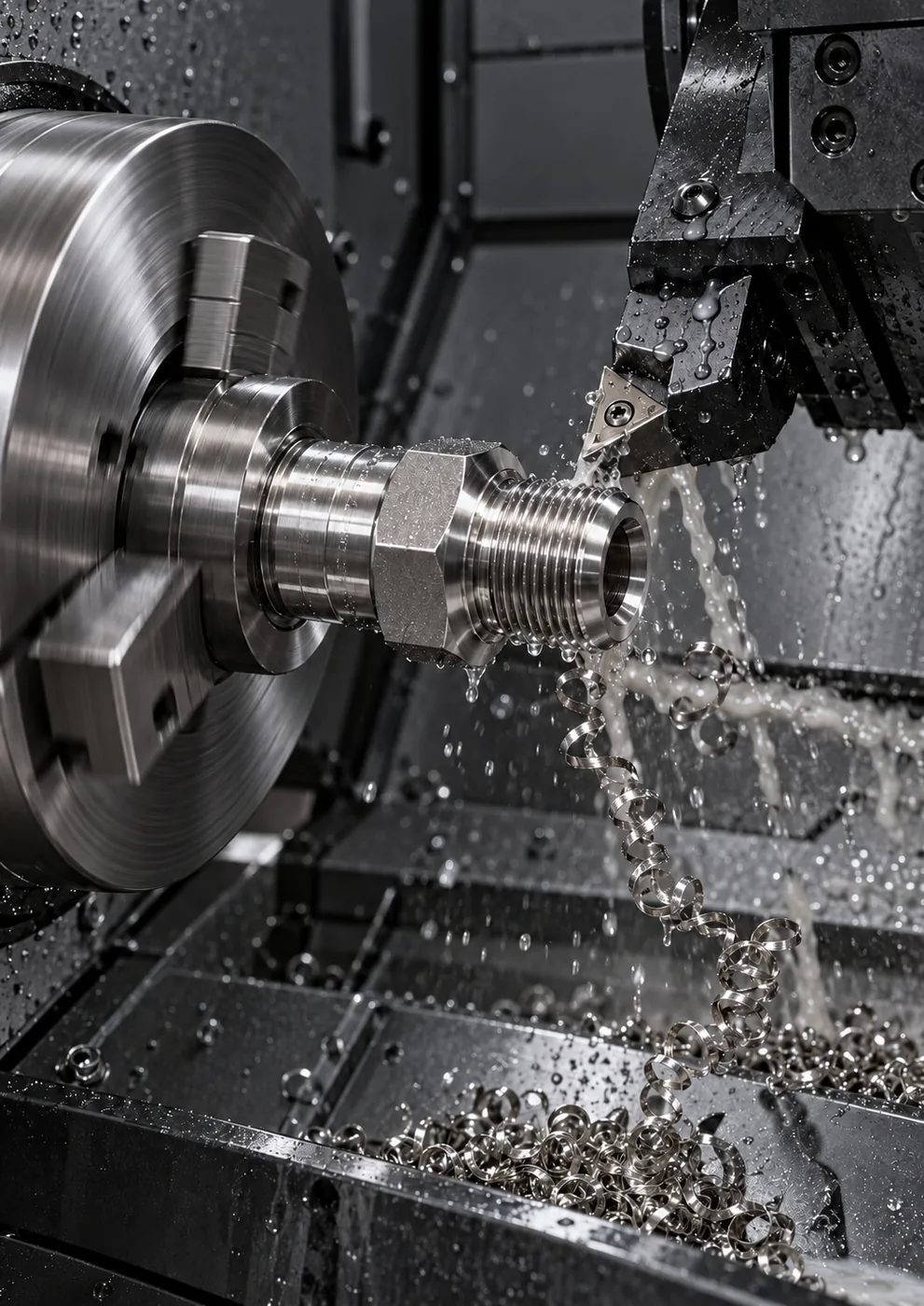
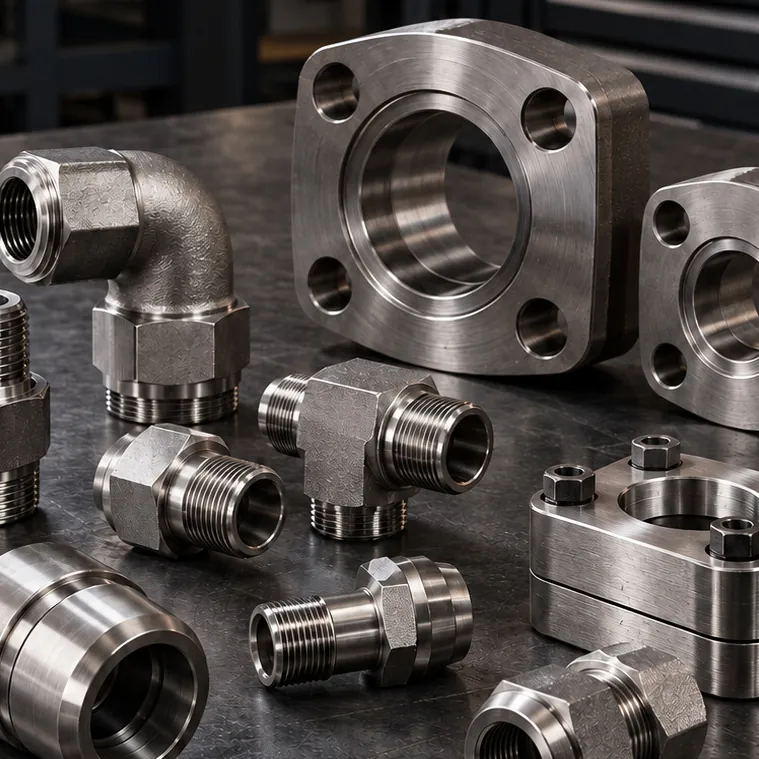
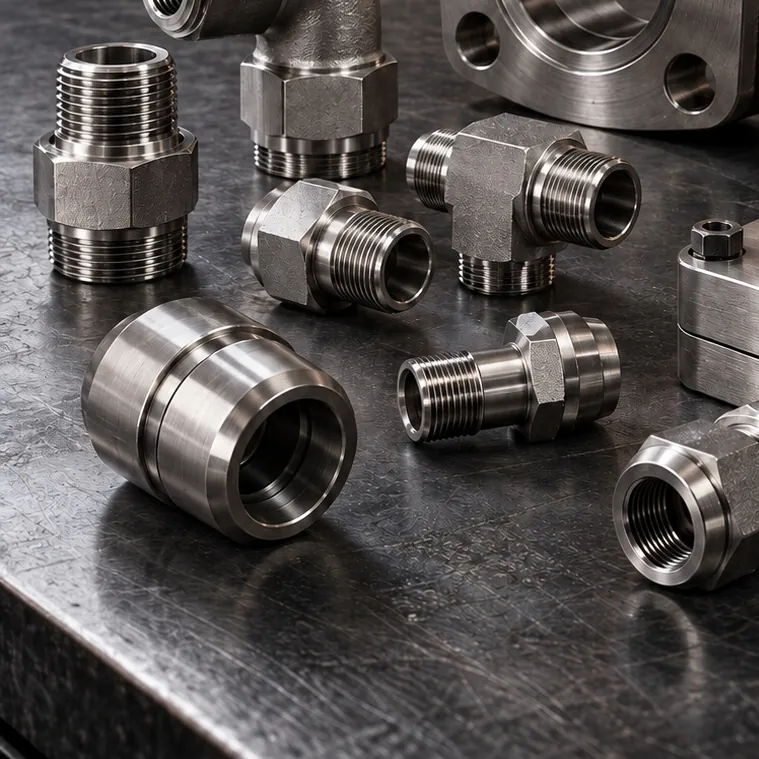
Thread profiles, sealing cones, wrench flats and connection geometry are machined from AISI 316/316L bar on CNC machines to the tolerances on the technical drawing, with repeatable dimensions in series production.
Quick answer
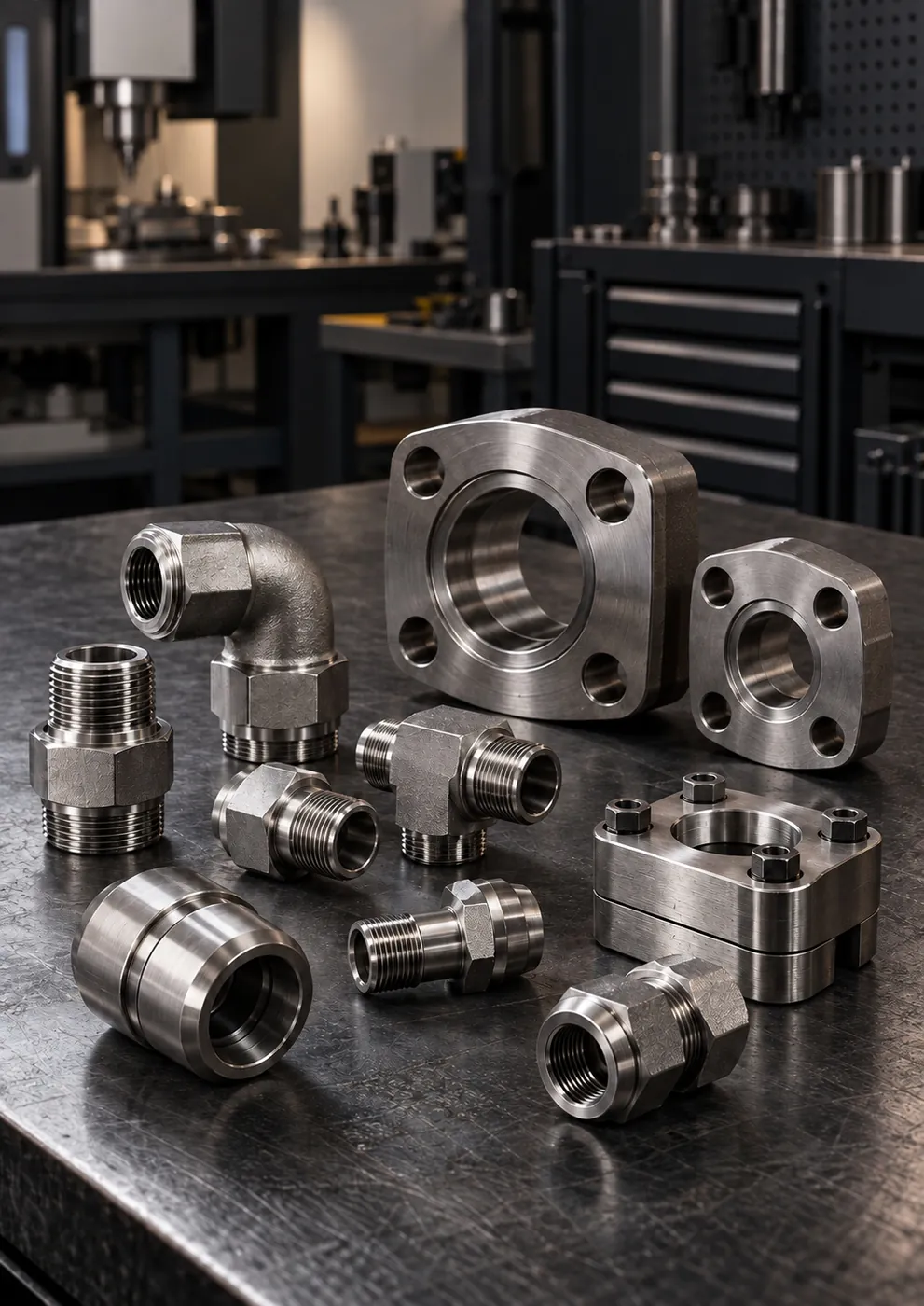
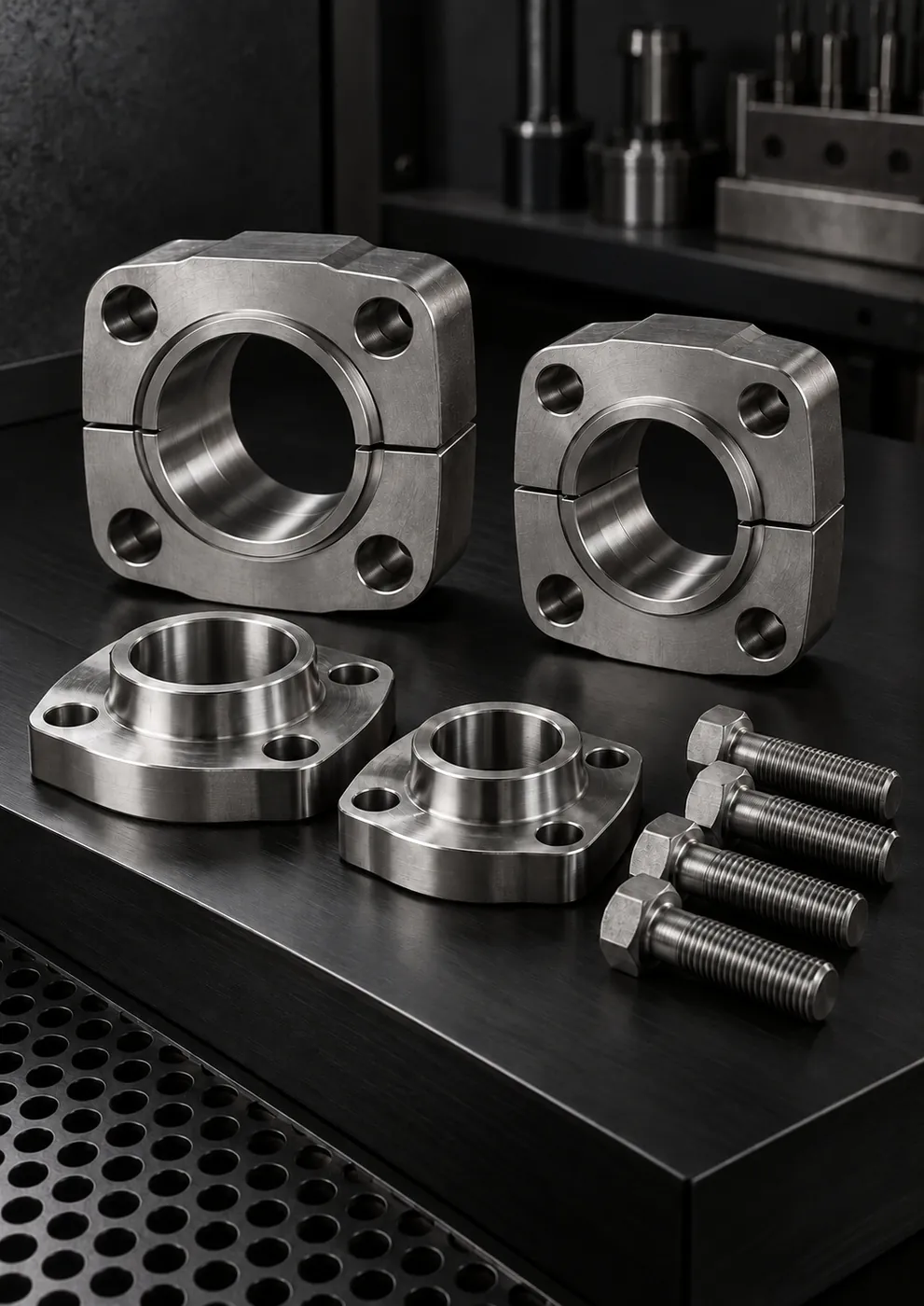
GÜNEYSS machines stainless steel fittings, nipples, adapters, SAE flanges and custom connection parts from AISI 316/316L round and hex bar on CNC machines. Pitch, angle and surface accuracy are checked on BSPP/BSPT, NPT, UNF/JIC and metric threads. The CNC machining stage takes 2-5 days depending on the part; standard production is scheduled within an average of 5-10 business days.
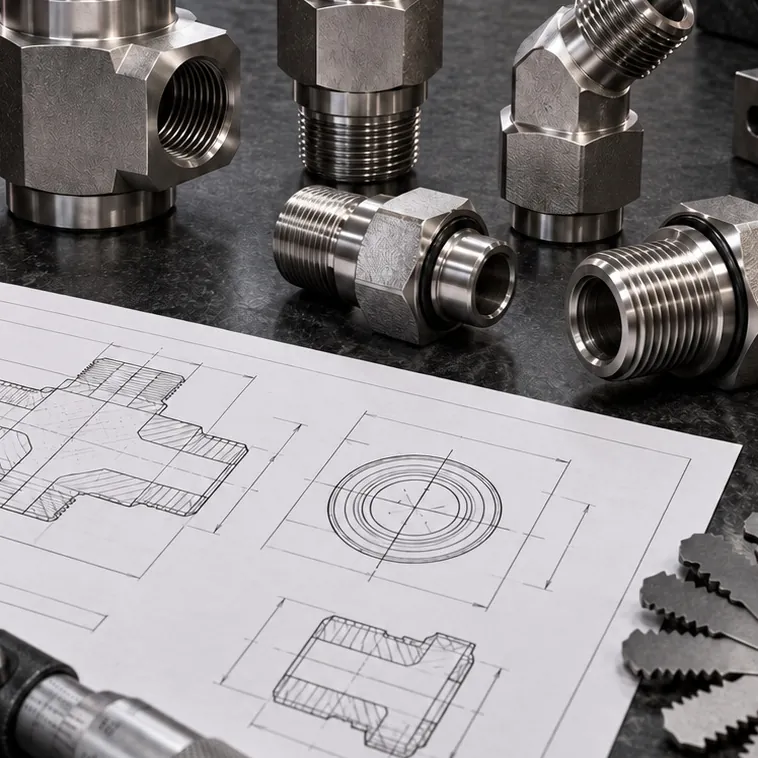
The reliability of a stainless steel fitting depends on its thread profile, sealing surface and installation dimensions all being right at the same time. An adapter with a correct thread but a faulty cone and a nipple with correct dimensions but a scratched sealing face lead to the same result in the field: a leak. In CNC manufacturing, we use the technical drawing as the common reference for both production and inspection.
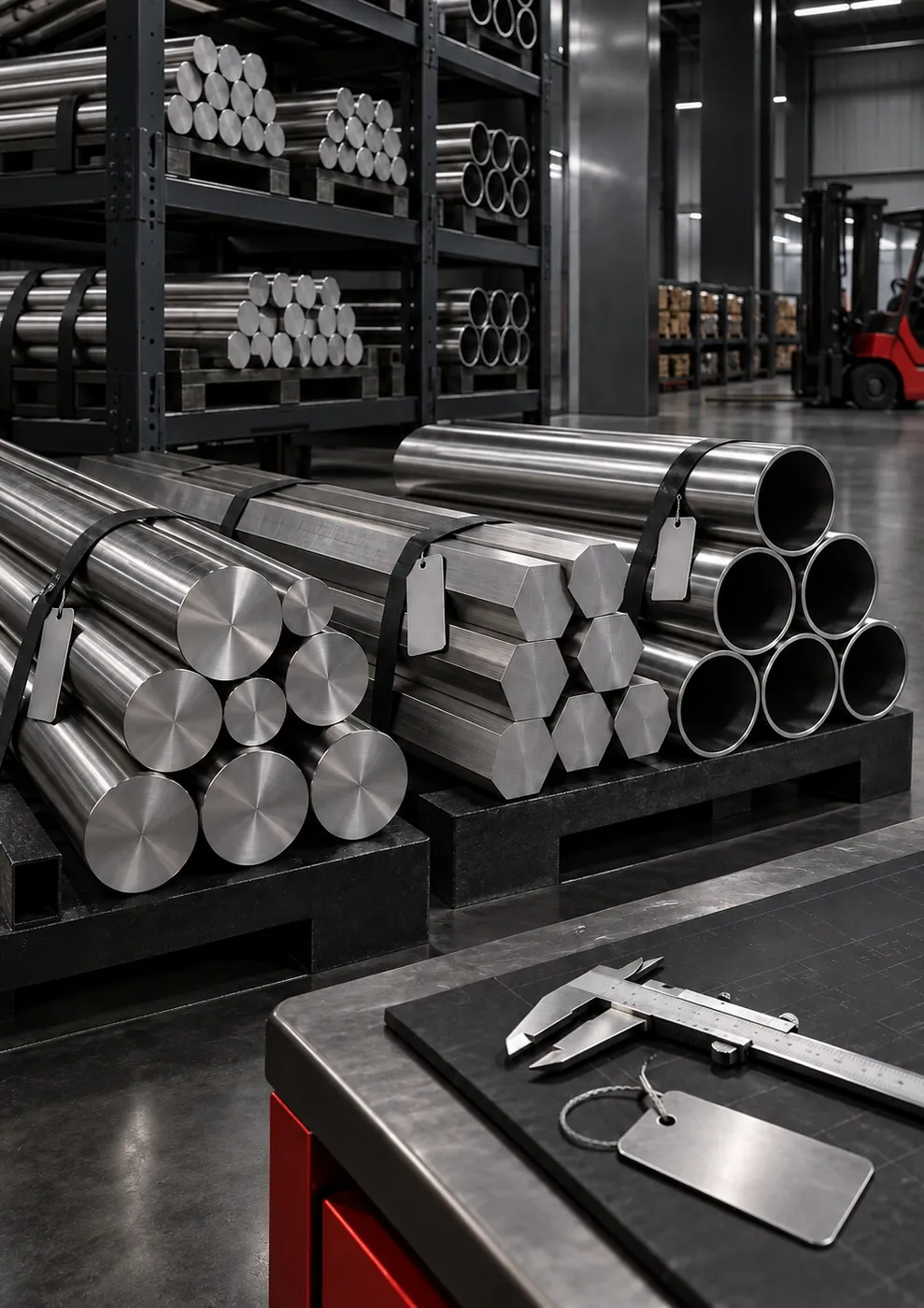
AISI 316/316L round bar, hex bar and tube stock are used for applications that require corrosion resistance and long service life. Diameter, wall thickness and machining allowance are determined by the part's thread standard, pressure class and final dimensions. At raw material receiving, surface, diameter and heat/lot information is checked, and lot records are kept traceable.
Drilling, wrench flats, threading and facing operations are planned around the part's workholding and inspection setup. Machining the sealing surface and the thread in the same setup keeps the two concentric; an off-axis cone will not seat fully, even with a correct thread.
The BSP family uses the 55° Whitworth profile; NPT, UNF and metric threads have a 60° profile. BSPT and NPT threads have a 1:16 taper; BSPP, UNF and metric threads are parallel. Pitch, angle and diameter are checked together on every thread, and parallel and tapered threads are never mixed up.
We machine the 37° flare seat on JIC connections, the 24° cone on DIN 2353/ISO 8434-1 connections, the flat face with an O-ring groove on ORFS connections, and the seal face on parallel-thread ports. Any scratch, nick or burr on these surfaces is a direct leak path; surface integrity matters as much as dimensions.
Hex wrench flats are machined to standard wrench sizes. For tight installation spaces, wrench swing clearance, overall part length and port spacing are evaluated together on the technical drawing.
Material grade (AISI 316 or 316L), thread standard and size, sealing type, critical diameters and tolerances, wrench flat size, overall length and surface finish requirements. Any missing information is completed in writing before work starts, so that manufacturing and inspection are carried out against the same reference.
When the same part is produced in large quantities, the goal is for the last part to come out with the same dimensions as the first. Series production begins only after the first part is measured and approved; critical dimensions are checked at regular intervals throughout the run. Being able to reproduce a maintenance spare to the same dimensions months later also depends on this controlled process.
After machining, sharp burrs are removed and thread roots and transition areas are cleaned. Each part is inspected for nicks, scratches or deformation that would make installation difficult, and the bright finish of the stainless steel surface is preserved.
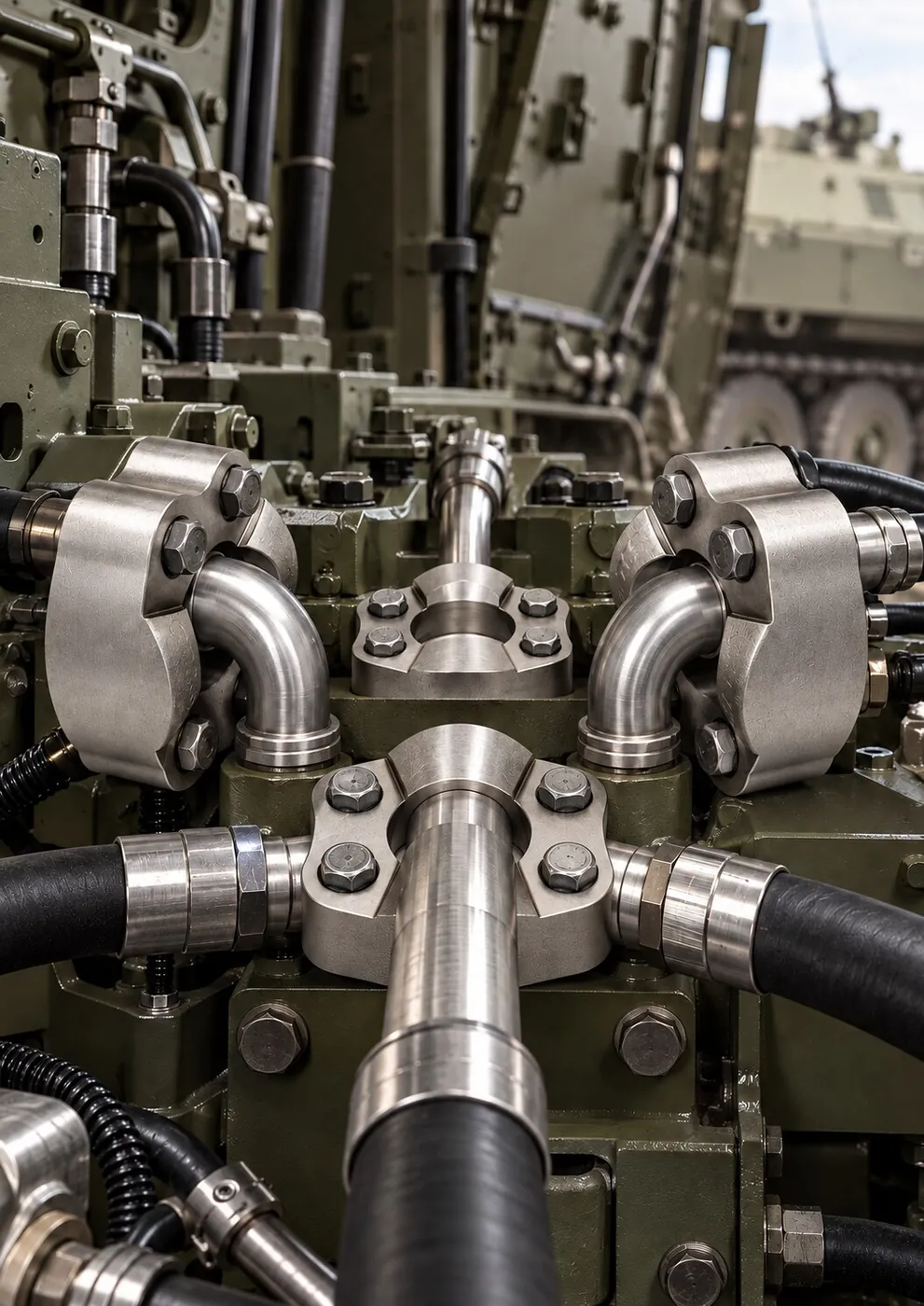
Dimensional repeatability for mobile hydraulic systems and compact power units in the defense industry; clean threads and compact geometry for ground support and test equipment in aviation; adapters that withstand saltwater environments in marine and offshore; elbows, adapters and flange blocks matched to machine ports in rolling mills and paper and board mills; transition parts suited to process lines in chemical plants.
Typical durations of the manufacturing steps: raw material inspection 0.5-1 day, cutting 0.5-1 day, CNC machining 2-5 days, cleaning 0.5-1 day, inspection 1-2 days, packaging 0.5-1 day. Standard production is scheduled within an average of 5-10 business days, and custom-size and project parts within an average of 10-20 business days after technical approval.
Process
From request to delivery in 6 steps
Material, technical drawing, connection standard and critical tolerances are confirmed before work starts.
AISI 316/316L bar is inspected and cut to diameter and length.
Bores, wrench flats, threads and sealing surfaces are machined according to the workholding setup.
Burrs are removed, and thread roots and transition areas are cleaned.
Thread fit, diameter, surface and sealing area are inspected.
Threads and ports are capped, and parts are packed separately by size and order group.
Sectors
On the sector page, you'll find this service's field-specific applications, recommended products and frequently asked questions.
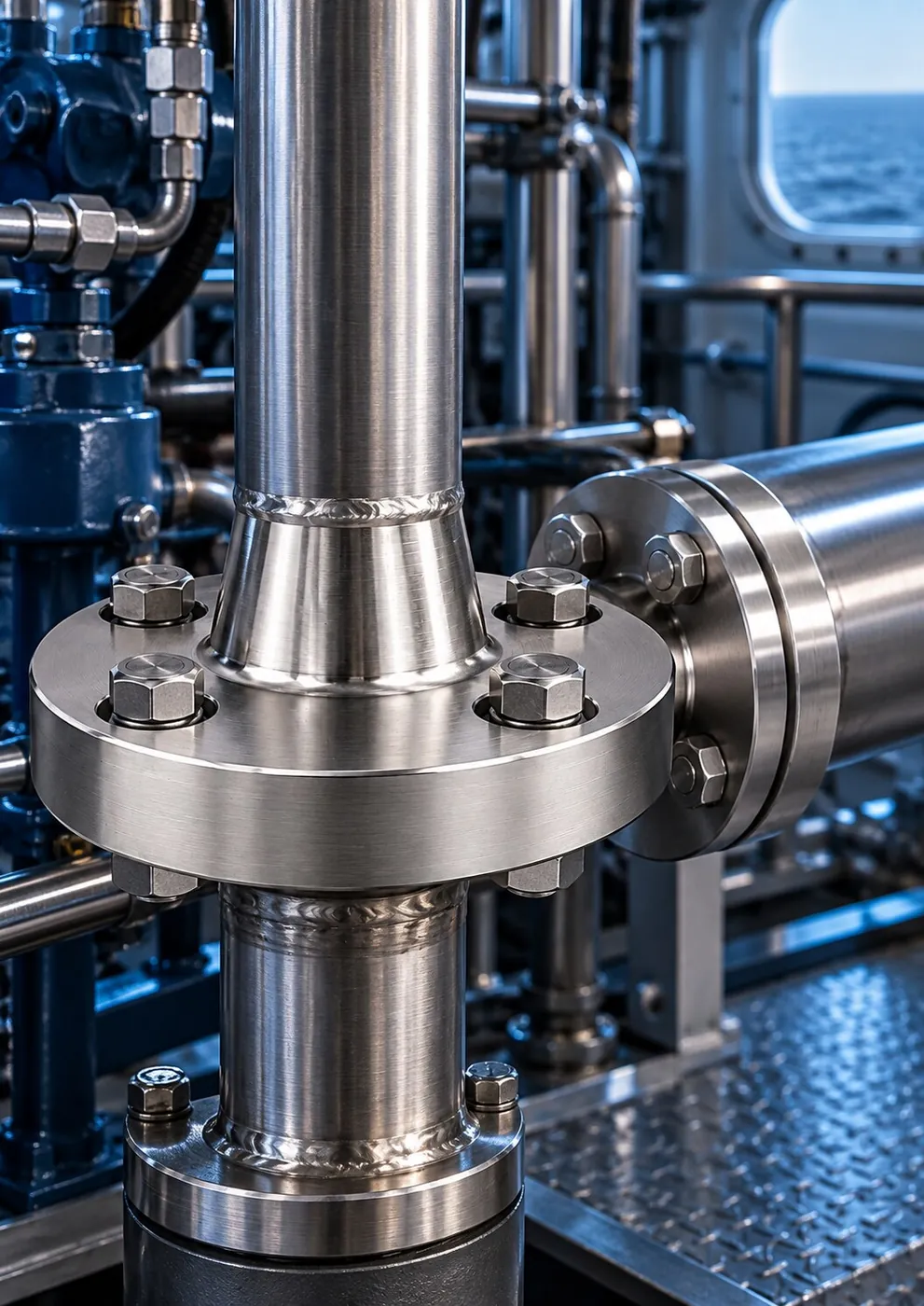
AISI 316L fittings, hose assemblies, SAE flanges and valves built to withstand salt spray and vibration on deck cranes, windlasses, steering gear, passerelles and engine room lines.
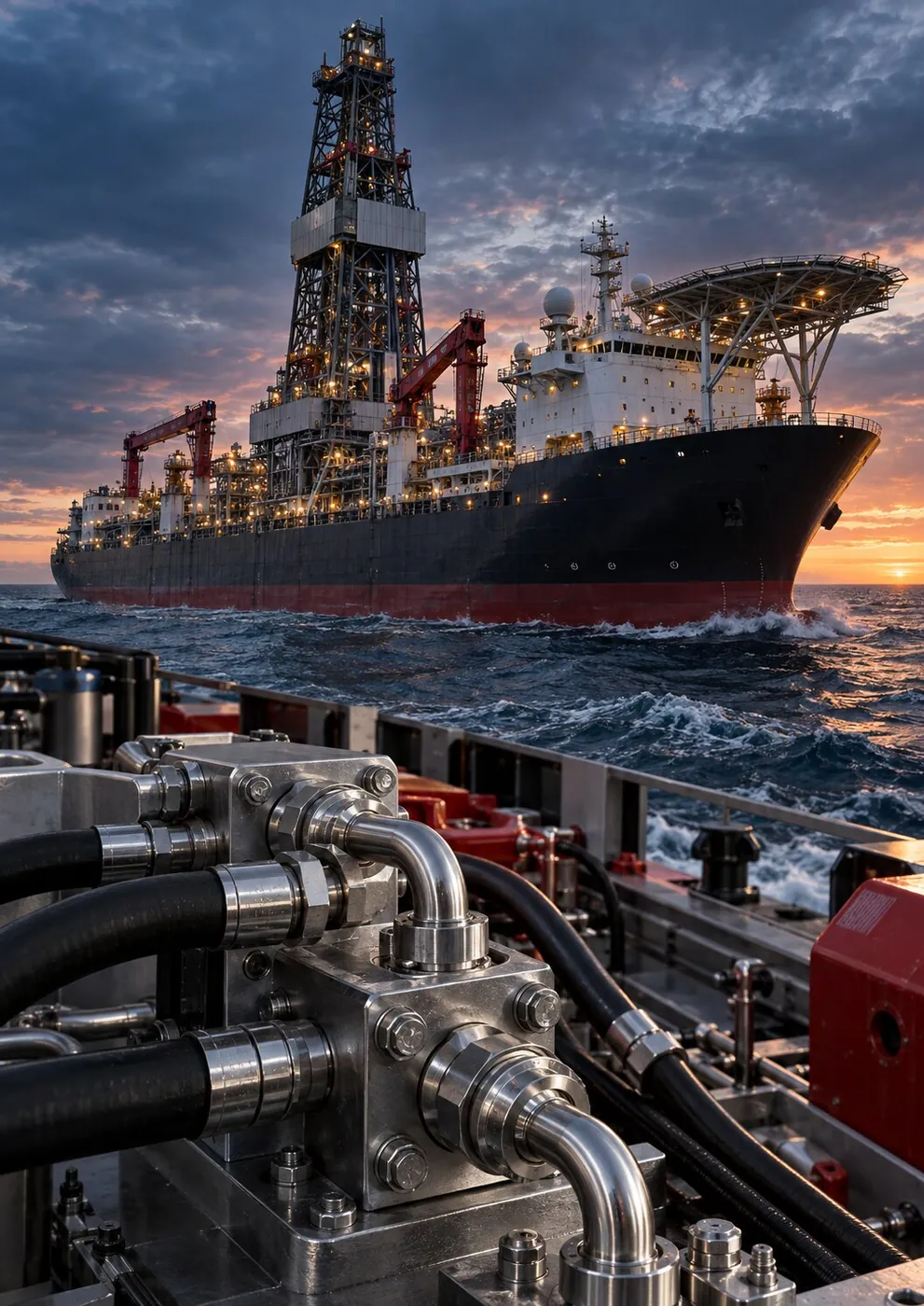
AISI 316L hose ends, SAE flanges, adapters and valves for crane, pipe handling, deck machinery and power unit lines on drillships and platforms.
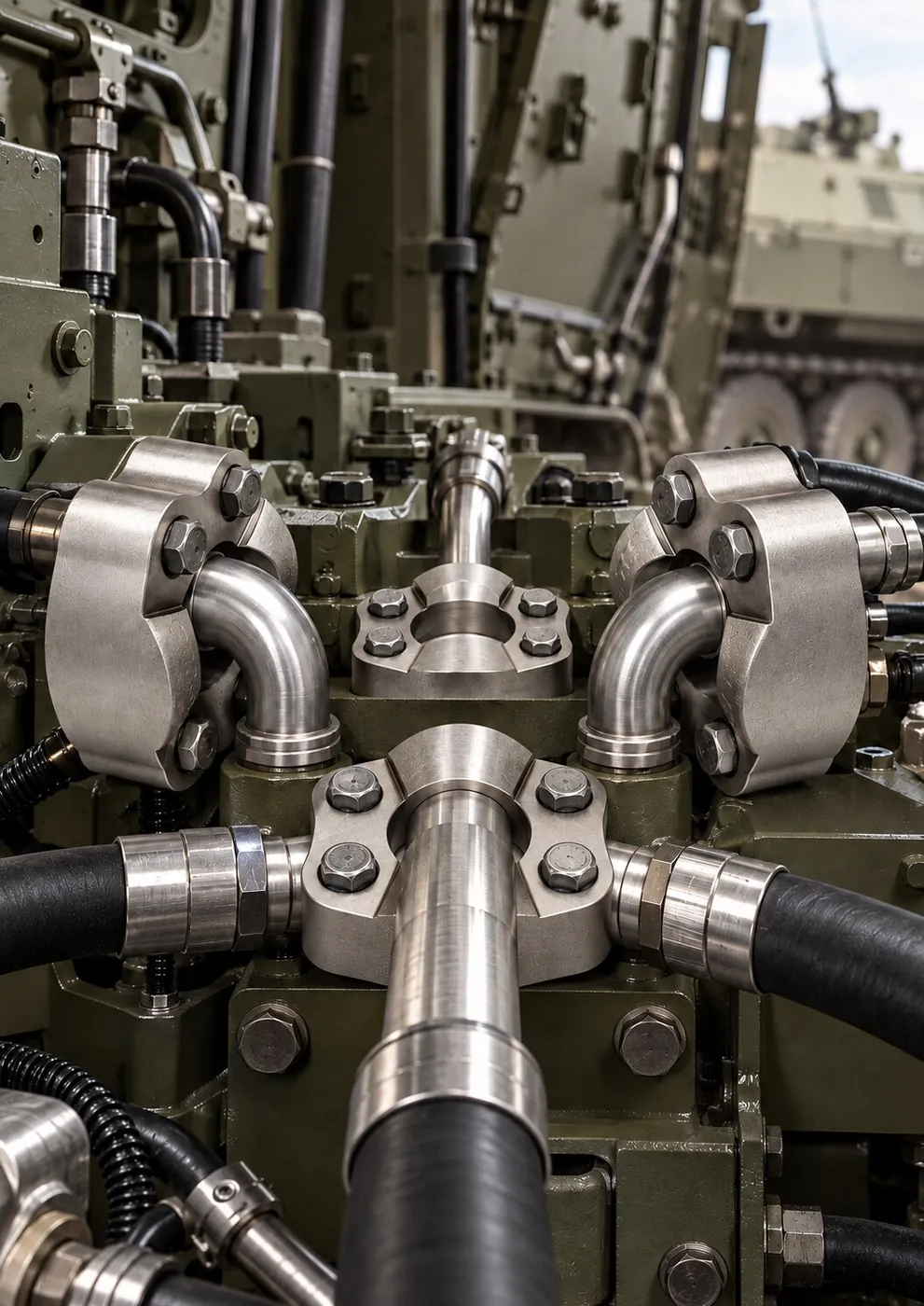
SAE flanges, adapters, elbows and hose fittings CNC-machined after technical drawing approval for mobile hydraulic systems, maintenance benches and compact power units.
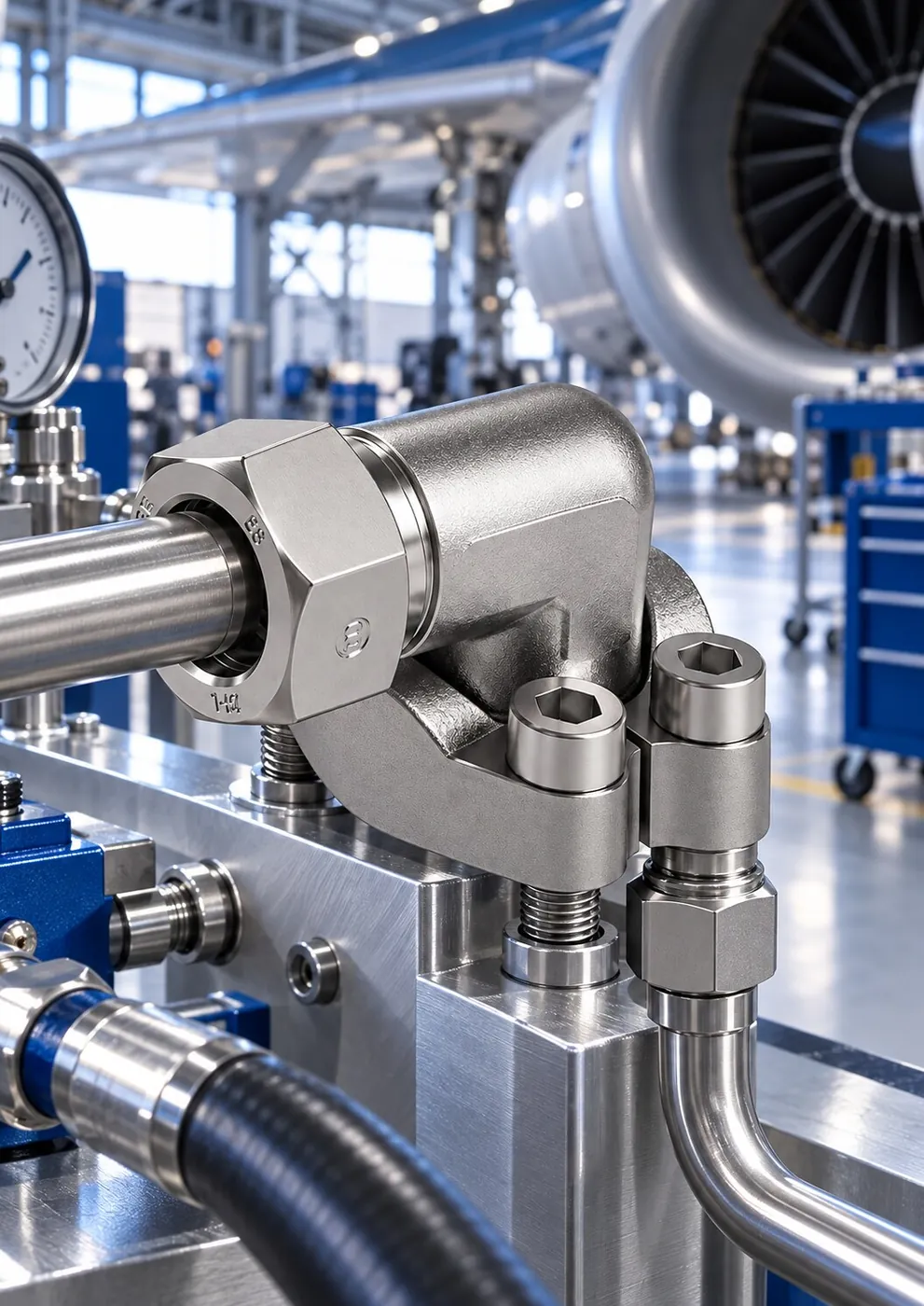
Compact AISI 316/316L fittings with clean threads and sealing surfaces for ground support equipment, hydraulic test benches and maintenance workshops.
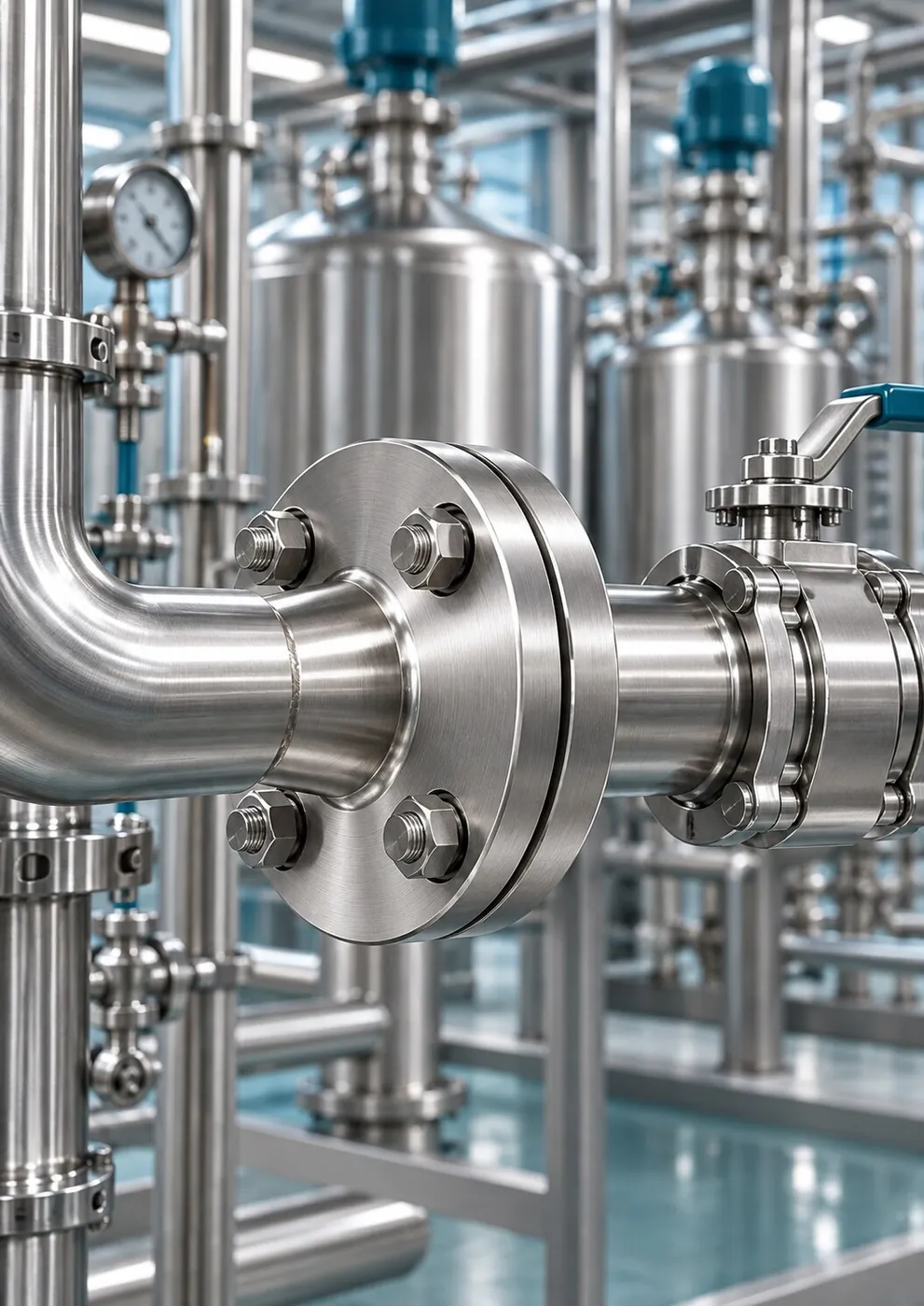
Stainless steel fittings, nipples, valves, flanges and hose fittings for chemical transfer and process lines, selected by weighing fluid compatibility, corrosion resistance, temperature and pressure together.
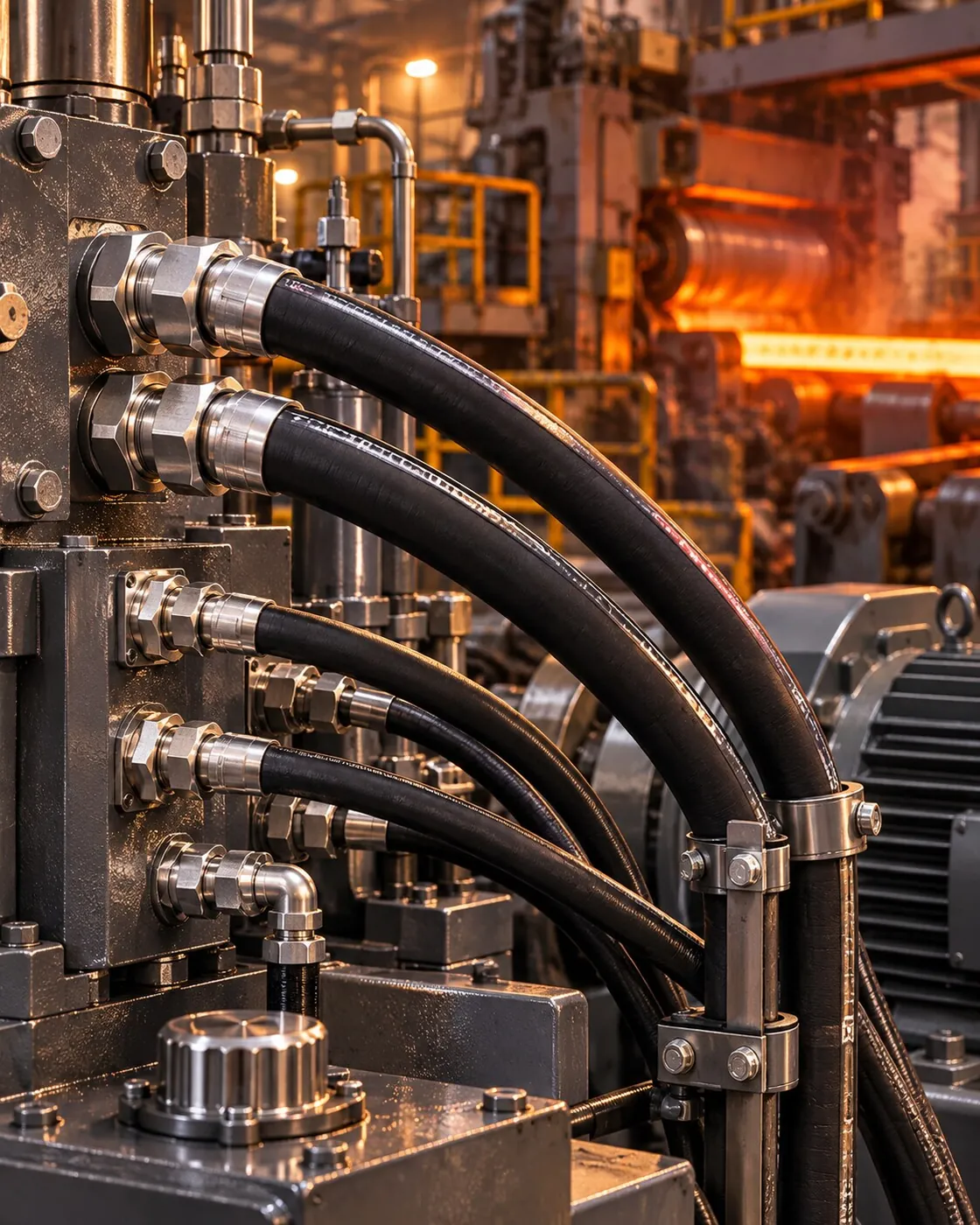
High-pressure hose ends, SAE flanges and adapters built for the high cycling, heat and vibration of presses, mill rolls and hydraulic power units; supplied from stock for emergency maintenance.
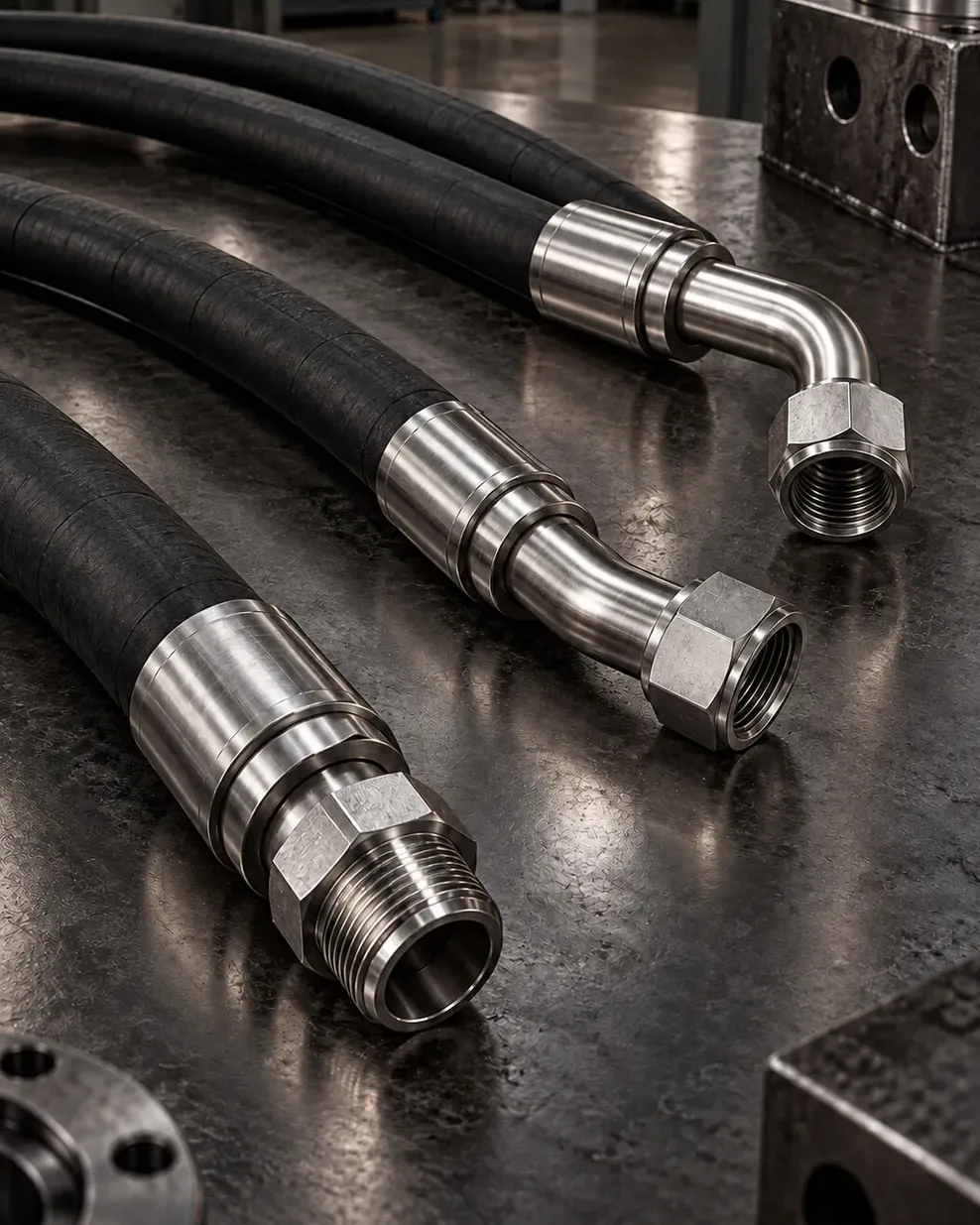
AISI 316L hose ends, SAE flanges, adapters and valves selected for mine water, vibration and abrasion on underground and open-pit machinery, crushing and screening, flotation, leaching and drainage lines.
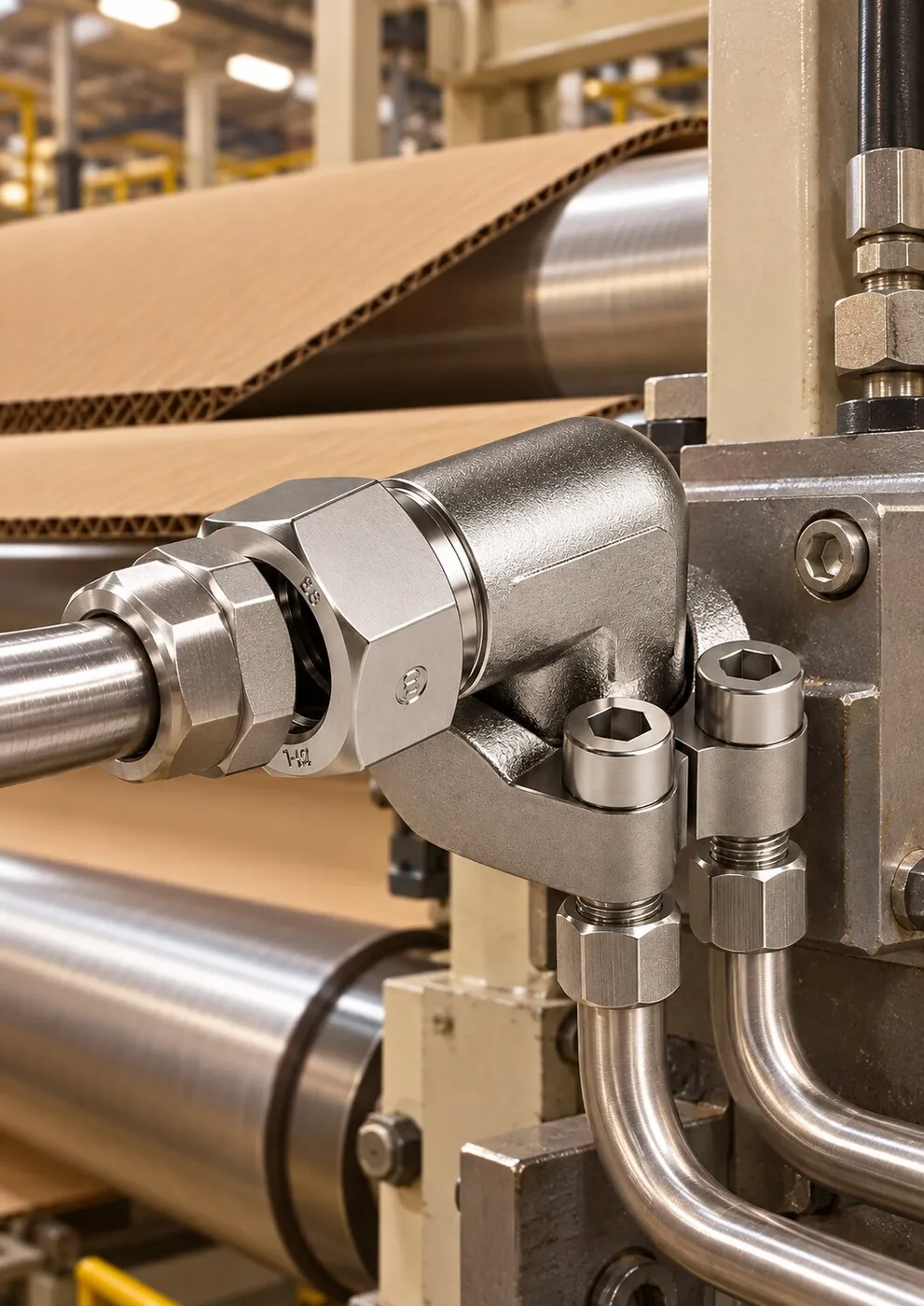
Elbows, tees, adapters, hose fittings and SAE flanges that cut maintenance time for continuously running hydraulic systems on corrugator, roll, cutting and actuator lines.
8 products
Hose Fittings & Ferrules 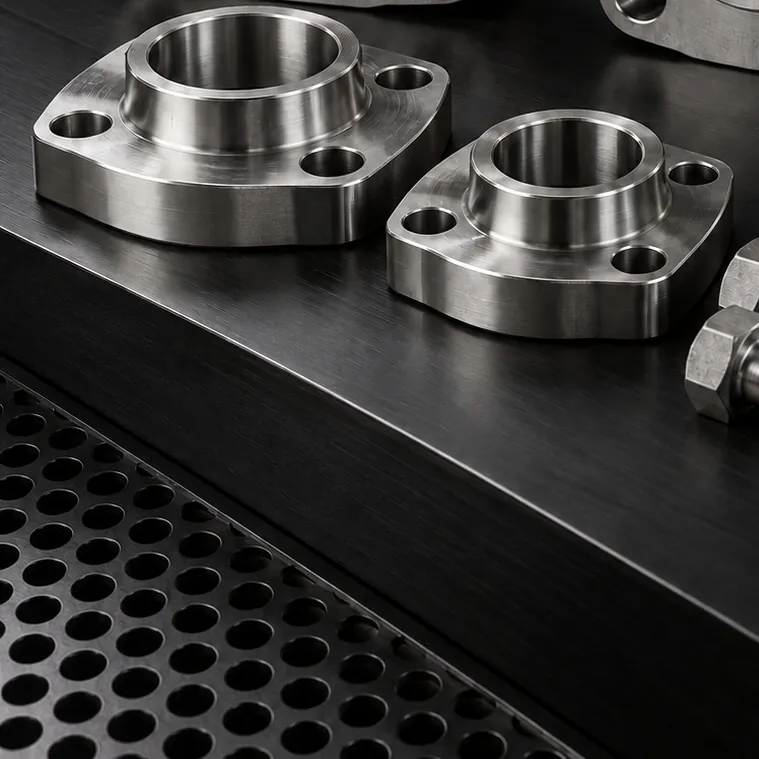 SAE Flanges (Code 61 / 62)
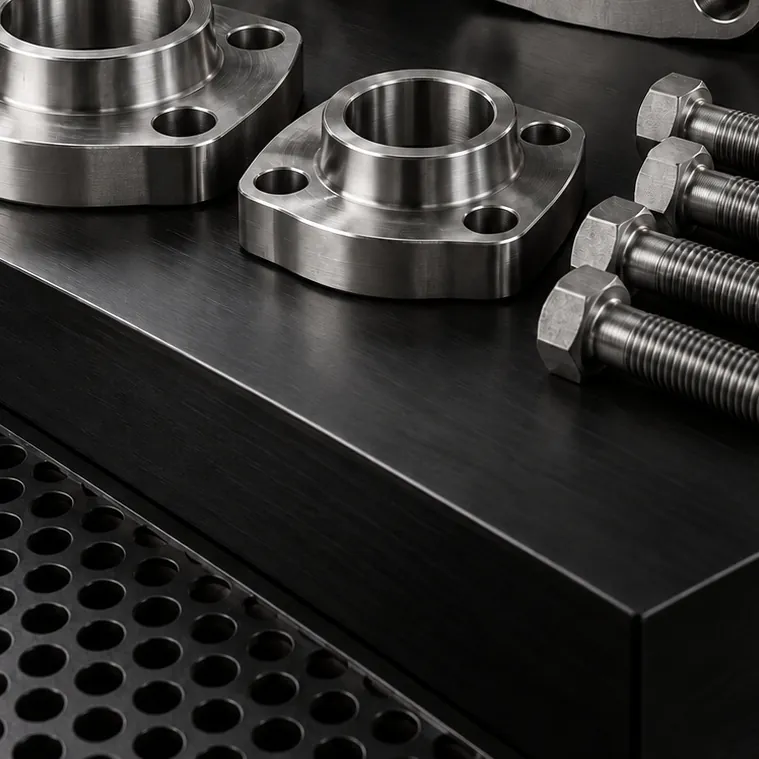 SAE Flanges (Code 61 / 62)
 SAE Flanges (Code 61 / 62)
 Weld Nipples & Weld Fittings Weld Nipples & Weld Fittings
 Custom-Made Hydraulic Parts
 Custom-Made Hydraulic Parts
Gallery
FAQ
If your question isn't here, message us on WhatsApp with a ready-made message and our technical team will answer directly.
Ask on WhatsAppWe manufacture BSPP (parallel) and BSPT (tapered), NPT, UNF/JIC and metric connections. The thread standard, size and sealing method should be specified on the technical drawing; if not, they are identified from a sample and confirmed in writing before production.
Thanks to their molybdenum content, AISI 316 and 316L are more resistant to pitting corrosion in chloride-bearing environments, such as under seawater exposure. 316L has a maximum carbon content of 0.03%, which reduces the risk of intergranular corrosion in welded parts.
Thread pitch, angle and diameter are measured, and thread fit is verified with the mating part or a thread gauge. The sealing surface is inspected separately to make sure no burrs, nicks or scratches remain.
Quantity is considered in the technical review together with dimensions, material and operating conditions. Both low-volume custom parts and series jobs are scheduled through this review, and in both cases the first part passes dimensional inspection.
Galling can occur on stainless steel threads, especially when they are tightened dry and quickly. Clean, burr-free threads, a suitable anti-seize compound and controlled tightening reduce this risk.
Quote and technical verification
Briefly describe your request; once size, material and lead time are clear, we'll respond with a written quote.
Details that speed up your quote