


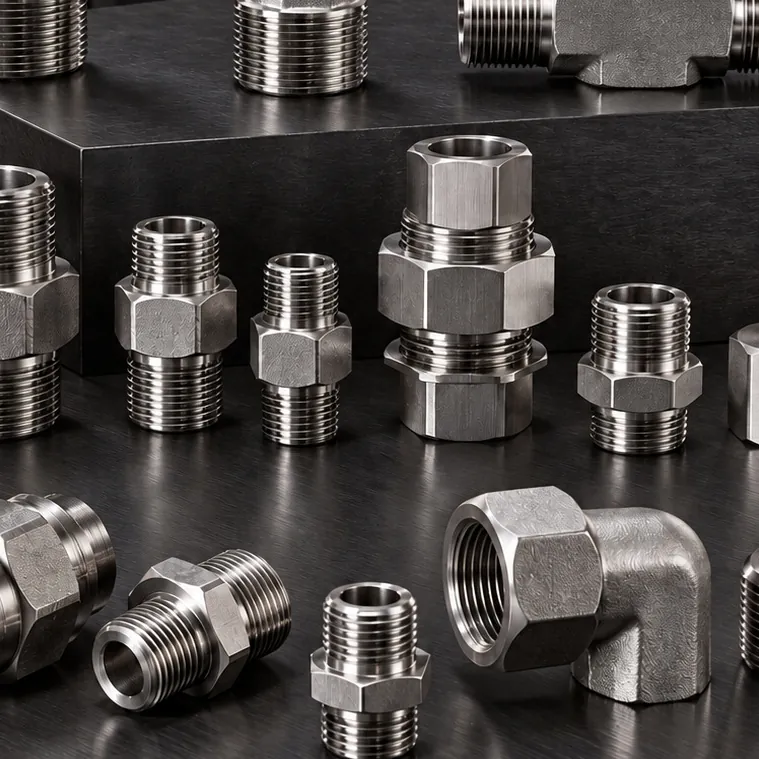
 DIN 2353 Compression Fittings
Straight Coupling (24° Cone)
Details & quote
AISI 316/316L · Welded lines · Flanged connections
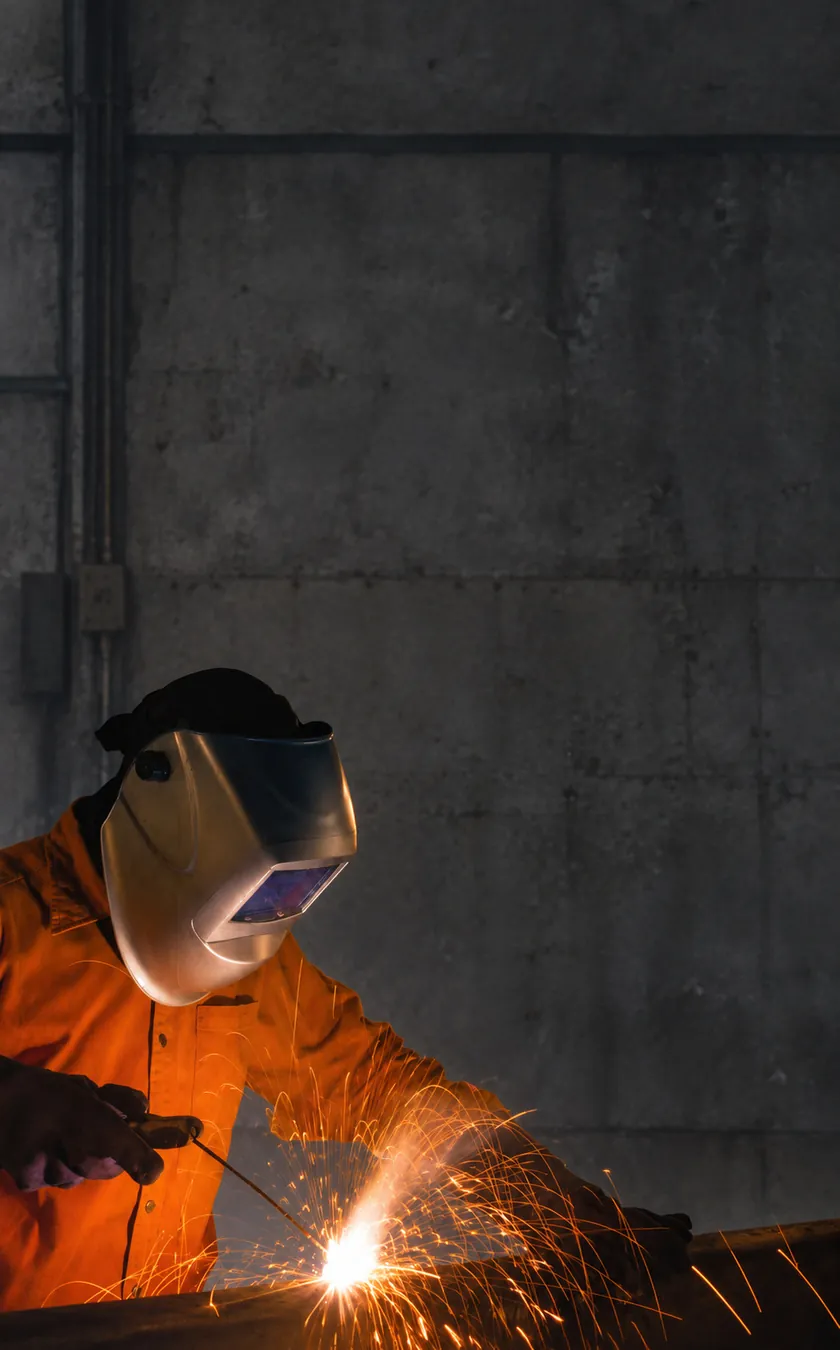
Welded and demountable stainless steel lines built from AISI 316/316L pipe, flanges and fittings: bevel preparation matched to wall thickness, axial alignment, welding to project specifications and post-weld surface cleaning.
Quick answer
GÜNEYSS fabricates welded and demountable stainless steel lines using AISI 316/316L pipe, elbows, tees, reducers and flanges. Pipe class, wall thickness, flange type and gasket face are selected together; weld bevels, axial alignment and post-weld cleaning are checked before the line is prepared for shipment. Stock parts are typically scheduled within 1-3 business days, and project-specific lines within an average of 10-20 business days after technical approval.
Stainless steel piping requires the pipe, fittings, flanges and the welds that join them to be treated as a single system. A line is only as reliable as its weakest connection: even with the right pipe class, a mismatched flange face, a poorly prepared weld bevel or a misaligned joint will come back as a leak at commissioning and as corrosion later on. That is why we plan piping not just from a parts list, but together with the fluid, pressure, temperature and maintenance requirements.
Elbows, tees, reducers and flanges are not selected by nominal diameter alone. DN/NPS, outside diameter and Schedule are compared from part to part; flange type, pressure class, face standard, gasket and bolting are specified together. 316L is preferred for welded lines: its maximum carbon content of 0.03% reduces the risk of intergranular corrosion in the weld zone.
Bevels are prepared to suit the pipe wall thickness, parts are aligned along the axis and misalignment is checked before tack welding. On flanged ends, bolt hole orientation is set to match the mating equipment. Otherwise the line has to be forced into place during installation, the gasket is not loaded evenly and a leak shows up at the first pressurization.
The welding process and filler material are determined by the project specifications and the stainless steel grade in use. With stainless steel, the goal is controlled heat input and a clean weld. Depending on the application, the pipe is purged with shielding gas to prevent oxidation on the root side.
Heat tint and contamination in the weld zone are removed, and the weld and surrounding area are visually inspected. The corrosion resistance of stainless steel depends on the passive layer on its surface; for this reason, discs, brushes and tools that have been in contact with carbon steel are not used, and iron contamination is prevented.
A fully welded line has the advantage in sealing, but it has to be cut for maintenance. Placing demountable flanged or fitting-type connections upstream and downstream of equipment that needs servicing, such as pumps, filters, valves and heat exchangers, makes it possible to replace components without opening up the entire line. The location of these connections is determined at the design stage, taking into account access, gasket replacement and spare part sizes.
Auxiliary system lines exposed to seawater in ship engine rooms; newbuild and repair piping in shipyards; lines exposed to saltwater environments on offshore facilities; process and transfer lines in chemical plants; lines requiring cleanable surfaces and corrosion resistance in food and beverage plants; pump discharge and skid piping in fire suppression systems; pressure lines between the power unit and consumers in rolling mills.
Pipe, fittings and flanges from stock are typically ready to ship within 1-3 business days. Standard production takes an average of 5-10 business days, while project-specific lines built from isometrics or technical drawings are scheduled within an average of 10-20 business days after technical approval. The clearer the routing, diameters, wall thicknesses and flange standard, the faster the production schedule is set.
Process
From request to delivery in 6 steps
Line routing, isometrics or dimensions, plus fluid, pressure and temperature data are collected.
Pipe class, wall thickness, fittings and flange type, gaskets and bolting are finalized.
Cutting, bevel preparation to suit wall thickness and axial alignment checks are carried out.
Welding is performed using a method and filler material that meet the project specifications.
Surface cleaning, visual inspection and, depending on the application, pressure/leak-tightness verification are carried out.
Open ends and flange faces are protected and the line is prepared for shipment.
Sectors
On the sector page, you'll find this service's field-specific applications, recommended products and frequently asked questions.
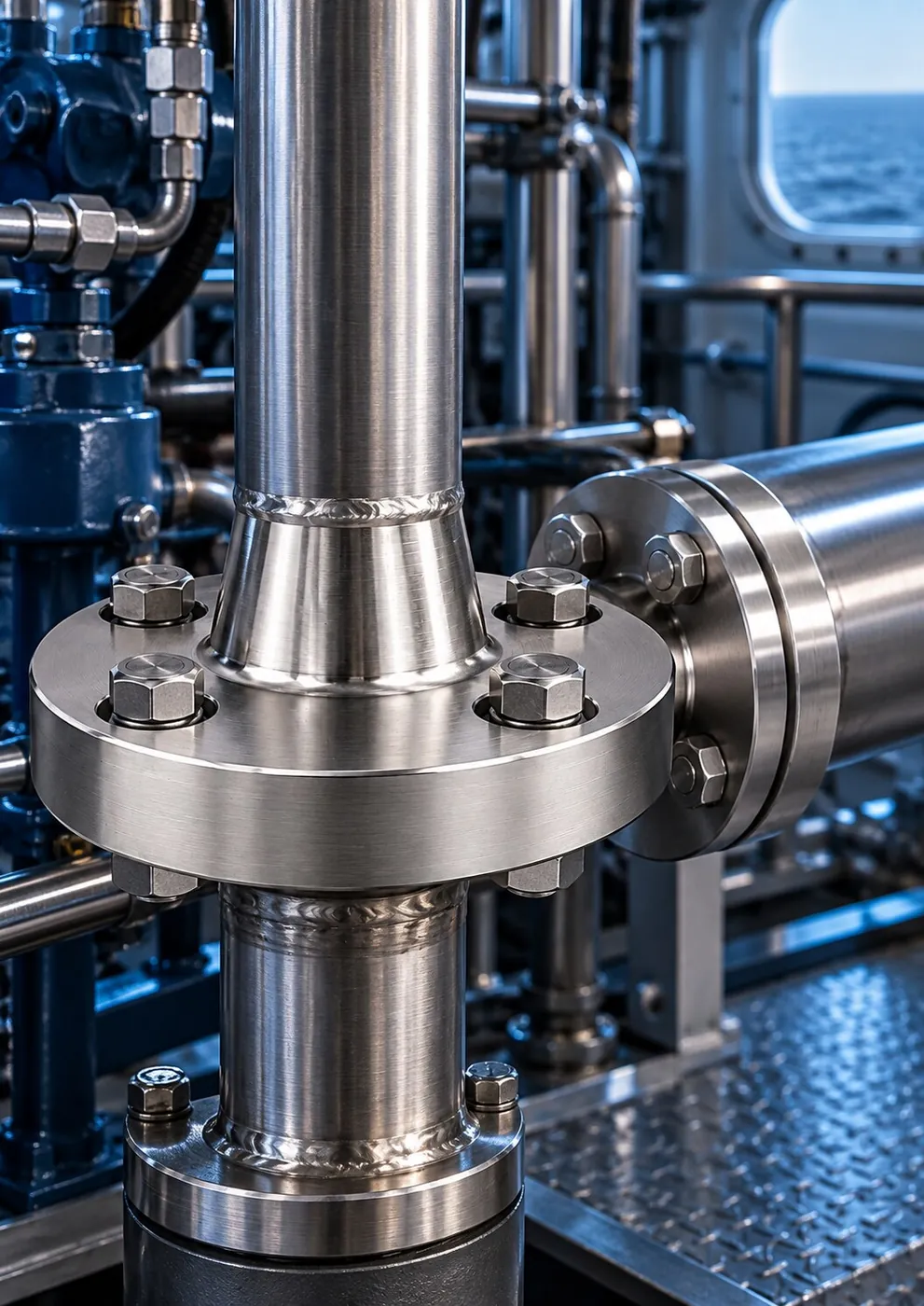
AISI 316L fittings, hose assemblies, SAE flanges and valves built to withstand salt spray and vibration on deck cranes, windlasses, steering gear, passerelles and engine room lines.
Stainless steel pipe, flanges, fittings and hose assemblies, from newbuild piping circuits to drydock overhauls; fast spares from stock for ship crane service teams.
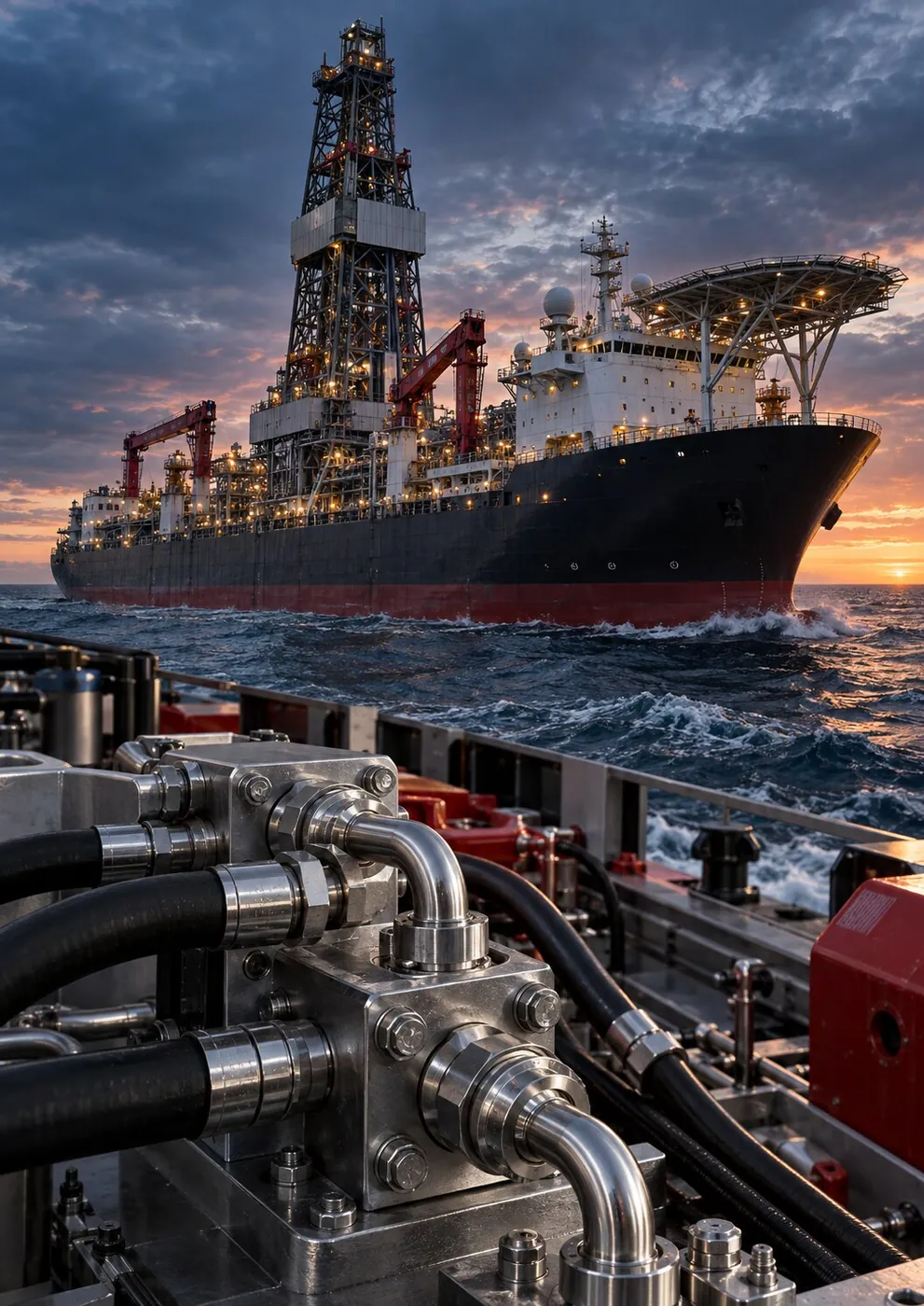
AISI 316L hose ends, SAE flanges, adapters and valves for crane, pipe handling, deck machinery and power unit lines on drillships and platforms.
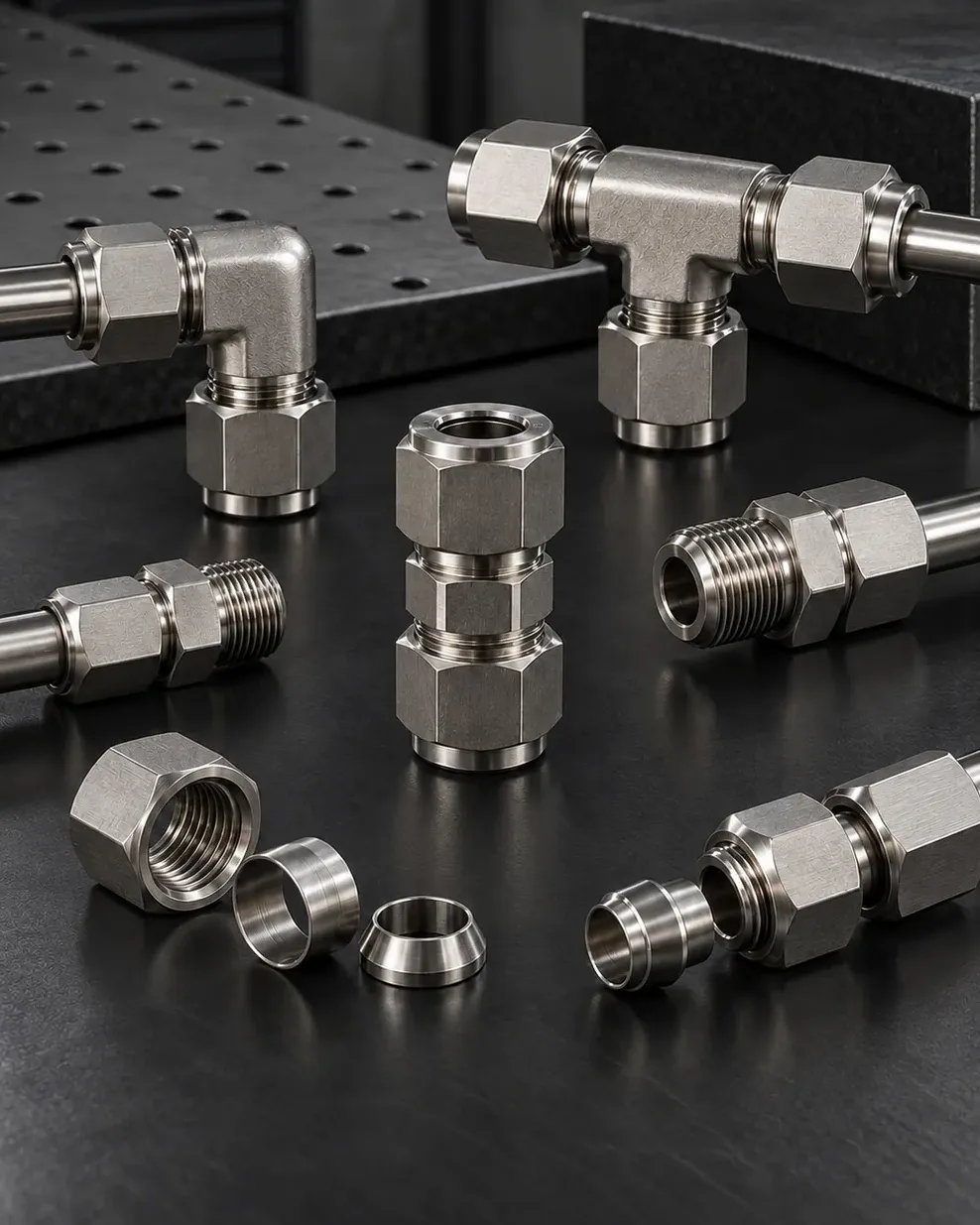
316L twin-ferrule fittings, needle valves, check valves and tubing for wellhead control panels, chemical injection, refinery instrument and sampling lines, and pipeline stations.
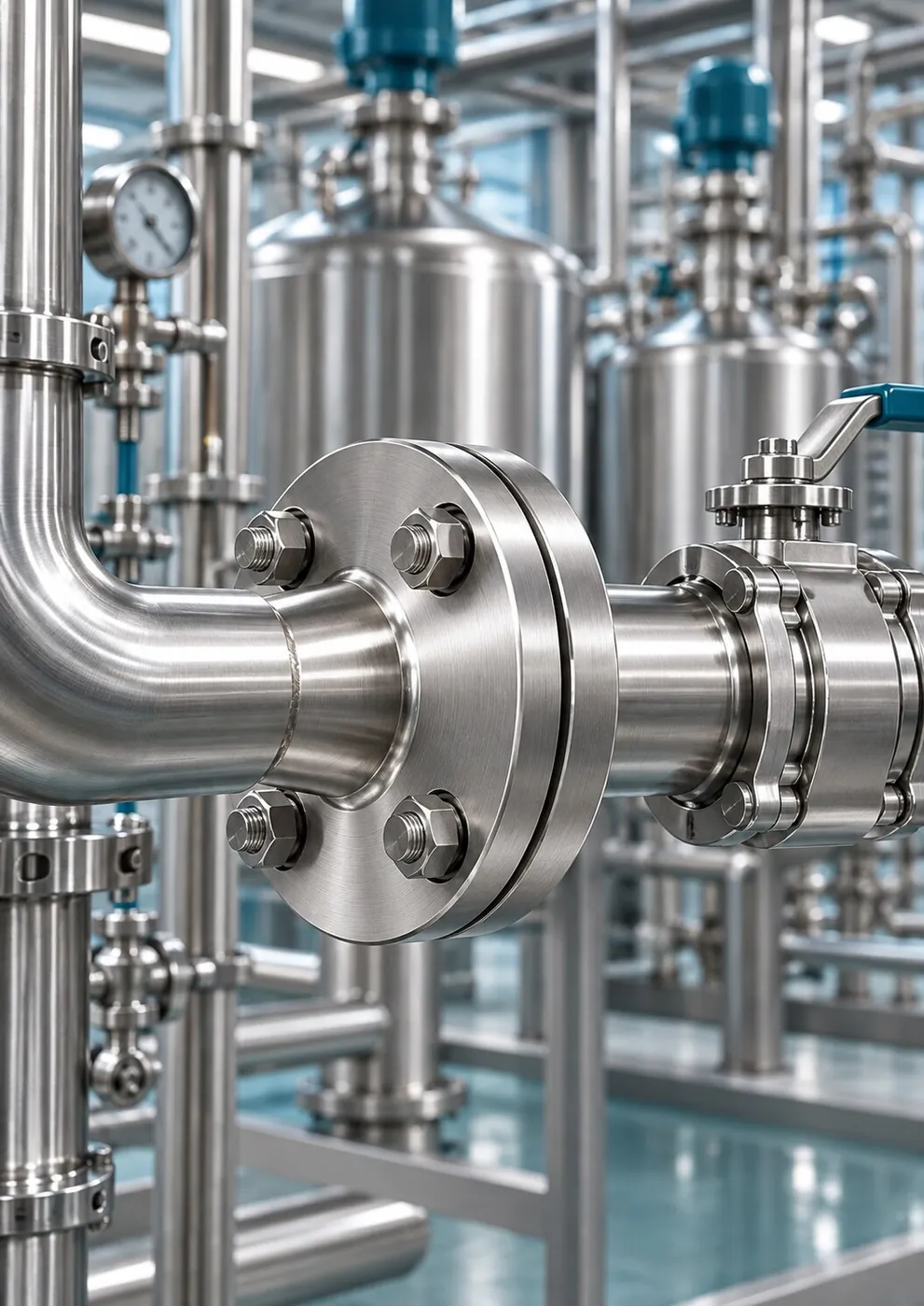
Stainless steel fittings, nipples, valves, flanges and hose fittings for chemical transfer and process lines, selected by weighing fluid compatibility, corrosion resistance, temperature and pressure together.
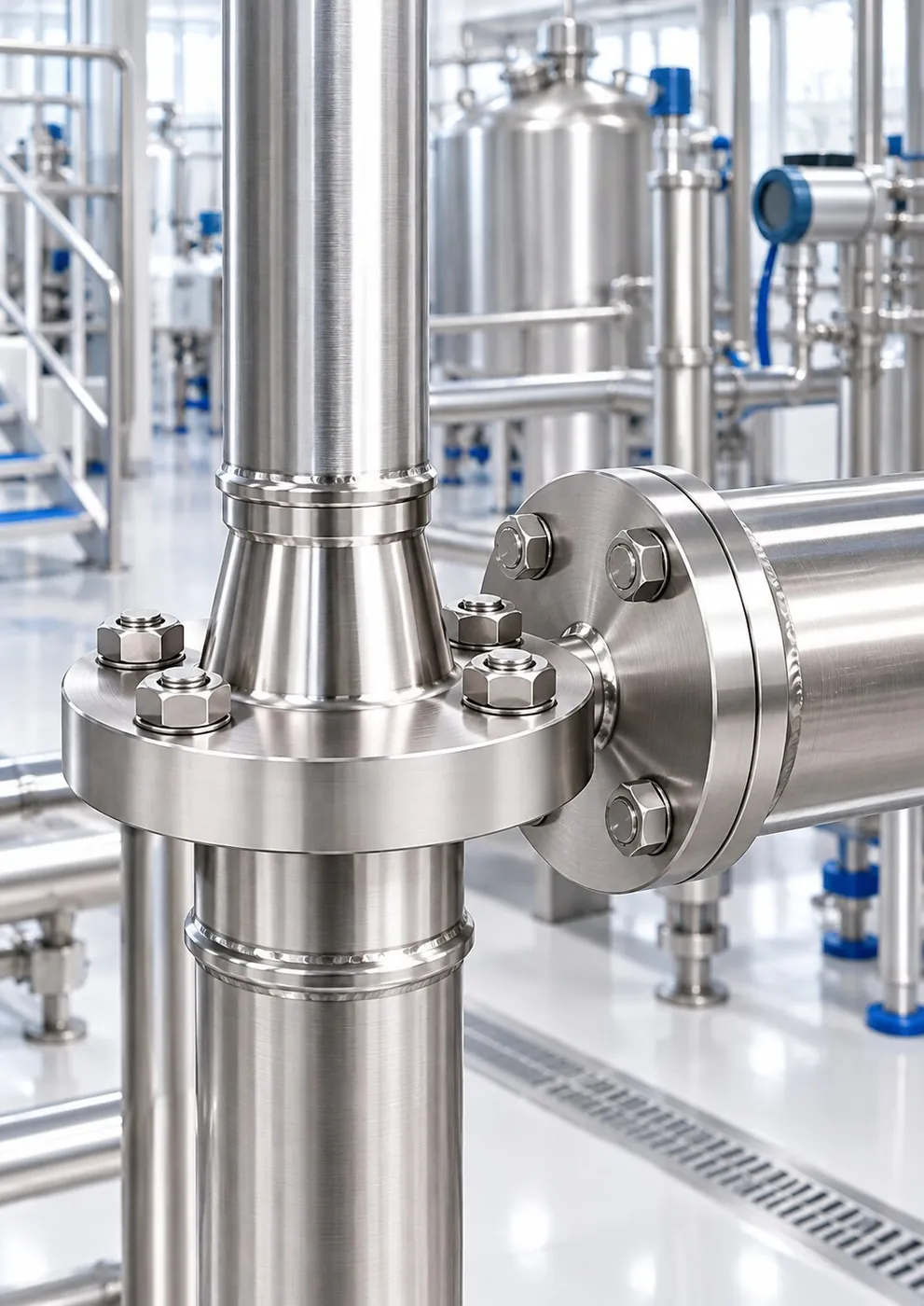
AISI 316/316L fittings, nipples, valves, flanges and hose assemblies for food and beverage lines that call for cleanable surfaces, corrosion resistance and maintenance access.
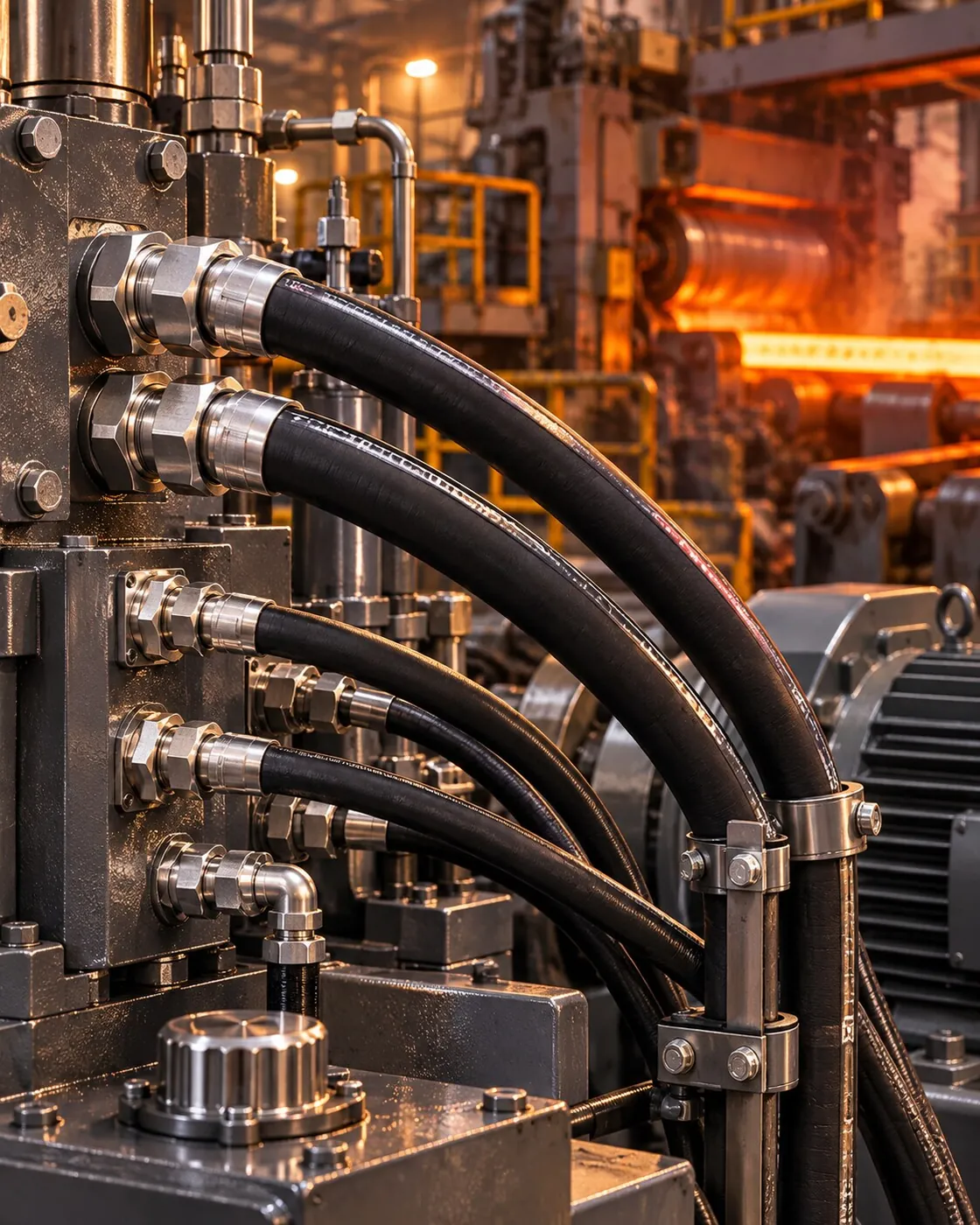
High-pressure hose ends, SAE flanges and adapters built for the high cycling, heat and vibration of presses, mill rolls and hydraulic power units; supplied from stock for emergency maintenance.
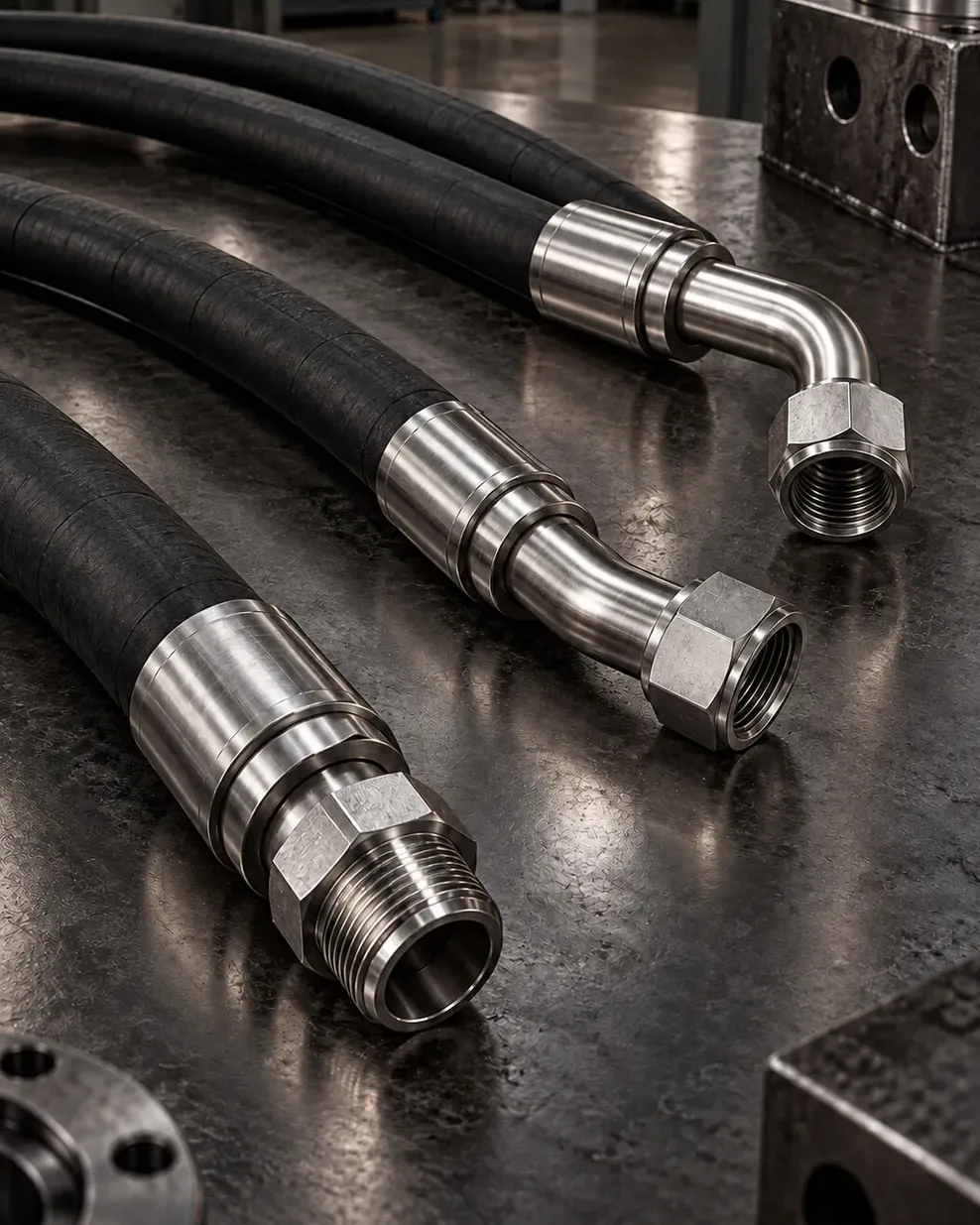
AISI 316L hose ends, SAE flanges, adapters and valves selected for mine water, vibration and abrasion on underground and open-pit machinery, crushing and screening, flotation, leaching and drainage lines.
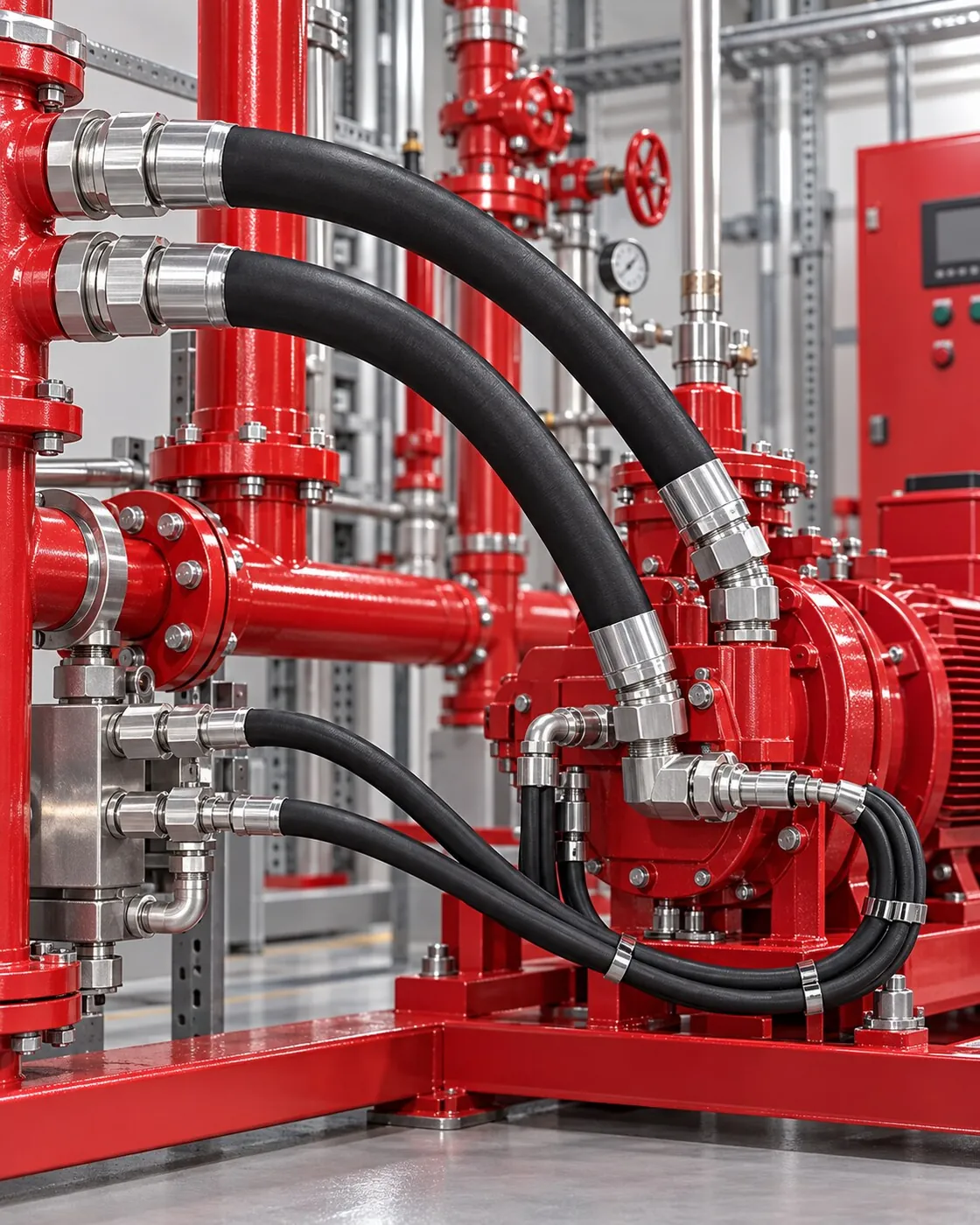
Neatly laid out, leak-tight stainless steel nipples, fittings, hose assemblies and flange connections that make servicing easier on fire pump sets, control skids and pressurized auxiliary lines.
19 products
DIN 2353 Compression Fittings 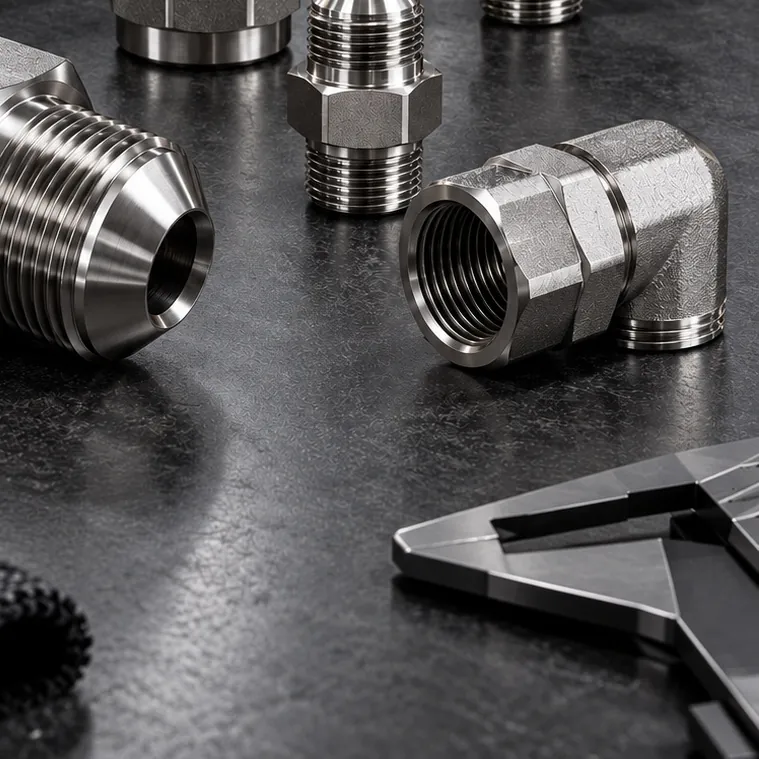 DIN 2353 Compression Fittings
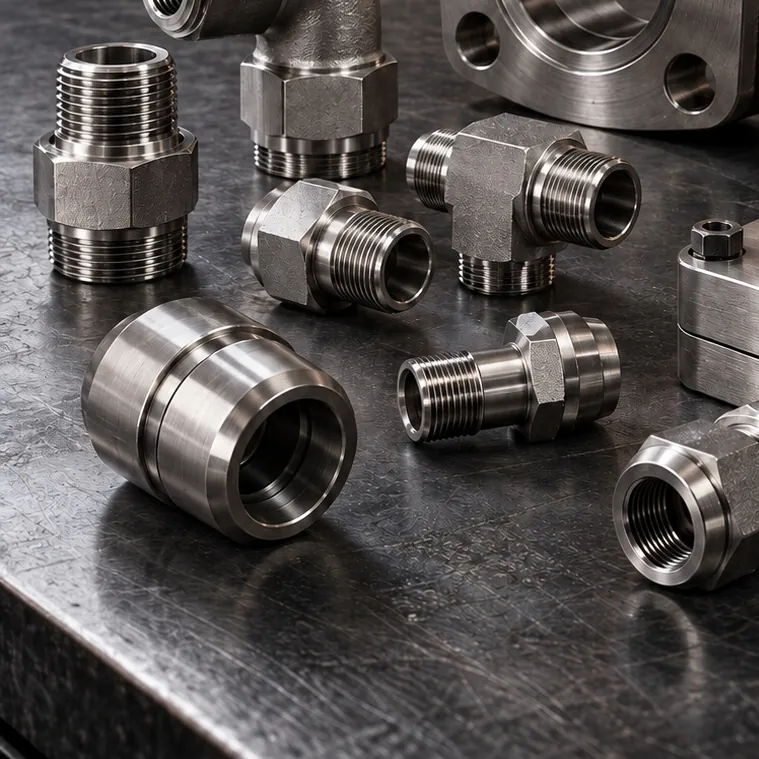 DIN 2353 Compression Fittings DIN 2353 Compression Fittings
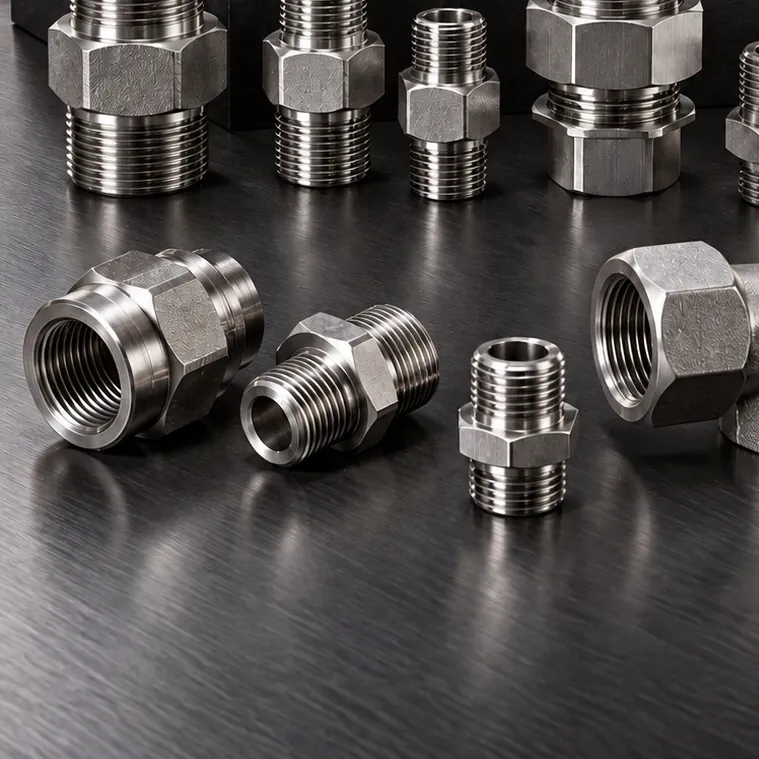 DIN 2353 Compression Fittings
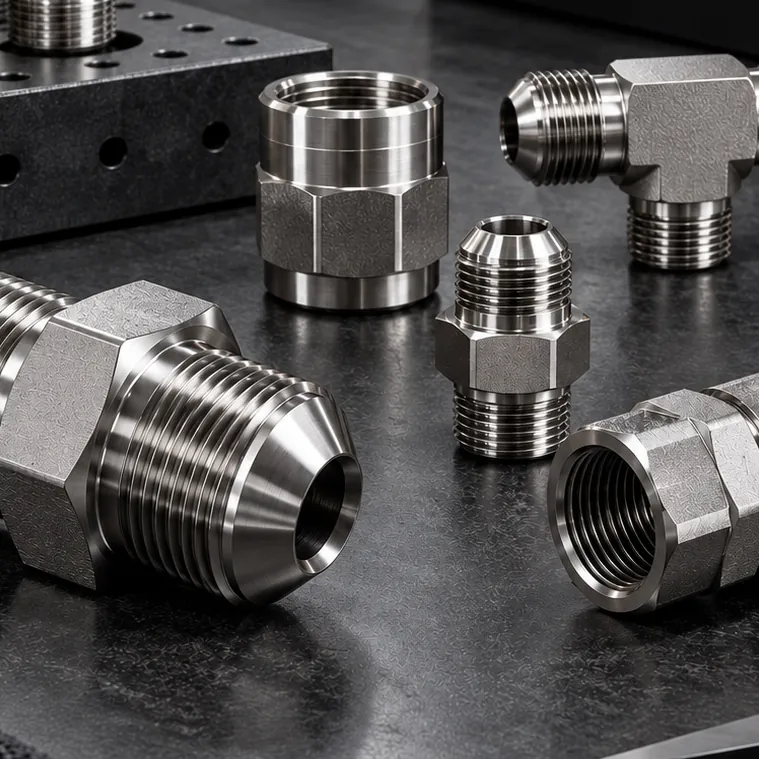 DIN 2353 Compression Fittings
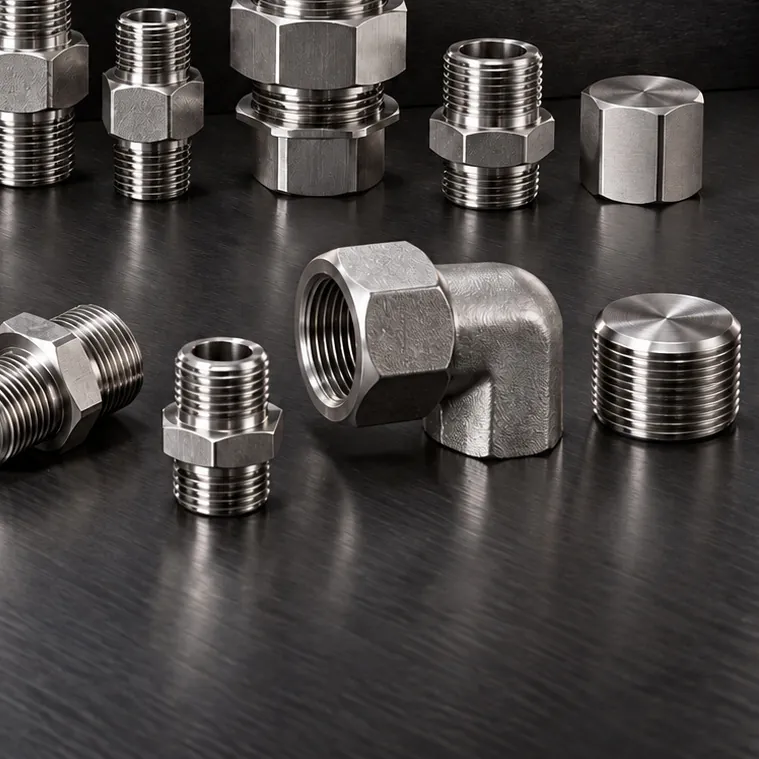 DIN 2353 Compression Fittings
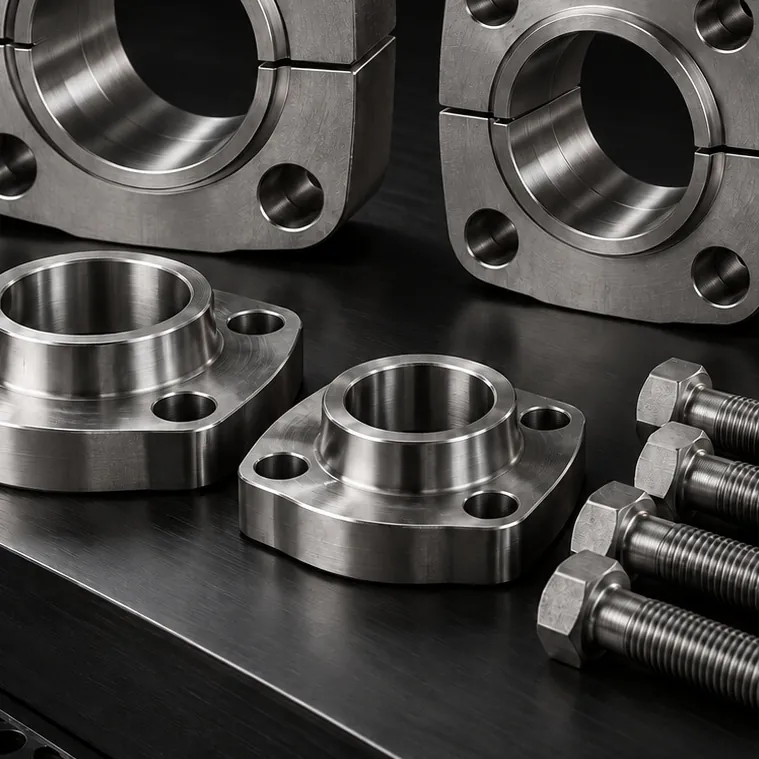 SAE Flanges (Code 61 / 62)
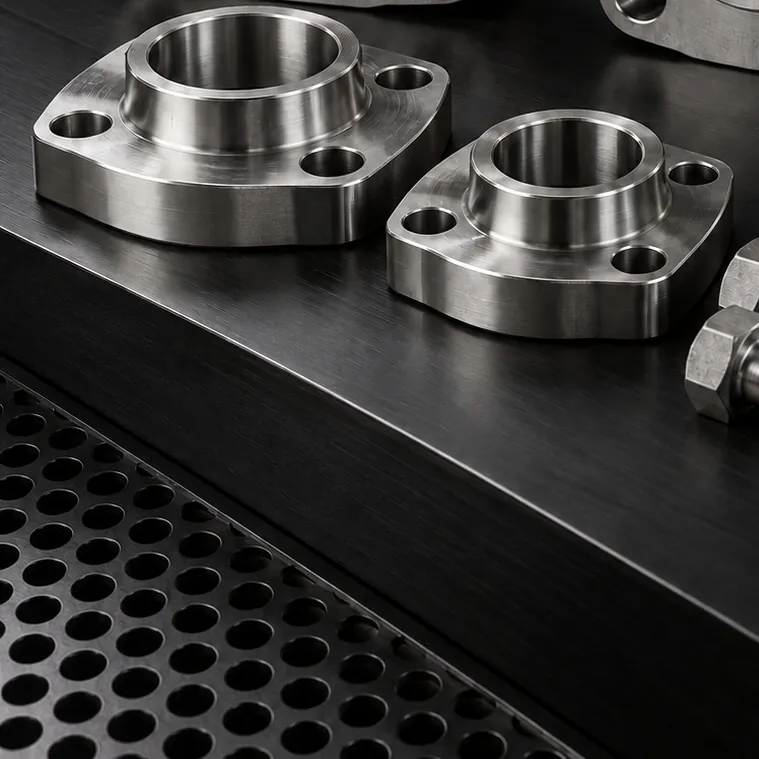 SAE Flanges (Code 61 / 62) Weld Nipples & Weld Fittings Weld Nipples & Weld Fittings Weld Nipples & Weld Fittings Weld Nipples & Weld Fittings
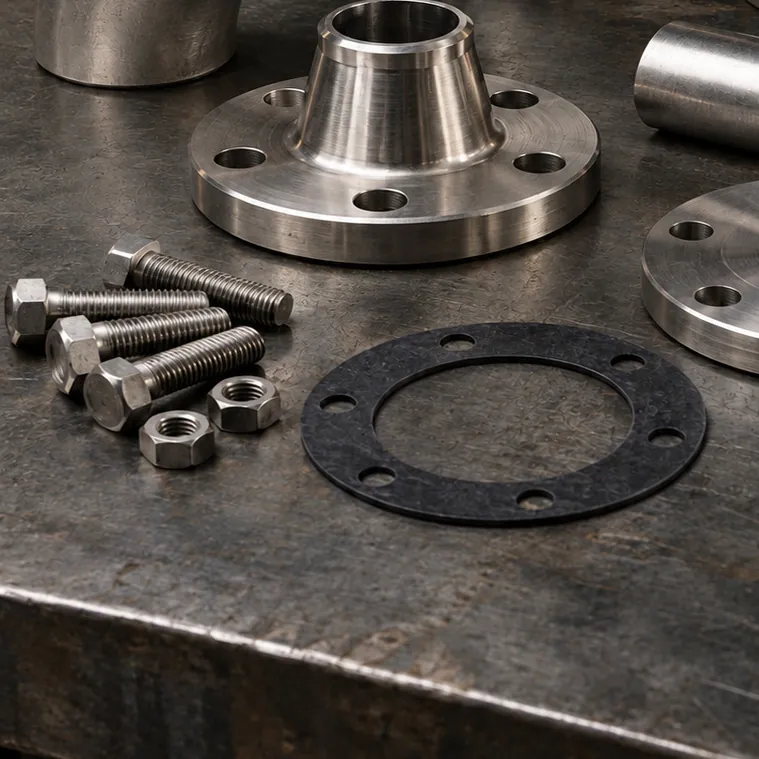 Stainless Steel Pipes & Flanges
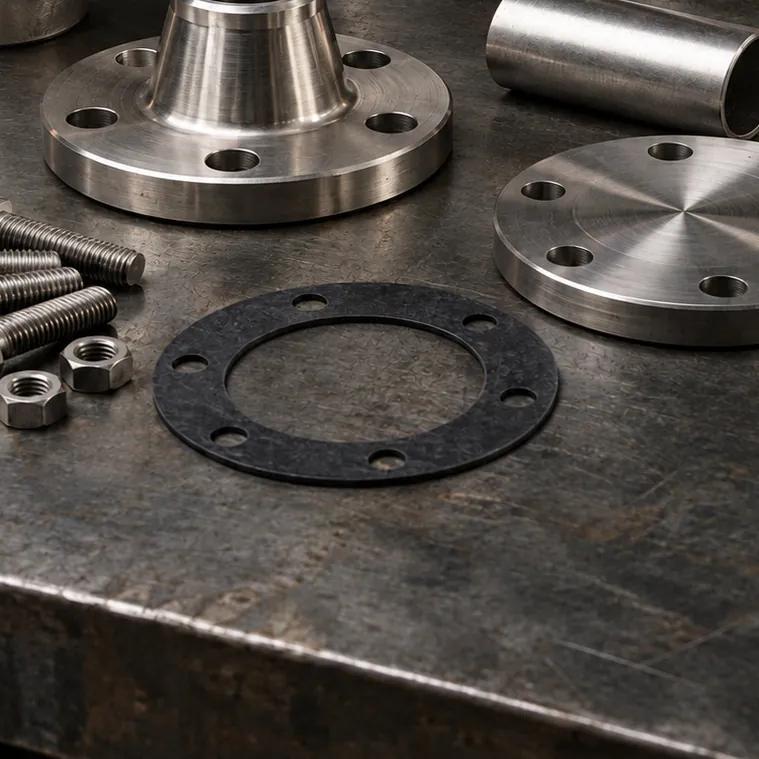 Stainless Steel Pipes & Flanges
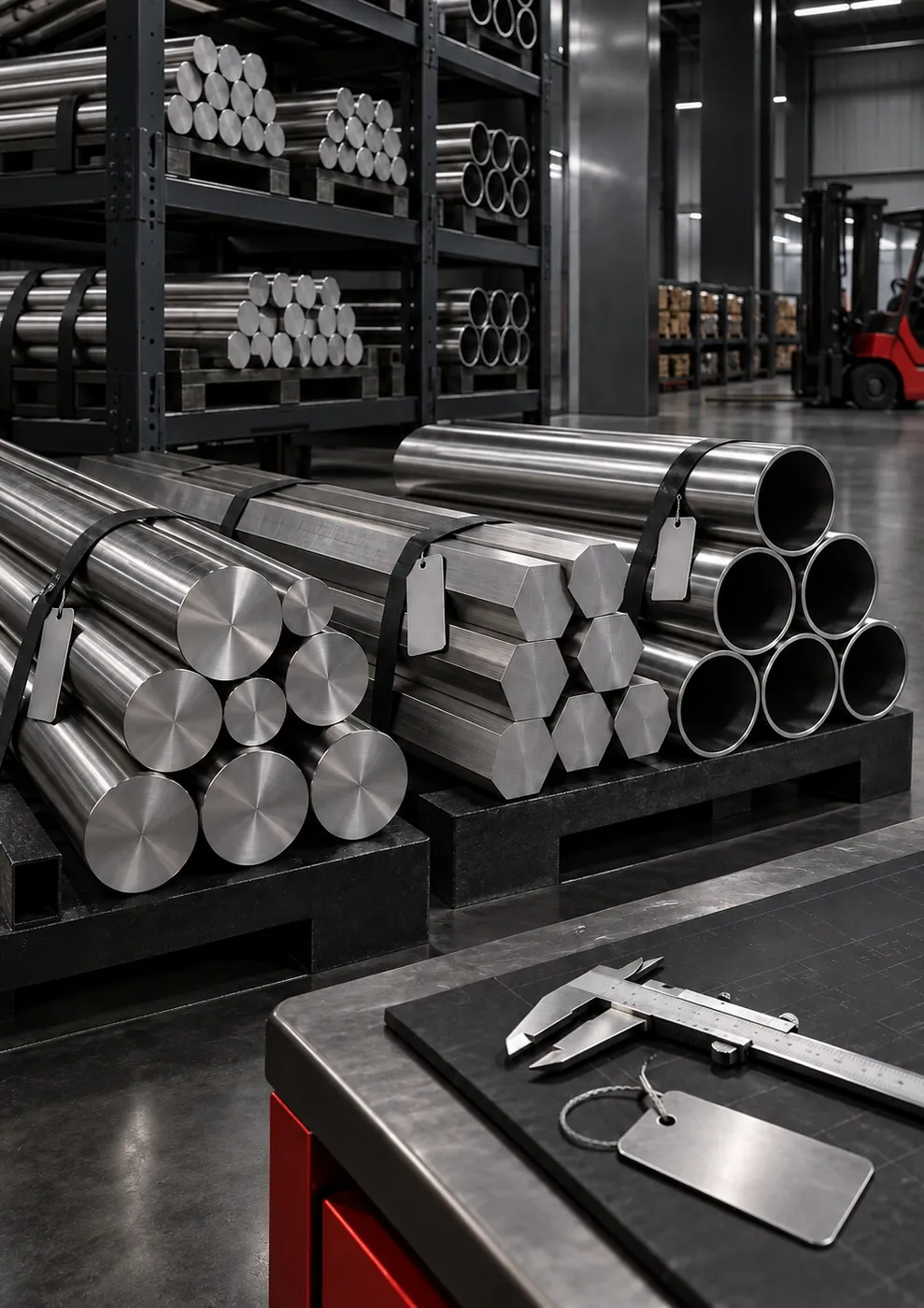 Stainless Steel Pipes & Flanges
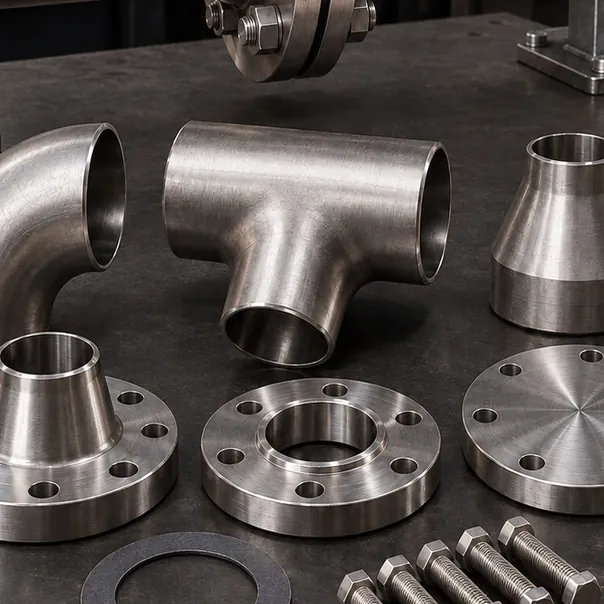 Butt-Weld Pipe Fittings
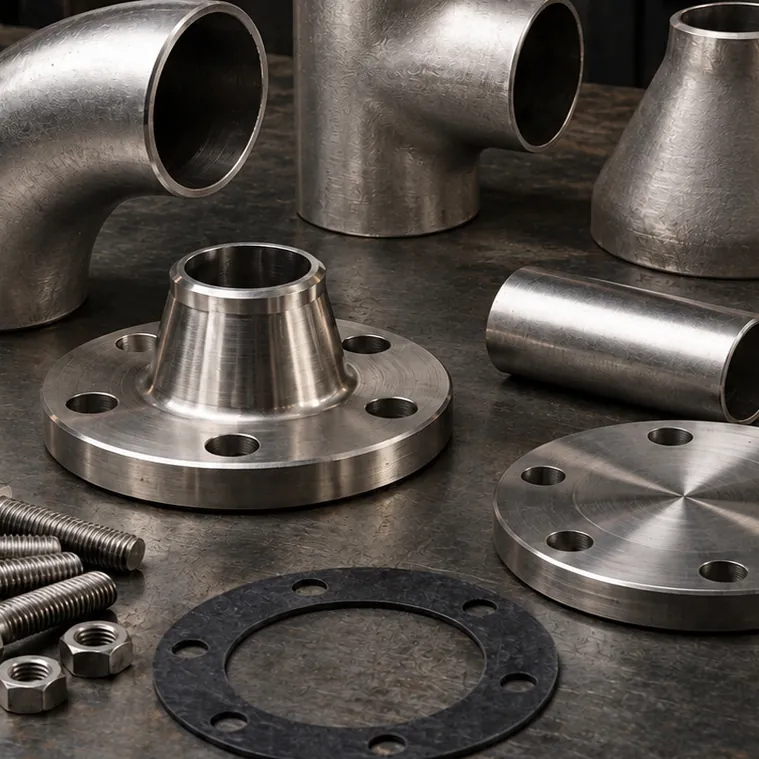 Butt-Weld Pipe Fittings Butt-Weld Pipe Fittings
Gallery
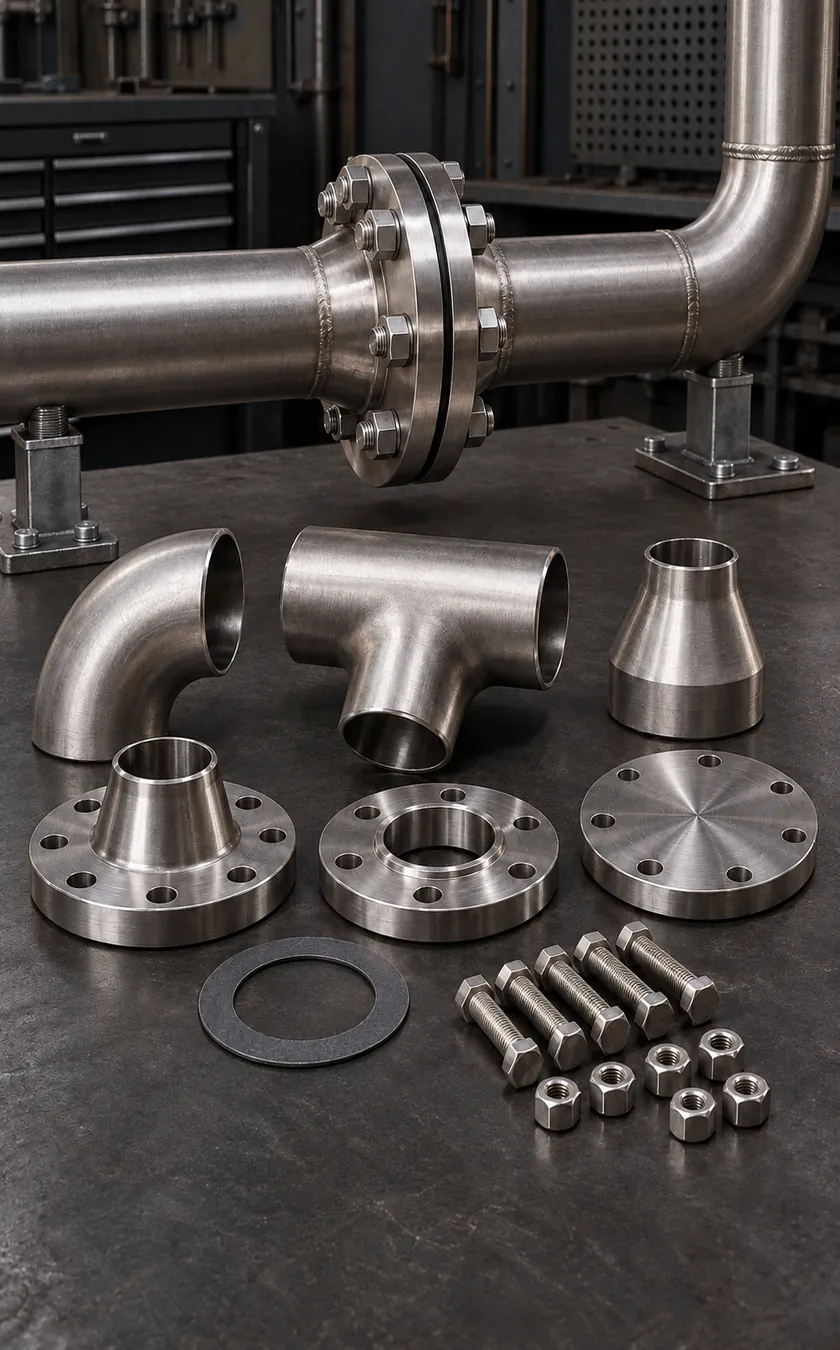 Butt-weld elbows, tees, reducers and flanges: the components that form the line geometry (illustrative image)
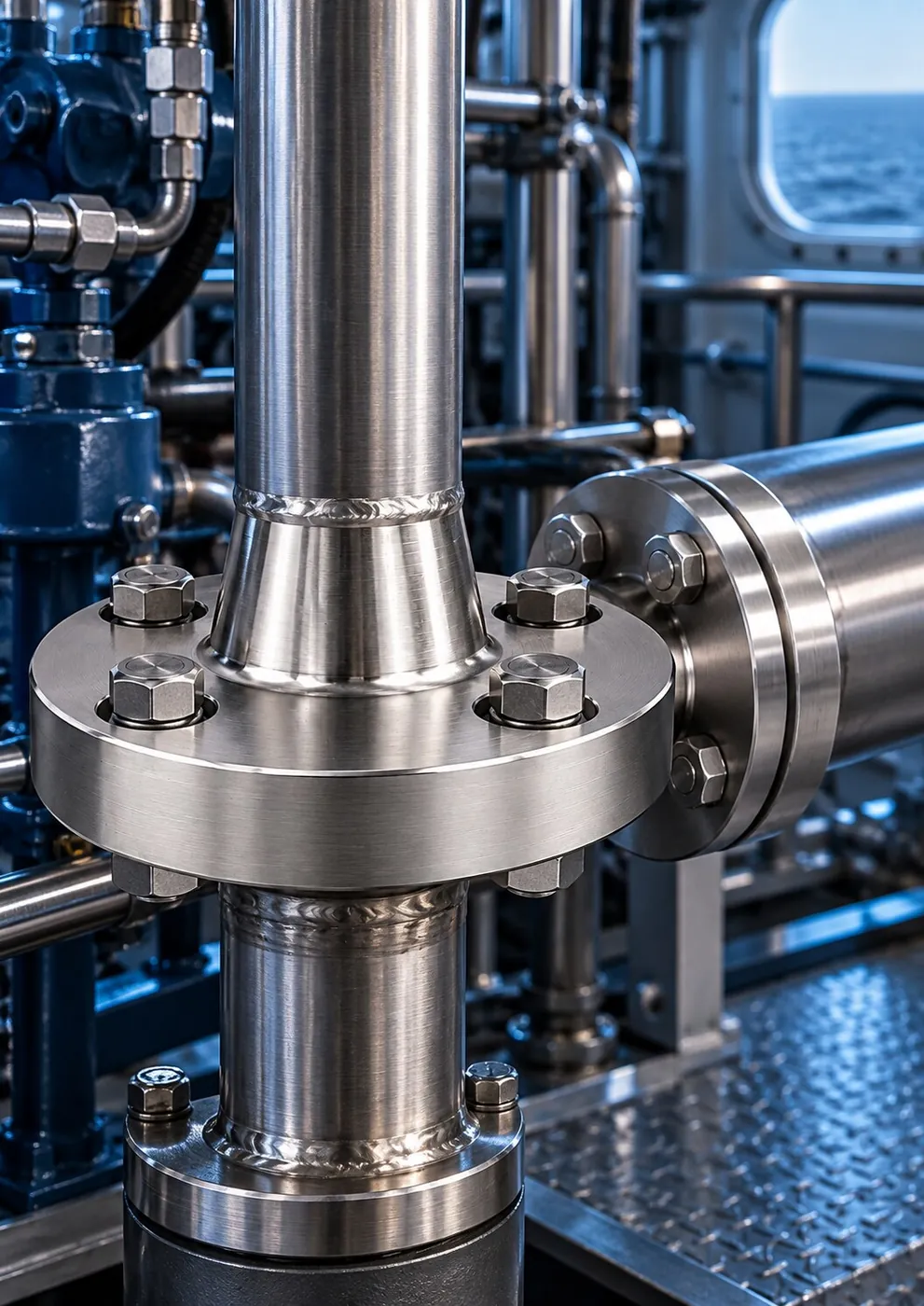 Flanged stainless steel pipeline in a ship's engine room (illustrative image)
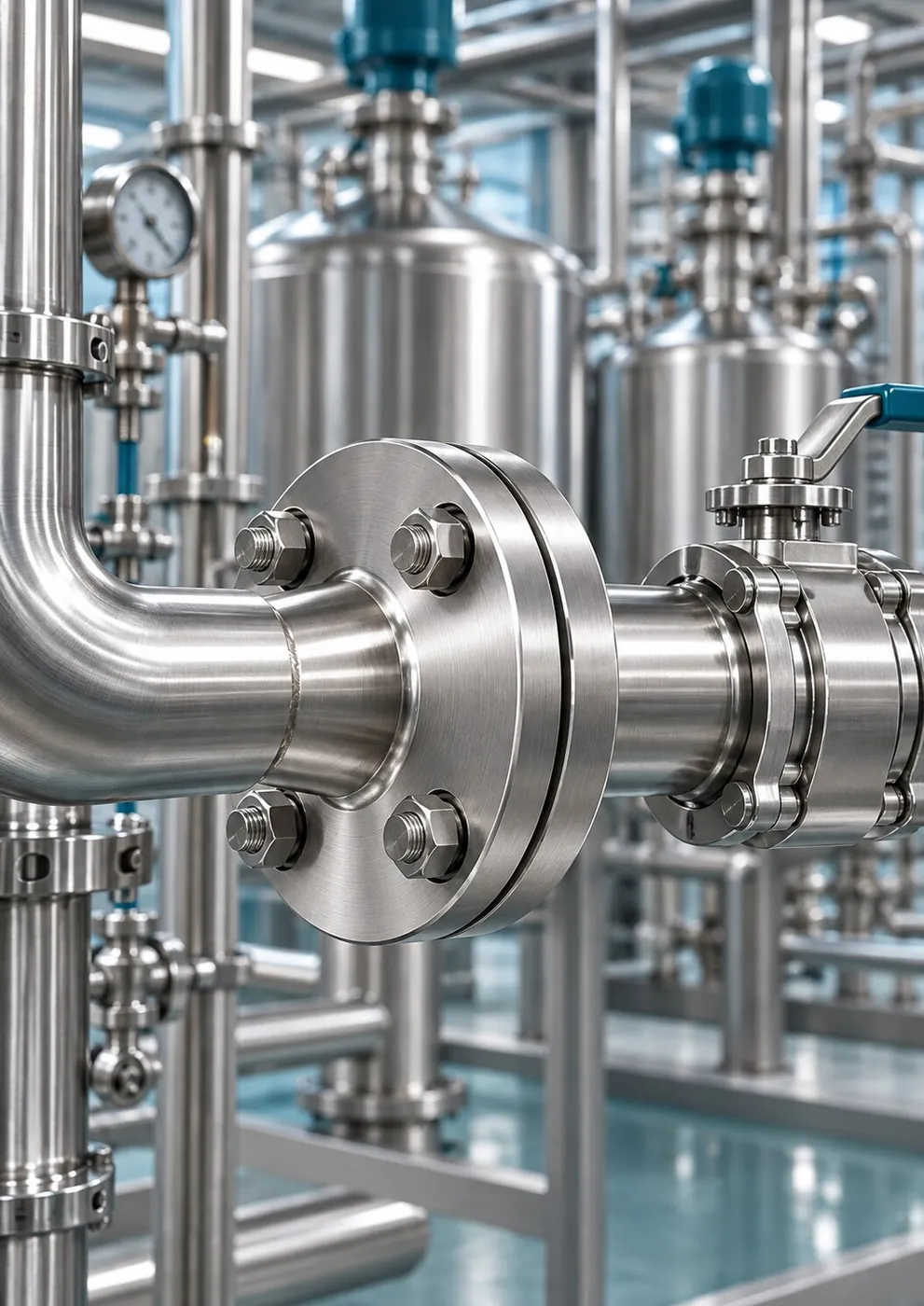 Stainless steel tank and flanged process connections in a chemical plant (illustrative image)
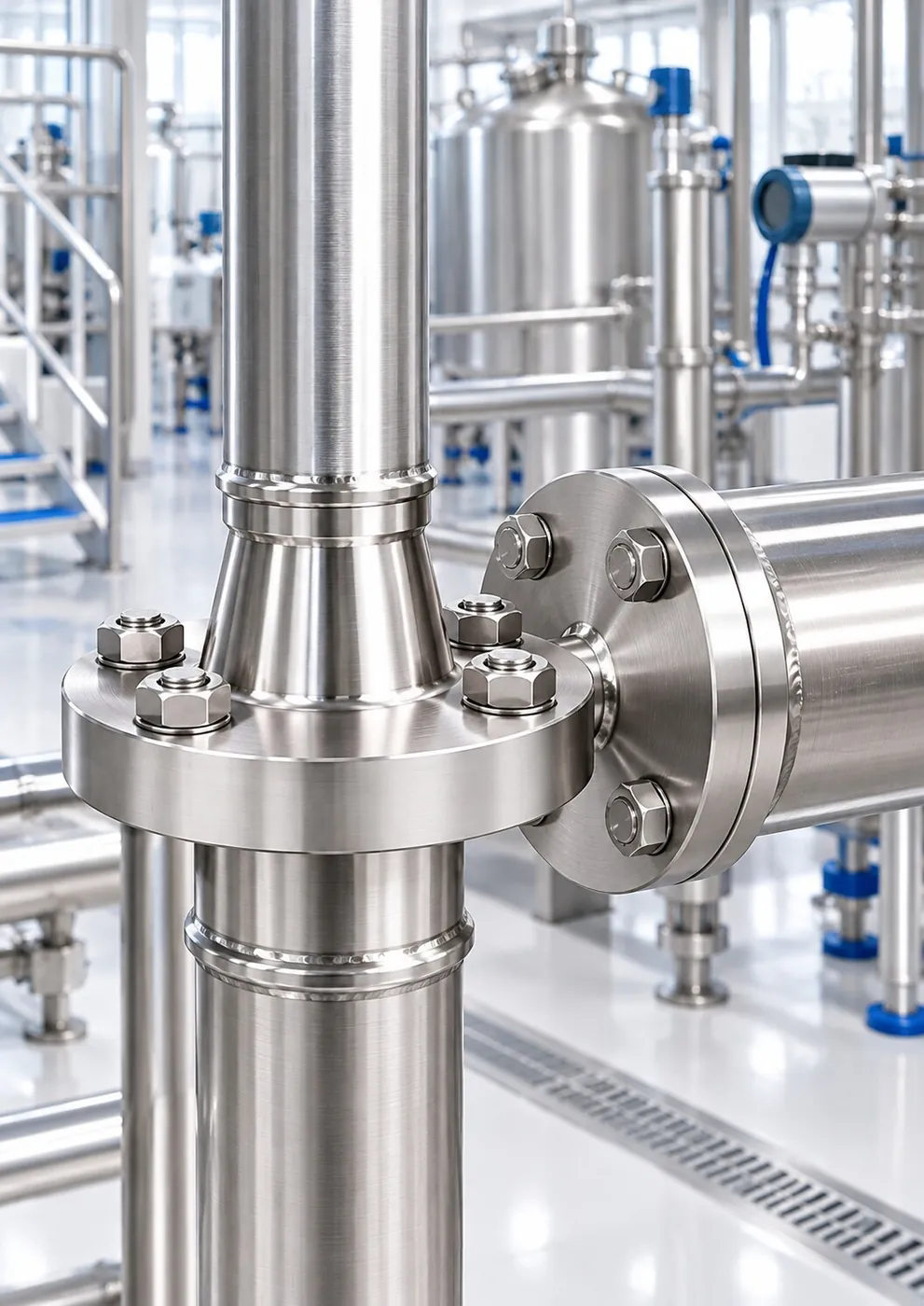 Stainless steel tank and flanged pipeline in a food plant (illustrative image)
FAQ
If your question isn't here, message us on WhatsApp with a ready-made message and our technical team will answer directly.
Ask on WhatsApp316L is preferred for welded lines. Because its carbon content is no more than 0.03%, it reduces the risk of intergranular corrosion in the heat-affected zone during welding. 316 can also be used for machined parts that are not welded; the choice is made taking the fluid, temperature and environment into account together.
Flange type (weld neck, slip-on or blind), pressure class, face standard and bolt pattern must match the mating equipment. The gasket is selected according to the face standard; bolts are tightened in a crisscross sequence, and axial misalignment is checked before installation.
Welded joints have the advantage in sealing, but they have to be cut for maintenance. Placing demountable flanged or fitting-type connections upstream and downstream of equipment that needs servicing, such as pumps, filters, valves and heat exchangers, allows components to be replaced without cutting the line.
Line isometric or dimensioned sketch, pipe outside diameter and wall thickness (or NPS and Schedule), flange type and pressure class, fluid, working pressure and temperature, quantity and delivery location. A preliminary assessment can also be made from photos and measurements; any missing information is completed together at the technical verification stage.
Pipe, fittings and flanges from stock are typically ready to ship within 1-3 business days. Standard production is scheduled within an average of 5-10 business days, and project-specific lines within an average of 10-20 business days after technical approval.
Quote and technical verification
Briefly describe your request; once size, material and lead time are clear, we'll respond with a written quote.
Details that speed up your quote