


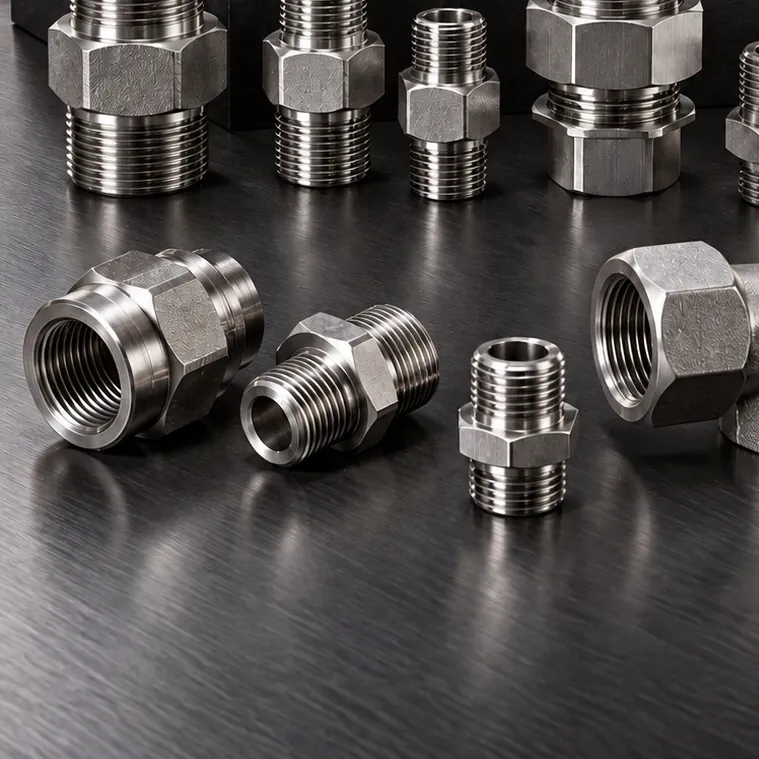
 BSP / NPT Adapters & Nipples
BSP Male Reducing Adapter (60° Cone)
Details & quote
Stainless Steel Hydraulic Fittings
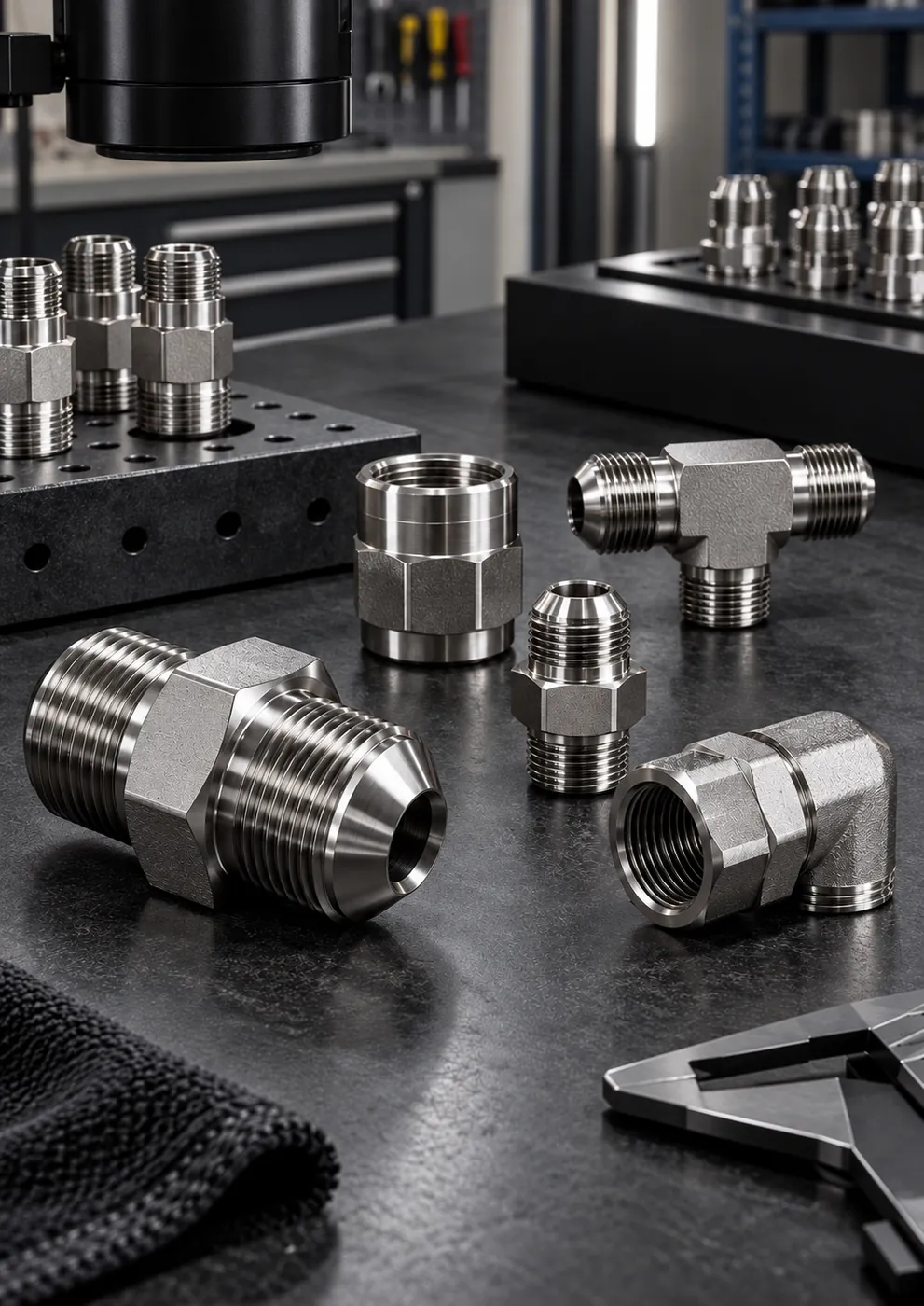
BSPP, BSPT and NPT threaded hex nipples, reducing adapters, conversion adapters and hex plugs.
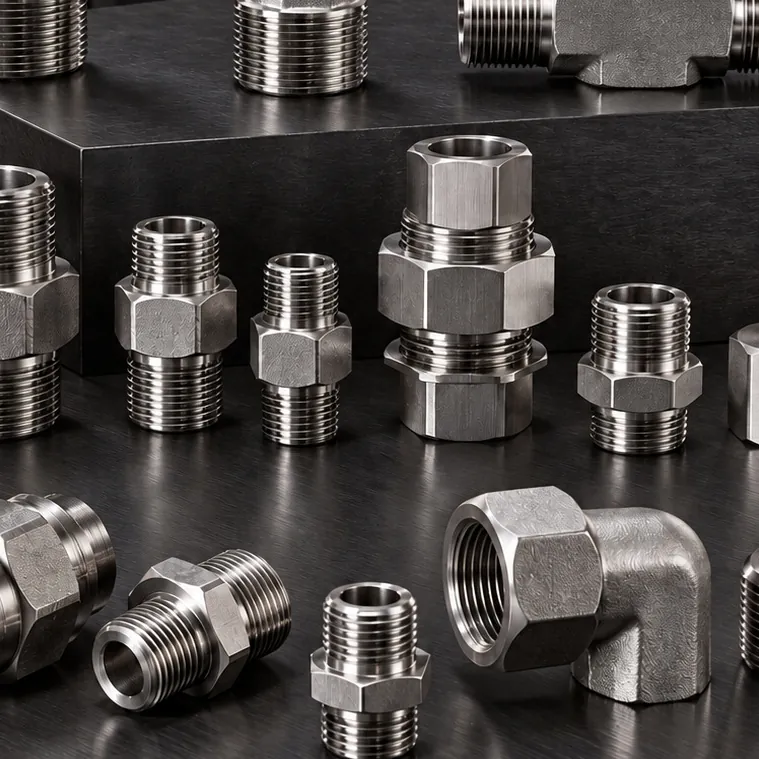 BSP / NPT Adapters & Nipples BSP / NPT Adapters & Nipples BSP / NPT Adapters & Nipples
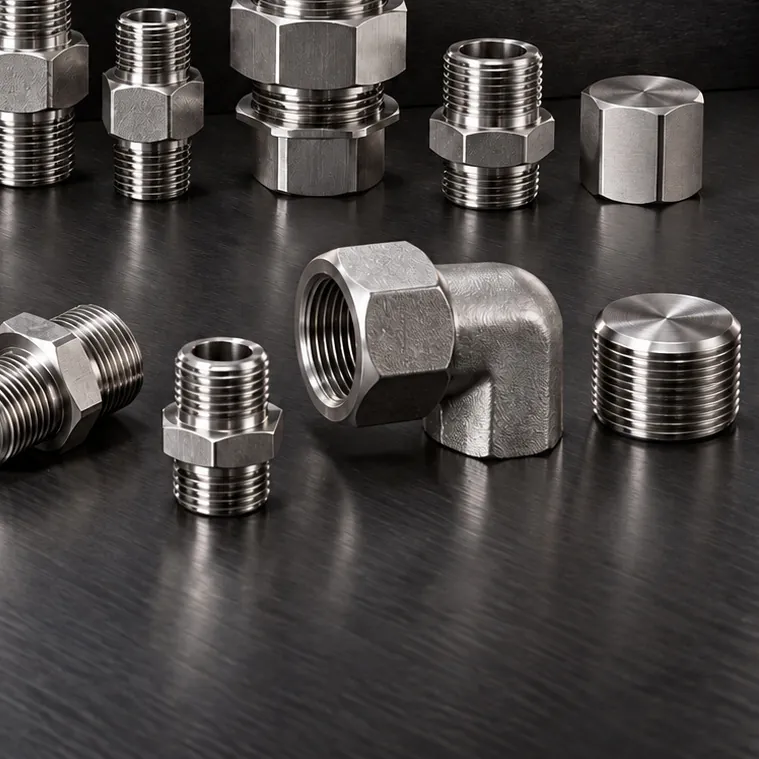 BSP / NPT Adapters & Nipples BSP / NPT Adapters & Nipples BSP / NPT Adapters & Nipples
Selection guide
Stainless adapters and hydraulic nipples are used to connect equipment with different thread standards, to change port sizes and to plug unused ports. The BSP family has a 55° thread profile and the NPT family a 60° profile; although they look similar, they are not interchangeable. On parallel (BSPP) threads, sealing is achieved with a sealing washer or a conical surface; on tapered (BSPT and NPT) threads, it is made on the threads themselves with a suitable sealant.
| Standard | Profile | Thread form | Sealing | Designation |
|---|---|---|---|---|
| BSPP (ISO 228-1) | 55° | Parallel | Bonded seal, O-ring, cutting edge or 60° cone | G 1/2 |
| BSPT (ISO 7-1) | 55° | Tapered 1:16 | On the threads, with sealant | R 1/2, Rc 1/2 |
| NPT (ASME B1.20.1) | 60° | Tapered 1:16 | On the threads, with sealant | 1/2-14 NPT |
The most commonly confused sizes are 1/2 and 3/4 inch: in both sizes, BSP and NPT alike have 14 threads per inch, so the wrong part threads easily into the port for a few turns and only binds when you tighten it. On a parallel thread the diameter is constant along its length; on a tapered thread, a difference in diameter can be measured between the first and last threads. At points that are disconnected and reconnected often, a parallel thread with a sealing washer gives more repeatable sealing than a tapered thread; a tapered thread seats a little deeper every time it is tightened. When selecting reducing adapters and bushings, the size and standard of each end should be specified separately.
On tapered threads, sealant is applied leaving the first one or two threads bare; this keeps particles from entering the line. To counter the risk of galling on stainless-to-stainless threads, clean threads and a suitable anti-seize compound are used. On bonded seal connections, the seal must sit fully on the port face; a damaged or previously tightened seal must not be reused. If a connection runs in freely for a few turns and then suddenly tightens, stop: the standard is most likely wrong.
Points on ships and in shipyards where pumps and valves of different origins meet on the same line; gauge, sampling and drain connections in chemical and food plants; pressure gauge and test point outlets on fire pump skids; and imported machine ports in rolling mills and board mills.
Not sure about the right size?
Send the sample, the technical drawing or your caliper measurements, and we'll confirm the thread standard and the matching part together.
+90 545 206 13 74Knowledge Center
Technical articles on selecting, installing and maintaining the products in this group.
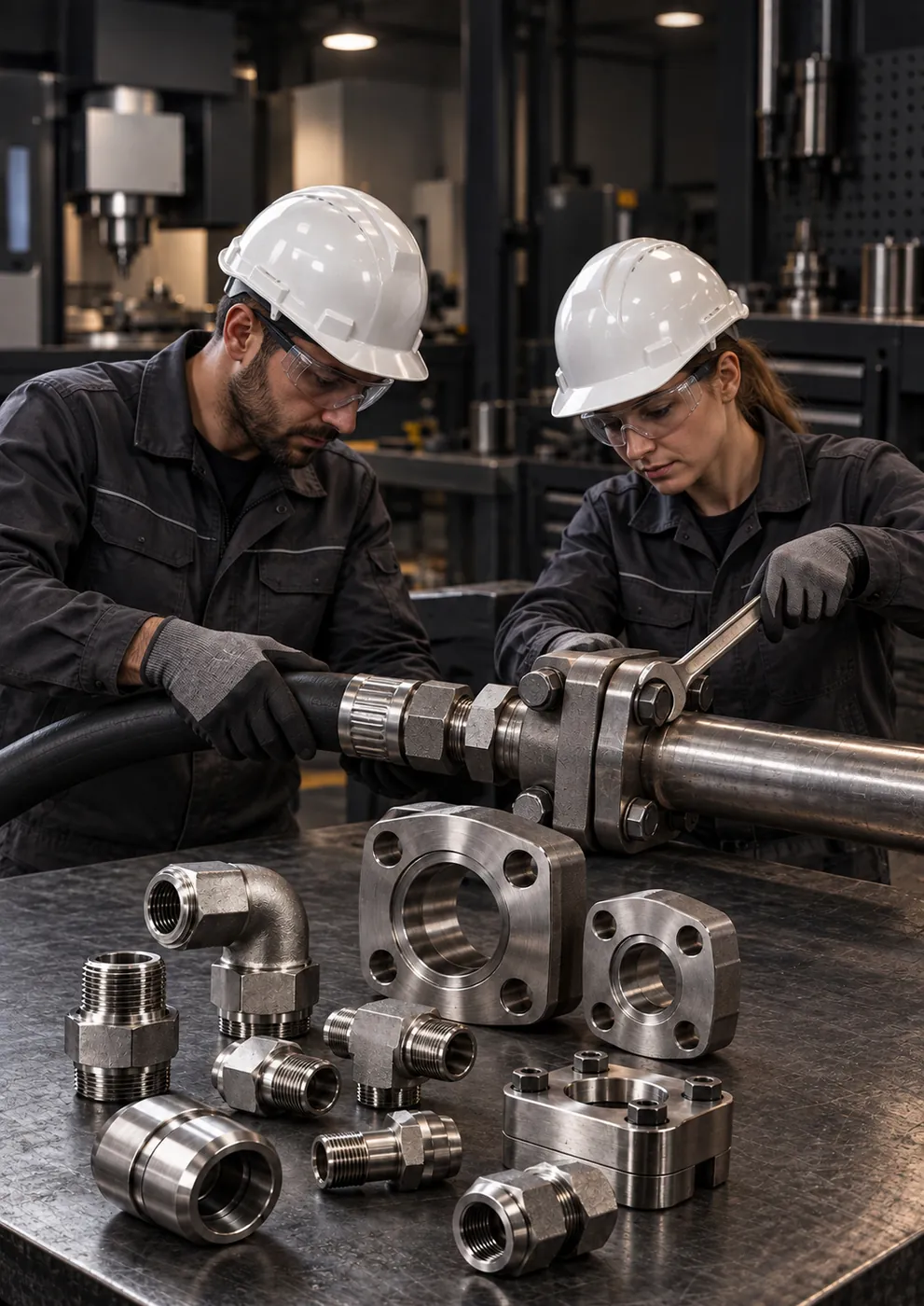
Hydraulic connections are sealed in four ways: O-ring, bonded seal (Dowty washer), metal cone face and tapered thread. On parallel threads, the seal…
BSP threads have a 55° profile, while NPT, UNF and metric threads have a 60° profile. BSPT and NPT tapered threads seal on the thread itself; on…
FAQ
If your question isn't answered here, message us on WhatsApp with dimensions or a photo, and our technical team will answer directly.
Ask on WhatsAppA bonded seal is a sealing washer consisting of a metal ring with an elastomer lip vulcanized to its inner edge. On parallel-thread ports such as BSPP, it seals by being compressed between the port face and the hex of the adapter or nipple. A new seal is recommended whenever a connection is disconnected and reassembled.
G denotes a parallel BSP thread (BSPP) per ISO 228-1. R denotes a tapered male and Rc a tapered female BSP thread (BSPT, ISO 7-1). NPT threads are written with the size and the number of threads per inch, as in 1/2-14 NPT. Writing these designations correctly on the technical drawing eliminates the risk of getting the wrong part.
A reducing nipple has male threads on both ends and joins two female ports or fittings of different sizes. A reducing bushing has a male thread on the outside and a female thread on the inside; it is screwed into a larger port to step it down to a smaller connection size.
To close off unused spare ports, test and drain points, or the open end of a disconnected line. The thread standard of the plug is selected to match the port: a BSPT or NPT plug for a tapered port, and a BSPP plug with a seal for a parallel port.
Yes, but a tapered thread seats a little deeper every time it is tightened, and the thread flanks deform over time. Before reinstalling, the threads should be cleaned and checked for damage. At points that are disconnected frequently, a connection that seals with a parallel thread and a seal should be preferred.