


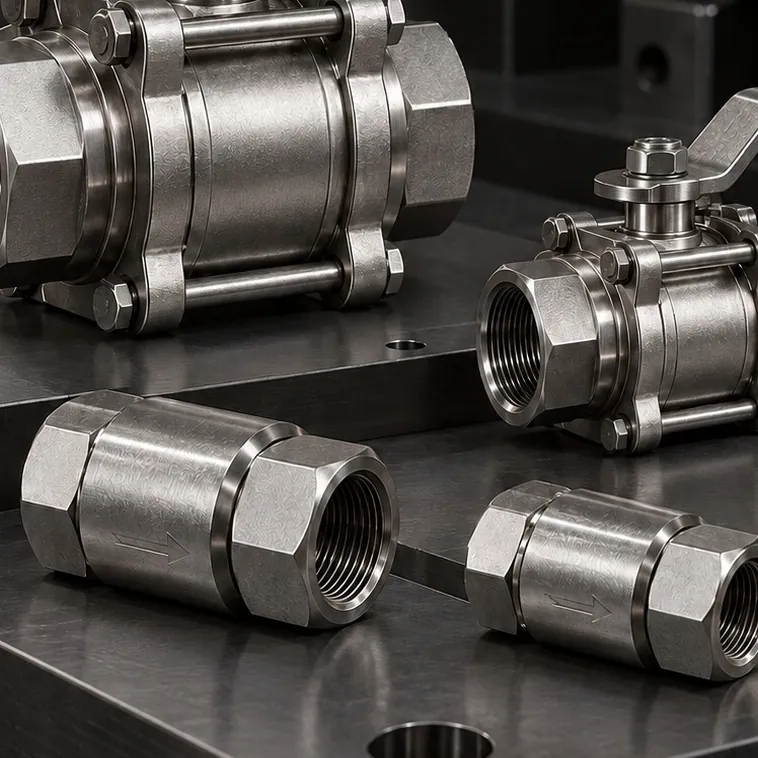
Ball, Needle & Check Valves
High-Pressure Stainless Ball Valve
High-pressure stainless steel ball valve with an AISI 316L body, providing quarter-turn on/off service in hydraulic and process…
Chemical transfer · Fluid compatibility · Sealing
Stainless steel fittings, nipples, valves, flanges and hose fittings for chemical transfer and process lines, selected by weighing fluid compatibility, corrosion resistance, temperature and pressure together.
Featured products in this sector
View all 25 productsProducts
25 products are listed for the operating conditions of Chemical Processing. Narrow down by group; open a product page for sizes and thread standards.
Ball, Needle & Check Valves
High-pressure stainless steel ball valve with an AISI 316L body, providing quarter-turn on/off service in hydraulic and process…
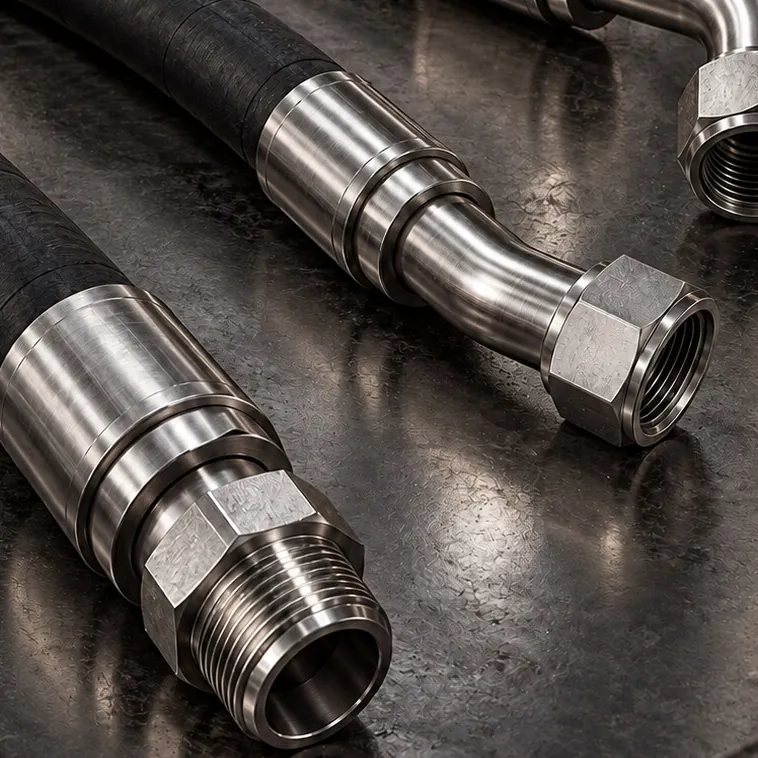
Hose Fittings & Ferrules
Stainless steel crimp-style 90° hose fitting with a female BSP swivel nut and 60° cone seat. Routes the hose at a right angle in…
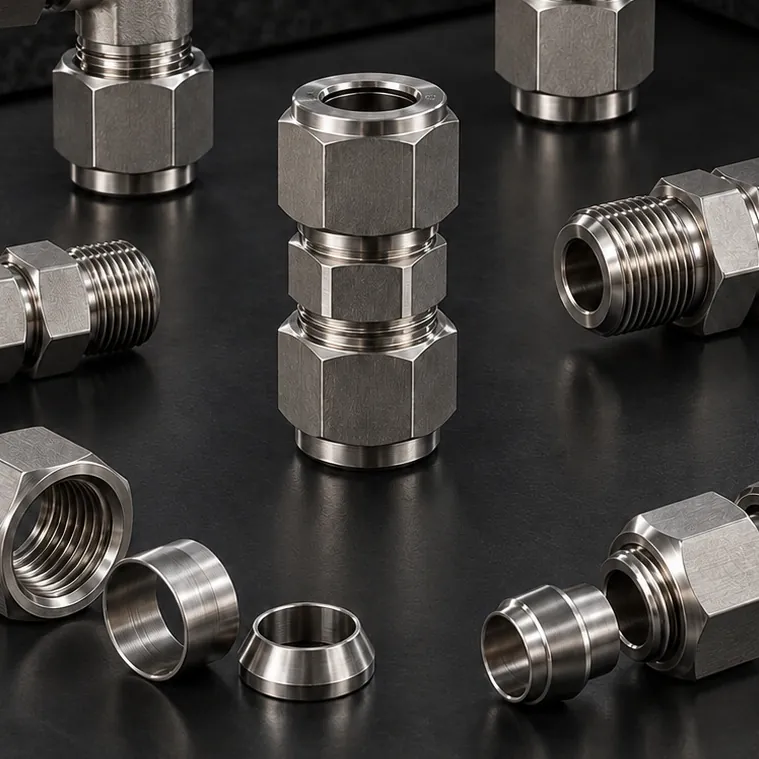
Twin Ferrule Instrumentation Fittings
Stainless steel twin-ferrule union joining two instrumentation tubes on the same axis. Weld-free, repeatable makeup in…
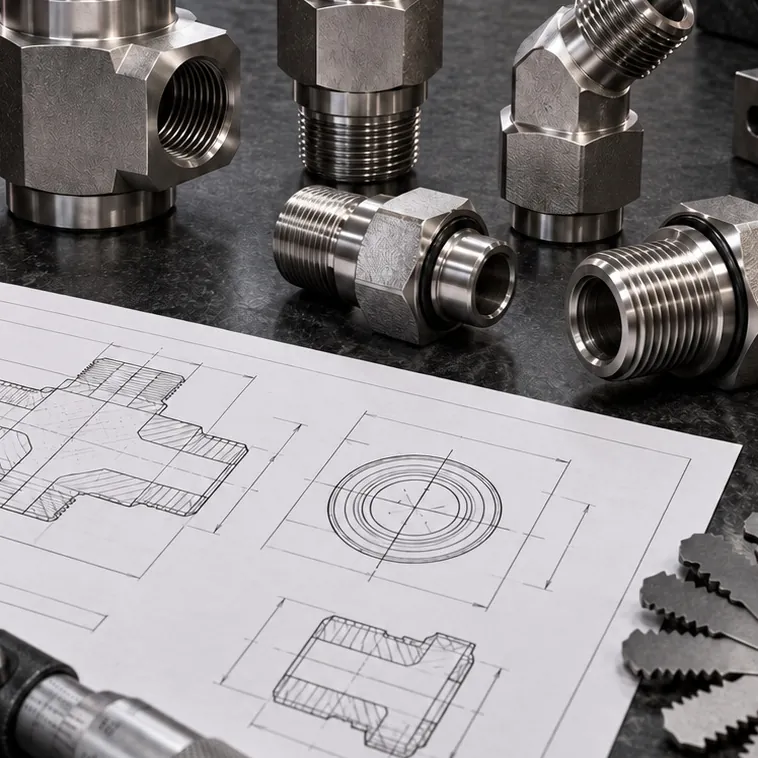
Custom-Made Hydraulic Parts
Custom stainless hydraulic adapter CNC-machined from a sample or technical drawing for thread, size and angle combinations not…
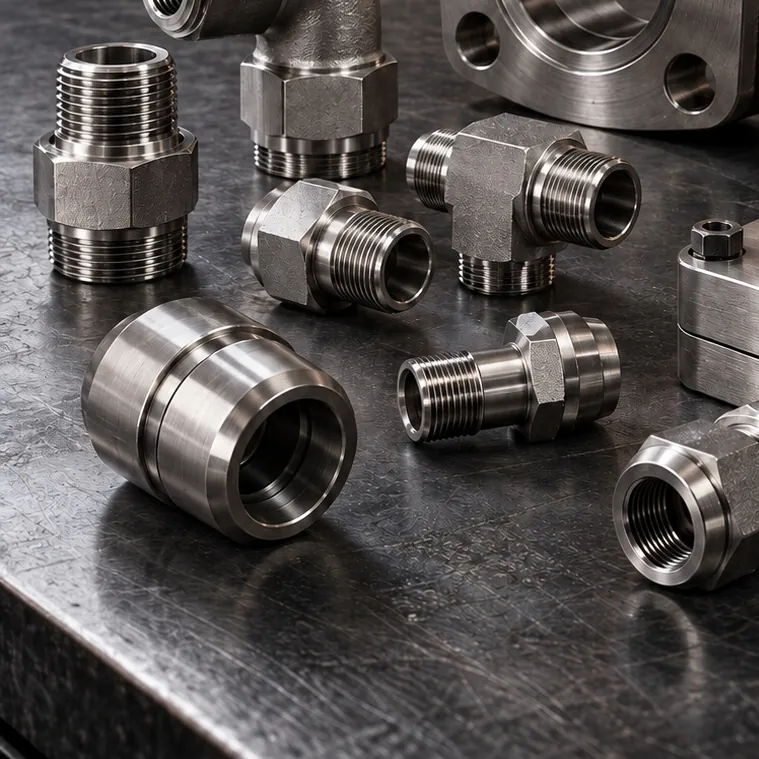
DIN 2353 Compression Fittings
Stainless steel 24° cone equal tee joining three tubes of the same diameter, used to branch off the main line. AISI 316L, DIN…
DIN 2353 Compression Fittings
Stainless steel tee with bite-type ends on the run and a male BSPT thread on the branch. Provides a direct take-off from the tube…
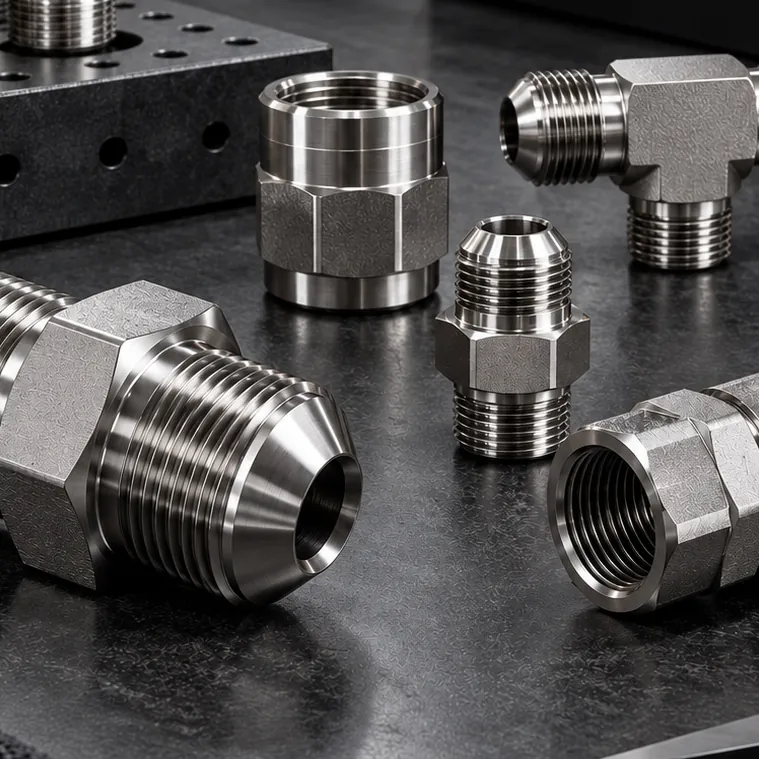
DIN 2353 Compression Fittings
Stainless steel 24° cone bulkhead coupling with locknut that routes a tube line through a panel, tank wall or ship bulkhead in a…
Ball, Needle & Check Valves
Stainless steel needle valve with a tapered stem for fine flow adjustment and isolation of measurement lines. For gauge, sampling…
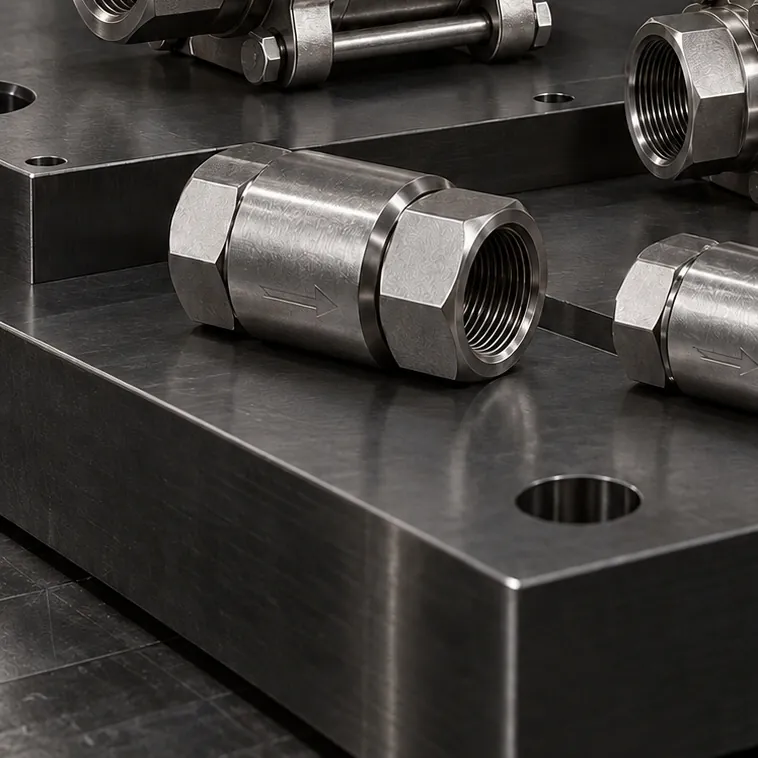
Ball, Needle & Check Valves
In-line stainless steel check valve that passes flow in one direction and stops reverse flow with a spring-loaded poppet. Female…
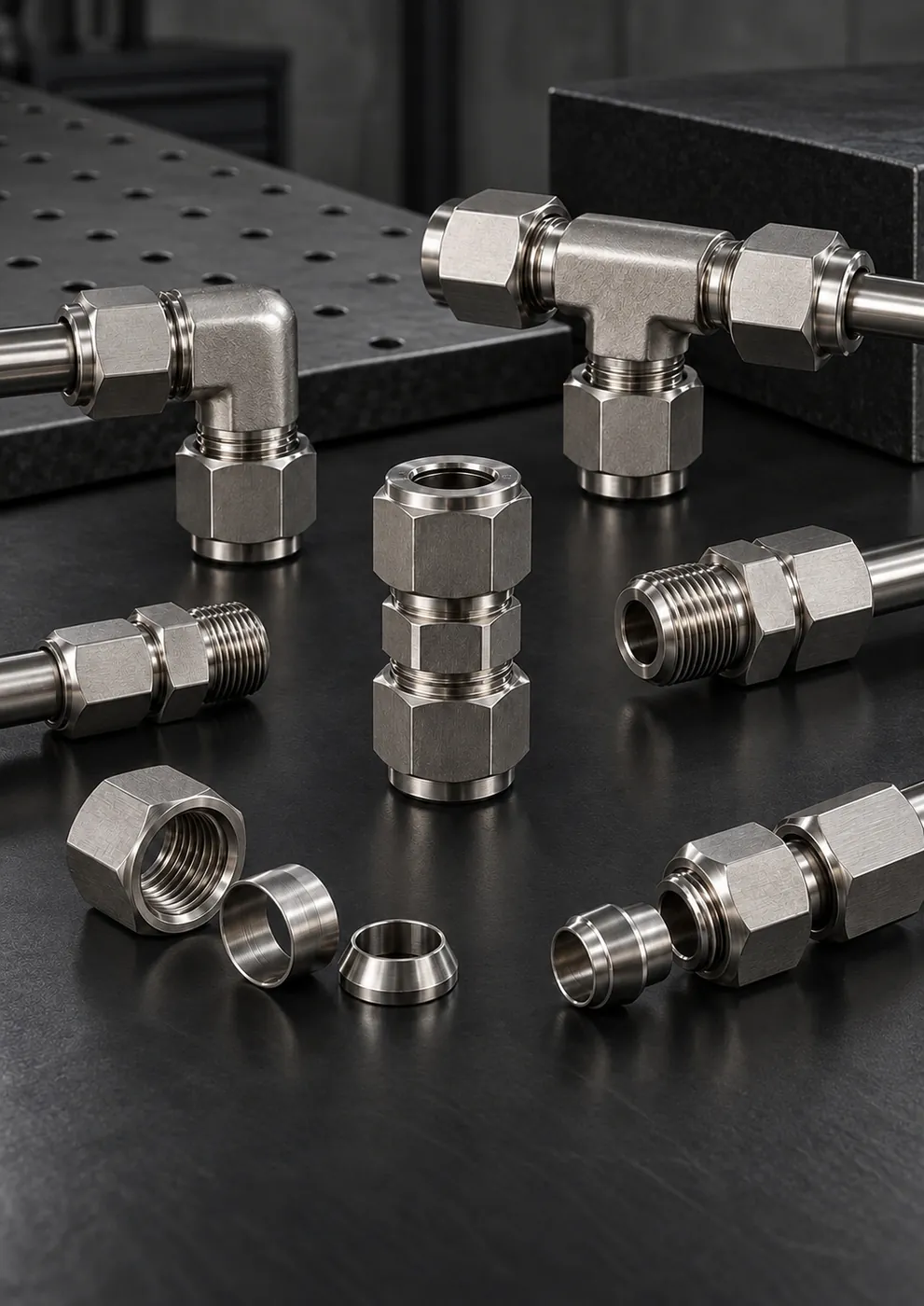
Twin Ferrule Instrumentation Fittings
Stainless steel twin ferrule union elbow joining two instrumentation tubes at 90°. Change of direction without bending tube…
Twin Ferrule Instrumentation Fittings
Stainless steel union tee with three twin ferrule ends for branching measurement and control lines. For transmitter, pressure…
Twin Ferrule Instrumentation Fittings
Stainless steel twin ferrule male connector joining instrumentation tube to a threaded port, with a tube end on one side and a…
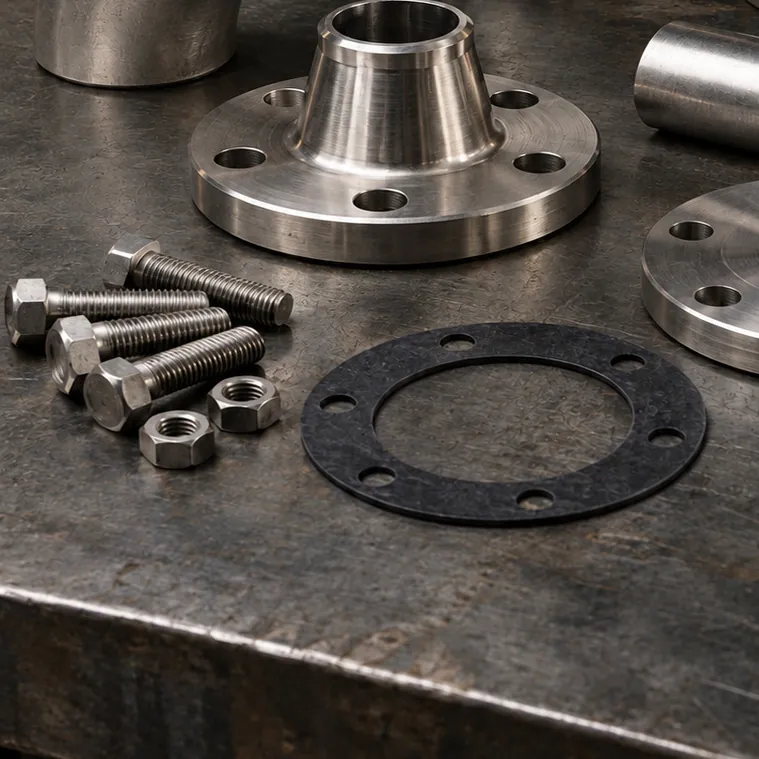
Stainless Steel Pipes & Flanges
Stainless steel flange with a tapered hub that is butt-welded to the pipe. For equipment connections and removable line breaks in…
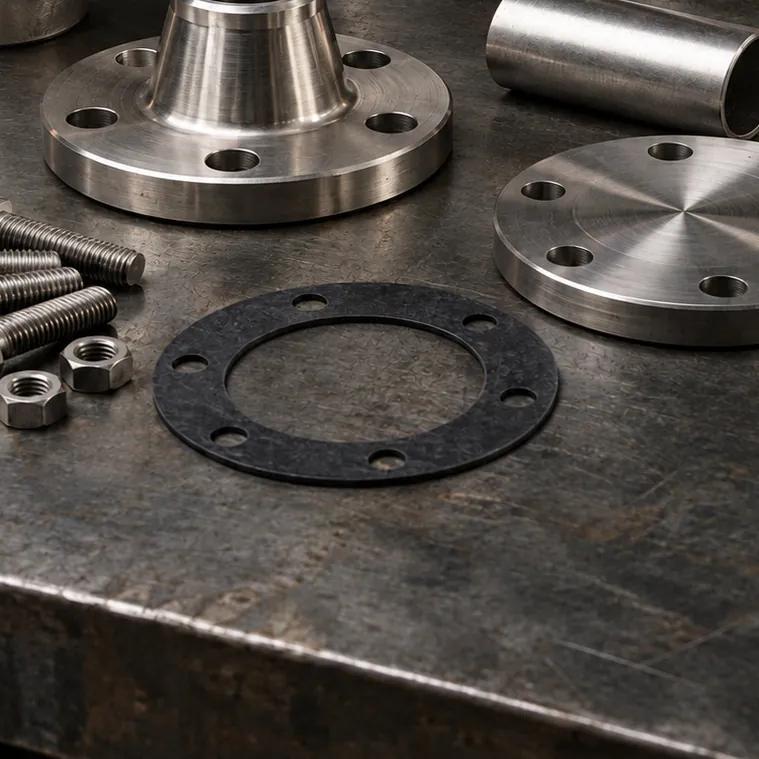
Stainless Steel Pipes & Flanges
Stainless steel blind flange that closes off the end of a pipeline or equipment outlet. For closing off lines, allowing for…
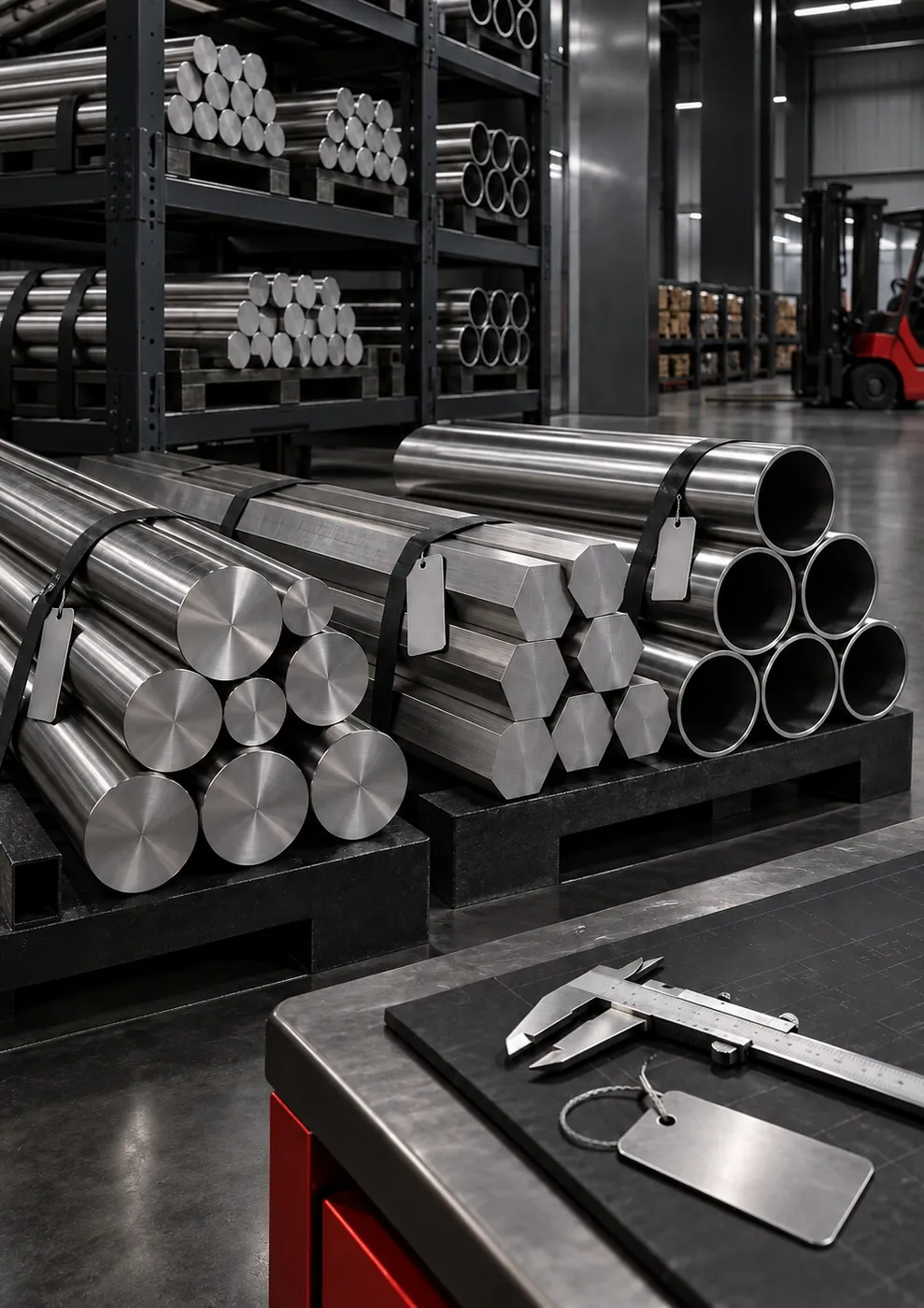
Stainless Steel Pipes & Flanges
Seamless stainless steel hydraulic tube in metric OD sizes for bite-type compression fittings and welded lines. AISI 316L; wall…
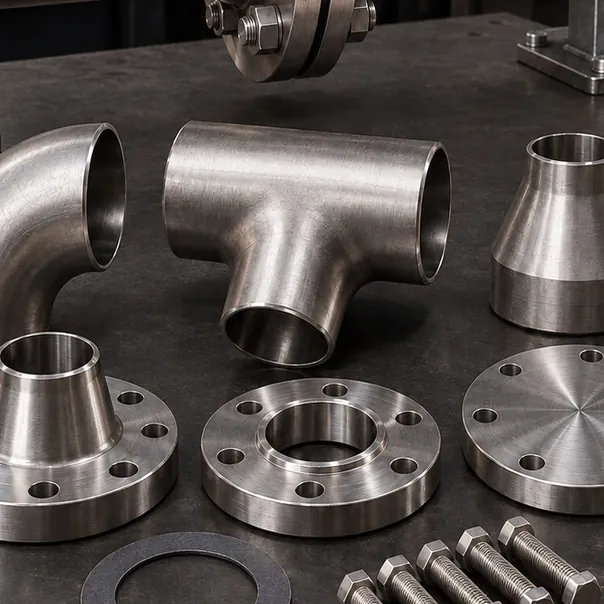
Butt-Weld Pipe Fittings
Butt-weld elbow for 90° changes of direction in welded stainless steel piping. Long (1.5D) and short (1D) radius; Schedule wall…
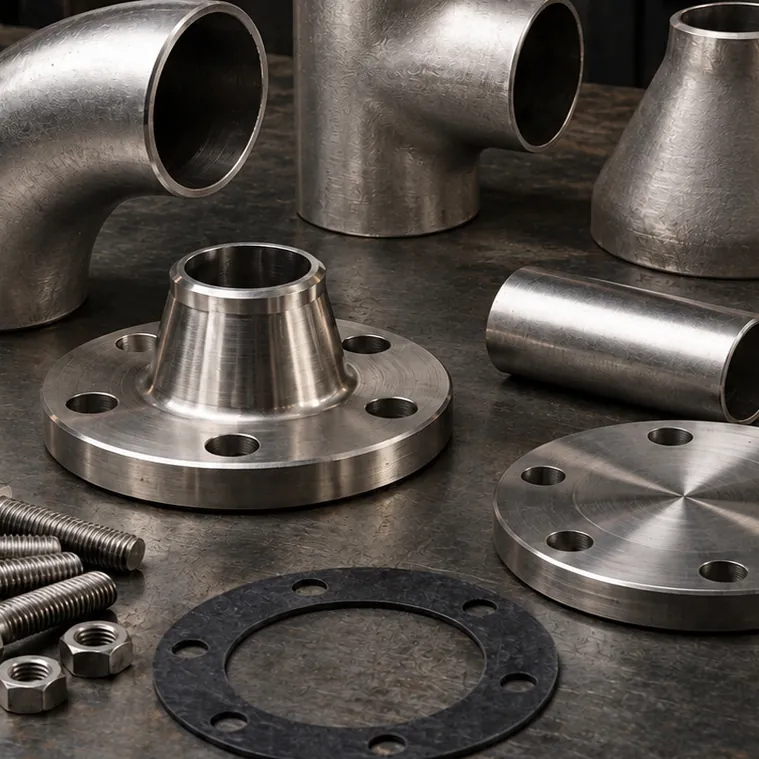
Butt-Weld Pipe Fittings
Butt-weld equal tee for same-size branch connections in welded stainless steel piping. AISI 316/316L for header, distribution and…
Butt-Weld Pipe Fittings
Butt-weld concentric reducer providing a coaxial size transition in welded stainless steel piping. For pump discharge lines and…
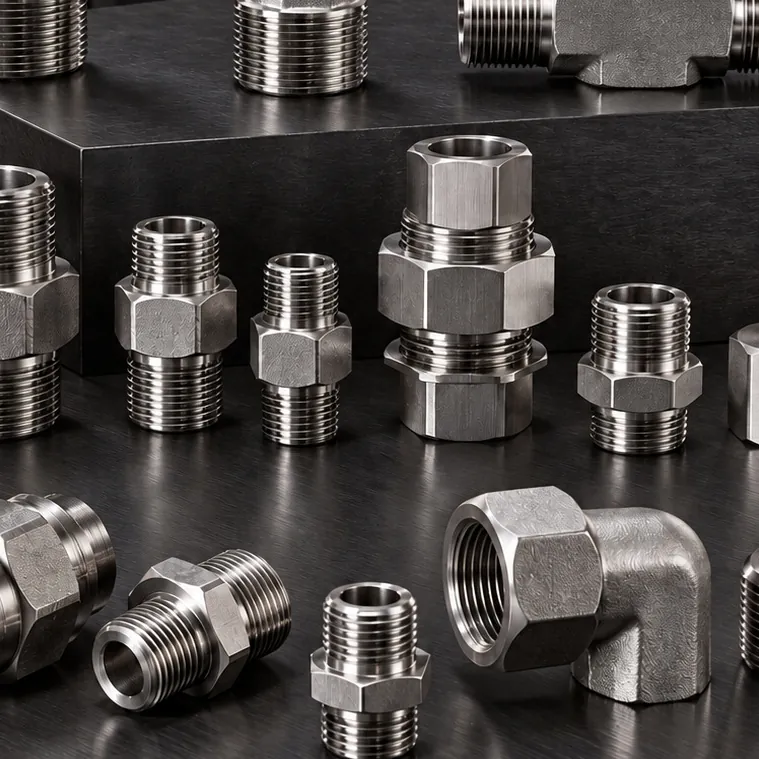
BSP / NPT Adapters & Nipples
Stainless steel conversion adapter with a BSP male thread on one end and an NPT male thread on the other. Connects equipment…
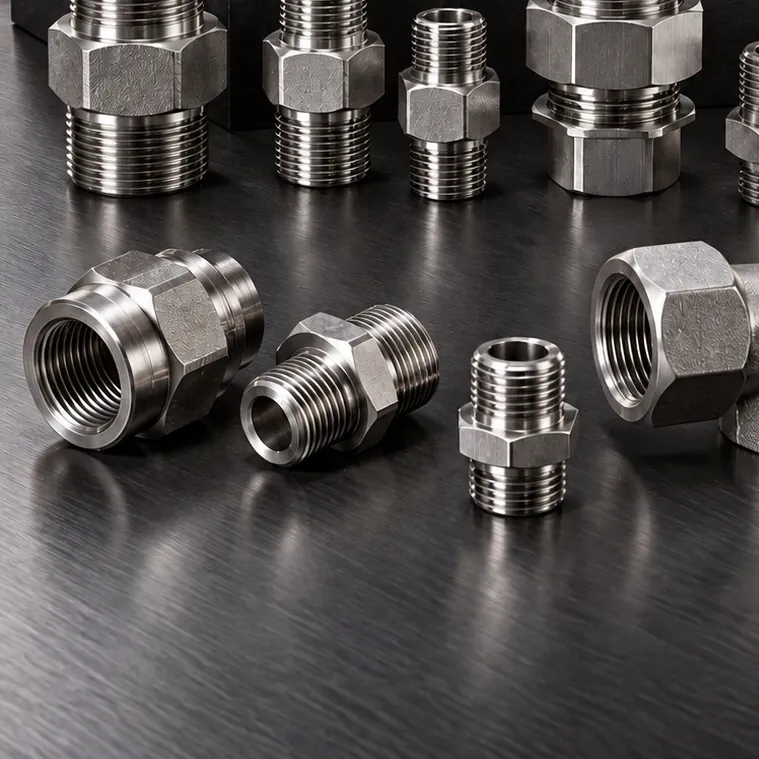
BSP / NPT Adapters & Nipples
Hex-body stainless steel reducing bushing with a male NPT tapered thread outside and a female NPT tapered thread inside. Steps…
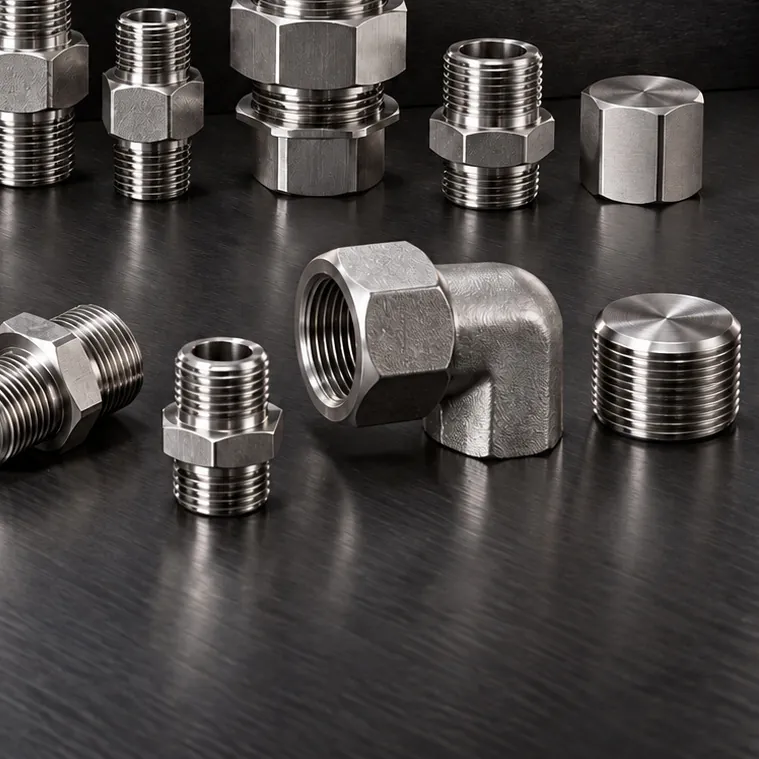
BSP / NPT Adapters & Nipples
Stainless steel hex head plug with a BSPT tapered thread for closing unused female ports and threaded line ends. AISI 316L.
BSP / NPT Adapters & Nipples
Straight hex-body stainless steel nipple with BSPT tapered male threads on both ends. Connects two female ports, valves or…
Weld Nipples & Weld Fittings
Stainless steel set consisting of a 24° cone body, a nut and an O-ring weld nipple that is butt-welded to the tube. Adds a…
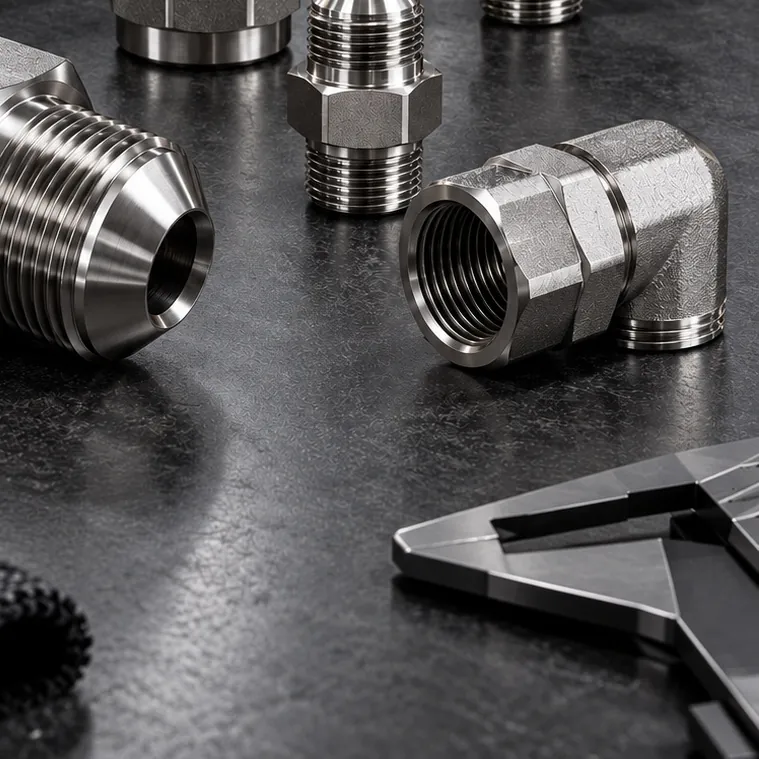
Weld Nipples & Weld Fittings
Stainless steel 90° elbow with one end welded to the tube and a 24° cone bite-type compression end on the other. Right-angle…
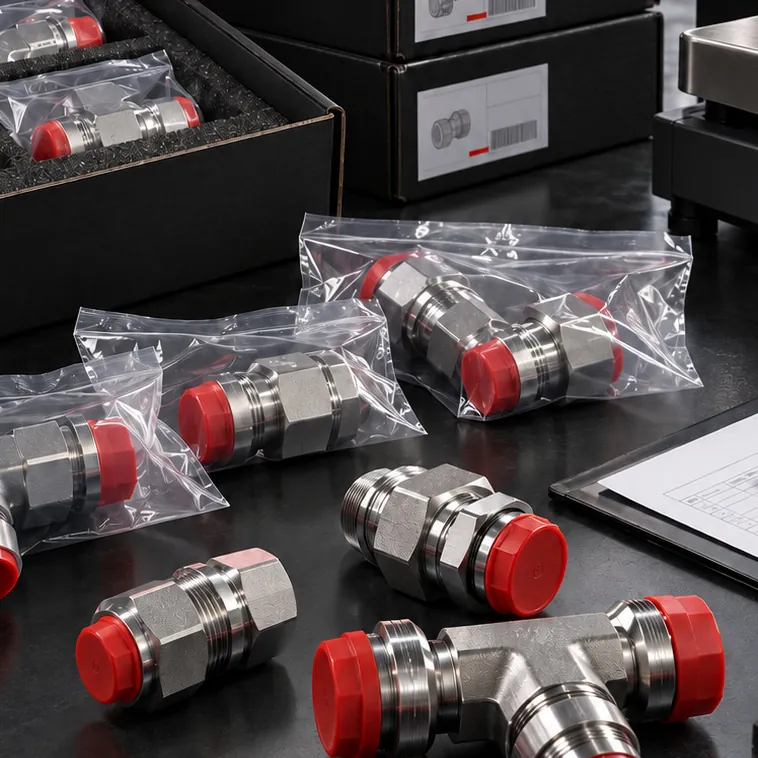
Quick Disconnect Couplings
Stainless steel-bodied male-female quick disconnect coupling with BSP threads. Fast, tool-free connection at test points, on…
Can't find your part in the list?
Send a sample photo, technical drawing or dimensions; we'll identify the right fitting from our catalog or through custom manufacturing.
Faik Güney · Contact person
Services
Beyond supplying parts, we complete the job in the field with piping, hose assembly, custom manufacturing and technical identification.
Selection of AISI 316L-body ball valves, needle valves and check valves by body, connection standard, bore size…
View service – Valves, Check Valves & Flow ControlWelded and demountable stainless steel lines built from AISI 316/316L pipe, flanges and fittings: bevel preparation…
View service – Stainless Steel Pipe FabricationAISI 316/316L tube with twin-ferrule union, elbow, tee, connector and adapter fittings for small-bore measurement…
View service – Instrumentation TubingIdentifying BSP, NPT, UNF/JIC and metric threads by measurement, matching them correctly to the mating part, and…
View service – Fitting & Thread IdentificationWhere a standard product is not the answer: custom adapters, nipples, flange blocks and transition parts made from a…
View service – Custom Parts from Drawings & SamplesHydraulic hose assembly and crimping: hose assemblies with straight, 45° and 90° stainless steel ends in BSP, JIC, NPT…
View service – Hydraulic Hose AssembliesThread profiles, sealing cones, wrench flats and connection geometry are machined from AISI 316/316L bar on CNC…
View service – Stainless Steel CNC MachiningOrderly, labeled and service-friendly connections with stainless steel tube and fittings on control panels, power units…
View service – Control Panel & HPU TubingStandard stainless steel fittings, adapters, hose ends, flanges and valves ready to ship within an average of 1-3…
View service – Fast Supply & Shutdown SupportOverview
Quick answer
Chemical plants use AISI 316/316L stainless steel fittings, nipples, valves, flanges and hose fittings on chemical transfer and process lines. Selection is based on the chemical nature of the fluid, its concentration, temperature, pressure and flow rate, all evaluated together. The seal material is specified separately according to the fluid; 316L is not resistant to every chemical, so compatibility must be verified against process data.
In a chemical plant, choosing a fitting is a compatibility question before it is a sizing question. The same fitting can run trouble-free for years on one line, yet suffer pitting corrosion within months on another chemical at a different concentration or temperature. On chemical transfer and process lines, fluid compatibility, corrosion resistance, temperature and pressure must be evaluated together.
GÜNEYSS supplies AISI 316/316L stainless steel fittings, nipples, ball valves, check valves, flanges, instrumentation fittings and hose assemblies for chemical plants. Sizes are selected according to flow rate, temperature, pressure and the chemical environment; surface finish, threads and dimensions are inspected before shipment, and leak testing is performed when specified in the order.
Field conditions
We select fittings for these conditions and specify the material, sealing type and installation method accordingly.
Describe your own conditionsThe same stainless steel grade can show very different corrosion behavior with different chemicals, concentrations and temperatures.
In chloride-bearing environments, the risk of pitting, crevice corrosion and stress corrosion cracking rises with temperature.
Even if the body is suitable, an O-ring that is incompatible with the fluid swells, hardens and causes leaks.
With hazardous chemicals, even a single-drop leak is unacceptable from a workplace safety and environmental standpoint.
Fittings at filling and transfer points are constantly disconnected and reconnected, wearing threads and sealing surfaces.
Technical selection notes
Points we clarify with you before ordering for Chemical Processing applications.
Without the chemical's name, concentration and operating temperature, material compatibility cannot be assessed correctly.
O-ring and seal materials must be specified according to the fluid, independently of the body.
On BSPT and NPT threads, the sealant used must also be compatible with the chemical.
For parts that will be welded, low-carbon 316L reduces the risk of intergranular corrosion.
Leak testing is performed per order; the test medium and acceptance criteria should be stated at the quotation stage.
Detailed guide
On transfer lines, ball valves are used for line isolation, and check valves are installed where backflow could affect product quality or safety. When selecting a valve, body material, connection standard, bore size, working pressure, temperature and fluid compatibility must be evaluated together; during installation, the flow arrow direction and service access should be checked.
Thanks to its molybdenum content, AISI 316L resists chloride-induced pitting corrosion better than grade 304; with a maximum carbon content of 0.03%, it also carries a low risk of intergranular corrosion at welded joints. These properties make it a common baseline material in chemical plants. However, stainless steel is not suitable for every chemical:
For this reason, the material decision must take into account the chemical's name, concentration and operating temperature, together with the plant's material specification. Compatibility charts are a starting point; the final decision is made together with the process owner's experience and specifications. Material data from a line that has been running trouble-free in the plant for a long time is also a valuable reference for new lines.
Even when the stainless steel body is suitable, the wrong seal will eventually cause the connection to leak. O-ring and seal materials must be selected according to the fluid:
| Seal material | Generally suitable for | Caution |
|---|---|---|
| NBR | Mineral oils, hydraulic oils | Not suitable for many polar solvents or strongly oxidizing media |
| FKM | Hydrocarbons, many acids, high temperatures | May be incompatible with certain ketones, esters and amines |
| EPDM | Water, steam, many alkalis and dilute acids | Incompatible with mineral oils and hydrocarbons |
| PTFE | Very broad chemical compatibility | Low elasticity; suitability for the fitting design must be checked |
The table shows general trends; the final selection depends on the chemical's concentration and temperature and on the seal manufacturer's compatibility data.
In chemical plants, sizes are selected according to flow rate, temperature, pressure and the chemical environment. Twin-ferrule instrumentation fittings are used on small-bore measurement and sampling lines, flanged connections at equipment points that are frequently dismantled, and nipples and adapters matching the device's thread standard (BSPP, BSPT or NPT) on pump and instrument ports. Because tapered threads (BSPT, NPT) seal on the thread itself, the thread sealant used must also be compatible with the chemical.
On stainless steel piping, the weld zone is often where corrosion resistance is weakest. The heat tint and oxide layer formed during welding weaken the passive layer of the surface, and in a chemical environment corrosion can start from this area. For this reason, weld bevel preparation, root-side shielding gas (back purging) and post-weld surface cleaning are especially important on process lines. Using 316L for weld nipples and flanges reduces the risk of intergranular corrosion in the heat-affected zone. The welding method and consumables are determined according to project requirements and the stainless steel grade used.
Every part undergoes dimensional, thread and surface inspection before shipment. Leak testing is performed when specified in the order; stating the test requirement, test medium and acceptance criteria at the quotation stage allows the production plan to be set up accordingly. After installation, a controlled leak check should also be carried out during initial commissioning. On lines carrying hazardous chemicals, running the line with a non-hazardous test fluid before commissioning and checking each connection point one by one makes it possible to detect any leak before the product is introduced.
Keeping spares in the same size and material for fittings replaced due to corrosion or seal degradation shortens downtime. Replacing a seal that has failed through chemical attack with one of the same material only postpones the problem; when seal failures recur, the seal material's suitability for the fluid should be re-evaluated. Standard sizes in stock are typically ready to ship within 1-3 business days; standard production is scheduled within an average of 5-10 business days, made-to-length hose assemblies within an average of 5-15 business days, and custom-size and project manufacturing within an average of 10-20 business days after technical approval. Parts are shipped with protective caps on threads and ports, packed separately by size and order group.
Applications
Teams in Chemical Processing that need fittings, hose assemblies and custom parts.
Stainless steel fittings on transfer and process lines running from tank to reactor and from reactor to storage.
Fittings, ball valves and hose fittings on dosing, mixing and filling lines.
Seals and fittings selected to suit the fluid on alkaline and acidic product transfer lines.
Twin-ferrule instrumentation tubing for transmitters, pressure gauges and sampling lines.
Frequently connected transfer hose ends, valves and adapters.
Suction, discharge and injection connections for chemical dosing pumps.
Gallery
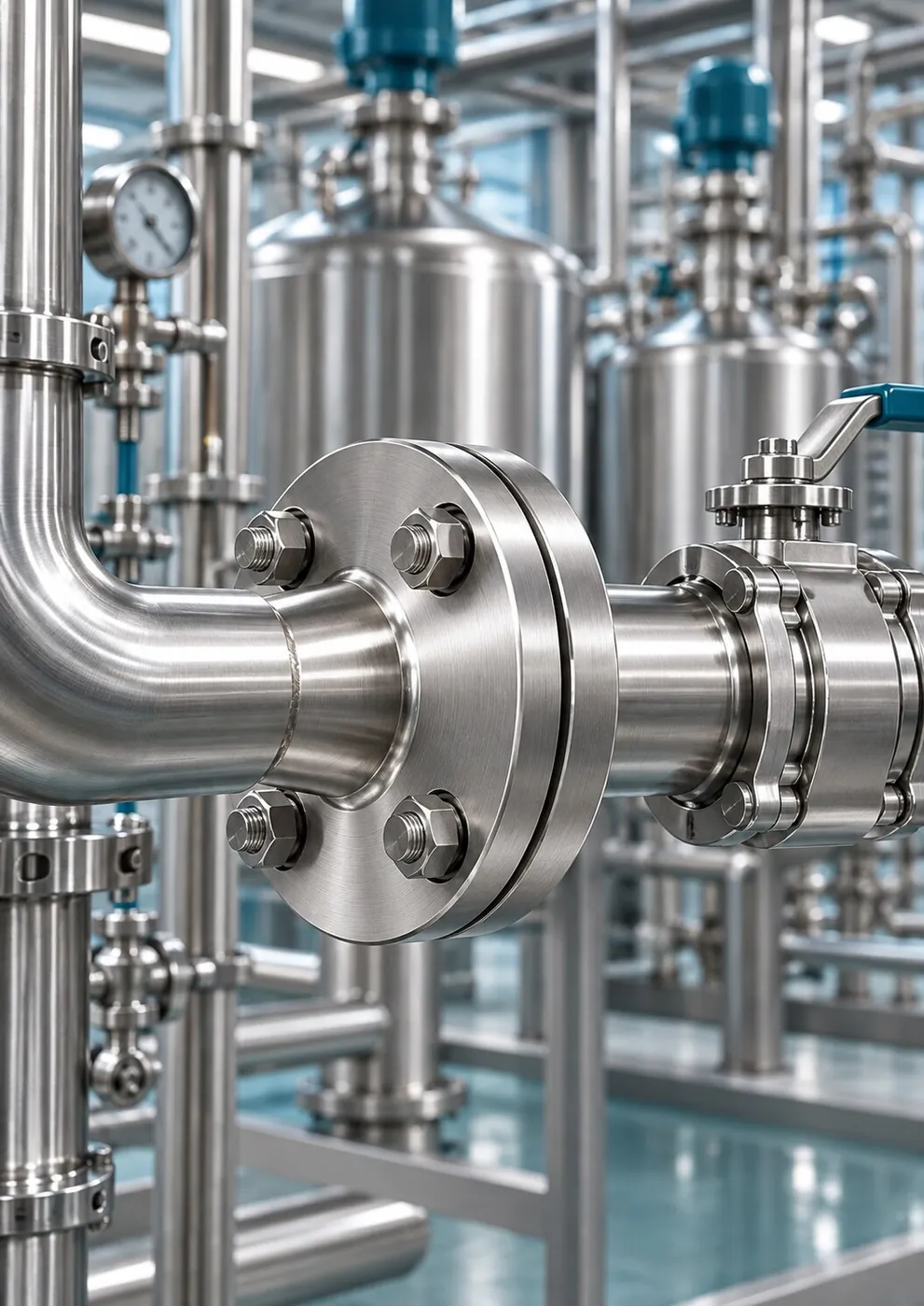
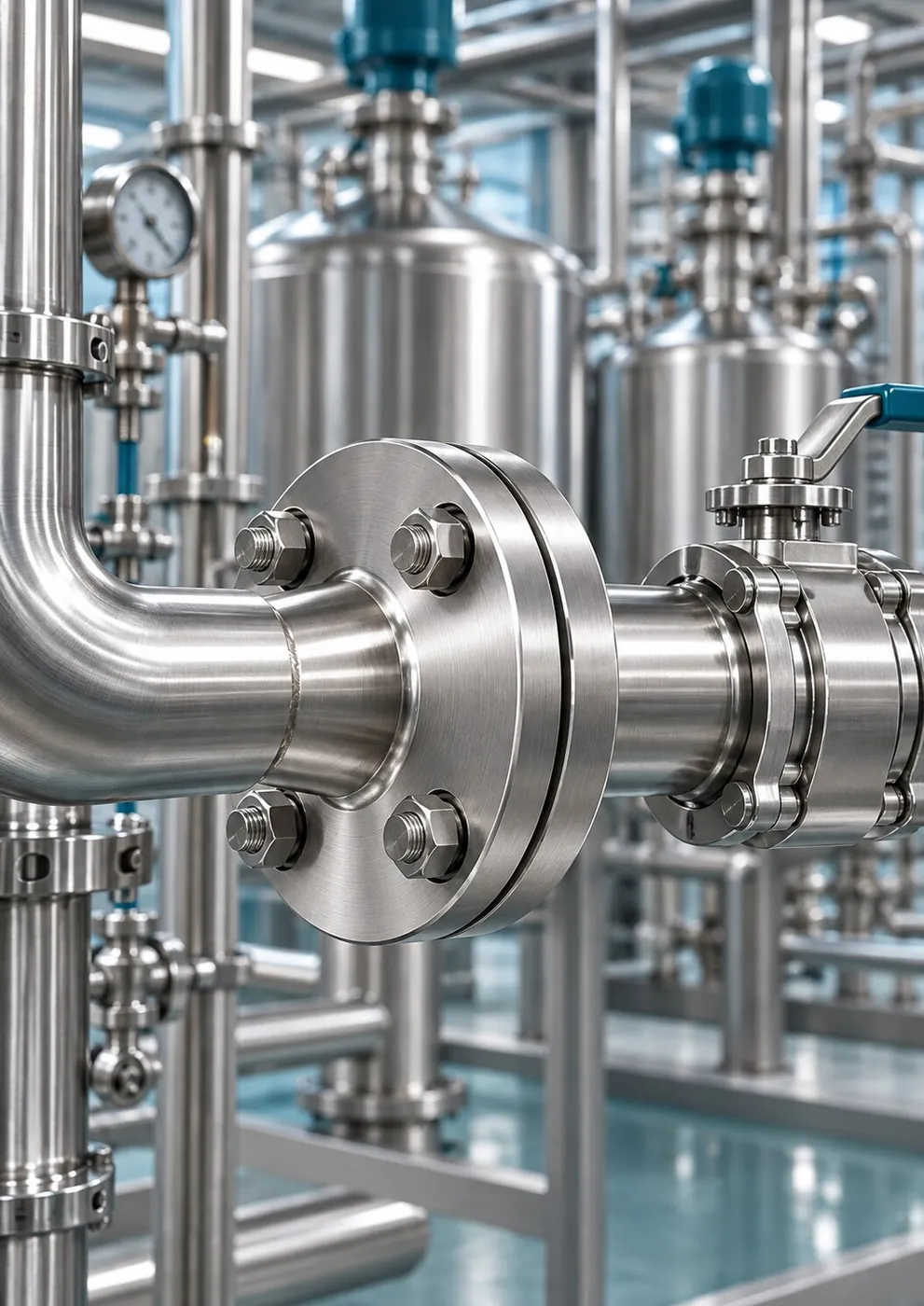
Stainless steel tank and flanged connections in a chemical plant (illustrative image)
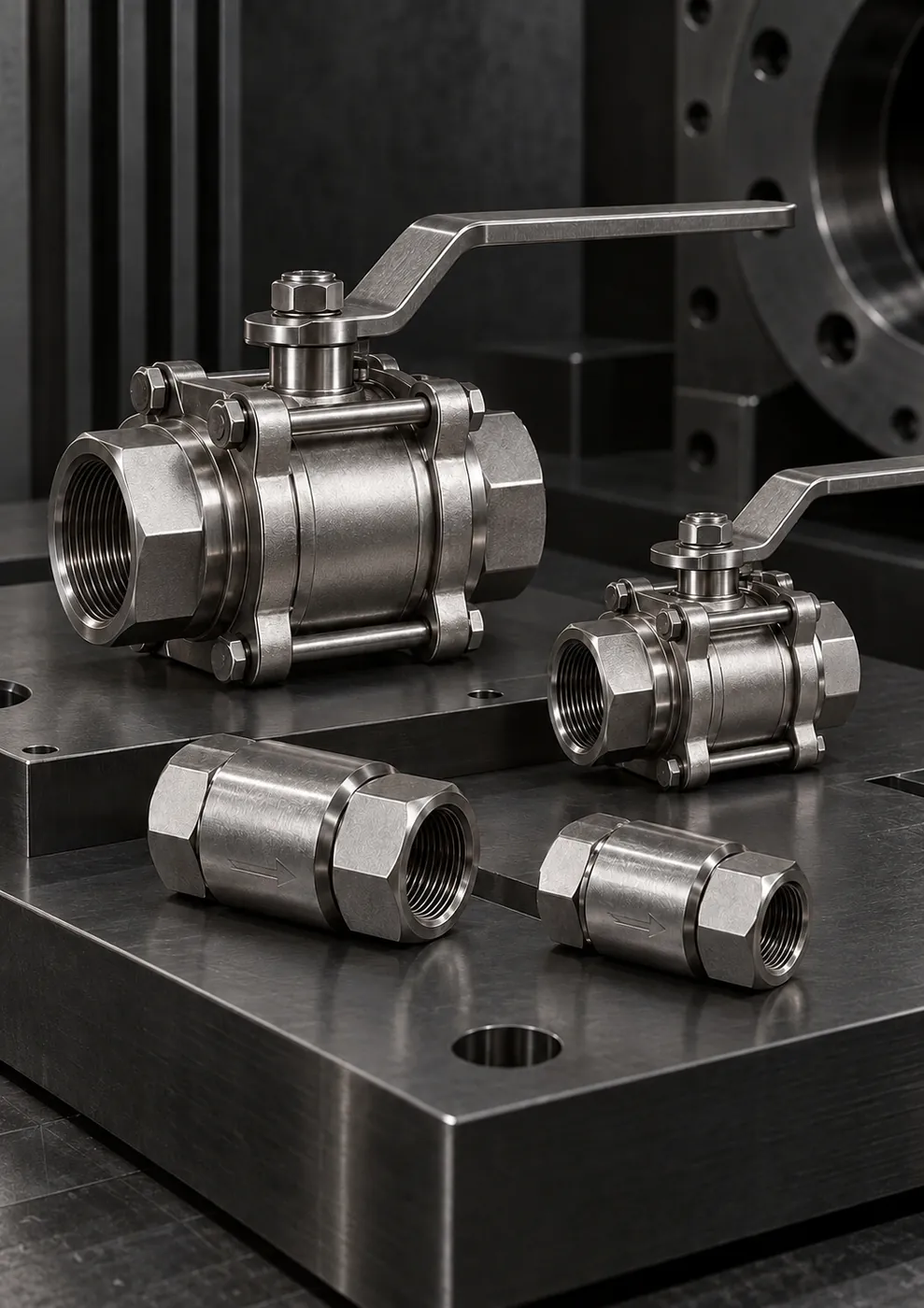
Stainless steel ball valves and check valves (illustrative image)
Twin-ferrule fittings for measurement and sampling lines (illustrative image)
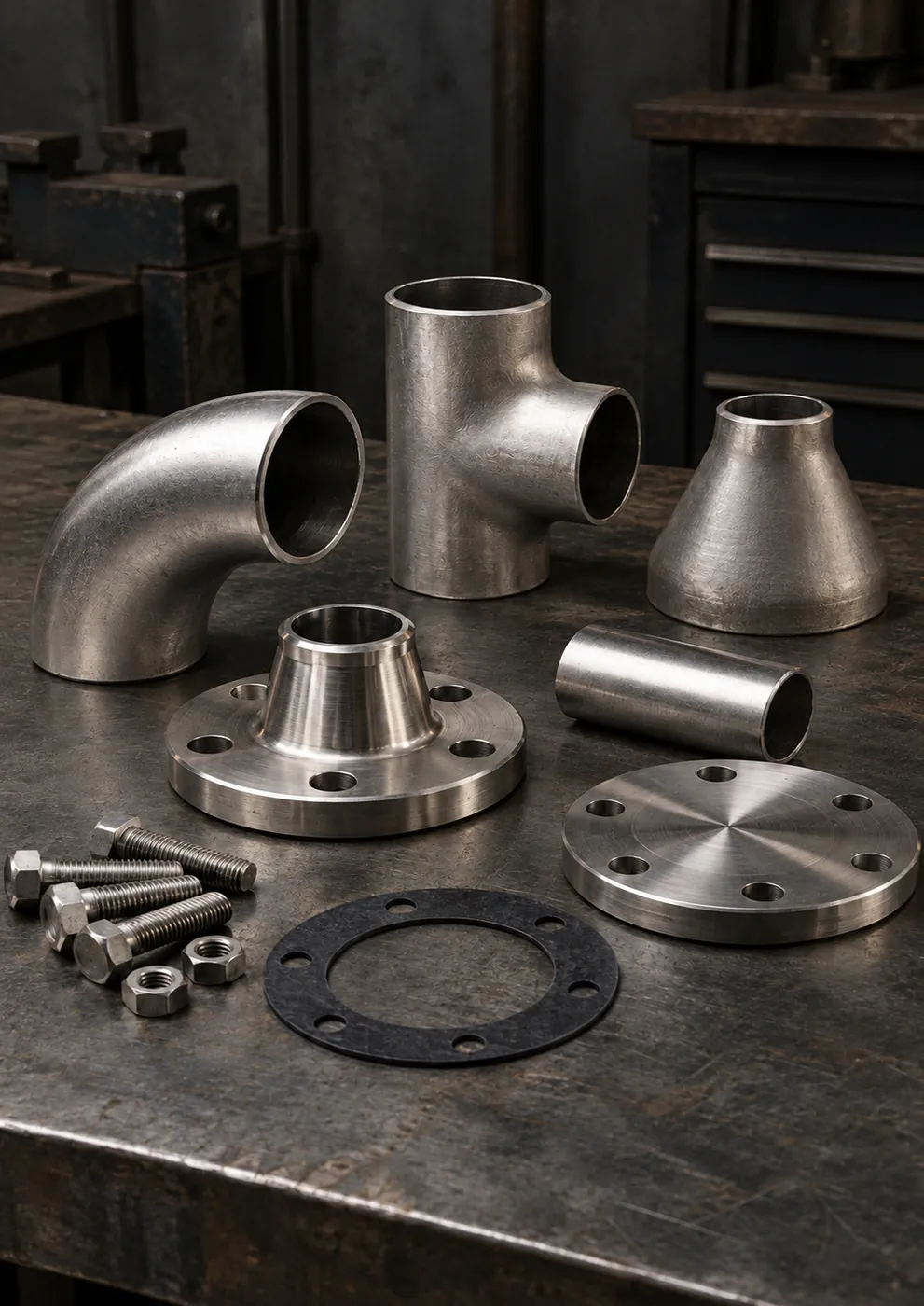 Weld neck flange, stainless steel pipe, gasket and bolt set (illustrative image)
Knowledge Center
In a twin-ferrule fitting, the front ferrule provides the seal and the back ferrule grips the tube. For correct installation, the tube is cut square…
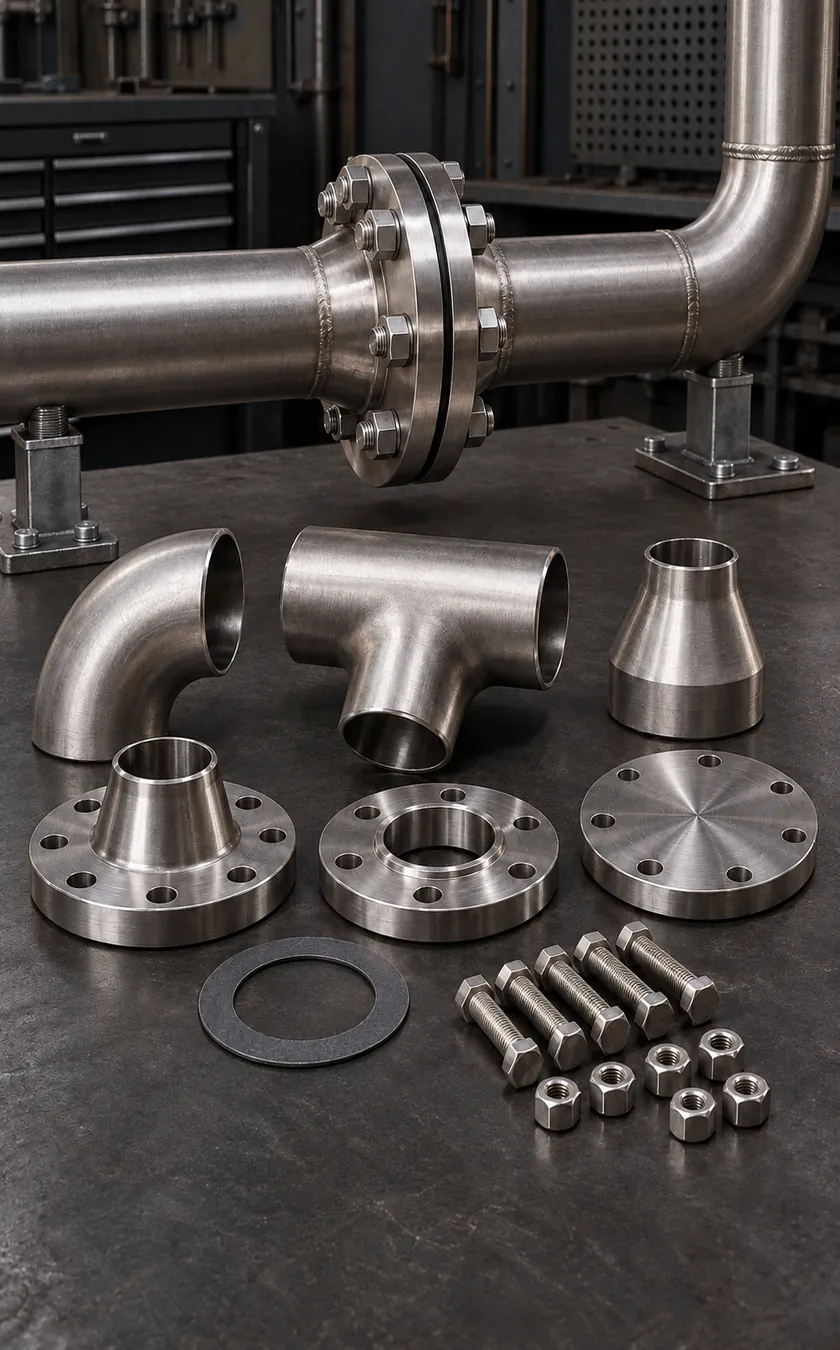
On a stainless steel pipeline, fittings and flanges are selected by matching them to the pipe's DN/NPS size and Schedule wall thickness. Weld neck…
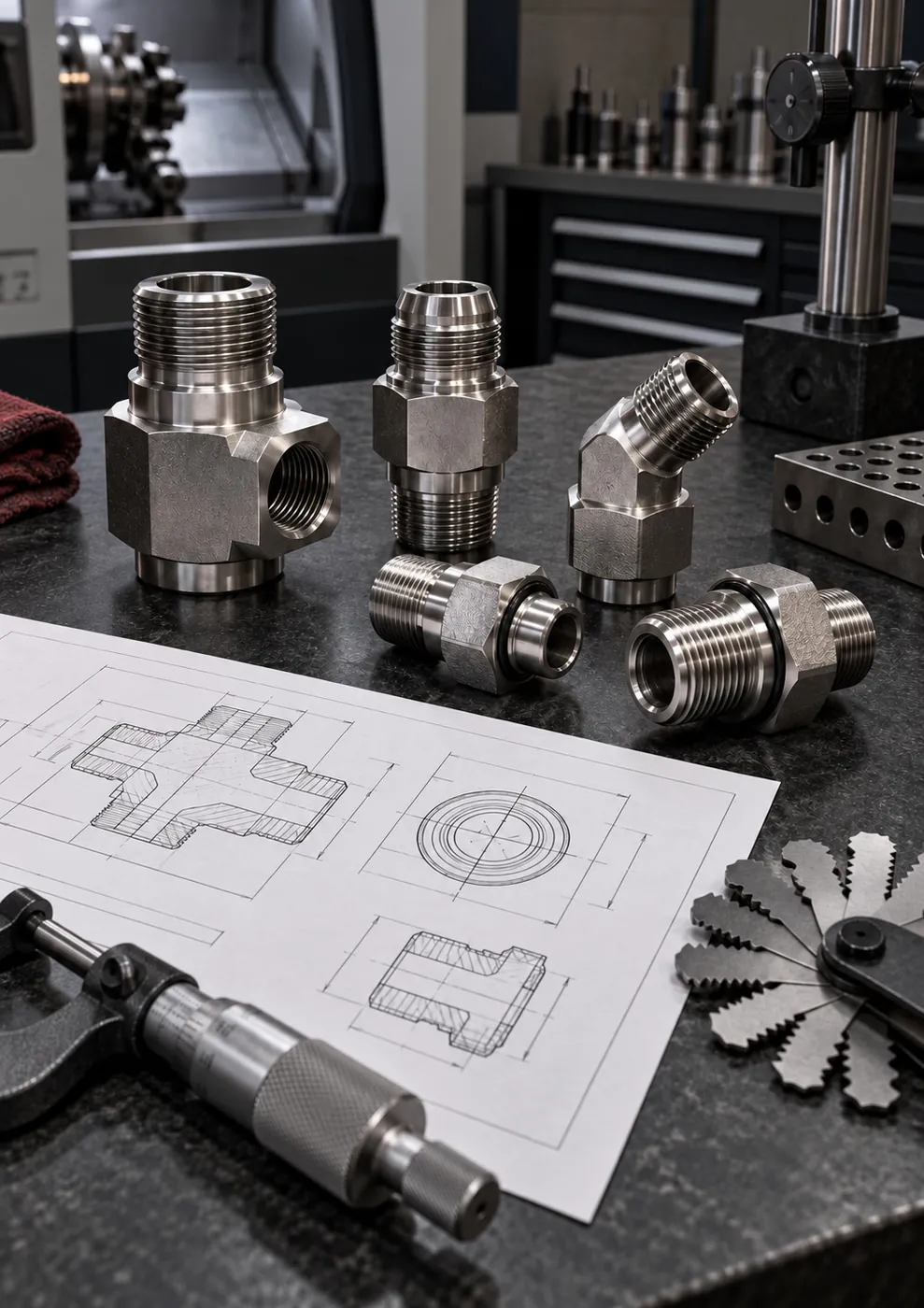
When a standard part won't fit, custom manufacturing starts with a sample, a dimensioned technical drawing or dimensional data. The thread standard…
Frequently asked questions
If your question isn't answered here, write to us and we'll pin down the size, thread standard and material together.
Send us your questionNo. 316L performs well in many process environments, but it is not suitable for reducing acids such as hydrochloric acid or for hot, concentrated chloride solutions. Once you share the chemical's name, concentration and temperature, suitability is assessed together with the plant's material specification.
The seal should be selected according to the fluid, independently of the body. As a general rule, NBR is used with mineral oils, EPDM with water, steam and many alkaline media, and FKM with hydrocarbons and many acids, while PTFE offers very broad chemical compatibility. The final selection depends on concentration, temperature and the seal manufacturer's compatibility data.
Every part undergoes dimensional, thread and surface inspection before shipment; leak testing is performed when specified in the order. If you state the test requirement, test medium and acceptance criteria at the quotation stage, the production plan and lead time are set up accordingly.
On tapered threads such as BSPT and NPT, sealing takes place on the thread and requires a thread sealant, which must also be compatible with the chemical in the line. At points that are frequently dismantled, parallel thread connections sealed by a seal or cone face, or flanged connections, may be more practical.
Yes. Critical diameters, the thread standard and the sealing type are verified from a sample, technical drawing or dimensional data, and production begins after first article approval. Custom-size manufacturing is scheduled within an average of 10-20 business days after technical approval.
Quote
Send us the line size, flow rate, operating conditions and your material specification, if you have one; we'll recommend suitable body and seal options with lead times.
Chemical Processing request form
Other sectors