 BSP / NPT Adapters & Nipples
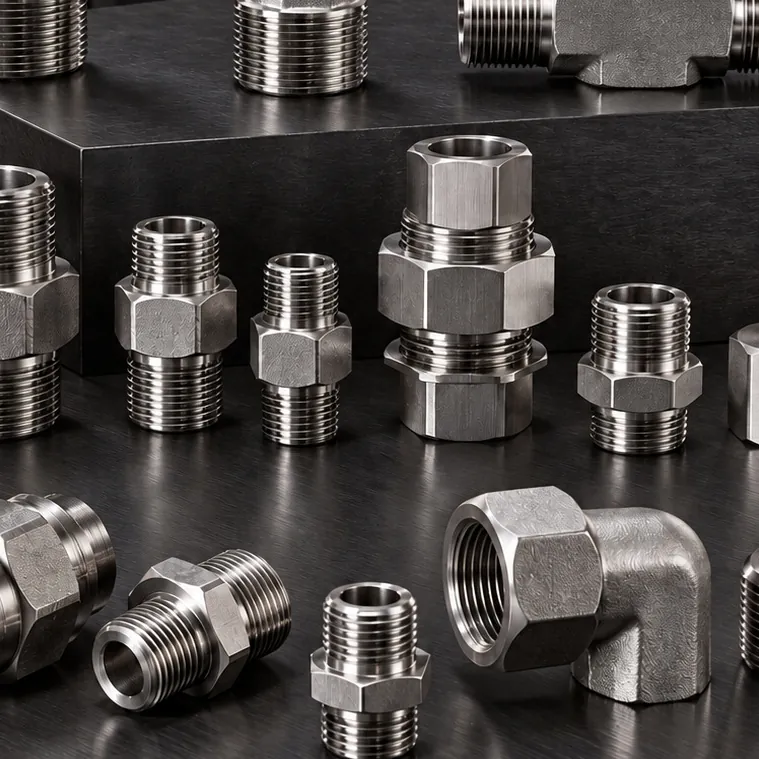
BSPT Hex Nipple
Details & quote
Ball valve · Needle valve · Check valve
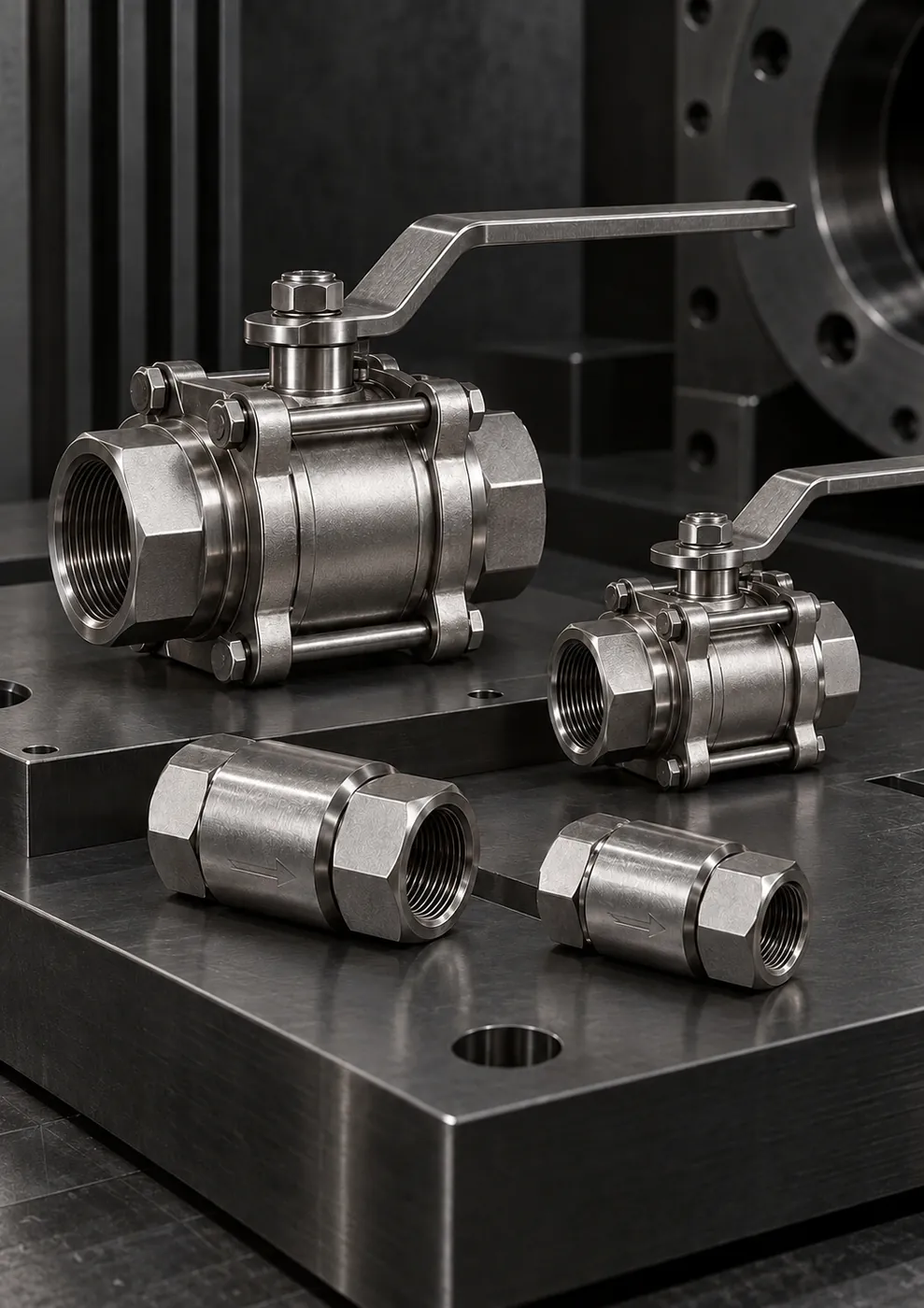
Selection of AISI 316L-body ball valves, needle valves and check valves by body, connection standard, bore size, pressure, temperature and fluid; placement in the line with flow direction and service access in mind.
Quick answer
A ball valve is used for quick shut-off in a line, a needle valve for fine flow adjustment and gauge isolation, and a check valve to keep flow moving in one direction. Body material, connection standard, bore size, working pressure, temperature and fluid compatibility are evaluated together during selection. GÜNEYSS supplies AISI 316L-body valves with BSP, NPT or project-specific stainless steel end connections, matched to the other connections in the line.
Valves are often selected by size and thread alone, and that is usually where the problems start. A ball valve left partially open to throttle flow wears out its seats, a check valve installed backwards shuts off the line, and a valve whose handle swing was never accounted for cannot be fully opened after installation. In valves and flow control, we look at how a valve will sit in the line just as carefully as we choose the right type.
A bored ball rotates a quarter turn to open or close the line quickly; in the fully open position it offers low resistance to flow. It is not suitable for throttling, because continuous use in a partially open position can wear the seats and eventually cause leakage. The difference between full-bore and reduced-bore bodies directly affects the pressure drop in the line.
Provides precise control of low flow rates through the finely adjustable movement of a stem with a tapered tip. It is used in instrumentation lines, for pressure gauge and transmitter isolation, and at sampling points.
Allows flow in one direction only; it prevents backflow at pump discharges and cross-flow between parallel lines. Selection takes into account cracking pressure (the differential pressure at which the valve starts to open), flow direction and mounting position. The flow arrow on the body must always be checked during installation.
A valve should not be used as a member that supports the line it is connected to; heavy valve groups should be supported upstream and downstream. On threaded connections, the sealing method depends on the thread type: thread sealing on tapered threads, a seal or O-ring on parallel threads. On stainless steel threads, a suitable anti-seize compound reduces the risk of galling. Placing demountable connections upstream and downstream of the valve makes it possible to replace the valve without cutting the line.
A valve should be considered not on its own, but as a group together with the nipples, adapters and fittings it connects to. If the valve end and the line connection are of different standards, the conversion adapter is specified at the ordering stage; transitions forced together in the field increase the risk of leaks and thread damage.
Valve seats and seals wear over time depending on the operating cycle and the fluid. Keeping a spare valve of the same type and connection on critical lines allows the line to be brought back into service quickly after a failure. If the markings on the body, the connection standard and the size of the valve to be replaced are noted, the new one is matched to the line in the same way.
Transfer and process lines in chemical processing; lines exposed to cleaning chemicals in food and beverage plants; pump discharge and test lines in fire suppression systems; auxiliary systems exposed to seawater on ships and offshore facilities; newbuild and repair piping in shipyards; power unit and auxiliary lines in rolling mills.
Valves and check valves from stock are typically ready to ship within 1-3 business days. If the valve group needs to be prepared together with custom adapters or nipples, standard production takes an average of 5-10 business days, and custom-size and project work is scheduled within an average of 10-20 business days after technical approval. If you are replacing an existing valve, a photo of the body markings and end connections shortens the selection process.
Process
From request to delivery in 5 steps
Fluid, pressure, temperature, line size and connection standard are collected.
A ball valve, needle valve or check valve is specified according to the duty.
Body material, bore size, end connections and flow direction are finalized.
The valve is prepared as a group, together with adapters and nipples if required.
Connections are checked, ends are capped and the order is shipped.
Sectors
On the sector page, you'll find this service's field-specific applications, recommended products and frequently asked questions.
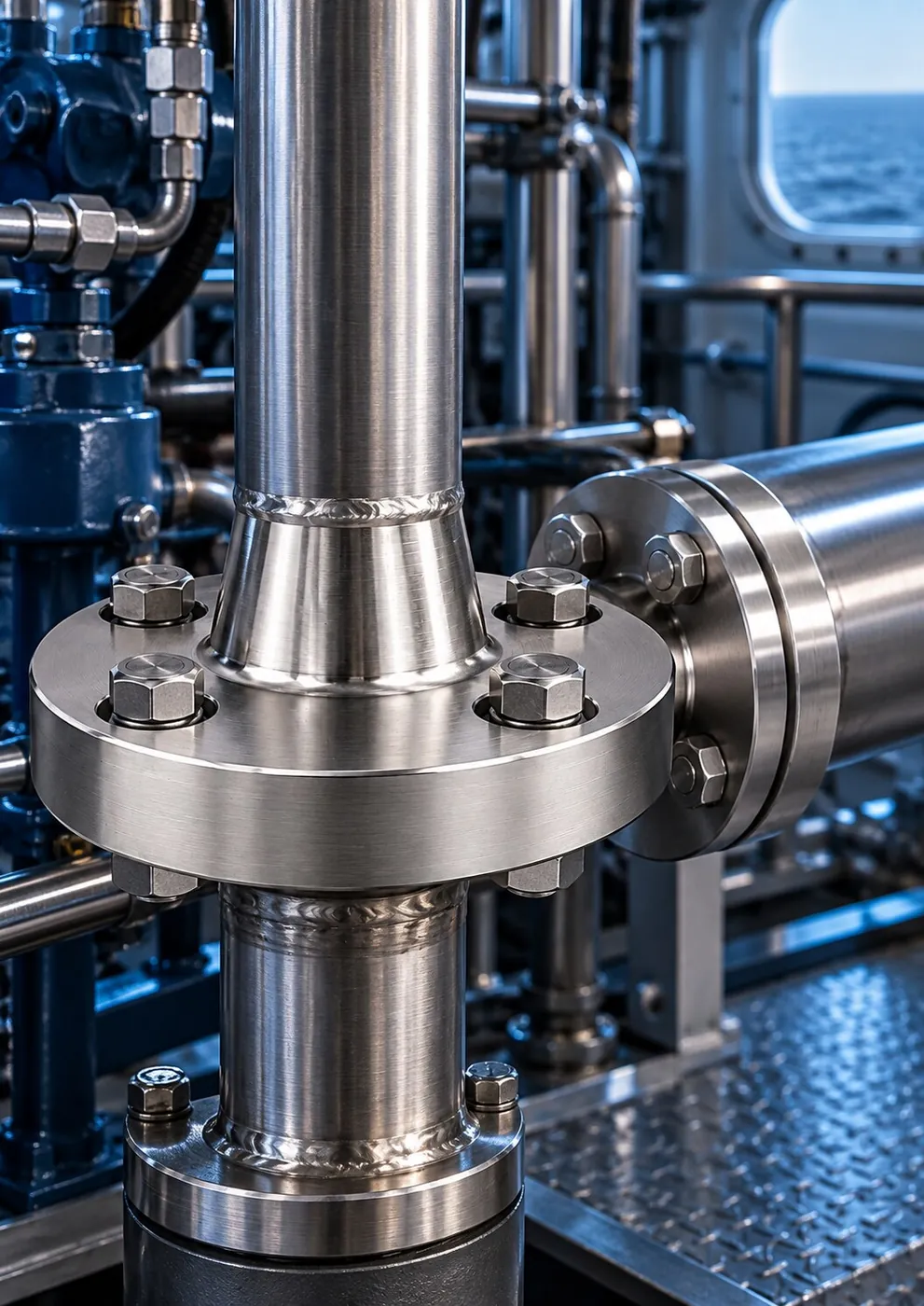
AISI 316L fittings, hose assemblies, SAE flanges and valves built to withstand salt spray and vibration on deck cranes, windlasses, steering gear, passerelles and engine room lines.

Stainless steel pipe, flanges, fittings and hose assemblies, from newbuild piping circuits to drydock overhauls; fast spares from stock for ship crane service teams.

AISI 316L hose ends, SAE flanges, adapters and valves for crane, pipe handling, deck machinery and power unit lines on drillships and platforms.
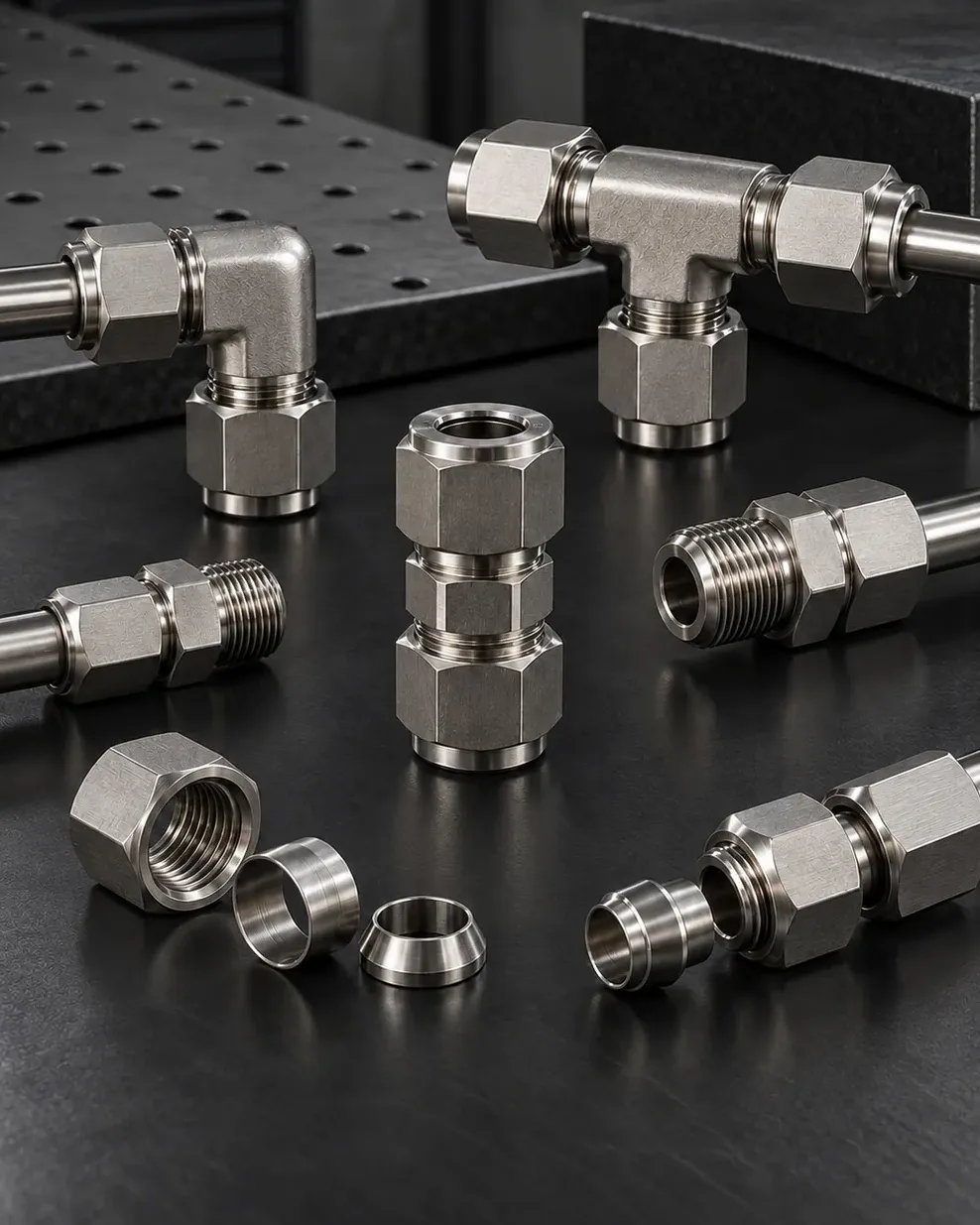
316L twin-ferrule fittings, needle valves, check valves and tubing for wellhead control panels, chemical injection, refinery instrument and sampling lines, and pipeline stations.
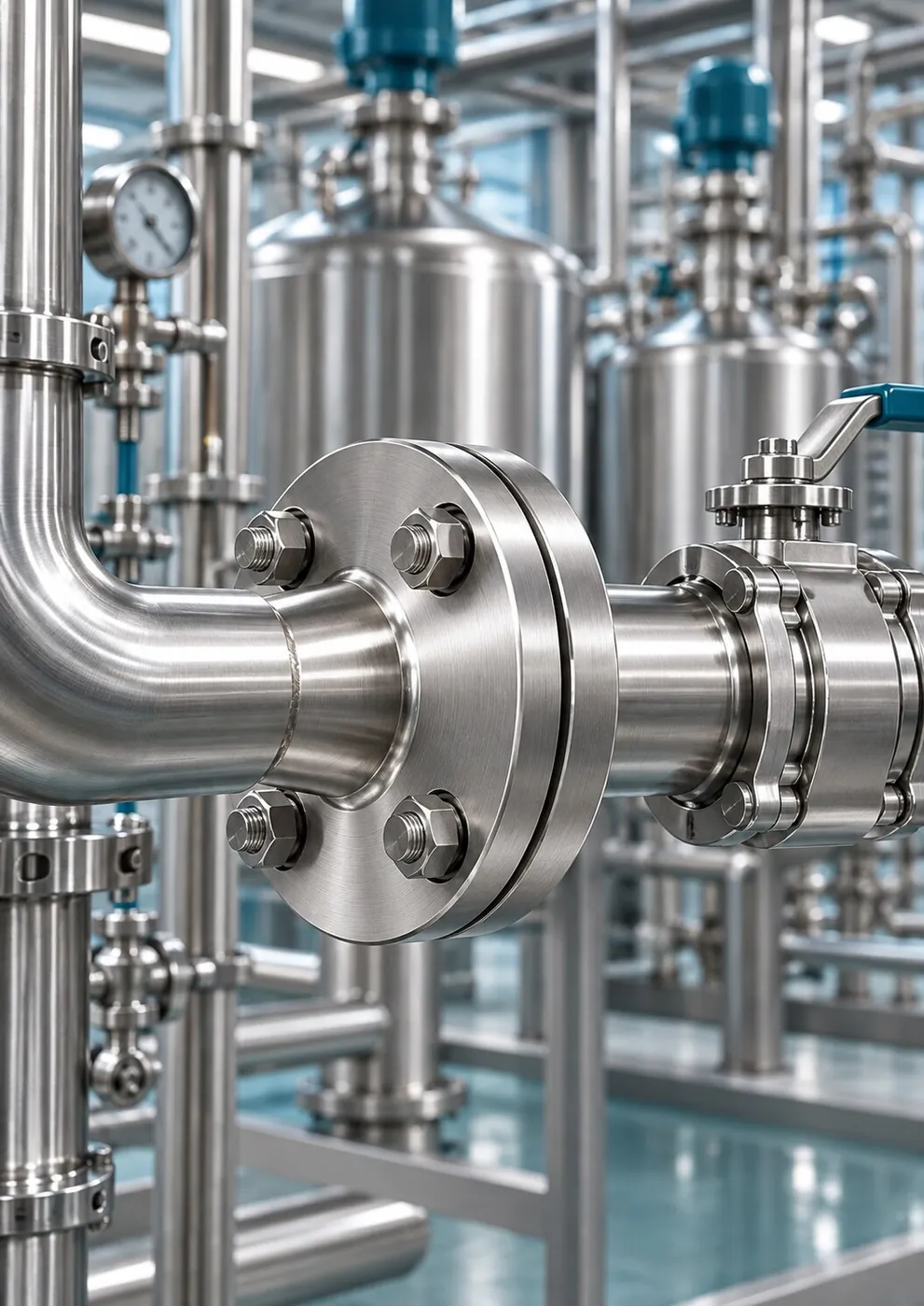
Stainless steel fittings, nipples, valves, flanges and hose fittings for chemical transfer and process lines, selected by weighing fluid compatibility, corrosion resistance, temperature and pressure together.
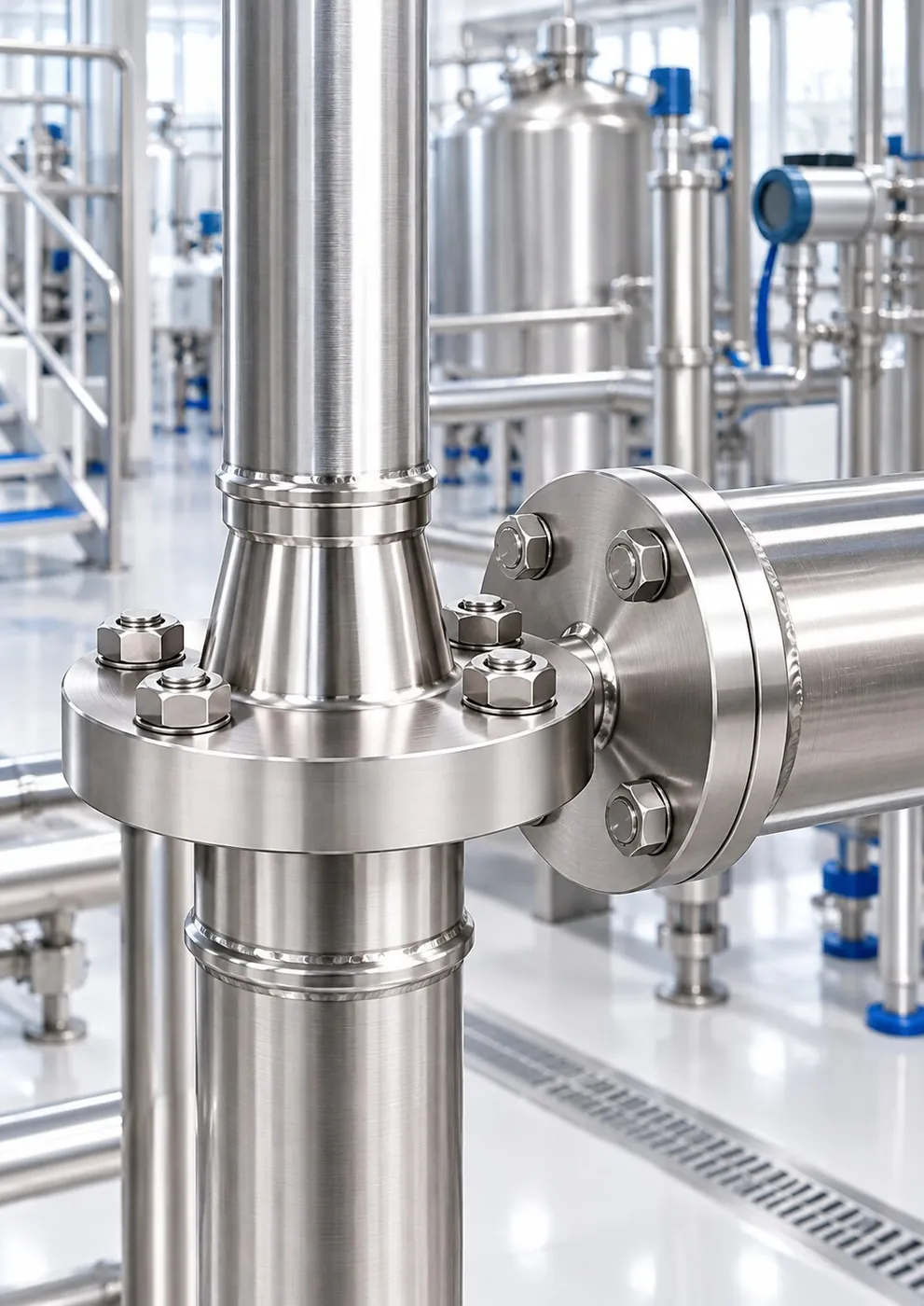
AISI 316/316L fittings, nipples, valves, flanges and hose assemblies for food and beverage lines that call for cleanable surfaces, corrosion resistance and maintenance access.
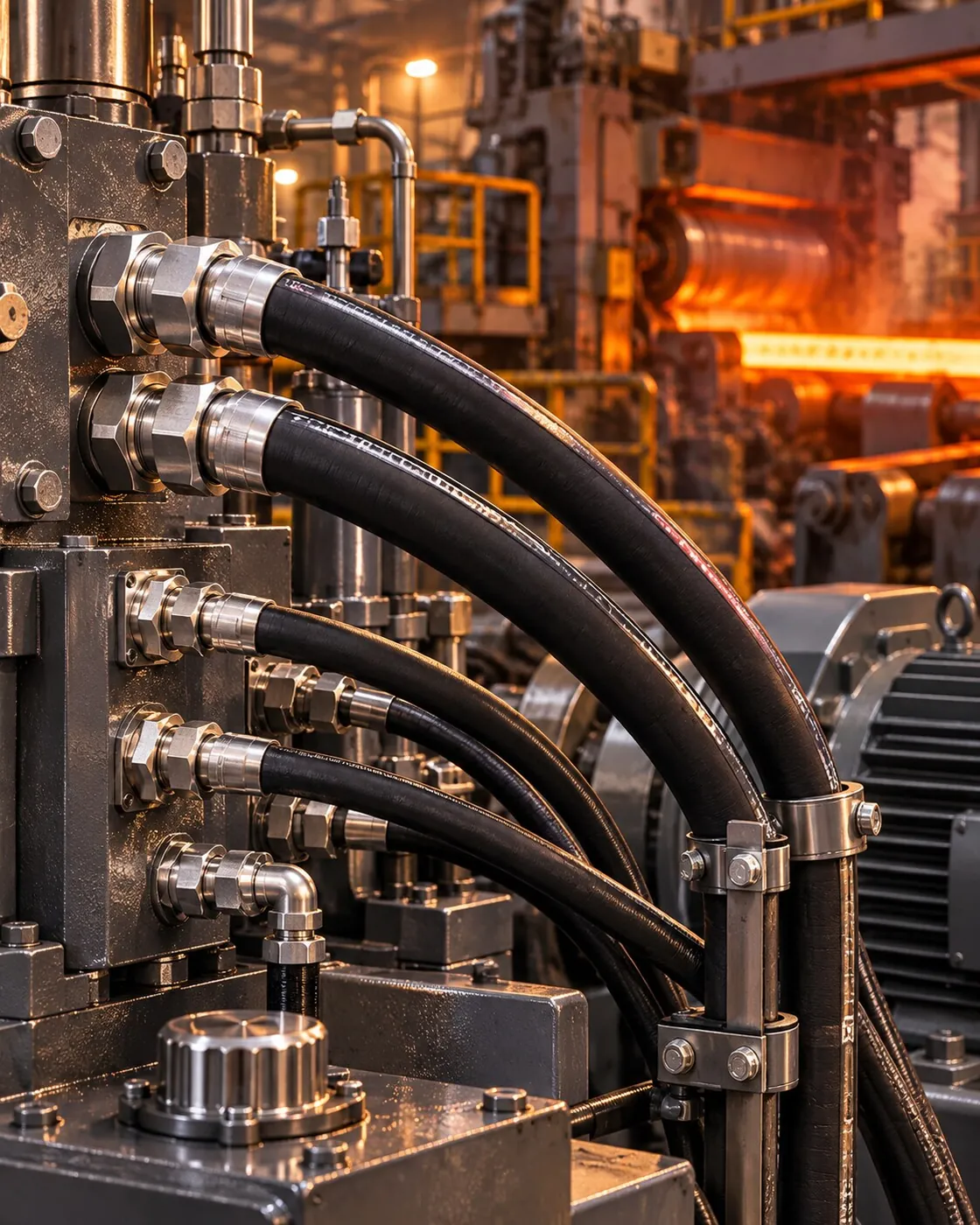
High-pressure hose ends, SAE flanges and adapters built for the high cycling, heat and vibration of presses, mill rolls and hydraulic power units; supplied from stock for emergency maintenance.
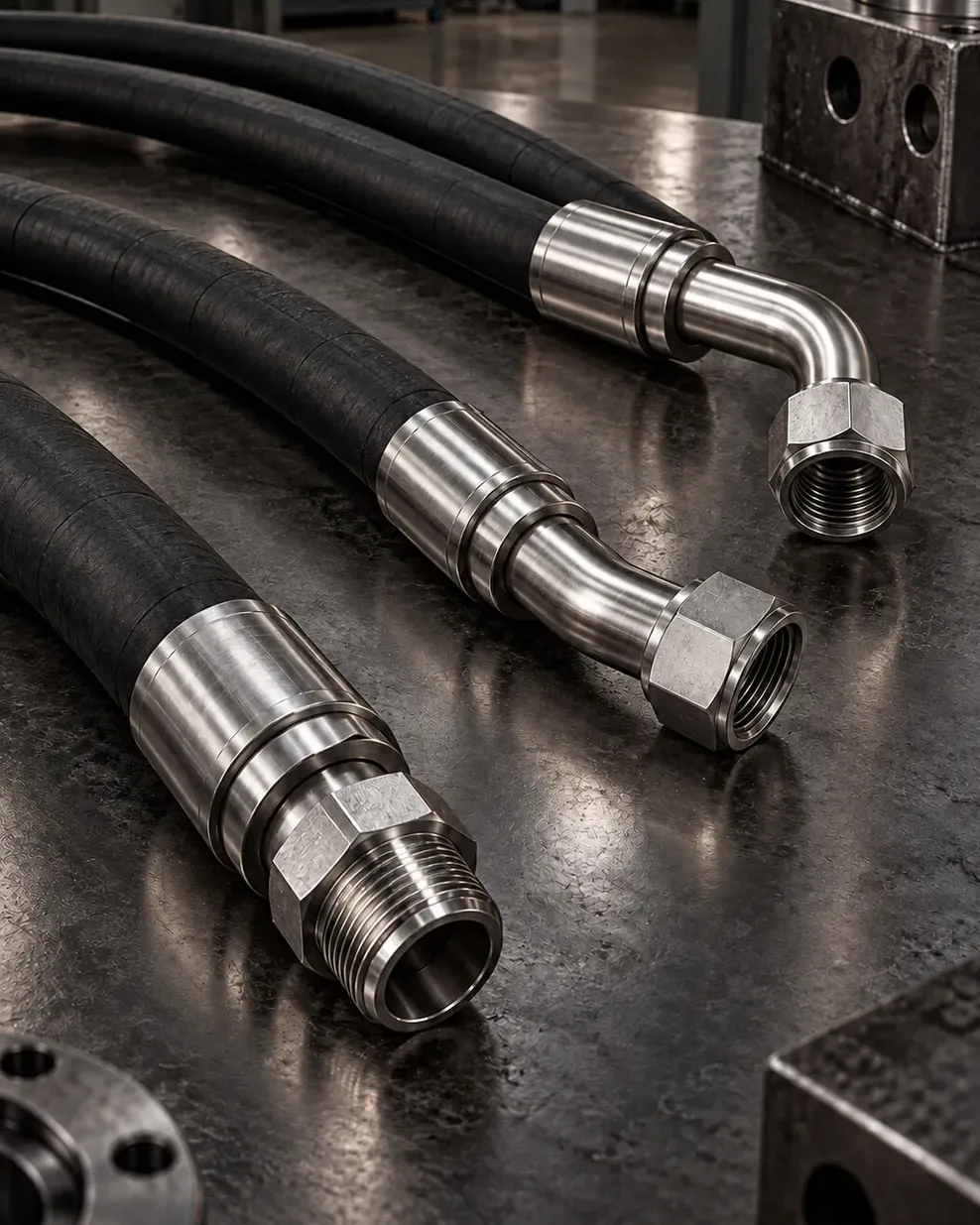
AISI 316L hose ends, SAE flanges, adapters and valves selected for mine water, vibration and abrasion on underground and open-pit machinery, crushing and screening, flotation, leaching and drainage lines.
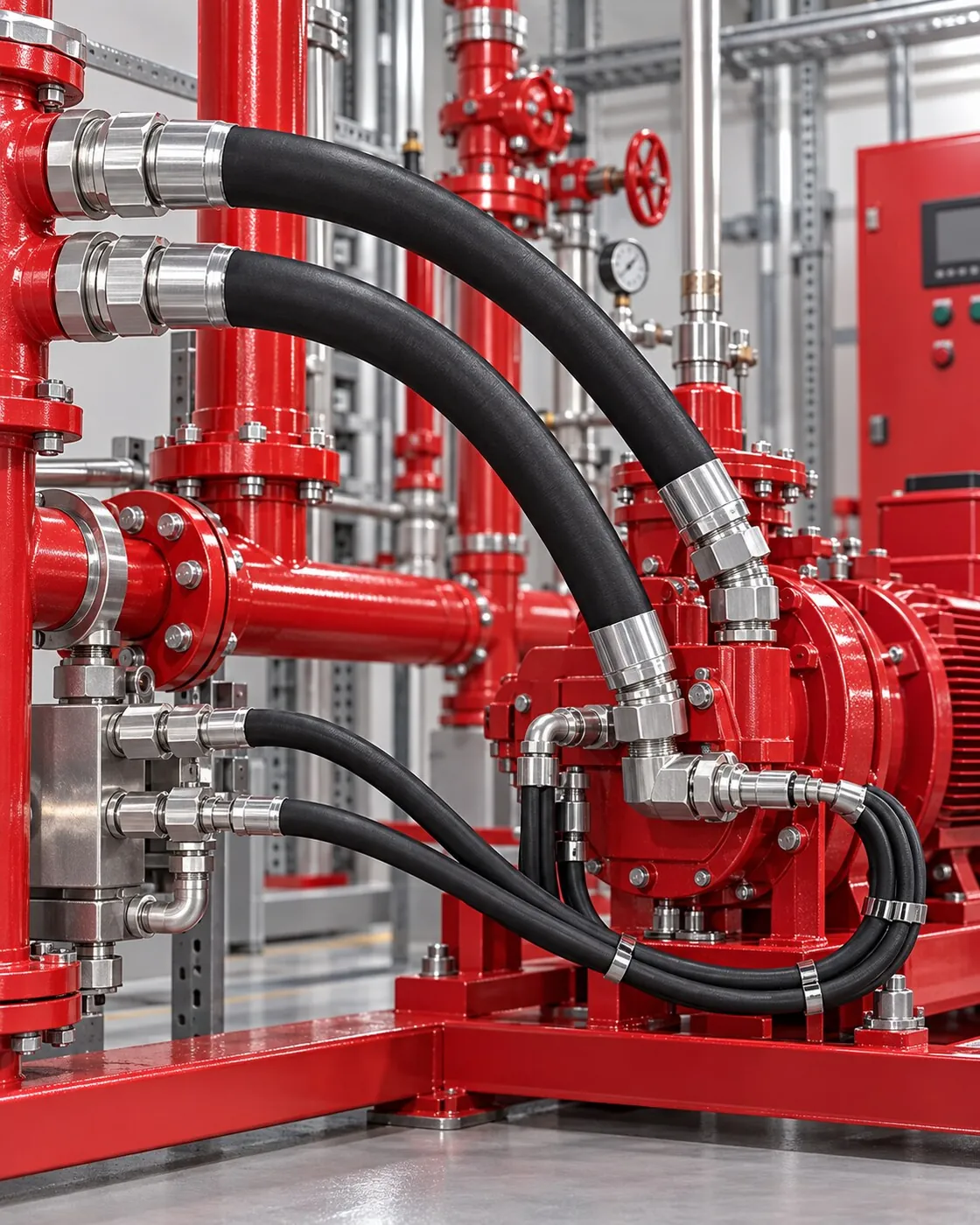
Neatly laid out, leak-tight stainless steel nipples, fittings, hose assemblies and flange connections that make servicing easier on fire pump sets, control skids and pressurized auxiliary lines.
4 products
BSP / NPT Adapters & Nipples 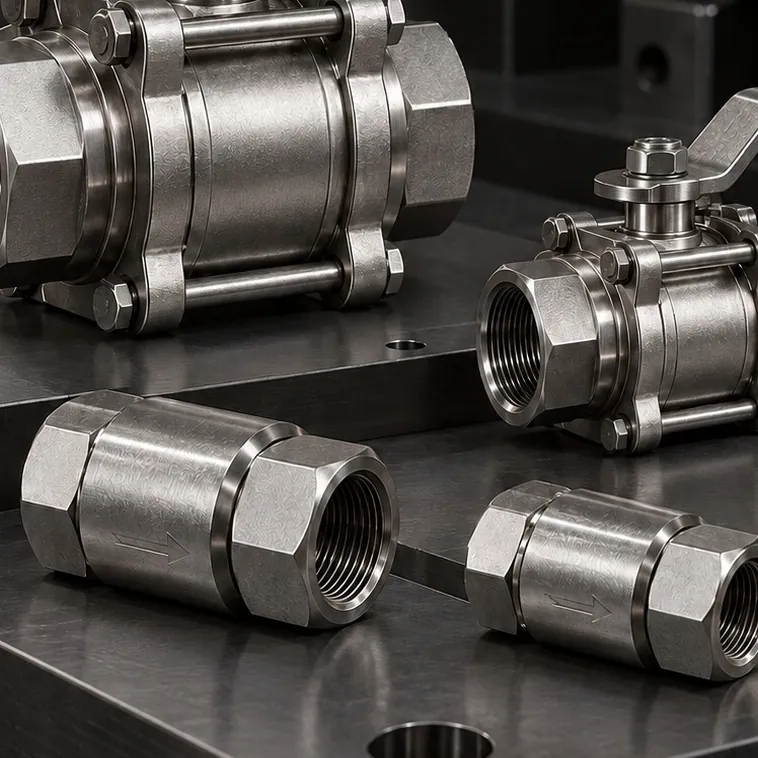 Ball, Needle & Check Valves Ball, Needle & Check Valves
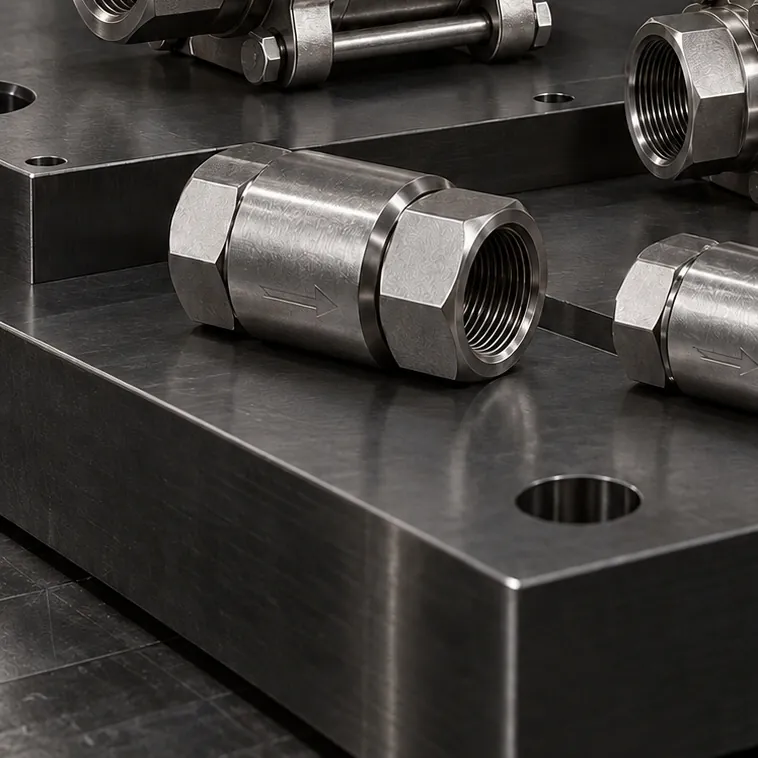 Ball, Needle & Check Valves
FAQ
If your question isn't here, message us on WhatsApp with a ready-made message and our technical team will answer directly.
Ask on WhatsAppIt is not recommended. A ball valve is designed to operate fully open or fully closed. With continuous use in a partially open position, the seats wear and the valve eventually stops shutting off completely. For fine flow adjustment, a needle valve or another valve type designed for regulation should be selected.
The arrow on the body shows the direction of flow; the check valve is installed so that this arrow points in the direction of flow. The mounting position (horizontal or vertical) should also be checked against the conditions specified by the manufacturer.
No. BSP threads have a 55° profile and NPT threads a 60° profile; even where the pitch is the same in some sizes, the thread angle and sealing method are different. Forcing incompatible threads together leads to leaks and permanent thread damage; a suitable conversion adapter should be used where needed.
Wherever precise control of low flow rates is required: instrumentation lines, pressure gauge and transmitter isolation, and sampling points. For quick shut-off on the main line, a ball valve is more suitable.
Valve type, connection standard and size, fluid, working pressure and temperature, required bore size and quantity. If you are replacing an existing valve, a photo of its tag or body also speeds up the selection.
Quote and technical verification
Briefly describe your request; once size, material and lead time are clear, we'll respond with a written quote.
Details that speed up your quote