


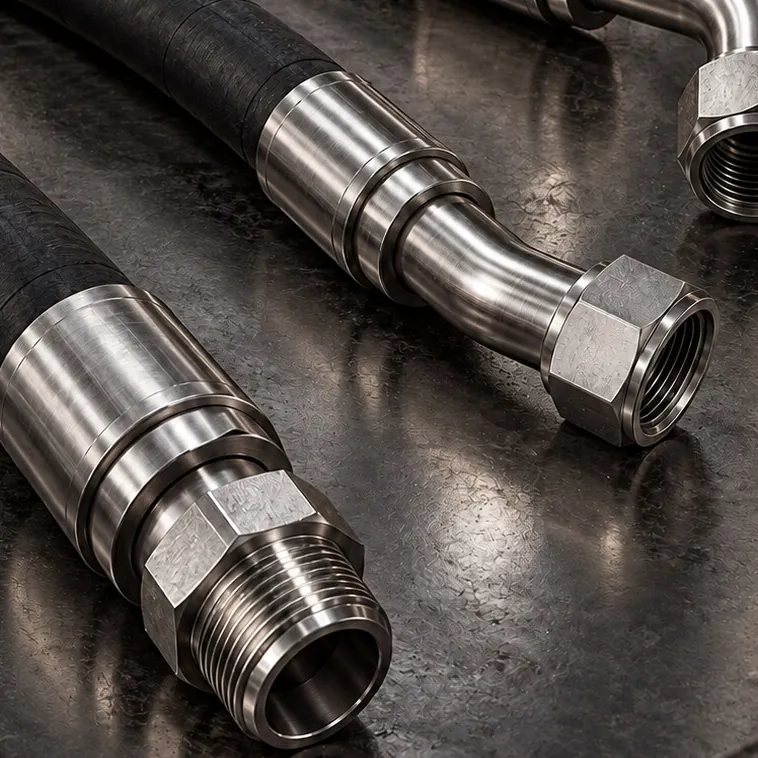
Hose Fittings & Ferrules
BSP Female Swivel 90° Hose Fitting
Stainless steel crimp-style 90° hose fitting with a female BSP swivel nut and 60° cone seat. Routes the hose at a right angle in…

Underground machinery · Mine water · Mineral processing
AISI 316L hose ends, SAE flanges, adapters and valves selected for mine water, vibration and abrasion on underground and open-pit machinery, crushing and screening, flotation, leaching and drainage lines.
Featured products in this sector
View all 21 productsProducts
21 products are listed for the operating conditions of Mining & Mineral Processing. Narrow down by group; open a product page for sizes and thread standards.
Hose Fittings & Ferrules
Stainless steel crimp-style 90° hose fitting with a female BSP swivel nut and 60° cone seat. Routes the hose at a right angle in…
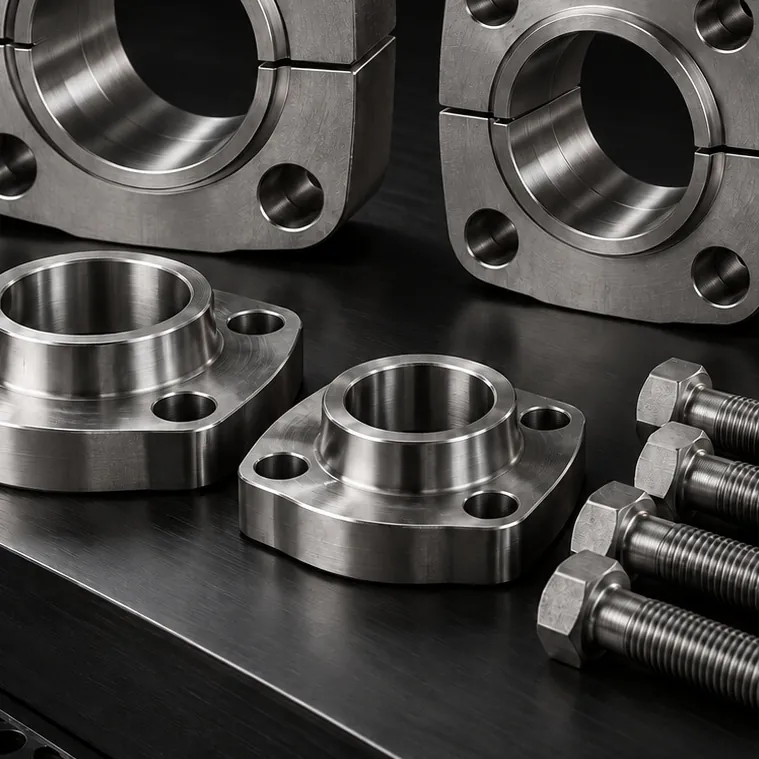
SAE Flanges (Code 61 / 62)
Two-piece stainless steel split flange clamp that holds a flanged-head hose fitting or tube end against an SAE Code 61 port…
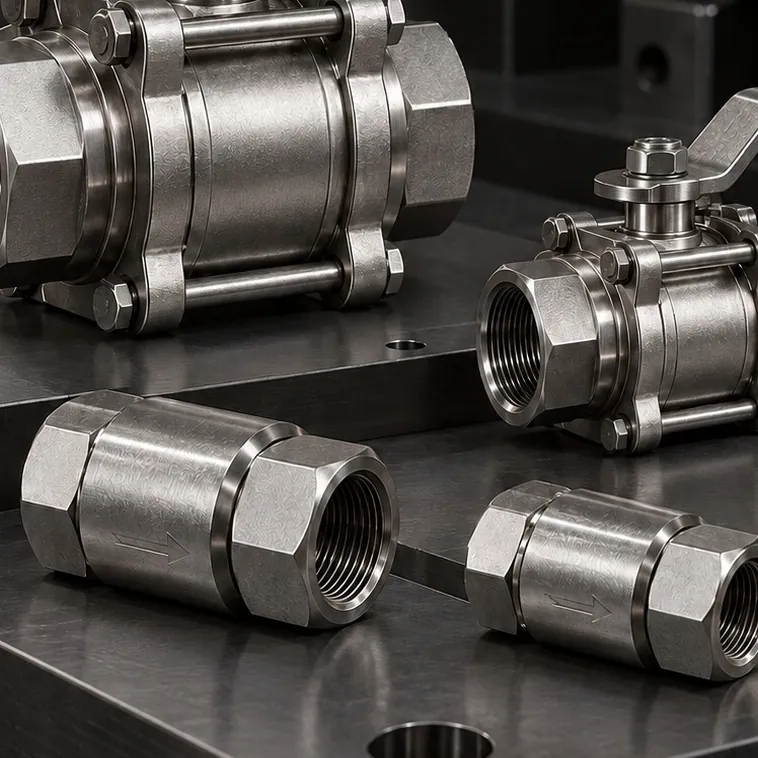
Ball, Needle & Check Valves
High-pressure stainless steel ball valve with an AISI 316L body, providing quarter-turn on/off service in hydraulic and process…
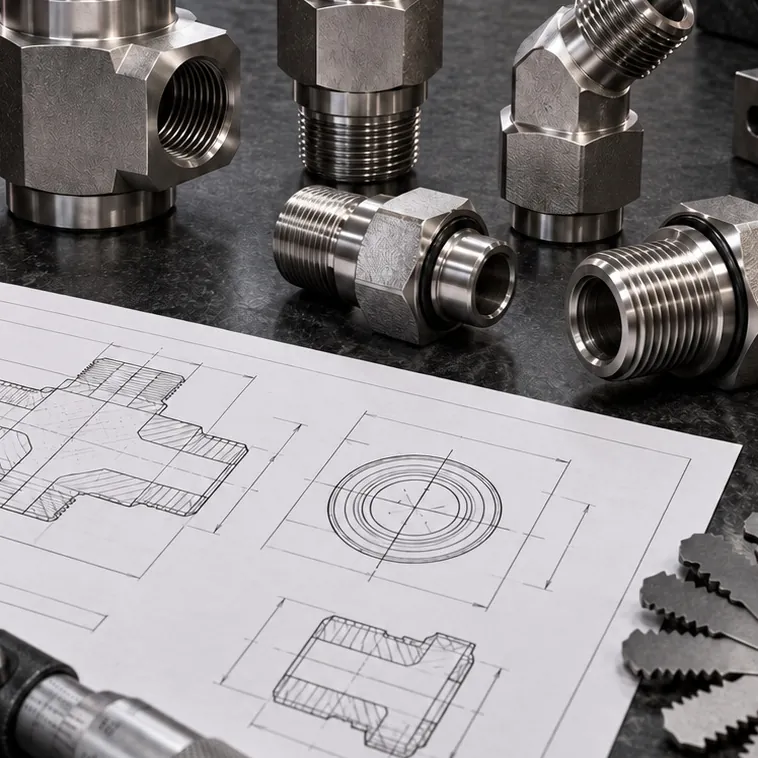
Custom-Made Hydraulic Parts
Custom stainless hydraulic adapter CNC-machined from a sample or technical drawing for thread, size and angle combinations not…
Hose Fittings & Ferrules
Stainless steel crimp ferrule for 2SN hydraulic hoses with two steel wire braids. Crimped together with the hose fitting to form…
Hose Fittings & Ferrules
Stainless steel DKOL straight hose fitting (L series) with a metric swivel nut and 24° cone with O-ring. Connects directly to DIN…
DIN 2353 Compression Fittings
24° cone straight coupling (DIN 2353) that joins two stainless steel tubes on the same axis without welding. AISI 316L body, L…
Hose Fittings & Ferrules
Stainless steel straight hose fitting with a female UNF swivel nut and JIC 37° cone seat. Crimp hose end for hydraulic systems…
Quick Disconnect Couplings
Stainless steel-bodied male-female quick disconnect coupling with BSP threads. Fast, tool-free connection at test points, on…
Hose Fittings & Ferrules
Stainless steel crimp-style 90° hose fitting with an SAE Code 61 flange head. Connects to pump and block ports in large-bore…
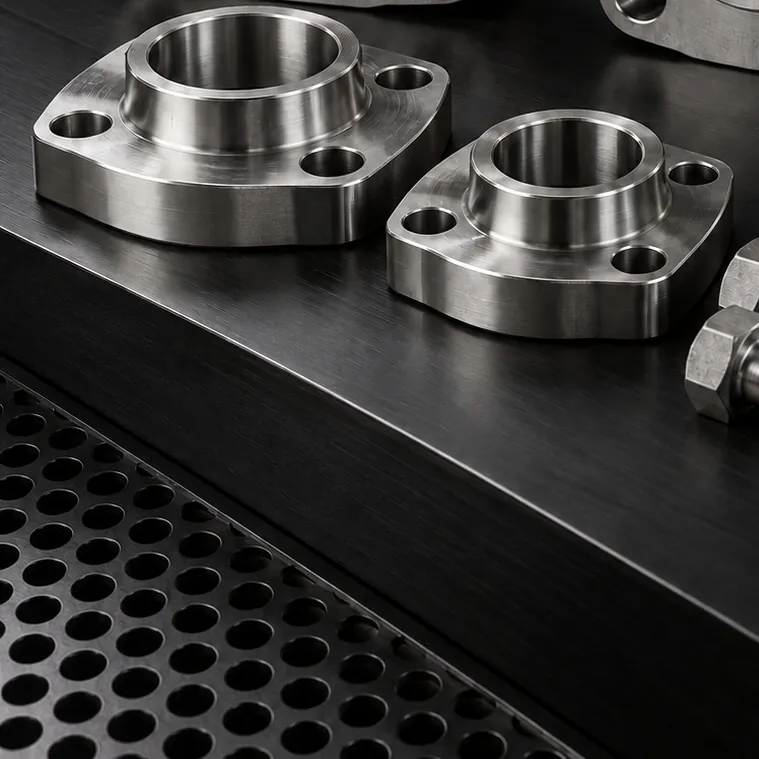
SAE Flanges (Code 61 / 62)
Stainless steel SAE Code 62 mating flange for high-pressure hydraulic lines. Connects the pipe to a Code 62 port via a welded or…
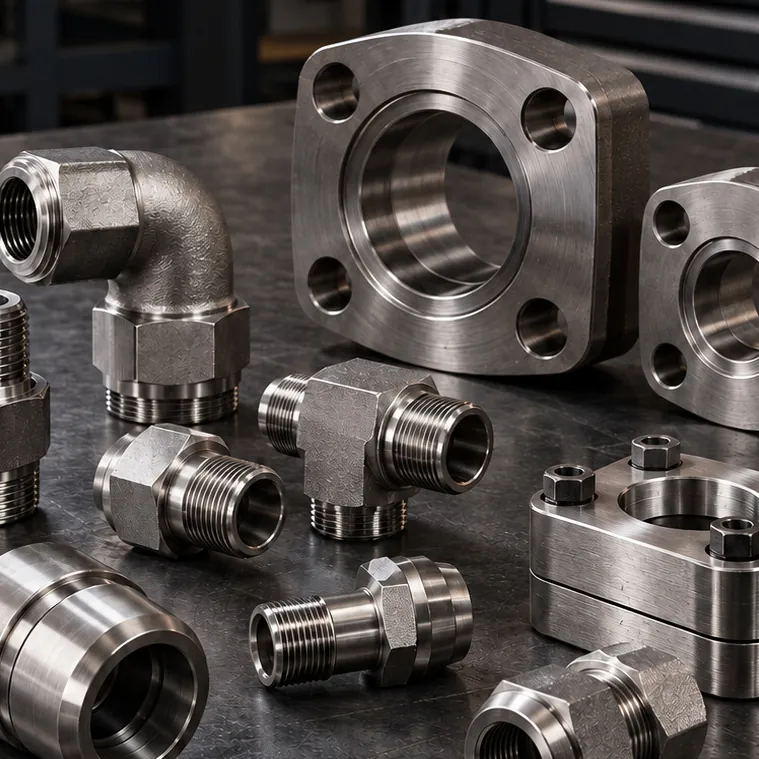
SAE Flanges (Code 61 / 62)
Stainless steel flange block combining SAE flange ports in a single body with elbow, spacer, reducer or distribution functions…
Hose Fittings & Ferrules
Stainless steel O-ring face seal (ORFS) hose fitting with a female swivel nut. Reduces the risk of leaks in high-pressure lines…
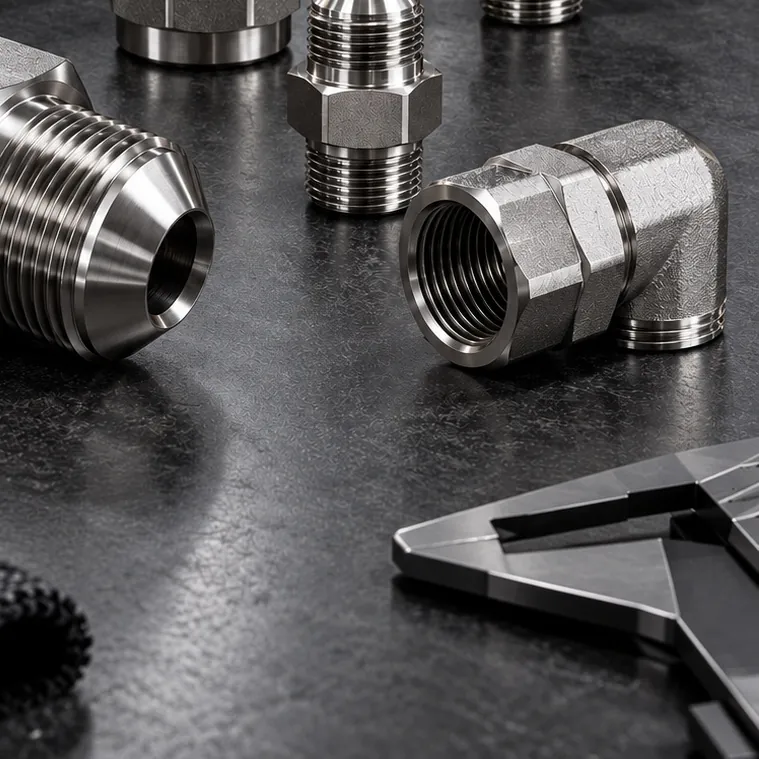
JIC 37° Fittings & Adapters
Stainless steel conversion adapter with a JIC 37° UNF male end and a BSPP parallel male thread. For connecting JIC hose lines to…
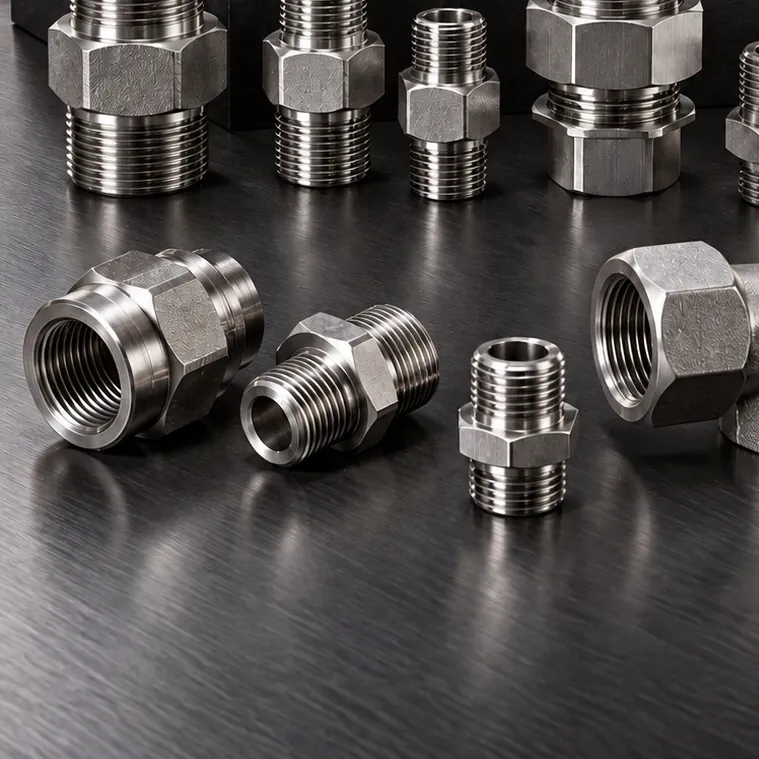
DIN 2353 Compression Fittings
Stainless steel male stud connector with a 24° cone tube end and BSPP male thread, connecting tube to pump, valve block or…
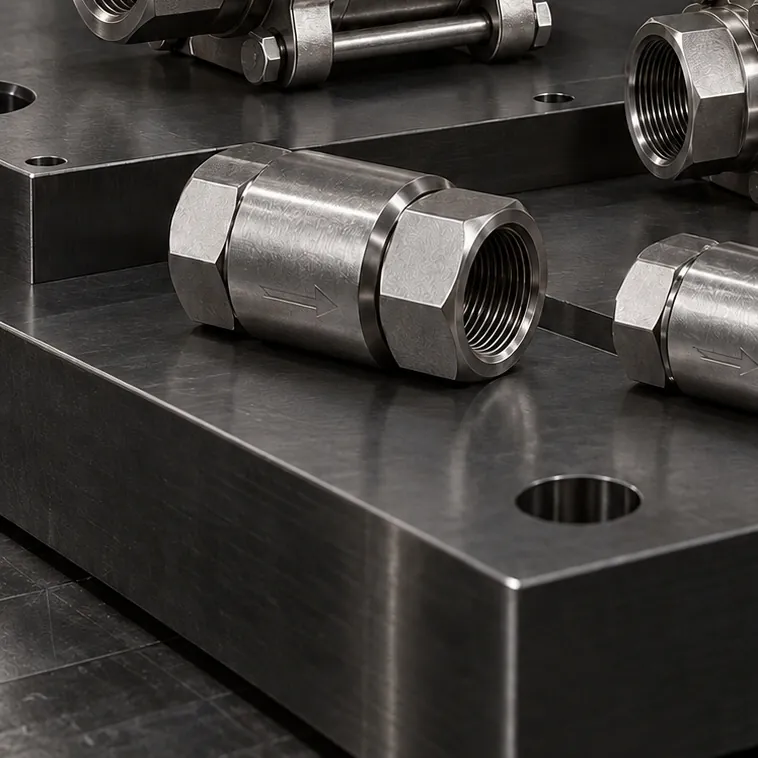
Ball, Needle & Check Valves
In-line stainless steel check valve that passes flow in one direction and stops reverse flow with a spring-loaded poppet. Female…
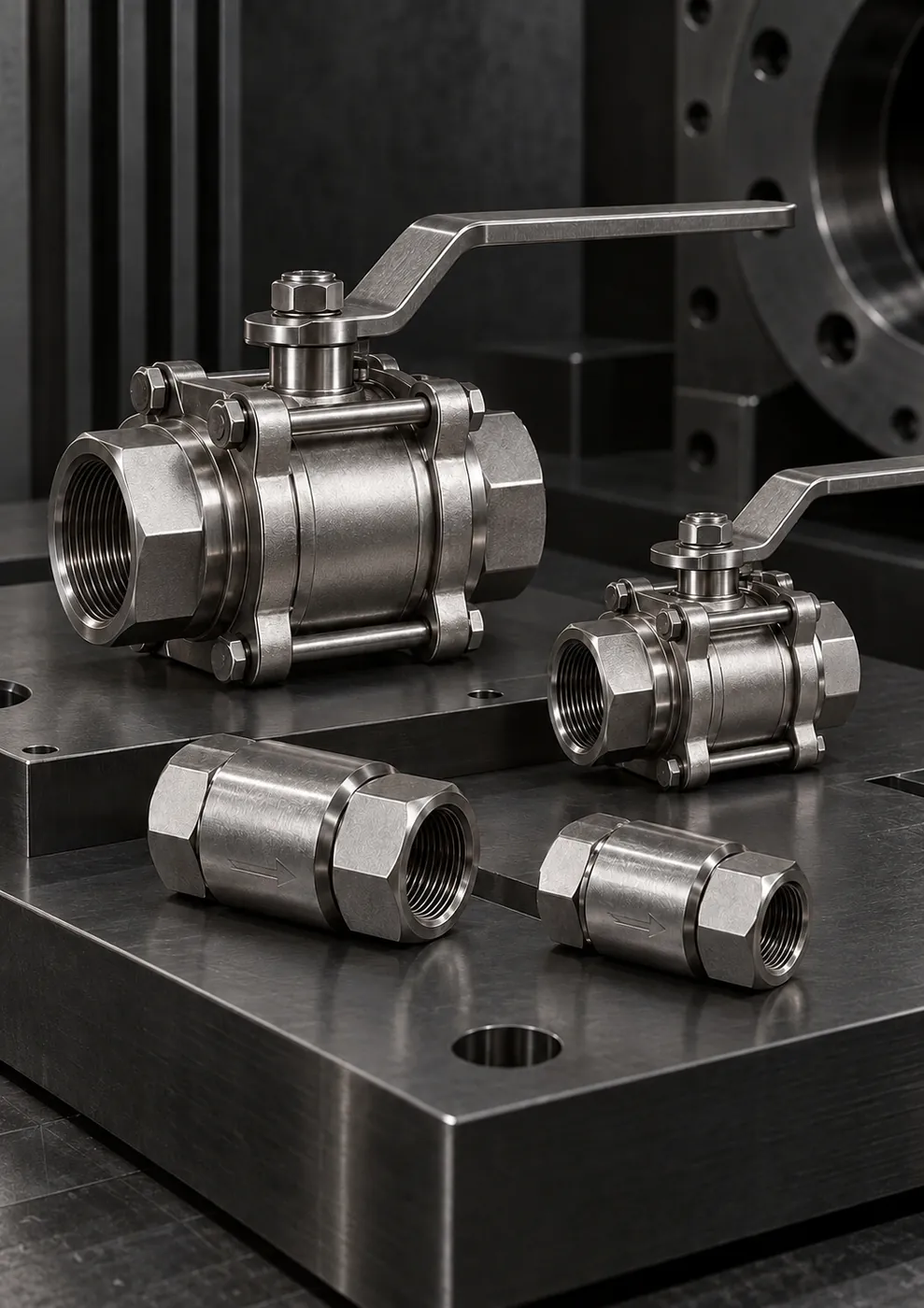
Ball, Needle & Check Valves
Stainless steel needle valve with a tapered stem for fine flow adjustment and isolation of measurement lines. For gauge, sampling…
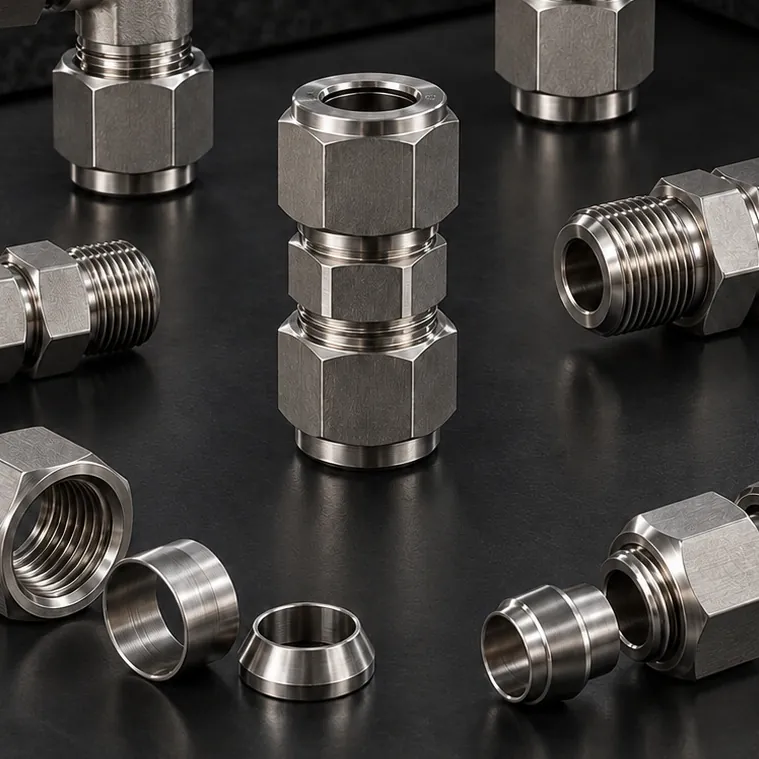
Twin Ferrule Instrumentation Fittings
Stainless steel twin-ferrule union joining two instrumentation tubes on the same axis. Weld-free, repeatable makeup in…
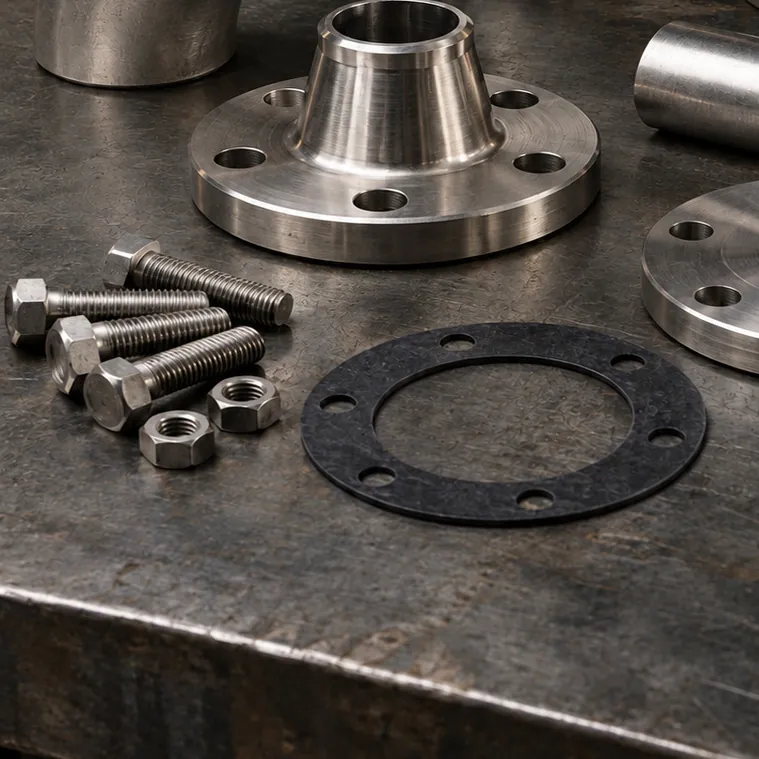
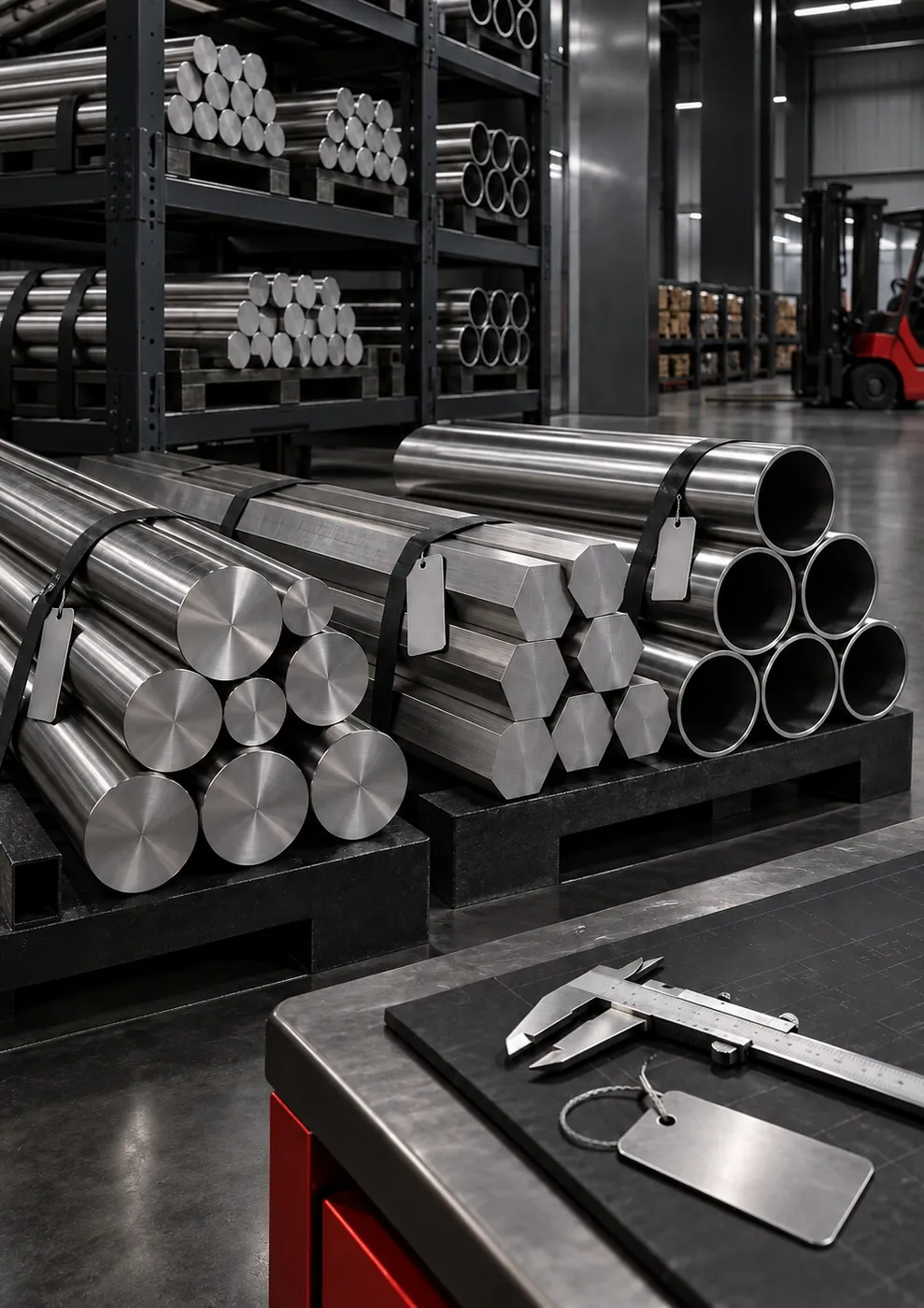
Stainless Steel Pipes & Flanges
Stainless steel flange with a tapered hub that is butt-welded to the pipe. For equipment connections and removable line breaks in…
Stainless Steel Pipes & Flanges
Seamless stainless steel hydraulic tube in metric OD sizes for bite-type compression fittings and welded lines. AISI 316L; wall…
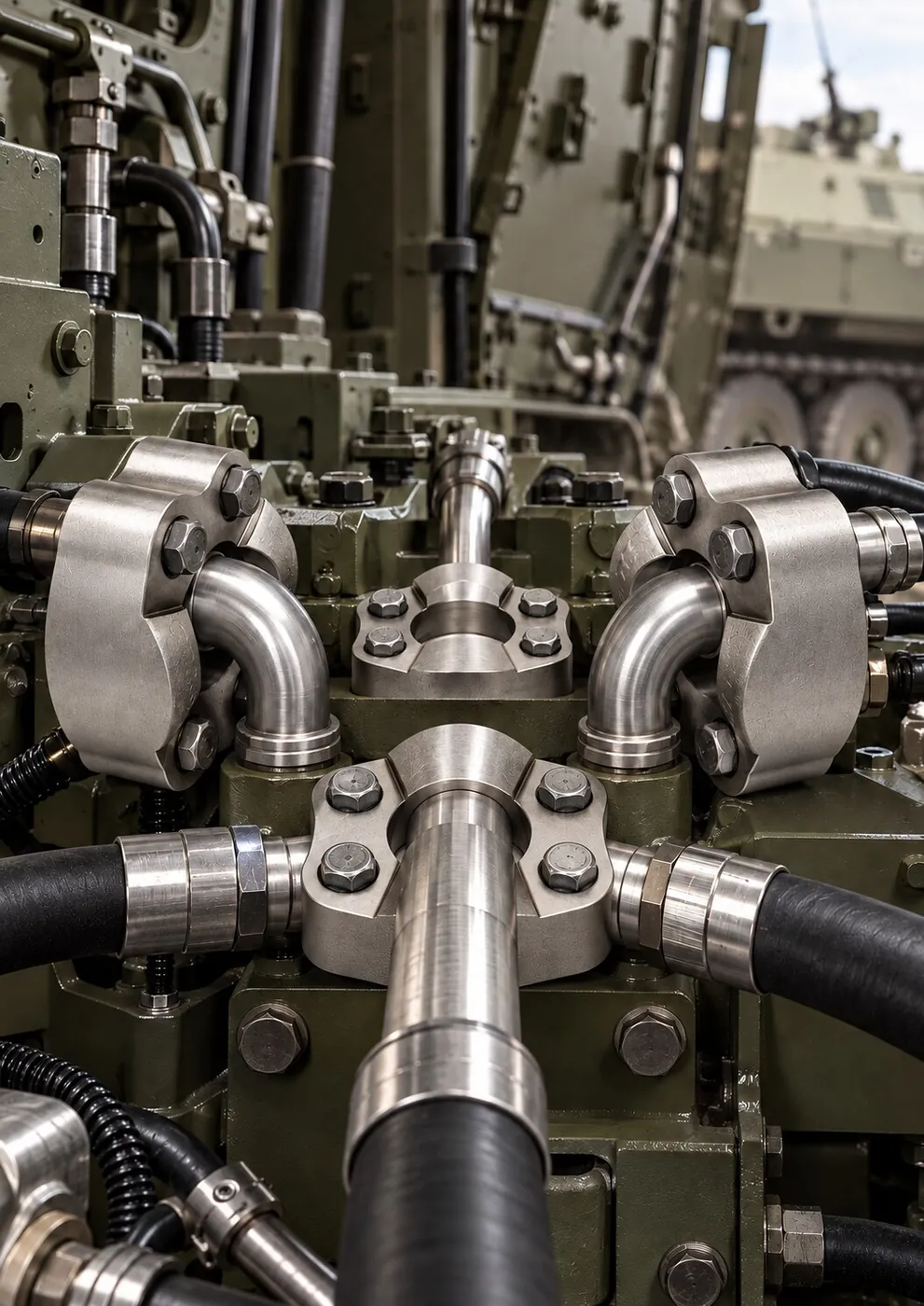
Custom-Made Hydraulic Parts
Stainless steel manifold blocks machined from solid to technical drawings, combining multiple hydraulic lines in a single body…
Can't find your part in the list?
Send a sample photo, technical drawing or dimensions; we'll identify the right fitting from our catalog or through custom manufacturing.
Faik Güney · Contact person
Services
Beyond supplying parts, we complete the job in the field with piping, hose assembly, custom manufacturing and technical identification.
Hydraulic hose assembly and crimping: hose assemblies with straight, 45° and 90° stainless steel ends in BSP, JIC, NPT…
View service – Hydraulic Hose AssembliesStandard stainless steel fittings, adapters, hose ends, flanges and valves ready to ship within an average of 1-3…
View service – Fast Supply & Shutdown SupportWhere a standard product is not the answer: custom adapters, nipples, flange blocks and transition parts made from a…
View service – Custom Parts from Drawings & SamplesIdentifying BSP, NPT, UNF/JIC and metric threads by measurement, matching them correctly to the mating part, and…
View service – Fitting & Thread IdentificationSelection of AISI 316L-body ball valves, needle valves and check valves by body, connection standard, bore size…
View service – Valves, Check Valves & Flow ControlAISI 316/316L tube with twin-ferrule union, elbow, tee, connector and adapter fittings for small-bore measurement…
View service – Instrumentation TubingWelded and demountable stainless steel lines built from AISI 316/316L pipe, flanges and fittings: bevel preparation…
View service – Stainless Steel Pipe FabricationThread profiles, sealing cones, wrench flats and connection geometry are machined from AISI 316/316L bar on CNC…
View service – Stainless Steel CNC MachiningOverview
Quick answer
In mining and mineral processing plants, AISI 316/316L hose ends, SAE flanges, adapters and valves are used on emulsion pump stations, mining machinery, crusher circuits, reagent dosing, leaching, drainage and dust suppression lines, particularly at points that are constantly wet and corrosive. Selection is based on the fluid type, the pH, chloride content and temperature of the water, vibration, impact and maintenance access. In dry, sheltered areas, plated carbon steel fittings may be sufficient.
In a mine, the service life of a hydraulic fitting is often determined as much by its environment as by pressure. Underground, roof support lines run on a water-based emulsion and machines work in humidity and dust; in a mineral processing plant, process water containing lime and reagents, leach solutions and dust suppression water are found close to the crusher hydraulics. A carbon steel fitting with damaged plating rusts in this environment, its threads seize, and it is hard to remove at the next maintenance.
GÜNEYSS prepares AISI 316/316L stainless steel hose ends, ready-assembled hose assemblies, SAE flanges, adapters, ball and needle valves, check valves and twin-ferrule fittings for teams that maintain mining machinery, for mineral processing plants and for companies that build equipment for these sites. Parts that are no longer available or non-standard are CNC-machined from a sample or technical drawing.
Field conditions
We select fittings for these conditions and specify the material, sealing type and installation method accordingly.
Describe your own conditionsAcid mine drainage and chloride-bearing groundwater quickly corrode carbon steel fittings and clamps and cause threads to seize.
Roof support emulsion and fire-resistant fluids raise questions of internal surface corrosion and of seal and plating compatibility.
Hydraulic breaker, drill and crusher circuits fatigue connections under constant pressure fluctuation.
Dust, mud and rubbing wear down the outer cover of hoses; dirt gets into the circuit during disassembly.
Every shipment to the mine takes time; a spare sent out before its size is verified can leave a machine idle for several shifts.
Machines with ORFS, JIC, metric and SAE flange connections work side by side in the same fleet; a wrong match causes leaks.
Technical selection notes
Points we clarify with you before ordering for Mining & Mineral Processing applications.
The fluid type and the pH, chloride content and temperature of the water are the starting point for material and seal selection.
Depending on the machine manufacturer, ORFS, JIC, metric or SAE flange connections are used; the thread and sealing type should be measured before ordering.
On lines subject to impact, hose type and pressure rating should be selected according to the impulse frequency; an abrasion sleeve should be added along chafing routes.
Any requirement for flame-retardant or antistatic hose, or for explosive atmospheres, should be specified in the quote request.
When hose assembly, adapter and O-ring sizes are on record, the right spare is requested the first time, even at a remote site.
Detailed guide
Heavy machinery mostly comes with plated carbon steel fittings, and in dry, sheltered areas these may be sufficient. Stainless steel makes a difference at points where the connection stays permanently wet, is exposed to corrosive water or is frequently disassembled:
In most of these environments, AISI 316L lasts far longer than carbon steel; however, as chloride levels rise, pH falls and temperature increases, the risk of pitting and crevice corrosion grows, particularly in stagnant gaps such as under seals and at clamp contact points. Share the pH, chloride content and temperature of the water in your quote request; since our raw material is AISI 316/316L, also state it if the specification calls for a different material.
Powered roof support systems generally run on a fire-resistant, water-based emulsion (HFA); this fluid lubricates less well than mineral oil, and seals should be selected to suit the fluid. Phosphate ester fluids are incompatible with NBR seals, and water-glycol fluids with zinc and cadmium plating. The roof support units' own quick-connect system is governed by the equipment manufacturer's standard; GÜNEYSS contributes on pump station, distribution and filter lines, test points, and adapters and transition pieces.
In coal mines, the flame-retardant and antistatic properties of hoses, and in mines with firedamp the requirements for explosive atmospheres (ATEX Group I), are subject to the relevant regulations and the operator's occupational health and safety requirements; they should be stated in writing in the quote request.
| Application | Common connection | Point to watch |
|---|---|---|
| Main lines on loaders, drills and breakers | Hose assembly with SAE flange Code 61/62, ORFS or JIC 37° ends | Impact loads, bend radius, outer cover abrasion |
| Machines and power units with metric ports | Metric 24° cone fittings and hose ends | Do not mix up the L and S series |
| Emulsion pump station and distribution | Stainless steel tube, fittings, ball valves and check valves | Fluid-compatible seals, internal surface corrosion |
| Reagent dosing and sampling lines | Twin-ferrule fittings, needle valves, check valves | Chemical compatibility, backflow prevention |
| Dust suppression and drainage water lines | Stainless steel pipe, flanges, ball valves, quick couplings | Clogging by suspended solids, frequently disconnected points |
Hydraulic breakers, drills and crushers generate constant pressure fluctuation and vibration in the line; hose type (wire-braided or spiral-reinforced) and pressure rating should be selected with the frequency of pressure impulses in mind as well. The outer cover of a hose rubbing against rock or the edge of a chassis wears quickly; an abrasion sleeve, a spiral guard and correct clamp spacing extend its service life. An anti-seize compound should be used on stainless steel threads to prevent galling, and connections on vibrating lines should be checked at every maintenance.
In flotation, collector, frother and depressant reagents are fed at low flow rates with precise dosing; on metal-tubed dosing lines, stainless steel tubing, twin-ferrule fittings, needle valves and check valves can be used. In heap leaching, the solution varies with the ore: acidic solutions are used for copper and alkaline cyanide solutions for gold. With reagents such as sulfuric acid, the behavior of stainless steel depends on concentration and temperature; compatibility should be confirmed against the plant's process data and specification. The closing hydraulics of filter presses also work in a wet, muddy environment.
A mine is often far from its suppliers; a spare in the wrong size can leave a machine idle for several shifts. We recommend preparing a spares list for each machine that includes hose assembly, adapter, O-ring and valve sizes, and keeping critical items on site. In an emergency, send a photo of the part taken next to a caliper, the thread size and the quantity via WhatsApp; stock availability and thread type are confirmed by message, and a sample is requested for unclear threads. Unobtainable adapters and flange blocks for machines that are out of production can be remanufactured from samples.
Applications
Teams in Mining & Mineral Processing that need fittings, hose assemblies and custom parts.
Stainless steel adapters, valves and hose assemblies for emulsion pump stations, main distribution lines and underground machinery.
Hose ends and SAE flanges for constantly wet points in excavator, loader, haul truck and drill rig hydraulics.
Stainless steel fittings for crusher adjustment cylinders, mobile plant hydraulics and dust suppression lines.
Twin-ferrule fittings, needle valves and check valves on flotation reagent dosing, sampling and process water lines; hose ends for filter press hydraulics.
Spare hose assemblies and adapters by machine, and unobtainable parts manufactured from samples.
Manifold and distribution connections for emulsion pump stations, dosing units and hydraulic power units.
Gallery
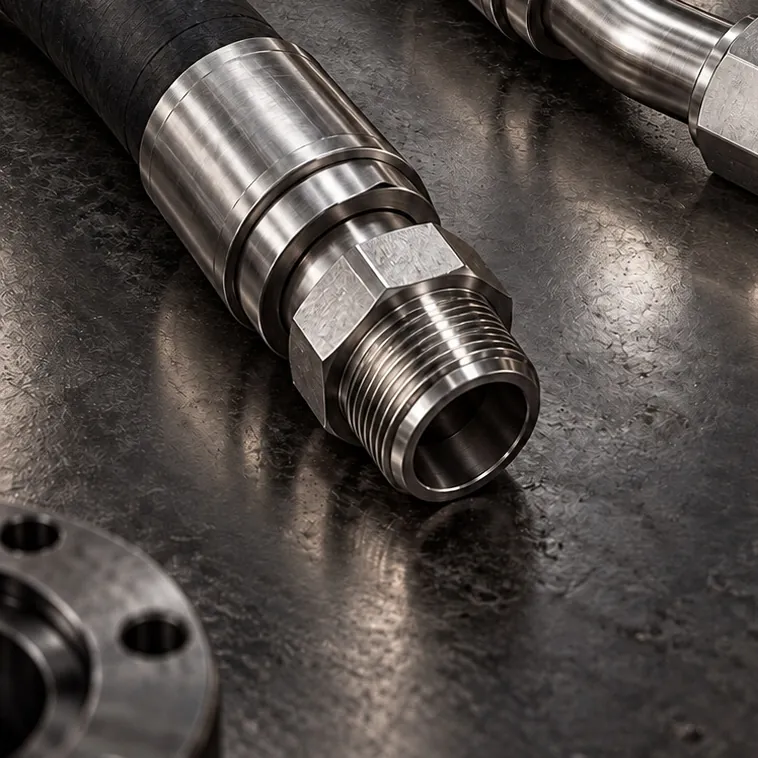
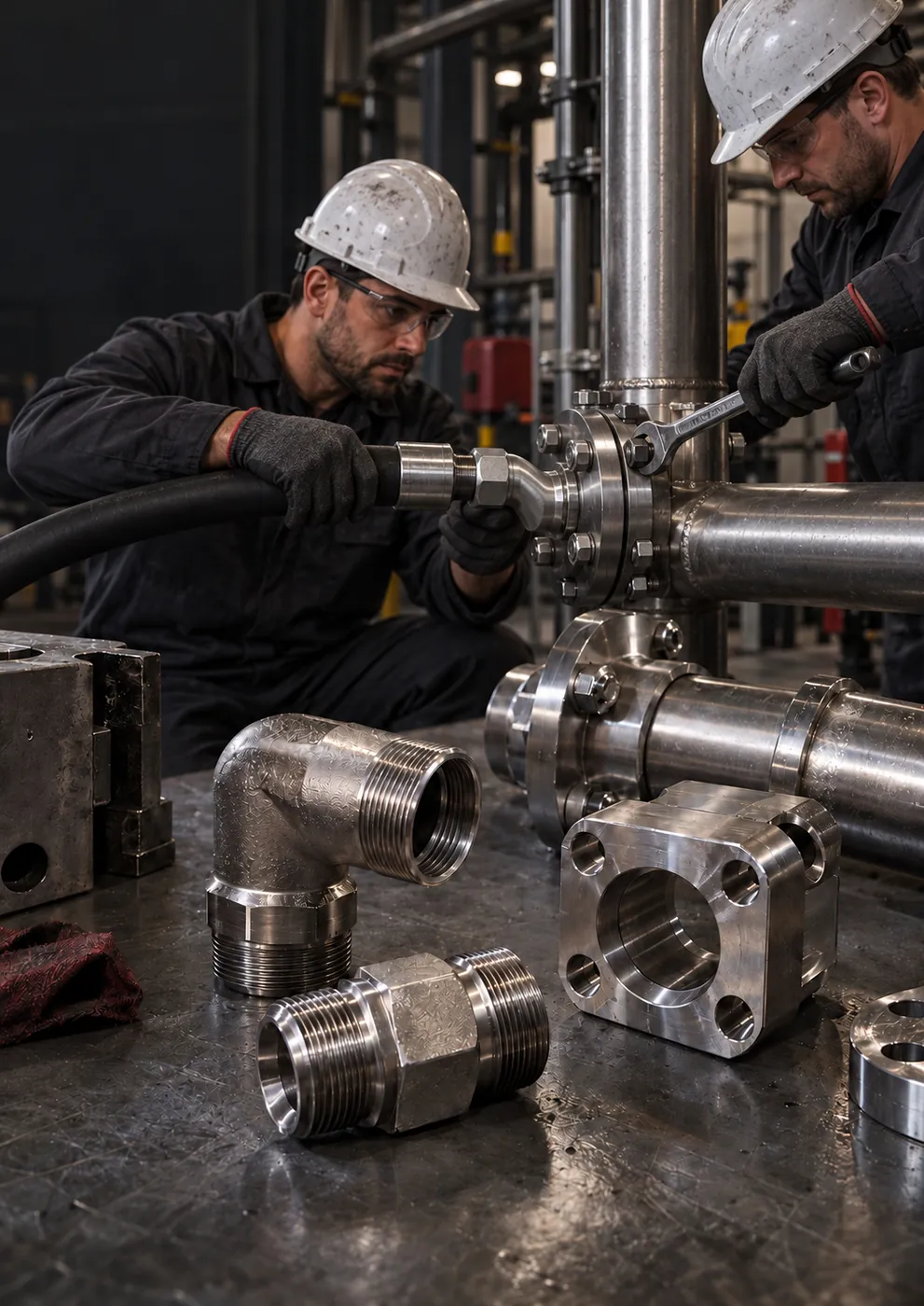
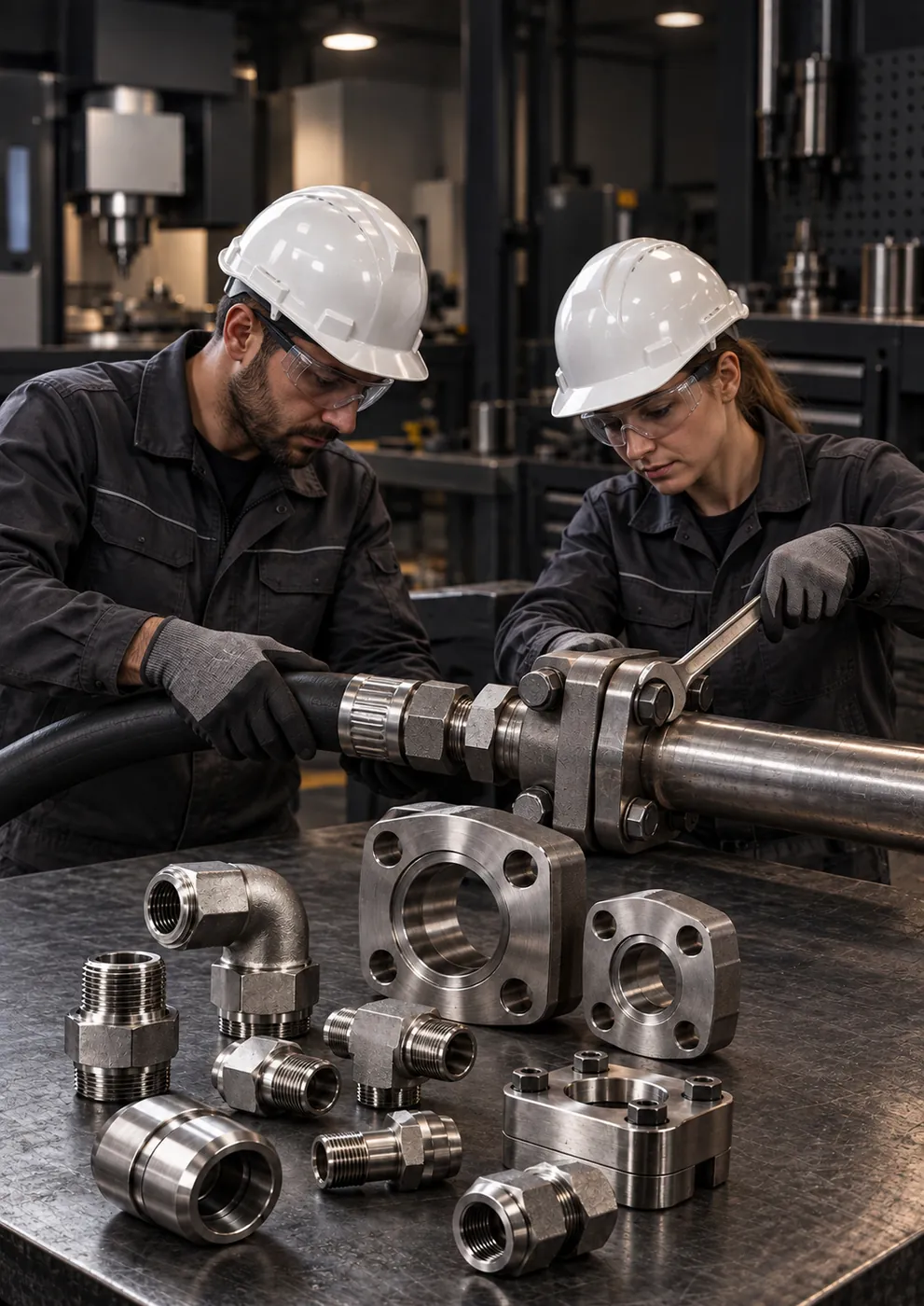
Installing a hose connection on a flanged pipeline (illustrative image)
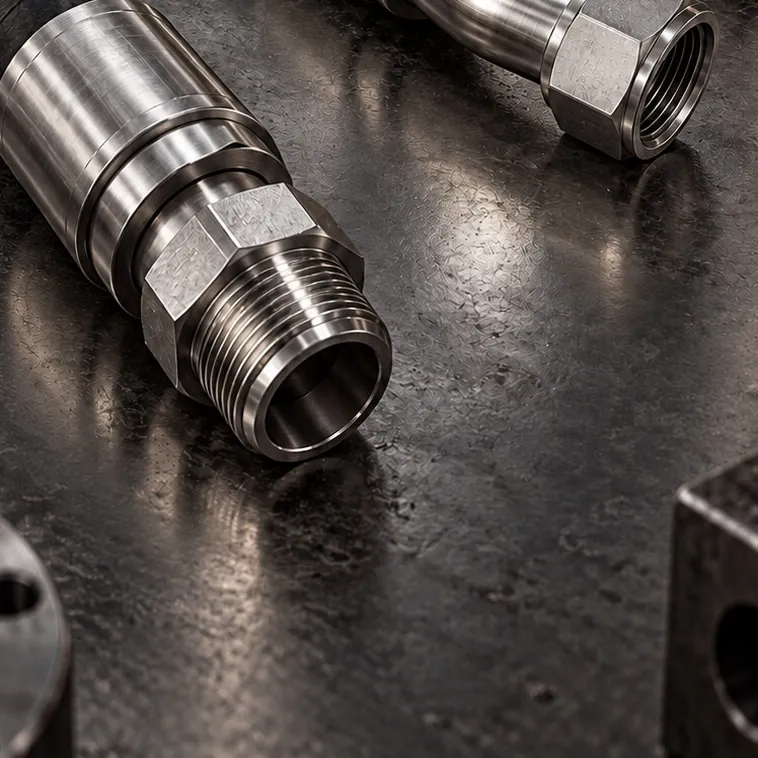
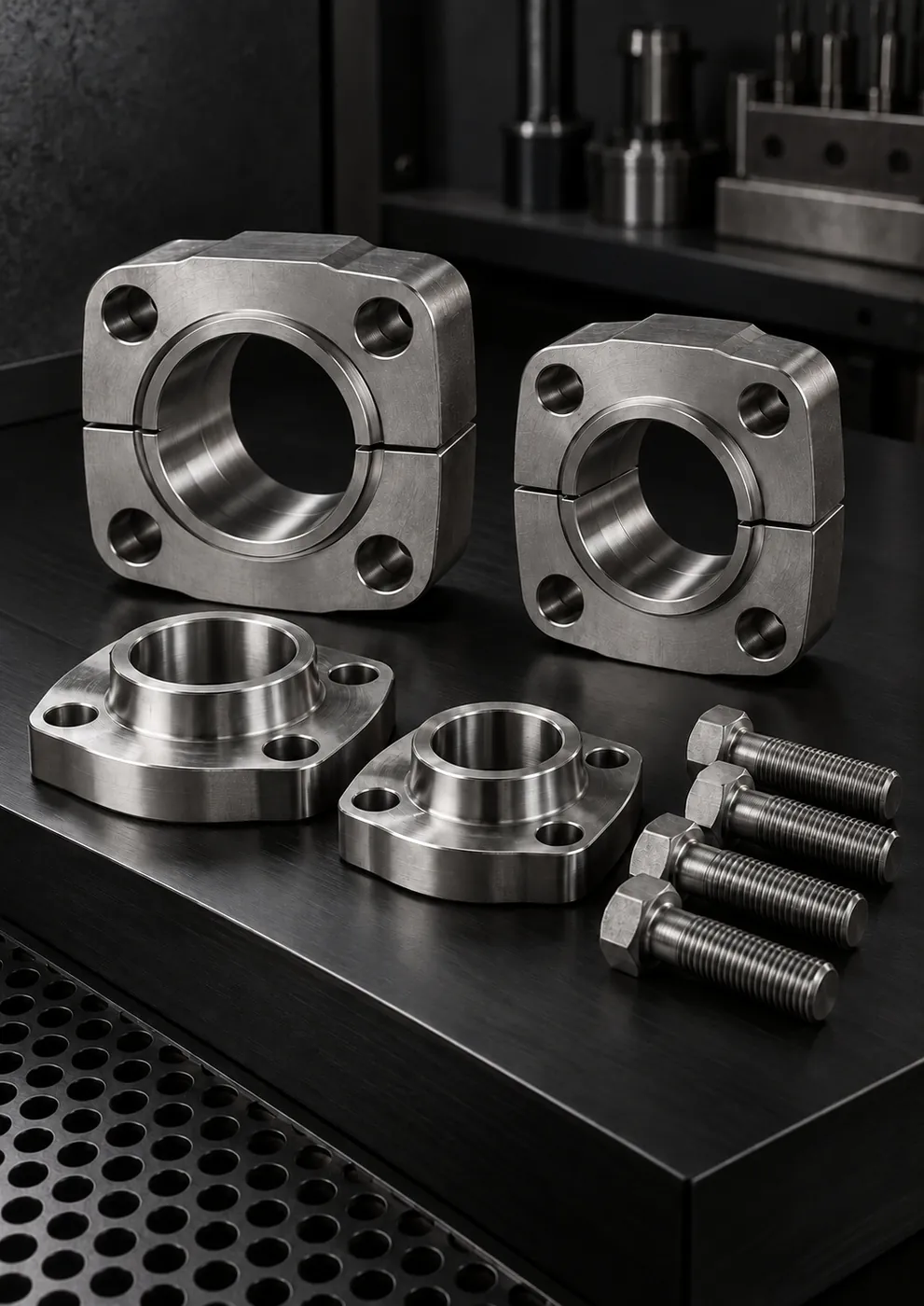 SAE flanges and bolts for high-pressure main lines (illustrative image)
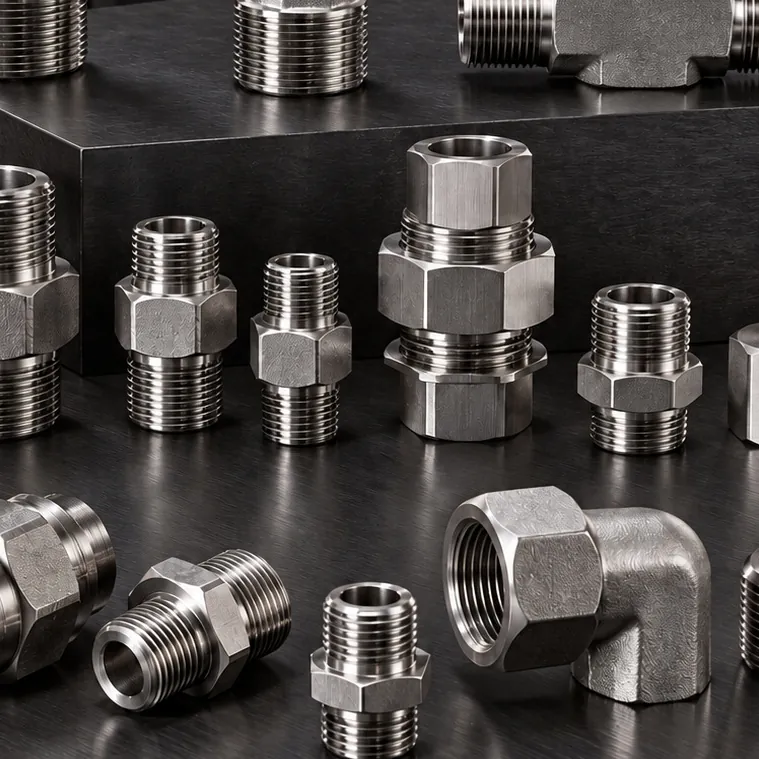
Stainless steel ball valves and check valves for drainage and dosing lines (illustrative image)
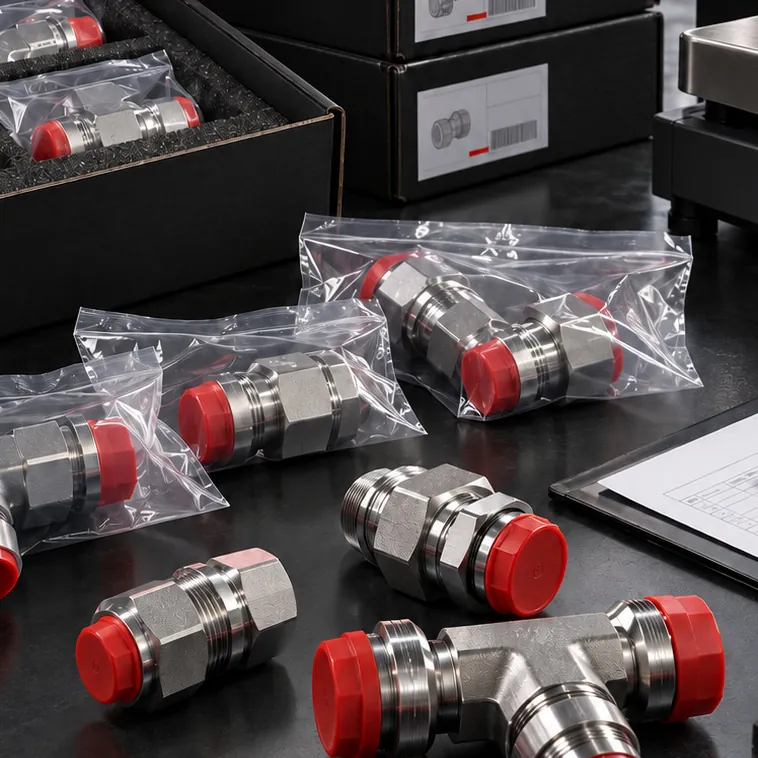
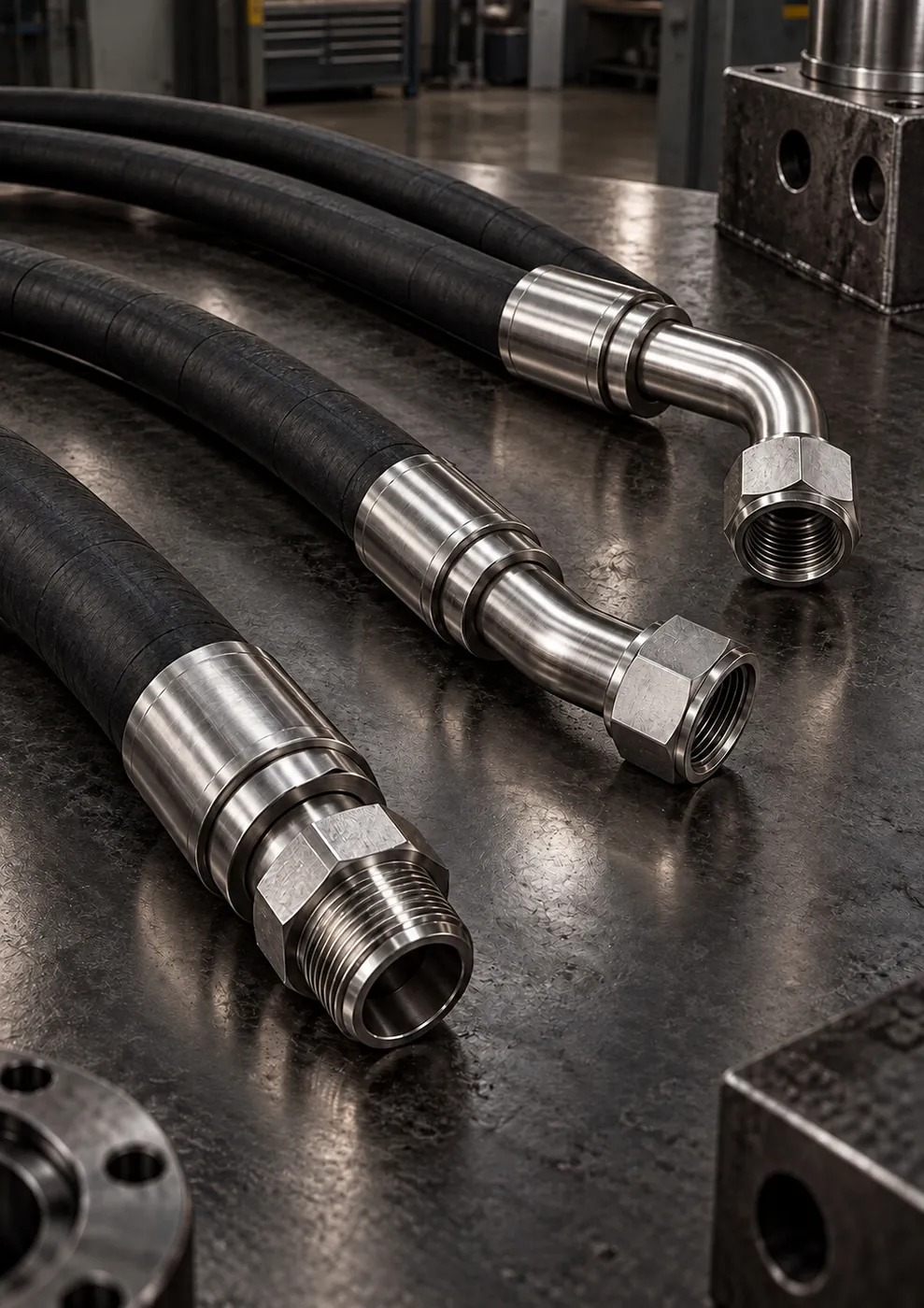 Ready-to-install hose assemblies with stainless steel ends (illustrative image)
Knowledge Center
The right hose assembly is defined by seven pieces of information: inside diameter and length, temperature, application conditions, fluid, working…
Hydraulic connections are sealed in four ways: O-ring, bonded seal (Dowty washer), metal cone face and tapered thread. On parallel threads, the seal…
Code 61 (ISO 6162-1) and Code 62 (ISO 6162-2) flanges are not interchangeable, even at the same nominal size: the Code 62 flange head is thicker and…
Frequently asked questions
If your question isn't answered here, write to us and we'll pin down the size, thread standard and material together.
Send us your questionNot necessarily. In dry, sheltered areas, the manufacturer's plated carbon steel fittings are often sufficient. At points that are exposed to acidic or chloride-bearing water, run constantly wet, carry emulsion or are frequently disassembled, stainless steel significantly reduces corrosion and thread seizing and makes removal easier during maintenance. We can assess together, based on your machine and line list, at which points a change makes sense.
In acid mine drainage and chloride-bearing groundwater, 316L lasts far longer than carbon steel; however, as chloride levels rise, pH falls and temperature increases, the risk of pitting and crevice corrosion grows. For water where these conditions are severe, the operator's specification may call for a higher-alloy material. Share the pH, chloride content and temperature of the water together with your specification; since our raw material is AISI 316/316L, we will tell you clearly whether the request can be met.
The roof support units' own quick-connect system depends on the equipment manufacturer's standard and approval; we make no claim to supply those connections themselves. We prepare stainless steel fittings for emulsion pump stations, distribution and filter lines, test points, adapters and transition pieces. A non-standard transition piece is assessed based on a sample or technical drawing.
With water-based fluids (HFA, HFC), a stainless steel body offers an advantage against internal surface corrosion; the decisive factor is the sealing element. Phosphate ester fluids are not compatible with standard NBR seals, water-glycol fluids can damage zinc and cadmium plating, and the low viscosity of emulsions also increases the tendency to leak. If you include the class of fluid you use and the fluid manufacturer's seal recommendation in your quote request, the O-ring material is selected accordingly.
On hydraulic breaker and drill hoses, the two most common causes are impact and abrasion. A hose type not selected for the pressure fluctuations, a route that rubs against rock or the edge of the chassis, and an installation that is stretched or twisted during movement all significantly shorten service life. These effects can be reduced by reselecting the end angle and length, and with an abrasion sleeve and suitable clamp spacing. A few photos showing the hose's route on the machine, along with where the damage starts, are the starting point for an assessment.
Send a photo of the part taken next to a caliper, the thread size and the quantity via WhatsApp or by phone; stock availability and thread type are confirmed by message. For a hose assembly, it is enough to state the connection type and angle at both ends, the hose inside diameter, the overall length and the working pressure. Lead times for items supplied from stock and for items to be made to size or manufactured are given separately.
Quote
Send the machine list, photos of the connections and, if known, the pH and chloride values of the water; we'll tell you separately which items are in stock and which require manufacturing.
Mining & Mineral Processing request form
Other sectors