


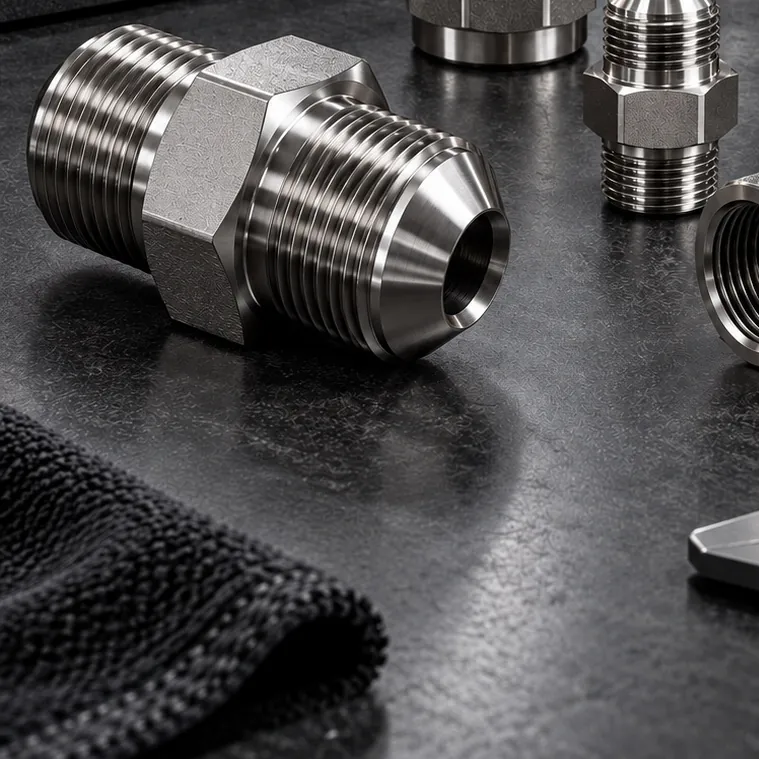
JIC 37° Fittings & Adapters
JIC Male x JIC Male Adapter
Stainless steel straight adapter with UNF male threads and JIC 37° cone seats at both ends. Joins two female swivel hose or tube…
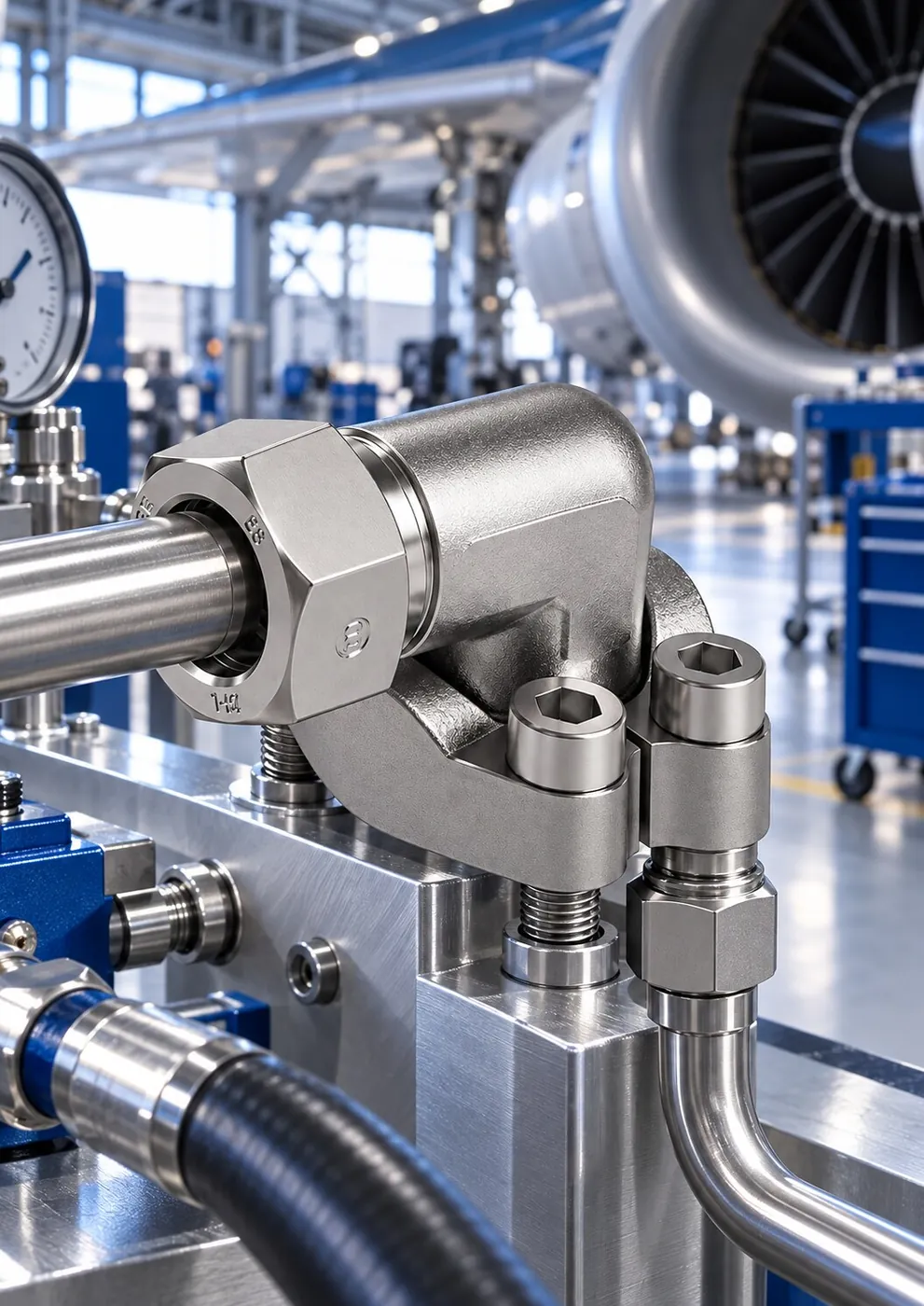
Ground support · Test benches · Precision threads
Compact AISI 316/316L fittings with clean threads and sealing surfaces for ground support equipment, hydraulic test benches and maintenance workshops.
Featured products in this sector
View all 14 productsProducts
14 products are listed for the operating conditions of Aviation. Narrow down by group; open a product page for sizes and thread standards.
JIC 37° Fittings & Adapters
Stainless steel straight adapter with UNF male threads and JIC 37° cone seats at both ends. Joins two female swivel hose or tube…
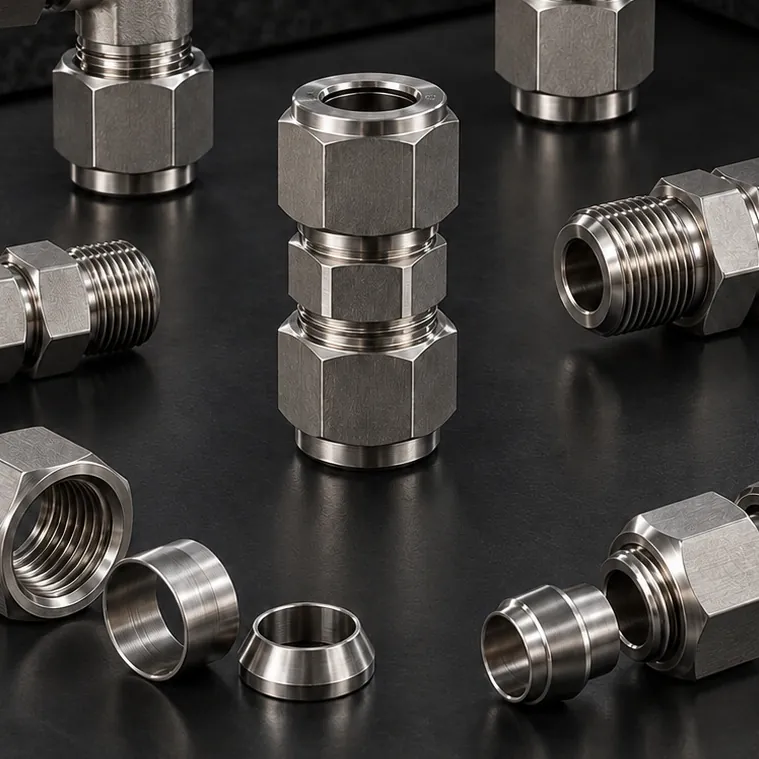
Twin Ferrule Instrumentation Fittings
Stainless steel twin-ferrule union joining two instrumentation tubes on the same axis. Weld-free, repeatable makeup in…
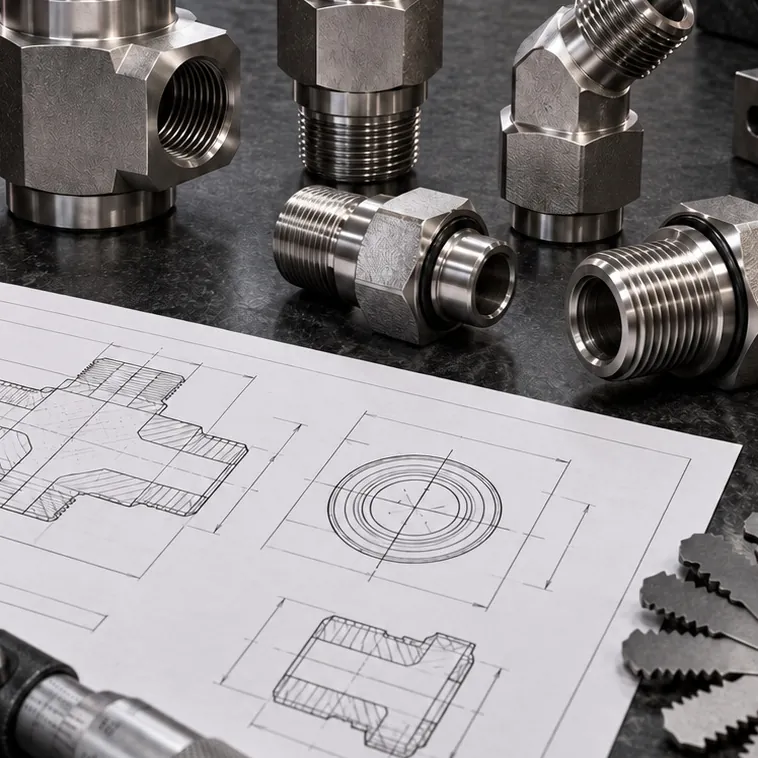
Custom-Made Hydraulic Parts
Custom stainless hydraulic adapter CNC-machined from a sample or technical drawing for thread, size and angle combinations not…
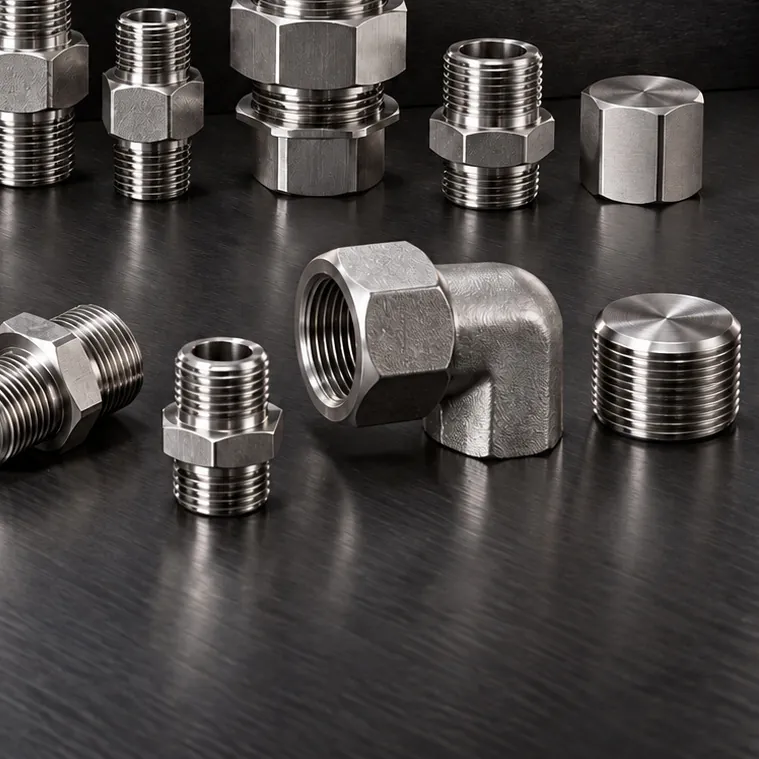
DIN 2353 Compression Fittings
Stainless steel 90° male stud elbow with a 24° cone tube connection on one end and a male NPT thread on the other. Tube outlet…
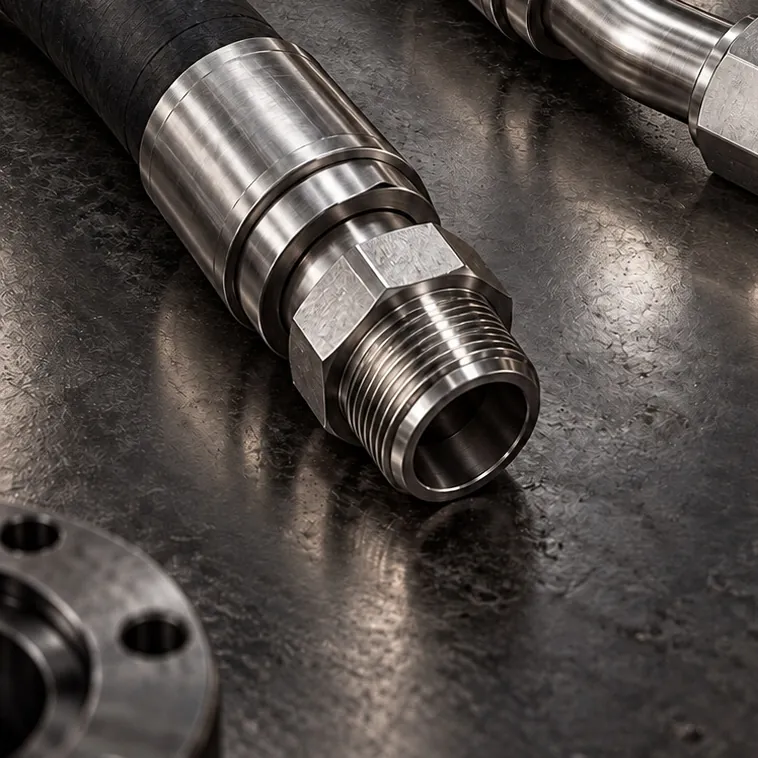
Hose Fittings & Ferrules
Stainless steel straight hose fitting with a female UNF swivel nut and JIC 37° cone seat. Crimp hose end for hydraulic systems…
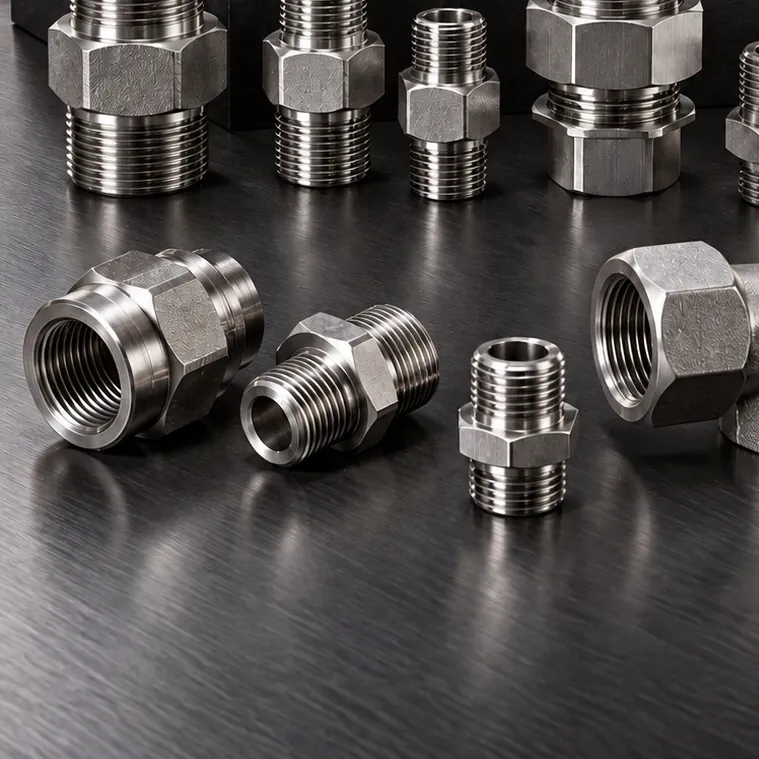
Hose Fittings & Ferrules
Stainless steel ring-type (banjo) hose fitting connected to the port with a hollow bolt. Rotatable connection perpendicular to…
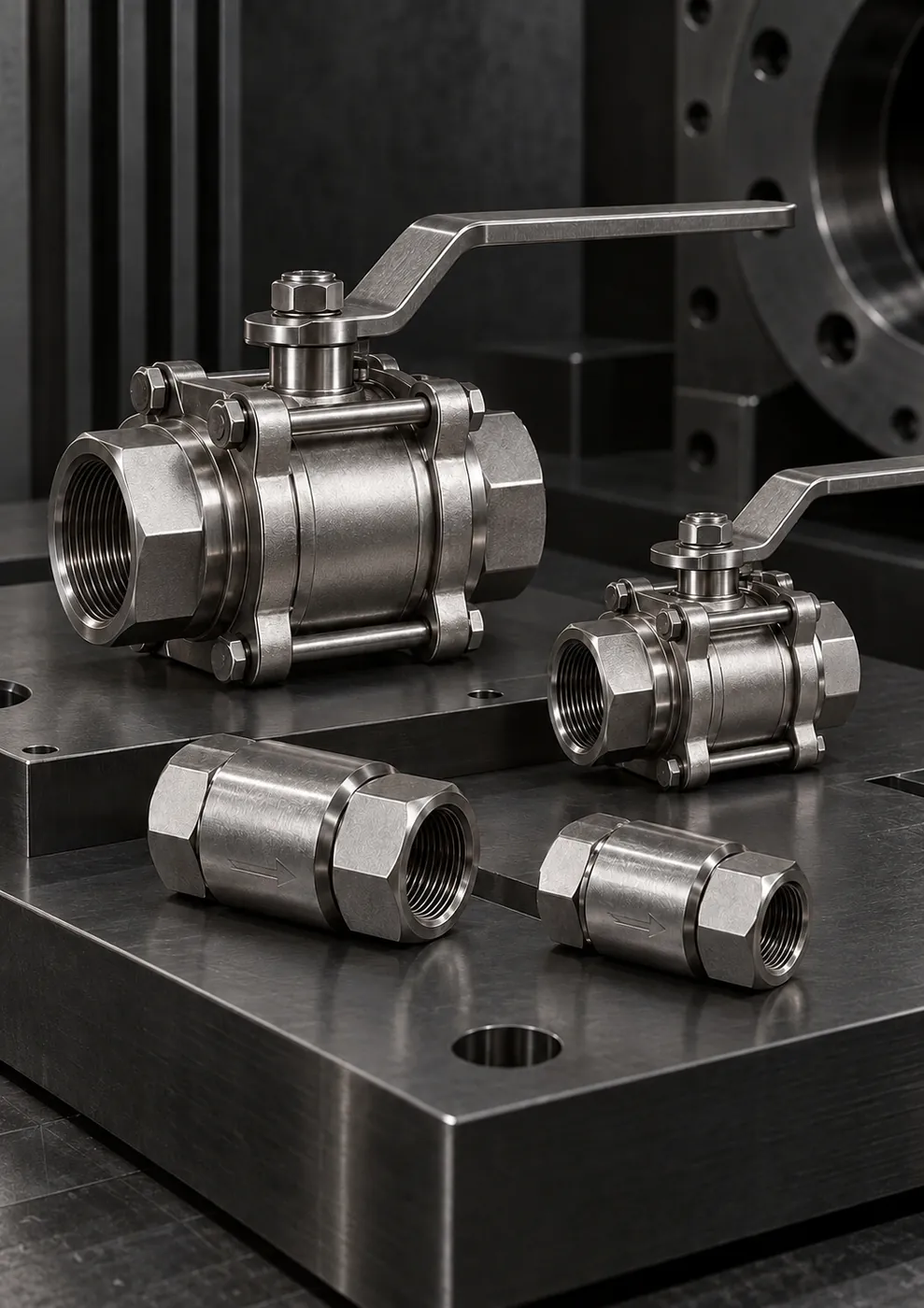
Ball, Needle & Check Valves
Stainless steel needle valve with a tapered stem for fine flow adjustment and isolation of measurement lines. For gauge, sampling…
Twin Ferrule Instrumentation Fittings
Stainless steel twin ferrule male connector joining instrumentation tube to a threaded port, with a tube end on one side and a…
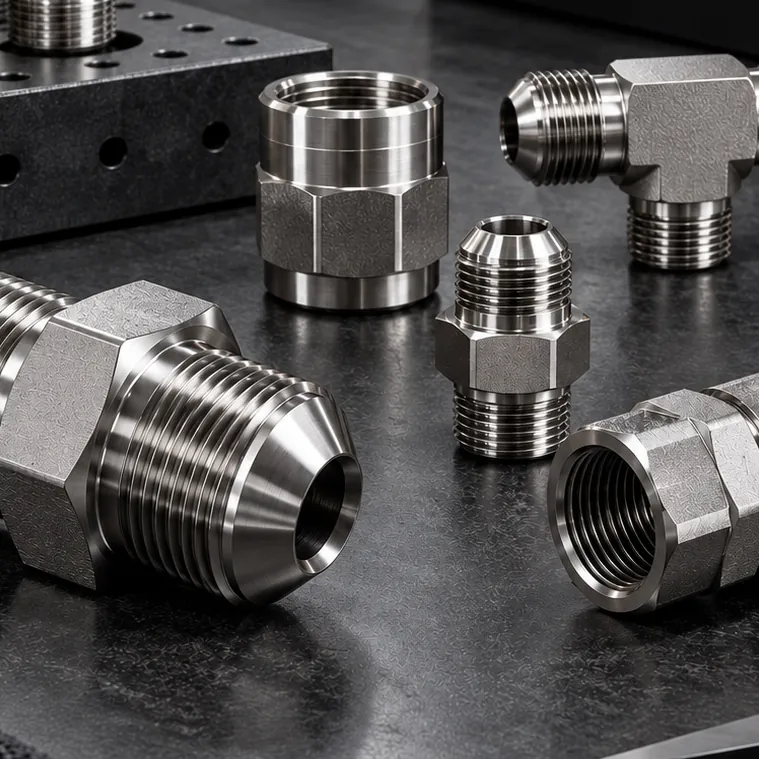
JIC 37° Fittings & Adapters
Straight stainless steel adapter with a JIC 37° UNF male end and an NPT tapered male thread. Connects JIC hoses or tubing to…
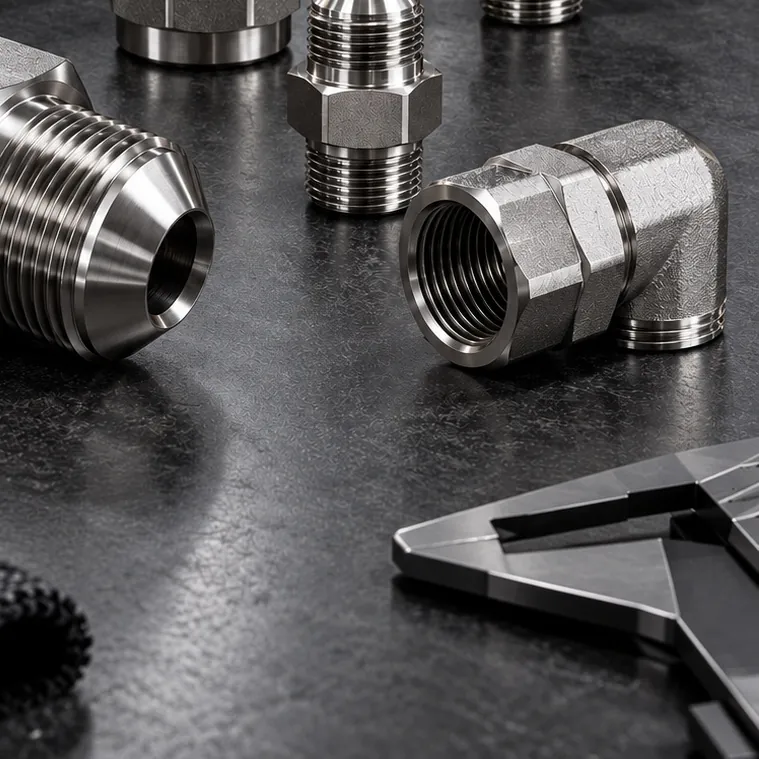
JIC 37° Fittings & Adapters
Stainless steel 90° elbow with a JIC 37° male end and a JIC 37° female swivel nut end. Routes hoses without twisting and makes…
JIC 37° Fittings & Adapters
Male plug for sealing JIC 37° female ends and female cap for sealing male ends. Stainless steel, for sealing off lines, pressure…
JIC 37° Fittings & Adapters
Straight stainless steel ORB to JIC adapter with an SAE O-ring boss (UNF) port end and a JIC 37° male line end. Secure port…
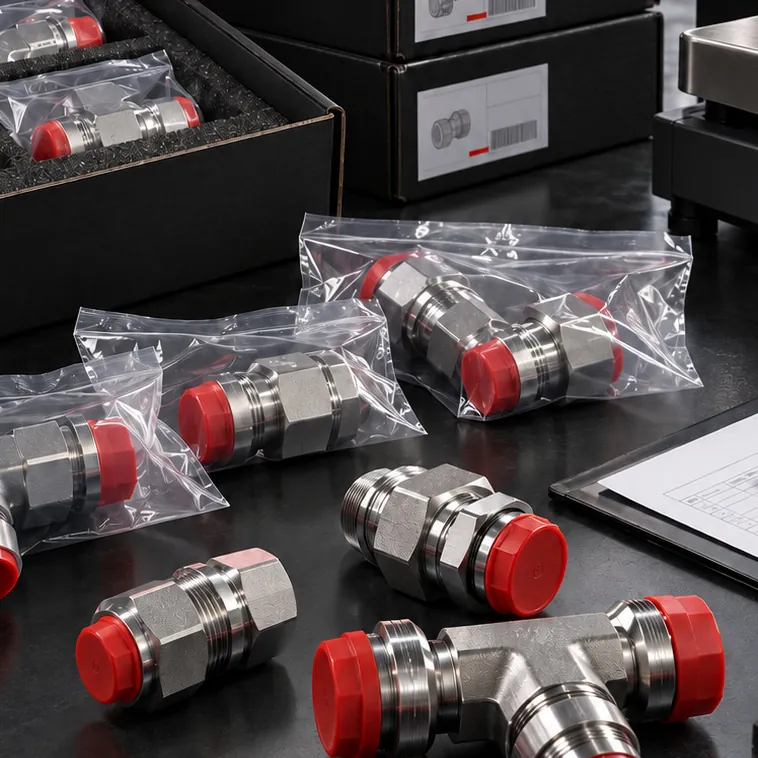
Quick Disconnect Couplings
Stainless steel-bodied male-female quick disconnect coupling with BSP threads. Fast, tool-free connection at test points, on…
Custom-Made Hydraulic Parts
Stainless steel manifold blocks machined from solid to technical drawings, combining multiple hydraulic lines in a single body…
Can't find your part in the list?
Send a sample photo, technical drawing or dimensions; we'll identify the right fitting from our catalog or through custom manufacturing.
Faik Güney · Contact person
Services
Beyond supplying parts, we complete the job in the field with piping, hose assembly, custom manufacturing and technical identification.
Thread profiles, sealing cones, wrench flats and connection geometry are machined from AISI 316/316L bar on CNC…
View service – Stainless Steel CNC MachiningAISI 316/316L tube with twin-ferrule union, elbow, tee, connector and adapter fittings for small-bore measurement…
View service – Instrumentation TubingWhere a standard product is not the answer: custom adapters, nipples, flange blocks and transition parts made from a…
View service – Custom Parts from Drawings & SamplesOrderly, labeled and service-friendly connections with stainless steel tube and fittings on control panels, power units…
View service – Control Panel & HPU TubingIdentifying BSP, NPT, UNF/JIC and metric threads by measurement, matching them correctly to the mating part, and…
View service – Fitting & Thread IdentificationHydraulic hose assembly and crimping: hose assemblies with straight, 45° and 90° stainless steel ends in BSP, JIC, NPT…
View service – Hydraulic Hose AssembliesOverview
Quick answer
In aviation, stainless steel hydraulic fittings are used mainly in ground support equipment, hydraulic test benches, maintenance workshops and the process lines of manufacturing facilities. In these applications, clean surfaces, precise threads and compact geometry come first; the connection type is selected as JIC/UNF, NPT, BSP or an application-specific metric size. Flight-critical parts on the aircraft itself are subject to their own aviation standards and an approved supply chain.
In aviation, hydraulics are not confined to the aircraft. The jacks and lifting systems that support aircraft during maintenance, hydraulic ground power units, the benches where actuators and landing gear components are tested, and the press and fixture hydraulics in manufacturing facilities all demand clean, precise and reliable connections. Ground support, maintenance and hydraulic test equipment require clean surfaces, precise threads and compact connection geometry.
GÜNEYSS manufactures AISI 316/316L stainless steel fittings, adapters, test connections and custom transition fittings for aviation manufacturing facilities, ground support equipment manufacturers and maintenance workshops. Sample-based or custom-size requests are added to the production schedule after technical approval. We make no claim to certified supply of flight-critical aircraft parts; our focus is on ground equipment, testing and manufacturing.
Field conditions
We select fittings for these conditions and specify the material, sealing type and installation method accordingly.
Describe your own conditionsChip and burr residue on a test bench is carried straight into the component under test; internal surface cleanliness matters as much as dimensions.
Phosphate ester-based fluids attack NBR seals; the seal material must be selected to suit the fluid.
Test adapters are constantly connected and disconnected; galling and wear on stainless steel threads must be planned for in advance.
Ground equipment and test benches need elbows and adapters that fit into tight spaces.
JIC fittings on ground equipment must not be confused with aviation-standard parts on the aircraft.
Technical selection notes
Points we clarify with you before ordering for Aviation applications.
Parts on the aircraft are subject to their own standards; selection should be limited to ground equipment, testing and manufacturing.
Compatible seals such as EPDM are selected for phosphate ester fluids, and NBR or FKM for hydrocarbon-based fluids.
Test bench connections are selected not for working pressure but for the highest test pressure the bench will apply.
Thread and port protective caps keep the part clean until assembly.
Setting up a fixed conversion adapter set for the component types tested on the bench reduces errors and lost time.
Detailed guide
Ground support equipment works in apron conditions: rain, de-icing fluids and constant relocation expose connections to both corrosion and impact. That is why stainless steel is a practical choice for exposed hose ends and adapters, extending their service life.
On a hydraulic test bench, contamination is carried straight into the component under test. This is why, in aviation applications, the cleanliness of a fitting matters as much as its dimensions. After machining, sharp burrs are removed and thread roots and transition areas are inspected; the goal is a clean internal surface free of chips and burr residue. Before shipping, threads and sealing surfaces are closed off with protective caps so that the part stays clean until assembly.
System cleanliness is usually specified with a cleanliness code such as ISO 4406. The target cleanliness level is a property not of a single part but of the entire circuit after assembly and flushing; still, starting with clean parts shortens the path to that target. The same care applies to the hose assemblies used on test benches: the ends of made-up hoses should be kept capped, and the hoses should be flushed before they are connected to the circuit.
The hydraulic fluids used in aviation can differ from those in industrial hydraulics. Fire-resistant phosphate ester-based fluids, common in civil aircraft, attack the NBR seals that are suitable for mineral oil; test benches and ground equipment operating with these fluids should use a compatible seal material such as EPDM. With mineral or synthetic hydrocarbon-based fluids, NBR or FKM seals can be used. The stainless steel body is compatible with both fluid families; what matters is specifying the correct O-ring and seal material.
| Connection | Typical use on the aviation side |
|---|---|
| JIC 37° / UNF | US-origin ground support equipment and test benches; metal-to-metal sealing through 37° cone seating |
| NPT | Pressure gauge, pressure switch and transmitter connections |
| BSP | European-origin power units, pumps and valve blocks |
| Metric | Application-specific adapters and manufacturing facility lines |
Although JIC 37° fittings have a similar geometry to the 37° flared fittings in aviation standards, they are not the same in terms of tolerances and documentation requirements. Using JIC fittings on ground equipment does not mean that a JIC part can be installed in place of an aviation-standard part on the aircraft.
Because components built to different standards are connected to the same pressure source on test benches, conversion adapters are used extensively. Each transition should be defined together with the thread standard and sealing method on both sides: for example, an adapter that connects a JIC 37° hose end to a BSPP port seals by cone seating on one side and by a seal on the other.
In aviation manufacturing facilities, hydraulic and process lines are concentrated less on the aircraft part itself than on the machines that produce it: forming presses, clamping cylinders on assembly fixtures, workholding hydraulics on machining centers and process cooling circuits. On these lines, long service life, regular maintenance and fewer production stoppages are the priorities. Stainless steel fittings reduce corrosion in areas that come into contact with coolant and moisture; fixtures, in turn, need elbows that fit into tight spaces and durable adapters at points that are frequently connected and disconnected. Using the same connection type for the same size throughout the facility reduces spare parts variety and the maintenance team's margin for error.
Standard sizes are prepared within 1-3 business days on average depending on stock availability, and standard production items within 5-10 business days. Sample-based or custom-size requests are added to the production schedule after technical approval and planned for completion within 10-20 business days on average. Critical diameters, thread standard, sealing type and installation dimensions are mutually confirmed before production; series production begins after first article approval.
Applications
Teams in Aviation that need fittings, hose assemblies and custom parts.
Stainless steel fittings, adapters and valve connections on press, fixture and process lines.
Hose and tube connections for aircraft jacks, hydraulic ground power units and maintenance platforms.
Test adapters and transition fittings for actuator, pump, valve and landing gear component tests.
Spare sets for frequently used service connections and custom adapters produced from samples.
Pressure gauge, transmitter and pressure switch connections; instrumentation tubing.
Gallery
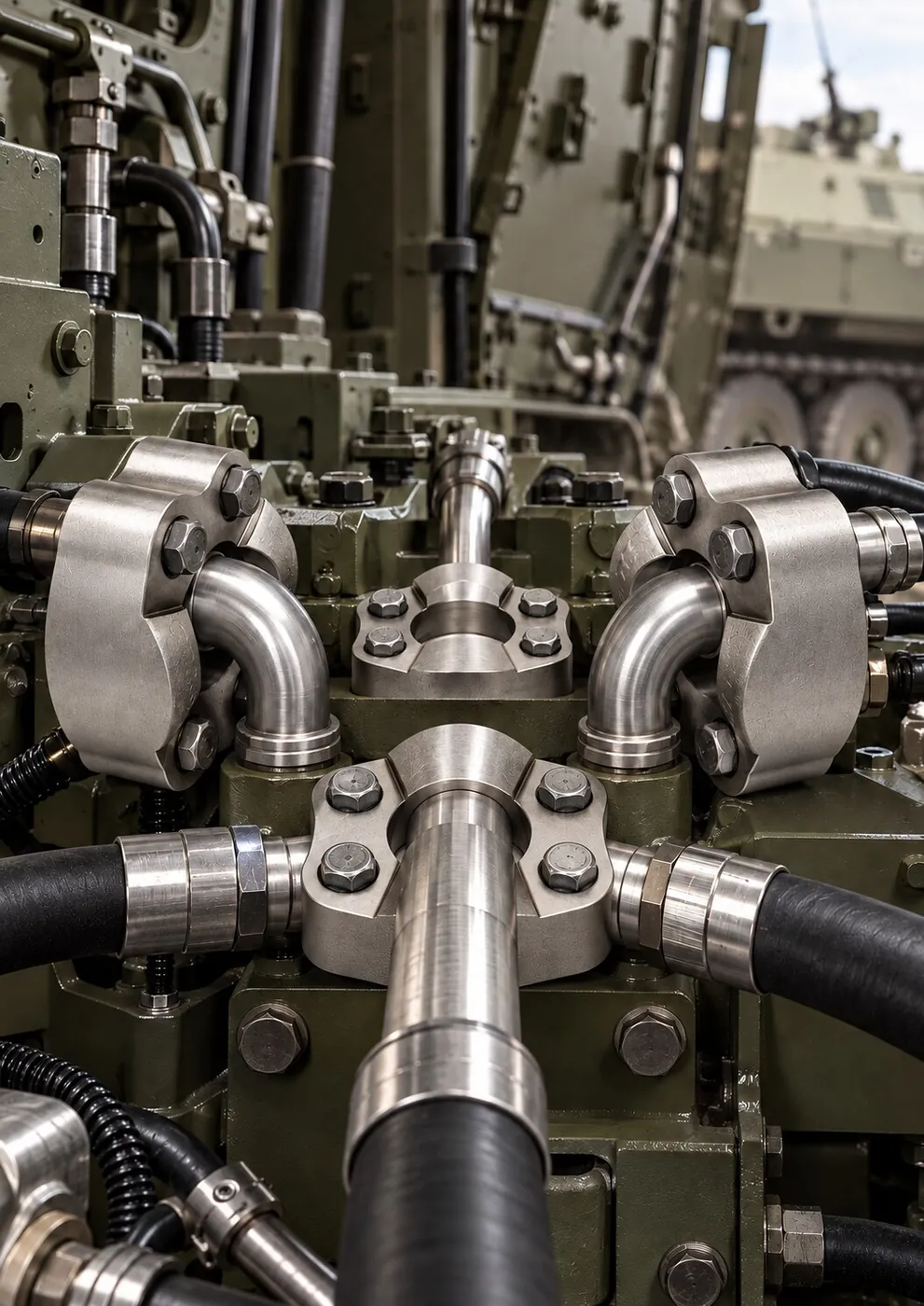
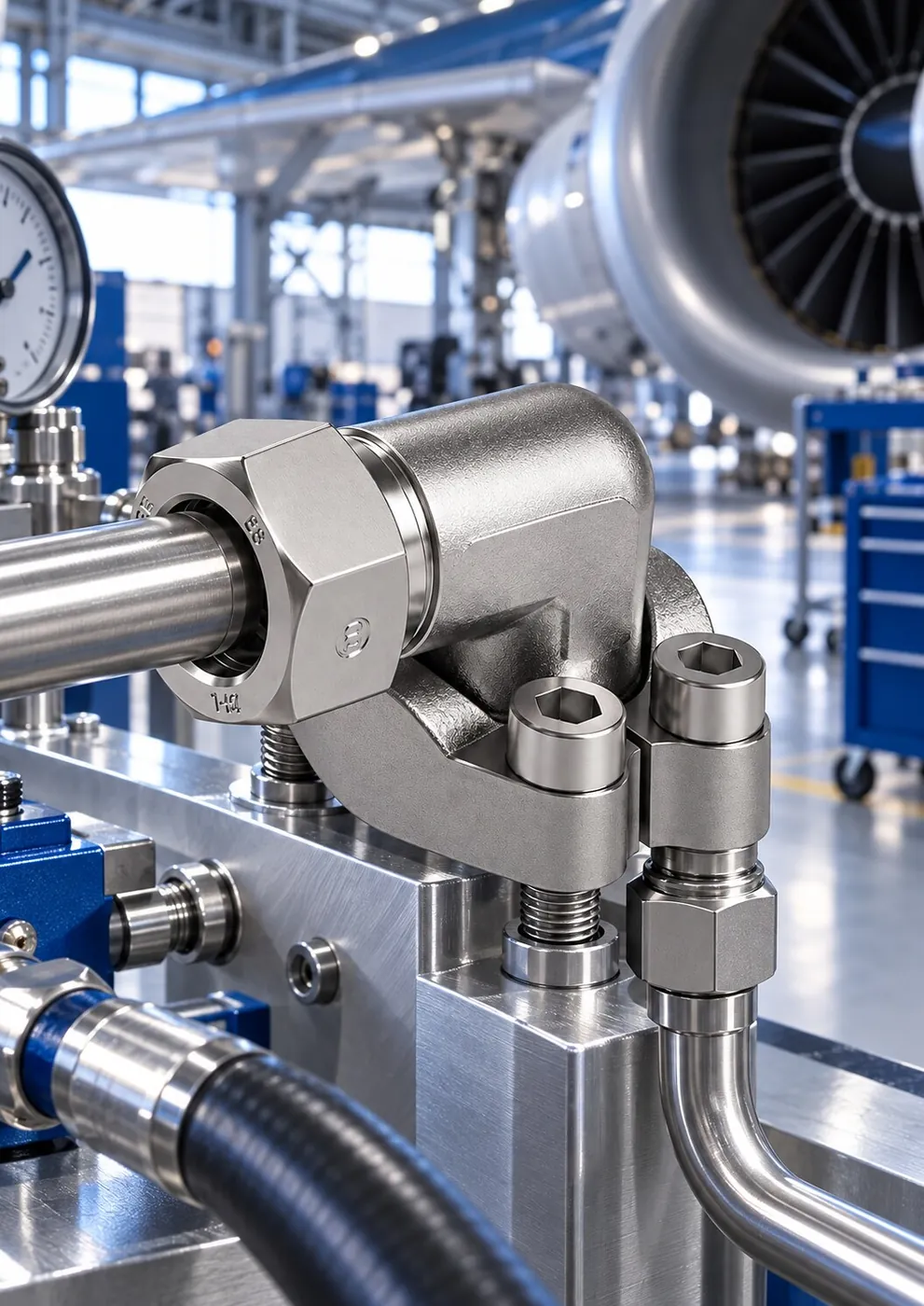
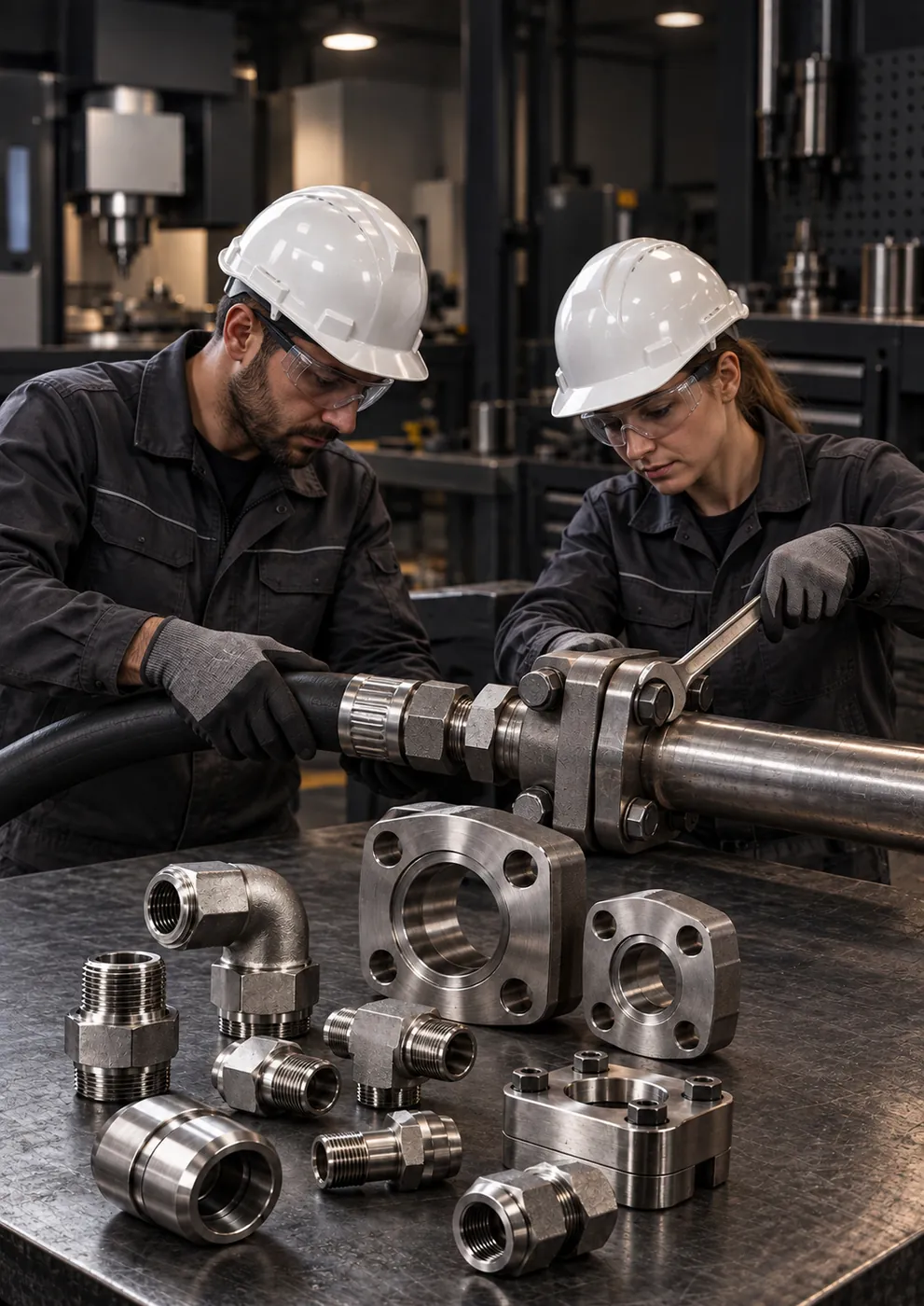
SAE-flanged hydraulic connection on ground support and test equipment (illustrative image)
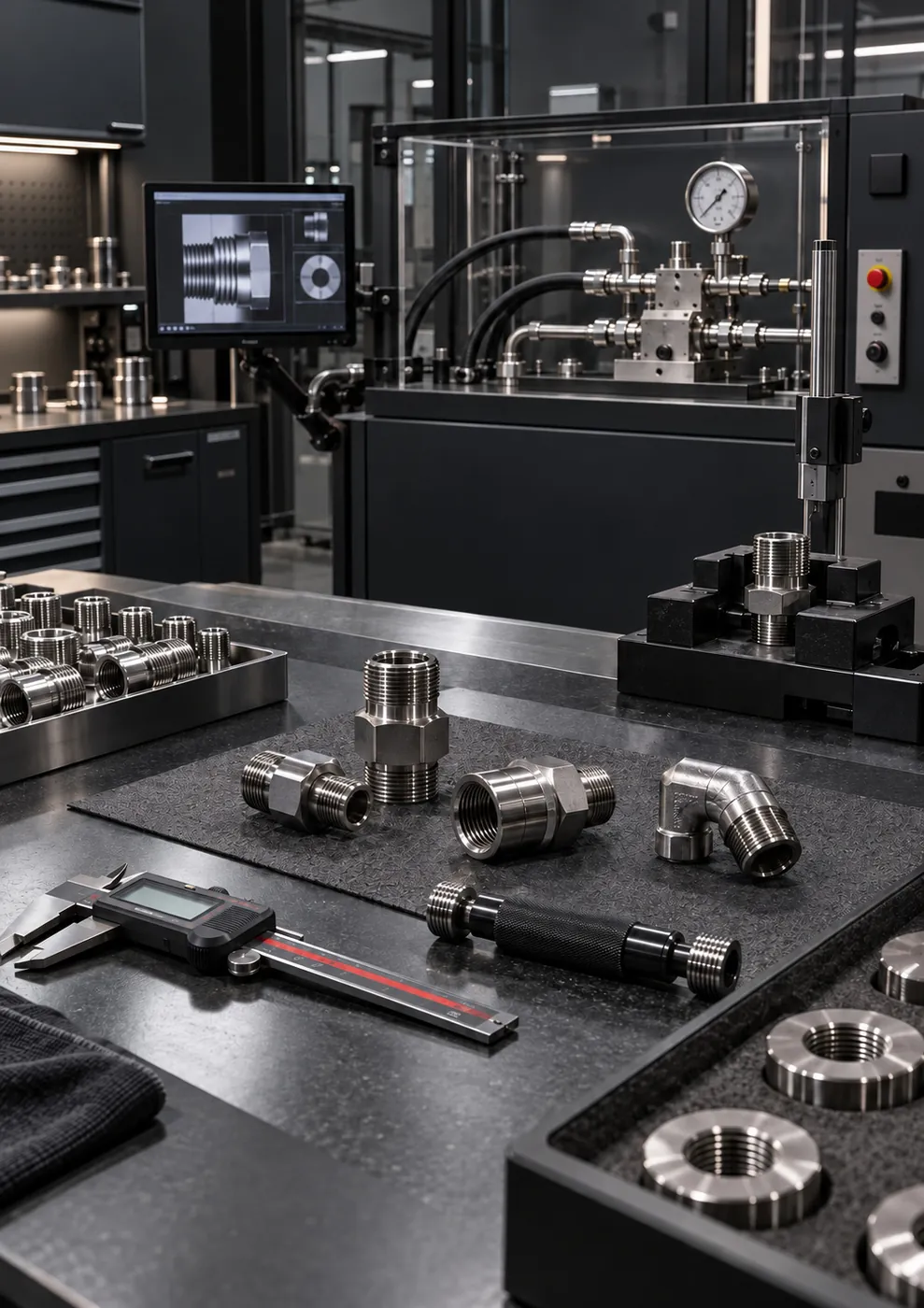 Control and test panel with pressure gauges (illustrative image)
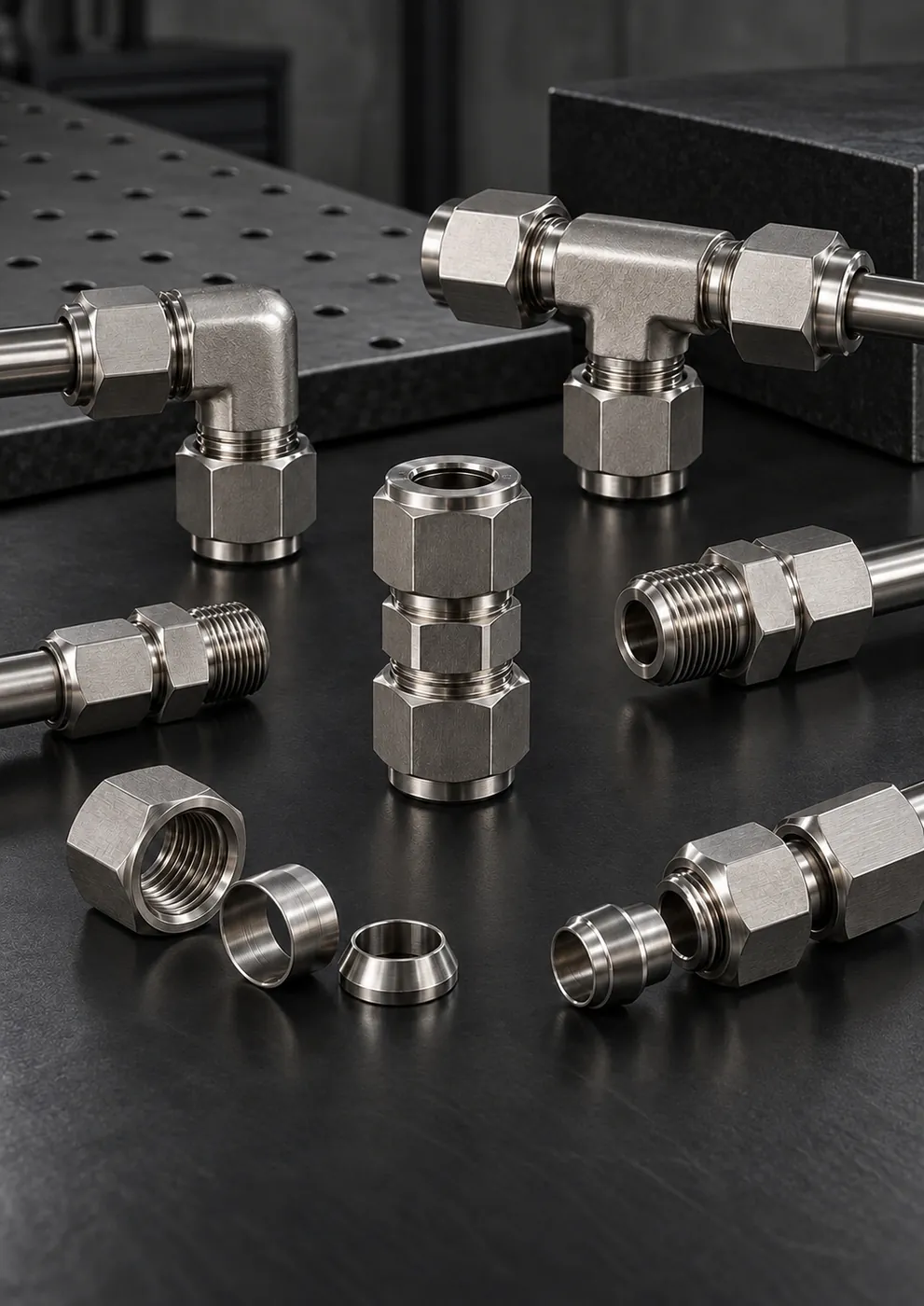 Twin-ferrule instrumentation fittings for measurement lines (illustrative image)
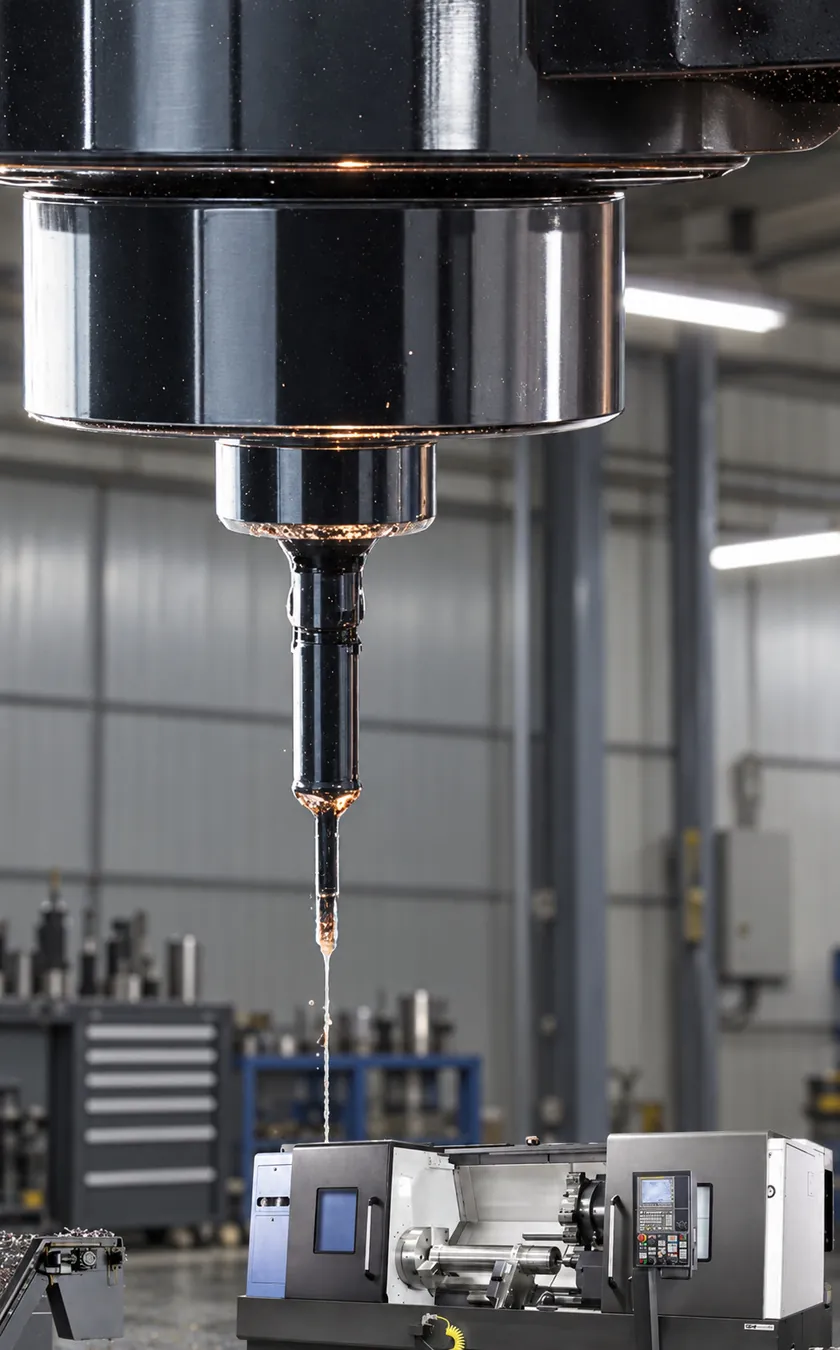 Precision machining of a part on a CNC machine (illustrative image)
Knowledge Center
In a twin-ferrule fitting, the front ferrule provides the seal and the back ferrule grips the tube. For correct installation, the tube is cut square…
Hydraulic connections are sealed in four ways: O-ring, bonded seal (Dowty washer), metal cone face and tapered thread. On parallel threads, the seal…
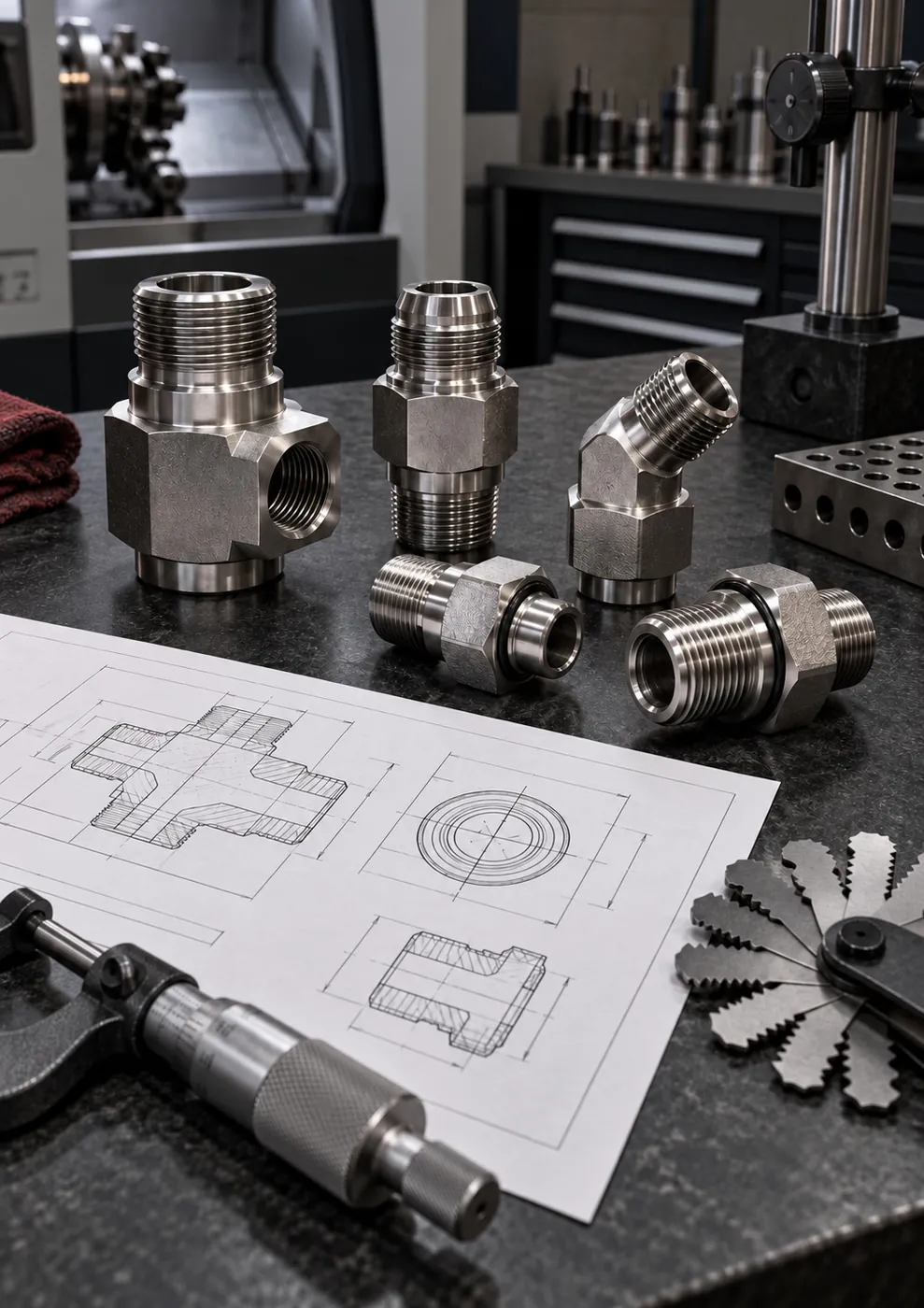
When a standard part won't fit, custom manufacturing starts with a sample, a dimensioned technical drawing or dimensional data. The thread standard…
Frequently asked questions
If your question isn't answered here, write to us and we'll pin down the size, thread standard and material together.
Send us your questionNo. Flight-critical parts on aircraft are subject to their own aviation standards and an approved supply chain; we make no claim to certified supply of these parts. We manufacture stainless steel fittings for ground support equipment, hydraulic test benches, maintenance workshops and the process lines of manufacturing facilities.
Phosphate ester-based fluids are incompatible with NBR seals and quickly cause swelling and degradation. A compatible seal material such as EPDM should be selected for these fluids. The stainless steel body is compatible with the fluid; all you need to do is specify the fluid type in your order.
Stainless steel threads are prone to galling under frequent disassembly and high tightening forces. Using a suitable anti-seize compound, keeping the threads clean and replacing worn adapters from a spare set greatly reduce the problem. For adapters used very frequently, we recommend planning a spare set from the start.
Although both use 37° cone seating, they are not the same in terms of tolerances and documentation requirements. JIC can be used on ground equipment, but a JIC part should not be installed in place of an aviation-standard part on the aircraft.
Critical diameters, thread standard and sealing type are confirmed from a sample or dimensioned drawing. After technical approval, the part is added to the production schedule; custom-size manufacturing is scheduled within 10-20 business days on average. Series production begins after first article approval.
After machining, sharp burrs are removed and thread roots and transition areas are inspected. Before shipping, threads and sealing surfaces are closed off with protective caps, and products are packed separately by size. Flushing the lines after assembly is still necessary to reach your circuit's target cleanliness level.
Quote
Share your connection standards, maximum test pressure and the fluid you use; we will tell you which parts can be supplied from stock and which through custom manufacturing, along with a lead time plan.
Aviation request form