


 DIN 2353 Compression Fittings
Straight Coupling (24° Cone)
Details & quote
Product group
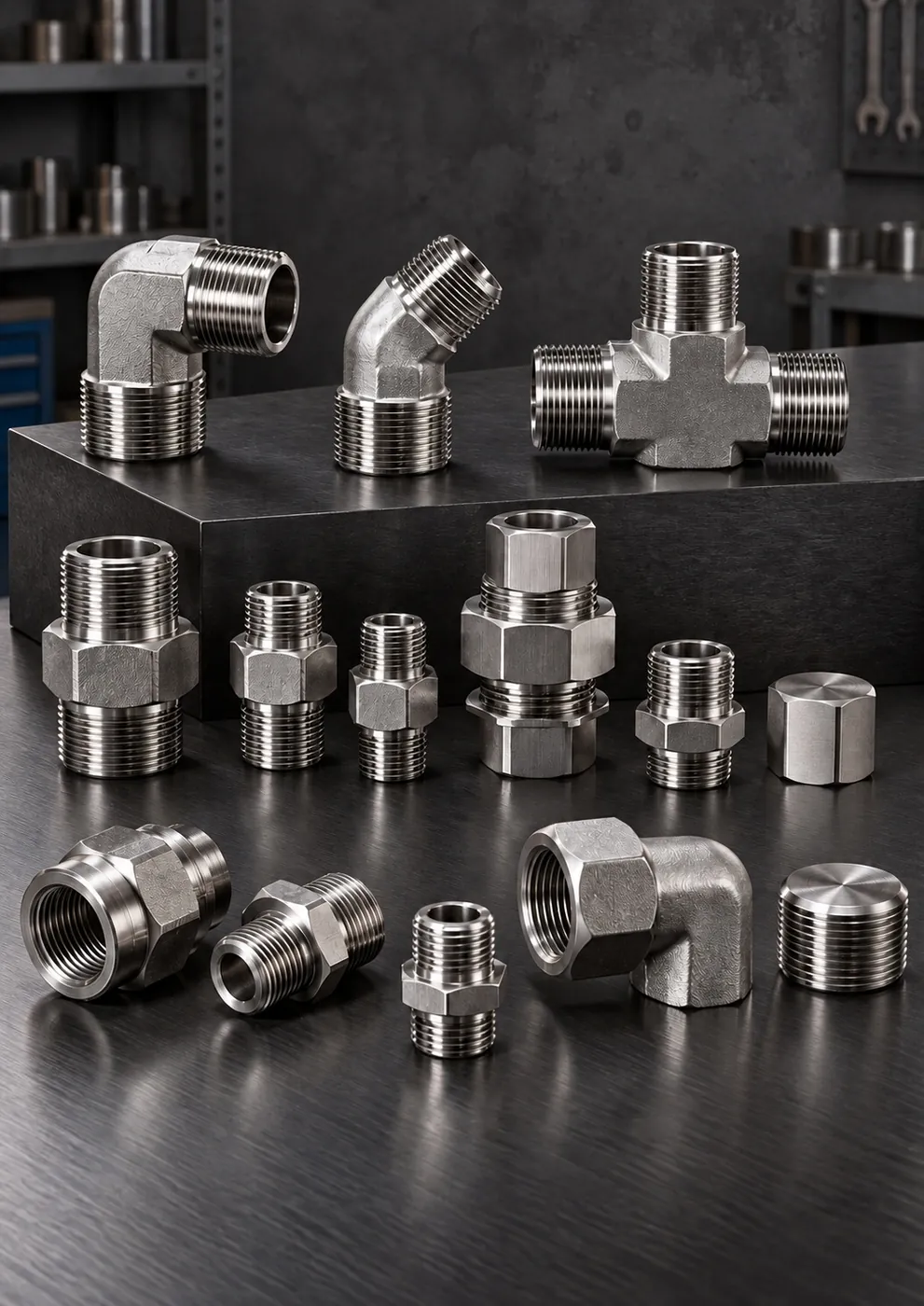
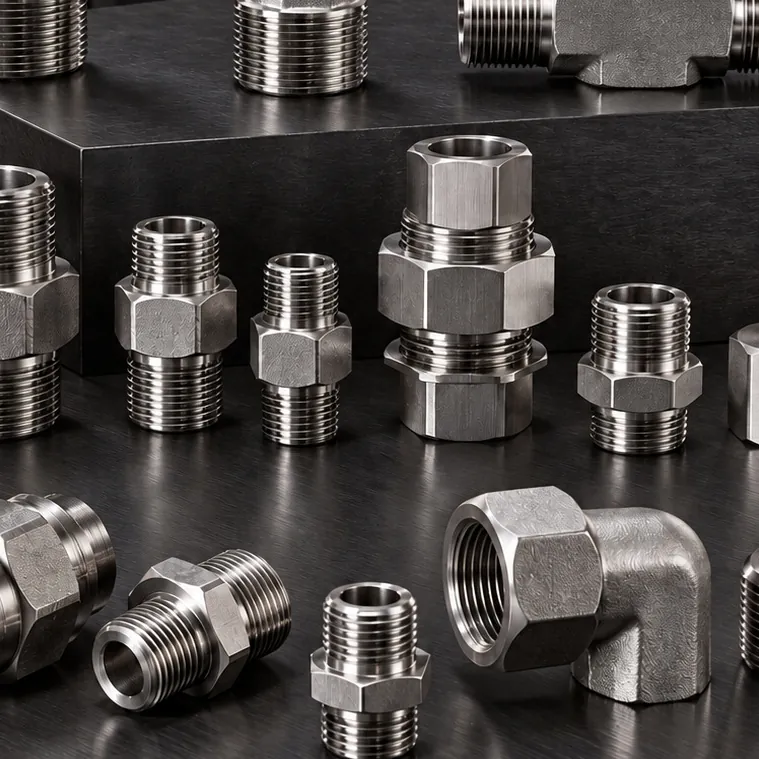
Straight, elbow and tee fittings; BSP, NPT, UNF/JIC and metric thread options, bulkhead fittings and weld nipples. AISI 316/316L.
 DIN 2353 Compression Fittings
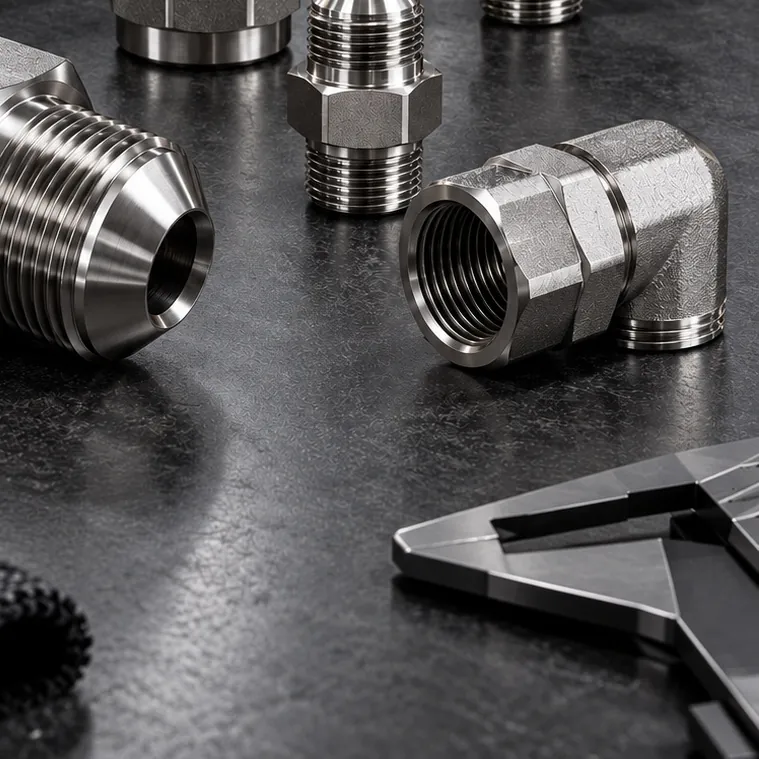 DIN 2353 Compression Fittings
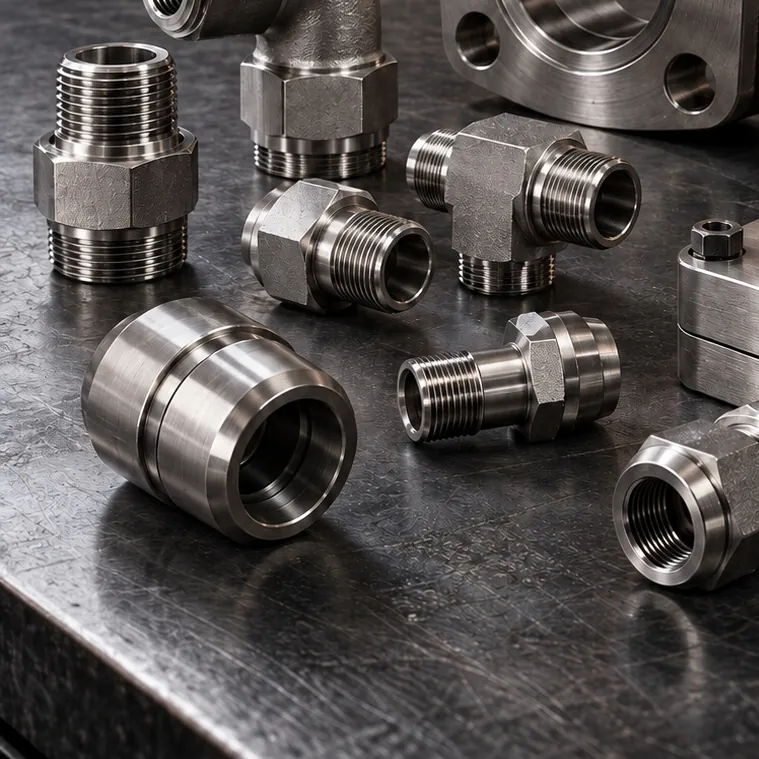 DIN 2353 Compression Fittings DIN 2353 Compression Fittings
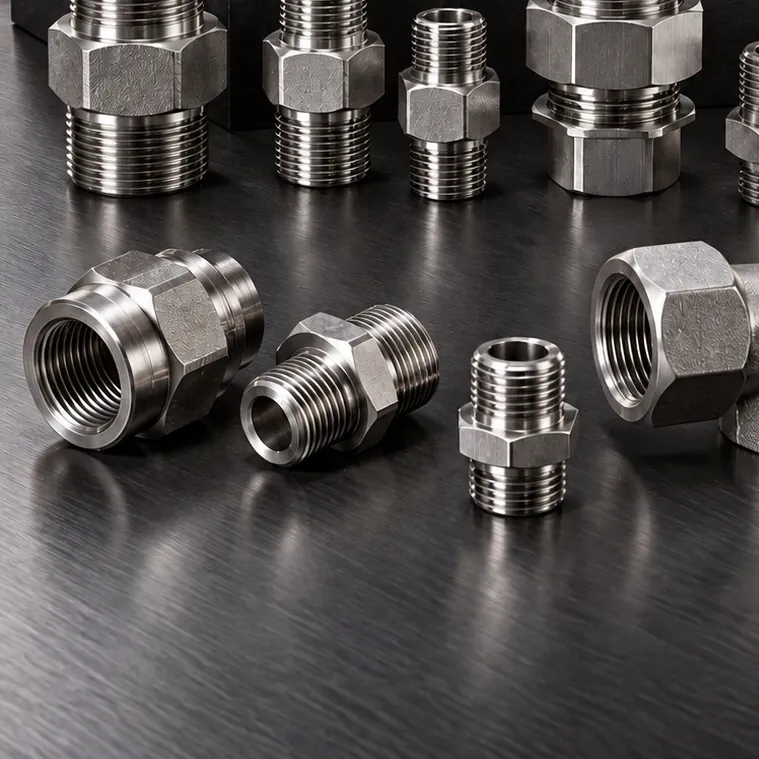 DIN 2353 Compression Fittings
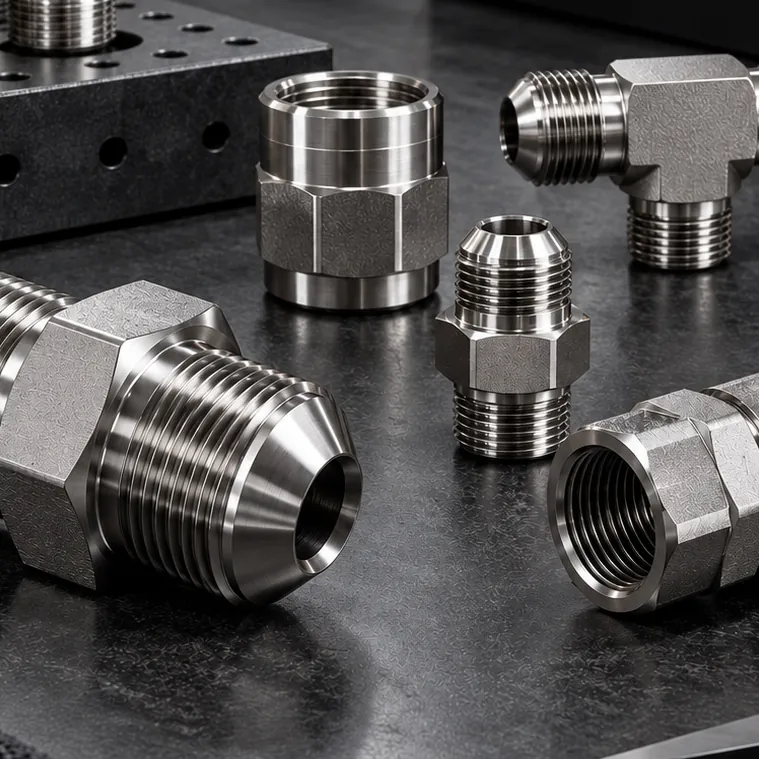 DIN 2353 Compression Fittings
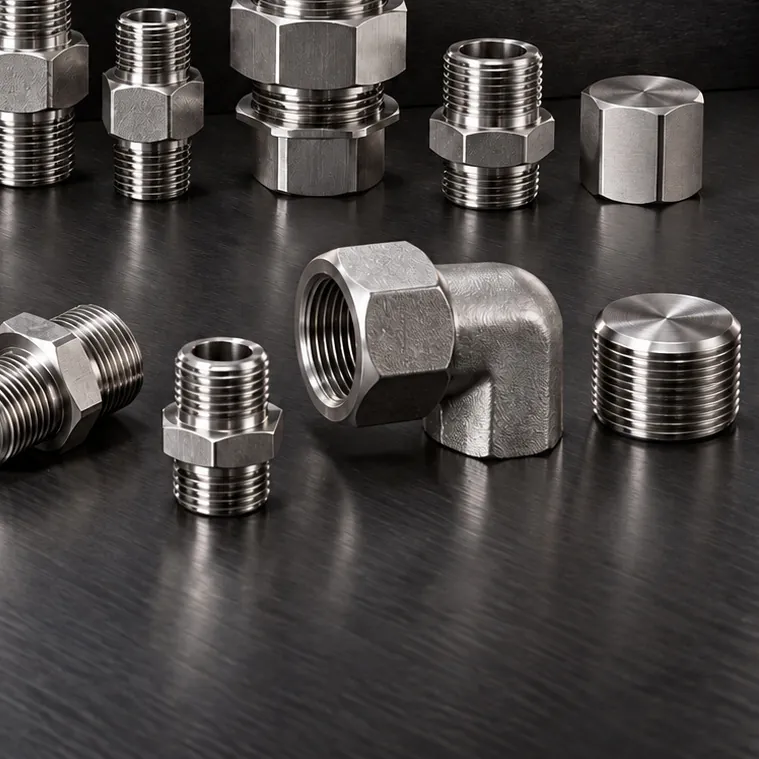 DIN 2353 Compression Fittings
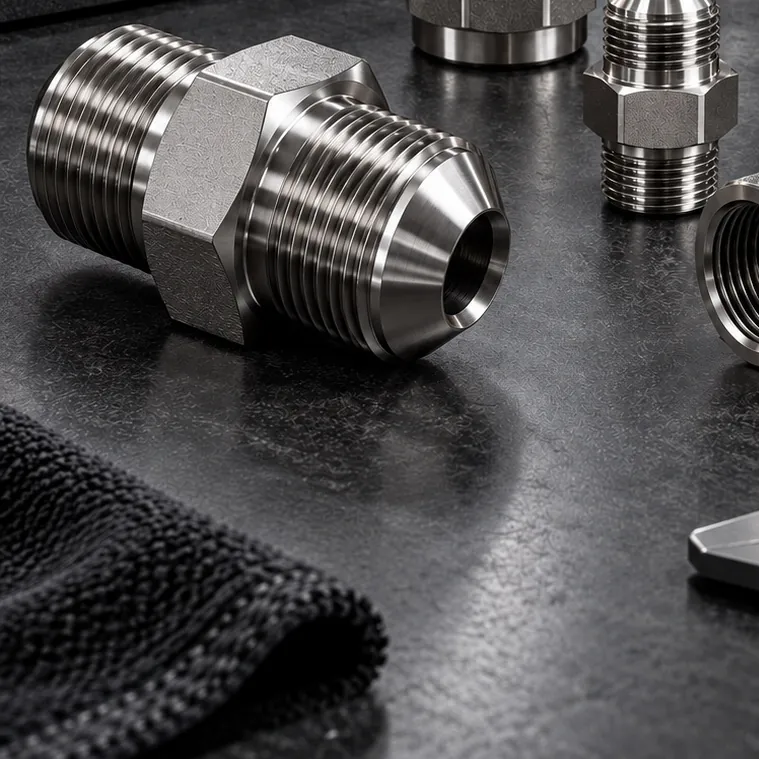 JIC 37° Fittings & Adapters JIC 37° Fittings & Adapters JIC 37° Fittings & Adapters JIC 37° Fittings & Adapters JIC 37° Fittings & Adapters JIC 37° Fittings & Adapters BSP / NPT Adapters & Nipples BSP / NPT Adapters & Nipples BSP / NPT Adapters & Nipples BSP / NPT Adapters & Nipples BSP / NPT Adapters & Nipples BSP / NPT Adapters & Nipples Weld Nipples & Weld Fittings Weld Nipples & Weld Fittings Weld Nipples & Weld Fittings Weld Nipples & Weld Fittings
Selection guide
Stainless steel hydraulic fittings are the basic connection components, such as nipples, elbows, tees, adapters and bulkhead fittings, that connect tube and hose lines to the pump, valve block and cylinder, and to each other. In Turkey these parts are often called and written "rekor" in the field, while the correct Turkish name is "rakor"; in a quote request, both spellings refer to the same product. Thread size alone is not enough when selecting a fitting: the thread standard, line pressure, fluid type, temperature, installation orientation and sealing method must be evaluated together. Mismatched standards lead to leaks, thread damage and premature servicing.
This group includes four sub-families. Which one you need is usually determined by the tube type and the standard of the port being connected.
| Family | Where does it seal? | Typical use |
|---|---|---|
| DIN 2353 compression fittings (24° cone, Ermeto-type) | Ferrule against the 24° cone, or an O-ring sealed cone end | Weld-free hydraulic lines with metric OD tube |
| JIC 37° (UNF) | Metal-to-metal contact between the 37° conical surfaces | Machines built to American standards, mobile hydraulics, test equipment |
| BSP / NPT adapters and nipples | Sealing washer or cone on BSPP; on the threads on BSPT and NPT | Port connections, thread conversions, plugging unused ports |
| Weld nipples and weld fittings | Weld seam at the welded end; 24° cone and O-ring at the removable end | Removable connection point on a welded tube line, bulkhead penetration |
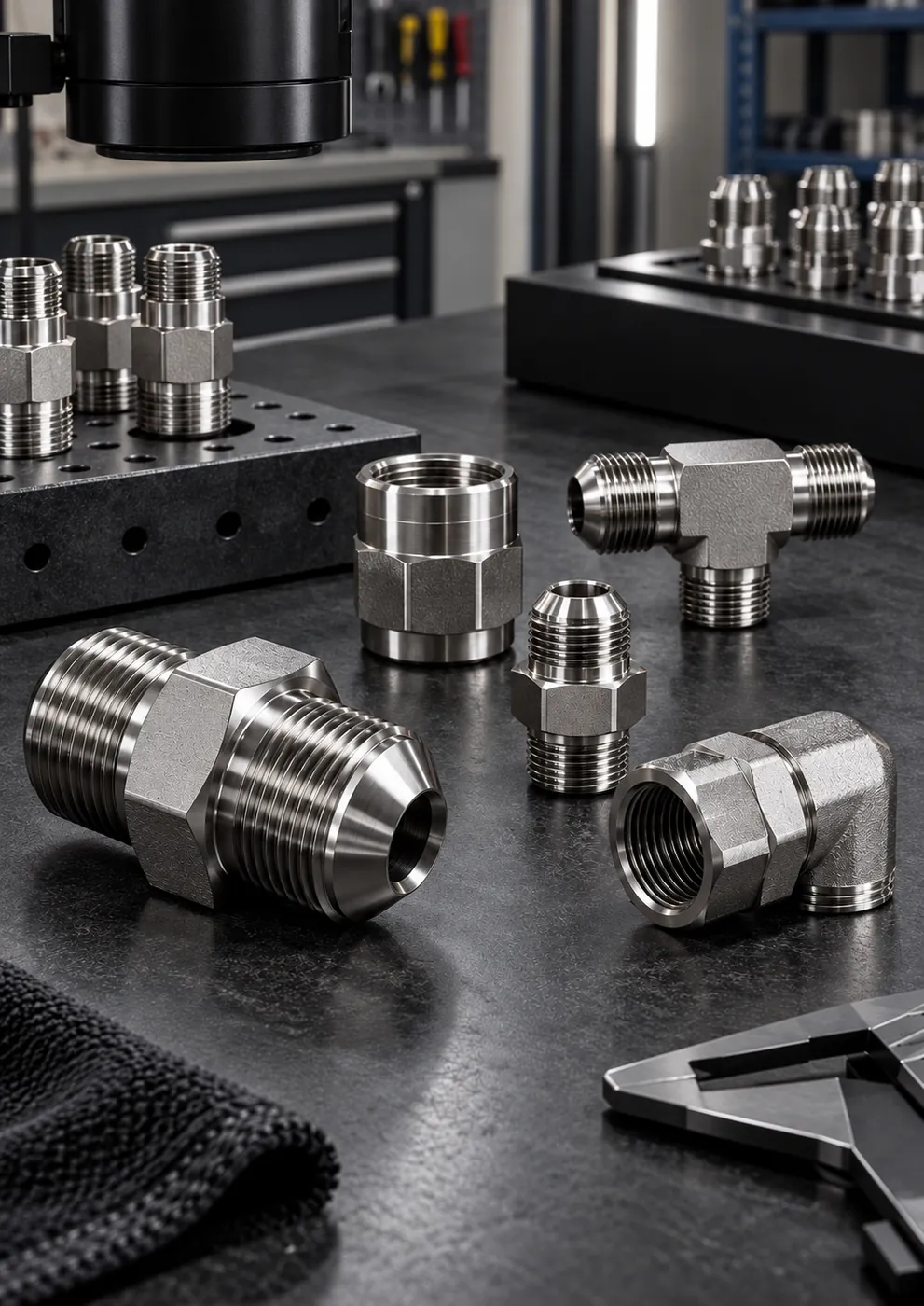
The fittings are machined on CNC lathes from AISI 316/316L round bar and hex bar stock; the thread profile, sealing cones and wrench flats are inspected against the tolerances on the technical drawing. Low-carbon 316L is preferred for parts that will be welded. Because both grades contain molybdenum, they are noticeably more resistant than 304 in chloride environments.
Stainless steel threads are prone to galling. Keep the threads clean, use a suitable anti-seize compound, and if a connection runs in freely for a few turns and then suddenly tightens, do not force it; recheck the standard. Connecting tubes and hoses with misalignment or under tension is also a common cause of hidden leaks.
On marine and offshore lines exposed to saltwater and vibration, in food plants that use chloride-based cleaning chemicals, in chemical plants handling corrosive fluids, and on rolling mill and board mill lines where maintenance downtime is costly, stainless steel fittings offer a longer service life than carbon steel fittings. Standard sizes in stock are typically ready within 1-3 business days, standard production within 5-10 business days, and custom sizes within 10-20 business days after technical approval.
Not sure about the right size?
Send the sample, the technical drawing or your caliper measurements, and we'll confirm the thread standard and the matching part together.
+90 545 206 13 74Knowledge Center
Technical articles on selecting, installing and maintaining the products in this group.
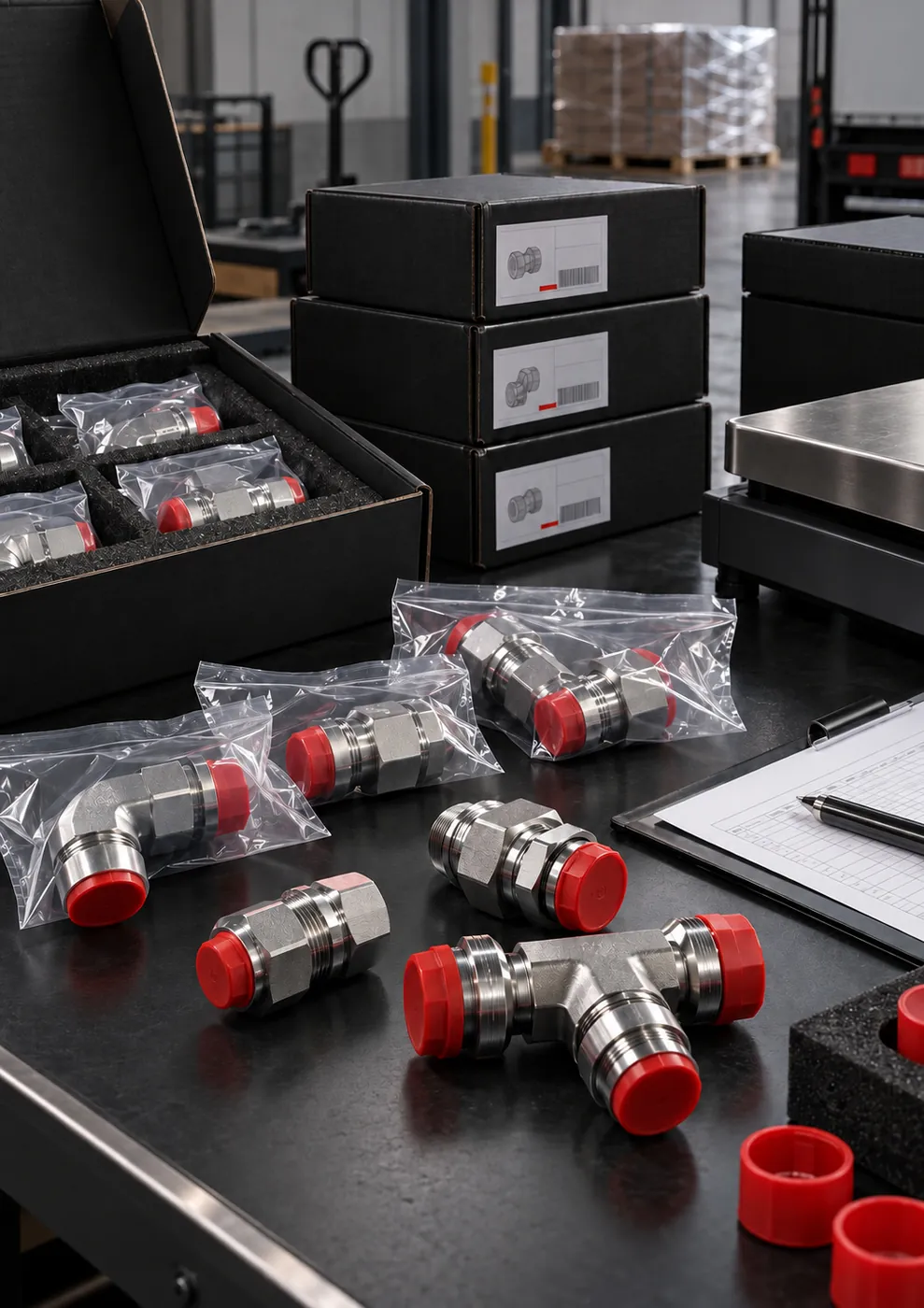
Stock items are prepared within an average of 1-3 business days, standard production within 5-10 business days, hose assemblies made to length within…
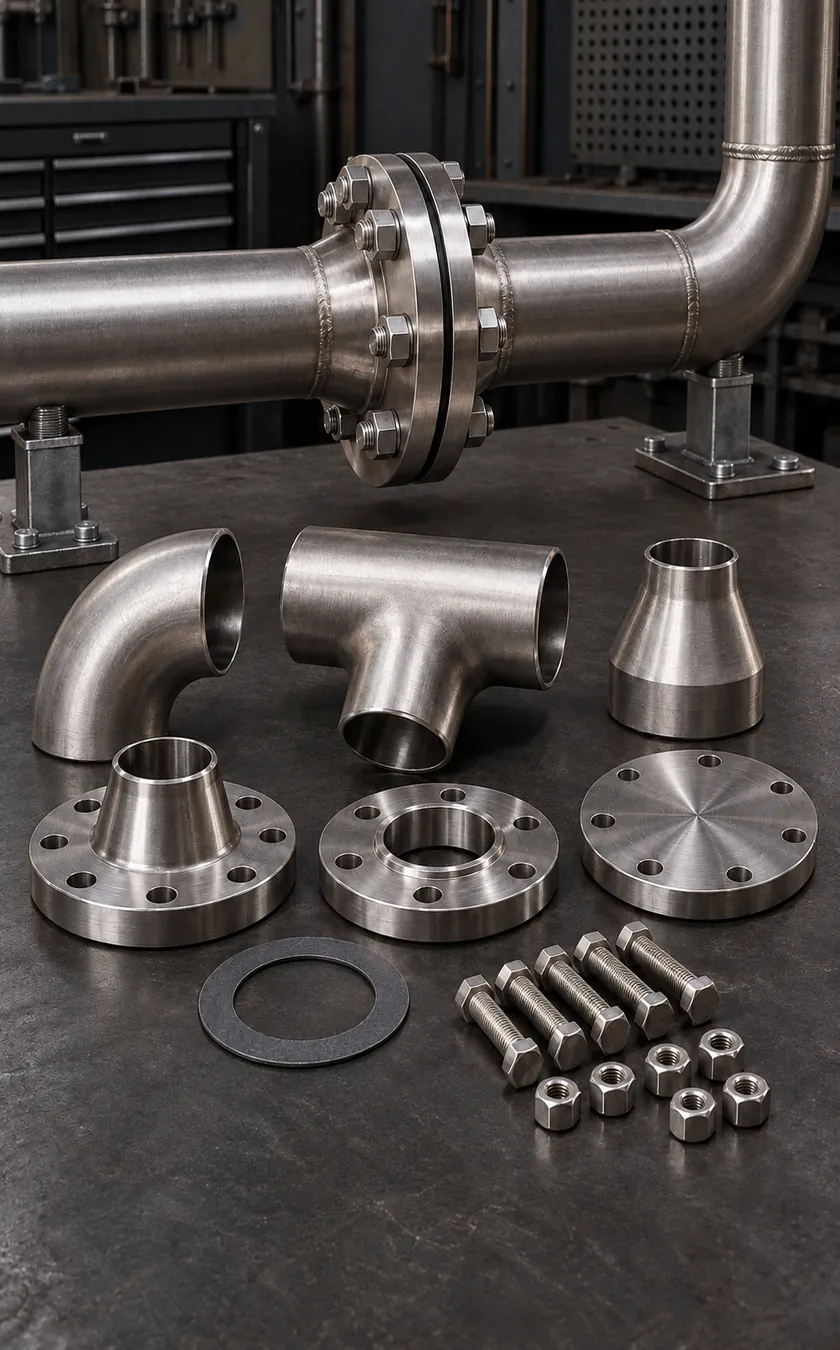
On a stainless steel pipeline, fittings and flanges are selected by matching them to the pipe's DN/NPS size and Schedule wall thickness. Weld neck…
In saltwater environments, the baseline material is AISI 316L; its molybdenum content increases resistance to chloride-induced pitting and crevice…
FAQ
If your question isn't answered here, message us on WhatsApp with dimensions or a photo, and our technical team will answer directly.
Ask on WhatsAppThe correct Turkish spelling is "rakor"; the pronunciation "rekor" is also common in the field and on the market. Both terms describe the same fitting that connects a tube or hose to a port or to another line. It does not matter which one you write in a quote request; what really determines the part is the thread standard, size and connection type.
Start with the line itself. If you are connecting metric OD tube without welding, you need a DIN 2353 (24° cone) compression fitting; if you are connecting a hose or tube on a machine built to American standards, a JIC 37° fitting; if you are converting a port to another standard or plugging it, a BSP/NPT adapter or nipple; and if you need a detachable point on a welded line, a weld nipple or weld fitting. A photo of the existing part often settles the question on its own.
Use an adapter with each end machined to a different standard; for example, BSPP on one side and JIC 37° male on the other. The sealing type, pressure rating and installation orientation of both ends are evaluated together. Conversions that have no catalog equivalent can be custom-machined from a technical drawing or a sample.
Yes, but direct contact between dissimilar metals can accelerate galvanic corrosion in humid, salty environments; in that case the carbon steel side corrodes faster. In salty or humid environments, it is safer to keep the line all-stainless or to include the transition point in the maintenance plan.
It depends on the family. DIN 2353 compression fittings are specified by tube OD and series (for example, 12 mm, L series). BSP and NPT adapters are referred to by thread size (for example, 1/2 inch), and JIC fittings mostly by dash size (for example, -8). Stating both the tube OD and the port thread in your request prevents misunderstandings.